
What if no matter how hard you study, your test anxiety keeps tanking your scores and you never match into a competitive specialty? Like you’re smart enough for derm, ophtho, ortho, EM, whatever—but the second the timer starts, your brain just… leaves?
Let’s talk about that nightmare honestly.
The Fear: “If I Can’t Fix This, I’m Screwed”
You’re probably running through some version of these thoughts:
- “Everyone else just gets nervous. I actually shut down.”
- “My practice scores are fine, but on real exams I drop like 15–20 points.”
- “What if my test anxiety ruins Step 2 and I kill my chances at competitive programs?”
- “What if programs think I’m lazy or dumb when it’s literally my anxiety?”
You’re not being dramatic. Bad standardized scores can absolutely hurt your application. Some programs screen brutally. Some PDs really do overvalue numbers.
But here’s the part your anxiety is lying to you about: It’s not “perfect scores or never match competitively.” The real world is messier. And that messiness gives you more openings than you think.
Let me break this down into three brutal-but-true realities and then what you can actually do.
Reality Check #1: Test Anxiety Is Common… But Program Directors Only See the Number
You and I both know test anxiety is real. Your autonomic nervous system does not care that you need a 250.
Your heart is racing, your hands are sweaty, you reread the same question three times, and somehow you’re halfway through the block with 15 questions left.
Program directors? They see: 229. Or 240. Or a fail.
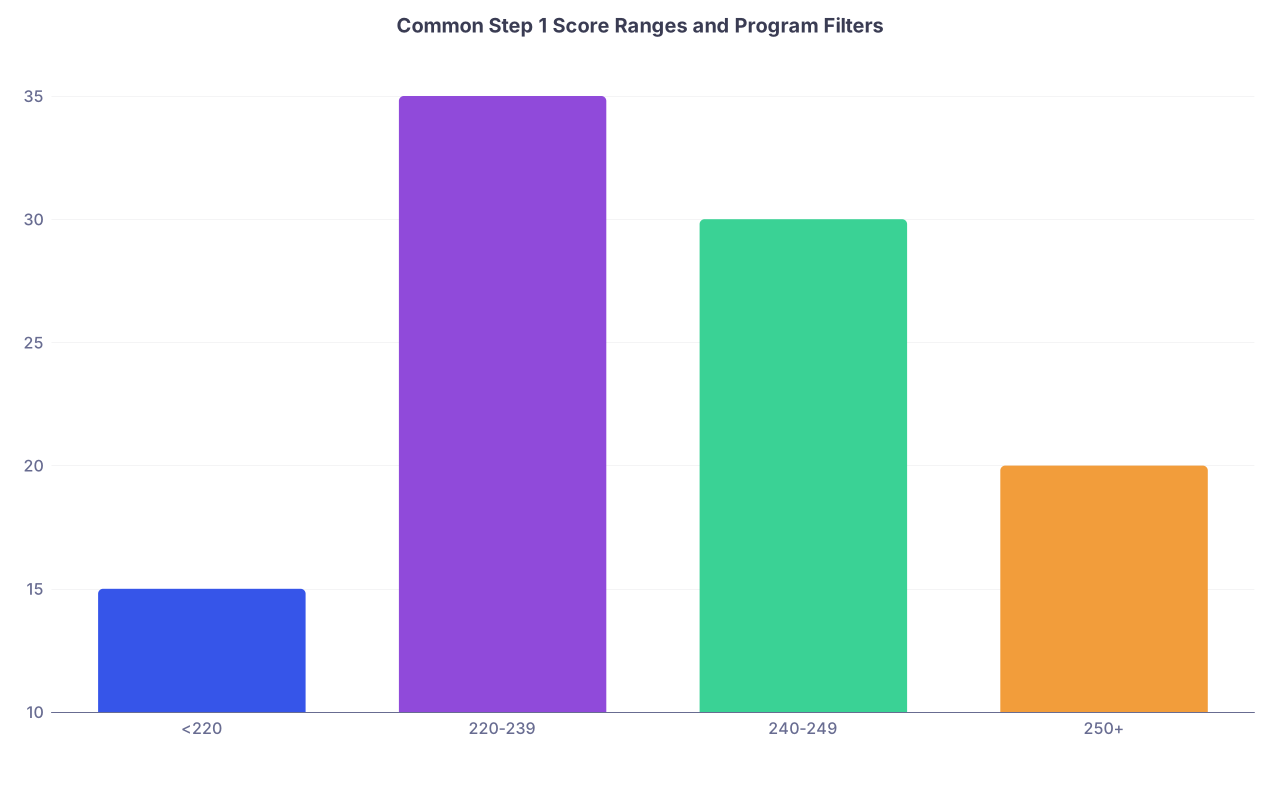
| Category | Value |
|---|---|
| <220 | 15 |
| 220-239 | 35 |
| 240-249 | 30 |
| 250+ | 20 |
And then their filters kick in. They’re not sitting there thinking:
“Wow, maybe this applicant had severe autonomic overactivation related to anxiety dysregulation.”
They’re thinking:
“Will this person pass boards on first try? Can I trust them on call? Do I want to fight our CCC about them?”
So yes, the system is a bit ruthless. Your anxiety doesn’t get scored. Only your performance under that anxiety does.
That sounds harsh, but it leads to a very important point:
You cannot treat test anxiety like a personality quirk. If you want competitive options, you have to treat it like a real medical/psychological problem that deserves the same seriousness as, say, uncontrolled asthma before you run a marathon.
Not “I’ll try to be less nervous.”
More: “I need an actual plan, possibly a diagnosis, probably interventions, and maybe accommodations.”
Reality Check #2: One Weak Exam ≠ “You’ll Never Match Competitively”
Your brain loves all-or-nothing thinking:
- “If my Step 1/2 isn’t amazing, derm/ortho/EM/whatever is gone forever.”
- “One bad exam means my entire career is over.”
- “If I get accommodations, programs will judge me.”
But look at how programs actually evaluate you. For real, not the horror-movie version your brain is running.
| Factor | How Programs Actually Use It |
|---|---|
| Board Scores | Screening + risk assessment |
| Clinical Grades | Work ethic, reliability, ceiling |
| Letters of Rec | How attendings describe you as a doc |
| Research | Specialty commitment, productivity |
| Away Rotations | “Would I work with this person daily?” |
Programs don’t sit around worshipping Step scores like a religious object. They care about:
- Will you show up?
- Will you learn?
- Are you dangerous?
- Are you miserable to work with?
A moderate score with strong clinical performance + research + good letters can absolutely beat a high score with mediocre everything else. I’ve seen:
- A 238 Step 1 → matched ENT because they had strong research and ridiculous letters.
- A 232 Step 1 / 248 Step 2 → matched EM at a big-name program with great SLOEs and away rotations.
- A Step 1 fail (yes, fail) → matched anesthesia after a solid pass, good narrative about growth, and strong faculty backing.
Is it harder? Yes.
Is it impossible? No.
Your anxiety tells you, “One bad score = doomed.” Reality: “One bad score = you’ll need a better story, better performance elsewhere, and maybe a slightly longer or more strategic path.”
Reality Check #3: Test Anxiety Is Treatable—But Not With Vibes and Willpower
This is the part you don’t want to hear: “It’ll be fine, just calm down” is useless.
This is the part you do need to hear: Test anxiety responds to actual interventions. And there are multiple angles.
Here’s what I’d consider if you were my friend spiraling about this:
1. Get a formal diagnosis if this is severe
If you’re having:
- Panic attacks before/during exams
- Near-blacking out, derealization (“feels like I’m not really there”)
- Extreme physical symptoms (shaking, nausea, chest tightness)
- Massive score drop from practice tests to the real exam
You’re not just “nervous.” That’s an anxiety disorder pattern.
That matters because:
- You can get documentation.
- You can qualify for accommodations (extra time, separate room, more breaks).
- You have a medical explanation if you need to talk about a score dip later.
No, getting evaluated doesn’t make you weak. It makes you less likely to tank Step 2.
2. Accommodations are not cheating. They’re risk control.
You’re allowed to play defense.
Typical accommodations for standardized exams (NBME, USMLE, COMLEX) can include:
- Extra time (usually 1.25x or 1.5x)
- Small group or private testing room
- Extra breaks
- Permission for certain calming items (like earplugs, sometimes even a stress ball depending on rules)
Is the process a pain? Yes. Tons of paperwork, often months in advance, detailed documentation from providers, sometimes previous records.
Is it worth doing if your anxiety is wrecking your scores? Absolutely.
Programs don’t see that you had accommodations. They see the score. And if that score is closer to your actual knowledge, that’s all that matters.

| Step | Description |
|---|---|
| Step 1 | Notice severe test anxiety |
| Step 2 | Talk to student health/psych |
| Step 3 | Formal evaluation & diagnosis |
| Step 4 | Documented treatment plan |
| Step 5 | Apply for accommodations |
| Step 6 | Practice with simulated conditions |
| Step 7 | Take high-stakes exam |
3. You need skills, not just reassurance
Your brain is used to pairing “exam = threat.” You can’t just logic your way out. You have to train it differently.
This is where a therapist who understands performance/test anxiety is worth their weight in gold. Things that actually help:
- Cognitive behavioral therapy (CBT) for test anxiety
- Exposure work using full-length practice tests under true conditions
- Skills like diaphragmatic breathing, grounding techniques, and thought reframing ahead of time, not just day-of
This is not woo-woo. I’ve watched people go from complete shutdown on shelf exams to “still anxious, but functional and stable” on Step 2. Not zero anxiety. Manageable anxiety.
You don’t need to be calm. You need to be functional.
Strategy: How to Protect Your Future While You’re Still Anxious
Let’s get practical. You’re in med school. You’ve got exams now, big boards later, and this nagging fear you’re screwing your future.
Here’s how I’d play it.
Step 1: Deal with the current damage
If you already have:
- A bad board score
- A failed exam
- Low shelf scores due to anxiety
You can’t erase them, but you can:
Stop the bleeding.
Get evaluated, get treatment, push for accommodations if indicated.Create a narrative.
Not “I have anxiety, feel bad for me.”
More: “I had X challenge, I recognized the pattern, sought care, changed my approach, and here’s the improvement.”Stack evidence of performance after the low point:
Strong clinical evals, better shelf scores, research productivity, consistent upward trends.
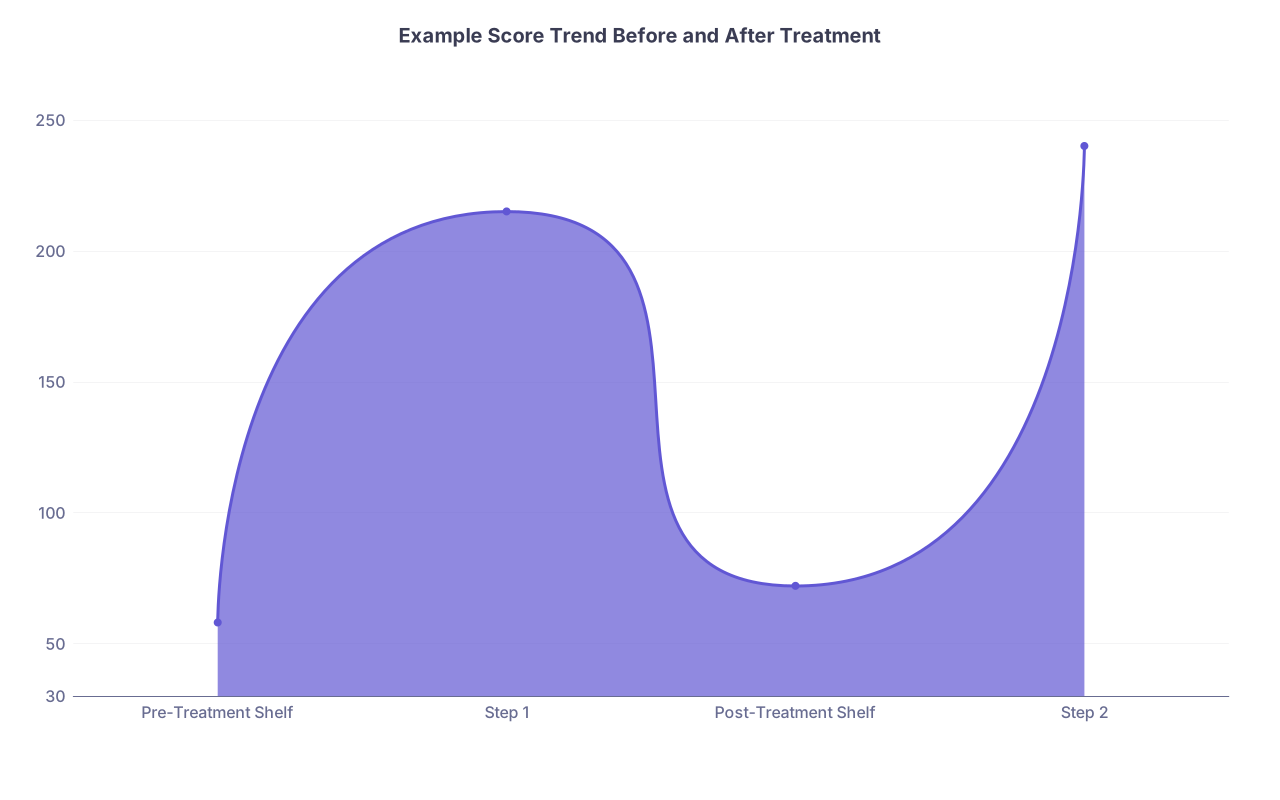
| Category | Value |
|---|---|
| Pre-Treatment Shelf | 58 |
| Step 1 | 215 |
| Post-Treatment Shelf | 72 |
| Step 2 | 240 |
That kind of trajectory tells a story programs like: “This person can respond to feedback and improve. Their low point isn’t their ceiling.”
Step 2: Be strategic about specialty competitiveness
If your anxiety is severe and chronic, there’s a non-zero chance you may decide that a brutally competitive specialty with insane board expectations is not worth the constant self-destruction.
That doesn’t mean you “settled” or “failed.” It means you weighed:
- Baseline anxiety
- Board expectations
- Length of training
- How often your future job will trigger this same pattern (exams, procedures, constant scrutiny)
But also—don’t pre-reject yourself from everything.
There’s a difference between:
- “I got a 250, but I’m terrified it’s not enough for derm.” (It often is, with the right app.)
- “I have a 215 and want integrated plastics at a top-5.” (That’s a different conversation.)
For many “competitive but not insane” specialties (EM, anesthesia, rads, some surgical fields), a decent Step 2 + strong clinical + solid letters can still work.

Talk to actual faculty in the specialty. Show them your numbers, your story, and your fears. Ask straight:
“With this profile, am I realistically in the range for [specialty] if I keep improving?”
You need real feedback, not your brain’s worst-case scenario.
Step 3: Build the non-test parts of your application aggressively
If exams are your weak area, everything else needs to be undeniably strong.
- On rotations: be early, be prepared, be teachable. The “I’d trust them on nights” reputation is huge.
- Letters: ask people who actually know you and saw you work through challenges, not just big names who barely remember you.
- Research: pick one or two projects, stick with them, get something tangible (poster, paper, presentation). Consistency beats dabbling.
- Away rotations (for fields that use them): treat them like month-long interviews. Reliability and humility matter more than being brilliant.
You want PDs to say in their head:
“Yeah, their score is a little lower than our usual. But damn, everyone who worked with them loved them. They show up. Let’s interview.”
What If It Really Does Limit You?
Let’s be honest for a second.
There are worst-case scenarios:
- You fail a major licensing exam more than once.
- You can’t function even with treatment and accommodations.
- Your scores are so far below cutoff that certain specialties/programs are truly off the table.
If you hit that territory, it doesn’t mean “you’re too broken to be a doctor.”
It means this system—with its rigid, high-stakes, standardized test obsession—may not fit the way your brain and nervous system work at the very top tiers.
That sucks. It feels unfair. But it’s not the same as “you have no future in medicine.”
I’ve seen people:
- Pivot from hyper-competitive ideas to fields they ended up loving way more.
- Take an extra year, get a master’s, rebuild their academic profile, and match solidly.
- Need longer treatment and retakes but still get through, then live perfectly functional attending lives.
This isn’t a movie. There’s rarely one single moment where everything is decided forever.
You’re Not Doomed. But You Can’t Ignore This.
If you only remember a few things, let them be these:
- Test anxiety is real and can absolutely wreck your scores—but it’s treatable if you stop pretending it’s just “nerves.”
- One bad score does not automatically erase your chances at a competitive match, but it does mean you need a real plan: treatment, accommodations if needed, and stronger performance everywhere else.
- You’re allowed to want a competitive specialty—and you’re also allowed to change your mind without calling it failure.
You’re not the only one terrified that your brain will betray you on exam day. The difference between the people whose anxiety ruins everything and the ones who still get where they want to go?
The second group stops trying to “tough it out” and starts treating it like a real, solvable problem.
FAQ (Exactly 4 Questions)
1. Will programs judge me if they find out I have test anxiety or got accommodations?
Programs don’t see whether you had accommodations on USMLE/COMLEX; they see your score and your performance. If you choose to talk about anxiety in a personal statement or interview, keep it framed around insight and growth, not as a plea for pity. Something like: “I struggled with performance anxiety on early exams, sought professional help, implemented structured strategies, and since then my performance has been stable and improving.” That reads as mature, not weak.
2. What if my Step 1 was bad and Step 2 is my only shot?
Then Step 2 becomes a priority project, not just “another exam.” That means: formal treatment if indicated, dedicated time, realistic schedule, full-length practice tests under exam conditions, and no going into it “just to see how I’ll do.” Many PDs weigh Step 2 heavily, especially now that Step 1 is pass/fail at many schools. A strong Step 2 can partially offset a weaker earlier record, especially backed by good clinical performance.
3. How do I know if my test anxiety is “bad enough” to get help and accommodations?
If your anxiety repeatedly causes a big gap between your practice and real scores, or triggers physical symptoms that interfere with reading, thinking, or time management, it’s “bad enough.” Don’t wait for total collapse. Talk to student health or a psychologist, get evaluated, and let them decide severity. Worst case, they say it’s mild—great, you still walk away with tools. Best case, you get real support and documentation that protects you for the big exams.
4. What if I do everything right and still don’t match into my dream specialty?
Then it hurts. A lot. But it doesn’t mean your effort was pointless. The same process—managing anxiety, building resilience, improving clinically—makes you a better doctor in any field. Plenty of people don’t match their first-choice specialty and end up happy in something they never originally considered. That doesn’t cancel out the disappointment, but it does mean your value as a future physician isn’t locked to one residency title. Your anxiety wants to tell you it’s “competitive dream or total failure.” Real life is messier—and often kinder—than that.