
It’s Monday 6:45 a.m., Day 1 of your USCE. You barely slept. You’re outside the workroom with a backpack, a white coat that still creases at the seams, and a quiet panic: “I have to get a strong LOR from this month. I cannot screw this up.”
Good. That urgency is your friend—as long as you structure it.
This first week decides whether your attending files you under “random observer” or “future colleague I’ll happily write for.” Here’s exactly what to do, day by day, to land in the second category.
Big Picture: Your First-Week LOR Strategy
Before we go day-by-day, anchor on this:
In the first week, your goal is not to ask for a letter.
Your goal is to:
- Make them remember you.
- Make them trust you.
- Make them like working with you.
Letters follow from those three. If you try to skip ahead, you look transactional and desperate. Attendings see that a mile away.
Think of Week 1 as building your “LOR foundation” across 4 dimensions:
| Dimension | What You’re Proving |
|---|---|
| Reliability | You show up, on time, prepared |
| Initiative | You do more than the bare minimum |
| Teachability | You respond well to feedback |
| Fit | You act like someone they’d hire |
Now let’s walk through the week.
Day 0–1: Before and During Your First Day
Day 0 (Sunday): Quiet Prep That Makes You Look “Sharp” on Monday
At this point you should make sure you don’t walk in blind.
1. Learn the bare-minimum logistics
You should know by tonight:
- Start time and exact location (down to floor and room number)
- Dress code: white coat? Scrubs? Business casual?
- EMR being used (Epic, Cerner, something else)
- Service type: inpatient vs outpatient, general vs subspecialty
If nobody has emailed you, you email them.
Very simple:
- Program coordinator / rotation contact:
- Confirm start time + meeting place
- Ask if there are onboarding modules or EMR videos you should complete before Day 1
- Ask if you’ll be on a team (resident/NP/PA) or directly with an attending
Twenty minutes of clarity tonight saves you from looking lost tomorrow.
2. Pre-load some “basic competence”
You’re not trying to master the specialty in one night. You’re trying to avoid looking clueless on common things.
Do this:
Skim 3–5 of the most common diagnoses for that service on UpToDate or similar.
For example:- Cards inpatient: CHF, NSTEMI, AFib with RVR, COPD exacerbation, pneumonia
- Outpatient IM: HTN, DM2, HLD, annual physical, CKD follow-up
For each, focus on:
- Typical HPI elements
- 3–4 key physical exam components
- The first-line management plan
You’re not presenting grand rounds. You’re just trying not to freeze when asked: “What else do you want to know in the history?”
3. Set up your tools
At this point you should set up a minimal system:
Pocket notebook or OneNote page labeled:
- “Teaching points”
- “Patients”
- “Questions to ask later”
- “Feedback”
Templates ready:
- H&P template
- SOAP note template
- One-line “patient summary” structure:
- Age + sex, key PMH, main problem, hospital day, big issues
This is how you avoid staring at a blank EMR note later in the week.
Day 1 (Monday): Make a Clean First Impression
There are only 2 goals for Day 1:
- Be the least problematic person they meet that day.
- Make them think, “This person might be useful by next week.”
Morning checklist
You should:
- Arrive 15–20 minutes early. Not “on time.” Early.
- Introduce yourself clearly to:
- Attending
- Senior resident / PA / NP
- Unit nurses (at least a couple)
- Use a simple intro:
- “Hi, I’m Dr. ___, an international medical graduate here for a 4-week [specialty] rotation. I’m excited to help and learn—please let me know how I can be useful.”
That last line matters. It signals you’re not there to loiter.
Ask these 5 questions on Day 1
Not all at once. Work them in throughout the day.
- “What are your expectations for me on this rotation?”
(Non-negotiable. You must ask this.) - “How many patients would you like me to follow?”
- “What format do you prefer for presentations?”
(Long H&P vs focused; how much detail on ROS, labs, etc.) - “What time would you like me to pre-round / have notes done?”
- “Is there anything students often do that you don’t like, so I can avoid it?”
Now you’re not guessing. You’re calibrated.
Your Day 1 behavior rules
At this point you should act like this:
- Do not argue. Ever. Just take notes.
- If you do not know, say:
- “I’m not sure, but I think X because Y. I’d like to read more about it.”
- Volunteer lightly:
- “Would it be helpful if I call the lab / pharmacy?”
- “Can I write the initial draft of this note and you review?”
You’re not trying to “show off independence” on Day 1. You’re trying to show you’re safe and eager.
Days 2–3: Become Reliable and Useful Fast
These are the days where people decide if you’re background noise or someone to invest in.
Morning: Pre-rounding and Data Discipline
At this point you should be:
- Arriving before the resident/senior
- Pre-rounding on 1–3 assigned patients
- Gathering:
- Vitals, I/Os, overnight events
- Labs, imaging results, consultant notes
- Your own quick exam (if allowed by hospital rules)
Do this every time:
- Write a one-line summary for each patient
- Jot down 2–3 active problems with a rough plan
- Even if you’re wrong, thinking clinically is noticed
Example structure when you present:
- “Mr. A is a 67-year-old man with CHF and CKD, hospital day 2 for acute decompensated heart failure.”
- “Overnight: No acute events, still dyspneic on exertion.”
- “Vitals stable, O2 requirement unchanged at 2L NC, weight down 1 kg since admission.”
- “I think the main issues today are volume status, optimizing his diuretics, and clarifying his discharge plan.”
Clean. Organized. Attending-friendly.
Midday: Ask for Targeted Feedback Early
Day 2 or 3, you should already be asking:
- “Can I get quick feedback on my presentations so I can improve this week rather than at the end?”
Do not say “Any feedback for me?” That invites vague fluff.
Be specific:
- “Is the level of detail in my HPI appropriate, or should I be more concise?”
- “Am I focusing on the right problems in my assessment and plan?”
Why now? Because:
- Early feedback → fast growth → they see a trajectory.
- LOR writers love “this student improved rapidly over the month” language.
Afternoon/Evening: Visible Work Ethic (Without Being a Martyr)
At this point you should:
- Offer to help with:
- Discharge summaries (draft)
- Medication reconciliation
- Calling outside hospitals for records
- Following up on labs/consults
You’re aiming for the team to start saying things like:
- “Oh, [your name] already did that.”
- “They’re actually really helpful.”
Those phrases translate directly into “strong work ethic” lines in LORs.
Stick around a bit after rounds if there’s actual work you can do. But don’t linger uselessly until 9 p.m. looking awkward. There’s a line.
Days 4–5: Start Building LOR-Worthy Relationships
By Day 4–5, the first-impression dust has settled. Now you shift to depth.
Step 1: Identify Your Potential LOR Writer(s)
At this point you should have a mental list:
- Primary attending
- Maybe a fellow or senior resident, if:
- They see your work closely
- They actually give you feedback
- They like teaching
You still don’t ask for letters yet. But you shape how they see you.
Look for:
- Who watches you present regularly?
- Who comments on your notes?
- Who asks you questions on rounds?
That’s your best LOR audience.
Step 2: Show Active Learning, Not Passive Attendance
Strong letters mention curiosity and teachability. You have to earn those.
Concrete moves for Days 4–5:
Do one mini follow-up on a question
- If the attending said on Day 2, “Look up the management of acute pancreatitis,” then on Day 4 say:
- “I read about pancreatitis management the other night; would it be okay if I share 2 quick points I learned?”
- Keep it 60 seconds. No lectures.
- This “closes the loop” and shows you actually followed through.
- If the attending said on Day 2, “Look up the management of acute pancreatitis,” then on Day 4 say:
Ask one or two real questions per day
- Not “What is CHF?” You’re not in high school.
- Example:
- “I noticed we chose DOAC instead of warfarin despite CKD. What tipped the balance for you?”
- This shows you’re thinking about decisions, not just memorizing lists.
Own your errors publicly and calmly
- If you miss a lab, say:
- “I should have checked the morning creatinine before rounds. I’ve now added it to my pre-round checklist.”
- This is gold for letters:
- “They accepted feedback well and did not repeat mistakes.”
- If you miss a lab, say:
Step 3: Make Your Professionalism Impossible to Ignore
By end of Week 1, your reputation should be:
- Always on time
- Never complaining
- Respectful to staff (especially nurses)
- Zero phone use during rounds except for clinical tasks
Minor but real: people notice if you say “thank you” when someone teaches you. Or when a nurse helps with a procedure. These are such small things—and they separate you from the many students who act entitled.
Weekend Between Week 1 and 2: Quiet Reset and Upgrade
Now it’s Saturday. You survived the first week. You’re exhausted. Good.
Take a breath—but not a full shutdown.
1. Short Self-Review
At this point you should honestly ask:
- What did I consistently do well this week?
- Where did I repeatedly struggle?
- Presentations too long?
- Not knowing meds?
- Exam too superficial?
Write 3 bullets under “Improve for Week 2”.
2. Close the Loop on Feedback
If someone gave you a specific suggestion, build a micro-plan.
Example:
- Feedback: “Try to be more concise in your presentations.”
- Plan:
- Before presenting, practice out loud once.
- Limit HPI to 5–7 sentences.
- Use a written one-line summary at top of your note.
You’re not reinventing yourself every week. You’re tightening.
3. Light Targeted Reading (1–2 hours max)
Pick 2–3 patients you followed this week.
For each:
- Read 1 short guideline summary or UpToDate review
- Focus on:
- Why we chose this treatment
- What alternative options exist
- When management changes (thresholds, indications)
Then prepare one case for a 2-minute “micro-teaching” if the opportunity comes up:
- “I read a bit more about [condition] over the weekend—may I share one short thing I learned?”
Used sparingly, that’s powerful.
Week 1 Timeline at a Glance
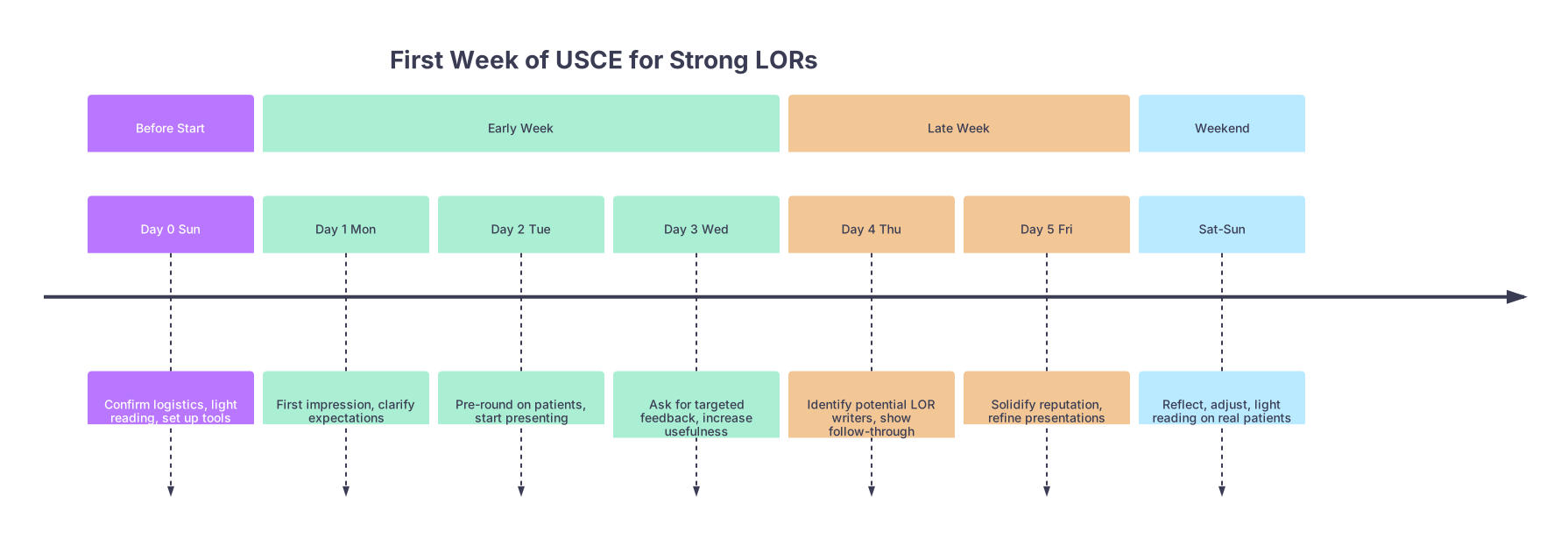
| Period | Event |
|---|---|
| Before Start - Day 0 Sun | Confirm logistics, light reading, set up tools |
| Early Week - Day 1 Mon | First impression, clarify expectations |
| Early Week - Day 2 Tue | Pre-round on patients, start presenting |
| Early Week - Day 3 Wed | Ask for targeted feedback, increase usefulness |
| Late Week - Day 4 Thu | Identify potential LOR writers, show follow-through |
| Late Week - Day 5 Fri | Solidify reputation, refine presentations |
| Weekend - Sat-Sun | Reflect, adjust, light reading on real patients |
How This Week Translates Into a Strong LOR
Let me connect the dots, because students often miss this.
A strong USCE LOR usually has 4–5 themes:
- Work ethic
- Clinical reasoning
- Communication & professionalism
- Improvement over time
- Fit for US training environment
Look back at what you’ve done in Week 1 and map it:
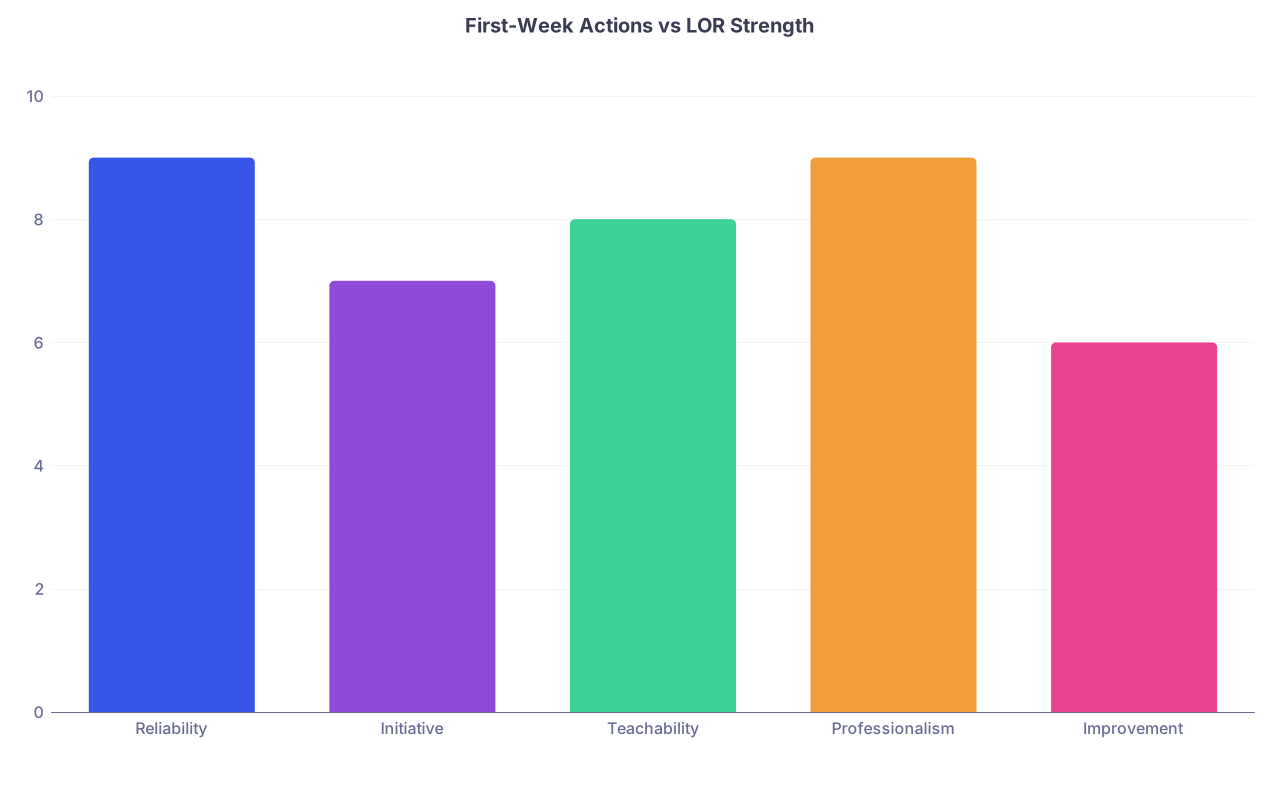
| Category | Value |
|---|---|
| Reliability | 9 |
| Initiative | 7 |
| Teachability | 8 |
| Professionalism | 9 |
| Improvement | 6 |
- Reliability → Early arrival, consistent pre-rounding, never missing rounds
- Initiative → Volunteering to draft notes, follow labs, help with discharge work
- Teachability → Asking specific feedback on Day 2–3, correcting mistakes
- Professionalism → Respect to staff, proper phone use, no complaining
- Improvement → Adjusting your presentations and plans between Days 2 and 5
When an attending sits to write, they don’t remember every detail. They remember impressions:
- “Always there, always prepared.”
- “Improved a lot in just a few weeks.”
- “Acted like a sub-I, not an observer.”
Week 1 creates those anchor impressions.
What Not to Do in Week 1 (Common IMG Traps)
Quick list, because I’ve watched IMGs sabotage themselves here.
At this point you should avoid:
- Talking about LORs on Day 1–3
Looks transactional. They don’t know you yet. - Over-explaining your CV / scores / visa situation
Answer if asked. Don’t pitch yourself constantly. - Hiding when you don’t understand something
“I’m not familiar with that—can I read and get back to you tomorrow?” is far better than pretending. - Being aggressively competitive with other students
Everyone sees it. Program directors hate it. - Acting like an observer when you’re supposed to be hands-on
If the culture allows students to write notes and see patients, don’t stay in the back of the room.
And the classic:
- Waiting until Week 3 to fix obvious problems
If after Week 1 your presentations are still disorganized and you haven’t asked for feedback, you’ve already cut the LOR ceiling.
End of Week 1: Quick Self-Audit
By Friday afternoon, you should honestly be able to say “yes” to most of these:
- Does my attending know my name without looking at my badge?
- Have I asked them directly what they expect from me on this rotation?
- Have I presented at least a few patients with a clear, structured format?
- Have I asked for and applied at least one piece of feedback?
- Have I been reliably early and prepared each day?
- Have I done something that made the team’s life easier?
If the answer is “no” to several, fix it Week 2. But don’t wait until the end.
How to Prep for the LOR Ask (Later, Not Week 1)
You’re not asking in Week 1, but you’re laying the groundwork so that asking in Week 3–4 feels natural, not awkward.
By doing all of the above in Week 1, you enable this future conversation:
- “Dr. ___, over the past few weeks I’ve really appreciated your teaching and feedback. I’m applying to internal medicine residency this year. If you feel you know my clinical work well enough, I’d be very grateful if you could write a strong letter of recommendation for me.”
Notice the phrase: “If you feel you know my clinical work well enough.”
Week 1 is where you start making that true.
Two Realistic First-Week Archetypes (Which One Are You Building?)
I’ve seen these two play out over and over.

Rotation A – The Forgettable Observer
- Shows up on time, but barely early
- Stands at the back of the team
- Never asks for expectations
- Presents maybe one patient, poorly structured
- Reads at home, but never shows that their learning changed anything on rounds
LOR outcome:
“Completed a rotation. Reliable. Interested in learning.”
= Useless, generic letter.
Rotation B – The Emerging Colleague
- Asks for expectations on Day 1
- By Day 3 is pre-rounding on 2–3 patients alone
- Asks for specific feedback, then improves
- On Day 5, efficiently presents and suggests basic plan ideas
- Thanks staff and attendings for teaching, closes loops on learning topics
LOR outcome:
“Hardworking, proactive, and quickly became a valuable member of the team. I would be happy to have them as a resident.”
= The kind of line that moves applications.
Week 1 is when you decide which track you’re on.
One More Visual: Your Week 1 Time Allocation
You can’t do everything. Here’s roughly how to spend your effort:
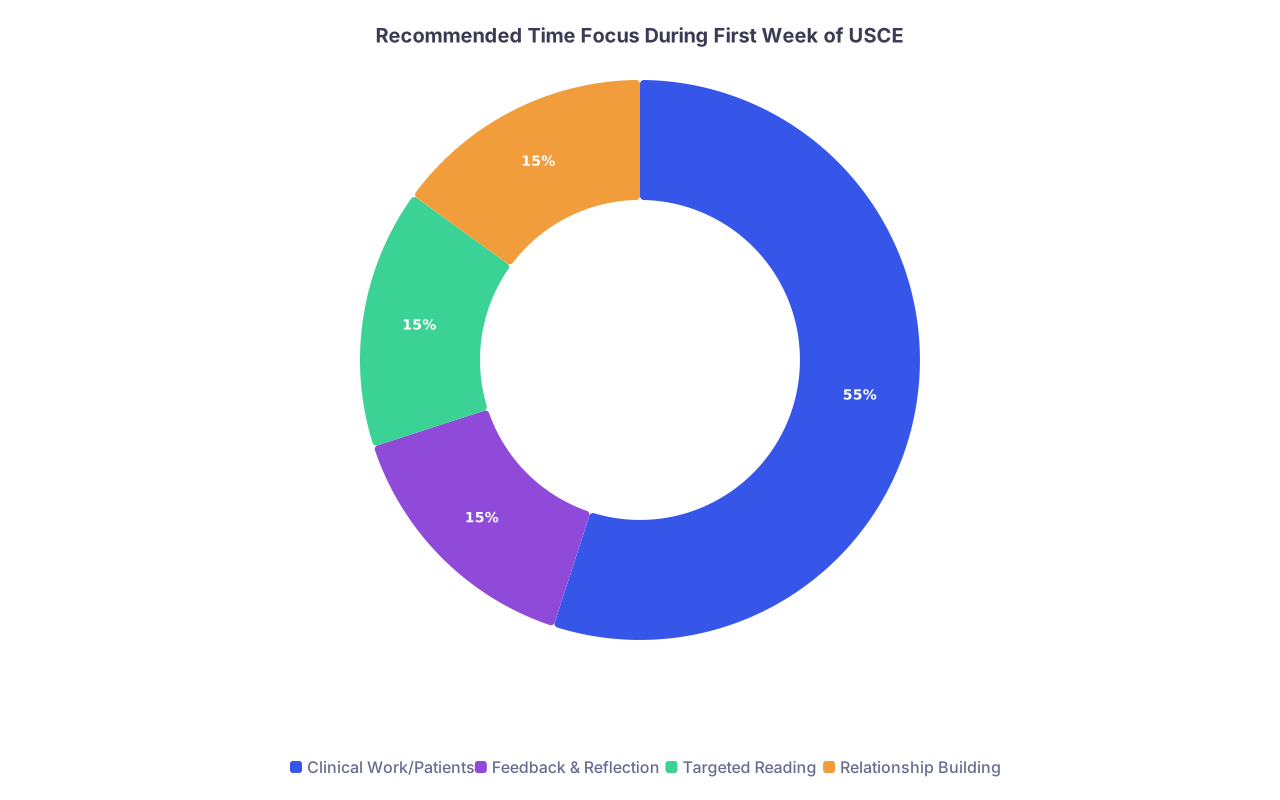
| Category | Value |
|---|---|
| Clinical Work/Patients | 55 |
| Feedback & Reflection | 15 |
| Targeted Reading | 15 |
| Relationship Building | 15 |
- Majority: patient care and preparation (notes, presentations, pre-rounding)
- The rest: feedback, small bits of reading, and actually talking to people like a future colleague
Key Takeaways
- Your first week is not about asking for LORs; it’s about becoming the kind of trainee someone wants to recommend.
- By Day 3, you should be reliably pre-rounding, presenting, and asking for targeted feedback—not floating in the background.
- If by the end of Week 1 your attending knows your name, has seen you improve, and finds you useful on the team, you’re on the right track for a strong LOR later.