
Pushing through Step 1 burnout isn’t heroic. It’s stupid and dangerous.
I’m just going to say the thing you’re probably afraid to admit: you’re more scared of rest than of exhaustion. You’re terrified that if you take a real break, everything will fall apart—scores, timelines, residency dreams, the whole flimsy Jenga tower.
And you’re asking yourself on loop:
“How much rest can I actually take before I ruin Step 1?”
Let’s pick that apart. Because the paradox is brutal: you’re trying to avoid burnout by studying harder… which is exactly how people burn out before they even sit for the exam.
The lie you’re telling yourself about Step 1 and rest
Somewhere in your head, there’s this imaginary “perfect Step 1 student”:
They study 10–12 hours a day. Take only quick 10-minute breaks. Don’t touch Netflix. Don’t scroll. They wake up at 6, do 2 blocks of UWorld before breakfast, review Anki in the shower (somehow), and they never, ever feel tired enough to question the whole thing.
That person doesn’t exist.
Here’s what actually happens in real life:
Someone starts their dedicated period gunning for 10 hours of “study” a day. By week 2, they’re:
- Re-reading the same paragraph three times
- Getting 35–45% on UWorld blocks they should be closer to 60%+ on
- Crying in the bathroom and then coming back to “power through”
They technically sit at the desk 10 hours a day. But if you filmed their screen, maybe 5 of those hours are actual focused work. The rest is doomscrolling, zoning out, or staring at First Aid while nothing sticks.
That’s not discipline. That’s pre-burnout.
You don’t need to “be stronger.” You need to understand this: rest is not a luxury; it’s part of the study plan. If you don’t schedule it, your brain will eventually force it on you in the ugliest way possible.
So… how much rest can you actually take?
Let me be ridiculously concrete, because vague “listen to your body” advice helps no one when you’re already spiraling.
Here’s a general sanity range I’ve seen again and again in students who do well on Step 1 without completely destroying themselves:
| Timeframe | Reasonable Rest Range |
|---|---|
| During pre-dedicated (light prep) | 1 full day off per week |
| Early dedicated (first 2 weeks) | 0.5–1 day off per week |
| Mid dedicated (weeks 3–4) | 0.5 day off per week |
| Late dedicated (final 1–1.5 weeks) | 0.5 day off or a few half-days |
| Daily during dedicated | 1–3 hours non-study time |
That’s not a rigid prescription. But it’s a safe reference point:
- You can take one full day off most weeks and still crush Step 1.
- You can stop studying by 8–9 pm most nights and not magically lose points.
- You can have actual evenings, not just “eat at desk while watching Sketchy.”
The caveat: those off times are legit off. Not half-off while scrolling reddit r/step1 study schedules and feeling guilty.
The real question: are you tired… or are you burned out?
You’re probably lumping everything under “burnout,” but there’s a huge difference between:
- Normal exhaustion: tired, brain foggy, but you have good and bad days, and sleep + a day off helps
- Actual burnout: dread, cynicism, emotional numbness, inability to care, no lift even after rest
You don’t treat those the same way.
Let me put it in plain language.
You’re probably just exhausted if:
- A solid night’s sleep actually helps a bit
- A day off makes you feel at least some lighter afterward
- You still have specific goals (e.g., “I want >230 equivalent score”)
- You’re anxious but not totally checked out
You’re probably edging into real burnout if:
- You wake up already dreading the day, every day
- You’re doing questions but can’t bring yourself to care about getting them right
- You feel numb—like you’re just a body moving through UWorld blocks
- Even after taking a day off, you still feel heavy, hopeless, and detached
- You’re fantasizing about just not showing up for the exam
If you’re in that second group, “just push through” is a bad plan. At that point, taking more rest is not risky; not resting is.
What happens if you don’t rest?
Let’s play out the worst-case scenario your brain is quietly whispering about: “If I slow down now, I’ll fall behind and bomb the exam.”
Here’s the other worst-case scenario—one I’ve actually watched people live:
Student refuses to rest. Keeps cranking at 50–60% capacity, calls it “grinding.”
Their NBMEs plateau or drop. They start panicking, add more hours.
They stop sleeping well, start crying more, and by 1–2 weeks before the real exam, they hit a wall.
Now they’re so fried that the last critical review window—where things should be consolidating—is just… gone. They’re there, physically, but nothing is going in. They walk into the exam already half broken.
Contrast that with someone who pulls back early when they feel themselves slipping:
- They take an actual full day off. Maybe even a weekend if they’re really fried.
- They sleep. Eat. Do things that aren’t medicine.
- They come back at 80–90% capacity and get more out of fewer hours.
You want numbers? Fine.
Imagine two people over 2 weeks:
- Person A: Studies 10 “hours” a day for 14 days at maybe 50% true focus → 70 effective hours
- Person B: Takes 1.5 days off, studies 8 focused hours the other 12 days at 85% focus → ~81.6 effective hours
Person B “rested more” and still did more real work.
Rest protects your output. It doesn’t steal from it.
How to build rest into a Step 1 schedule without spiraling
Let’s say your dedicated is 6–8 weeks. You don’t need a perfect calendar; you just need something simple that your anxious brain can cling to when it starts screaming “You’re lazy!”
Here’s a baseline structure that’s actually manageable.
1. Weekly rest expectations
Pick one of these for most weeks:
- Option A: 1 full day off (e.g., Sunday completely off)
- Option B: 2 half-days off (e.g., Wed evening off, Sunday afternoon off)
Commit now that this is part of your plan, not a moral failing.
2. Daily rest expectations
Think in blocks, not in total hours:
- Morning: 1 UWorld block + review
- Midday: 1 UWorld block + review
- Afternoon: Content review / Anki / weak topics
Once you’re done with the day’s planned blocks + a realistic amount of review, you stop. Even if it’s “only” 7–8 hours.
Then you get minimum 1–2 hours of conscious non-med time. Walk. Talk to a human. Watch something. Cook. Shower without listening to a podcast about renal physiology.

| Step | Description |
|---|---|
| Step 1 | Wake 7:30 |
| Step 2 | 8:30-10:00 UWorld Block |
| Step 3 | 10:00-11:30 Review |
| Step 4 | 11:30-12:00 Break |
| Step 5 | 12:00-1:30 UWorld Block |
| Step 6 | 1:30-2:30 Review |
| Step 7 | 2:30-3:00 Break |
| Step 8 | 3:00-5:30 Content / Anki |
| Step 9 | 5:30-10:30 Off Time / Dinner / Wind down |
Does this look “soft” compared to 12-hour grind schedules people post online? Sure. But ask yourself: would you rather do 8 real hours or pretend to do 12 while mentally collapsing?
When you absolutely need more than a normal break
Sometimes a regular day off isn’t enough. And this is the part no one admits publicly, but I’ve seen it over and over:
There are students who take 2–3 days completely off in the middle of dedicated and still end up matching into solid programs. Why? Because the alternative was full psychological combustion.
Signs you might need a longer break:
- You’re crying most days and not just because a question was hard
- You feel physically sick thinking about opening UWorld
- Your most recent NBME was way lower than usual and your reaction wasn’t panic, it was… nothing
- You keep thinking, “I don’t even care anymore”
If that’s you, here’s a structure that can save you:
Day 1: Full off. Do not touch anything Step-related. No “light Anki.” Nothing.
Day 2: Half-off. Light review only if you want to: maybe watch 1–2 videos or flip through a topic you like. No questions.
Day 3: Ease back in. One block only, plus light review. Extra sleep. Short day.
That feels terrifying when you’re already feeling behind. But burnout is like a debt with interest—if you keep ignoring it, the payback hits harder and later.
What if I’ve already “wasted” time?
You’re probably keeping a mental ledger of all the days you “could have” studied harder:
- That week during systems you were too depressed to keep up
- That week during M2 where you didn’t touch Anki
- The random 3 days last month you said you’d “restart tomorrow”
Your brain is telling you: “Because of those, you can’t take any more breaks.”
That’s not how learning works.
That time is gone. Beating yourself up doesn't convert regret into knowledge. All it does is burn emotional energy you actually need for the next few weeks.
What matters now:
- Your trajectory over the next 4–8 weeks
- How much quality you get out of your remaining study time
- Whether you show up to the exam mentally intact instead of emotionally shredded
The past doesn’t own you. But panic about the past can ruin your present.
What does too much rest actually look like?
I’m not going to pretend there’s no such thing as under-studying. Obviously there is.
You’re in the danger zone if:
- You’re taking 3–4 full days off per week during dedicated
- You’re doing less than 20–30 UWorld questions most days and calling that good
- You haven’t done any full-length practice exam (NBME, UWSA) within 3–4 weeks of your test
- You’re consistently choosing rest to avoid anxiety, not to recover
That last one matters. There’s a difference between:
“I’m exhausted and my brain is mush; I’ll rest so I can come back stronger”
vs.
“I’m scared of seeing my scores; I’ll ‘rest’ as an excuse to not face them”
But notice what I’m not calling too much rest: 1 day off a week. Even 2, if your other days are solid. A movie night. Dinner with friends. Walking outside for 45 minutes.
Those are not indulgences. They’re survival tools.
The residency fear you’re not saying out loud
You’re not just scared of failing Step 1 or doing “bad.” You’re scared that if you’re not absolutely perfect, some PD somewhere will look at your application and think:
“Hmm, they probably didn’t work that hard.”
So you’re trying to prove something—to strangers who’ll never see your study log—by grinding yourself into dust now.
Reminder: Step 1 is pass/fail now in many contexts (or at least massively de-emphasized compared to before). Even in places where score still matters or equivalent exams matter, programs are not ranking you based on whether you studied 8 vs 11 hours a day.
They care about:
- Whether you passed with margin
- Whether you’re emotionally stable enough to not implode as an intern
- Whether you’re someone they’d trust at 3 a.m. with a crashing patient
Someone who can’t set boundaries with themselves and burns out doing one exam? That doesn’t scream “ready for residency.”
Taking reasonable rest is not a red flag. It’s practice for having a sustainable career.
A quick self-check you can do tonight
I’m going to give you something concrete to do, not just more theory.
Tonight, ask yourself three questions and actually answer them on paper:
- On a scale of 1–10, how burnt out do I feel right now (not just tired—burnt)?
- If I took 1 full day off this week, what am I sure would happen… and what’s the actual evidence for that?
- What’s the absolute minimum number of hours tomorrow that, if I did them well, I’d be able to say, “I showed up”?
Then, build tomorrow around that minimum. Not around punishing yourself.
Because here’s the uncomfortable truth: you don’t need to become a hero to pass Step 1 or even to do well. You just need to not sabotage yourself by trying to be one.
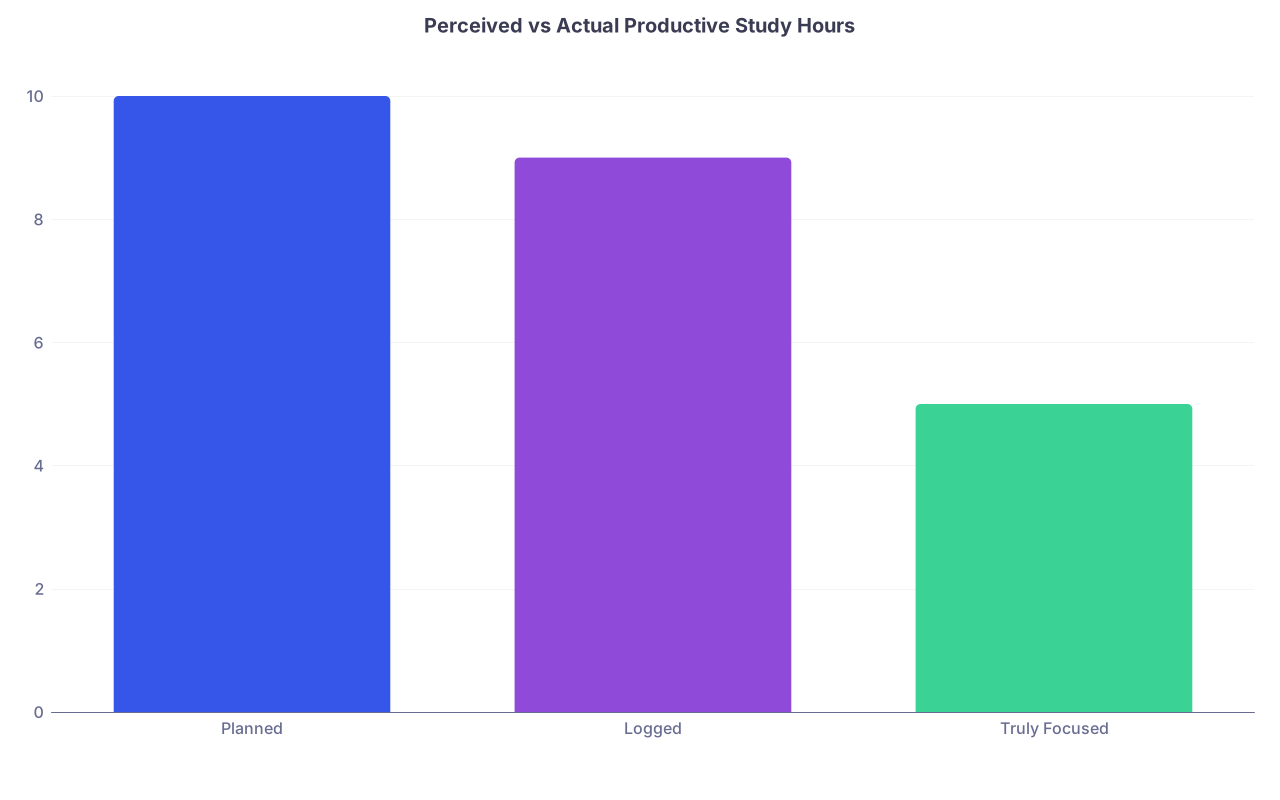
| Category | Value |
|---|---|
| Planned | 10 |
| Logged | 9 |
| Truly Focused | 5 |

| Step | Description |
|---|---|
| Step 1 | Feeling Exhausted |
| Step 2 | Normal Exhaustion - Short Rest OK |
| Step 3 | Take 1-2 Full Days Off |
| Step 4 | High Burnout Risk |
| Step 5 | Talk to Advisor / Mental Health |
| Step 6 | Adjust Exam Date or Study Load |
| Step 7 | Still Caring About Performance? |
| Step 8 | Sleep Helps At All? |

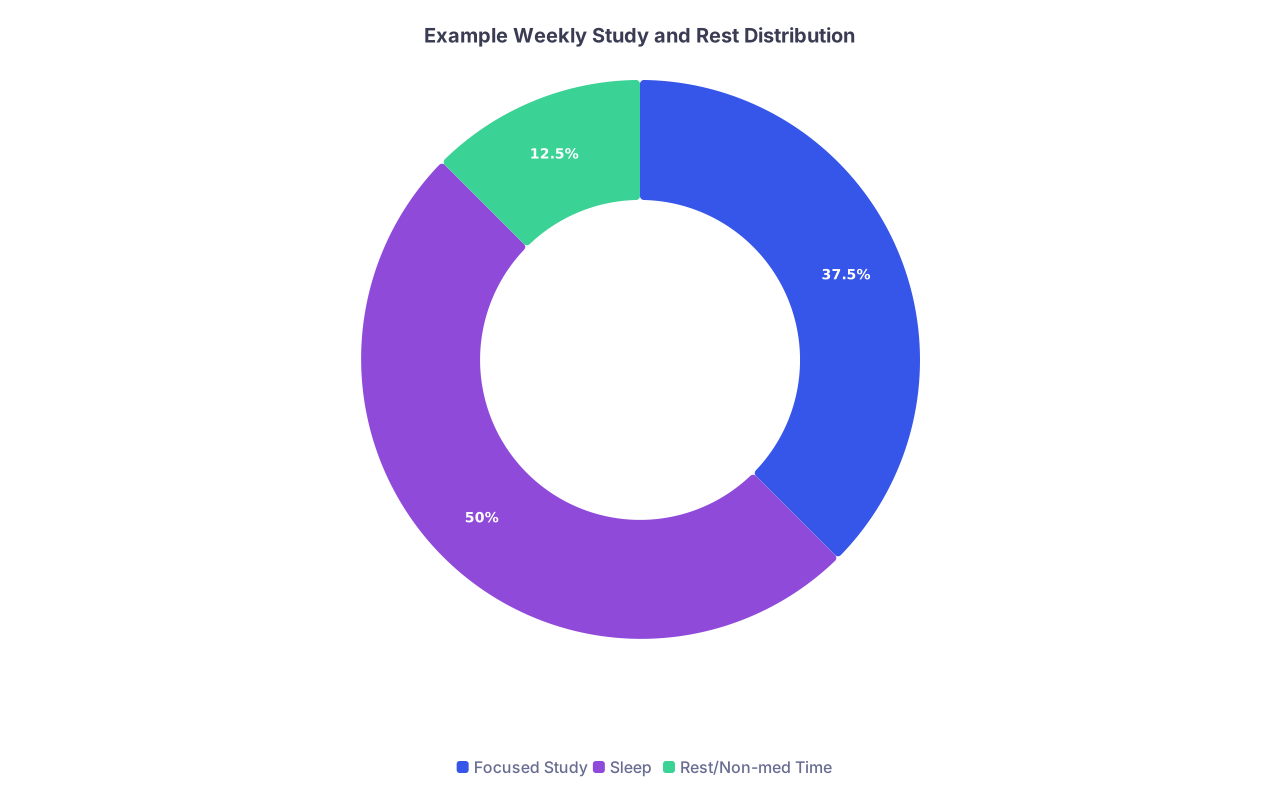
| Category | Value |
|---|---|
| Focused Study | 42 |
| Sleep | 56 |
| Rest/Non-med Time | 14 |

FAQ: Exactly 6 Questions
1. Can I really take a full day off during dedicated without tanking my score?
Yes. A full, intentional day off once a week is completely compatible with strong Step 1 performance. What tanks scores isn’t a weekly rest day—it’s weeks of half-focused “grinding” at 30–50% capacity because you never recharge. One day off doesn’t erase six days of good work. If anything, it makes those six days more effective.
2. How do I know if I should postpone my exam versus just rest more?
Think about two things: your trend and your mental state. If your last couple of NBMEs are clustered near or above your goal and your main problem is exhaustion, you probably need strategic rest, not postponement. If your NBMEs are consistently below a safe passing margin and you’re severely burnt out (numb, hopeless, can’t care), postponement + recovery + structured plan may be safer. Talk to an advisor who knows your school’s patterns; don’t decide in total isolation.
3. I feel guilty every time I’m not studying. How do I deal with that?
You’re not going to eliminate guilt; you just have to decide in advance what’s “allowed” and then trust that decision. For example: “I study from 8–6 and I take Sunday off.” Once that’s set, when guilt shows up at 8:30 pm or on Sunday afternoon, you remind yourself: “This is part of the plan. Rest is in the contract.” Guilt will still talk—it just doesn’t get to drive.
4. What if everyone around me is studying more hours than I am?
They aren’t. They’re saying they are. Or they’re physically at a desk longer, but not truly working longer. Someone flexing about 12-hour days may actually be doing 6–7 solid hours and 5–6 hours of scattered, half-distracted misery. Your job isn’t to match their performance theater; it’s to hit your own learning goals and walk into test day with a functioning brain.
5. Is it okay to do “lighter” study on my rest day, like just Anki?
If you’re borderline exhausted, that’s not a rest day. That’s a diet version of burnout. A true rest day means no mandatory tasks. If you genuinely feel like doing a few flashcards because it calms you, fine—but the moment it starts to feel like an obligation, stop. Your brain needs at least some days where there is no Step-related demand at all.
6. What’s one small change I can make this week that will help the most?
Pick one fixed cutoff time each day—say, 8:30 or 9 pm—after which you absolutely do not study. Not “unless I feel behind.” Not “unless I messed up a block.” Hard stop. That one boundary will force you to make your daytime hours count more and will give your brain predictable recovery time every single night.
Open your calendar for the next 7 days and block off your rest first—at least one full day, plus a daily cutoff time. Then fit your UWorld blocks and review around that, not the other way around.