
Your friends’ Step 2 prep progress is probably lying to you.
Not because they’re bad people. Because group chats, casual hallway flexing, and “oh I’m just doing like 80 questions a day” are absolutely terrible indicators of where you actually stand.
You’re sitting there thinking:
“I’m already behind.”
“They’re on Qbank #2, I haven’t finished Qbank #1.”
“They’re on their second pass of UWorld; I’m still trying to remember what CHF is.”
Let’s pull this apart before you convince yourself you’ve tanked your future residency over a test you haven’t even taken yet.
The Myth of “Everyone Else Is Way Ahead”
First blunt truth: you only ever see the loud 20%.
The ones posting their Anki streak on Instagram.
The ones casually saying, “Yeah I’m halfway through my UWorld second pass, trying to bump my percent from 74 to 80.”
The ones who answer “How’s Step 2 prep?” with a full monologue.
The quiet 80%? They’re like you. Confused, scared, and convinced everyone else has color-coded spreadsheets and 260+ practice scores.
Here’s the pattern I’ve seen over and over:
A student is sure they’re behind. They whisper their practice score like it’s a confession. Then I ask how many of their classmates have actually shown them their scores. Not “said” them. Shown. Screenshots.
Usually the answer is: almost none.
Anecdotes aren’t data. And yet you’re building your entire sense of doom on vibes and scattered comments.
Let me ground this with something more concrete.
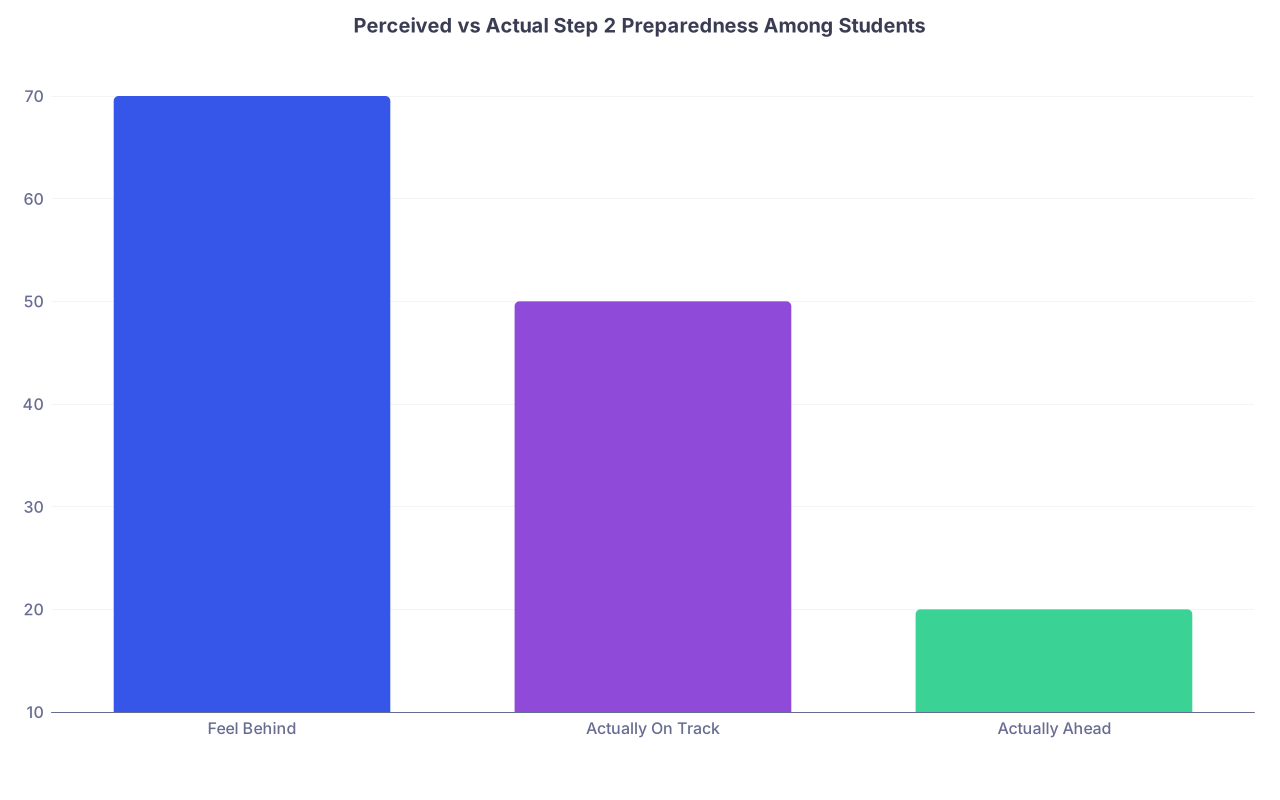
| Category | Value |
|---|---|
| Feel Behind | 70 |
| Actually On Track | 50 |
| Actually Ahead | 20 |
That’s not a real study. But it’s extremely real behavior. Most people feel behind. A big chunk are actually okay. A smaller chunk are truly ahead.
And here’s the uglier truth: sometimes the loudest “ahead” people are panicking just as much as you, and overcompensating by oversharing. I’ve watched someone brag in the lounge about “crushing 78% on UWorld,” then later admit to a close friend their average was actually mid-50s and they were terrified.
You’re comparing your messy, unfiltered day-to-day with other people’s highlight reel and half-truths.
You will always lose that comparison.
What “Behind” Actually Means (Versus What Your Brain Thinks It Means)
Your anxiety is probably telling you “behind” means:
- You’re doomed for a low Step 2 score
- You’ve blown your chance at a competitive specialty
- You can’t catch up in time
- Everyone else is miles ahead and residency programs will somehow know
Let’s translate that into reality.
Being “behind” could mean a few very different things:
Your timeline is shifted, not destroyed.
Maybe you started UWorld later because your rotation was brutal. Or you had family stuff. Or you actually slept. That’s not moral failure; it’s sequencing.Your volume is lower but your learning might be deeper.
The classmate doing 120 questions/day and reviewing nothing? They might feel “ahead.” Reality: shallowly exposed to a ton, retained very little.You haven’t planned yet, so everything feels like chaos.
There’s a big difference between “I’m behind” and “I haven’t actually sat down and mapped out a realistic study plan.” The first feels existential. The second is fixable this afternoon.
Want a slightly painful but helpful reality check?
| Your Thought | More Accurate Translation |
|---|---|
| “I’m behind everyone” | “I don’t actually know where most people are” |
| “I’ve ruined my chances” | “I haven’t optimized my remaining time yet” |
| “Everyone else is doing more” | “I’ve heard from 3 loud people and extrapolated to 120 classmates” |
| “I’m starting too late” | “My start date is later, but I still have usable weeks left” |
| “I can’t catch up” | “I haven’t calculated what’s actually possible per day” |
So before you spiral: define “behind” in numbers, not vibes.
Step 2 Reality Check: Where Are You Actually?
Let’s break this into something you can’t hand-wave away.
Here’s what honestly matters for Step 2:
- Time until exam
- Question volume and review depth
- Exposure to high-yield topics
- Practice with the actual testing format and timing
- Mental stamina / burnout management
Notice what’s not on that list:
“How early your friends started.”
Use this as a quick gut-check framework. Be painfully honest.
1. Time Until Your Test
Grab a calendar. Count days until test day. Not “about a month.” I mean the number.
Now subtract:
- Days you’re post-call and essentially useless
- Known obligations (weddings, travel, family events, etc.)
- At least 1 rest day every 1–2 weeks unless you want to fully melt down
Whatever is left is your real number. That’s your battlefield.

| Step | Description |
|---|---|
| Step 1 | Total Days Until Exam |
| Step 2 | Subtract Call/Exhausted Days |
| Step 3 | Subtract Major Obligations |
| Step 4 | Subtract Rest Days |
| Step 5 | Real Study Days |
You might start thinking, “I don’t have enough days.” Hold that. Let’s calculate before we panic.
2. Question Volume Reality
Say you have 30 real study days.
If you do 40 questions/day (which is doable even during lighter rotations), that’s 1,200 questions.
At 60/day, that’s 1,800.
At 80/day (more intense), 2,400.
Most people don’t need three full Qbanks. Most don’t even genuinely finish one all the way through with solid review. They say they “did UWorld” but what they mean is “I clicked on all the questions sometime in the last 3 months.”
You could be “late” and still get through:
- 1 full Qbank (or most of UWorld),
- plus practice exams,
- plus targeted review.
That’s not fantasy. That’s math.
Here’s a simplified view:
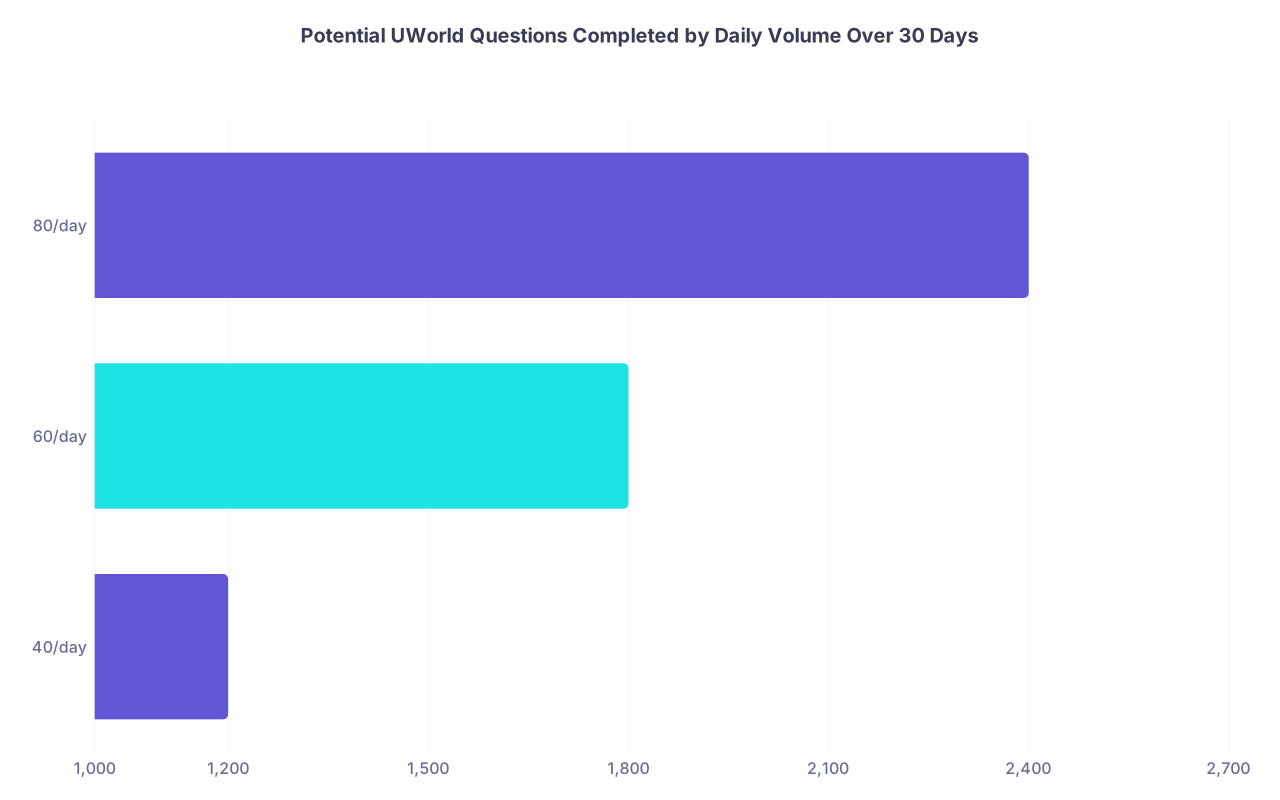
| Category | Value |
|---|---|
| 40/day | 1200 |
| 60/day | 1800 |
| 80/day | 2400 |
Your brain will want to say, “Yeah, but they started earlier.” Who cares. The test scores what you know on test day, not how aesthetically your timeline looked on Google Sheets.
Your Friends’ Study Plans Are Probably Wrong for You Anyway
Let’s say your friend really is ahead. They’re 70% through UWorld. They started during their psych rotation. They do 80 questions a night. Great. For them.
You know what doesn’t matter?
Trying to mimic them when your life, rotation schedule, and brain are completely different.
I’ve watched people wreck themselves by trying to live someone else’s Step 2 strategy. Like:
- The person who’s a slow reader trying to do 120 questions/day because “that’s what X is doing.” They end up skimming explanations, retaining nothing, then blaming themselves instead of the plan.
- The person with a rough family situation trying to stack 12-hour clinic days plus late-night question marathons. They burn out by week 2 and declare they’re “not built for medicine.”
It’s not that your friends are evil or dumb. Their approach is optimized for their constraints, their learning style, their anxiety level. Not yours.
Your job is not to be “at their level.” Your job is to build a plan that a) you can actually execute and b) closes your gaps efficiently.
Concrete Next Steps: From “I’m Behind” to “I Have a Plan”
Let’s get practical. You’re spiraling. You want something to do.
Here’s what I’d have you do in the next 24–48 hours.
Step 1: Set a Baseline Without Destroying Your Soul
You need some idea where you stand. But I also know the idea of taking a full NBME right now makes you want to vomit.
Compromise:
- Option A: Do a 1/2-length practice block (2–3 blocks of 40) in timed, random mode. No pausing. Just see how it feels.
- Option B: If you’re really close to your dedicated period, bite the bullet and schedule an NBME or UWSA in the next week.
The goal is not to get a number to panic over. It’s to get a map:
- Are you missing basics?
- Are you running out of time?
- Are you constantly torn between two answers and guessing wrong?
Write down themes. Not just “I suck.”
Step 2: Decide Your Question Target
Given your real remaining days, pick a realistic daily question range. Not aspirational. Real.
If you’re on an intense rotation:
Maybe 20–40/day on work days, 60–80 on days off.
If you’re in a lighter block or dedicated:
Maybe 60–80/day consistently, with full review.
Then pick a primary Qbank. UWorld is the default. Don’t overcomplicate it with every resource on Reddit.
Ask: “With my daily target, how much of this bank can I honestly finish with review before my test?”
If the math doesn’t fit, don’t change reality. Change the goal. You might aim for 70–80% of a bank plus a few NBMEs instead of forcing 100% completion.
How to Study When You Feel Behind (Without Breaking Yourself)
Here’s where people usually screw it up. They realize they’re “behind” and respond with:
- 6-hour question marathons with zero deep review
- 5 different resources added “just in case”
- No days off
- Constant doom-scrolling SDN/Reddit between blocks
Then they mentally detonate by week 3.
You can’t afford that.
A more sane “I feel behind but I’m not going to self-destruct” structure might look like:
Morning or first chance:
- 40 questions, timed, random, mixed (mimic the real exam)
- Immediate review: understand why each wrong answer is wrong, and what the question was really testing
Later in the day:
- Another 20–40 questions if time/brain allow
- Short, targeted content review based on your misses (e.g., if you missed multiple nephrotic vs nephritic questions, review that category specifically that night)
Night:
- Quick pass of Anki or your own flashcards, but don’t turn it into another 2-hour punishment block
You being “behind” doesn’t magically give you more cognitive bandwidth. You still have one brain. Overloading it doesn’t make it learn faster.
When You’re Actually at Risk (And What to Do About It)
I’m not going to tell you everyone’s fine. Some people are truly at risk. Here’s when I start to worry more:
- Your practice tests are repeatedly low with no upward trend
- You consistently can’t finish blocks on time
- You’re not reviewing questions thoroughly—just doing volume to feel less guilty
- You’re avoiding practice exams because you “already know it’ll be bad”
This is where you stop pretending and get serious.
You might need to:
- Talk to your dean or academic support about possibly adjusting your test date
- Set non-negotiable question + review blocks and protect them ruthlessly
- Cut the resource hoarding and focus on 1–2 things you’ll actually use daily
- Accept that your ego has to take a hit before your score can improve
If your school has people who specialize in Step prep, swallow the pride and go talk to them. Say, “Here are my scores, here’s my timeline, I feel behind and I need a realistic plan.”
This is not a character flaw. This is triage.
Social Comparison: How to Not Let Your Group Chat Ruin Your Prep
You probably won’t stop comparing yourself to your classmates. Fine. But you can blunt the damage.
A few practical boundaries that actually help:
- Mute the class Step 2 chat if it spikes your heart rate every time someone posts their “OMG 260 UWSA!!”
- Stop asking, “How many questions are you doing a day?” when what you really mean is, “Please tell me I’m not a failure.”
- If a conversation about scores starts and you feel yourself dissociating, say, “I’m trying not to think about everyone else’s numbers right now” and physically walk away.
Protect your brain. You don’t owe anyone access to your anxiety.

And if you absolutely must compare, compare you to you:
- How did this week’s block percentages compare to last week’s?
- Are you understanding explanations faster?
- Are you missing fewer “easy” questions and pushing up your baseline?
Track that. Not “X is already on their third NBME.”
What If You Actually Don’t Catch Up?
Here’s the nightmare scenario your brain keeps whispering:
“What if I do all this, and I still don’t catch up? What if I don’t get the score I want?”
Then you adjust.
People match into solid residencies every year with scores they once swore would “end their career.” Maybe you won’t be ultra-competitive for derm or ortho. But maybe you pivot to something you like that’s less score-obsessed. Or you build the rest of your application so strong that your Step 2 is just one piece, not your entire identity.
Does that suck if you had a dream specialty in mind? Yeah. I’m not going to sugarcoat that. But it’s not the same as “Your life is over” or “You don’t belong in medicine.”
I’ve watched people:
- Bomb Step 1, regroup for Step 2, crush it, and still get great interviews.
- Have an average Step 2 but great letters, research, and fit—and match better than their “genius” classmates.
- Take a detour year to do research or a prelim year and still end up where they wanted eventually.
You’re not stuck in whatever moment you’re in right now.

The Internal Script You Need to Rewrite
Your current script is probably something like:
“I’m behind. I’m lazy. Everyone else cared more than I did. I’ll never catch up. I’ve ruined everything.”
You don’t have to replace that with fake positivity. You can replace it with something more accurate and usable, like:
“I started later than I wanted. I can’t change that. I can control what I do with the next 4–8 weeks.”
Or:
“I’m not where other people are. I don’t need to be. I need to be better than I was last week and ready enough on test day.”
You’re allowed to be scared and still move forward. Those aren’t mutually exclusive.
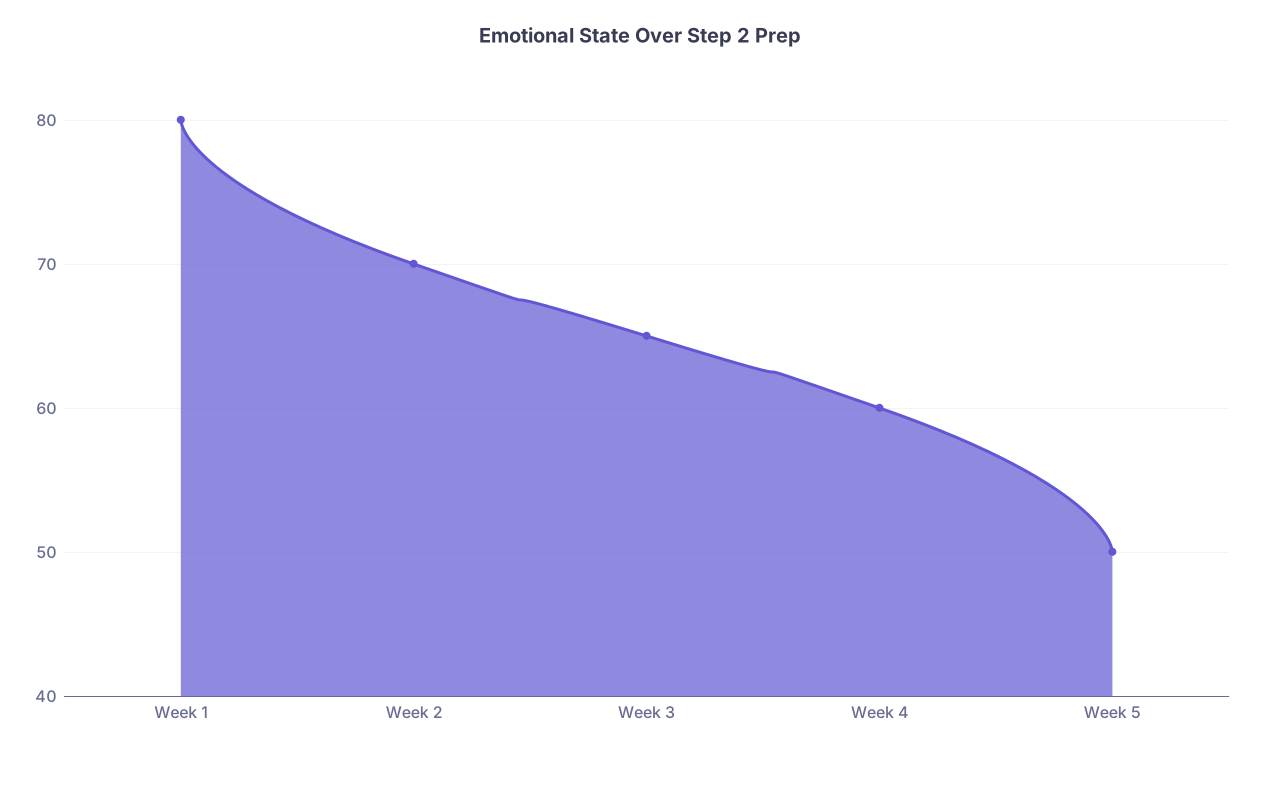
| Category | Value |
|---|---|
| Week 1 | 80 |
| Week 2 | 70 |
| Week 3 | 65 |
| Week 4 | 60 |
| Week 5 | 50 |
Call that “panic level.” If it trends down while your question performance trends up? That’s the real win.
Quick Takeaways Before You Go Back to Studying
Let me condense this into what actually matters:
- Your friends’ Step 2 prep stories are incomplete and often misleading. Stop treating them like objective reality.
- “Behind” is only meaningful when you attach numbers to it: days left, questions/day, practice scores, not vague doom.
- You still have time to build a focused, realistic plan that’s right for you, not for the loudest person in your group chat.
You’re scared. Fine. Be scared with a plan. That’s how people pass.