
The way most people tell women to handle sexist comments in medicine is ineffective, vague, and frankly unfair.
“Just ignore it.”
“Kill them with kindness.”
“Be the bigger person.”
That advice sets you up to swallow disrespect, doubt yourself, and then replay the conversation in your head at 2 a.m. while you are post‑call and exhausted.
You need something better than “be graceful.”
You need a toolkit. With actual words. Ready to use under pressure.
That is what this is: a script toolkit for handling sexist comments on rounds and in clinic—built for women in medicine who are tired of improvising while someone is undermining them in front of patients, colleagues, or trainees.
Core Principles: How to Respond Without Blowing Yourself Up
Before scripts, you need a strategy. Otherwise you will either freeze, overreact, or burn political capital you cannot afford to lose.
Here are the guardrails I recommend.
Safety first.
If the person is unstable, angry, or has real power over your grade or job, your options narrow. You might delay confrontation, document, and escalate later instead of going head‑to‑head in the moment.Match response to goal.
Not every comment needs to be crushed. Decide what you want most:- Preserve patient trust?
- Maintain authority in front of the team?
- Teach the offender something?
- Create a paper trail for later? Different goals → different scripts.
Respond to the behavior, not your worth.
You are not there to prove you deserve to be a doctor. You are there to set standards for how people will speak to and about you at work.Short, clear, calm.
Rambling explanations and nervous laughter undercut you. Aim for one or two sentences, then move on.Assume witnesses are learning from you.
Students, nurses, junior residents are watching. When you set a boundary well, you give them permission to do the same later.
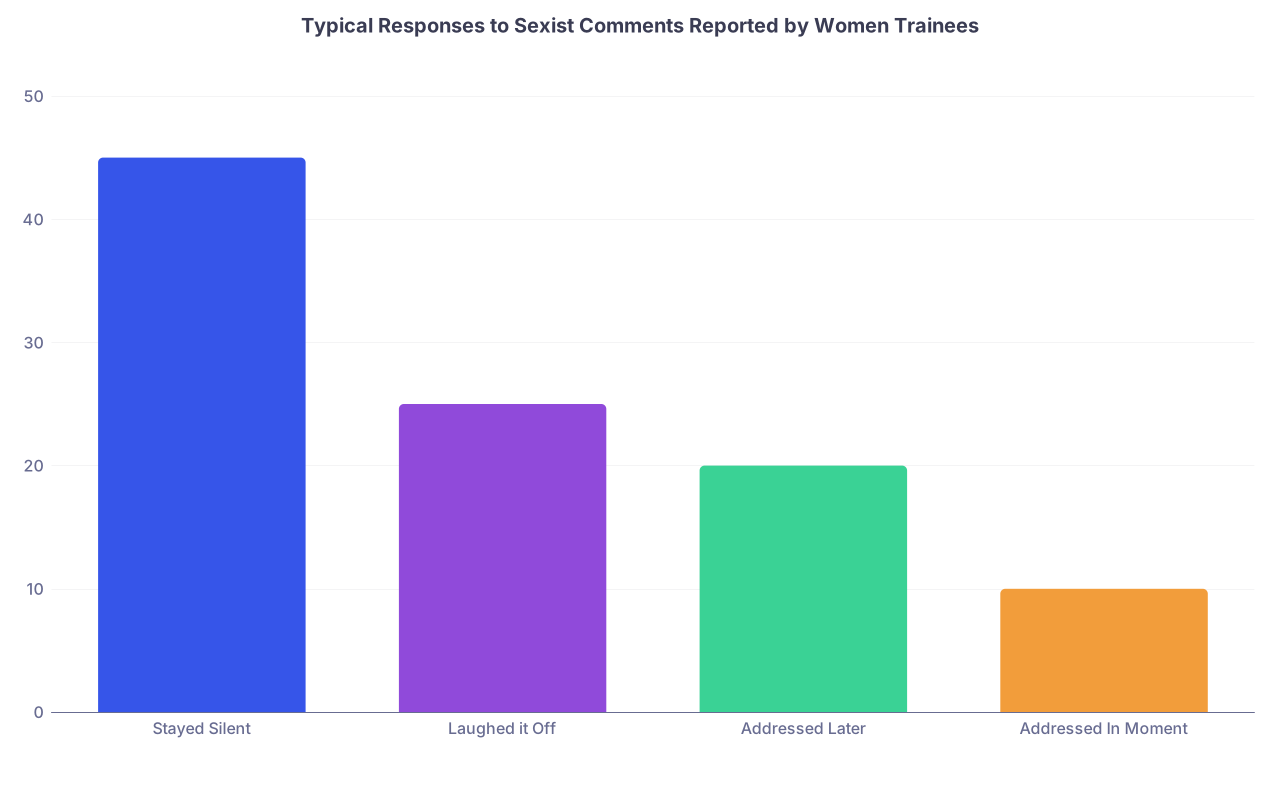
| Category | Value |
|---|---|
| Stayed Silent | 45 |
| Laughed it Off | 25 |
| Addressed Later | 20 |
| Addressed In Moment | 10 |
Most women I have worked with default to “stay silent” or “laugh it off.” Not because they accept the comment, but because they do not have a script ready.
Let us fix that.
Situation 1: Patients Who Will Not Accept You as the Doctor
Classic scenarios:
- “No, I want to see the real doctor. The male doctor.”
- “Sweetheart, when is the doctor coming?”
- “You are too pretty/young to be a surgeon.”
- The patient addresses your male student or intern instead of you.
Core goals in this setting
- Maintain patient care and safety.
- Clarify your role clearly.
- Avoid colluding with the disrespect.
Go‑to scripts (and how to use them)
1. The Firm Identity Statement
Use when someone questions whether you are the doctor.
“I am Dr. [Last Name], the physician taking care of you today.”
If they persist:
“We have an excellent team, but I am the doctor responsible for your care. Let us talk about what you are concerned about.”
Short. Unapologetic. You repeat it if needed.
2. The Redirect
When a patient keeps talking to your male colleague:
“I want to make sure you are getting accurate information. Questions about your diagnosis should come to me—Dr. [Last Name]—since I am leading your care.”
Then you physically orient yourself closer to the patient, make eye contact, and answer directly. Signal with your body that you are the point person.
3. The Boundary + Option
Use when the patient insists on a male doctor.
“I hear that you prefer a male physician. On this team, I am the attending / resident / only physician available today. I will provide you with the same high‑quality care as any of my colleagues. If you still prefer a different doctor, we can discuss options after we address your immediate medical needs.”
If you are a student:
“I am the medical student working with Dr. [Last Name], who is your physician. I will be part of your care team today. If you would like to discuss your concerns about providers, Dr. [Last Name] can join us.”
You are not required to accept being swapped out like furniture. You also do not have to argue endlessly at the bedside. Set the terms, then proceed with care or hand off to your attending if necessary.
4. The “Drop the Pet Name” Correction
For “sweetheart,” “honey,” “young lady,” etc.:
“I go by Dr. [Last Name] in the hospital.”
If they do it again:
“I introduced myself as Dr. [Last Name]. That is what I will respond to here.”
No smile. No giggle. Just matter‑of‑fact.

Situation 2: Sexist Comments from Attendings and Senior Physicians
This is where it gets tricky. Power is real. Evaluations are real. Retaliation is sometimes real.
You still have options.
Common lines:
- “We need a pretty face in clinic today.”
- “You should go into pediatrics, you are too nice for surgery.”
- “You will not want to do nights when you have kids.”
- Comments on your body, clothes, or dating life.
Decision tree: in the moment or later?
Use this mental flowchart:
Is patient care actively happening?
→ Save it for later or use a minimal in‑the‑moment response.Is this public in front of the team?
→ Consider a short, clear correction so the team sees the standard.Is this the kind of attending known to retaliate?
→ Use low‑risk responses in the moment + document + escalate if needed.
In‑the‑moment scripts
1. The “Name It and Pivot”
For sexist jokes or “compliments”:
“That comment is not appropriate for work. Let us get back to [patient / plan / topic].”
or:
“I do not talk about my appearance or personal life with patients or colleagues. I would like to focus on the case.”
This draws a line without a lecture.
2. The “Professional Standard” Mirror
For gender‑stereotyping about specialties, pregnancy, etc.:
“I will choose my specialty based on my skills and interests, not my gender.”
“Decisions about family planning will not affect my commitment or ability to practice medicine.”
Delivered calmly. No debate.
3. The “Clarify the Implication” Question
When something feels off but subtle:
“I want to make sure I understood. Are you saying women in this field are less committed?”
or:
“Can you explain what you mean by that?”
Often, once they have to say it plainly, they back off or realize how bad it sounds. You are forcing them to own the implication instead of absorbing it silently.
After‑the‑fact scripts (private)
Sometimes you wait until you are in an office or hallway without an audience.
4. The Brief, Direct Feedback
“Dr. [Name], I wanted to circle back to a comment from earlier. When you said [quote or paraphrase], it felt dismissive / sexist / undermining. I want to be evaluated on my clinical performance, not on [gender / appearance / plans for family]. I am asking that we keep feedback focused on my work.”
Three parts:
- What they said.
- How it impacted you.
- What you want instead.
Keep it under 30 seconds.
5. The “Alignment with Values” Appeal
Some attendings care about being seen as good teachers.
“I know you care about creating a strong learning environment. Comments about my gender or future family plans make it harder for me to participate fully. I would appreciate us keeping commentary focused on my work and growth as a clinician.”
You are framing it as: “Help me learn better,” not “You are a monster.”

| Step | Description |
|---|---|
| Step 1 | Hear sexist comment |
| Step 2 | Use role clarification scripts |
| Step 3 | Use direct call out |
| Step 4 | Direct feedback now |
| Step 5 | Minimal response now, document, seek support |
| Step 6 | Who said it |
| Step 7 | Risk of retaliation |
Situation 3: Sexist Comments from Peers and Other Staff
Honestly, these are often easier to handle than attendings. You have more leverage.
Scenarios:
- Male co‑resident: “Can you take notes, you have nicer handwriting.”
- Nurse: “We always ask the male resident to talk to this angry patient.”
- Colleague introduces you by first name but uses “Doctor” for men.
Scripts that work well here
1. The “Equal Standards” Nudge
“We should all be documenting and scut‑sharing equally, regardless of gender.”
If it is repeated:
“I notice these tasks keep coming my way. Let us rotate them so it is fair.”
2. The Reframe
For “We need a male doctor for this angry patient”:
“We need the most appropriate clinician, not a specific gender. I am happy to manage this patient.”
or, if you are not the right person clinically:
“Let us think about who has the right relationship or skill set for this situation, not just their gender.”
3. The Title Correction
When someone uses “Dr.” for men and first name for you in front of patients:
Turn slightly towards the group and say:
“Dr. [Last Name], please.”
You do not need to add anything else. Just like men do.
If it keeps happening, privately:
“When introductions use titles for male physicians but not for me, it undermines my role. Please introduce me as Dr. [Last Name] with patients and families.”

Situation 4: Jokes, “Compliments,” and Microaggressions
These are the death by a thousand cuts: “You are too pretty to be in the ICU,” “Are you sure you can lift the patient?” “You must be the nurse,” etc.
If you do not respond, people assume it did not bother you. If you respond with a rant every time, you will be labeled “oversensitive.”
You need middle‑ground, reusable lines.
Quick scripts for microaggressions
1. The “One‑Line Boundary”
“That is not appropriate.”
or:
“I do not find that funny.”
and then silence. Let them fill the space.
2. The “Facts, Not Stereotypes”
“My credentials and training, not my gender, determine my role here.”
“I am here as a physician. Please address me as such.”
3. The “Flip the Assumption”
When someone says, “You must be the nurse”:
“Actually, I am the doctor. The nurses are over there and they are excellent.”
No apology, no awkward laugh. Just correction.
4. The “Name the Pattern”
To a colleague who repeatedly makes sexist jokes:
“You have mentioned women’s bodies or roles a few times today. It makes it harder to take this environment seriously. Can we leave that out of our work conversations?”
You are not dissecting each joke. You are calling out the pattern.
| Style | Description | Best For |
|---|---|---|
| Identity Statement | Clear role definition | Patients doubting your authority |
| Boundary + Pivot | Call out, then move on | Jokes, comments during rounds |
| Clarify Question | Force them to explain implication | Subtle or coded remarks |
| Private Feedback | Short, direct, in private | Attendings, staff you work with |
| Documentation & Report | Written record, formal channels | Repeated or severe misconduct |
Documentation and Escalation: When Scripts Are Not Enough
Some behavior is not just “annoying.” It is reportable. Repeated comments, physical contact, sexual propositions, threats, explicit bias in evaluations—this moves into formal territory.
You cannot fix institutional sexism with one clever comeback. Sometimes the solution is building a record and using the system against the problem, not against yourself.
Step‑by‑step documentation protocol
Create a private log (not on hospital shared drives).
- Date, time, location.
- Exact words as close as you can recall.
- Who was present.
- How you responded.
- Any immediate impact (e.g., patient care disruption, emotional distress).
Save corroborating material if it exists.
- Emails, texts, chat screenshots.
- Evaluation comments.
Consult quietly with one or two trusted people.
- Senior woman in your specialty.
- Program ombudsperson or designated equity officer.
- They can help you gauge patterns: Is this a “known problem person”? What has worked before?
Decide your escalation level.
- Informal: Conversation with clerkship director / chief resident: “This is happening, I want it on your radar.”
- Semi‑formal: File a professionalism concern or enter an incident into the hospital reporting system.
- Formal: Title IX complaint, HR process, or institutional investigation.
Scripts for raising concerns up the chain
To a clerkship or program director:
“I want to discuss a professionalism concern. Over the last [time period], Dr. [Name] has made repeated comments about my gender and appearance that feel sexist and affect my ability to learn. I have documented specific incidents and would like your guidance on next steps and how this can be addressed without jeopardizing my evaluations.”
Notice the structure:
- Labels it as “professionalism,” not “my feelings.”
- Signals you have documentation.
- Names your fear (retaliation) so they cannot pretend it does not exist.
To an ombudsperson / HR / Title IX:
“I am reporting a pattern of sexist conduct from [Name, role]. I have logged several specific incidents with dates and witnesses. I want to understand what protections I have from retaliation and what options exist for addressing this behavior.”
If they try to downplay it, return to your documentation. Calmly.
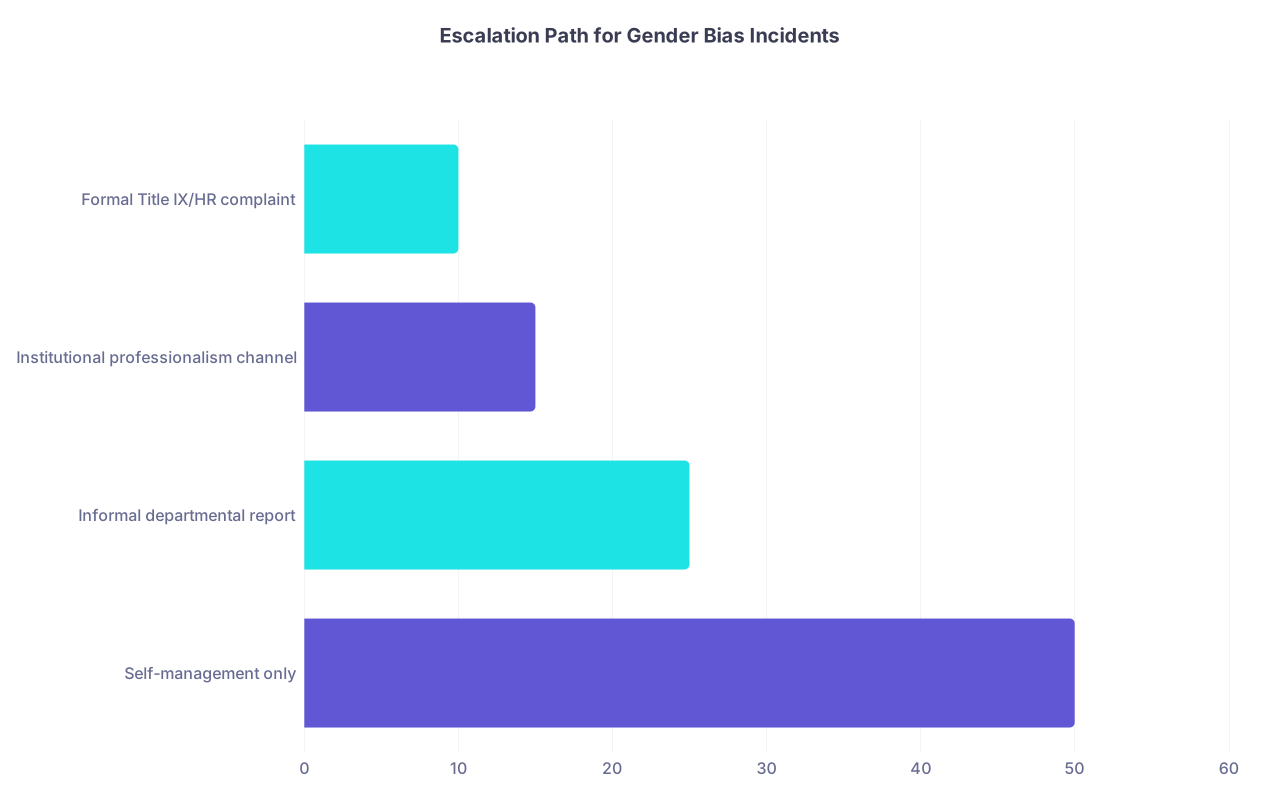
| Category | Value |
|---|---|
| Self-management only | 50 |
| Informal departmental report | 25 |
| Institutional professionalism channel | 15 |
| Formal Title IX/HR complaint | 10 |
Most women stay in the “self‑management only” category forever. Not because the behavior is minor, but because no one has ever walked them through what escalation actually looks like.
Now you have a map.
Practicing the Scripts So They Are There When You Need Them
You will not pull off these lines smoothly if the first time you say them is in front of a hostile attending. You need reps.
Here is a simple practice protocol:
Pick 3–4 scripts that fit your style best. Write them out on a note in your phone or a small card you keep in your white coat.
Practice out loud 3 times each.
Yes, out loud. In your car, in the bathroom, walking your dog. Your mouth needs to know the words.Role‑play with a friend or co‑resident.
- They play the patient / attending.
- They say the line.
- You respond using your script.
- Swap roles. Try different tones—hostile, joking, clueless.
Start with low‑risk situations.
Use your scripts first with peers or in milder situations. Build confidence before you deploy them with high‑power people.Debrief after real incidents.
Ask yourself:- What did I say?
- What do I wish I had said?
- Which script would have fit better? Adjust your toolkit.

Protecting Yourself Without Becoming the “Problem Person”
You have probably seen it happen. The woman who finally calls something out gets labeled “difficult,” while the guy who made the sexist comment keeps his reputation intact.
You cannot control other people’s bias. You can control how you frame your actions.
Framing that helps
Anchor to patient care and professionalism.
- “I am raising this because it affects patient trust.”
- “We owe our learners a professional environment.”
Emphasize consistency.
- “I would say the same if this were directed at a man, a nurse, or a student.”
Avoid over‑explaining.
- State the issue.
- State the impact.
- State what you want instead. Then stop.
-
- Ask a supportive co‑resident: “If you hear comments like X directed at me, can you back me up with something like, ‘Let us keep this professional’?”
Often one well‑timed ally response changes the tone of an entire team.
Scripts for allies (share these with your colleagues)
If you have male allies who say, “I do not know what to say,” give them these:
- “Let us keep this professional.”
- “She already introduced herself as Dr. [Last Name].”
- “I do not think that comment is appropriate.”
- “Her future family plans are not relevant to her evaluation.”
Train your environment, not just yourself.
Pulling It Together: Build Your Personal Script Card
You do not need 50 lines. You need 8–10 that you can actually remember.
Here is a template you can adapt:
1–2 for patients:
- “I am Dr. [Last Name], the physician taking care of you today.”
- “I go by Dr. [Last Name] in the hospital.”
2–3 for peers/staff:
- “Let us share these tasks equally.”
- “Please introduce me as Dr. [Last Name] with patients.”
- “We need the most appropriate clinician, not a specific gender.”
3–4 for attendings/seniors:
- “That comment is not appropriate for work. Let us get back to the patient.”
- “I will choose my specialty based on my skills and interests, not my gender.”
- “When you said [X], it felt sexist and undermining. I would like feedback focused on my clinical performance.”
- “I am reporting a pattern of sexist conduct and have documented specific incidents. I want to discuss options for addressing it and protections from retaliation.”
Print it. Photograph it. Stick it behind your ID badge.
You are not overreacting. You are setting standards.
Your Next Step Today
Open the notes app on your phone (or grab a scrap of paper) and write down five scripts from this article that sound most like you. Say each one out loud, twice.
Then pick one low‑risk situation—maybe correcting your title with a friendly nurse—and use a script the next time it comes up.
Do that, and you will not be empty‑handed the next time someone tests your boundaries on rounds or in clinic. You will be ready.