
The biggest mistake programs make with “Women in Medicine” work is treating it like a feel‑good event instead of a serious, structured initiative. You’re not planning a tea party. You’re building infrastructure.
You can absolutely launch a real, sustainable Women in Medicine (WiM) initiative in one academic year—if you treat it like a project with deadlines, owners, and deliverables.
Below is a month‑by‑month plan you can actually follow. I’ll assume you’re starting in July (new academic year), but you can adjust the months to your reality. The sequence stays the same.
Month 1 – Clarify your mission and find your base
At this point you should stop talking in vague terms (“support women”) and decide what problem you’re actually trying to solve in your program.
Weeks 1–2: Quiet intel and reality check
You start by listening, not by announcing.
Do this:
- Block one hour and write your own “why.”
- Are you seeing constant microaggressions?
- Zero women in leadership?
- Pregnant residents getting punished on schedules?
Keep it brutally specific.
- Have 3–5 one‑on‑one conversations with:
- One junior trainee (MS3/MS4 or intern)
- One mid‑level resident or fellow
- One woman faculty member
- One male ally you trust
- Ask them:
- “If you could fix one thing for women here in the next 12 months, what would it be?”
- “What have you seen that makes you think women are at a disadvantage here?”
- “Who is already doing good work on this that I should know about?”
Start a simple running log (Google Doc or Notion) with themes and specific examples. Not feelings. Examples.
Weeks 3–4: Define scope and first‑year targets
At this point you should have a decent sense of patterns. Now you narrow.
Pick 2–3 focus areas max for Year 1. Examples:
- Visibility & mentorship
- Promotion and leadership pipeline
- Pregnancy/parenting support
- Pay transparency & equity
- Harassment/microaggressions response and culture
Then define concrete Year 1 outcomes like:
- “Establish a formal WiM group with bylaws and leadership structure”
- “Run 3 educational sessions with >40 attendees each”
- “Create and launch one mentorship program connecting 20 trainees with faculty”
- “Present first annual Women in Medicine report to department leadership”
Write a one‑page concept note:
- Problem (3–4 bullets, with examples)
- Mission (1–2 sentences)
- Year 1 goals (up to 5 bullets)
- Ask (what support you’ll need: small budget, meeting space, email list, PD endorsement)
You’ll use this document constantly in the next months.

Month 2 – Build a core team and secure a sponsor
At this point you should stop planning alone. Solo passion projects burn out.
Week 5: Recruit a core working group
You’re looking for a small, committed founding team:
Aim for:
- 2–3 residents/fellows
- 1–2 medical students (if your program has them)
- 2–3 faculty (ideally including at least one in leadership: APD, PD, division chief)
Send a targeted invite, not a vague mass email. Something like:
We’re forming a small working group to launch a Women in Medicine initiative in our department over the next year. It will meet monthly and focus on three priorities: [X, Y, Z]. I’d love for you to be part of the founding team if you can commit to 1 hour/month for meetings plus occasional tasks.
People respect specifics.
Week 6: First working group meeting
Agenda for Meeting #1 (60 minutes):
- Quick intros: role + why they care (10 min)
- Review your one‑page concept note (10 min)
- Confirm Year 1 focus areas (15 min)
- Agree on structure:
- Name (e.g., “Department of Medicine Women in Medicine Initiative”)
- Meeting cadence (monthly)
- Communication (email list, WhatsApp/Signal/Slack)
- Assign interim roles (20 min):
- Lead/Coordinator (likely you)
- Faculty liaison
- Communications/tech (email list, calendar, flyers)
- Data/assessment lead
Leave with:
- Next meeting date/time
- Each person one clear follow‑up task
Weeks 7–8: Find and lock in a high‑level sponsor
You need one person with power. Not just moral support. Someone who signs things and controls budgets.
Likely candidates:
- Program director
- Department chair or vice chair
- GME office leader
- Chief medical officer if you’re ambitious
Schedule a 30–45 minute meeting.
Bring:
- Your one‑pager
- A short slide deck (5 slides max):
- Why WiM matters locally (concrete examples, not national statistics)
- Brief plan and structure
- First‑year deliverables
- What you’re asking for (see next)
Ask for:
- Formal recognition (listed as an official program/committee)
- A modest budget (even $1–3k/year is game‑changing)
- Protected time signal (e.g., half‑day per quarter for meetings, no clinic)
- Data access (HR or GME data on gender distribution, promotions, salaries in aggregate)
If they push back with “we support everyone, not just women,” you need to be ready:
- “I agree everyone benefits from equity. Focusing on women first lets us build structures we can later adapt for other groups. Right now, we have X% women residents and Y% women in leadership. That mismatch alone justifies a targeted effort.”
Month 3 – Formalize structure and map the year
At this point you should act like a real initiative: charter, calendar, and basic infrastructure.
Week 9: Draft charter and roles
Work with your group to create a simple, 2–3 page charter:
Sections:
- Mission statement
- Year 1 focus areas
- Membership (who is included: students, residents, fellows, staff, faculty, allies)
- Governance:
- Chair or Co‑Chairs
- Resident lead
- Student lead
- Subcommittees (e.g., Education, Mentorship, Advocacy)
- Meeting structure:
- Monthly working group meetings
- Quarterly open events
- Decision‑making (consensus? majority vote?)
Do not over‑engineer this. You just need enough structure that people know who owns what.
Week 10: Map your Year 1 calendar
You need a visible plan.
Pick 3–4 anchor events across the year:
- Fall: Kickoff event + panel on “Women in Medicine at Our Institution”
- Winter: Skills workshop (negotiation, promotion, or handling bias)
- Early Spring: Mentorship or sponsorship launch
- Late Spring: Women in Medicine half‑day symposium or celebration
Add monthly lighter‑lift activities:
- Journal club on gender equity or ethics
- Coffee chats or small group dinners
- “Equity in the wards” case discussion
Drop them into a calendar by month:
| Month | Key Activity |
|---|---|
| Sep | Kickoff event + listening session |
| Nov | Negotiation skills workshop |
| Jan | Mentorship program launch |
| Mar | Bias and bystander intervention session |
| May | Women in Medicine half-day symposium |
Share this draft calendar with your sponsor for visibility.
Weeks 11–12: Build minimal infrastructure
You’re not launching a startup. Keep it lightweight:
- Email list or listserv (e.g., [email protected])
- Shared drive/folder for documents
- Simple logo or wordmark (even just consistent fonts/colors)
- One slide you can drop into any talk or meeting about WiM
If your institution is open to it, set up a basic webpage under the department or GME site with:
- Mission
- Leadership
- Upcoming events
- Contact email
Month 4 – Data, ethics, and defining success
At this point you should stop guessing and get some numbers. Ethics without data is just vibes.
Week 13: Request institutional data
With your sponsor’s backing, request:
- Gender breakdown by:
- Medical students, residents, fellows, faculty
- Leadership roles (chief, PD, chair, committee chairs)
- Promotion and retention data by gender (if available)
- Salary data in aggregate by rank and gender (even if crude at first)
- Any prior climate survey data with gender breakdowns
If HR or GME balks, ask for de‑identified, aggregate data. You do not need names.
Week 14: Design a short climate survey
Goal: 10 minutes max, high response rate.
Include:
- Experiences:
- “I have witnessed or experienced gender bias in the past 12 months”
- “I feel supported by my program/department when I report concerns”
- Opportunities:
- “I have access to mentorship from women in my field”
- “I understand the path to promotion/leadership here”
- Open‑ended:
- “What’s one thing that would make this a better environment for women?”
Use anonymous tools that your institution allows (Qualtrics, REDCap, institution‑approved Google Forms).
Tie this directly to medical ethics:
- Fairness in assignment of clinical duties
- Respect for autonomy and pregnancy/parenting decisions
- Justice in promotion, pay, and opportunity
Weeks 15–16: Launch survey and start preliminary analysis
- Send from your sponsor’s email for legitimacy
- Keep it open for 2–3 weeks
- Send one reminder only (or people tune you out)
Start building a simple dashboard for later:
- Response numbers by role
- Key percentages (e.g., “% who witnessed bias”)
Use that to sharpen your priorities. If 60% of women residents report harassment from patients with no support from attendings? That becomes a program.
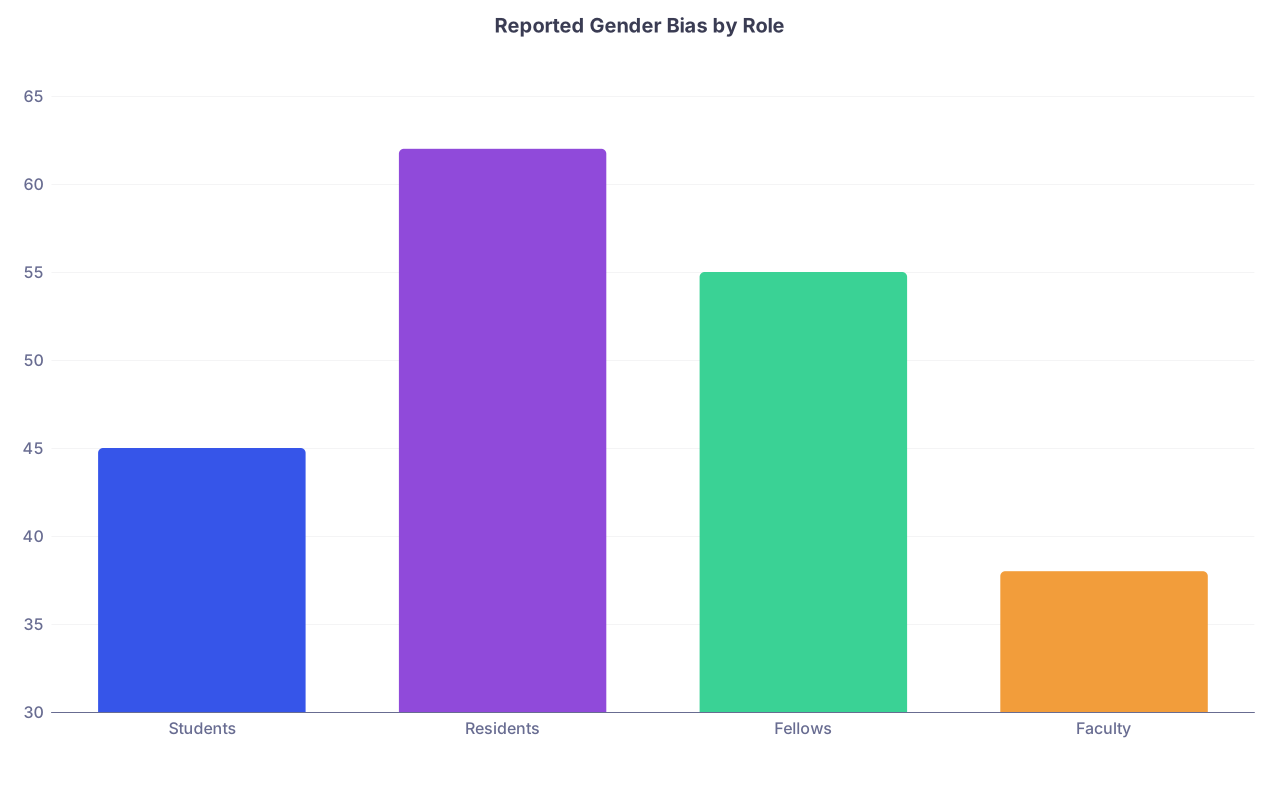
| Category | Value |
|---|---|
| Students | 45 |
| Residents | 62 |
| Fellows | 55 |
| Faculty | 38 |
Month 5 – Plan your kickoff and anchor programming
At this point you should be visible. Quiet committees alone do not change culture.
Week 17: Design your kickoff event
Aim for an event within the next 4–6 weeks.
Key elements:
- Clear title (e.g., “Launching the Women in Medicine Initiative in [Department]”)
- Co‑branding with department/GME so it does not look rogue
- Agenda (60–90 min):
- Welcome from sponsor or chair (5–10 min)
- Brief overview of data and why this matters locally (10–15 min)
- Panel of 3–4 women at different career stages (30 min)
- Listening session / small‑group discussion (20–30 min)
- Concrete “here’s what we’re doing this year and how to get involved” (10 min)
Week 18: Lock speakers and logistics
- Invite panelists with specific prompts:
- “One ethical dilemma you faced related to being a woman in medicine”
- “One moment you felt strongly supported”
- Reserve space (or virtual platform)
- Arrange food/refreshments if your tiny budget allows. It boosts attendance.
- Design and send a calendar invite widely:
- Trainees, faculty, staff, allied health
- Make it clear that all genders are welcome
Weeks 19–20: Prep materials
- One‑page handout or slide about:
- Mission
- Leadership
- Year 1 calendar
- Anonymous comment/feedback forms (physical or digital QR code)
- List of concrete ways to engage:
- Join mailing list
- Sign up as mentor/mentee
- Volunteer for subcommittees
Month 6 – Execute kickoff and recruit broadly
At this point you should show that this is real and collect your first wave of allies.
Week 21: Run the kickoff
Day‑of checklist:
- Arrive early and set up sign‑in (name, role, email)
- Put up a slide with QR codes for:
- Survey (if still open)
- Sign‑up for updates
- Start on time, end on time. Respect people’s clinical schedules.
During the event:
- Have your sponsor explicitly say:
- “This initiative has my full support”
- “Time spent on this work is valued and will be counted as service/leadership where possible”
- Share one or two striking data points, not a full data dump.
- In the panel, do not let it devolve into generic “lean in” advice. Keep it grounded in your institution.
Week 22: Debrief and assign follow‑ups
Within a week:
- Meet with your core team.
- Review:
- Attendance numbers
- Email sign‑ups
- Themes from discussion
- Assign:
- Who will follow up with interested volunteers
- Who will draft a short summary email of the event to the department
Weeks 23–24: Solidify subcommittees
Based on interest, create 2–3 subcommittees and assign leads:
Common ones:
- Mentorship & Sponsorship
- Education & Events
- Advocacy & Policy
Each subcommittee should:
- Meet once to pick one flagship project for the year
- Set 2–3 month micro‑timelines for that project
Months 7–8 – Launch mentorship and skills programming
At this point you should move from talk to tangible supports.
Month 7: Build and launch a mentorship program
Week 25: Design the structure
Keep it simple for Year 1:
- 1:1 mentorship pairs or small pods (3 mentees : 1 mentor)
- Match across levels (students with residents, residents with faculty)
- Commitments:
- Meet at least 3 times over 6 months
- Optional themes: career planning, work‑life integration, handling bias, promotion
Create two short sign‑up forms:
- For mentors:
- Specialty, interests
- Comfort topics (negotiation, research, parenting, etc.)
- For mentees:
- Career interests
- What they most want from a mentor
Week 26: Recruit mentors first
Email targeted faculty:
We’re launching a Women in Medicine mentorship program. We’re asking mentors to meet with 1–3 mentees three times over 6 months. The goal is to support women trainees at our institution around career planning and ethical challenges in training. Can you commit?
Aim for quality over quantity. Ten good mentors are better than thirty who no‑show.
Weeks 27–28: Match and announce
- Match mentees to mentors based on interests and schedules.
- Send both sides:
- Intro email
- Simple expectations
- Suggested first‑meeting agenda
Consider a kickoff mixer where pairs can meet in person.
Month 8: Run a high‑impact skills workshop
Pick one of the classic gaps:
- How to negotiate contracts and resources
- How promotion actually works here
- How to respond to gendered microaggressions and harassment (patients, staff, colleagues)
Weeks 29–32: Plan and deliver
- Find an internal or external expert (e.g., someone from faculty development, a labor lawyer, a communication skills educator).
- Date, room, CME credit if possible.
- Frame it explicitly as part of ethical professional development:
- “Negotiating fairly is part of ensuring justice and non‑exploitation in the workplace.”
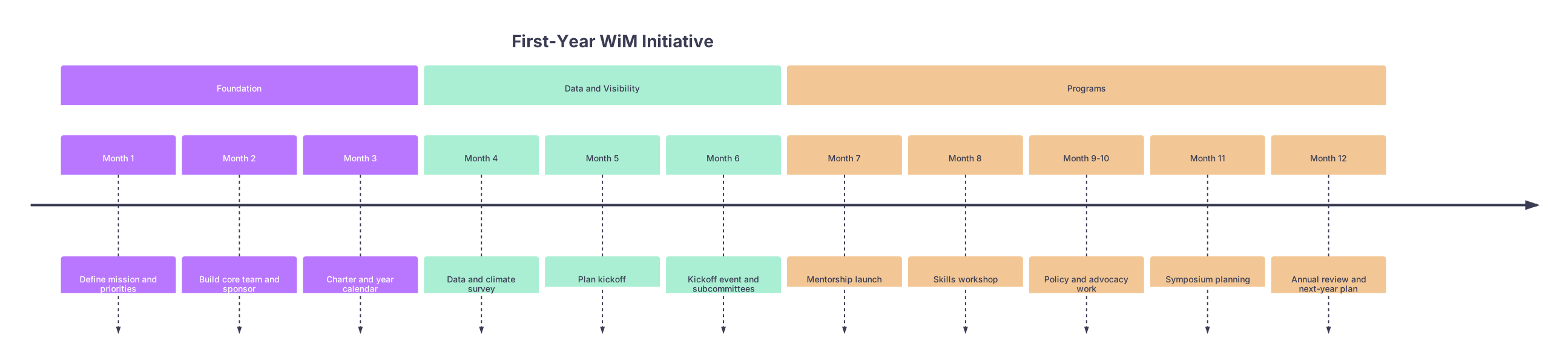
| Period | Event |
|---|---|
| Foundation - Month 1 | Define mission and priorities |
| Foundation - Month 2 | Build core team and sponsor |
| Foundation - Month 3 | Charter and year calendar |
| Data and Visibility - Month 4 | Data and climate survey |
| Data and Visibility - Month 5 | Plan kickoff |
| Data and Visibility - Month 6 | Kickoff event and subcommittees |
| Programs - Month 7 | Mentorship launch |
| Programs - Month 8 | Skills workshop |
| Programs - Month 9-10 | Policy and advocacy work |
| Programs - Month 11 | Symposium planning |
| Programs - Month 12 | Annual review and next-year plan |
Months 9–10 – Policy, advocacy, and culture change
At this point you should touch policy, not just programming. Otherwise nothing structural changes.
Month 9: Identify 1–2 realistic policy targets
Use your data and stories to pick small but meaningful wins, for example:
- Call‑room or lactation space access and reliability
- Clear, written pregnancy and parental leave policy for trainees
- Formal process for reporting harassment from patients and visitors
- Scheduling protections during late pregnancy or early postpartum
You are not rewriting the entire GME handbook in Year 1. Choose targets you can move.
Week 33–34: Draft policy proposals
For each target, write a one‑page proposal:
- Problem statement (with 1–2 quotes or data points)
- Ethical framing (justice, nonmaleficence, respect)
- Proposed change (concrete, actionable)
- Resource needs (if any)
- Who needs to approve (PD, GME, HR)
Meet with relevant stakeholders before you send it up formally. Nobody likes surprises.
Month 10: Start implementation or pilots
Weeks 37–40:
- If your target is lactation space:
- Map current spaces
- Document problems (access, cleanliness, locking, scheduling)
- Pilot solutions with facilities (locks, signage, scheduling system)
- If your target is parental leave clarity:
- Work with GME to create a standardized FAQ handout and a point‑person.
Document everything. Photos, emails, before‑after descriptions. You’ll need this for your end‑of‑year report.

Months 11–12 – Showcase, evaluate, and lock in continuity
At this point you should prove impact and secure your initiative’s future.
Month 11: Plan a Women in Medicine symposium or showcase
Think of this as your Year 1 capstone.
Format options:
- Half‑day in‑person symposium
- Evening “Grand Rounds” style event
- Hybrid poster session plus panel
Core components:
- Short presentation of your data and Year 1 outcomes:
- Attendance numbers
- Mentorship matches
- Policy changes or pilots
- Ethics spotlight:
- Case presentations on gender‑related ethical dilemmas your institution has faced (de‑identified)
- Trainee voices:
- 3–4 short trainee talks on their experiences and ideas for change
Invite:
- Department and institutional leadership
- GME office
- Nursing and allied health leaders
- ANY stakeholder who can influence future policy or budgets
Month 12: Evaluate and build the next‑year plan
Weeks 45–48: Run a mini‑evaluation
Repeat key parts of your initial climate survey, or at least:
- Awareness of the WiM initiative
- Perceived support for women in the program
- Participation in mentorship/events
Compare pre‑ and post‑ where you can, even if the data is rough. You are showing trajectory, not publishing in JAMA.
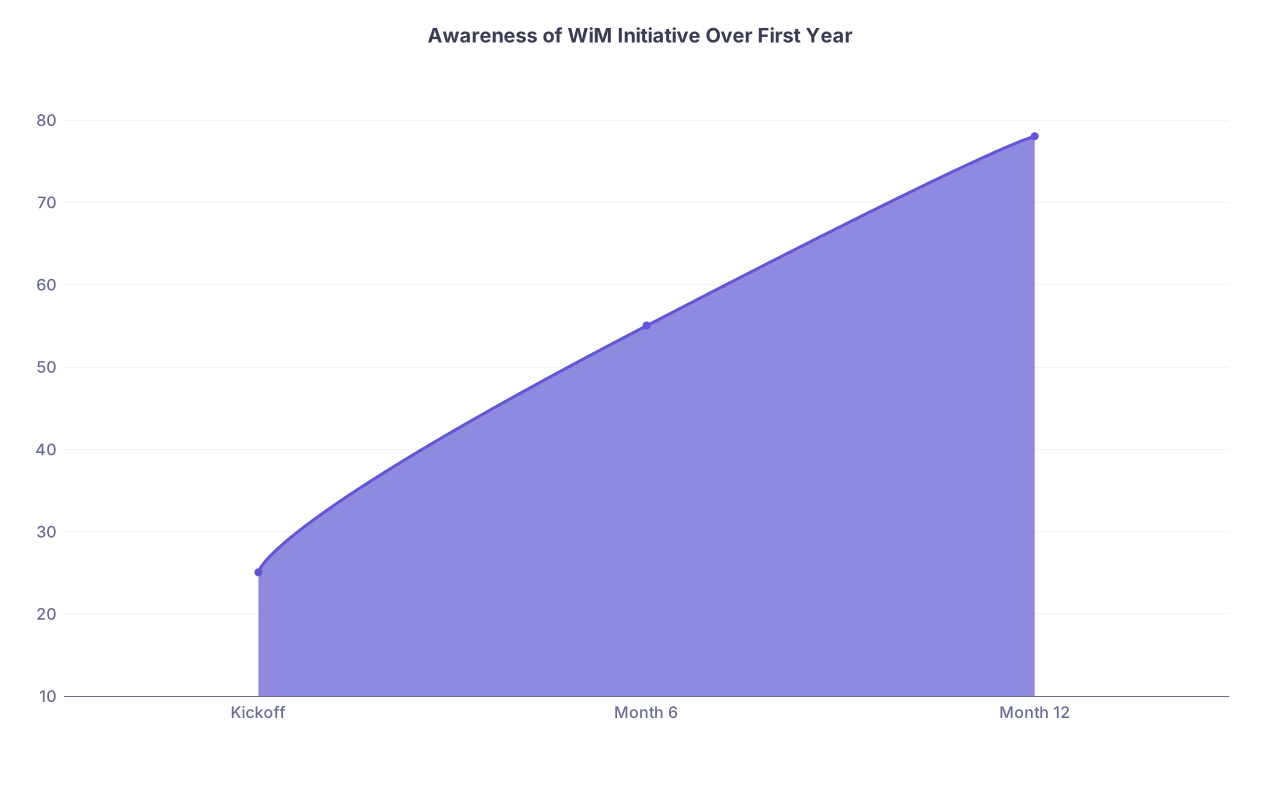
| Category | Value |
|---|---|
| Kickoff | 25 |
| Month 6 | 55 |
| Month 12 | 78 |
Collect:
- Feedback from mentors/mentees
- Brief statements from leaders on perceived value
Week 49–50: Write a 2–3 page annual report
Include:
- Mission and focus areas
- Activities run (with numbers)
- Data snapshots
- Policy/advocacy wins
- Quotes from participants
- Clear ask for Year 2 (budget, protected time, expanded scope)
Send it to:
- Your sponsor
- Department leadership
- GME leadership
- Anyone who supported you along the way
Week 51–52: Transition planning
You do not want the whole thing to collapse when you graduate or change roles.
Before year’s end:
- Identify next‑year leaders (co‑chairs, trainee leads)
- Create a clean folder structure with:
- Charter
- Calendars
- Templates (emails, surveys, event flyers)
- Policy documents
- Hold a transition meeting:
- Review what worked
- List what to drop
- Sketch next year’s 3 priorities

How this ties back to your own development and ethics
Launching a Women in Medicine initiative is not “extra‑curricular fluff.” Done properly, it’s:
- Systems‑level ethics in practice: justice, equity, non‑exploitation
- Real leadership experience:
- Project management
- Stakeholder negotiation
- Policy design
- A visible signal on your CV that you care about structural change, not just personal achievement.
But it only counts if you treat it like what it is: a serious, longitudinal project with real deadlines and results—not a series of feel‑good events.
Today’s next step is simple:
Block 45 minutes, open a blank document, and draft your one‑page concept note—problem, mission, Year 1 goals, and what support you’ll ask for. That single page is the spine of everything that comes next.