
It’s July 5th. You’re a brand‑new PGY‑1. Your pager just went off for the fifth time in ten minutes, your senior is talking orders at 2x speed, and your inbox quietly dings with an email:
“Reminder: Please submit your moonlighting interest form and elective requests by Friday.”
You barely feel qualified to write Tylenol, and apparently you’re already supposed to make “career decisions.”
This is exactly where a lot of women in residency get steamrolled. Not because they’re less capable. Because they don’t see certain moments as negotiation moments—and by the time they realize it, the policies, schedules, and expectations are already baked in.
Let’s walk through PGY‑1 to PGY‑3 like a timeline and mark the spots where you should stop, plant your feet, and negotiate harder than feels comfortable.
Big Picture: Where Negotiation Actually Lives in Residency
Before we go month-by-month, zoom out. Residency isn’t one big contract negotiation; it’s a series of “small” moments that quietly decide:
- Your pay (yes, even within the same PGY level)
- Your schedule and call pattern
- Your moonlighting and outside work
- Your research and leadership visibility
- Your treatment around pregnancy, fertility, and caregiving
- Your letters, recommendations, and fellowship/job set‑up
Most residents only fight on the obvious stuff: vacation requests, one-off schedule swaps, the occasional call complaint. The real leverage points are earlier and more structural.
Here’s the skeleton of when those leverage points tend to hit:
| Time Frame | Priority Negotiation Topic |
|---|---|
| Pre-July PGY-1 | Contract details, sign-on terms |
| Months 1–3 PGY-1 | Schedules, elective sequencing |
| Months 4–8 PGY-1 | Research roles, mentorship |
| Late PGY-1 | Moonlighting, outside work rules |
| PGY-2 Early | Leadership roles, schedule equity |
| PGY-2 Mid | Pregnancy/leave/fertility planning |
| PGY-3 Early | Fellowship/job terms, letters |
| PGY-3 Late | Transition to attending, title/pay |
We’ll go chronologically, but you should recognize this up front:
If you wait until you’re “more senior” or “more established,” you’ve already given up a lot.
Pre‑Residency to Month 1 PGY‑1: Contract, Pay, and Expectations
Yes, the contract is “standard.” No, that doesn’t mean everything in it is fixed.
Before Day 1: At this point you should…
1. Scrutinize your offer and contract language
You’re probably tired from interviews and just grateful to have matched. This is where women often under‑negotiate.
Dig for:
- Salary variation within PGY level
Some programs have quiet differential pay for chief residents, special tracks, or external grants. Ask directly:- “Are there any PGY‑1 salary differentials for research tracks, chief pathways, or funded positions?”
- Educational funds
Not just “CME money exists,” but:- Amount per year
- Whether you can roll unused funds forward
- Whether board review courses and exam fees are covered
This is usually not a “add 10k to my salary” convo. But I’ve watched residents successfully push for:
- Extra CME funds when they had strong research commitments
- Coverage for Step 3 fees
- Housing stipend clarification or eligibility
You do not ask, you do not get.
2. Clarify moonlighting and outside income
Women disproportionately assume “I’m not allowed” while male co‑residents quietly stack moonlighting shifts.
Ask in writing:
- “From which PGY level is internal moonlighting allowed?”
- “Are external moonlighting or telehealth shifts permitted with program approval?”
- “What is the approval process and who has final say?”
You’re not committing to moonlight. You’re establishing that it’s normal and expected you might want to.
3. Understand parental leave and medical leave like a lawyer
Do not wait until you’re pregnant, dealing with a loss, or managing a new diagnosis. That’s when people get pressured into bad deals.
Get answers for:
- Paid vs unpaid weeks
- Who approves schedule adjustments
- Whether you must “make up” months and how that affects graduation
You’re not asking for special treatment. You’re mapping the rules so when you need to negotiate, you’re not starting from zero.
Months 1–3 PGY‑1: Schedule, Rotations, and Being Seen as “The Workhorse”
This is when you’re the most vulnerable—and when certain patterns quietly set.
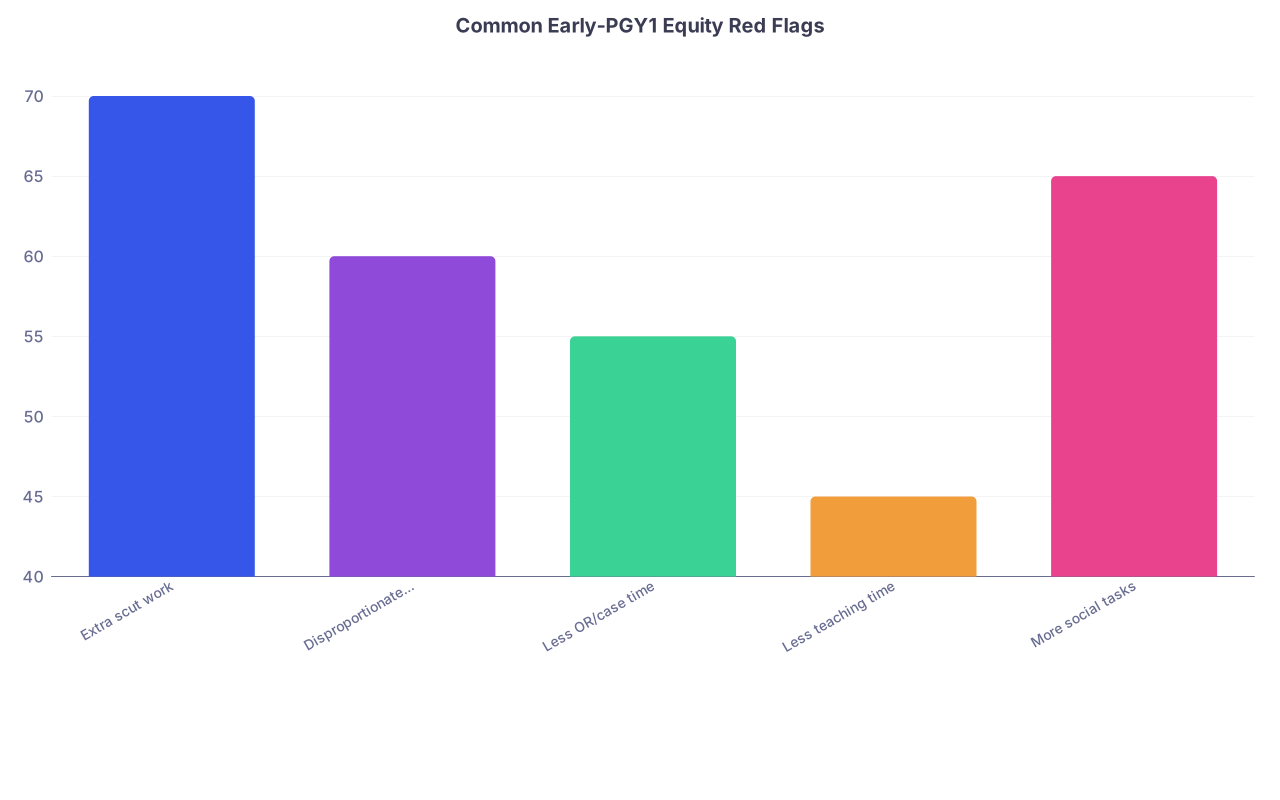
| Category | Value |
|---|---|
| Extra scut work | 70 |
| Disproportionate nights | 60 |
| Less OR/case time | 55 |
| Less teaching time | 45 |
| More social tasks | 65 |
At this point you should…
1. Watch the distribution of uncredited work
Women in residency often get dumped with:
- Family communication
- Social work chasing
- “Can you just call the PCP, you’re so good with families”
- Logistics for team events, sign‑out emails, schedules
Across weeks 2–8, keep quiet receipts:
- Who regularly gets the “people work” vs the “procedure work”
- How often you’re pulled from teaching rounds to fix logistics
If you see a pattern, you don’t complain about “sexism in the team” on day 10. You negotiate role boundaries with your senior or APD:
- “I’m noticing I’m pulled a lot to manage communication and logistics, which I’m happy to help with. I also want to make sure I’m getting equal exposure to procedures/OR time. For the next few weeks, can we plan that I prioritize X, and we spread Y and Z across the team?”
You’re not asking permission to be treated fairly. You’re stating an expectation with specifics.
2. Push on elective and rotation ordering
Everyone treats PGY‑1 scheduling like a black box. But much of it is hand‑tailored.
This is where women who think they “shouldn’t be difficult” end up with:
- Heavy Q4 call months right before board exams
- ICU months stacked with fertility treatment or pregnancy
- No early elective time for research
By week 2–4, ask the chief or scheduler:
- “Which rotations are still flexible for me this year?”
- “I’d like to front‑load one elective to explore research in X—what are my options?”
- “Can we avoid pairing an ICU month with night float, if possible, given [health/family]?”
You’re not asking them to rebuild the schedule from scratch. You’re pushing for one or two targeted changes early, when it’s still feasible.
Months 4–8 PGY‑1: Research, Visibility, and “Fellowship‑Track” Cred
This is the part everyone ignores while they’re just trying not to drown. It’s also when the people who will land the prime fellowships start getting quietly positioned.
At this point you should…
1. Negotiate your role on research projects
Too many women in medicine end up:
- Doing data work with no authorship
- Getting pushed to “coordination” roles rather than first‑author roles
- Getting added late to a project with little visibility
When you’re invited onto a project—or you find one you want—ask directly, early:
- “What authorship positions are envisioned right now?”
- “If I take lead on X, is first‑author realistic?”
- “What’s the timeline for submission, and how often will we meet?”
If the answer is vague, negotiate:
- “I’m interested in this, but I want a clear path to first‑author or at least second‑author. If I handle [data extraction, first draft, revisions], can we agree that I’ll be [first/second] unless something changes substantially?”
People respect residents who treat their time like it matters. The ones who just say “happy to help” get used.
2. Guard your conference and presentation opportunities
When abstract season hits, you will see this pattern: men more likely to be pushed forward to present; women stuck in background roles.
You counter that with one clear sentence well before abstracts are accepted:
- “If this gets accepted, I’d like to be the presenting author at [local/regional/national]—is that feasible with the program’s scheduling?”
If someone shrugs this off, bring your PD or APD into the loop as a scheduling issue:
- “I’ll have a few abstracts going in; I’d like to make sure I’ll be able to attend if they’re accepted. What’s the process for getting those days approved?”
It’s not whiny. It’s professional.
3. Start building the “board score + reputation” package
Ethically, you owe it to your future self to push for what improves long-term competence, not just immediate service coverage.
So during months 6–8, you:
- Ask for a realistic, protected Step 3 studying window:
- “Which month would be best to schedule Step 3 and carve out lighter call or a vacation week around it?”
- Push for at least one rotation with consistent attending feedback:
- “I’m trying to improve quickly. Could we set up brief end‑of‑week check‑ins on this rotation so I can adjust in real time?”
Women too often play “good soldier” and never ask for structure that actually makes them better. Then they’re told later, “You’re good, but not quite at the level for that fellowship.”
You fix that now.
Late PGY‑1: Moonlighting, Extra Work, and “Team Player” Traps
By the second half of PGY‑1, you’re somewhat functional. This is when extra work and “helpful resident” expectations really kick in.
At this point you should…
1. Negotiate moonlighting (if allowed)
If your program permits it late PGY‑1 or early PGY‑2, approach it like a business, not a favor.
Key questions to your PD or chief:
- “What’s the cap on hours per week/month, and how is duty hour compliance tracked?”
- “Is there any difference in pay or expectations across sites?”
Then negotiate this boundary clearly:
- “I’m interested in up to X shifts per month, but I want to avoid conflicts with major rotations and burnout. Can we agree to revisit how it’s going after three months?”
Women tend to pre‑apologize for wanting extra income. Don’t. You are selling your time and expertise. Do it on your terms.
2. Say no to unpaid “glue” work
You’ll start getting asked to:
- Lead recruitment dinners because “you’re so relatable”
- Sit on unpaid committees about “culture” and “wellness”
- Be the default person to host med student orientation
These can be fine. In moderation. But they are work, and they compete with sleep, studying, and real career development.
Your negotiation script:
- “I’m interested in helping with X. Given my current load, I can take on [one discrete responsibility] this year. Are there any formal leadership titles or evaluation components tied to this?”
If the answer is no title, no official recognition, no time:
Then the follow‑up is:
- “In that case, I think I need to pass this year so I can focus on my clinical growth and research goals.”
Saying no here often feels radical. It shouldn’t.
PGY‑2 Early: Schedules, Leadership, and “Who Runs This Place”
PGY‑2 is where you’re seen as part of the structure, not just a warm body. That’s exactly when you want to push for equity and leadership—before all the good roles are quietly promised away.

At this point you should…
1. Review your schedule for equity, not just survival
Look at your PGY‑2 schedule as a whole:
- Number of nights vs peers
- Distribution of weekends and holidays
- Access to procedural/OR-heavy rotations
- ICU vs clinic balance
If you notice you’re getting a heavier burden (and this happens a lot to “competent, dependable” women), bring data:
- “I pulled my call and weekend numbers against X, Y, and Z. Right now I’m scheduled for [X more nights / more weekend call]. Can we redistribute a bit so it’s closer to the group average?”
You’re not asking them to like you. You’re asking them to do math.
2. Go after formal leadership early
Chief spots, committee leads, QI roles—they don’t fall out of the sky in PGY‑3. They get shaped in PGY‑2.
You’re not “waiting to be recognized.” You’re pitching.
By month 2–4 of PGY‑2:
- Tell your PD/APD:
- “I’d like to be considered for chief or a major leadership role. What experience or metrics should I prioritize this year to be competitive?”
- Then push for the right experiences:
- Leading M&M sessions
- Running intern orientation
- Participating in curriculum or schedule committees
If you’re already being asked to do that work informally, you push for the title:
- “I’ve been organizing X and Y. Could we formalize this as a [resident liaison / assistant chief / QI lead] role for my evaluations and CV?”
Women routinely do chief‑level work without chief‑level recognition. Don’t let that slide.
PGY‑2 Mid: Pregnancy, Fertility, Family, and Ethics of Self‑Sacrifice
This is the minefield. A lot of women decide about pregnancy, egg freezing, or caregiving during PGY‑2. Many feel they have to “take what they can get.” You don’t.
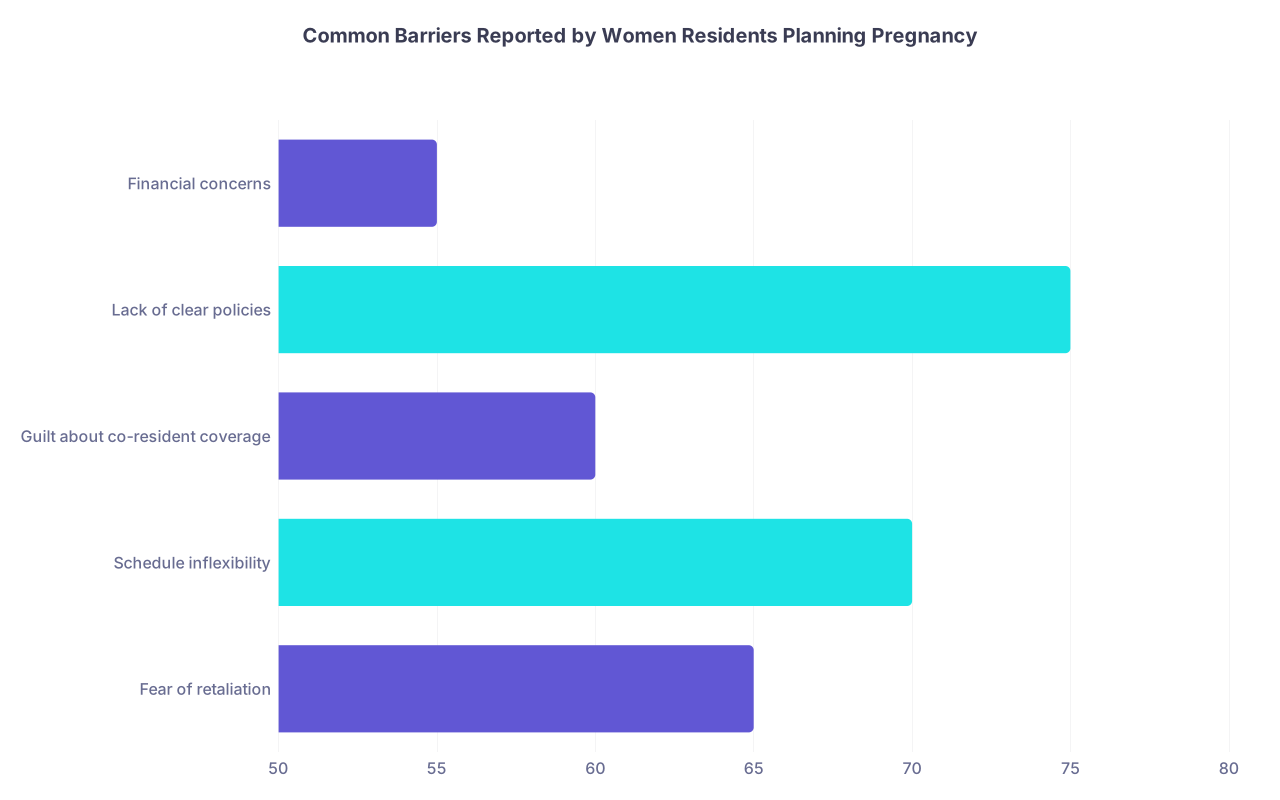
| Category | Value |
|---|---|
| Fear of retaliation | 65 |
| Schedule inflexibility | 70 |
| Guilt about co-resident coverage | 60 |
| Lack of clear policies | 75 |
| Financial concerns | 55 |
At this point you should…
1. Separate emotion from policy
You may feel guilty asking for what you need. That feeling is not a legal category.
You’re not negotiating whether you “deserve” leave. That’s settled by:
- Institutional policy
- State law
- ACGME requirements
What you’re actually negotiating:
- Timing and rotation alignment
- How much coverage is from co‑residents vs external resources
- How your evaluations and fellowship/job applications will be handled
Go to your PD/APD with:
- “Per policy, I’m entitled to X weeks of [paid/unpaid] leave. I’d like to discuss the best way to structure that around my rotations so that:
- I don’t disproportionately burden my co‑residents, and
- I still meet my training requirements and fellowship goals.”
If they frame it as “you’re making others pick up the slack,” that’s not on you. That’s a program design failure. Push back, calmly:
- “Coverage planning is a system responsibility. I’m happy to be flexible with timing and rotations, but I can’t waive my rights or training requirements.”
2. Protect your evaluations and future opportunities
Subtle retaliation is real: poor evaluations, lost opportunities, comments like “not as committed.”
You pre‑empt:
- “I want to be sure my performance is evaluated on the months I’m actually working, not penalized for leave. Can we agree on who will be responsible for ensuring that?”
If you’re applying for fellowship or jobs:
- “I’ll be on leave during [months]. What’s the best way to frame this in my letters and application so programs understand I’m still on track and committed to this field?”
No apologies. Just planning.
3. If you’re doing fertility preservation (egg freezing, IVF)
You need:
- Predictable clinic time
- Daytime flexibility, often with short notice
You negotiate for a specific plan:
- “I’m undergoing fertility treatment between [dates]. I can still cover my clinical duties, but I’ll need [early morning/late afternoon] windows on some days. Can we build this into my outpatient or elective months instead of my ICU or night float blocks?”
If they push “we can’t guarantee that,” respond:
- “Let’s look at which rotations are most flexible so I can schedule treatment responsibly. I’m trying to plan this in a way that protects both patient care and my health.”
You’re not asking for a spa day. You’re protecting your future ability to even have this career and a family.
PGY‑3 Early: Fellowship, Jobs, and Letters – The High‑Stakes Negotiations
This is where money and trajectory really shift. People will tell you, “You can negotiate later as an attending.” That’s half true. A lot of doors are already selected now.
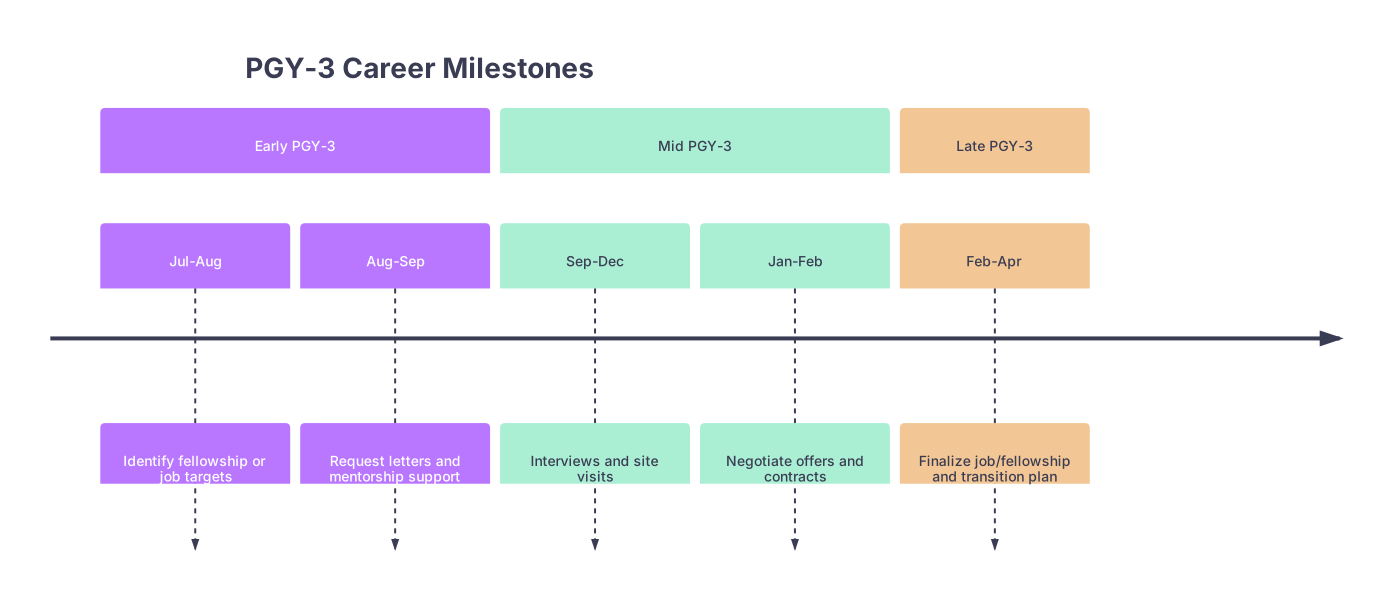
| Period | Event |
|---|---|
| Early PGY-3 - Jul-Aug | Identify fellowship or job targets |
| Early PGY-3 - Aug-Sep | Request letters and mentorship support |
| Mid PGY-3 - Sep-Dec | Interviews and site visits |
| Mid PGY-3 - Jan-Feb | Negotiate offers and contracts |
| Late PGY-3 - Feb-Apr | Finalize job/fellowship and transition plan |
At this point you should…
1. Be explicit about what you want from letters
Don’t just ask, “Can you write me a letter?” That’s how you get generic, gender‑biased fluff.
When you ask an attending or PD:
- “I’m aiming for [specific fellowship or job type]. I’d appreciate a letter that highlights:
- My procedural/clinical strengths in [X]
- My independence and decision‑making
- Any leadership and teaching roles you’ve seen.”
You can even send them bullets:
- “[Example: managed the septic shock patient on night float, led M&M on XYZ, built the QI protocol for ABC].”
Men do this all the time. It’s not pushy. It’s smart.
2. Negotiate interview time and scheduling without shame
Women, especially those with kids or caregiving responsibilities, often take worse interview schedules because they’re afraid of being “difficult.”
With your chiefs/PD:
- “I’ll have several interviews in [months]. I’d like to batch days off or group interviews on [clinic vs ICU] months. How can we structure this so I’m not constantly piecemealing days, which is worse for the team and me?”
You’re not asking for extra vacation. You’re asking for a better system.
PGY‑3 Mid to Late: Transitioning to Attending – Titles, Money, and Boundaries
Some programs keep you on as faculty or hospitalists. Some help you bridge to your first job. This is definitely negotiation.

At this point you should…
1. If you’re staying at your institution, fight the “cheap attending” trap
Common pattern: “We’d love to keep you on as an attending for a year. The pay is… modest.”
You ask for:
- Clear job description (clinical only? teaching? admin?)
- Salary benchmarked to new attending market, not “slightly above resident”
- Title that reflects your real role (Hospitalist, Clinical Instructor, Assistant Professor)
Your script:
- “I appreciate the offer. To seriously consider it, I’d need:
- A salary in the range of [X–Y] based on [MGMA or institutional data]
- Protected time for [teaching/research/admin] if those are expectations
- A title aligned with those responsibilities.”
If they tell you “everyone else took less,” remember: that’s how systemic pay gaps perpetuate. You’re allowed to be the one who says no.
2. If you’re going to another job or fellowship, negotiate start date and support
Even fellowships have room to negotiate:
- Start dates (so you don’t work into your last breath as a PGY‑3)
- Moving support
- Onboarding schedules
With the new program/employer:
- “My residency end date is [X]. To avoid burnout and ensure I’m ready to start strong, I’d like:
- A start date of [Y]
- [Z] days for relocation and onboarding
- Clarity on any required orientation and whether that is paid time.”
Women often feel they should be “grateful” and accept whatever. That’s how you start your attending life already depleted.
Throughout PGY‑1 to PGY‑3: Daily Micro‑Negotiations That Add Up
Not everything is a giant policy battle. Some of the most impactful negotiations are small, repeated, and boring.

Daily or weekly spots to push:
- Credit for your ideas
“I’d like to add that I suggested [X] earlier and I’m glad we’re going that route.” - Procedures and cases
“I haven’t done a central line this month yet—can I take this one?” - Teaching time
“I’d like to run the next teaching session on [topic]. Can I take that on?” - Boundary on disrespect
When repeatedly interrupted:
“I wasn’t finished—let me complete my thought, then I’m happy to hear your view.”
These feel small. They’re not. They train everyone around you on how you expect to be treated.
Quick Ethical Checkpoints: When Saying No is the Right Call
You’re in a profession that runs on self‑sacrifice. That doesn’t mean self‑erasure is ethical.
Watch for these moments and default to no or hard negotiation:
- Being asked to “keep quiet” about harassment or bias “for the team’s sake”
- Being strongly discouraged from taking protected leave you’re entitled to
- Being pushed into uncompensated, ongoing DEI or “women in medicine” work with no title or time
- Being guilted for wanting market‑rate pay after training
Those aren’t “grey areas.” They’re red flags.
Final 3 Takeaways
Residency is full of real negotiation windows—contracts, rotations, research roles, leave, leadership, and PGY‑3 jobs. If you treat them as fixed, you’ll lose leverage you can’t get back.
Your time and visibility are currency. Guard them. Don’t volunteer endlessly for glue work without title, credit, or time. Ask clearly for authorship, procedures, presentations, and leadership labels.
Protect your future self ethically. That means negotiating hard for fair leave, equitable schedules, and real pay—even when it makes others uncomfortable. You’re not just being “difficult.” You’re correcting a system that will happily run on your underpaid, undercredited labor if you let it.