
The idea that “gender bias is the same everywhere in medicine” is flat‑out wrong. It behaves differently in oncology, OB/GYN, and cardiology—and it shapes your career whether you see it or not.
Let me be blunt: if you are a woman planning your career, choosing between these specialties without understanding their gender dynamics is like choosing a job without knowing the salary structure or promotion rules. You might “follow your passion” straight into a wall you could have anticipated and prepared for.
I am going to break this down very specifically: how gender plays out differently in oncology, OB/GYN, and cardiology—on paper (numbers), in the call room (culture), and in the promotion committee meeting (power).
The baseline: who is where, and in what numbers?
Before talking about culture or ethics, start with the demographics and hierarchy. Headcount tells you two things: who sets the norms, and who holds power.
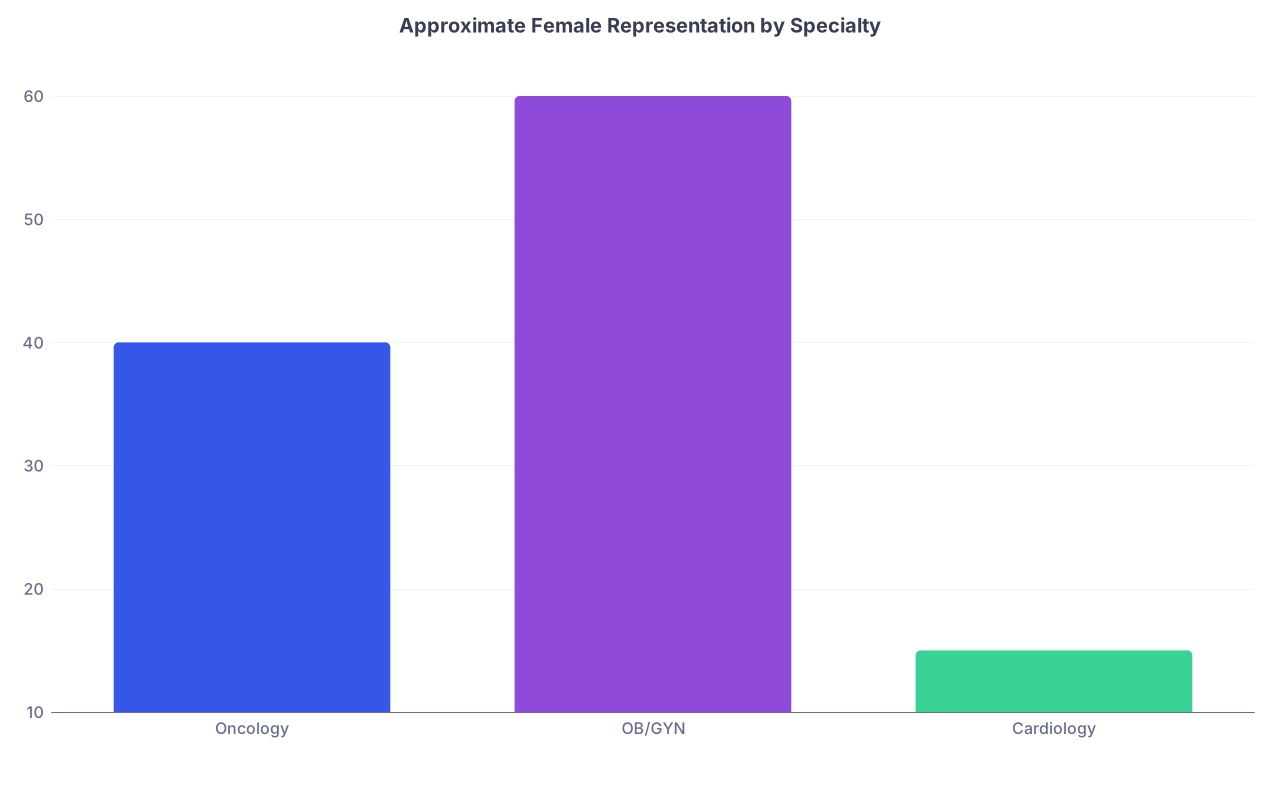
| Category | Value |
|---|---|
| Oncology | 40 |
| OB/GYN | 60 |
| Cardiology | 15 |
These are ballpark academic numbers (varies by country and region, but the pattern is consistent):
- Oncology: roughly 35–45% of practicing oncologists are women, higher among fellows and junior faculty.
- OB/GYN: 60–80% of residents are women; younger cohorts are majority female; older leadership still skew male.
- Cardiology: 12–20% of cardiologists are women; interventional cardiology sits closer to 7–10% in many places.
Now layer on leadership, because that is where the gender picture shifts again.
| Specialty | Women in Leadership Roles* |
|---|---|
| Oncology | ~25–35% |
| OB/GYN | ~30–40% |
| Cardiology | ~10–15% |
*Division chiefs, department chairs, major society leadership. Rough global academic trends.
So yes, OB/GYN “looks” most female, oncology is mixed, and cardiology is male‑dominated, especially in procedural niches. That is the skeleton. The real story is how this shapes expectations, respect, and career trajectories.
Oncology: “Caring is valued… until promotion time”
Oncology has a reputation for being “good for women.” That is partly true and partly lazy thinking.
Why oncology feels more gender‑balanced on the surface
Oncology often attracts physicians who are comfortable with:
- High‑emotion conversations (bad news, prognostic discussions).
- Longitudinal care with patients and families.
- Interdisciplinary collaboration (nursing, palliative care, social work).
Stereotypically—and unfairly—those traits get coded as “feminine.” So people start saying things like, “Oh, oncology is great for women, lots of talking, lots of holistic care.” I have heard senior male attendings say this to female residents as if it were a compliment. It is not. It is a red flag.
But in practice:
- Many oncology divisions genuinely value communication skill and relational work.
- Patients are often more accustomed to women physicians in oncology than in, say, interventional cardiology.
- You will see more women in tumor boards, on ward teams, and in outpatient clinics than in many procedural fields.
So the daily lived experience can be less overtly hostile than in heavily male-procedural cultures.
Where the gender dynamics bite in oncology
Here is where it gets more complicated.
First, the “emotional labor” problem. Women oncologists are:
- More likely to get complex family meetings routed to them: “You’re so good with families, can you talk to them?”
- More likely to be expected to spend extra time on end‑of‑life counseling.
- More likely to provide informal emotional support to nurses, staff, and trainees.
That time is not counted on your CV. It is invisible work. When promotion committees look, they see:
- RVUs (relative value units).
- Grant funding.
- Publications.
- Committee roles (formal ones, not the hours you spent de‑escalating distressed relatives in a hallway).
Men and women can both be strong communicators, but women get pushed into being the default “emotional buffer” far more often. Their clinical days stretch, their documentation suffers, and their academic output gets squeezed.
Second, research and prestige. The high‑prestige oncology tracks—translational research, early‑phase trials, lab‑based work—still skew male at senior levels. Women are more likely to be:
- Concentrated in breast cancer, gynecologic oncology, palliative‑adjacent work.
- Doing “quality improvement,” “survivorship,” “communication” research—crucial, but historically undervalued.
You will see it in conference keynotes. Look at big‑ticket plenaries in areas like immunotherapy or precision oncology: still disproportionately male, especially from the more “hard science” labs.
Third, work‑life boundary erosion. Oncology clinics are packed; messages pile up; patients are terrified and want immediate answers. Many female oncologists I’ve seen:
- Allow their accessibility to be exploited (“You’re so responsive to patients—can you just…”).
- Answer MyChart messages at 10 p.m. because patients are genuinely in crisis.
Ethically, they are doing the right thing for patients. Institutionally, they are burning themselves out and getting no structural recognition for it.
Day‑to‑day culture for women in oncology
The vibe:
- Less macho than procedural specialties.
- More acceptable to talk about burnout, grief, moral distress.
- But still subject to the usual medicine problems: pay gaps, promotion gaps, and patient bias (being mistaken for a nurse, or “the young doctor” forever).
A resident rotating on heme/onc might notice:
- Women attendings are often “beloved” by nurses and patients but under‑represented as division chiefs.
- Male attendings may be shielded from as many “emotional grenade” conversations.
- Mentorship for women is present but concentrated in certain disease groups (breast, GYN, supportive care).
On ethics: oncology is saturated with ethically heavy decisions (futility, trial enrollment, cost of care). Women are often pulled into performing the “soft skills” part of this ethic—aligning goals, supporting families—without equal access to structural power where systemic decisions are made.
OB/GYN: “Majority female culture, minority female power”
OB/GYN is the specialty that many laypeople assume is “where the women doctors are.” That assumption hides a lot of tension.
The paradox: female residents, male chairs
OB/GYN residencies in North America and Europe are majority female. In some programs, 80–90%+ of residents are women. Clinics are full of women physicians. Patients often explicitly request women.
Yet if you look at:
- Department chairs.
- MFM (maternal-fetal medicine) or GYN oncology division chiefs.
- National society presidents.
You still see a strong male presence, especially in older cohorts. That is changing—but slowly.
So the pipeline is female, the gatekeepers historically male. This mismatch drives a lot of unspoken frustration.
How gender plays out in training and workload
OB/GYN sits at a nasty intersection:
- High physical workload (long surgeries, overnight L&D).
- High emotional labor (birth trauma, pregnancy loss, miscarriages, abortions).
- High medico‑legal risk.
Women residents often carry an uneven emotional burden:
- Sitting with patients through miscarriages and stillbirths for extended periods.
- Being “the one patients open up to” about domestic violence, sexual trauma, or reproductive coercion.
- Handling the fallout of systemic failures (limited abortion access, restrictive laws) at the bedside.
Meanwhile, the cultural attitude in some older, male‑dominated leadership circles is still: “We did 110‑hour weeks; you can too.” Flexibility is treated as indulgence instead of basic sanity.
There is another subtle dynamic: sexualization and boundary testing.
I have heard patients say to women OB/GYN residents:
- “You must really like this stuff to be in this field.”
- “What does your husband think about you doing pelvic exams all day?”
- Or more explicit remarks during pelvic exams that you would never ask a male urologist.
Many women just swallow it and move on. That accumulates.
Internal gendered dynamics within OB/GYN
Do not assume that a majority‑female specialty is automatically a feminist utopia. It is not.
Common patterns:
- L&D nurses sometimes show more deference to male attendings (seen as the “real authority”) despite being unfamiliar with the case.
- Male OB/GYNs may be fast‑tracked into surgical prestige tracks (GYN oncology, urogynecology) or leadership roles—“natural leader” bias.
- Women can be held to impossible dual standards: be warm but not “too emotional,” decisive but not “too aggressive.”
There are also ethical minefields particular to OB/GYN where gender matters:
- Abortion care: women residents and attendings are often more visibly associated with providing abortion, drawing political and personal backlash.
- Contraception counseling: patient assumptions that female docs are “pushing” certain methods, especially with marginalized communities.
- Fertility care: subtle pressure on women physicians to reveal their own reproductive choices or struggles, which male colleagues rarely face.
I have watched junior women attendings get undermined by older male physicians in shared practices—questioned in front of patients, billed differently, or quietly excluded from high‑revenue OR days. The fact that the hallway outside is full of women in scrubs does not cancel that out.
Gender, identity, and patient expectations
OB/GYN also exposes a sharp ethical problem: patient “preference” versus discrimination.
- Some patients explicitly request women for pelvic exams or deliveries. Reasonable.
- Others refuse care from male OB/GYNs entirely.
- Some will implicitly devalue women’s expertise by always “double‑checking” with a male consultant, even when not clinically necessary.
Women OB/GYNs can get stuck:
- Being seen as more “nurturing,” so patients demand more time, more access, more emotional labor.
- Being treated as less “authoritative” in complex surgical decisions, especially when standing next to an older male surgeon.
All of that shapes career satisfaction. Some women thrive in OB/GYN and would never choose anything else. Others feel the weight of being constantly “on” emotionally, in a specialty that is physically brutal and structurally rigid.
Cardiology: “Still the boys’ club, especially with catheters”
Cardiology is where gender bias stops pretending to be subtle. Especially in interventional and electrophysiology.
The numbers and what they actually mean
Women in general cardiology: roughly 15–20%. In interventional cardiology: closer to 10% or less in many regions. And within those numbers, leadership positions lean heavily male.
This shows up in:
- Conference panels: “manels” on ischemic heart disease, structural interventions, device therapy.
- Cath lab rosters: a rotating cast of men, with one woman who is constantly overbooked and over-scrutinized.
- Fellowship selection: women applicants regularly asked (covertly or overtly) about family plans, radiation concerns, and “whether they can handle the lifestyle.”
If you are a woman walking onto a cardiology service, you feel the culture shift immediately coming from medicine or peds.
Culture: performance, speed, and bravado
Cardiology culture rewards:
- Aggressiveness: “Let’s take them to the lab now.”
- Decisiveness bordering on arrogance.
- Procedural dominance: who can handle the most complex PCI, the toughest VT ablations.
Women cardiologists I have known report the same pattern: if they are assertive, they are “abrasive.” If they temper their language, they are treated as less knowledgeable. You do not get to win that game playing by their rules.
There is also the informal, male‑bonding layer:
- Golf outings and device‑sponsored dinners where industry relationships are cemented.
- Late‑night drinks after cath conferences where research collaborations and opportunities are casually handed off.
- “Locker room” style banter in cath labs and echo reading rooms that casually excludes women or puts them in the role of audience, not participant.
You miss those spaces, you miss opportunities. Full stop.
Structural and ethical barriers unique to women in cardiology
Three big ones:
Radiation and pregnancy.
Early pregnancy, fertility concerns, miscarriages—these are real. Women in interventional fields often:- Get quietly discouraged from the cath lab: “Think about your future family.”
- Face resistance when requesting accommodations during pregnancy (shielding, reduced radiation cases).
- Worry—legitimately—about being perceived as “less committed” if they step back from fluoro‑heavy work.
Ethically, departments should provide clear, evidence‑based policies to protect pregnant physicians and normalize accommodations. Many do not.
Pay and referrals.
Referral patterns are political. Female cardiologists often:- Receive more “low‑acuity,” “chatty” outpatient referrals (palpitations, chest pain in younger women) and fewer high‑RVU procedures.
- Are seen as “great with patients” and “excellent teachers,” which translates into… more clinic time, less cath lab or EP lab time.
That shapes compensation, especially in productivity‑based models.
Heart disease in women.
Ironically, women cardiologists are often more attuned to sex‑specific presentations and disparities in treatment. They raise these issues. They do the research. And then watch male colleagues still dominate the podium at major meetings on “women’s heart disease” because they have the big‑ticket trials.
So you get this ethical absurdity: the people most affected by the bias (women) are doing the moral and clinical work of fixing it, while the power structures remain stubbornly male.
Day‑to‑day for women in cardiology
The quick sketch:
- Patient bias: “When is the real heart doctor coming?” happens more in cardiology than you might believe.
- Colleague bias: repeated underestimation of procedural skill, especially for petite women—“Are you strong enough for the lab?” as if PCI is a deadlift competition.
- Isolation: being the only woman in the division, or one of two, for years.
Yet, women who stick it out in cardiology and carve space for themselves often become visible role models precisely because they refuse to blend in. Their presence changes things for the next wave. But they pay a price on the way up.
Comparing the three: what shifts, what stays the same
Let us line this up clearly.
| Factor | Oncology | OB/GYN | Cardiology |
|---|---|---|---|
| Overall gender mix | Mixed, trending female junior | Majority female trainees | Strongly male, esp. procedural |
| Emotional labor load | High, often feminized | Extremely high, central to work | Moderate, often devalued |
| Procedural culture | Variable (some heavy, some light) | High surgical and L&D procedures | Very high, especially in cath/EP |
| Leadership representation | Moderate female presence | Improving but still male‑tilted | Low female representation |
| Patient gender expectations | Mixed | Often expect women physicians | Often expect male “heart doctor” |
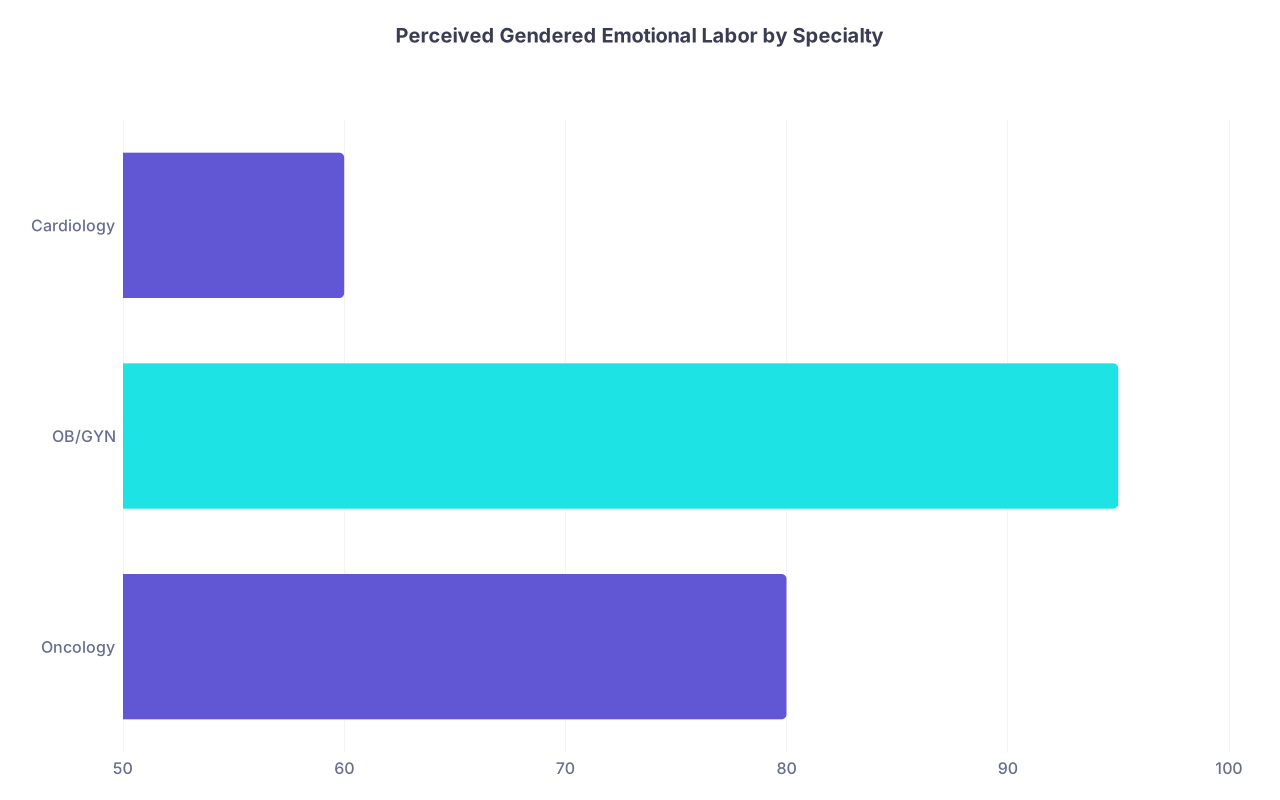
| Category | Value |
|---|---|
| Oncology | 80 |
| OB/GYN | 95 |
| Cardiology | 60 |
(Think of those numbers as “relative emotional load expectations on women,” not precise metrics.)
What is consistent across all three:
- Women do more emotional labor, formally or informally.
- Women have to over‑perform to establish the same perceived competence.
- Leadership and high‑prestige niches lag behind in gender equity.
What differs:
- In OB/GYN, women are numerically dominant but still underpowered structurally.
- In oncology, women are present in critical mass but concentrated in certain content areas and emotional labor roles.
- In cardiology, women are numerically and culturally marginal, especially in interventional niches.
Those differences matter for your daily life, your ethical stress load, and your long‑term career satisfaction.
Practical and ethical implications for you
You are not going to choose a specialty just based on gender politics. Nor should you. But ignoring them is naive.
How to think about these three if you are a woman in training
Let me be specific.
If you are drawn to oncology:
- Expect: heavy emotional load, complex relational work, and a relatively “civil” but still biased academic structure.
- Watch for: being the default for “difficult conversations,” getting steered into lower‑prestige research tracks, having your grant/OR time undercut by invisible labor.
- Ethically: you will sit at the center of serious end‑of‑life decisions. Gendered expectations can amplify your moral distress and exhaustion. You will need boundaries that do not feel natural at first.
If you are drawn to OB/GYN:
- Expect: intense physical demands, sleep disruption, and high emotional exposure to reproductive trauma and joy.
- Watch for: being told “this is a women’s specialty, it is fine” while men still run the OR block schedule and sit in the big chairs; being leaned on to “fix” system problems (like access to abortion) in your personal time.
- Ethically: you will live in the tension between patient autonomy, state laws, institutional policies, and your own body. You must have a clear internal ethical framework and support network.
If you are drawn to cardiology:
- Expect: resistance. Not always malicious, but constant. You will have to claim your procedural identity and repeat that claim—often.
- Watch for: subtle discouragement from interventional/EP if you are considering pregnancy or just because you are a woman; biased referral patterns; being used as the “diversity face” without equal power.
- Ethically: you will witness disparities in care and representation up close. Whether you challenge the culture or conform will be a recurring moral decision.
Concrete moves that actually help
Spare me the generic “find a mentor” advice. Everyone says that. Here is what actually matters.
Choose mentors strategically by power and behavior, not just gender.
- In oncology: you want at least one mentor with serious academic clout who respects emotional labor yet pushes for your protected time and resources.
- In OB/GYN: identify who controls call schedules, OR blocks, and evaluation culture. If that person is an ally, their support is worth more than ten “nice” faculty.
- In cardiology: if you are aiming for interventional, you need a sponsor (not just mentor) who is explicitly willing to put you into high‑stakes cases and back you when there is pushback.
Track your workload. Religiously.
Log the things that do not show up in standard metrics:
- Number of family meetings you run in oncology.
- Extra patient counseling sessions on L&D.
- “Quick” curbside consults in cardiology that you never bill for.
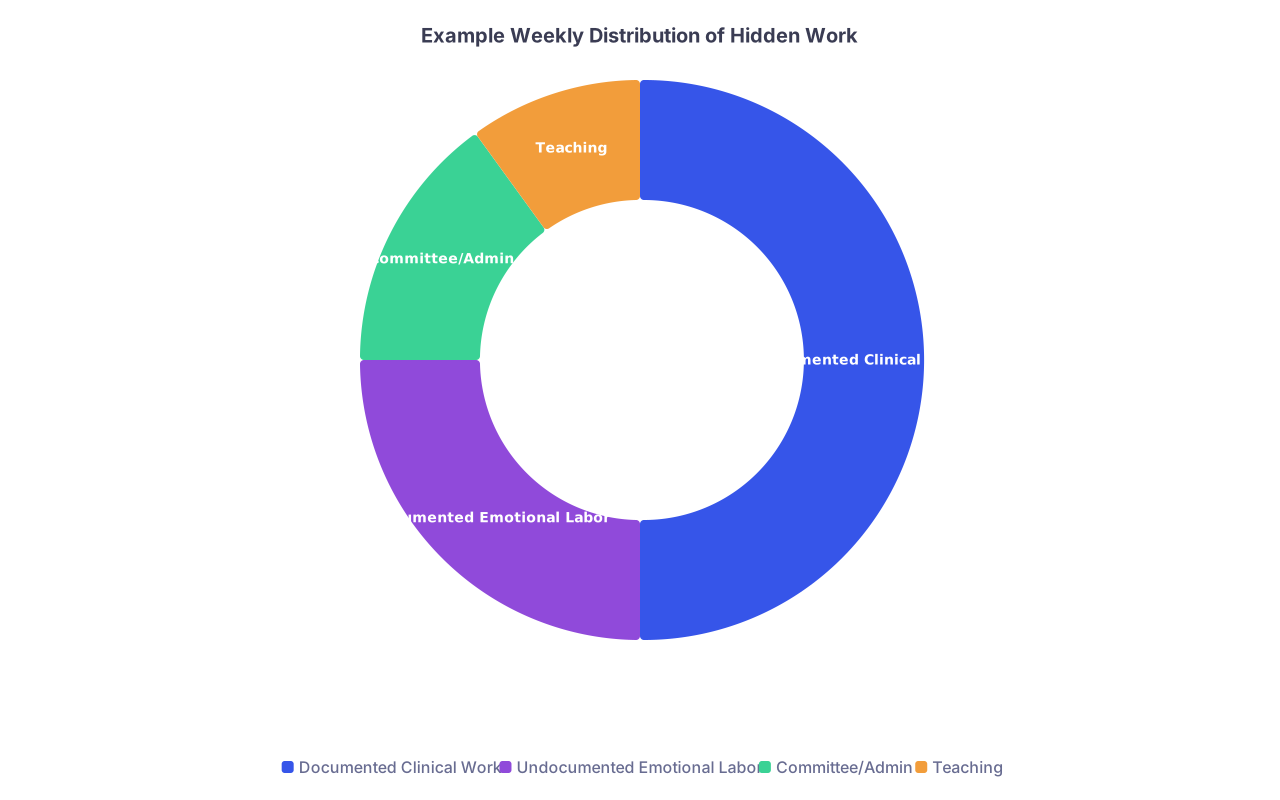
Example Weekly Distribution of Hidden Work Category Value Documented Clinical Work 50 Undocumented Emotional Labor 25 Committee/Admin 15 Teaching 10 Those numbers help when you renegotiate expectations or ask for protected time.
Set explicit boundaries early—and say the quiet part out loud.
Example phrases:
- Oncology: “I’m happy to take this family meeting, but over time these add up. We need a fair distribution of difficult conversations across the team.”
- OB/GYN: “I can sit with this grieving patient now, but I also have two inductions and a section—let’s share this support role so care is both compassionate and safe.”
- Cardiology: “I’m interested in leading more structural cases. Let’s map a path so I get the case volume I need instead of defaulting to clinic overflow.”
You will feel “difficult” when you say these things. You are not. You are being clear.
Align your ethical values with the specialty’s hardest problems.
- In oncology: can you tolerate prolonged exposure to death and suffering without collapsing or going numb? Can you accept that cure is not always the metric?
- In OB/GYN: can you live with being on the front line of reproductive justice, abortion restrictions, and maternal mortality disparities?
- In cardiology: can you handle a culture that glamorizes procedure and speed and still insist on equity, evidence, and humanity?
If the specialty’s core ethical dilemmas interest you rather than only exhaust you, you are in the right neighborhood.
A brief visual: different career stress curves
One way I frame this for residents deciding among these is with a simple mental timeline.
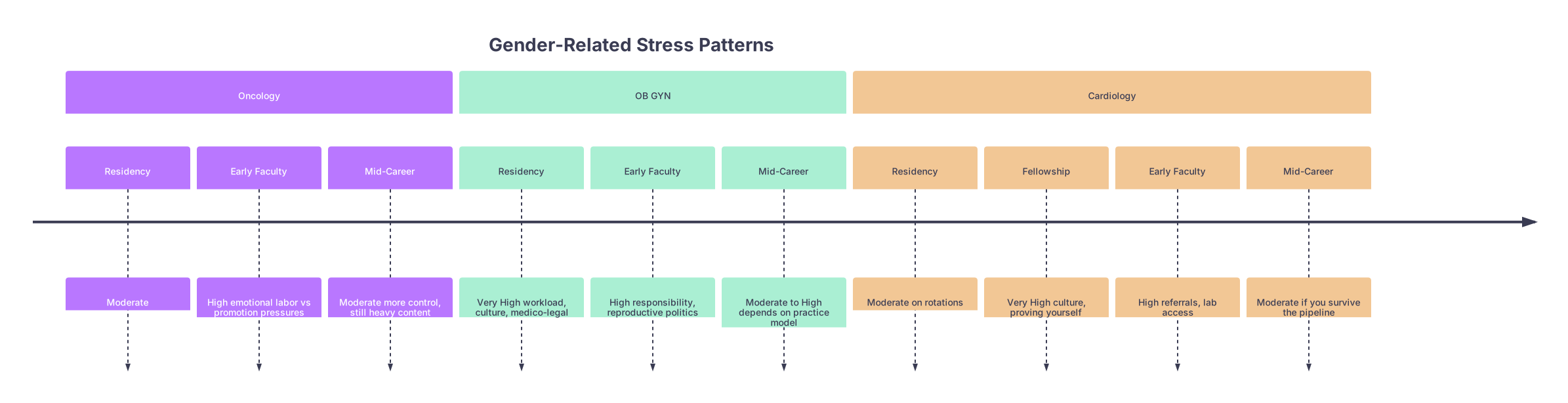
| Period | Event |
|---|---|
| Oncology - Residency | Moderate |
| Oncology - Early Faculty | High emotional labor vs promotion pressures |
| Oncology - Mid-Career | Moderate more control, still heavy content |
| OB GYN - Residency | Very High workload, culture, medico-legal |
| OB GYN - Early Faculty | High responsibility, reproductive politics |
| OB GYN - Mid-Career | Moderate to High depends on practice model |
| Cardiology - Residency | Moderate on rotations |
| Cardiology - Fellowship | Very High culture, proving yourself |
| Cardiology - Early Faculty | High referrals, lab access |
| Cardiology - Mid-Career | Moderate if you survive the pipeline |
Not scientific. But it matches what many women report informally.
FAQs
1. If I care about women’s health and gender equity, should I automatically choose OB/GYN?
No. OB/GYN is a powerful place to work on women’s health, but it is also punishing and highly politicized. You can do serious work on women’s health in oncology (breast, GYN cancers, survivorship) and cardiology (women’s heart disease, pregnancy‑related cardiomyopathy, cardio‑obstetrics). Choose the physiology and day‑to‑day work you actually enjoy, then layer advocacy on top of that.
2. Is cardiology “too hostile” for women, or is that exaggerated?
It is not universally hostile, but the barriers are real. Some programs are genuinely supportive and actively recruiting women into cath/EP. Others are 20 years behind. The hostility is often subtle—doubts about your commitment, biased case assignment—rather than overt harassment. Talk to actual women fellows and attendings in specific programs. The variation between institutions is massive.
3. Does the emotional labor burden in oncology and OB/GYN inevitably lead to burnout for women?
Not inevitably. Women who survive long term in these fields usually do three things: they build strong peer support, they set firm boundaries around availability, and they secure structures (protected time, psychotherapy, manageable call) that buffer the emotional load. The problem is not “women are too emotional”; the problem is systems that exploit that skill without compensating or supporting it.
4. Will choosing a “more female” specialty like OB/GYN protect me from sexism?
No. The sexism just looks different. You may be surrounded by women but still see men disproportionately in power. You may deal less with “are you the nurse?” and more with “you’re so caring, can you take on this extra?” You trade one pattern of bias for another. The question is: which environment can you tolerate and influence while still doing work you find meaningful?
5. How early in training should I start worrying about these gender dynamics?
You do not need to decide your specialty in MS1 based on gender politics. But by clinical rotations, you should be observing: who has power, who gets interrupted, who gets certain patients or procedures, how leaders talk about pregnancy and parenting. Start collecting data. Then, when you are serious about applying to one of these specialties, interrogate programs about their culture explicitly. Your future self will thank you.
Key takeaways:
- Gender dynamics are not uniform: oncology, OB/GYN, and cardiology each distort them in distinct ways that alter your daily work and long‑term trajectory.
- Emotional labor, structural power, and procedural access are the three levers where gender shows up differently in these specialties; ignore them and you will be blindsided.
- You can thrive as a woman in any of these fields—but only if you walk in with clear eyes, strategic mentorship, and the willingness to push back against how your gender is quietly scripting your role.