
The biggest secret about male dominance in medicine is not raw talent, not “passion,” and not even bias in evaluations. It’s sponsorship networks. And they’re operating around you every single day while people keep telling you to “find a mentor.”
Let me be blunt: mentoring is what they tell women to ask for. Sponsorship is what quietly makes men chairs, deans, and “rising stars.”
You’re in medicine. You see the gendered outcomes: who gets the invited talks, the choice rotations, the “you’d be great for this role” comments. That’s not random. That’s a system. And most women aren’t just outside it—they don’t even know what it’s called.
I’m going to walk you through how these hidden networks actually work, what they look like in real life, and how you can plug into them without selling your soul or playing the caricature people love to accuse ambitious women of being.
Mentors vs Sponsors: The Lie You’ve Been Sold
Here’s the reality faculty talk about behind closed doors:
Mentors improve you.
Sponsors move you.
Most institutions push mentoring programs for women because they’re safe and PR-friendly. Panels, coffee chats, “professional development” mornings. It looks good in photos. But promotions committees aren’t run by your mentor list. They’re influenced—often heavily—by your sponsors.
Sponsors are the ones who:
- Say your name when you’re not in the room.
- Put you on the grant, the paper, the committee.
- Email the conference organizer: “You should invite Dr. X for this panel.”
- Tell the chief: “Let her run that project; she’s ready.”
Here’s what male sponsorship looks like in practice:
- The senior male cardiologist who tells his buddy on the national guideline committee, “Use Patel as site PI, she’ll deliver.” That one call jumps her from “solid clinician” to “national trial investigator.”
- The program director who pulls the male PGY-3 aside and says, “You should apply to the fellowship at MGH—I’ll call the PD there for you.” No official letter. Just a phone call.
Those phone calls? They’re the currency of advancement.
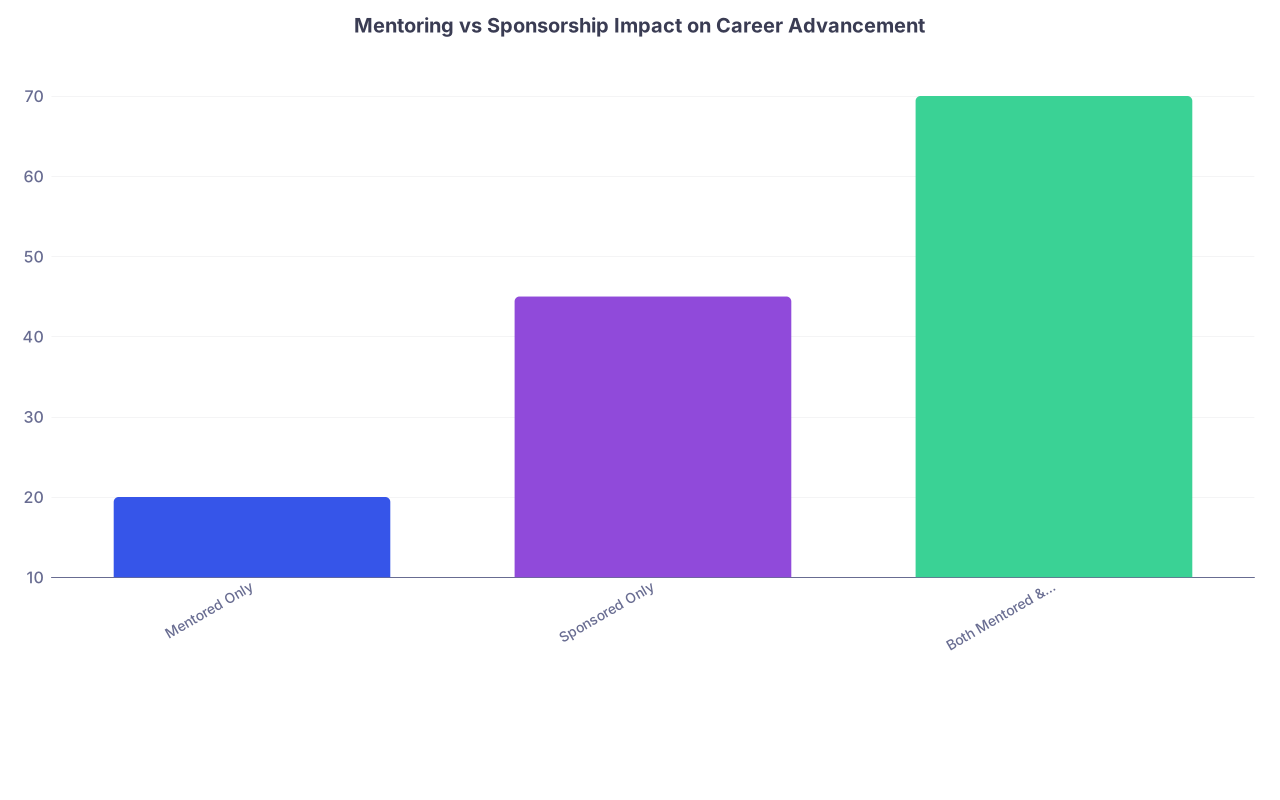
| Category | Value |
|---|---|
| Mentored Only | 20 |
| Sponsored Only | 45 |
| Both Mentored & Sponsored | 70 |
When I sit in promotion meetings, I see it over and over. The CV matters, sure. But the tone around your name—who vouches for you, who frames your “trajectory”—matters just as much.
Mentors give advice: “You should write more.”
Sponsors create reality: “I’ve put her as co-I on my next study.”
You need both. But if you have to pick where to focus your limited time and political capital? You choose sponsorship.
How Male Sponsorship Networks Actually Operate
You’re not imagining it. The guys do get looped in more. But it’s not always a smoky backroom conspiracy. It’s habits. Comfort. Familiarity. And inertia.
Here’s the anatomy of a typical male sponsorship pipeline:
Early informal visibility
Male student or resident shows up to “optional” things—department happy hours, case conferences, sports-watching nights. Attending notices: “He’s around. He’s interested.” The attending starts using his name in conversation. That’s the first hook.Low-risk favors first
“Hey, can you help me with this case presentation?”
“Want to take a stab at the first draft of this review?”
These small asks create a justification later: “He’s been working with me on X.”Credibility testing
Sponsor watches: Does he meet deadlines? Ask smart questions? Not embarrass them? If yes, the door opens broader.
If no, the relationship stays social and goes nowhere.Deployment into opportunities
This is where the magic happens:- “Put him on that podium case at grand rounds.”
- “Let him present the abstract at ACC.”
- “We need someone to lead the QI initiative—give it to him.”
Narrative building
The sponsor then starts telling a story about this person: “He’s exceptional.” “He’s one of our best.” “He’s on a leadership path.”
People start repeating it. The story becomes reality.
All of this happens in hallways, call rooms, and hotel bars at conferences—not in the official “professional development” sessions women get herded into.
The most dangerous part? Men are often not consciously scheming. They’re just “helping the people they click with.” Which, predictably, tends to be people who look, sound, and live like them.
The Gap Women Face (That No One Spells Out)
Women don’t lack mentoring. Every “Women in Medicine” initiative throws mentors at you. Panels, speed mentoring, luncheons with visiting professors. Good intent, weak outcomes.
The structural disadvantages on the sponsorship side are very real:
Less informal time with power.
You’re leaving early to pick up your kid. You’re not at the bar at midnight. You’re not invited to the golf weekend. That’s where the real bonds form.The “optics” trap.
Senior men hesitate to be seen as too close to junior women because of gossip or #MeToo anxiety. So they keep it cordial, distant, “professional.” Which sounds nice until you realize: all the real sponsorship is inherently personal.Over-mentoring, under-sponsoring.
Women get advice. Feedback. Coaching. Men get “I’ll make a few calls.” Your calendar is full. Your name is not.Bias in who’s assumed “leadership material.”
Men get “he’s aggressive, he’s a go-getter.”
Women get “she’s intense” or “she’s not quite ready” or “her situation is complicated with young kids.”
So you end up with women who are hyper-competent, over-prepared, and significantly under-placed.
Let me be crystal clear: you will not “outwork” a closed sponsorship gap by just being excellent. You need access.
How to Identify Real Sponsors (Not Just Nice Mentors)
Most women waste years orbiting around people who will never actually sponsor them.
You’re looking for three things:
Power that matters
Titles are a clue, but not the whole story. The associate professor who quietly runs the fellowship match is more powerful for you than the full professor who’s never on a single decision committee.Look for:
- People who sit on promotions committees.
- Program or fellowship directors.
- Section/division chiefs.
- High-grant-volume PIs who constantly get funded.
- The person everyone checks with before they “announce” decisions.
Track record of moving others
Don’t listen to what they say at panels. Look at who’s succeeded around them.Who got the best fellowships? The best jobs? The national presentations? You can usually trace it back to 3–5 “kingmakers” in any department.
Willingness to attach their name
Sponsors put their reputation on the line. If someone only gives you feedback but never offers, “I can introduce you to X” or “I’ll suggest your name for Y,” they’re a mentor—valuable, but not the same.
| Behavior | Mentor Only | True Sponsor |
|---|---|---|
| Gives career advice | Yes | Yes |
| Reviews CV or personal statement | Yes | Sometimes |
| Invites you onto key projects | Sometimes | Often |
| Recommends you for roles/talks | Rarely | Routinely |
| Makes private calls/emails for you | Almost never | Regularly |
Once you know what you’re looking for, the landscape changes. You stop chasing “inspiring” people and start aligning with powerful, active gate-openers.
How Women Can Ethically Tap Into These Networks
Let’s talk tactics. None of this is about becoming someone you hate or pretending you love golf.
The goal is simple: make it very easy and very low-risk for powerful people to bet on you.
Step 1: Be strategically visible to the right people
No, you don’t need to go to every social thing. But you do need targeted exposure.
- Volunteer for the talk where the section chief will be in the room.
- Present at M&M with the most influential attendings present, not just whoever is “nicer.”
- Show up to departmental grand rounds and ask one intelligent, concise question occasionally. People notice names that keep appearing.
You’re not auditioning all the time. You’re creating a pattern.
Step 2: Make a concrete ask that opens the sponsorship door
Most women ask like this: “Do you have any advice for someone interested in X?”
Most sponsors act on this: “Is there a way I could get involved in [specific project/committee/initiative] you’re working on?”
Try:
“I’m serious about a career in academic cardiology, especially outcomes research. If there’s ever an opportunity to help with a manuscript or data set—even grunt work—I’d like to be considered.”
Specific. Useful. Easy to say yes to.
Step 3: Over-deliver quietly and predictably
This is where most people—men and women—screw it up.
If a sponsor gives you a task, they’re not testing your brilliance. They’re testing your reliability.
- Turn things in early.
- Make their life easier, not harder.
- Don’t CC fifteen people. Don’t make excuses. Fix things.
Once they internally label you as “safe to deploy,” the door cracks open further. That label is gold.
Step 4: Trigger actual sponsorship behavior
At some point you need to move from “useful helper” to “person I push forward.”
You can nudge this without sounding entitled:
“Thank you again for looping me into the QI project. As I think about next steps in my career, I’d really value your perspective on where I might be ready for more responsibility—whether that’s presenting this work externally, leading a new piece of it, or being considered for departmental roles.”
This plants three ideas in their head:
- Presenting (talks, conferences)
- Leadership (titles, roles)
- Departmental standing
You’re giving them a menu of sponsorship moves without demanding any single one.
Navigating the Gendered Landmines
There are some traps here that are very real for women. Ignore them and you’ll get burned. Overreact to them and you’ll stay stuck.
Trap 1: The “favorite” or “pet” label
When a man sponsors a man, he’s “developing leaders.”
When a man sponsors a woman, some people call her “his favorite” or worse.
You counter this with breadth and substance.
- Work with more than one sponsor over time. Two or three, ideally across roles.
- Have tangible outputs: talks, papers, committees. Sponsors plus visible work ≠ pet. It looks like merit.
Trap 2: The “she slept her way up” whisper
Yes, people still say this. No, you cannot control all of it.
What you can do:
- Maintain professional boundaries—especially around travel, late-night meetings, alcohol.
- Be visibly as close to senior women and neutral male allies as to senior men; balance protects you.
- Be seen grinding. When your achievements are obviously built on work, the gossip looks petty.
Trap 3: Self-sabotage as “not wanting to play the game”
I’ve heard so many high-potential women say, “If that’s the game, I’m not playing.” Fine. But then be honest with yourself about the ceiling you’re accepting.
This isn’t about compromising ethics. It’s about choosing to engage with the power structures that already exist—so that you’re in position to change them later.
Building Your Own Sponsorship Web (Not Just Borrowing Theirs)
Here’s the next level: you can’t just depend on male networks forever. You need to be part of building alternative networks that actually work as well as theirs.
This starts smaller than you think.
Horizontal sponsorship
Most people only think vertically: senior → junior. Start adding horizontal: peer → peer.
You can:
- Put a colleague’s name forward for a speaking invite you can’t take.
- Suggest a co-resident lead the next QI project and tell the attending why she’s the right person.
- Share opportunities in group chats with, “This would be great for [Name]. She did X, Y, Z.”
That’s sponsorship. On your scale. Right now.
Micro-sponsorship with credibility
Don’t oversell people who aren’t ready. That kills your own capital.
Instead, be specific and accurate:
“She’s early, but she’s incredibly reliable and has strong data skills. If you need someone to manage the registry side, she’ll crush it.”
That’s the voice sponsors use behind closed doors. Calm, specific, confident.

| Step | Description |
|---|---|
| Step 1 | Initial Contact |
| Step 2 | Mentoring Relationship |
| Step 3 | Visible Reliability |
| Step 4 | Small Opportunities |
| Step 5 | Strong Performance |
| Step 6 | Active Sponsorship |
| Step 7 | Roles Talks Promotions |
| Step 8 | Trusted by Sponsor |
The Ethics Question: Is This Just Manipulation?
Let me answer the thing you’re probably thinking: “Isn’t this just playing politics? Isn’t advancement supposed to be merit-based?”
You’re not wrong to be irritated. Merit should matter. But medicine is human. Humans use judgment, shortcuts, and stories. Sponsorship is just the formal name for what humans do when they believe in someone and have power to help them.
Here’s the ethical line I use:
- Are you misrepresenting your skills or readiness? Then yes, that’s a problem.
- Are you building real relationships, doing real work, and asking people with power to notice and back you? That’s not manipulation. That’s sanity.
The unethical part is a system where only men get that backing because they’re the ones in the golf foursome. You pushing yourself into the frame is not the sin here.
Practical Scripts You Can Steal
You don’t have time to reinvent the language. So use what works.
To convert a casual mentor into a potential sponsor:
“I’ve really appreciated your advice about [X]. If you ever hear about a project or committee where someone with my skills could contribute, I’d be grateful if you’d keep me in mind.”
To nudge someone toward an actual opportunity:
“I’m very interested in getting experience presenting at regional or national meetings. If there’s ever a chance to present work from our group, I’d love the opportunity to do that.”
To ask for behind-the-scenes advocacy without sounding needy:
“As I’m thinking about promotion/fellowship applications, I know informal impressions matter. If you feel comfortable doing so, I’d really appreciate it if you’d mention my name when opportunities that fit my trajectory come up.”
Simple. Direct. Professional.