
The silence around parental leave in residency interviews is not an accident. It’s a strategy—and it’s messing with your head.
You’re not crazy for thinking: “If I ask about maternity leave, they’ll rank me lower.” That fear is everywhere. Whispered in locker rooms. Half-joked about on away rotations. Smuggled into “friendly advice” like: “Just… don’t bring up kids.”
Let me say this bluntly: the system is set up so you don’t feel safe asking. And you’re stuck trying to choose between your body, your future kids, and your Match chances. It’s disgusting. And yes, I worry about it too.
So let’s actually sort out three separate questions:
- Can they legally rank you lower for asking about parental leave?
- Will some programs quietly do it anyway?
- How do you protect yourself and still get the info you need?
Because pretending this is just a “follow your heart” situation is how people end up sobbing PGY-1 at 2 am, pumping in a supply closet with no outlet, wondering why they didn’t ask harder questions beforehand.
What the Rules Say vs What Actually Happens
Here’s the clean version first: under NRMP and federal law, they cannot legally discriminate based on pregnancy, family plans, or gender. Programs aren’t supposed to:
- Ask if you plan to have kids
- Ask if you’re pregnant
- Punish you for asking about parental leave
- Rank you lower for your gender or parental status
On paper, asking about parental leave policies is 100% allowed. You’re in the clear.
But you and I both know that’s not really what you’re asking.
You’re asking: “Even if they’re not supposed to, will they silently move me down their list because I look like a ‘future maternity leave problem’?”
I hate that this is a rational fear. I really do. But yes—some places will see you as a risk.
Not all. Not even most, honestly. But enough that women start self-censoring. Enough that senior residents whisper things like, “I mean, technically it’s fine to ask… but I wouldn’t.”
So you’re trying to operate inside this unstable gray zone:
- Protected by formal rules
- Vulnerable to private bias
And you have to make strategy decisions while your brain is screaming, “What if this one question costs me my dream program?”
The Ugly Truth: Who Actually Gets Penalized?
There’s a pattern. The people most worried about asking about parental leave are:
- Women in childbearing years
- Especially those in OB/GYN, surgery, anesthesia, EM, or other “coverage-sensitive” fields
- Those who look like they could be planning pregnancy (married, long-term partner, etc.)
No one cares if a male applicant casually says, “Yeah, my wife and I might have kids during residency.” People nod, maybe even congratulate him.
A woman even hinting at pregnancy? Totally different energy. Suddenly people start thinking about “coverage” and “continuity” and “fairness to co-residents.”
You know how many times I’ve heard variations of:
- “One of our residents had a baby and it was really hard on the rest of us.”
- “We’re like a family here, we just help each other out when someone’s on leave.”
- “We support parental leave… but you know, we’re a small program so it can be challenging.”
That last one is code for: if you get pregnant, expect guilt.
So yes, there are programs where asking about parental leave will flip a mental switch: “This applicant is a likely maternity leave risk.” And they might not rank you as high. Not because they’re allowed to. Because they’re human and biased and thinking about call schedules, not your uterus rights.
That’s the worst-case scenario you’re scared of. And it’s not imaginary.
But Here’s What You’re Forgetting: This Is a Two-Sided Risk
You keep obsessing over one risk: “If I ask, I might get ranked lower.”
You’re ignoring the other risk: “If I don’t ask, I might end up somewhere that will treat me like a burden the minute I get pregnant.”
And that second risk? That one can ruin three years of your life.
Bad parental support in residency doesn’t look like a single bad conversation. It looks like:
- You on rotations where no one covered you fairly
- Passive-aggressive comments every time you step away to pump
- Your evals subtly tanking because you “weren’t as present” postpartum
- Being guilted into taking less leave than you’re legally allowed
- Your mental health cratering while everyone pretends they’re “so happy for you”
You’re not choosing between:
- Perfect match chances
vs - Slightly more information about policies
You’re choosing between:
- Protecting your rank list today
vs - Protecting your future self when you’re bleeding, sleep-deprived, and trying to keep a newborn alive while also cross-covering 50 patients overnight
That’s the real tradeoff. And it’s brutal.
What You Can Safely Ask (and How to Phrase It)
You’re scared because you think any mention of family = red flag. That’s not quite true. There’s a smarter way to do this.
Target the system, not your personal plans.
Instead of:
“I’m planning to have kids during residency. How is maternity leave handled?”
Try:
“I’m really interested in how the program supports residents during major life events, like illness or parental leave. How is coverage typically handled when someone takes leave?”
You don’t say you’re pregnant. You don’t say you’re trying. You frame it as: “I care about human beings being treated like human beings.”
Here are specific question templates you can use:
- “What is the official parental leave policy for residents? Is it paid, and how many weeks are typically taken?”
- “Have any residents taken parental leave in the last few years? How did that work in practice—for them and for their co-residents?”
- “How does the program handle meeting ACGME requirements if someone takes a longer leave—are there options to extend training, adjust rotations, etc.?”
- “Are there lactation rooms close to clinical areas? How do residents practically get time to pump during busy rotations?”
Notice: all of these are about structure, not your personal life.
If someone decides to rank you lower just for asking those questions? They’re telling you exactly who they are. And honestly, that’s information you needed before you committed the next 3–7 years of your life to them.
Who to Ask, When to Ask
You don’t have to launch into parental leave questions in your first faculty interview with the PD staring at you like you’re a Step 1 score.
You’ve got options.
Residents are your safest intel source
Current residents—especially women and especially those with kids—are gold.
Ask them things like:
- “Do you feel people who’ve taken parental leave here have been supported or resented?”
- “If someone needed to pump, did the culture actually allow it, or was it just ‘on paper’ support?”
- “Do you know anyone who delayed or changed their baby plans because of this program?”
You’ll hear the truth in their tone even if they’re being careful.
And you can do this in breakout rooms, socials, or follow-up emails. Doesn’t have to be on-record in front of the PD.
Timing matters
If you’re terrified of asking during the interview day, you can:
- Wait until post-interview communication (if the program allows it)
- Email the program coordinator: “Could you share the written parental leave policy for residents?”
- Ask at second-look events or informal Q&As
Or—this is underrated—wait until after you’ve made an initial draft of your rank list, then only dig deeper on the places you’re already ranking high. No point interrogating your #12 about lactation rooms.
Decoding Their Answers: Green Flags vs Red Flags
It’s not just what they say. It’s how they say it.

Green flag answers look like:
- “We’ve had several residents take parental leave in the last few years. We use a combination of schedule adjustments, elective time, and coverage so no one gets overburdened.”
- “We have a written policy I can send you—it includes X weeks paid leave, and residents often extend a bit more unpaid if they want.”
- “We worked with a resident last year who needed extra time postpartum; we adjusted her schedule and supported her extending residency slightly so she could meet all requirements.”
- “We have dedicated lactation rooms near the ICU and wards, and we protect time as best we can. The chiefs help with that.”
Red flag answers sound like:
- “We’re like a family. We just all pitch in.” (Translation: no structure, lots of guilt.)
- “We haven’t really had anyone take much leave recently.” (Translation: either culture is hostile or everyone is terrified.)
- “Well, technically there’s FMLA but with our schedule it’s tricky.”
- “It’s complicated with ACGME requirements, so people usually just take a week or two.”
If someone starts talking more about how “hard” it was on other residents than how they supported the person on leave? Believe them. That’s your future.
What the Data Side of Your Brain Needs to See
You might feel like everyone is against you. They’re not. The culture is (often) bad. But there are real, structural protections in place.
| Aspect | Typical Reality in Many Programs |
|---|---|
| Official leave policy | Exists in GME handbook, often underused or poorly advertised |
| Paid portion | 0–6 weeks paid, sometimes tied to vacation/sick time |
| Use of vacation | Frequently forced or strongly pressured to use for leave |
| Schedule adjustments | Patchwork coverage by co-residents, electives reworked |
| Impact on graduation | Short leaves usually fine, longer leaves may extend training |
And some specialties/programs are actually improving:
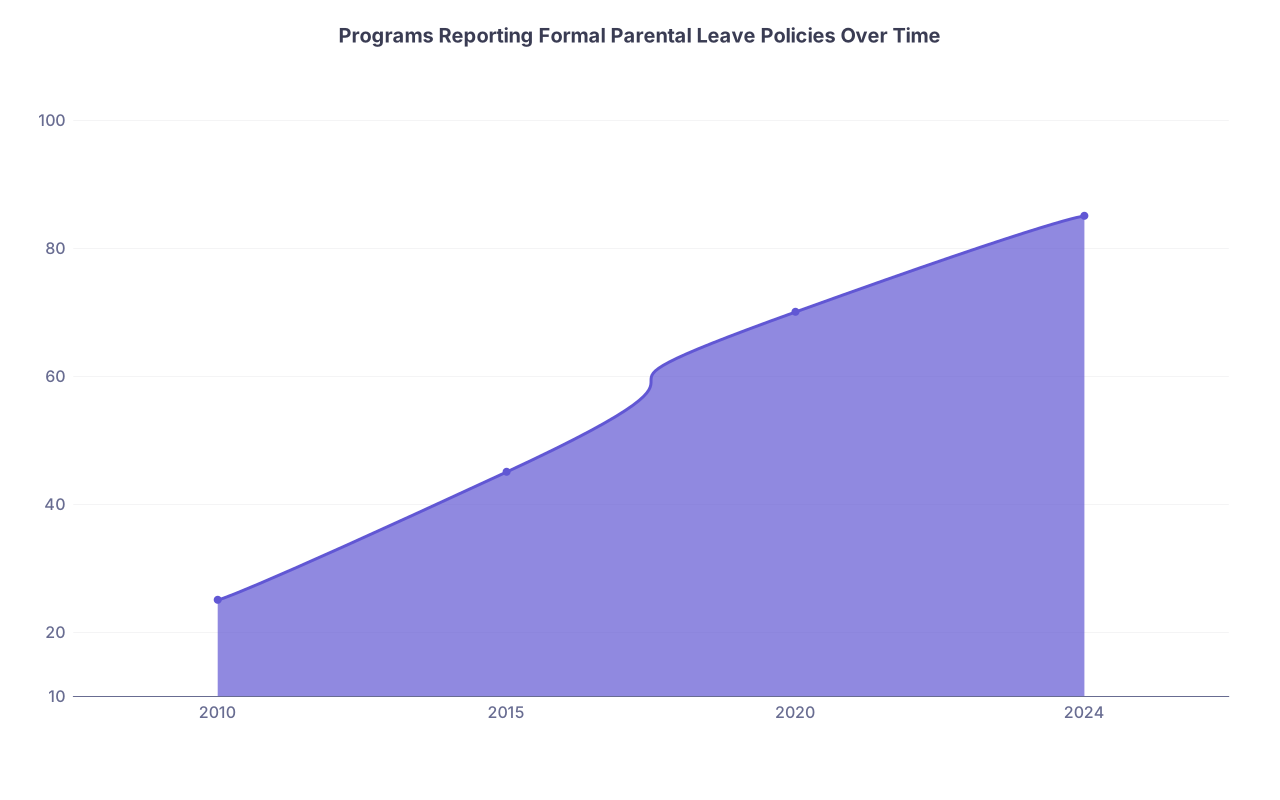
| Category | Value |
|---|---|
| 2010 | 25 |
| 2015 | 45 |
| 2020 | 70 |
| 2024 | 85 |
So no, you’re not asking for something outrageous. You’re asking how a basic human event is handled in a professional training environment. That’s not radical. That’s sanity.
How to Balance Fear vs Self-Respect
Let’s be honest: you might decide, “I’m too scared to ask. I just want to match.” I get it.
If that’s where your anxiety is right now, here’s a compromise approach:
- Don’t mention your personal baby plans at all. Keep it off the table.
- Quietly collect whatever you can: GME handbook, benefits PDF, HR website, state law.
- Ask residents vague but telling questions: “Do people feel supported when stuff happens outside work—health, family, kids?”
- Rank based partly on vibe: where did women residents actually look happy? Who had kids around? Who looked dead behind the eyes?
But if—even under all that fear—there’s a part of you that’s like, “I refuse to spend my reproductive years in a place that sees pregnancy as a problem,” then you have to ask more directly. Not recklessly. But clearly enough that you can tell who’s faking it.
Because here’s the awful scenario no one talks about: you stay silent, you match at a high-powered “prestige” place, you get pregnant PGY-2… and then realize that to them, you’re just coverage problem #47.
That’s not theoretical. That’s most of the horror stories I’ve heard.
One More Hard Truth: If Asking Drops You on Their List, They Were Never Your Program
This is the part I say to myself when my anxious brain starts screaming what-ifs:
If a program would mark me down simply for asking how they treat residents who have children, that’s not a place I’m willing to bleed for at 3 am on a Saturday.
And residency will ask you to bleed for it. In every way.
You deserve a program that sees you as a future physician and a future human, not just as a warm body for call.

| Step | Description |
|---|---|
| Step 1 | Applicant worries about asking |
| Step 2 | Ask residents discreetly |
| Step 3 | Assess culture and support |
| Step 4 | Review written policies |
| Step 5 | Adjust rank list based on red flags |
| Step 6 | Need this info to protect future self? |
And yes, there’s risk either way. You’re allowed to be scared. You’re allowed to want the match more than anything. You’re allowed to care about your future kids and still want a competitive specialty.
But don’t erase yourself from your own equation.

Quick Reality Check: You Are Not the Problem
You’re not the burden for wanting to know:
- If you can recover from childbirth without being punished
- If you’ll be allowed to pump without needing to fight every day
- If colleagues will see your pregnancy as normal, not as betrayal
The problem is a system built on the assumption that an “ideal resident” is either male or never pregnant.
You’re not breaking the system by asking about parental leave. You’re exposing it.
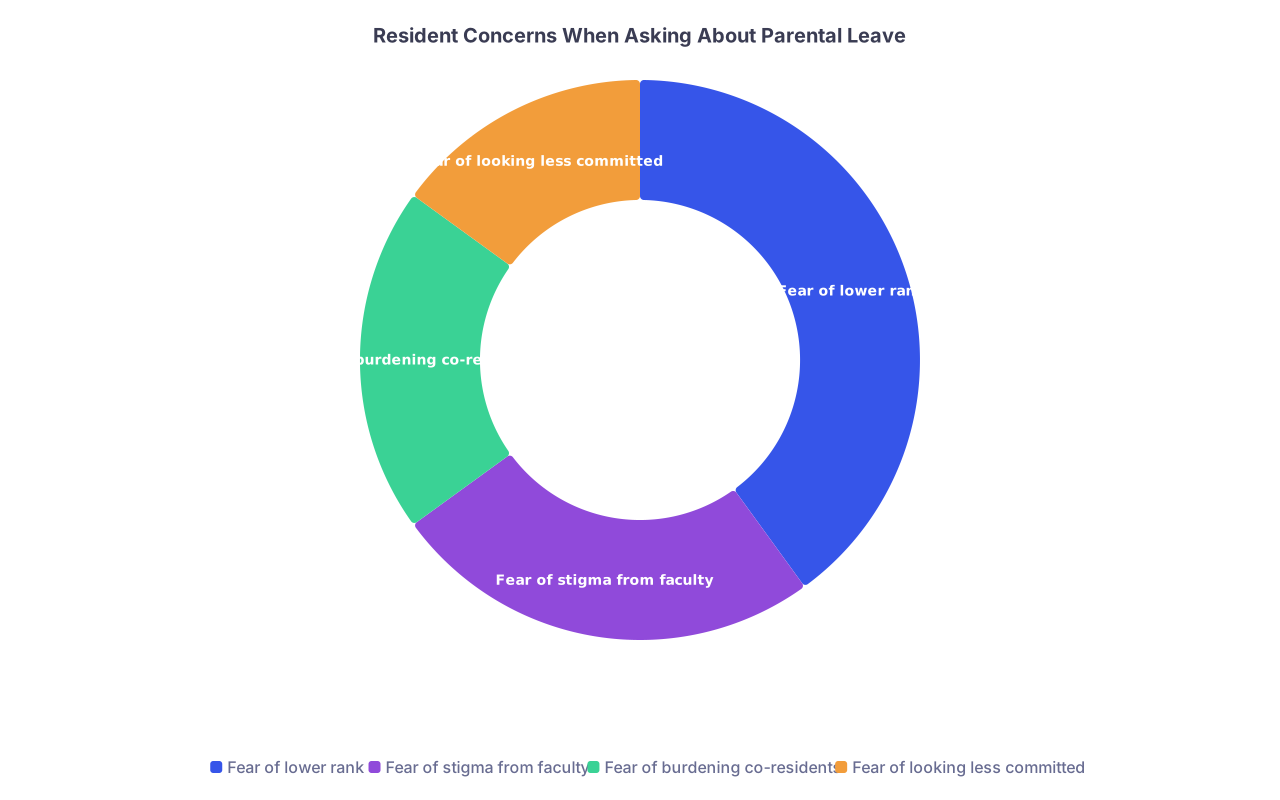
| Category | Value |
|---|---|
| Fear of lower rank | 40 |
| Fear of stigma from faculty | 25 |
| Fear of burdening co-residents | 20 |
| Fear of looking less committed | 15 |
And if a program reacts badly to that exposure? Let someone else match there. Let them have the residents who can pretend they don’t have a body or a family for 3–7 years.
That doesn’t have to be you.

Bottom Line: Should You Ask?
Here’s where I land, after spiraling about this more than I’d like to admit:
- Asking about policies and culture around parental leave, without revealing personal plans, is reasonable and defensible—and often necessary.
- If a program penalizes you for that, they’ve just saved you from years of misery you would have faced the moment you got pregnant.
- Use residents (especially women and parents) as your primary truth-tellers; use program leadership to confirm policies and read their attitudes.
You’re not wrong to be scared. You are wrong if you let that fear convince you that you don’t get to ask how they’ll treat you when you’re at your most vulnerable.
You’re allowed to care about both: matching well and not disappearing as a human being in the process.