
It’s late. You’ve technically “finished” your last exam or your last Sub-I, you’ve submitted ERAS, maybe you’ve even signed your contract. Everyone keeps saying, “You must be so excited for residency!” And you’re sitting there thinking:
“I don’t even know how I’m going to make it through the next week, let alone intern year.”
Your friends are talking about vacation plans. You’re googling phrases like “too burned out to start residency” and “what if I can’t handle being an intern” at 1:30 a.m., scrolling forums where people either say “suck it up” or “maybe medicine isn’t for you,” and neither option feels remotely comforting.
You keep wondering: what if I burn out before I even start? What if it’s not just normal fatigue, and I’m already broken?
Let’s talk about that. Honestly.
First: No, You’re Not “Defective” For Feeling This Way
Let me get this out of the way: you’re not the only one who’s hit a wall before residency even begins. You’re just one of the few actually admitting it to yourself.
I’ve watched people finish a brutal ICU Sub-I, drag themselves through interview season, and then quietly fall apart in February. They don’t announce it. They just… fade. Start showing up less. Stop answering texts. Say things like, “I think I peaked in M3,” half-joking, half-serious.
There’s this unspoken script everyone pretends to follow:
- M1–M2: grind
- M3: get destroyed but “grow”
- M4: magical vacation year, lots of brunch, light electives, travel
- Then residency, where you’re tired but “doing what you love,” so it’s all worth it
Reality? A lot of people hit emotional bankruptcy somewhere between the end of M3 and the beginning of residency. The timing actually makes sense: your adrenaline wears off, the Step score drama is mostly behind you, the matching game is done or almost done… and suddenly there’s space. Space to feel everything you’ve been stuffing down for years.
That doesn’t mean you’re not cut out for medicine. It means you’re human, and med training is structurally insane.
What Burnout Really Looks Like (Before It Explodes)
Burnout isn’t just “being tired.” You know how to function on not enough sleep. You’ve been doing that since MCAT. This is different.
I’m not going to throw a DSM list at you, but here’s what I’ve actually seen (and felt) in people who are circling burnout before residency starts.
1. Emotional numbness that feels wrong
Not “I had a long day” tired. More like:
- A patient told you something heartbreaking and you thought, “I should care more than I do.”
- You used to get excited about procedures, teaching, even good feedback. Now it’s just… flat.
- You get good news (matched, strong evals, nice email from an attending) and your brain’s like, “Cool,” and then nothing.
That hollow feeling where good things don’t land anymore? That’s a sign your emotional system is overwhelmed and has basically pulled the fire alarm and shut down.
2. Dread that doesn’t turn off
Some dread is normal. Big transition, new hospital, new expectations. Totally reasonable.
But watch the pattern:
- You’re not just nervous about intern year. You’re dreading tomorrow’s pre-rounding. Or even replying to a simple email.
- The closer residency gets, the more your stomach knots up… and not in a “big stage” way, but in a “trapped” way.
- Your calendar reminds you about orientation and you feel something close to panic, not butterflies.
Dread that’s chronic and heavy is a red flag. Your brain is telling you it has no reserves left for another climb.
3. Cognitive fog and “I used to be smart”
This one hits hard because medicine worships “sharp minds.” Signs:
- You read the same patient note three times and nothing sticks.
- You used to be quick during rounds. Now it feels like you’re two seconds behind everything.
- Studying for Step 3 or in-service exams feels like wading through wet cement. You’re not just unwilling; your brain feels offline.
And then the spiral hits: “If I’m already this slow now, how am I going to be an intern?” That fear is legitimate. The fog is your brain saying: we’ve been in overdrive too long.
4. Personality shift you recognize but can’t stop
You notice you’re… different.
- More irritable with friends, family, even patients. Tiny things set you off.
- You used to joke and laugh at work. Now everything feels like an attack or an obligation.
- People say, “You seem really stressed,” or “You’re not yourself lately,” and they’re not wrong.
This “I don’t like who I am right now” feeling? Also classic burnout territory.
5. The fantasy of escape… to anything else
This one is tricky because it’s so loaded with shame.
You catch yourself thinking:
- “What if I just… didn’t show up to intern orientation.”
- “Could I quit and work at a coffee shop?” (I’ve heard that exact line so many times.)
- “If I got into a minor car accident, not deadly, but enough to get a leave… that wouldn’t be so bad.”
That’s not weak. That’s your mind begging for an off-ramp. Desperately.
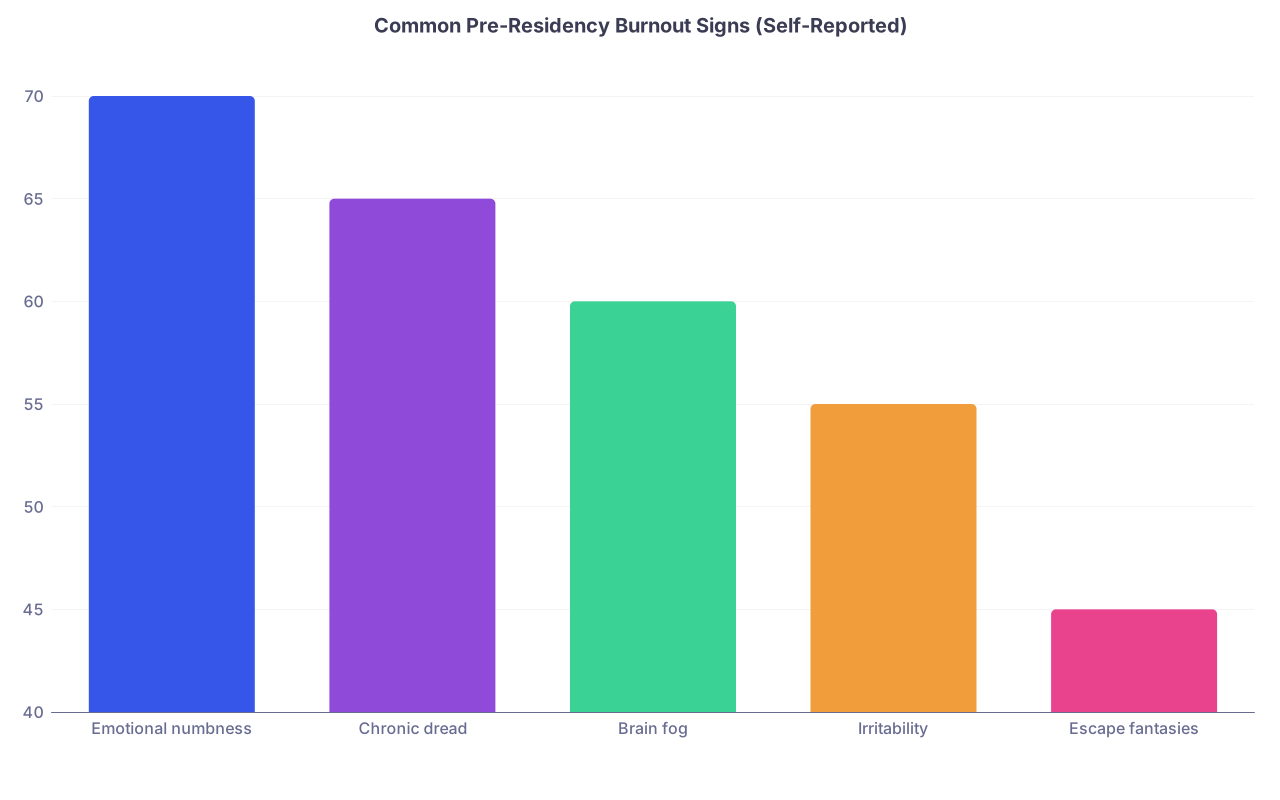
| Category | Value |
|---|---|
| Emotional numbness | 70 |
| Chronic dread | 65 |
| Brain fog | 60 |
| Irritability | 55 |
| Escape fantasies | 45 |
Big Fear: “If I’m Burned Out Now, I’ll Definitely Fail as an Intern”
Here’s the thought spiral I see all the time:
“I’m exhausted now, when things are supposedly ‘easier.’ Residency is objectively harder. Therefore, I will definitely crash and burn.”
Feels logical. It’s not that simple.
There are a few inconvenient truths:
You’ve been sprinting a marathon.
Most people hit residency already depleted because pre-residency life is this mess of exams, Sub-Is, interviews, financial anxiety, family expectations, and zero real time to recover. Residency is intense, yes, but it can be differently intense. Sometimes slightly more structured. Sometimes with an actual paycheck and a team that’s stable. A lot of people paradoxically feel emotionally better once they’re in a role with clear responsibilities instead of constantly hustling for the next line on the CV.Burnout now does not predict lifelong failure.
I’ve watched people who were complete shells by Match Week become solid, kind, competent interns once someone finally looked them in the eye and said, “You’re not okay, let’s fix that before we throw you into 28-hour calls.” Burnout is a state, not your identity.Ignoring it absolutely makes residency harder.
Here’s the part that does deserve your anxiety: if you push through without addressing any of this, residency will chew you up faster. That doesn’t mean you’re doomed. It means the timing actually matters. This weird limbo between med school and residency is one of the better times to intervene.
So no, “I’m burned out now” does not automatically translate to “I’m a doomed intern.” It does translate to: “I need to make an actual plan, not just white-knuckle it.”
How to Tell If You’re “Just Tired” or Actually Burning Out
You’re probably trying to self-triage. Is this normal exhaustion? Or something more serious?
Ask yourself a few blunt questions. No filter.
If I had a full month completely off with no obligations, no exams, and no guilt… would I expect to feel like myself again?
If your honest answer is, “Yeah, probably,” that’s more classic exhaustion. If it’s, “I don’t even know who ‘myself’ is anymore,” that’s deeper.Do I still feel some spark about anything in medicine?
Not forced enthusiasm for interviews. Not what you “should” say. Deep down: does any part of the work still feel meaningful or interesting? Or is it all gray?Is my body screaming at me?
Chronic headaches, stomach issues, insomnia, palpitations when you even think about the hospital. Your body usually starts yelling before your mind admits something’s wrong.Have I started thinking about hurting myself, even passively?
“I wish I wouldn’t wake up.” “If I disappeared, it would be easier.” That’s not “just burnout.” That’s a serious mental health emergency, and you need actual help, not just resilience quotes.

What You Can Actually Do Before Residency Starts
You’re probably expecting me to say “self-care” and “mindfulness.” I’m not going to. You’re too smart for that kind of superficial nonsense.
Let’s talk about things that actually move the needle, especially when you’re already on edge.
1. Get brutally honest with one real human
Not a group chat. Not Twitter. One person.
This could be:
- A mentor who has seen you on rotations and actually likes you
- A therapist (preferably someone who knows med culture)
- A dean or wellness person you marginally trust
Say the quiet part out loud: “I’m worried I’m burning out before residency and I don’t know what to do.” Use those words. That sentence unlocks more honest conversations than “I’m a bit stressed.”
You need a witness. Someone who can say, “You’re not crazy, this is real,” and also help you decide if this is:
- Fixable with rest + boundaries
- Suggesting you should slow down, delay, or adjust your start
- Tied to depression/anxiety that needs medical treatment
2. Treat the pre-residency months like actual rehab, not bonus hustle time
If you have any gap between graduation and start day, you have two options:
Option A (what many people do):
Fill every second with “productive” things—extra electives, moonlighting, research, more shadowing, “getting a head start.”
Option B (what most burned-out people should do):
Use this time like recovery after an injury. Not vacation. Actual rehab.
That means:
- Sleep becomes non-negotiable, not optional.
- You let go of the idea you must “maximize” this window with more career stuff.
- You structure your days around health, not achievement: therapy, movement, time outside, feeding yourself on time, reconnecting with non-medical parts of your identity.
Yes, you’ll feel guilty. Like you’re falling behind. Remind yourself: if your brain is the equipment you bring into residency, you’re repairing the equipment, not goofing off.

| Step | Description |
|---|---|
| Step 1 | Notice burnout signs |
| Step 2 | Immediate crisis help |
| Step 3 | Talk to mentor or dean |
| Step 4 | Plan focused recovery period |
| Step 5 | Consider therapy and schedule changes |
| Step 6 | Suicidal thoughts? |
| Step 7 | Functional at work? |
3. Actually consider the nuclear option: delaying residency
I know. This one terrifies you.
“Won’t that ruin my career?”
“Will programs think I’m weak?”
“Will I ever get another chance?”
I’ve watched people delay start for mental health. It’s not common, because the culture scares you out of even considering it. But it happens—and those people are typically healthier, more stable, and actually better residents when they start.
Is it easy? No. It requires uncomfortable conversations, paperwork, and swallowing a truckload of shame that shouldn’t be there in the first place. But if you’re at the point where you’re barely functioning, fantasizing about accidents, and hanging on by your fingernails, starting residency on time is not the flex you think it is.
This is where that mentor/dean/therapist conversation matters. You need someone who’s actually seen the process, not anonymous internet strangers yelling “never quit” from behind screens.
The Ethics Piece You’re Secretly Worried About
You’re not just anxious about yourself. You’re also thinking, “Is it even ethical for me to start residency like this? Am I putting patients at risk?”
You know what’s actually unethical? A system that grinds students down for years and then pretends shocked surprise when some of them show up to residency with nothing left in the tank.
You being worried about your capacity to care for patients is exactly the kind of self-awareness you want in a doctor.
A few hard truths:
- You will never start residency “fully ready.” No one does.
- Being tired, scared, and imperfect is normal.
- Showing up severely burned out, dissociated, and untreated for mental health issues absolutely affects patient care.
That doesn’t mean you need to be some zen, fully healed version of yourself to start. It means you have an obligation—to yourself and to patients—to not ignore obvious signs that you’re in trouble.
Ethics here looks like:
- Admitting you’re not okay, sooner rather than later
- Getting actual help (therapy, meds, schedule modifications, maybe a delay)
- Staying in conversation with supervisors if things worsen rather than hiding it until something breaks
You’re not a robot. You’re a human who treats humans. Your health is not separate from your professionalism. It’s part of it.

How to Read Your Own Signs Without Gaslighting Yourself
The hardest part of all this? Trusting your own perception. Medicine basically trains you to override your internal alarms.
So here’s a sanity check:
- If a close friend described exactly what you’re feeling—same fog, same dread, same fantasies of escape—what would you tell them?
- Would you say, “You’re fine, suck it up”? Or would you say, “You need help and rest, this isn’t sustainable”?
Whatever compassion you’d give that friend? You deserve at least that, bare minimum.
And if you’re still unsure, here’s a blunt line:
If your daily life feels like pure survival—no joy, no rest, just white-knuckling your way from one obligation to the next—you’re not “just tired.” That’s burnout territory. You don’t have to wait until you collapse in a call room to take yourself seriously.
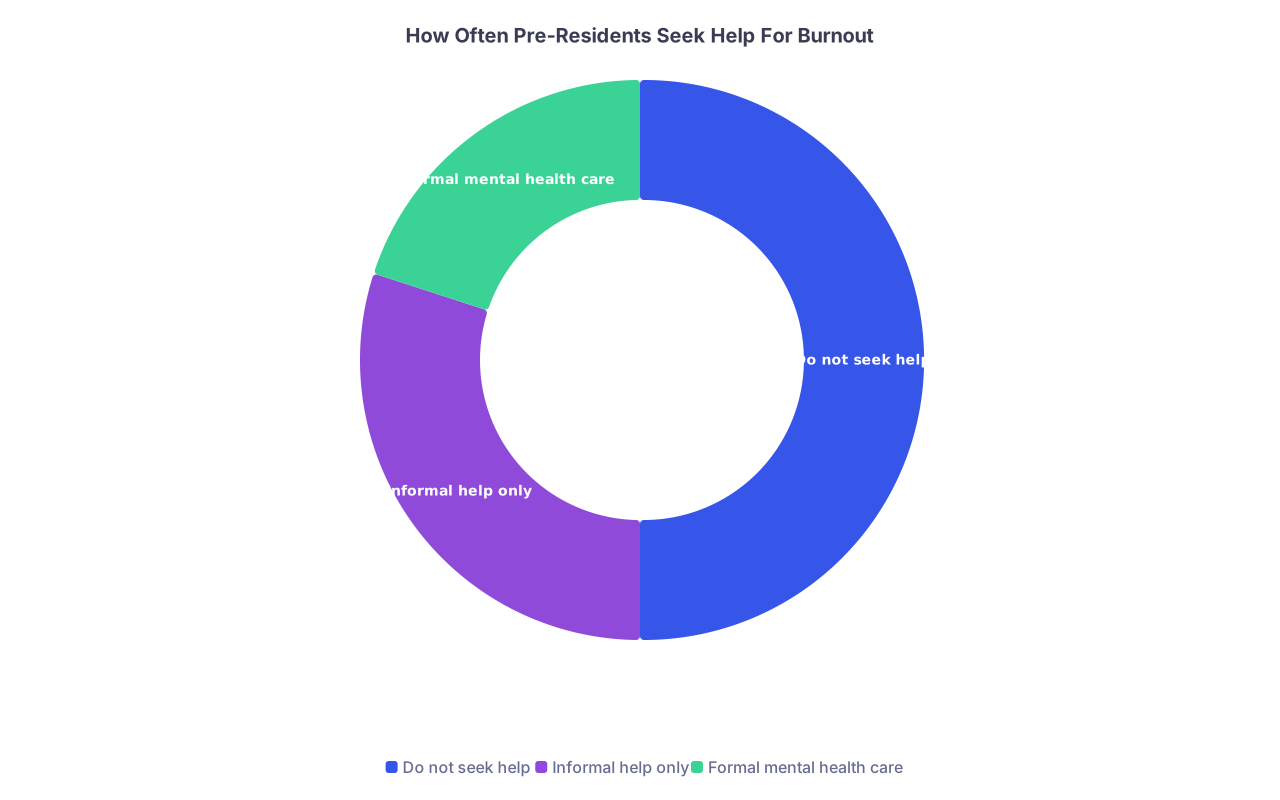
| Category | Value |
|---|---|
| Do not seek help | 50 |
| Informal help only | 30 |
| Formal mental health care | 20 |
The Part You Probably Need to Hear Out Loud
You’re not broken for feeling like you might burn out before residency. It doesn’t mean you picked the wrong career or that you’re secretly weaker than everyone else. It means you’ve been under sustained pressure for years, with very little genuine recovery, and your mind and body are raising a hand saying: “This isn’t sustainable.”
There are real risks in ignoring that. But there’s also real hope in catching it now instead of after a meltdown during intern year.
If you remember nothing else:
- Burnout before residency is common and reversible, not a permanent verdict on your ability to be a good doctor.
- You have ethical permission—actually, an ethical obligation—to take your own burnout seriously before you’re responsible for a full patient list.
- You don’t have to figure this out alone. Say the honest words to someone with power to help, and treat this pre-residency window like rehab, not extra-credit hustle time.
You’re allowed to arrive at residency as a human who needed help before you put on the white coat with MD/DO embroidered on it. That doesn’t make you less. That might be the thing that keeps you in this career long enough to actually do the good you went into it for.