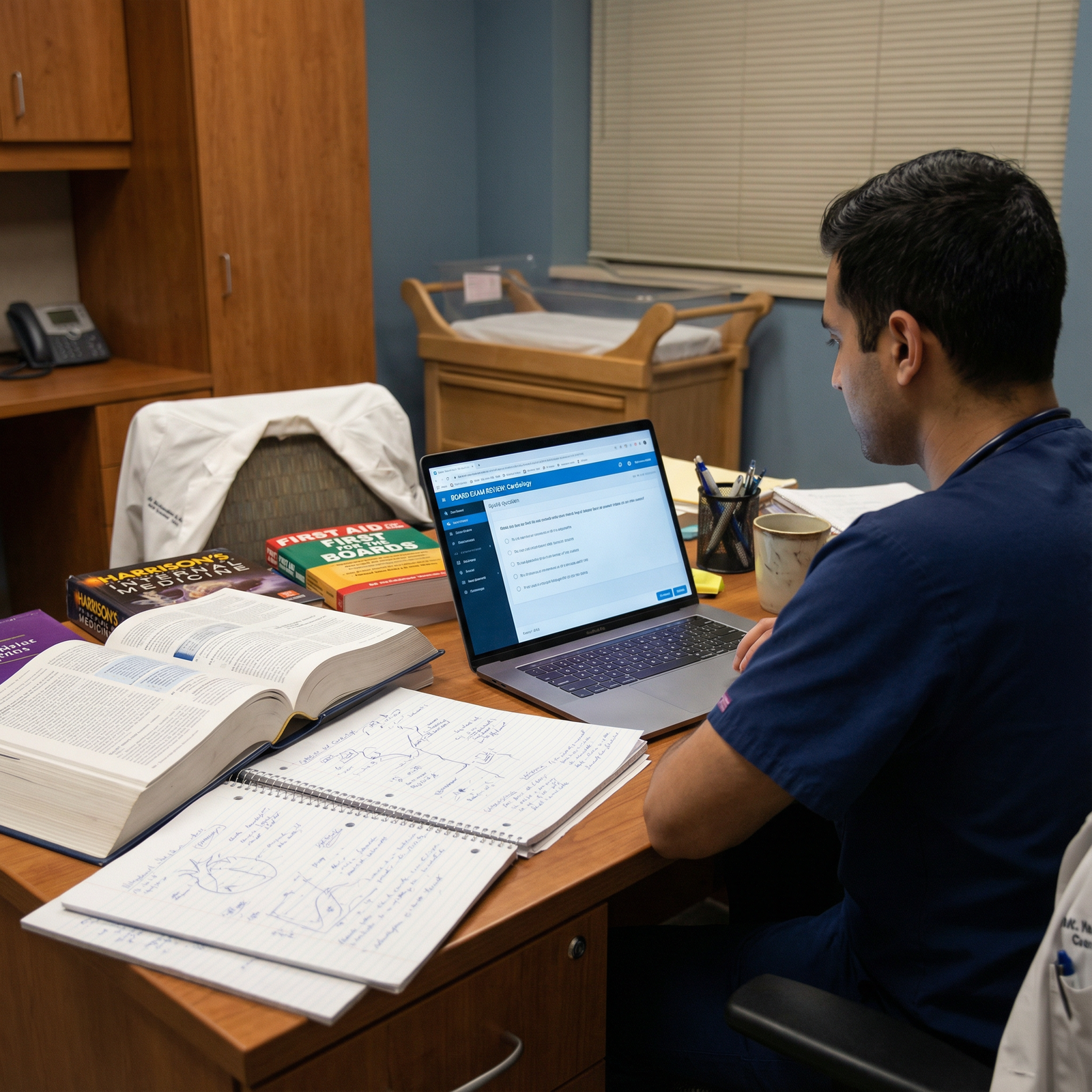
The dogma that “you must start serious board prep PGY-1 or you’re behind” is wrong. Flat-out.
The data and actual score distributions do not support the panic-driven culture of buying three question banks as an intern and doing 40 questions after a 28‑hour call. What they do support is something much less sexy: consistent clinical learning, smart timing, and targeted studying in the 6–9 months before your exam.
Let’s dismantle the myth properly.
What the Evidence Actually Shows About Timing
There is surprisingly little high-quality evidence that “the earlier the better” is true for board prep during residency. What we do have points in a different direction: proximity to the exam and quality of engagement matter more than starting during orientation month.
Look at two relevant pieces of data residents usually ignore:
In‑Training Exam (ITE) correlation
Across internal medicine, surgery, EM and others, program directors see the same pattern: PGY‑2 and PGY‑3 ITE scores are far more predictive of board pass rates than anything you did PGY‑1. Not your June enthusiasm, not your 5 a.m. Anki deck.Q‑bank completion vs timing
Studies and internal analyses from big question banks (UWorld, Rosh, TrueLearn) consistently show that total questions completed and performance near the test date correlate with board performance. No solid evidence that doing 50 questions a week starting July of intern year beats doing 100–150 per week in the last 6–8 months.
It gets more obvious if you actually look at how people who pass vs fail tend to structure their prep.
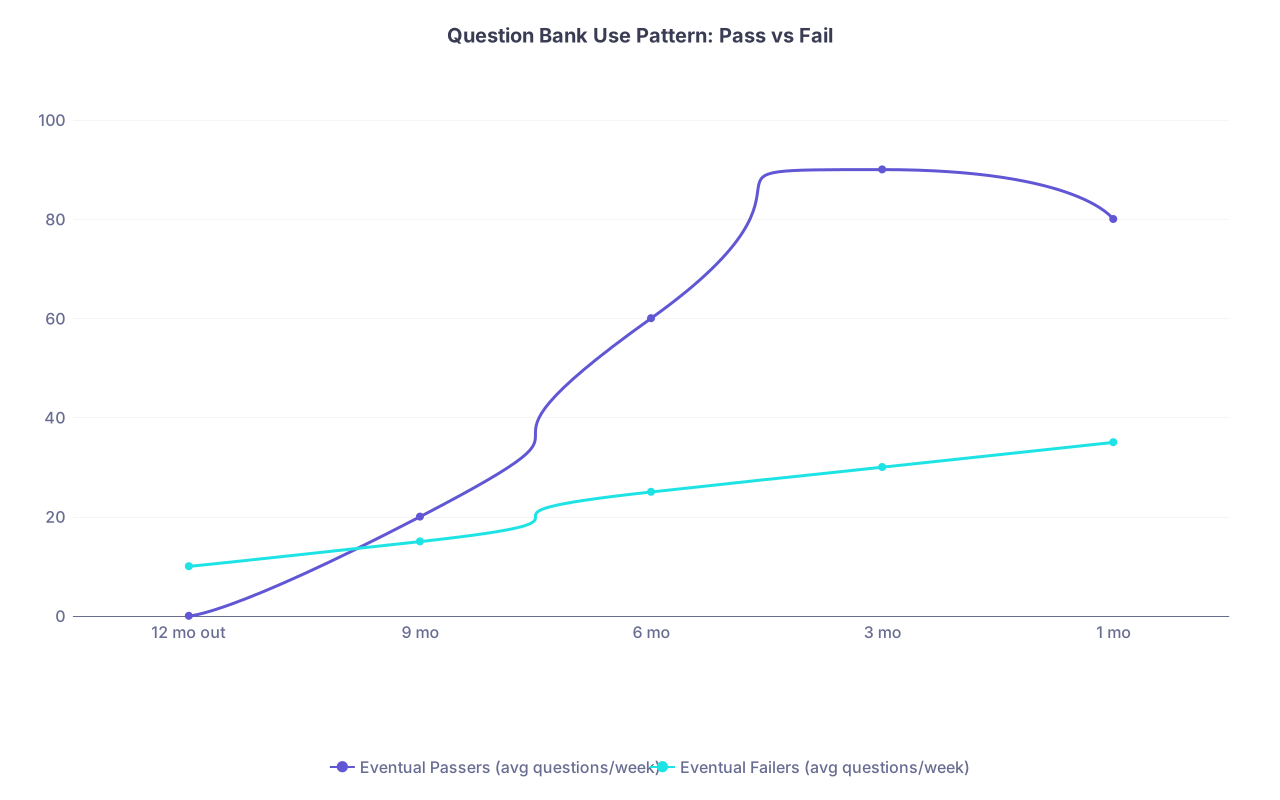
| Category | Eventual Passers (avg questions/week) | Eventual Failers (avg questions/week) |
|---|---|---|
| 12 mo out | 0 | 10 |
| 9 mo | 20 | 15 |
| 6 mo | 60 | 25 |
| 3 mo | 90 | 30 |
| 1 mo | 80 | 35 |
The people who pass don’t look like “I started hard PGY‑1 and never stopped.” They look like “I ramped up when the exam got real, and I did enough questions with feedback close to the test.”
Interns who go all in from day one often burn out, fall off completely during heavy rotations, and end up with a very average (or worse) ramp during the critical final year.
So is starting PGY‑1 ever useful? Sometimes. But it’s not automatically beneficial, and it’s very often counterproductive.
The Big Myth: “If You Don’t Start PGY‑1, You’ll Fail”
Let me be blunt: this line is usually pushed by three groups:
- Q‑bank/board review companies that profit from your anxiety.
- Senior residents who are projecting their own regret or fear.
- Attendings or PDs repeating old advice from a different exam era.
The actual board pass rates, even after Step 1 went pass/fail, don’t support “start PGY‑1 or else.” Most categorical programs have primary board pass rates in the 90–95% range. Yes, there are struggling subgroups (international grads with language barriers, residents with major life stressors, people who fail ITEs repeatedly). Those people benefit from early targeted help, which is different than “everyone should grind PGY‑1.”
The more honest statement is:
If you do nothing until three weeks before the exam, you’re in trouble.
If you build a reasonable base through residency and study seriously in the last 6–9 months, you’re overwhelmingly likely to pass.
Early prep helps only if:
- You actually learn from it (not just click through questions half-asleep),
- It doesn’t destroy your clinical performance or mental health,
- And you sustain some engagement over time.
That’s a small subset of residents.
What PGY‑1 Is Actually For (and How It Helps Your Boards)
Here’s the part everyone underestimates: your clinical work is board prep if you don’t sleepwalk through it.
The interns I’ve seen crush boards did not necessarily start UWorld on July 1. They did something else:
- On wards, they argued with the senior about why they’d choose apixaban vs warfarin, then went and read 10 minutes on it that night.
- In clinic, they saw uncontrolled diabetes every day and actually tried to understand why GLP‑1s vs SGLT2s vs basal insulin, not just clicking Epic orders.
- They picked one question bank or resource and used it occasionally, not obsessively, PGY‑1 — often 10–20 questions a week when rotations were lighter.
They were turning clinical encounters into spaced repetition. That’s the stuff that sticks.
The intern who is dead-eyed at 10 p.m. trying to squeeze in 20 nephrology questions “because my senior said we have to do 1,000 Qs this year”? They’re not encoding much. They are avoiding guilt, not building knowledge.
You don’t get bonus points for “started earlier” if the learning quality is trash.
When Early Board Studying Does Make Sense
Now the contrarian twist: I’m not saying “do nothing PGY‑1.” I’m saying indiscriminate aggressive board prep PGY‑1 is overkill. Strategic early work can absolutely be useful for specific people.
These are the scenarios where early-ish prep isn’t crazy:
You struggled badly with standardized tests pre‑residency
Step 2 barely passed, COMLEX just above the line, repeated failures. For you, the bar is different. Starting a bit of structured work PGY‑1 (especially around weak content areas) is smart. But that still doesn’t mean 50 questions a day. Think 10–15 questions a few days a week, regular ITE review, deliberate reading on misses.You’re in a program with weak didactics or chaotic teaching
Some community or understaffed programs simply don’t have a strong educational structure. In those, using a board resource early to create a scaffold can help your real learning on the wards. Again, modest volume, not religion.You’re planning a highly competitive fellowship where board performance actually matters
Cardiology, GI, heme/onc in certain markets – some PDs really do look at ITE trends and board scores. In that context, building good habits early can protect you. But they care more about PGY‑2/3 numbers than what you did the first four months.
Even in these cases, the goal PGY‑1 is orientation and foundation, not “full send board boot camp.”
The Cost of Excessive PGY‑1 Board Prep
Nobody ever talks about the opportunity cost. Time is finite. You can spend it on:
- Actually learning patient care and patterns,
- Sleep, exercise, and protecting your brain,
- Or grinding questions in a haze of fatigue.
If your heavy PGY‑1 board grind is:
- Making you cut corners on notes,
- Making you irritable and sloppy on call,
- Or pushing you toward early burnout,
…then it is not neutral. It’s a liability.
There’s also a cognitive problem: you’re studying the wrong gradients early. As a brand new intern, a detailed board-style question on septic shock vasopressors doesn’t land well until you’ve managed a few crashing patients. You’re doing high-level nuance on a foundation that doesn’t exist yet.
The result: low retention, high frustration, and this vague “I’m always behind” feeling that poisons your whole year.
I’ve watched interns quit early board prep, feel guilty, then re-engage properly PGY‑2 and crush their ITE. The guilt was useless. The early overkill added nothing.
A Saner Timeline: What Actually Works for Most Residents
Let me lay out what I’ve seen work repeatedly, across specialties, without wrecking your life.
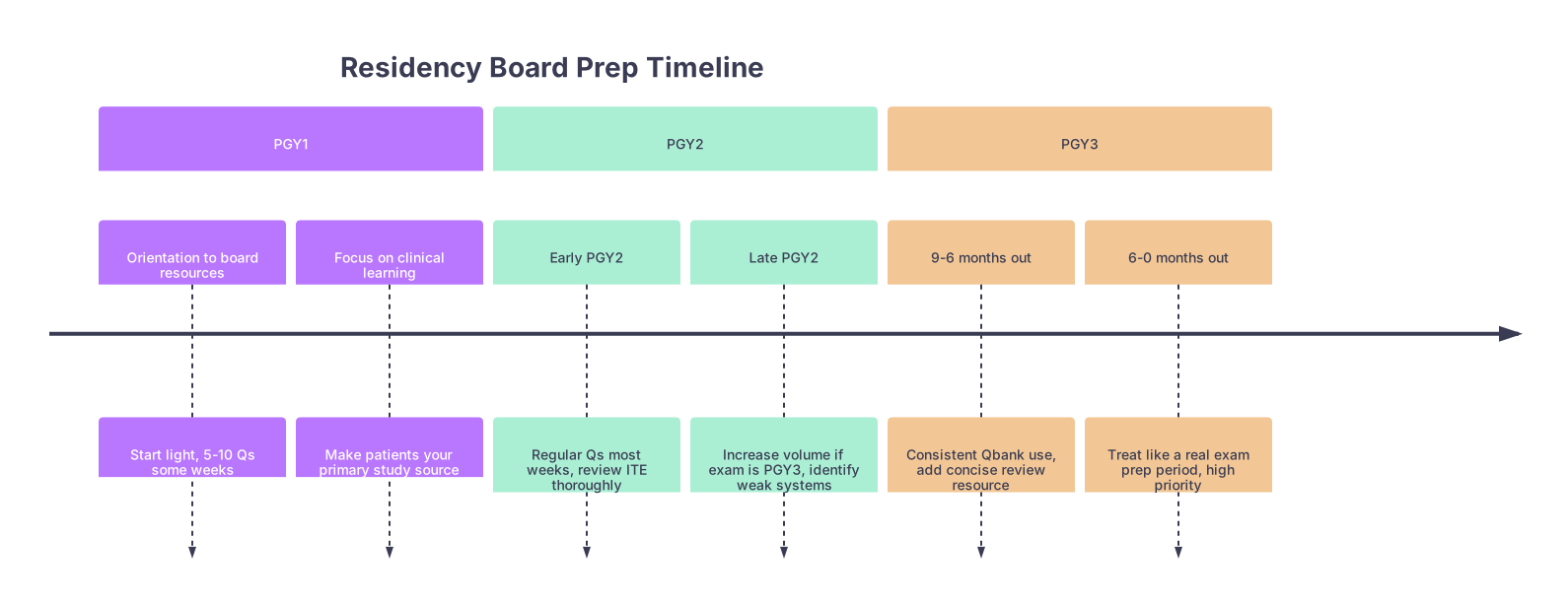
| Period | Event |
|---|---|
| PGY1 - Orientation to board resources | Start light, 5-10 Qs some weeks |
| PGY1 - Focus on clinical learning | Make patients your primary study source |
| PGY2 - Early PGY2 | Regular Qs most weeks, review ITE thoroughly |
| PGY2 - Late PGY2 | Increase volume if exam is PGY3, identify weak systems |
| PGY3 - 9-6 months out | Consistent Qbank use, add concise review resource |
| PGY3 - 6-0 months out | Treat like a real exam prep period, high priority |
The shape isn’t “max effort from day 1.” It’s a slow ramp with a serious curve upward when the exam is actually on the horizon.
To make this concrete, here’s how intensity typically shifts:
| Year | Typical Effective Intensity | Main Focus |
|---|---|---|
| PGY-1 | 0–15 Qs/week, irregular | Clinical learning, survival |
| PGY-2 | 20–60 Qs/week | Building knowledge base, ITE |
| PGY-3 (pre-exam) | 80–120 Qs/week | Exam-level prep, consolidation |
Notice what’s missing: “150 questions a week as an intern” or “full board course PGY‑1.” Because that’s what’s usually overkill.
How to Use PGY‑1 Well Without Overkill
If you still feel itchy doing “nothing” PGY‑1, fine. Here’s how to use early time in a way that isn’t pointless:
Pick one main resource
Not three. One. A solid Q‑bank or a brief review book/video series. Your goal is familiarity, not coverage.Link questions to patients
Saw a COPD exacerbation today? Do a few pulmonary/acid–base questions this week. That makes the cognitive hooks much stronger.Watch your fatigue meter
If you’re too tired to remember what you did 10 questions ago, you’re not studying. You’re clicking. Stop and sleep.Treat the ITE as your early diagnostic
Your first ITE is more useful than 6 months of random PGY‑1 boards grinding. Use its results to shape your PGY‑2/3 prep.Don’t let PGY‑1 studying scare you into thinking you’re dumb
You’re supposed to feel lost as an intern. Board questions are designed for people nearing the end of training, not for someone who just learned how to sign an admission order.
The Psychology Trap: Anxiety ≠ Readiness
One of the more toxic illusions in residency is confusing anxiety with preparation. The anxious intern buying three resources and constantly talking about boards looks “serious.” The quiet PGY‑2 who spends a focused hour most nights doing questions and reviewing rationales looks “chill.”
Guess who passes with margin?
Starting PGY‑1 often isn’t a mastery move. It’s an anxiety management strategy. “If I start now, maybe I won’t feel this terrified.” But your nervous system stops responding after a while. Chronic fear about an exam two years away is just noise.
You want acute, productive stress when it’s go-time. Not years of background dread you medicate with sporadic question blocks.
Who Actually Benefits from Very Early, Structured Prep?
Let’s be precise and narrow, because broad, vague advice is how we got this myth.
Very early, structured prep (PGY‑1 with a real schedule, not casual) may help if:
- You have a documented pattern of failing or barely passing big exams, and
- You have protected time or a relatively humane schedule, and
- You can do the work without sabotaging sleep and clinical growth.
Everyone else? You’re better served by actually mastering the basics of your specialty, building pattern recognition, and then attacking a question bank the way it’s designed to be used: when you’re close enough to the exam that feedback translates into targeted improvement.
Quick Reality Check: What PDs Actually Care About
Ask program directors off the record what scares them about a resident’s board prospects. It isn’t “did not start UWorld PGY‑1.”
It’s patterns like:
- Repeatedly poor ITE performance with no upward trend,
- Not reading about patients,
- Chronic disorganization and missed feedback,
- Major life chaos (health issues, family crises) right before the exam with no adjusted plan.
None of those are fixed by “started early.” They’re fixed by honesty, planning, and focused effort at the right time.
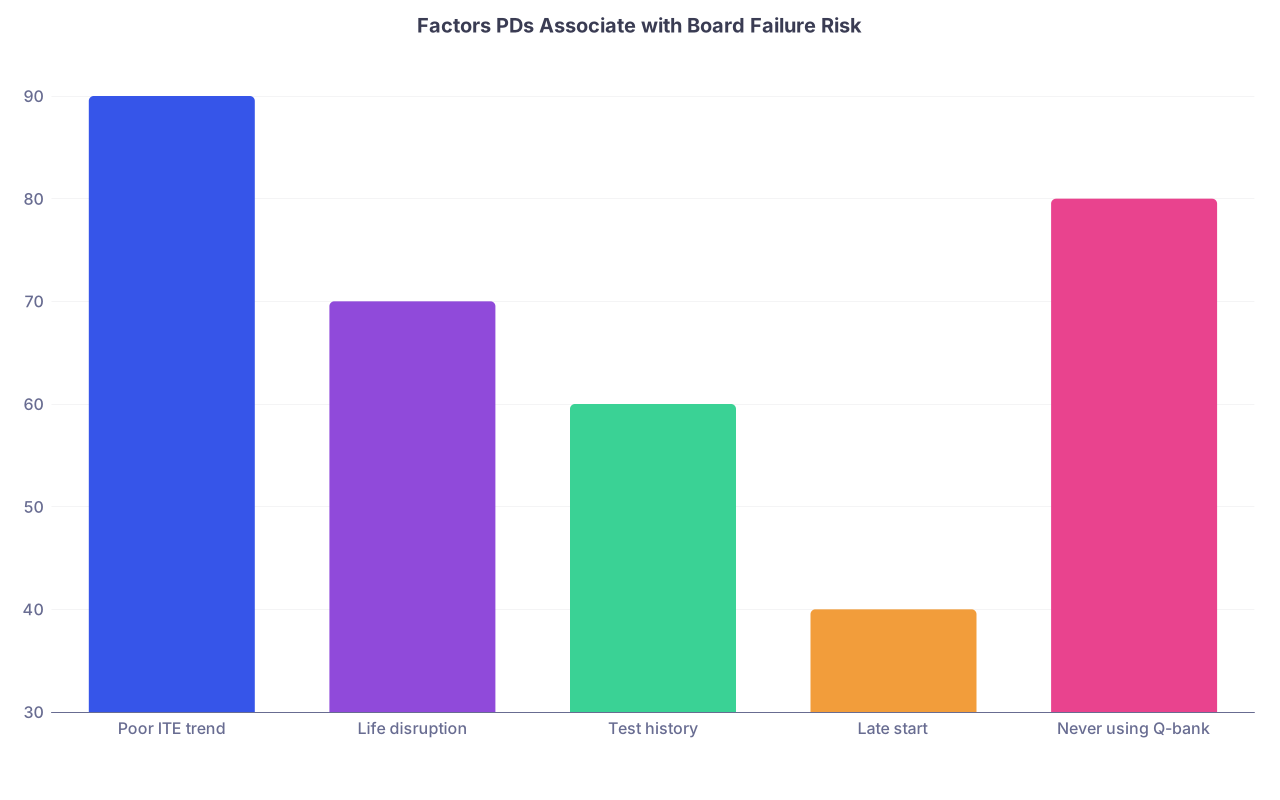
| Category | Value |
|---|---|
| Poor ITE trend | 90 |
| Life disruption | 70 |
| Test history | 60 |
| Late start | 40 |
| Never using Q-bank | 80 |
Notice “late start” is not at the top. “Never seriously engaged” is.
FAQs
1. If I don’t start a question bank PGY‑1, am I behind my classmates?
No. You’re “behind” only if you enter the final 6–9 months before the exam without a plan or without having engaged with a good resource at all. Many residents start true, consistent Q‑bank use PGY‑2 or early PGY‑3 and do just fine. Your PGY‑1 job is to build genuine clinical understanding and stay alive.
2. How many questions should I aim for over all of residency?
For most major specialties, residents who pass comfortably usually complete somewhere in the 2,000–4,000 questions range from one major bank plus maybe a smaller supplemental source. You do not need 10,000 questions across five platforms. Depth and review of errors matter more than raw count.
3. I did terribly on my first ITE as an intern. Do I need to panic and start hardcore board prep?
You need to respond, not panic. Talk with your PD or a trusted faculty member, identify content gaps, and start a reasonable plan: maybe 10–20 targeted questions a few days a week, plus focused reading in weak areas. The goal is to see improvement PGY‑2, not to “fix” everything overnight.
4. Are expensive PGY‑1 board review courses worth it?
Almost never. Those big early courses try to sell you insurance on an exam you won’t take for years. If your program pays for something and you enjoy it, fine. But paying thousands out-of-pocket PGY‑1 when you’re not yet ready to consolidate that info is usually a poor return on investment.
5. What’s the single best thing I can do PGY‑1 to help my future board performance?
Read about your patients. Every day. When you admit decompensated heart failure, go read 15–20 minutes from a solid source about guideline-based management. When you see hyponatremia, review the algorithm. That’s the knowledge the boards test, just in multiple‑choice form later. You don’t need to front-load the format if you’re mastering the content through real cases.
Key takeaways: Starting intense board prep PGY‑1 is usually overkill; quality and timing of study matter more than sheer duration. Use intern year to become a solid clinician and lightly orient to resources, then ramp to real exam prep in the final 6–9 months. Ignore the fear-based “start now or fail” narrative; it sells products, not success.