You’re a PGY‑0 in your own head. MS3 or MS4, on a peds month watching a kid limp into clinic. Or on FM clinic seeing weekend warriors with chronic knee pain. You know you want primary care sports medicine. The question running in the background all day is simple:
Do you pick Family Medicine or Pediatrics if your endgame is a Sports Medicine fellowship?
Here’s the actual answer and how to think about it — not the vague “follow your passion” nonsense.
Quick Answer: For Most People, FM Sets You Up Better
If you want the punchline up front:
- If you want a broad sports medicine practice (high school, college, adults, masters athletes, weekend warriors) → Family Medicine is usually the better core residency.
- If you’re 100% sure you only care about kids/adolescents, maybe plus young college athletes, and you actually like sick kids and inpatient pediatrics → Peds is reasonable but narrower.
Sports medicine fellowships take both FM and Peds. You can get there from either. But they are not equal in terms of:
- the patient population you’re trained to own
- the jobs you’ll be competitive for
- how comfortable you’ll feel managing common issues in your future clinic
Let’s break it down properly.
How Sports Medicine Fellowships View FM vs Peds
Most primary care Sports Med programs are listed as:
- “Accepts: Family Medicine, Internal Medicine, Emergency Medicine, Pediatrics, PM&R”
Reality? The pipeline is dominated by FM, then PM&R. Peds is a smaller slice.
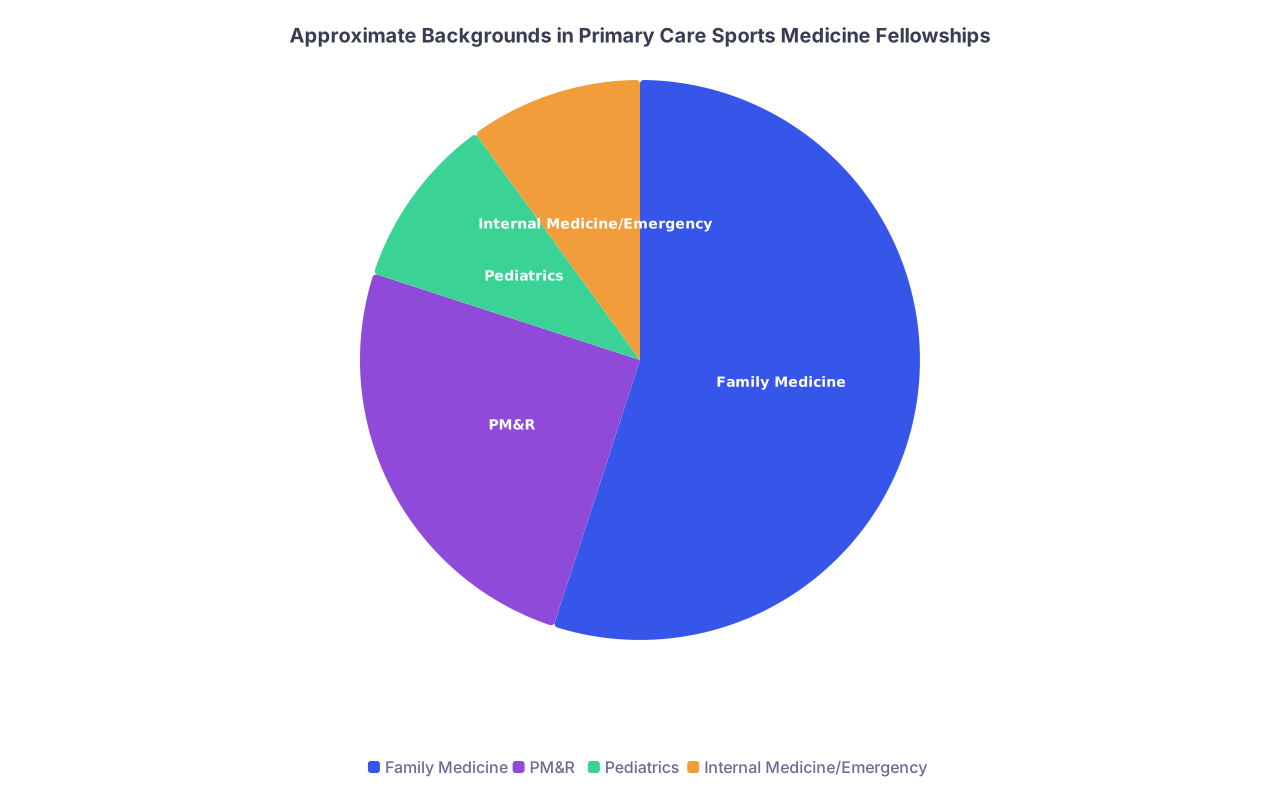
| Category | Value |
|---|---|
| Family Medicine | 55 |
| PM&R | 25 |
| Pediatrics | 10 |
| Internal Medicine/Emergency | 10 |
What this means for you:
- You’re not handicapped coming from Peds. Plenty of programs love pediatric backgrounds, especially those with strong youth sports coverage.
- But FM is the default feeder. A lot of curricula, clinic mixes, and job descriptions quietly assume “adult + adolescent” training as the base.
If you’re purely gaming the odds for versatility and job flexibility: FM wins.
Clinical Breadth: Who You Can Comfortably Treat After Residency
Ask yourself: In your ideal sports clinic, who’s in the waiting room?
- 12‑year‑old with Osgood‑Schlatter
- 19‑year‑old college soccer player with an ACL tear s/p reconstruction
- 45‑year‑old accountant training for a half‑marathon
- 62‑year‑old ex‑runner with knee OA who wants to stay active
Now look at residencies.
Family Medicine
You’ll be trained to manage:
- Newborns → geriatrics
- Chronic disease (HTN, DM, CAD, COPD, obesity)
- Women’s health, men’s health, procedures
For sports medicine, this translates into:
- You’re comfortable seeing adolescents and adults day one of fellowship.
- You know how to handle comorbidities that matter for sports: obesity, metabolic disease, cardiac risk, menopausal issues, testosterone issues, etc.
- You’re automatically credible managing masters athletes, those 40–70-year-olds who still want to run, golf, bike, ski.
Pediatrics
You’ll be trained to manage:
- Birth → 18 (maybe 21 depending on institution)
- Developmental issues, congenital conditions, NICU grads, complex kids
- Lots of bread‑and‑butter peds illness and preventive care
For sports medicine, that means:
- You’ll be excellent with youth and adolescent athletes
- Growth plates, apophyseal injuries, overuse injuries in kids—they’ll feel like second nature
- But you’ll have zero formal training in adult medicine, so any adult focus comes only from fellowship and self‑study
If your future dream job is “team physician for a high school and pediatric sports clinic,” Peds fits fine. If you want your schedule full of everyone from 13 to 70, FM matches that practice better.
Procedural & Musculoskeletal Training: Who Actually Sees More MSK?
Raw truth: Both FM and Peds residencies can be mediocre or excellent for MSK, depending on how aggressively you chase it.
Typical FM MSK Exposure
In an average FM residency, you’ll get:
- A lot of outpatient clinic with back pain, knee pain, shoulder pain
- Some dedicated ortho/sports rotations
- Opportunities for:
- Joint injections (knees, shoulders, trochanteric bursae, etc.)
- Basic splinting and casting
- Point‑of‑care ultrasound (POCUS) in progressive programs
But you have to deliberately load your electives with ortho/sports, urgent care, and MSK ultrasound.
Typical Peds MSK Exposure
In a typical peds program, MSK is not the star of the show:
- Most time is inpatient, NICU, PICU, gen peds, heme‑onc, etc.
- Ambulatory peds often = infections, asthma, well‑child checks
- MSK is under‑represented unless you’re at a place with:
- Strong pediatric sports medicine orthopedic division
- A peds sports clinic that takes residents
- Faculty who care enough to pull you into coverage and clinic
If you’re at a pediatric powerhouse with a sports program (think Children’s Hospital Boston, CHOP, Nationwide, CHLA, etc.), you can carve out a good MSK experience. At a random community peds program? Less likely.
So from a sheer probability standpoint, FM gives you more consistent MSK exposure.
Career Flexibility and Job Market
This is the part nobody tells you on your rotation when everyone is pretending every choice is equally great.
What Jobs Actually Look Like
Sports medicine jobs commonly look like:
- 50–80% primary care / general clinic
- 20–50% sports medicine (injury clinic, procedures, coverage, etc.)
Pure 100% sports medicine outpatient without traditional primary care still exists, but it’s not the norm unless you’re in a large ortho group or very sports-heavy market.
Now match that to your base residency:
- From FM: You can do
- Traditional FM + sports
- Sports-heavy clinic in an ortho group seeing adult and adolescent athletes
- College or university health/sports medicine center
- Occupational/industrial sports medicine type work
- From Peds: You can do
- General peds + pediatric sports
- Pediatric hospital’s sports medicine program
- High school / youth sports coverage
- College coverage if they’re fine with you handling “younger side” and being comfortable with young adults
What’s harder from Peds:
- Getting hired into a primarily adult ortho group where most patients are 35–70.
- Being the go‑to doc for large employers or adult athlete populations.
You can kick down those doors if you’ve got the skillset and the right fellowship, but you’ll always be explaining, “Yes, I’m peds‑trained but I see a ton of adults from fellowship onward.” Some hiring committees won’t care. Some absolutely will.
If you want maximum job flexibility, FM is the safer bet.
Lifestyle, Training Culture, and What You Actually Like Doing
You’re going to live inside this specialty for three years before fellowship. Make sure you can stand the day‑to‑day.
Family Medicine Lifestyle & Culture
- Mix of inpatient and outpatient, usually less intense than IM
- Broad mix of ages and problems
- Culture tends to be more “whole‑person, community, pragmatic”
- More mental health, pregnancy, preventive care, chronic disease
If you hate chronic disease or adult psychosocial issues, FM will grind you down. If you like variety, it’s great.
Pediatrics Lifestyle & Culture
- Inpatient months can be very busy (NICU, PICU, wards)
- Outpatient clinic is more seasonal but generally lighter from a complexity standpoint than adult multimorbidity
- Culture is often more collaborative, a bit more “soft,” and very kid‑focused
- Parents. All day. Every day. You either tolerate that or you don’t.
If watching a 2‑month‑old in respiratory distress terrifies you in a bad way, peds isn’t your friend. But if you love kids and hate dealing with adult life problems, peds may fit.
Tie‑breaker rule I use with students: If you’d be miserable doing 80% “core specialty” and only 20% sports for three years, don’t pick that residency.
How to Decide: A Practical Framework
Here’s a simple decision grid. Be honest with yourself.
| Factor | Family Medicine | Pediatrics |
|---|---|---|
| Usual patient age in future sports practice | Teens to older adults | Children and adolescents |
| Breadth of future job options | Wider (adult + adolescent) | Narrower (mostly youth) |
| Natural fit with ortho groups | Strong | Variable/Weaker |
| Inpatient experience | Adult medicine | NICU/PICU/peds wards |
| Typical MSK exposure in residency | Moderate to good | Low to variable |
| Best if you… | Want broad sports practice including adults | Love kids and prioritize pediatric athletes |
Now ask yourself:
If you imagine your ideal future clinic being:
- 70%+ ages 25–70 → Go FM
- 70%+ ages 8–18 with some college athletes → Peds is fine
- 50/50 and you care a lot about job flexibility → I’d still say FM
Concrete Steps to Maximize Sports Medicine from Either Path
No matter which you pick, here’s how to not waste those three years.
If You Choose Family Medicine
- Rank FM programs that:
- Have an established sports medicine fellowship or strong affiliation
- Offer longitudinal sports clinics and event coverage
- Have faculty who are CAQ‑SM and actively practicing sports medicine
- Load electives with:
- Orthopedics
- Rheumatology (for the “not actually sports” MSK)
- PM&R / spine
- Dedicated sports medicine if available
- Learn:
- MSK ultrasound early
- Joint injections on any willing shoulder/knee/bursa in clinic
- How to sell yourself as “FM + sports” on rotations and to your PD
If You Choose Pediatrics
- Prioritize programs with:
- A pediatric sports medicine section
- Affiliation with a children’s hospital that has sports clinics and research
- Opportunities for high school and youth sports coverage
- Make your electives:
- Pediatric ortho
- Pediatric rheum
- Adolescent medicine with a sports bend
- Any time in adult sports if your program allows off‑service electives
- Be proactive:
- Ask to cover local high school games with sports attendings
- Get comfortable with growth‑plate and overuse injuries in kids
- Build a clear narrative: “I’m going to be a pediatric sports medicine physician, specifically.”

| Step | Description |
|---|---|
| Step 1 | MS3/MS4 |
| Step 2 | FM Residency |
| Step 3 | Peds Residency |
| Step 4 | Extra MSK Rotations |
| Step 5 | Peds Sports/Ortho Rotations |
| Step 6 | Sports Med Fellowship |
| Step 7 | Sports Med Career |
| Step 8 | Choose Residency |
Red Flags and Common Mistakes
I’ve seen a few patterns repeat:
Picking Peds because “I like kids” but you actually want to see a lot of adult athletes later.
You will be fighting your base training forever.Picking FM and then ignoring MSK for 3 years.
You match sports med fellowship on “potential,” but you show up way behind the ortho/PM&R people. Then fellowship feels like drinking from a firehose.Assuming fellowship erases all base residency limitations.
It doesn’t. Hiring committees, credentialing, and your comfort level in clinic are all anchored in your residency.Choosing based on perceived competitiveness.
Both FM and Peds are generally non‑hyper‑competitive right now. Choose based on fit and your future patient mix, not on some imagined Step‑score threshold.
FAQs
1. Will doing Pediatrics hurt my chances of matching a Sports Medicine fellowship compared to Family Medicine?
Not automatically. Many fellowships like pediatric applicants, especially at children’s hospitals or youth‑focused programs. But the raw volume of FM applicants is higher, and many programs are more “adult‑leaning,” which can favor FM for fit. If your whole application screams “pediatric sports” and you’ve actually built that experience, you’ll be competitive.
2. Can I do mostly adult sports medicine if I trained in Pediatrics?
You can, but it’s an uphill climb. You’ll need a fellowship that gives you significant adult exposure and you’ll have to convince employers you’re comfortable managing adult comorbidities. Some ortho groups won’t care if you can handle MSK and clear for procedures; others will prefer FM/IM/PM&R on paper. It’s possible, but not the path of least resistance.
3. What if I’m equally interested in kids and adults—should I just default to Family Medicine?
If you’re genuinely happy treating both and want maximum flexibility, I’d lean FM. You can still build a youth‑heavy sports practice out of FM, but it’s harder to build a broad adult practice out of Peds. FM keeps more doors open for sports med jobs in ortho groups, college health, and mixed outpatient settings.
4. Do I need to choose a residency that already has a Sports Medicine fellowship?
It helps but it’s not mandatory. Having an in‑house fellowship usually means:
- Regular exposure to sports med faculty
- Built‑in sideline and event coverage options
- Easier letters and mentorship
But if your program doesn’t have one, you can still match sports med by deliberately seeking out rotations, research, and coverage with nearby systems that do.
5. How much does research matter for Sports Medicine fellowships?
Depends on the program. For many community and mid‑tier academic programs, strong clinical experience, letters from sports attendings, and demonstrated interest (coverage, electives, courses) matter more than an impressive PubMed list. For big-name academic sports fellowships, having at least some scholarly output (case series, QI projects, retrospective studies) can help. Don’t ignore it, but don’t think you need an R01.
6. If I already matched FM or Peds, is it too late to shift my path toward Sports Medicine?
No. You’re fine. The key is to start now:
- Load electives with MSK/sports-focused rotations
- Find a sports medicine mentor (even if outside your program)
- Get experience in coverage, clinics, and procedures
- Make your interest obvious to your PD and faculty
Your base residency is the platform. How sports‑heavy that platform becomes is mostly up to how you spend your elective time and who you attach yourself to.
Key takeaways:
- For broad, flexible sports medicine careers that include adults, FM is usually the better residency foundation.
- Peds makes sense if you’re genuinely committed to pediatric and adolescent sports and don’t care much about adult athletes.
- Whichever you choose, your real advantage will come from aggressively carving out MSK and sports experiences during residency, not just relying on the label on your badge.