
People massively overrate “in‑house fellowships” when picking internal medicine.
They matter. But not the way most MS4s think they do.
If you’re choosing an IM program and obsessing over whether it has in‑house cards, GI, heme/onc, etc., you’re asking the wrong first question. The better question is: What actually moves the needle for my fellowship chances and my day‑to‑day life?
Let’s walk through that like adults and not like rumor‑driven Reddit threads.
The short answer: How important is in‑house fellowship availability?
Here’s the blunt hierarchy:
- Your own performance and reputation (Step scores, letters, research, how you function on the wards)
- The program’s overall strength and brand in IM
- Program culture and support for fellowship applicants
- Your network and mentorship
- Then, way down the list: in‑house fellowship availability
So the real answer: in‑house fellowships are a nice bonus, sometimes a strategic advantage, and occasionally irrelevant or even misleading.
If you’re choosing between:
- A stronger IM program with few/no in‑house fellowships
vs. - A weaker IM program with lots of in‑house fellowships
I’d pick the stronger IM program almost every time if your goal is a competitive fellowship.
What “in‑house fellowship” actually changes for you
People talk about “we have in‑house cards and GI” like that magically guarantees a spot. It doesn’t. But in‑house programs do change a few real things.
1. They change your exposure and mentorship
If a program has in‑house fellowships, you usually get:
- More subspecialty faculty
- Fellows on your teams and consults
- Conferences specifically geared to that subspecialty
- Easier access to projects and letters
That matters, especially for competitive fellowships like cards, GI, heme/onc.
But this only helps if:
- They actually like working with residents
- They let residents meaningfully participate in research
- Faculty are known, respected, and actually write strong letters
There are places with in‑house GI where the fellows and faculty barely interact with residents. On paper you’ve got “in‑house GI.” Practically, you get nothing.
2. They change your match odds locally, not globally
Most programs with in‑house fellowships take some of their own residents most years. But not all. And not most of them.
A common pattern I’ve seen:
- Cards: maybe 1–3 “home” residents per year
- GI: 0–2 per year
- Heme/Onc: 1–2 per year
If your program graduates 30 IM residents a year and there are 2 in‑house cards positions going to home applicants, that’s not “guaranteed.” That’s a lottery with slightly better odds if you’re a rockstar locally.
So in‑house fellowships mostly increase your chances at:
- Matching at that institution
- Getting letters from people on the inside that carry weight elsewhere
They don’t override mediocre performance or weak letters.
When in‑house fellowships are a major advantage
There are a few clear situations where in‑house options are legitimately high‑value.
Scenario 1: You already know your target subspecialty
If you’re starting IM with a very strong lean toward:
- Cardiology
- GI
- Heme/Onc
- Pulm/CC
Then being at a place with a solid in‑house program in that field is a real asset.
You get:
- Early shadowing with that division
- Chances to meet the program director by PGY‑1 or early PGY‑2
- Department retreats, journal clubs, conferences where you’re “part of the family”
- A pipeline for structured research projects
For example, if you’re obsessed with cardiology and you choose a mid‑tier IM program that has a strong, known‑nationally cards fellowship with approachable faculty… that can beat a slightly higher‑tier IM program with no cards fellowship and weak cardiology presence.
But again, the keyword is strong. A no‑name in‑house cards fellowship with minimal academic output is just a logo on the website.
Scenario 2: You’re aiming for a competitive subspecialty from a mid‑tier program
If you’re not at a top‑10 IM program, in‑house fellowships can be your launchpad. Because:
- External programs may not know your brand as well
- But your home faculty can go to bat for you hard
- Fellowship PDs listen when a known cardiologist says, “This resident is excellent; you want them”
So for mid‑tier or community/university‑affiliated programs, I’d absolutely value strong in‑house fellowships more. That local reputation can carry you nationally.
Scenario 3: You’re location‑locked
If you have to stay in a particular city/region long‑term—because of family, partner, finances—then in‑house fellowships are more important.
Why?
- You’ll probably apply heavily to local fellowships
- Having in‑house options gives you an “inside track” at at least one local program
- You have more years to network with the exact people who decide your future
Still not everything. But if you must stay in, say, the Pacific Northwest, then a Seattle/Tacoma/Portland IM program with in‑house fellowships is strategically smarter than a similar program with none.
When in‑house fellowships don’t matter much (or at all)
Now the other side. There are plenty of cases where you’re overrating this and ignoring more important differences.
1. When the “in‑house” programs are weak or obscure
Not all fellowships are created equal.
An in‑house fellowship that:
- Fills mostly with outside applicants no one has heard of
- Has almost no publications, national presence, or conference visibility
- Doesn’t integrate residents into meaningful teaching
…is not moving your CV much.
If I have to choose between:
- Strong IM training + strong academic mentoring at a place with no in‑house GI
vs. - Mediocre IM training at a place with an unknown in‑house GI
I’m taking the first.
2. When the overall IM program is clearly stronger elsewhere
This is where people get trapped.
If you’re comparing:
- Strong academic IM (reputation, research, fellowship match track record, culture) without your specific in‑house fellowship
vs. - Slightly weaker academic IM but with in‑house fellowships in your dream specialty
I usually tell people: pick the stronger IM program.
Fellowship PDs care a lot about:
- How tough your residency training is
- How well you perform in that environment
- Who is writing your letters and how known they are
Strong IM + good mentorship beats “we have in‑house GI” almost every time.
3. When you’re undecided on subspecialty
A lot of MS4s say they’re 100% cards or 100% GI and then fall in love with pulm/CC, heme/onc, or decide to be a hospitalist. This happens constantly.
If you don’t know yet, then:
- Broad exposure across subspecialties
- Supportive program leadership
- Time and flexibility for electives
…are much more important than the in‑house fellowship list.
I’d never pick a worse overall training environment just because it had your tentative PGY‑0 fantasy fellowship.
What actually drives fellowship match success
Let’s ground this in what PDs actually use to judge you.
| Factor | Impact Level | You Can Control? |
|---|---|---|
| Residency performance & letters | Very High | Yes |
| Program reputation/rigor | High | Indirectly |
| Research & scholarly output | High | Yes |
| In‑house mentorship/network | Medium | Yes |
| In‑house fellowship presence | Low–Medium | No |
And visually:
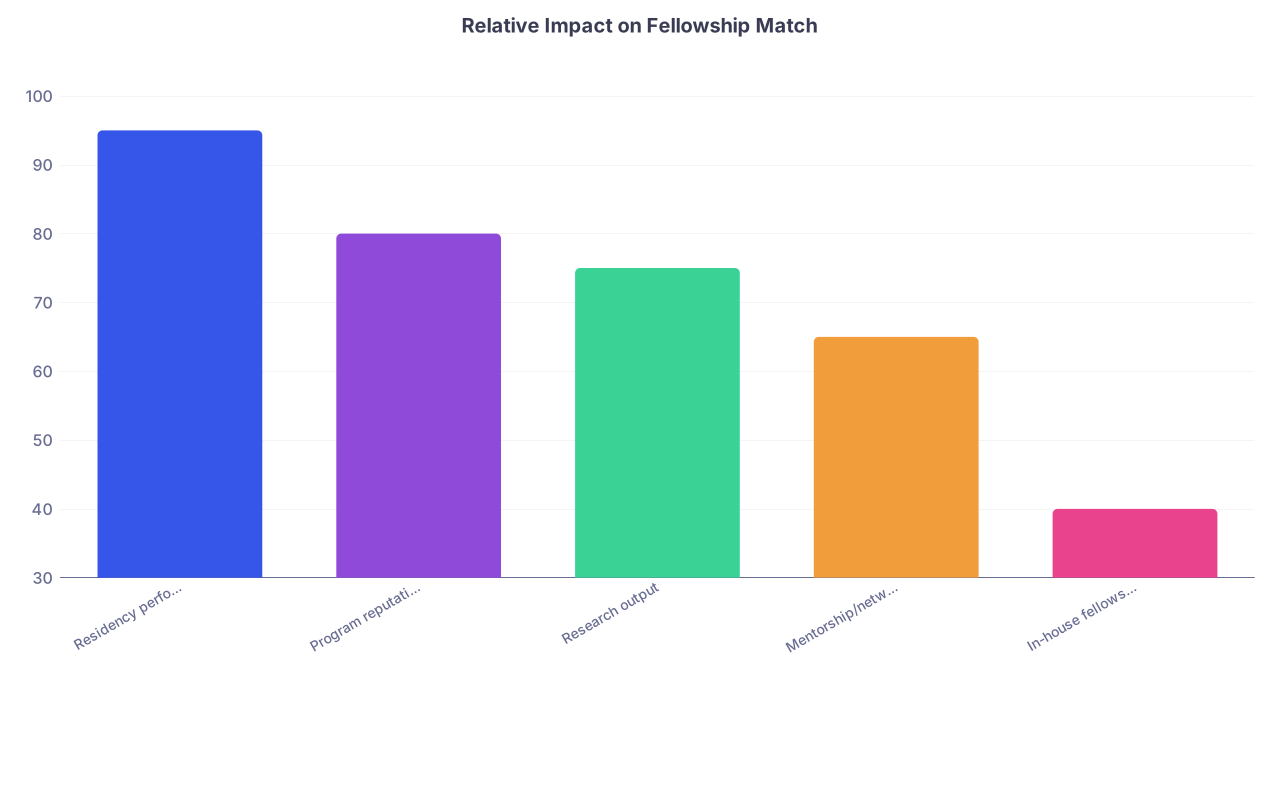
| Category | Value |
|---|---|
| Residency performance | 95 |
| Program reputation | 80 |
| Research output | 75 |
| Mentorship/network | 65 |
| In-house fellowship | 40 |
The pattern is obvious: in‑house fellowship matters, but it isn’t the main event.
If your IM program:
- Consistently matches people into the fellowships you care about
- Has faculty who publish and attend national meetings
- Gives you time and support to do projects and present at conferences
…you’re in a good place, even if there’s no in‑house match slot waiting.
Step-by-step: how to actually weigh this when ranking programs
Here’s a practical way to decide how much to care.

| Step | Description |
|---|---|
| Step 1 | Start - Choosing IM Programs |
| Step 2 | Prioritize overall IM strength and fit |
| Step 3 | Count as a major plus |
| Step 4 | Look for strong external match record |
| Step 5 | Rank high |
| Step 6 | Be cautious - do not trade IM quality for in-house |
| Step 7 | Sure about subspecialty? |
| Step 8 | Program has strong in-house fellowship in that field? |
| Step 9 | Overall IM program still strong? |
And here are the concrete questions you should ask on interview day or to current residents:
“Where have your residents matched for [cards/GI/whatever] in the last 5–10 years?”
If they only mention their own in‑house program and nowhere else, that’s a red flag.“How many home residents match into your in‑house [cards/GI/etc.] each year?”
You want honest numbers. Not vibes.“How involved are fellows and subspecialty attendings with residents on the wards and in clinic?”
You’re looking for genuine integration, not “we see them in passing.”“Is it easy for residents to do research in [field] here? Who usually mentors them?”
Named faculty and specific examples > vague “oh yeah, there are opportunities.”“Do residents feel supported or pressured about going into fellowship?”
Culture matters. A place that guilt‑trips hospitalist‑bound residents or ignores fellowship‑bound residents is a problem.
Academic vs community IM: different math for in‑house fellowships
Here’s where people mix things up.

Academic IM programs
Most university IM programs:
- Have at least a few in‑house fellowships
- Send people to competitive fellowships elsewhere even without in‑house options in every field
Here, in‑house fellowships are a bonus, not the foundation. The program brand, research culture, and faculty reputation usually carry more weight.
Community or community‑affiliated IM programs
These vary more. Some have:
- Zero in‑house fellowships
- A couple small ones (often cards or pulm/CC)
- Or a tight link with a nearby university fellowship
Here, in‑house fellowships can matter more because:
- The brand name is weaker nationally
- Having local champions may be your biggest selling point
- The number of residents doing research is smaller, so being “the fellowship‑bound person” stands out
If you’re going to a community program and you’re seriously set on a competitive subspecialty, I’d care more about in‑house or tightly‑affiliated fellowship options than I would at a big‑name academic center.
How to balance “fit” vs “fellowship pipeline”
Don’t be the person who picks a toxic or miserable environment just because the website lists 7 in‑house fellowships.
Burnout, poor training, or constant stress will tank your performance, your letters, and your motivation to even apply for fellowship.
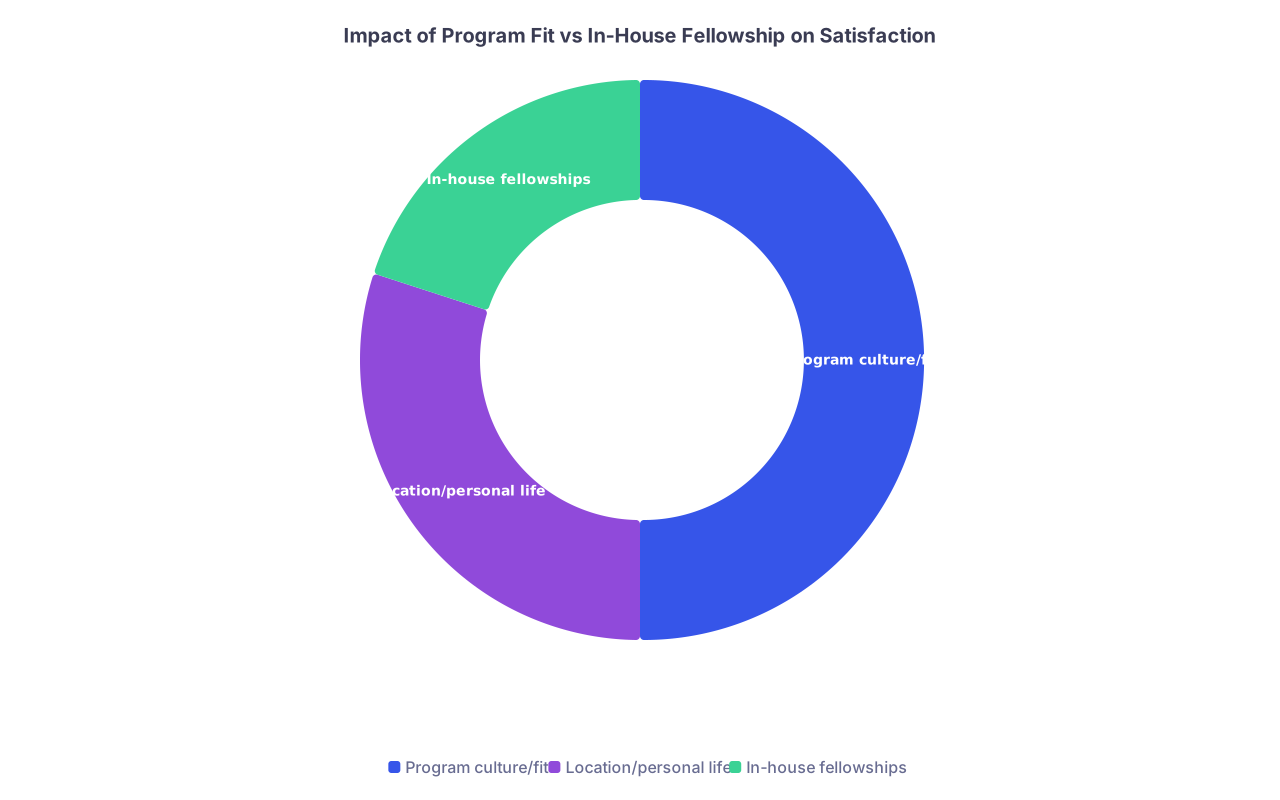
| Category | Value |
|---|---|
| Program culture/fit | 50 |
| Location/personal life | 30 |
| In-house fellowships | 20 |
The balance I recommend:
First filter:
- Would I be okay doing general IM here if I changed my mind about fellowship?
- Do residents seem reasonably happy and supported?
Second filter:
- Does this program have a track record of getting people where I want to go, whether in‑house or elsewhere?
Tiebreaker:
- If two programs are otherwise roughly similar, then yes—choose the one with the stronger in‑house fellowship presence in your field of interest.
FAQs: In‑House Fellowships & IM Choices
1. If I want cardiology, do I need an IM program with an in‑house cards fellowship?
No. Plenty of people match into cardiology from IM programs without in‑house cards. What you do need: strong letters from cardiologists, solid research or scholarly work, good in‑service/Step 3 performance, and a program with a history of placing people into cards. In‑house cards is a plus, not a requirement.
2. Is it easier to match into your own program’s fellowship?
Sometimes, but not guaranteed. Many fellowships like to take 1–2 “home” candidates per year they know and trust. But they also don’t want all of their fellows to be homegrown. If you underperform as a resident, you won’t be saved by being “one of theirs.”
3. How do I tell if an in‑house fellowship is actually strong?
Check: where their fellows go after (jobs, advanced training), how much they publish, whether faculty are known nationally (guidelines, conferences), and whether residents present/poster with them. If the fellowship can’t show decent outcomes or academic activity, it’s probably not a powerhouse.
4. What if a program has in‑house heme/onc but everyone says the division is malignant?
Run that through a reality filter. If multiple residents independently describe that fellowship/division as toxic, dismissive, or exploiting residents for scut, that “in‑house fellowship” isn’t a benefit. It’s a warning label. Don’t sacrifice your well‑being for a line on a brochure.
5. I’m undecided between hospitalist vs fellowship. Should I still care about in‑house options?
Somewhat, but not heavily. Focus more on: how well they train hospitalists, how much autonomy you get, ICU exposure, and how happy the graduates seem in their careers. In‑house fellowships are nice if you later decide to subspecialize, but they shouldn’t outweigh core training quality.
6. Do community programs without any in‑house fellowships cripple my chances at subspecialty?
Not automatically, but they make the game harder. You’ll have to hustle more for research, network outside your institution, and be near‑perfect on performance and letters. If subspecialty is a high priority, I’d try to choose either an academic program or a community program with at least some formal fellowship connections.
7. When I’m ranking programs, should I ever choose a weaker IM program solely because it has my dream in‑house fellowship?
Almost never. The only exception: you’re location‑locked and this is the only realistic path to stay in that area and the fellowship itself is genuinely strong. Otherwise, sacrificing training quality, mentorship, and sanity for a logo that says “we have in‑house GI” is a bad trade.
Key takeaways:
- In‑house fellowships are helpful but secondary; your performance, letters, and program quality matter more.
- Use in‑house options as a tiebreaker, not your primary decision driver, unless you’re mid‑tier/location‑locked and the fellowship is truly strong.
- Always prioritize training quality and fit over a long list of in‑house fellowships that look great online but don’t actually support residents well.