
The prestige obsession will mess you up if you let it.
If you’re first‑gen, you’re walking into a game where everyone else seems to know the unwritten rules—and nobody bothered to hand you the rulebook. You hear “top program,” “big‑name institution,” “Ivy,” “Tier 1,” and you’re supposed to just…know what to do with that.
You don’t. And that’s not your fault. But if you guess wrong, you pay the price with your time, your sanity, and sometimes your future options.
Let’s fix that.
This is about how a first‑gen student should think about prestige when picking residency programs. Not abstract career advice. Concrete: apply here, do not apply there, this is overhyped, this actually matters.
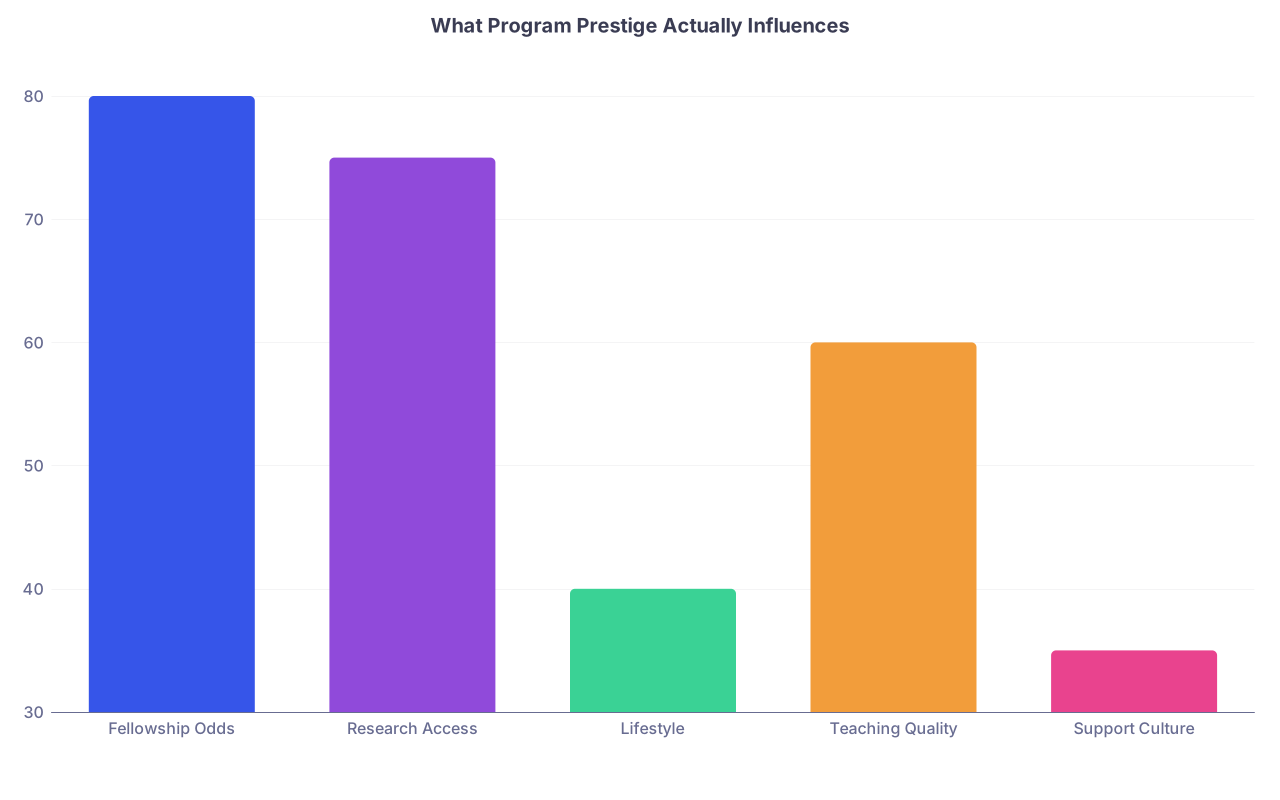
1. Understand What Prestige Actually Buys You (And What It Doesn’t)
| Category | Value |
|---|---|
| Fellowship Odds | 80 |
| Research Access | 75 |
| Lifestyle | 40 |
| Teaching Quality | 60 |
| Support Culture | 35 |
You’ve heard the line: “Go to the most prestigious program you can get into.” That’s lazy advice. It’s also incomplete.
Prestige does a few very specific things well:
- It makes certain doors easier to open later (especially competitive fellowships or academic jobs).
- It increases your access: research, big‑name mentors, complex cases, national visibility.
- It gives you a brand on your CV that people recognize without thinking.
But here’s what people conveniently leave out:
- Prestige does not guarantee good teaching.
- It does not guarantee you’ll be supported, sane, or even treated decently.
- It does not fix a toxic culture, malignant seniors, or a lack of mentorship for first‑gen or underrepresented backgrounds.
I’ve watched this play out over and over:
Student A (first‑gen) picks the “#3 national program” in their specialty. They’re sold on name. They get crushed by the workload, get little guidance, and end PGY‑3 with minimal research output and no genuine mentorship for fellowship. They match fellowship, but not where they hoped, and they’re exhausted.
Student B (also first‑gen) chooses a “mid‑tier” program in a strong regional academic center. Less flashy name, but the PD knows them, they get protected time for research, they co‑author several papers with a fellowship director, and they’re effectively “pre‑matched” into a top fellowship because someone is actually looking out for them.
Who’s better off? It’s not obvious from the brochure.
If you’re first‑gen, prestige is a tool, not the goal. You don’t chase it blindly. You ask a different question:
What exactly do I need prestige for?
- If you want academic cardiology, ortho oncology, derm, plastics, or a hyper‑competitive fellowship? Prestige helps—sometimes a lot.
- If you want to be a community pediatrician or hospitalist near home? Prestige matters mostly at your first job (and even then, region > rank).
Before you rank anything, write this sentence on a piece of paper:
“I need prestige for: _______”
If that blank is very vague (“options someday,” “because everyone else is doing it”), you’re letting other people’s anxiety drive your decisions.
2. Decode “Prestige” As a First‑Gen Applicant
You’re not imagining it: people who grew up around medicine talk about prestige differently. Their parents did residency here, their aunt did fellowship there, their mentor trained with that famous name.
You don’t have that network. So you need a quick, dirty way to decode program reputation without a family full of attendings.
Use the right shortcuts (not the flashy ones)
These are the prestige signals that actually mean something:
- How often the program’s grads match into competitive fellowships.
- How many grads go into academic positions vs. purely community.
- Volume and complexity of cases (especially in surgical and procedural fields).
- Presence of subspecialty fellowships in‑house (a huge deal for some fields).
- The faculty who are known names in your specialty (not just big general hospital name).
And here’s what’s overrated:
- Overall hospital ranking (USNWR hospital rank ≠ residency quality).
- General institutional fame (“It’s Ivy,” “It’s Mayo,” “It’s name‑brand”).
- Shiny facilities and fancy websites.
- “We’re a Level 1 trauma center” when every other program on your list is too.
You can extract a lot from basic data. For example:
| Factor | Program A (Big-Name Coastal) | Program B (Regional Academic) |
|---|---|---|
| Cards fellowship in-house | Yes | Yes |
| % grads to cards GI heme-onc | 15% | 25% |
| Research publications per resident (median) | 1 | 3 |
| PD and APD nationally involved | 1 | 3 |
| Program reputation locally vs nationally | National name | Regional but strong |
If you want cardiology, Program B might quietly be the superior “prestige” choice for you, even though Program A looks sexier on paper.
3. Calibrate Prestige to Your Specialty and Your Stats
Different specialties care about prestige differently. You need to stop thinking “residency” and start thinking “this specialty, with my numbers, my background.”
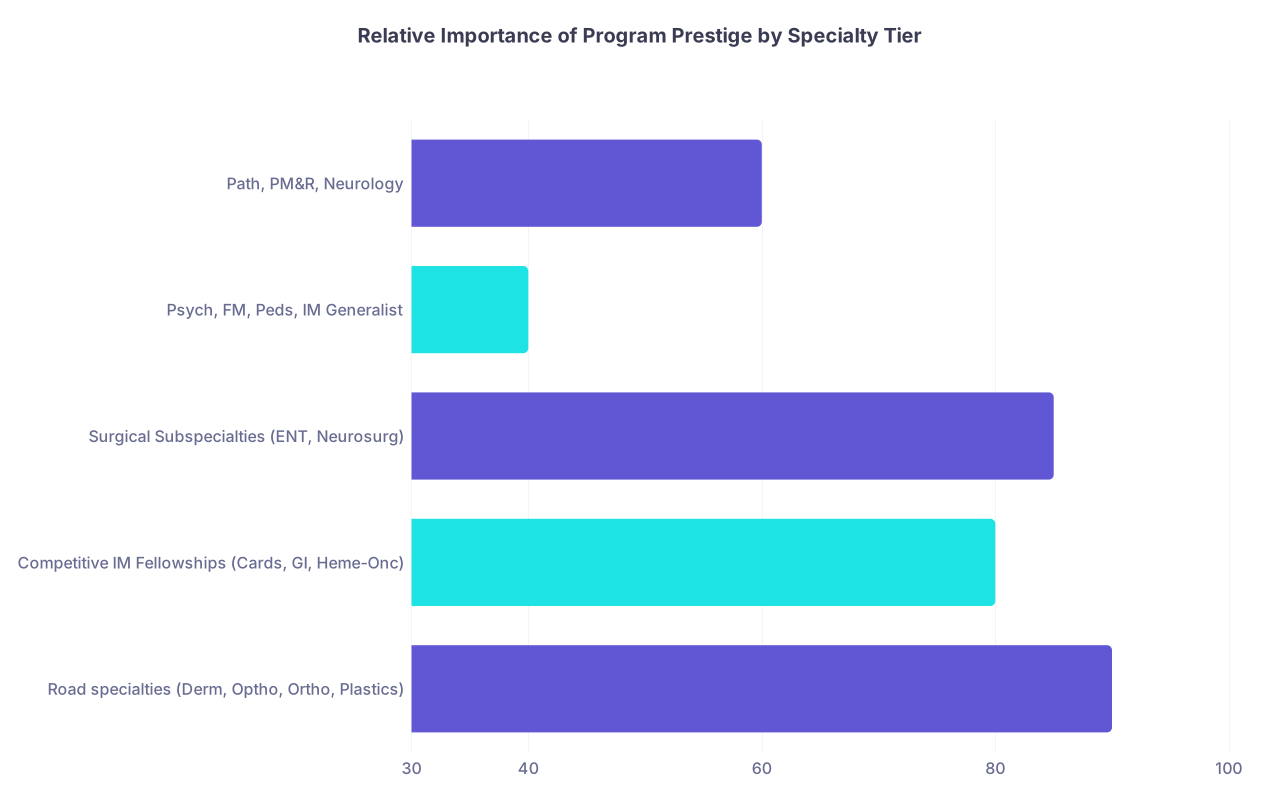
How much does prestige matter by specialty?
Rough guide. Not perfect, but closer to reality than what you’re hearing in the hallway.
| Category | Value |
|---|---|
| Road specialties (Derm, Optho, Ortho, Plastics) | 90 |
| Competitive IM Fellowships (Cards, GI, Heme-Onc) | 80 |
| Surgical Subspecialties (ENT, Neurosurg) | 85 |
| Psych, FM, Peds, IM Generalist | 40 |
| Path, PM&R, Neurology | 60 |
Quick translation:
- Derm, ortho, plastics, neurosurg, ENT, competitive subspecialty surgery: prestige and connections matter a lot. People absolutely name‑drop programs and mentors.
- IM when you want top cardiology/GI/heme‑onc/pulm‑crit: prestige is meaningful, but a great mid‑tier with strong fellowship outcomes can beat a “famous” but disorganized place.
- Psych, FM, peds, general IM, EM, neurology, PM&R: prestige is “nice to have,” but fit, geography, and training quality often matter more in real life.
Now layer your own stats on top of that.
If your Step scores, clinical grades, and research sit around the median for that specialty:
- Gunning only for “Top 10” brand names is a fast track to overreaching and then scrambling.
- You want a portfolio: a few stretch prestige programs, a solid core of realistic strong regionals, and some safe but acceptable programs.
If your stats are stellar for that field:
- Yes, you can push harder for big names—but not at the expense of your wellbeing.
- For first‑gen students, one pitfall is under‑applying to high‑tier programs because you assume you don’t belong there. Do not self‑reject. Let them say no.
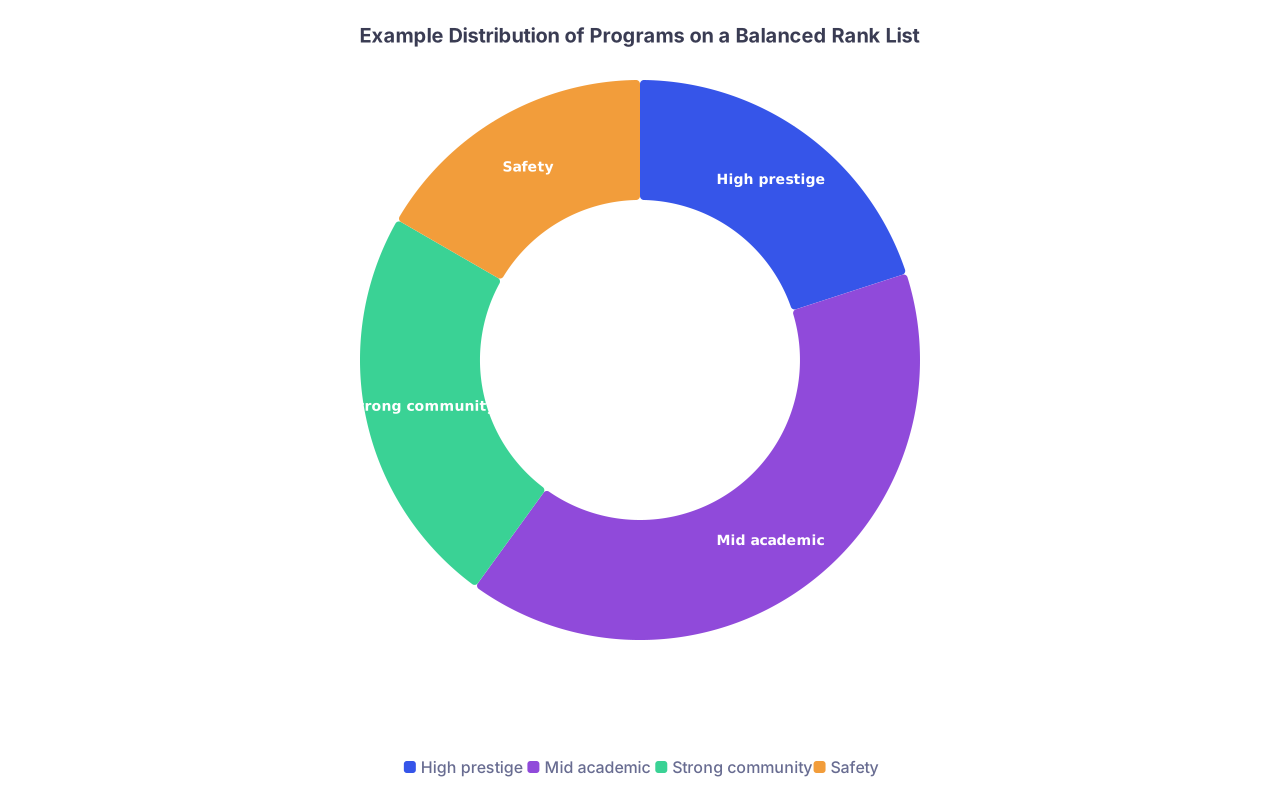
You want a distribution that looks something like this (mentally, not literally):
- ~15–25% “reach” / big‑name academic programs.
- ~50–60% solid academic or hybrid programs where you’re competitive.
- ~15–25% safety programs you’d still be willing to attend.
4. First‑Gen Specific Traps When Chasing Prestige
Being first‑gen changes the game. You’re not just picking a program; you’re picking the environment that will either scaffold you up—or leave you to figure out everything alone.
Here’s what I’ve seen first‑gen students run into when they over‑prioritize prestige:
Programs that assume you already know the rules.
“Everyone” magically knows about away rotations, which fellowships you need research for, how to ask for protected time, how to network at conferences. Nobody explains it. You’re just expected to figure it out. At some elite places, the hidden curriculum is half the training.Faculty who favor legacy and connections.
You’ll hear things like, “Oh, she’s Dr. X’s daughter—she’ll have no trouble with cards.” That person will get the extra project, the personal email to the fellowship director, the inside track. Not always malicious. But very real.No one advocating for you because you’re not “from the pipeline.”
Programs with strong pipelines from a few med schools often pour effort into “their” students. If you’re a first‑gen student from a state school they rarely recruit from, you’re more at risk of getting lost.Financial strain in expensive cities.
Prestige is clustered in places where rent is offensive: SF, NYC, Boston, LA, Chicago. If you have no family safety net, that cost hits hard. Extra loans, credit card debt, no margin to handle emergencies. That matters.
None of these are automatic dealbreakers. But you need to ask whether a given prestigious program has any real infrastructure that supports residents like you—or whether you’ll be expected to sink or swim.
5. Concrete Ways to Evaluate Programs Beyond the Brand Name
This is where you stop hand‑waving and start doing recon. You’re not a random applicant; you’re a first‑gen applicant trying to decide if a prestigious program is actually good for you.
Use residents as your primary intel source
On interview day or second looks, you want specific questions. Not: “Is the program supportive?” Everyone lies on that one.
Ask:
- “When residents want competitive fellowships, what does the program actually do to help them?”
- “Who are the go‑to mentors for people who didn’t come in with research/connection advantages?”
- “What happens to residents who are not from [big‑name med schools]? Do they get the same access to opportunities?”
- “Can you tell me about a resident who struggled academically or personally and how the program responded?”
- “How many recent grads went into the kind of job I think I want (community vs academic, specific subspecialty)?”
Then watch how they answer. If they dodge, generalize, or speak in vague “we care a lot” language with no examples—that’s a red flag.
Stalk the graduates (scientifically)
Go to the residency website. Hunt for:
- A list of recent graduates and where they went for fellowship or practice.
- If not on the site, ask the coordinator to send you a list; many programs have it.
You’re looking for patterns:
- If everyone doing top fellowships came from top med schools, that tells you something.
- If graduates with profiles that look more like yours (state school, DO, Caribbean, non‑traditional) are matching solidly, that matters more than the hospital’s NF ranking.
Understand prestige hierarchies in your region
Medicine is regional. In some areas, a “mid‑tier” academic program has more local pull than a distant Ivy.
Example: working in the Midwest. A University of Michigan, Wisconsin, or Minnesota residency might carry more real‑world weight there than a random East Coast mid‑tier “prestige” place. People hire who they know and trust.
Talk to attendings where you rotate and ask directly:
- “If I wanted to work in this region as a [specialty], which programs locally are most respected?”
You’ll sometimes hear names you’ve barely seen on national rankings. That’s the invisible prestige you actually care about if you want to practice in that area.
6. Balancing Prestige vs. Fit: A Simple (Blunt) Framework
You’re going to have to make a call where one program is clearly more “prestigious” but another clearly feels healthier or more supportive.
Here’s the way I’d think through it if you’re first‑gen.
Step 1: Be brutally clear about your likely future path:
- You are strongly, specifically gunning for: competitive fellowship or academic career in a high‑status subspecialty → prestige has more weight.
- You are leaning toward: community practice, hospitalist work, primary care, psych outpatient, EM in a community setting → prestige takes a backseat to training quality, location, and sanity.
Step 2: Ask which program will best prepare you for that path, not which one makes your CV look cooler.
For competitive, academic‑leaning paths, I’d pick a less flashy program over a big‑name one if:
- The less flashy program has strong, documented fellowship match outcomes in your target field.
- The PD and faculty have a reputation for going to bat for their residents.
- The research infrastructure is actually accessible (protected time, mentors who publish with residents—not just a giant research engine you’re never part of).
For community‑leaning paths, I’d pick a slightly less prestigious program if:
- You’ll see more bread‑and‑butter cases, get more autonomy, and graduate confident.
- The location will not bankrupt you.
- The culture respects residents as humans.
A quick “gut check” decision rule
If the more prestigious program is:
- Only slightly more famous,
- In a city that will financially crush you,
- With residents who seem burned out and unsupported,
and the less prestigious program:
- Has residents who are tired but not broken,
- Produces grads doing what you want to do,
- Has PDs who know every resident by name and path—
You’re usually better off at the “less prestigious” place.
Yes, there are exceptions. No, they are not as common as students think.
7. What To Do If You Feel Underselling Yourself or Overreaching
First‑gen students usually land in one of two traps:
- You underestimate yourself and avoid applying to big‑name places you’re actually competitive for.
- You overcorrect and think prestige will fix everything, so you apply mostly to dream programs and ignore solid mid‑tier fits.
Here’s how to reset.
If you’re underselling yourself
Signs:
- Your advisor says, “You should throw in some top programs,” and you shrug it off.
- Your scores, evaluations, and research are at or above the median for that field—but you only applied to low‑to‑mid tier programs out of fear.
Fix:
- Pick 5–10 higher prestige programs where your stats are at least in the ballpark.
- Apply to them with intention. Tailor your personal statement when possible, mention faculty or features.
- Use interviews there as recon: Do you feel like you could belong? Or are you treated as an outlier?
You’re not “wasting” applications. You’re buying information about whether these environments could work for you.
If you’re overreaching on prestige
Signs:
- More than 50% of your list is “Top X” anything.
- You chose programs by fame more than by actual training, geography, or resident experience.
- You’re in a specialty where your stats are just average but your list looks like you’re a national rockstar.
Fix:
- Add programs that are strong regionals with solid outcomes, not just big names.
- Prioritize places where your med school has successfully placed people before.
- Ask your home PD or advisor: “Where would you add if you wanted me to have a safe but high‑quality match?”
Your goal is not to impress strangers at a reunion. Your goal is to match somewhere that will get you where you want to go next.
8. How to Systematically Compare Programs (So You Don’t Get Lost)
If you’re first‑gen, your brain will naturally lock onto clear labels: “Top 10,” “University of X,” “Ivy.” You need a counterweight—something concrete to compare.
Use a simple spreadsheet with these columns:
- Name of program
- Prestige tier (your rough gut: High / Medium / Local strong / Safety)
- Fellowship outcomes in your interest field (Strong / Decent / Weak / Unknown)
- Resident culture (Supportive / Mixed / Concerning)
- Location cost (Low / Medium / High)
- First‑gen/URiM support (Real programs/mentors vs lip service)
Then sanity‑check your list.
| Category | Value |
|---|---|
| High prestige | 6 |
| Mid academic | 12 |
| Strong community | 7 |
| Safety | 5 |
Your aim isn’t a perfect distribution. It’s awareness. If your doughnut is 80% “high prestige” and you’re a borderline competitive applicant, that’s not confidence—that’s denial.
9. A Note on Family, Expectations, and Guilt
If you’re first‑gen, your family may not understand the difference between “Harvard‑adjacent famous place” and “regional program you’re actually happy at.” They hear names. They assume more famous = better life.
You’re going to feel pressure. Maybe to “aim high for the family,” maybe to stay close to home, maybe to pick something that sounds impressive when your aunt brags about you.
Let me be very blunt: they’re not the ones taking Q4 call.
Prestige that makes you miserable is not prestige. It’s branding. You have the right to trade a big name for:
- An extra hour of sleep,
- Colleagues who back you up,
- A PD who writes you a killer letter instead of barely remembering you.
Your family probably just wants you to be safe, stable, and proud of yourself. They won’t know how to weigh “#7 national” vs “supports residents, good outcomes.” That’s your job.
You’re allowed to choose the program that lets you build a life, not just a flex.
10. What This All Boils Down To
If you strip away the noise, here’s how a first‑gen student should approach prestige when picking programs:
- Use prestige strategically, not emotionally. It matters more in some specialties and for some future goals, and much less if you’re headed for community‑focused careers.
- Judge programs by outcomes and support, not logos. Look at where grads go, how residents talk when they’re not on script, and whether someone at that program is likely to invest in you.
- Protect your future self, not your ego. The right “mid‑tier” program can open more doors—and do less damage—than the wrong “top‑tier” one.
Three questions to keep asking as you build and finalize your list:
- What do I actually need prestige for in my career plan?
- At this specific program, would someone like me actually get access to the opportunities that prestige supposedly provides?
- Ten years from now, will I care more about the program’s brand—or about the skills, connections, and sanity I walked away with?
Answer those honestly, and you’ll handle the prestige game better than most people—first‑gen or not.