
What if your Step score is the first thing every family medicine program sees and they all just… quietly toss your application?
Reality Check: Are You Actually “Too Low” for Family Medicine?
Let me be blunt: a lot of us catastrophize our scores way more than programs do. Especially in family medicine.
You see posts like “Got a 250, can I still match FM?” and want to throw your phone. Meanwhile you’re sitting on a 210-something (or a Step 1 pass with a shaky Step 2) wondering if you just ended your career before it started.
Here’s the truth I’ve seen play out:
- FM programs do care about Step scores. They’re not fake-nice about it.
- But they usually care about them as a filter, not a definition of your worth.
- A “low” score for derm and a “low” score for FM are not the same universe.
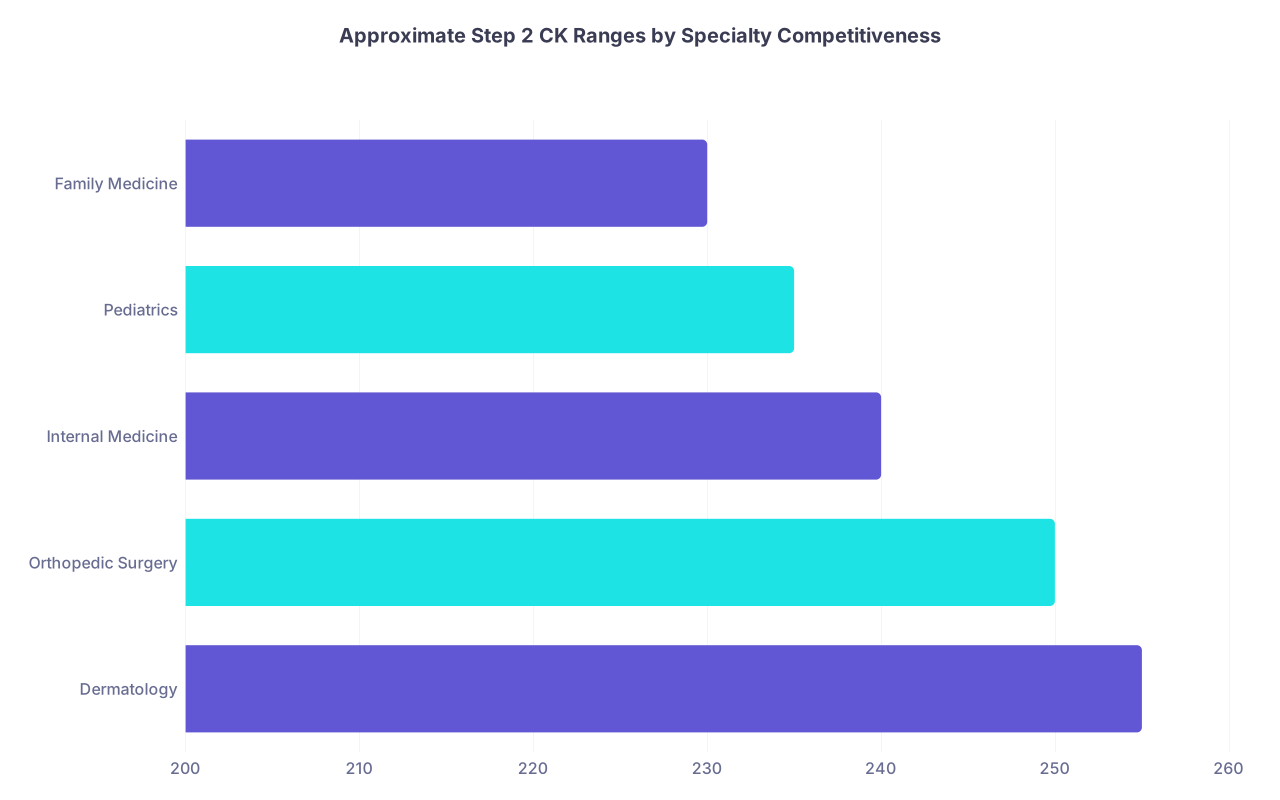
| Category | Value |
|---|---|
| Dermatology | 255 |
| Orthopedic Surgery | 250 |
| Internal Medicine | 240 |
| Pediatrics | 235 |
| Family Medicine | 230 |
Those are rough averages for matched applicants, not hard cutoffs. Tons of family medicine residents are below 230. Some below 220. Some below 210. Especially in community programs and certain regions.
The bigger red flags for FM usually aren’t:
- “Score is 215 instead of 235”
They’re more:
- Multiple Step failures
- Very late Step 2 with barely passing scores and no explanation
- Pattern of poor performance plus weak clinical comments plus bad LORs
If you’re thinking, “Okay, but I have X score, is that basically a death sentence?” here’s a rough-and-honest table.
| Step 2 CK Range | FM Outlook (US MD/DO) | FM Outlook (IMG) |
|---|---|---|
| 240+ | You’re fine, focus on fit | Strong for many FM programs |
| 225–239 | Solid for most FM programs | Competitive for many, not all |
| 210–224 | Still very realistic | Possible, but need smart strategy |
| <210 | More limited, but not impossible | Need strong story + broad list |
None of this is absolute. I’ve seen people with sub-210s match decent FM programs because the rest of their app actually told a story. I’ve also seen people with higher scores struggle because everything else screamed “I don’t really want family medicine, I just failed at my dream specialty.”
So the real question isn’t “Is my score too low for FM?”
It’s “Given my score, what kind of FM programs can I realistically target, and how do I stop my score from being the only thing they see?”
How FM Programs Actually Look at Applicants (Not the Fantasy Version)
Here’s how it tends to go behind the scenes. The part you don’t see.
Many programs start with:
- ERAS filter: Step cutoff (yes, even FM)
- Geography preference
- Visa / IMG status filters
- Then they actually read what’s left

| Step | Description |
|---|---|
| Step 1 | ERAS Applications |
| Step 2 | Auto Screen Out |
| Step 3 | Check MSPE and Grades |
| Step 4 | Check Visa and School |
| Step 5 | Review Personal Statement |
| Step 6 | Review Letters |
| Step 7 | Interview List |
| Step 8 | Hold or Reject |
| Step 9 | Meets Score Filter |
| Step 10 | US MD or DO? |
| Step 11 | Invite for Interview |
Where your low score hurts you most is step B. If a program with 1,500 applications sets their Step 2 filter at 220, a 215 may literally never be opened. That’s the part that sucks the most: not even getting read.
But once you’re past that filter? The tone changes. Then people ask:
- Do they actually want FM, or is this backup panic energy?
- Do they work hard on the wards or just show up?
- Do they have any consistent theme—primary care, underserved, community, continuity?
- Are their letters specific and enthusiastic or copy-pasted garbage?
I’ve watched faculty scroll past scores once they see “great with patients, hardworking, reliable, would happily work with again.” They may joke about numbers, but when there’s a resident-shaped hole in the call schedule, they want someone who shows up and does the work, not just someone who crushed UWorld.
So the strategy becomes:
- Don’t get filtered out.
- Then, don’t look like “low score and nothing else.”
Where Low Scores Actually Matter in FM (And Where They Don’t)
Here’s where your anxiety is legit:
- Highly competitive FM programs – University-affiliated, big cities, “top 10” FM names, California, Seattle, Boston, etc. These programs can be weirdly picky.
- Visa-restrictive or IMG-heavy environments – They use Step as one of the only “objective” metrics.
- Programs drowning in apps – They’ll throw up a higher cutoff just to make the number manageable.
But there are a lot of places where your score matters less than you think:
- Community FM programs in smaller cities or rural regions
- Programs explicitly focused on underserved care
- Newer programs trying to build a reputation
- Programs that know Step 1 pass/fail made Step 2 way more high-stakes and messy
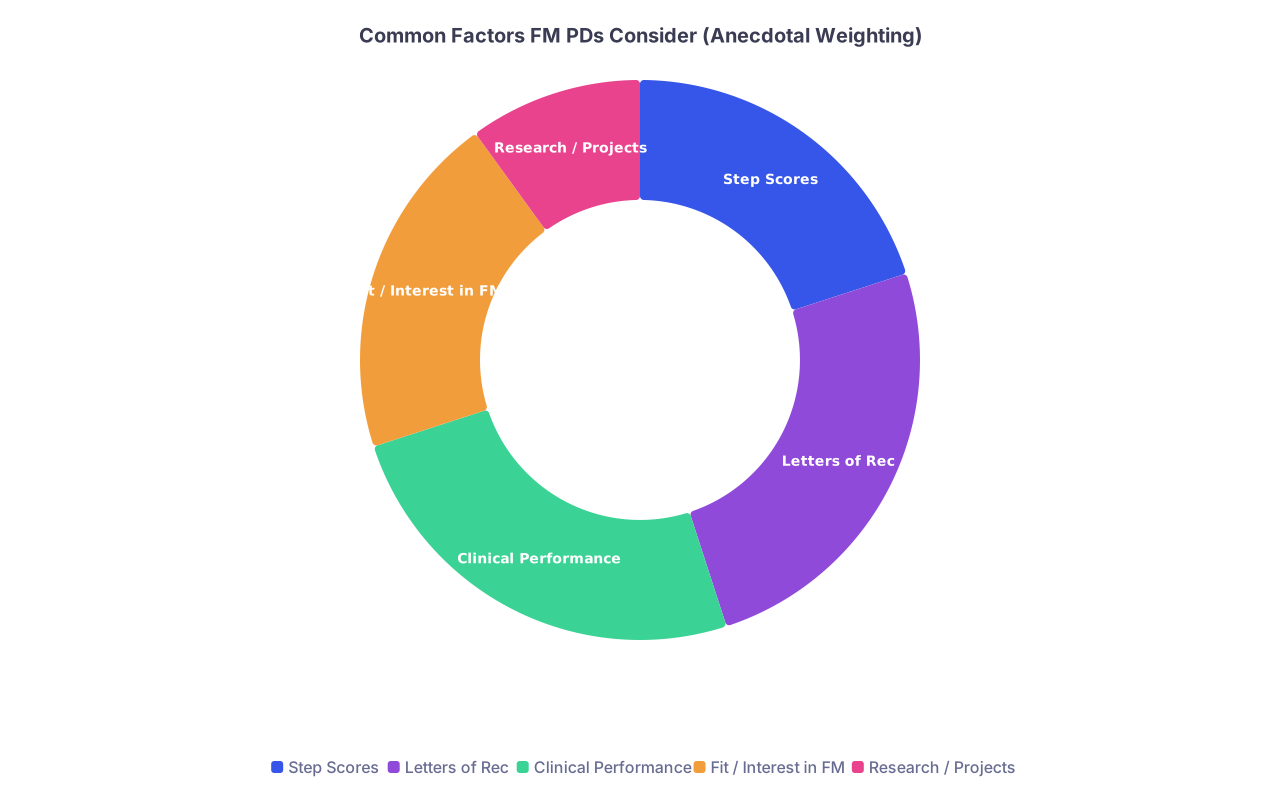
| Category | Value |
|---|---|
| Step Scores | 20 |
| Letters of Rec | 25 |
| Clinical Performance | 25 |
| Fit / Interest in FM | 20 |
| Research / Projects | 10 |
That’s not based on one randomized trial; it’s what program directors actually say out loud at conferences and Q&As.
Notice: Step is part of it. Not the whole thing.
Where your score really won’t matter much:
- Once you’re actually a resident. Nobody’s asking “what was your Step score?” when you’re handling three new admits and a crashing COPD exacerbation.
- For most FM fellowships (sports med, geri, palliative, OB-heavy). They care way more about what kind of resident you are.
Your score feels like your identity now. It will not stay that way.
Making a Low Score Look Less Like a Red Flag
You can’t hide your score. But you can make it only one piece of a much bigger picture.
1. Be honest—but controlled—in how you frame it
If you have:
- A single fail
- A big jump from Step 1 to Step 2
- A barely passing score after major life stuff (illness, death in family, etc.)
Use your personal statement or an additional info section to briefly explain. Not a sob story. Just:
- What happened
- What you learned
- How you’ve functioned since (clerkships, Sub-Is, etc.)
If your score is just low with no drama? Don’t invent trauma. Own it with your actions, not a paragraph of excuses.
2. Stack your FM-specific experiences
If your scores are not going to carry you, your story has to.
Things that actually land with FM PDs:
- Longitudinal primary care clinic work
- Free clinic, FQHC, community health centers
- Rural rotations, migrant health, addiction medicine, OB in a community setting
- Anything with continuity and underserved
If you don’t have these yet, see if you can still add:
- An FM elective where you tell the attending: “FM is my first choice; I need a strong letter and I’m willing to work for it.”
- A short quality improvement project in an FM clinic
- Volunteering in a community clinic, even once a week
3. Letters that actually say something
Mediocre letters kill more applicants than low Step scores. I’ll die on that hill.
You want at least 2–3 letters that sound like:
- “This student is one of the hardest working”
- “Patients consistently commented on how comfortable they felt”
- “I would be happy to have them as my resident or colleague”
Not:
- “They completed the rotation and showed interest in learning.”
Ask specifically:
- “Would you feel comfortable writing a strong letter for my FM application?”
If they hesitate at all, move on. Seriously.
4. Play the geography and program type game
This is where people mess up with low scores: they apply like they’re still competing for derm.
Think strategically. Something like:
| Program Type | Approx. Number to Apply |
|---|---|
| University FM (big cities) | 5–10 |
| Community + university-affiliated | 15–25 |
| Pure community FM | 25–40 |
| Rural / smaller region FM | 15–30 |
You adjust the exact numbers to your situation. But the idea is: don’t only apply to shiny brand-name programs in saturated markets and then act shocked when interviews are scarce.
5. Use your personal statement like a weapon, not fluff
If your Step score is weak, your personal statement cannot be:
“I always knew I wanted to be a family medicine doctor because I like continuity and holistic care…”
Every PD has read that 400 times. Instead:
- Tell 1–2 concrete stories from clinic that actually show your behavior
- Connect those stories to why FM specifically
- Subtly counter the “backup plan” vibe by making FM sound like the point, not the consolation prize
Low scores with a powerful FM story? That’s matchable.
High scores with a lukewarm, generic FM pitch? Surprisingly risky.
How Many Interviews Do You Actually Need To Breathe?
Here’s what most of us obsess about: “What if I only get like… three interviews?”
For FM, especially as a US MD/DO, the general pattern I’ve seen:
- ~8–10 solid interviews → you should match somewhere
- 5–7 → possible but anxiety-inducing
- 3–4 → not hopeless, but you’re in high-stress territory
- 0–2 → serious trouble, need backup plans
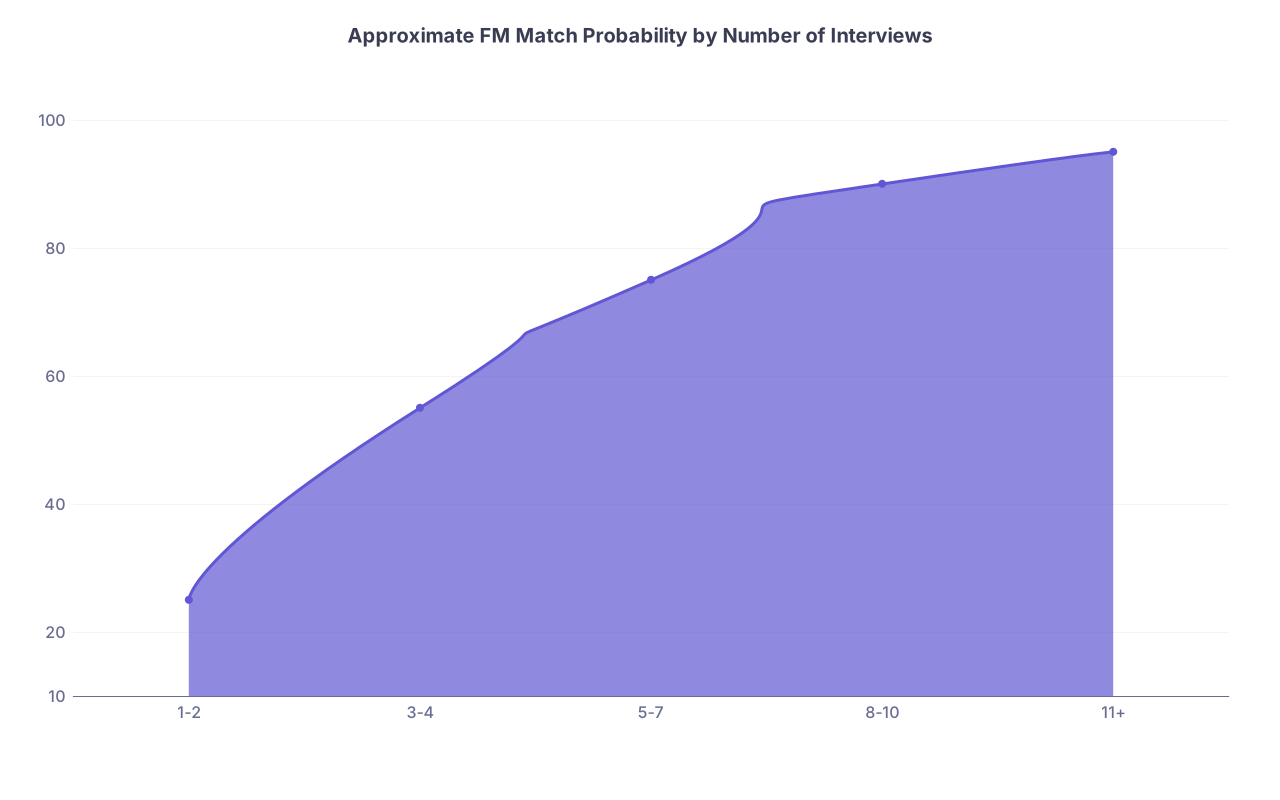
| Category | Value |
|---|---|
| 1-2 | 25 |
| 3-4 | 55 |
| 5-7 | 75 |
| 8-10 | 90 |
| 11+ | 95 |
These are rough. Real life is messier. But if you’re sitting there in December with 7 interviews and a 215 Step 2, you’re not doomed. You’re just going to be nervously over-analyzing every interaction until Match Day. (Welcome to the club.)
If you’re at 0–2 interviews and it’s late:
- Ask your school for help immediately
- Have mentors email programs directly where you have ties
- Be brutally flexible about geography and program “prestige”
You’re not trying to win a beauty contest at that point. You’re trying to get training. You can build whatever career you want after you match.
FAQs – The Stuff You’re Probably Still Spiraling About
1. “My Step 1 was pass/fail and my Step 2 is low. Do programs assume I failed Step 1 or am dumb?”
No. They assume exactly what they see: you passed Step 1 and got X on Step 2. That’s it. They don’t get a secret file that tells them you actually barely passed.
What they do think about more now (with Step 1 P/F) is:
- “Can this person pass Step 3 and in-training exams?”
- “Are they going to struggle with boards during residency?”
You address that by:
- Showing upward trend in clerkship grades or shelf exams
- Doing well on any standardized exams you take later
- Possibly taking Step 3 early if your advisor thinks it’ll help (this is not mandatory and can backfire if rushed)
2. “I failed Step 1 or Step 2 once. Is family medicine still realistic?”
Yes, but you’re on thinner ice, especially if:
- You’re an IMG
- You have multiple failures
- There’s no obvious explanation or improvement
Your strategy shifts to:
- Heavy FM commitment (rotations, letters, PS)
- Directly addressing the failure once, then pivoting to what you’ve done since
- Casting a very wide net, especially in less competitive regions
I’ve seen people with a fail + later pass match solid FM programs when everything else screamed “reliable, hardworking, genuinely FM-focused.”
3. “Will a low Step score limit me from doing a sports med / OB / addiction medicine fellowship later?”
Usually not, as long as:
- You perform well in residency
- You get fellowship-relevant experience and letters
- You’re not repeatedly failing in-training exams
Fellowship directors care much more about:
- “Is this someone I’d trust with my patients?”
- “Do they show up, get along with the team, and learn quickly?”
Your residency performance will matter a lot more than your ancient Step 2.
4. “Be honest—should I give up on FM and go for something ‘easier’ if my Step is really low?”
If you actually want FM? No. FM is the “easier” path compared to a lot of specialties, and it has a wide range of programs. The question isn’t “Is FM too competitive for me?” It’s:
- Am I willing to be flexible on location, program type, and prestige?
- Am I willing to swallow my pride and apply broadly to places my classmates ignore?
- Am I okay with a path that’s maybe less shiny on paper but still gets me to the work I actually want to do?
If the honest answer is “I don’t even like FM, I’m just running from my score,” that’s different. But if your heart’s actually in primary care? Don’t bury that because of one number.
Key points, no fluff:
- Low Step scores make matching FM harder at fancy, competitive programs—but not impossible overall, especially if you’re flexible and strategic.
- Once you clear initial filters, your FM story, letters, and clinical performance matter a lot more than your Step number.
- You don’t need a perfect application—you need enough interviews, a clear commitment to FM, and the willingness to go where the doors are actually open.