
Why do so many students talk about family medicine like it’s the “easy mode” of residency, while internal medicine is the “real” cognitive specialty?
That narrative is outdated. Worse than that—it’s misleading enough to screw up your specialty choice if you buy into it.
I’ve heard versions of the same conversation on every med school campus and in every resident workroom:
“If I can’t match IM at a good place, I’ll just do FM. It’s easier hours and less intense.”
Or the Step-obsessed variant:
“I’ll aim for IM first. If my score tanks, I’ve always got FM as a backup.”
This used to map loosely onto reality in the 1990s and early 2000s. It does not anymore. The landscape has shifted: board exams went pass/fail, application inflation exploded, and primary care expectations blew up. Yet the myth lingers.
Let’s dismantle it properly.
The Old Story vs The New Data
The old story goes like this:
Internal medicine = “academic,” sicker inpatients, higher Step scores, harder residency.
Family medicine = “chill clinic,” lower scores, lifestyle specialty, easier match.
That was never completely true. But now it’s frankly wrong.
Look at actual competitiveness signals rather than hallway gossip: number of applicants per spot, average USMLE Step 2 CK scores, fill rates with MD/DO grads. The gap between FM and IM has shrunk dramatically, and in some places has flipped.
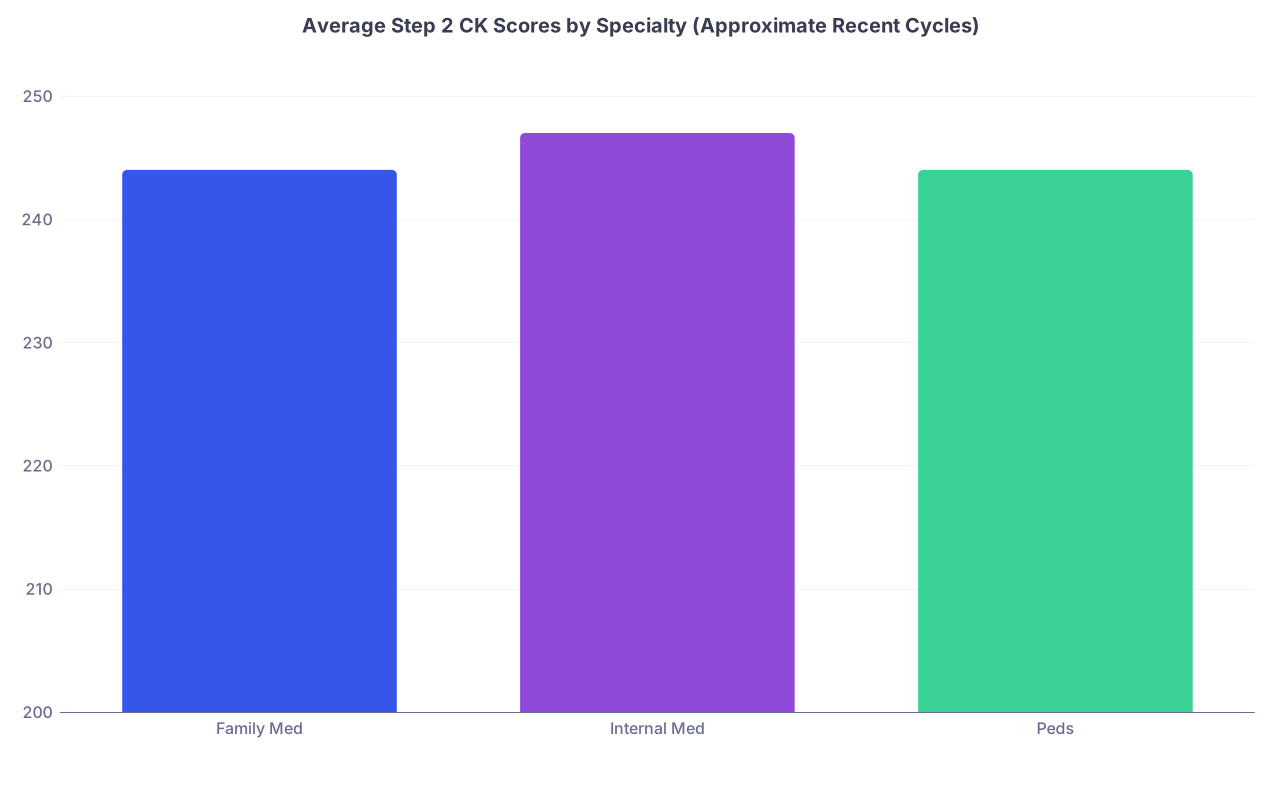
| Category | Value |
|---|---|
| Family Med | 244 |
| Internal Med | 247 |
| Peds | 244 |
Across recent NRMP data:
- US MD and DO applicants going into FM and IM have very similar Step 2 scores. We’re talking low- to mid-240s vs mid-240s to high-240s, depending on year.
- Fill rates with US grads are converging. Many FM programs are now mostly or entirely US grads, particularly in metro and academic settings.
- The number of applications per applicant is insane in both fields. You are not “sliding” into FM the way your attending did 25 years ago.
In other words: the market no longer treats FM as an easy consolation prize. The data do not support that.
Training Intensity: Clinic vs Wards, Not Easy vs Hard
Another persistent myth: IM is “hard” because of wards, ICU, and subspecialty consults; FM is “easier” because it’s mostly clinic with some nights and obstetrics sprinkled in.
Reality: both are brutal in different ways.
Internal medicine residency is skewed toward:
- Inpatient medicine
- High-acuity admissions
- ICU, stepdown, subspecialty consult services
- Complex polypharmacy and medical puzzles
Family medicine residency is skewed toward:
- Outpatient continuity clinic
- Preventive care, chronic disease management
- Pediatrics and obstetrics
- Emergency/urgent care, procedures, behavioral health
Notice what that means: IM is high-acuity, narrower age range. FM is cradle-to-grave, broad-scope, lower average acuity but far higher variety.
So which is “harder”?
Depends on what you mean by hard.
On an IM ward month, you might carry 12–18 complex inpatients, all over 65, on 15 meds each, with active decompensation. It’s intense, time-pressured thinking, lots of rapid decisions, and recurring nights.
On an FM continuity clinic day, you might see:
- A newborn well check
- A 3-year-old with recurrent otitis and developmental concerns
- A pregnant patient at 24 weeks with gestational diabetes
- A 45-year-old with uncontrolled diabetes and depression
- A 58-year-old with chest pain you have to decide to send to the ED or not
- A 78-year-old with dementia, caregiver burnout, and polypharmacy
- A same-day visit for acute psych crisis
All in 15–20 minute slots, with prior auths, disability forms, and family drama packed into every visit.
That’s not easier. It’s just different. If anything, the cognitive whiplash in FM clinic is tougher for some residents than a focused IM inpatient day.
Scope of Practice: FM is Not “IM Lite”
Here’s where the myth really collapses: people treat FM as if it’s internal medicine with worse branding. That’s just wrong.
Family medicine is not “IM but easier.” It’s:
- Internal medicine
- Plus pediatrics
- Plus outpatient gynecology
- Plus obstetrics (if you choose that track)
- Plus outpatient procedures
- Plus basic psychiatry and behavioral medicine
- Plus a huge dose of social medicine and systems navigation
Internal medicine is deeper in the inpatient and adult medicine lane. FM is wider, with more age ranges, more settings, and more domains.
I’ve seen IM residents visibly tense up floating in an FM clinic that includes prenatal care, newborn checks, and behavioral health visits in the same half-day. Not because they’re incapable, but because their training didn’t emphasize that spread.
Procedurally, FM can be very intense in the right programs: full-scope OB, colposcopy, skin procedures, joint injections, vasectomies, colonoscopies in some rural settings. That’s not “easy primary care.” That’s high-responsibility frontline medicine.
Competitiveness: The Backup Plan Lie
Students love treating FM as the “in case everything else fails” plan. The numbers no longer justify that attitude.
| Metric | Family Medicine | Internal Medicine |
|---|---|---|
| US MD/DO Step 2 CK (approx) | ~243–246 | ~245–248 |
| Fill rate with US grads | High, rising | High, stable |
| Applicants per position | Increasing | Increasing |
| IMG presence (overall) | Still common | Still common |
Exact numbers shift each year, but the pattern is consistent: FM is not this “low-bar” receptacle for anyone who breathes and passes Step 2.
Here’s the twist: in desirable urban and academic locations, FM can be just as hard or harder to match than IM. Many strong med students want those primary-care-focused academic programs with serious behavioral health integration, broad training, and strong fellowship pipelines.
On the flip side, yes, there are under-filled FM programs in less popular geographic areas. But guess what? Same is true for lower-tier IM programs in less desirable regions. Geography and program reputation drive competitiveness more than the FM vs IM label.
The “I’ll just drop to FM if I bomb Step” strategy is less and less reliable as more students pile into primary care and as the prestige arms race cools for some subspecialties.
Lifestyle Reality Check: Outpatient Burnout Is Very Real
Another myth: FM is better lifestyle, IM is grind.
Nope. Replace that with: inpatient vs outpatient stressors are different flavors of misery. You pick your poison.
An IM resident on a Q4 call ward month is crushed by:
- Long shifts and night float
- Endless pages, rapid responses, ICU transfers
- Constant cross-cover with too many patients
- Pagers going off while they’re trying to discharge 6 patients before noon
A full-spectrum FM resident is crushed by:
- Overbooked clinic
- EMR inbox insanity—labs, messages, refills, forms
- Being the single point of contact for everything in the patient’s life
- OB call and deliveries at 2 a.m. followed by clinic the next day
Post-residency, outpatient IM and FM attendings in large systems face almost identical productivity and panel pressures. RVU targets do not care about your specialty label.
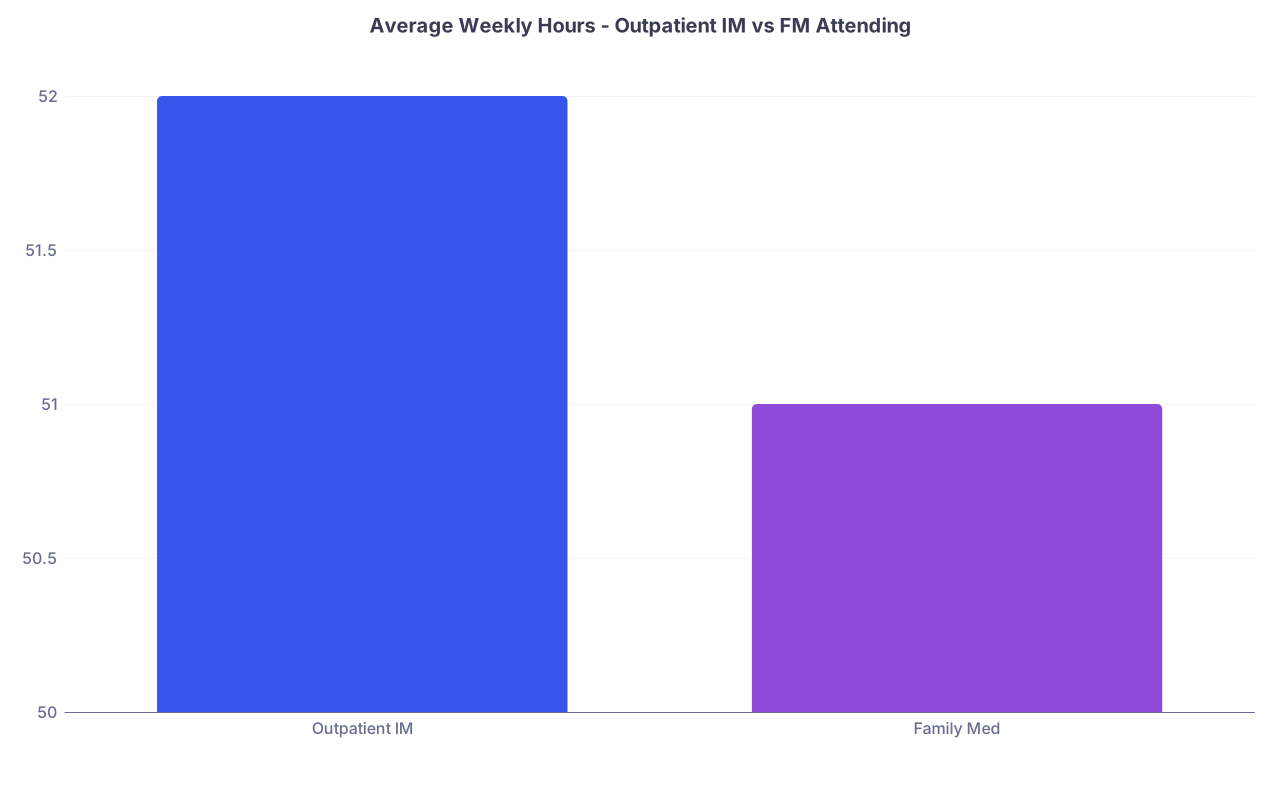
| Category | Value |
|---|---|
| Outpatient IM | 52 |
| Family Med | 51 |
The slight differences that do exist usually relate to:
- Whether you do OB (FM only; more nights/call)
- Whether you take inpatient service (both, but less common and more optional in community settings)
- How your group is structured (hospital-employed vs FQHC vs private)
If your primary motivation is “better lifestyle,” choosing FM vs IM is much less important than choosing the right job structure once you finish.
Intellectual Demand: FM Is Not For People Who “Don’t Like Medicine That Much”
Students sometimes confess it like a guilty secret:
“I’m thinking FM because I don’t want something super intense. I’m not that into pathology or puzzles.”
Then they rotate onto a solid family medicine service and are shocked by how hard it is to do well.
Primary care—done well—is cognitively exhausting:
- You’re managing multi-morbidity with limited time and incomplete data.
- You’re rationing attention and resources in real time: who needs workup today vs “watch and wait.”
- You’re tracking long arcs of disease: prediabetes to diabetes, subclinical hypothyroid to overt, mild cognitive decline to dementia.
- You’re doing risk stratification constantly: which chest pain is GERD, which is anxiety, which is a 911 moment.
This is different from the satisfying “whodunit” of hospital IM, where you stabilize, diagnose, and hand off.
Family medicine requires unusual diagnostic humility and comfort with uncertainty. If you like immediate, crisp answers and clear closure, you may find FM more mentally frustrating than IM, not less.
Flip side: if you genuinely like puzzles with tight feedback loops, inpatient IM may feel more gratifying. That doesn’t make it “harder”—just more aligned with a particular cognitive style.
Careers and Fellowships: FM Is Not a Dead End
Another quiet myth under all this:
“FM closes doors. IM keeps them open. So choose IM if you’re smart.”
Again, that was closer to true decades ago. It’s lazy thinking now.
Internal medicine clearly has a broader and more established subspecialty ecosystem: cardiology, GI, pulm/critical care, heme/onc, nephrology, rheum, endocrine, etc. If you want to live in an ICU or cath lab, you go IM. End of story.
But family medicine has its own real, competitive fellowship world:
- Sports medicine
- Geriatrics
- Palliative care
- Addiction medicine
- Maternal-child health / high-risk OB (FM-based)
- Academic medicine and leadership tracks
- Community and global health pathways
Plus, FM physicians in rural or under-served settings often step into roles that are essentially “mini-hospitalist + ED + OB + clinic” because there’s simply no one else. That’s not a lack of options. That’s high scope and high responsibility.
If your plan is “generalist outpatient primary care in a city,” both IM and FM can take you there. You pick based on scope (peds? OB?) and training culture. Not based on some imaginary difficulty curve.
Program Culture: What Actually Matters More Than FM vs IM
Here’s the reality most MS3s don’t want to hear: the FM vs IM label is a blunt instrument. Your daily life in residency is determined much more by:
- Program size and call structure
- How malignant or humane the leadership is
- Whether the culture is education-first or service-first
- Template expectations in clinic and EMR burden
- Strength of nursing, case management, and ancillary staff
I’ve seen “easy” internal medicine programs where residents have protected teaching time, capped services, strong NP/PA support, and sane night systems.
I’ve also watched family medicine residents run themselves into the ground at places that bolt OB, inpatient adult, inpatient peds, and overloaded clinics onto a skeletal resident workforce.
The hard question you should be asking isn’t, “Is FM easier than IM?” It’s:
- “Where do I want to sit on the inpatient–outpatient spectrum?”
- “Do I want to see kids and do women’s health—and maybe OB?”
- “Do I want a narrower, deeper adult medicine focus or a wide cradle-to-grave scope?”
- “What type of call structure can I tolerate?”
That’s the grown-up way to approach this, not “FM is the easy primary care track.”
How to Choose Without Falling for the Myth
Let me be blunt:
If you choose FM because you think it’s easier, you’re setting yourself up for a miserable, misaligned residency.
Same thing if you choose IM because you think it’s the “real doctor” pathway and FM is somehow lesser. That snobbery usually melts by PGY-2 when you realize how much primary care is holding the system together.
Here’s a better approach.
Do two things during your core rotations and electives:
Track your energy, not your ego.
Notice which days drain you versus which days you can finish tired but not hollowed out.
Days heavy on wards, codes, and ICU? That points toward IM.
Days heavy on clinic, continuity, kids, OB, counseling? That points toward FM.Watch attendings 10–20 years out.
Who has a life you’d be okay inheriting?
Look at outpatient IM docs. Look at FM docs. Ask what their average week actually looks like—clinic volume, call, inbox, admin. Do not rely on nostalgic stories from someone who trained before duty hour reforms and EMRs.
Then decide. Not based on made-up difficulty tiers, but on actual alignment with how you like to think and work.

| Step | Description |
|---|---|
| Step 1 | Start - Want Primary Care |
| Step 2 | Consider Internal Medicine |
| Step 3 | Family Med - Full Spectrum |
| Step 4 | Family Med - Outpatient Focus |
| Step 5 | Internal Med - Hospitalist track |
| Step 6 | Internal Med - Outpatient track |
| Step 7 | Want to see kids regularly |
| Step 8 | Interested in OB and womens health |
| Step 9 | Prefer inpatient focus |
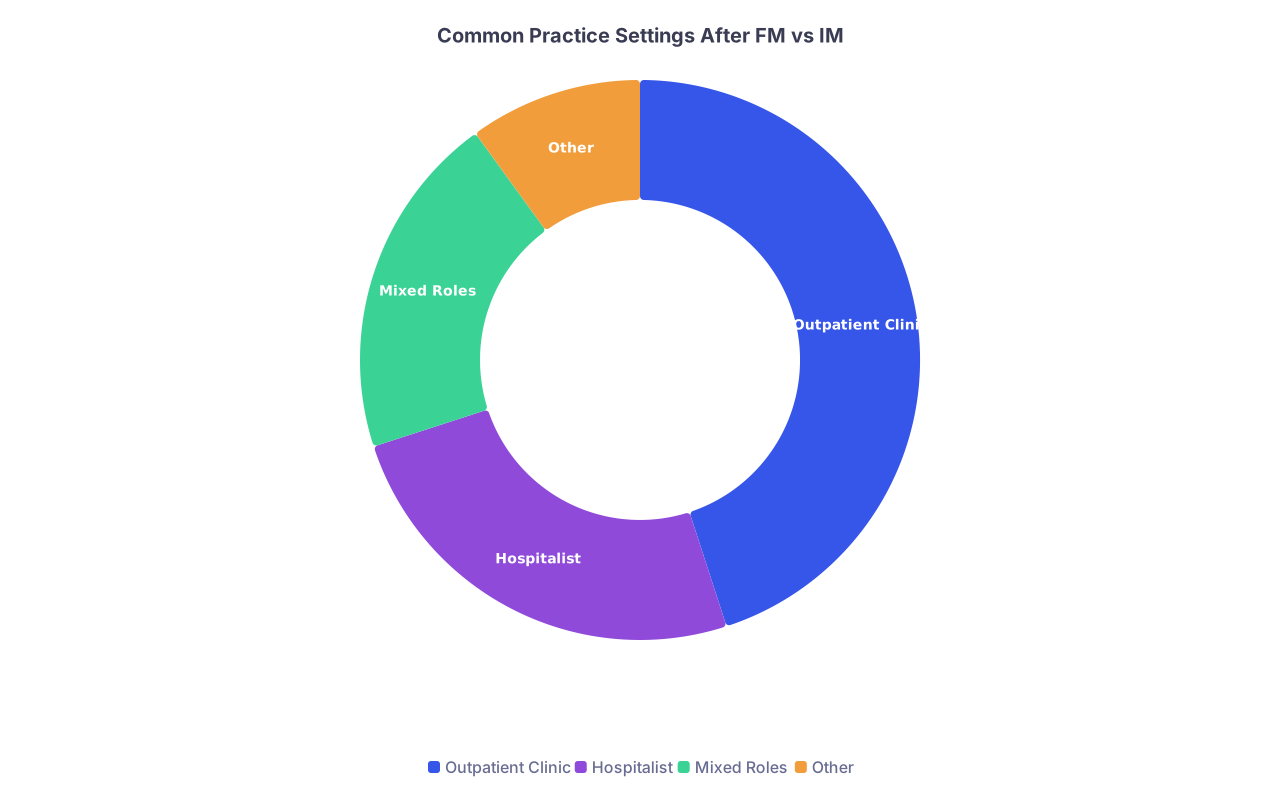
| Category | Value |
|---|---|
| Outpatient Clinic | 45 |
| Hospitalist | 25 |
| Mixed Roles | 20 |
| Other | 10 |



The Bottom Line
Three key truths to walk away with:
Family medicine is not automatically easier or less competitive than internal medicine anymore. The score gaps are small, and in desirable locations, FM can be just as hard—or harder—to match.
FM and IM are different shapes of difficulty, not different levels. IM is deeper in adult inpatient and subspecialty medicine. FM is broader across ages, settings, and problems, with heavy outpatient complexity and continuity.
You should choose based on scope and style of practice, not on outdated prestige myths or imagined lifestyle differences. Decide whether you want inpatient-heavy adult medicine (IM) or broad, cradle-to-grave, community-focused care (FM). The label doesn’t save you from hard work. Alignment does.