
The “cush psychiatry lifestyle” story is wildly overstated—and also, weirdly, still underselling some of the real advantages. Both the haters and the hype merchants are wrong.
You’ve probably heard both extremes already:
- “Psych is 9–4, no notes, no nights.”
- “Psych is endless documentation, dangerous patients, and pure burnout.”
Neither matches what the data—or actual residency schedules—show.
Let’s dissect the mythology and talk about what call, notes, and nights in psychiatry actually look like, compared with other fields, and where people keep lying to themselves.
Myth #1: “Psychiatrists Don’t Really Take Call”
I hear this from pre-meds all the time, usually repeated by someone who did one chill outpatient afternoon clinic and decided that’s what the whole specialty is.
Reality: Psychiatry has call. It’s just a very different type of call than surgery, EM, or medicine.
What call actually looks like in psychiatry residency
Across most ACGME-accredited psych programs, you’ll see some mix of:
- In-house nights as a junior resident (typically PGY‑1/2)
- Home call as a more senior resident (PGY‑3/4)
- Weekend rounding on inpatient or consults
On a typical rotation-heavy academic program, psychiatry residents still do fewer nights and fewer hours than IM, surgery, OB, or EM. That’s not opinion—that’s survey data.
The ACGME and multiple resident survey projects consistently show psychiatry near the low end of resident work hours and call burden. Something like 50–60 hours/week is common for inpatient-heavy rotations, and 40–50 for outpatient/emphasis programs. Yes, there are malignant exceptions. There always are.
Compare that with the 70–80+ hours/week that are essentially standard in general surgery and neurosurgery, and you see the first real correction: psychiatry absolutely has call, but it is rarely the all-consuming beast that dominates your life the way surgical call does.
What “night float” and call actually feel like
Here’s what I’ve seen in practice on typical psych night shifts:
- You might cover an inpatient psych unit, the ED psych consult pager, and sometimes cross-cover for other psych units in the system.
- A “busy” night often means: 2–5 ED consults for SI/HI, psychosis, agitation, capacity evals, plus calls from the floor for meds, agitation, or medical issues that really should go to medicine.
- On many nights, there are genuine stretches of quiet. You might actually sit, think, read, and write notes. Very different from cross-covering 60 medicine patients with nonstop rapid responses.
But here’s the catch people gloss over: psych call can be psychologically heavy even when it’s not physically exhausting. You may spend an hour trying to de-escalate someone paranoid and violent, or evaluating a teenager post-suicide attempt with distraught parents in the room. That’s not “easy,” it’s just a different axis of difficulty.
Attendings and post-residency call
Another big myth: “As an attending psychiatrist, you never take call, you just work clinic hours.”
Again—depends heavily on practice setting.
- Academic inpatient psychiatrists often take home call and rotate coverage for nights/weekends. Frequency might be 1:6 to 1:10, sometimes better.
- Community hospitals might have a psychiatrist on phone back-up for ED docs or midlevels. Some get called a lot. Some hardly at all.
- Outpatient-only private practice or telepsych? Call may be essentially nonexistent, or it may just be “urgent messages” and rare true emergencies.
Is psych call usually lighter than surgical subspecialty call? Yes. Is it meaningfully lighter than hospitalist call in many settings? Often, yes. But does call completely disappear? No. And if someone is telling you it does, they either do pure outpatient in a very controlled environment, or they’re selling something.
Myth #2: “Psych Has No Notes; It’s Just Talking To People”
This one’s almost funny to anyone who has actually used an EHR in psychiatry. Psych is documentation-heavy, and it’s getting worse, not better.
Why psych documentation is such a beast
Psychiatry’s “procedure” is the conversation. That means your work product is words. In the chart.
So instead of “lap appy, no complications” or “CHF, diuresed, improved,” you get:
- Multi-page initial evaluations with history, mental status exam, risk assessment, collateral, formulation, and detailed plan
- Suicide risk documentation that has to be airtight because plaintiffs’ attorneys love it when it is not
- Capacity evaluations that sometimes read like bar exam essays
On a busy academic inpatient service, I’ve seen PGY‑2s writing 3–6 new admits per call night, each one a 3–6 page note in the EHR, plus daily progress notes on 10–15 existing patients. It’s not rare to be finishing notes after sign-out if you’re not efficient.
Outpatient: the stealth documentation trap
People imagine outpatient psych as 10 patients a day, long chats, no stress. Wrong era.
Many outpatient setups now expect:
- 15–20 minute med checks
- 30–60 minute intakes
- 20+ patients per day in some high-volume community or telepsych settings
Even short visits need meaningful documentation. That’s diagnosis, meds, side effects, risk assessment, counseling elements, plus all the click-box nonsense to satisfy billing and compliance.
| Category | Value |
|---|---|
| Psych | 35 |
| IM | 45 |
| Surgery | 30 |
| EM | 20 |
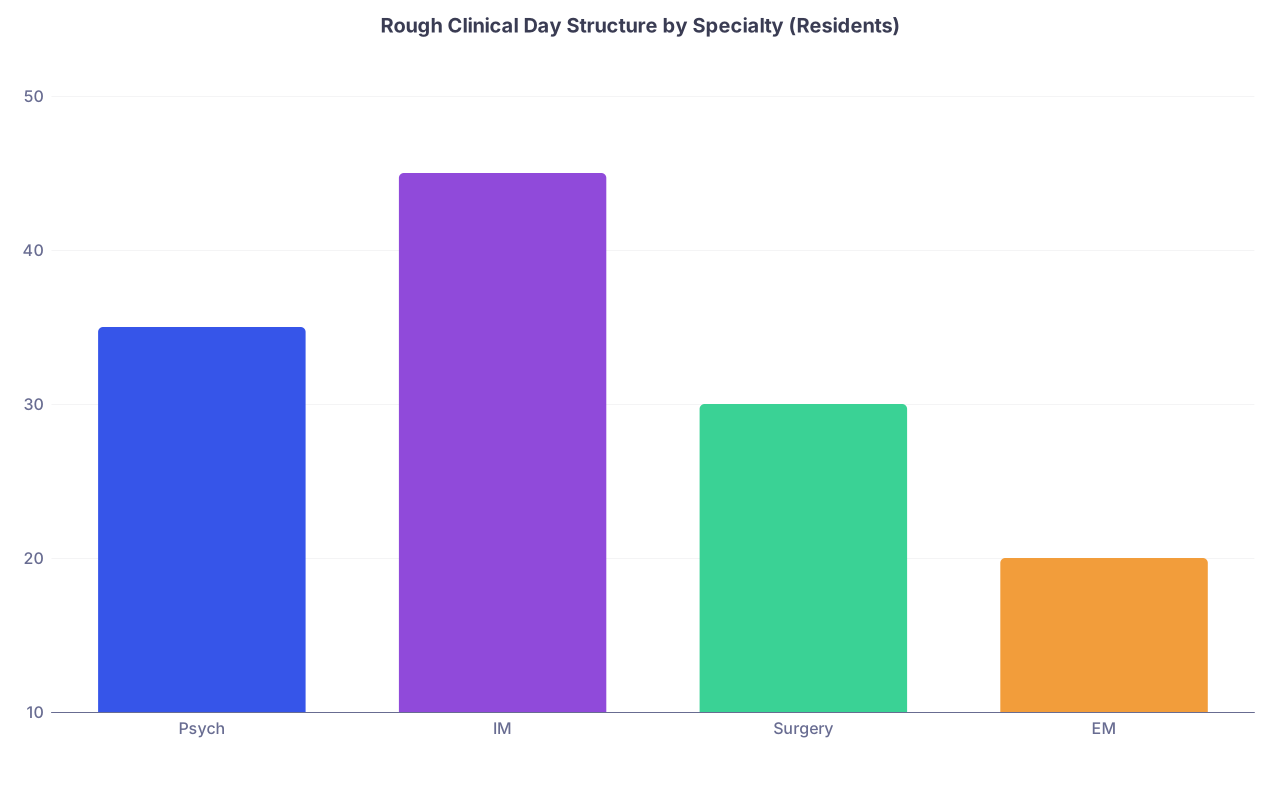
(This chart: approximate percentage of the day spent on documentation and computer tasks. Psych is often near the top. Not because of complexity of orders, but because the narrative content is the work.)
Does psychiatry have less note burden than other fields?
Not really. It’s different.
You’re not writing long ICU notes with 20 meds and ventilator settings, but your cognitive and narrative burden is high. The legal risk around risk-assessment documentation makes people defensive. That adds length.
If you pick psychiatry because you hate documentation, you will be disappointed. If you pick it because you prefer thinking and writing to doing procedures all day, then yes, the trade feels better.
Myth #3: “Psych Rarely Works Nights; It’s Basically a Day Job”
This is one of those half-true statements that gets turned into dogma.
During residency, you will work nights. Less than some fields, more than others, but nights are there.
Typical night exposure by training year
Every program is different, but a common pattern:
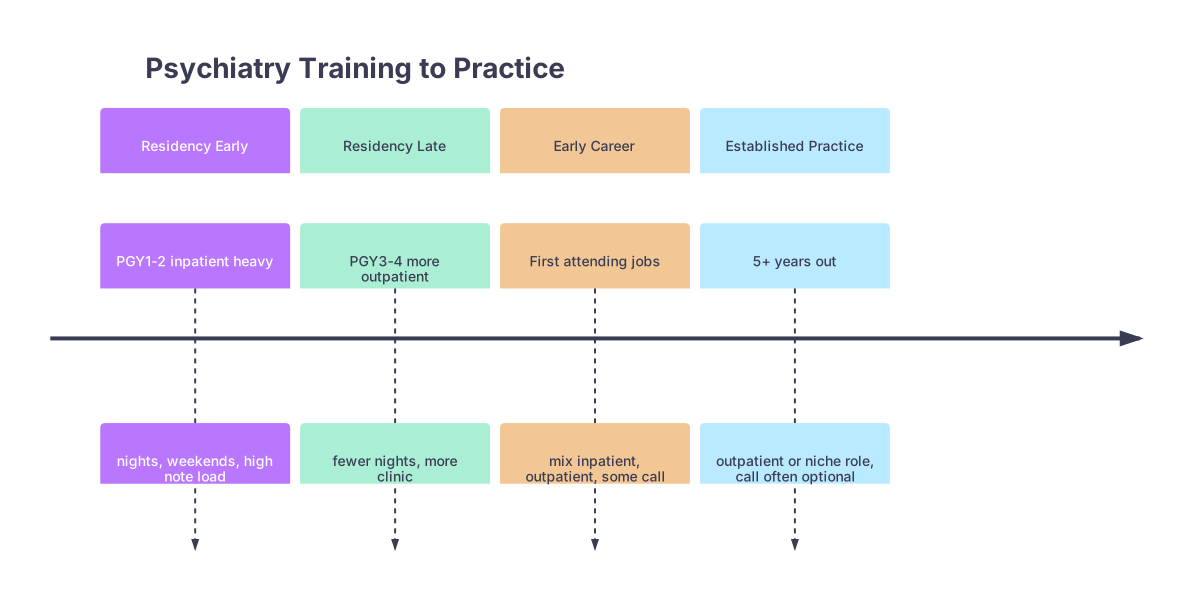
- PGY‑1: Some months of medicine/neurology (with their own nights) plus psych night float or call.
- PGY‑2: Heavy psych inpatient and ED coverage, often the brunt of psych nights.
- PGY‑3: More outpatient; nights may decrease or become home call.
- PGY‑4: Often minimal nights unless you are chief or in certain electives.
The big difference compared with surgery or OB: once you are out of training, you can fairly easily find psychiatry jobs with zero nights and zero weekends. Medicine, hospitalist work, EM, and many procedural specialties cannot make that promise without sacrificing a huge chunk of available jobs.
So the corrected version of this myth is:
- During residency: expect consistent night and weekend work, just typically at a lower intensity and fewer hours than the most demanding specialties.
- After residency: psychiatry offers one of the clearest paths to a true daytime schedule if you want it.
Myth #4: “Psych Is Chill; The Patients Aren’t That Sick”
This one is dangerous.
Psych patients get admitted because they’re sick in ways that can kill them or someone else. People romanticize psychiatry as “talking about feelings” and forget:
- Acute mania with no sleep for days, running into traffic.
- Meth-induced psychosis with violent agitation.
- Severe depression with a loaded firearm at home.
- Catatonia, NMS, serotonin syndrome, lithium toxicity, alcohol withdrawal.
You may see fewer crashing ventilated patients than in ICU, but the acuity is real, and the mental load is heavy.
The lifestyle myth here is tricky: psych hours and flexibility are often better, but the emotional intensity per hour can be high.
On call, your tough cases won’t be septic shock; they’ll be “Can this person safely leave the hospital tonight?” with incomplete data and huge consequences either way.
Myth #5: “Compared To Other Specialties, Psych Is Practically a Vacation”
Let’s do an actual comparison instead of vibes.
| Aspect | Psychiatry | Internal Medicine | General Surgery |
|---|---|---|---|
| Typical hours/week | 45–60 | 55–70 | 70–80+ |
| Nights (residency) | Regular, but fewer overall | Regular, moderate burden | Frequent, heavy |
| Call post-residency | Often optional (outpatient) | Common (hospital work) | Very common |
| Note burden | High narrative, risk focus | High, data + narrative | Moderate, procedure-focused |
| Physical intensity | Low–moderate | Moderate | High |
| Emotional load | High (SI/HI, trauma, risk) | High (death, chronic illness) | High (surgical crises) |
This is the real pattern: psychiatry usually wins on control of your schedule, not on “doing no work.”
Want no nights ever, no weekends, and a 4‑day week? Psych gives you one of the best shots at that, especially with outpatient or telepsych.
Want “easy” days where you barely think and nothing emotionally heavy happens? Psych is the wrong field.
What Nights and Call Actually Look Like for Many Psych Residents
Let me paint a realistic night scenario, not the horror story and not the fantasy.
You sign in at 5 pm. You’re covering:
- The inpatient psych unit (15 patients)
- ED psych consults
- Sometimes a detox unit or CL‑psych consult pager
Between 5 pm and midnight you may:
- Do 1–3 new ED consults for SI (suicidal ideation), HI (homicidal ideation), or psychosis.
- Evaluate 1 inpatient for escalating agitation, adjust meds, possibly order restraints under careful documentation.
- Field calls about side effects, insomnia, or capacity questions from the floor.
Between midnight and 7 am:
- A consult or two may trickle in.
- You round quickly on any new admits.
- You write the bulk of your notes. This is where some nights become “documentation nights.”
Is it as adrenaline-fueled as running to codes and intubations? No. Is it “sleep all night and watch Netflix”? Also no, at least in functional programs.
The Part People Don’t Talk About: Safety and Burnout
Here’s a myth that’s especially dishonest: “Psych is safe; patients are grateful, so burnout is low.”
The data contradict this. Psychiatrists have non-trivial rates of burnout, and one of the reasons is safety and violence exposure. I have heard versions of this more times than I can count:
“I didn’t realize how often I’d feel unsafe at work.”
Not every unit is chaotic, and good hospitals have strong nursing and security. But you will:
- Be in rooms with agitated, unpredictable patients.
- Make decisions that directly determine use of restraints, intramuscular meds, and involuntary admission.
- Document in ways that can be torn apart in court years later.
Lifestyle isn’t just hours. It’s what those hours do to your nervous system.
Psych can be an excellent lifestyle specialty if:
- You prefer mental over physical work
- You enjoy long-term follow-up or complex cognitive problems
- You are okay with high emotional tension and some personal risk
But if your idea of “good lifestyle” is emotional comfort and low stakes, you’re misunderstanding the trade.
The Flip Side: Where the “Cush” Reputation Is Earned
Despite all of this myth-busting, psychiatry does genuinely offer structural advantages most other specialties cannot match.
Outpatient and telepsych, once you are established, can look like:
- 4 days/week of clinic
- 8–10 hours/day, little to no weekend work
- Optional call, or very light call
- High autonomy over patient volume and schedule
- Realistic part-time options that actually pay decently
| Category | Value |
|---|---|
| Psychiatry | 80 |
| Internal Medicine | 40 |
| General Surgery | 10 |
| Emergency Med | 5 |
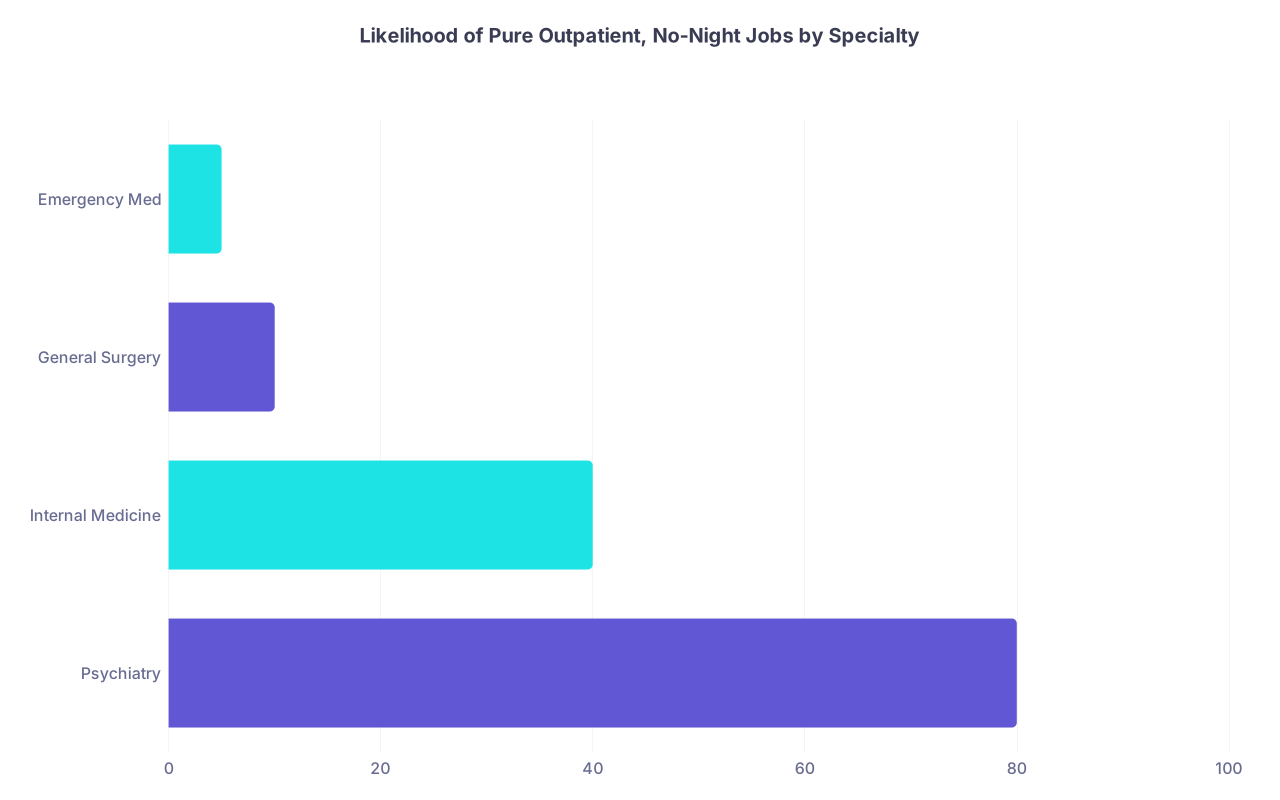
Rough reality: psychiatry is near the top of the list for “I can have a normal-ish life and good income without a procedural hustle.”
That’s the real story—not that psychiatry has no call, no notes, or no nights, but that the average long-term lifestyle is more customizable and tamer than most acute-care specialties.
How To Decide If Psychiatry’s Lifestyle Actually Fits You
Forget the Reddit threads where people casually toss out “psych is the easiest” without context. Ask yourself different questions:
Do you want fewer physical hours in the hospital but can tolerate emotionally intense interactions?
Are you okay with long, detailed notes and legal sensitivity around your documentation?
Can you accept that residency will involve nights and weekends, even in psych, but that you’re buying yourself much more post-residency flexibility?
And be brutally honest here: are you attracted to psychiatry for the work, or are you trying to escape other specialties? Because if it’s the latter, you’ll notice quickly. The wrong person in psych looks bored, annoyed with patients, and resentful of the conversations. That’s a recipe for burnout no lifestyle perk can fix.


| Period | Event |
|---|---|
| Residency Early - PGY1-2 inpatient heavy | nights, weekends, high note load |
| Residency Late - PGY3-4 more outpatient | fewer nights, more clinic |
| Early Career - First attending jobs | mix inpatient, outpatient, some call |
| Established Practice - 5+ years out | outpatient or niche role, call often optional |
The Bottom Line: What’s Myth, What’s Real
Let me strip it down.
- Psychiatry does have call, notes, and nights. Fewer hours and less chaos than surgical and acute-care fields on average, but not a free pass.
- The documentation and emotional load are high. If you hate writing and hard conversations, the “good lifestyle” will not save you.
- The real advantage of psychiatry isn’t that residency is easy; it’s that your post-residency options include genuinely controllable, daytime-only, sustainable careers in a way many other fields simply cannot match.
If you like the work, the lifestyle is excellent. If you’re trying to dodge work by hiding in psych, you will be miserable.