
The obsession with “only hands‑on US clinical experience counts” is wildly overstated—and it’s making a lot of us panic for no good reason.
Let me say the fear out loud:
“I only have observerships. No externships. No US internship. No hands‑on clerkships. Just shadowing‑type stuff. Are programs going to laugh at my ERAS and auto‑reject me?”
You’re not the only one thinking this. I’ve watched entire WhatsApp groups spiral over this exact line on their CVs. People post: “Only 3 months USCE (all observerships) – should I even apply?” like they’re admitting a crime.
Let’s unpack what’s actually going on.
1. What Programs Really Mean by “US Clinical Experience”
First, the ugly truth: programs use “US clinical experience” in confusing, inconsistent ways. And we, as IMGs, read way too much into it.
Here’s how I’ve seen it break down across real programs:
| Program Type | What They Commonly Accept as USCE |
|---|---|
| Community IM/FM | Observerships often okay |
| University IM (mid-tier) | Prefer hands-on but flexible |
| Top academic IM | Strong preference for hands-on |
| Highly competitive fields | Observerships rarely enough |
Very roughly:
- Some programs: “USCE = anything in a US clinical setting”
(observership, externship, elective, whatever) - Some: “USCE = has to be hands‑on with patient contact and notes”
- A smaller, painful subset: “USCE = 3–6 months recent hands‑on with strong LORs”
So when you read: “6 months US clinical experience required,” that might mean your observerships count. Or they might not. They often don’t clarify, which is maddening.
But here’s the key: most community programs, and a decent chunk of mid‑tier university programs, absolutely will still take you seriously with observerships—especially if the rest of your application isn’t on fire.
2. The Real Problem Isn’t “Only Observerships” – It’s Context
Programs don’t look at your CV and think: “Observership = Trash.”
They think: “What does this observership prove to me?”
If your ERAS looks like:
- Step 1: pass
- Step 2: decent
- No USMLE fails
- Some research or at least coherent experiences
- And 2–3 US observerships with real LORs
…you are not going into the “do not even read” pile just because it wasn’t hands‑on.
On the other hand, if your file is:
- Multiple USMLE attempts
- Huge graduation year gap
- No continuity of clinical exposure
- Only 1 short observership from 5 years ago
Then yes, programs will likely be worried—and the “only observerships” thing is just one piece of that bigger picture.
This is the part we hate hearing, but it’s true: observerships don’t rescue a weak overall application. They supplement a decent one.
3. What Observerships Actually Do For You (When They’re Done Right)
Observerships are not just “I followed some doctor around and nodded.” Or at least, they don’t have to be.
They can help you:
- Show you understand US healthcare systems and culture
- Get US-based letters of recommendation
- Demonstrate recent clinical exposure if you’re a few years out
- Give you stories and examples for personal statement and interviews
That last one people severely underestimate. Saying in an interview:
“During my observership at XYZ Community Hospital, I saw how attendings managed a 15-minute visit with a complex diabetic patient by using team-based workflows…”
is much better than:
“In my home country, we did…”
You’re showing programs: “I’ve physically stood in a US clinic/hospital, I get how it works, I won’t be totally lost on Day 1.”
That matters.
4. But Will Programs Take Me Seriously If It’s Only Observerships?
Let me draw the lines clearly, because my brain needed this broken down when I was spiraling.
Cases where “only observerships” are usually OK (assuming decent scores)
- You’re a recent graduate (0–3 years out)
- Good Step 2 (say 230+ for IM/FM, higher for more competitive)
- No or minimal gaps
- You have 2–3 strong US letters from these observerships
- Targeting community IM/FM, maybe mid-tier university IM
- You’re realistic about where you apply and how widely
In this situation, plenty of applicants have matched with only observerships.
Cases where “only observerships” become a real handicap
- Applying to:
- Top‑tier university IM (think Mayo, MGH, Hopkins level)
- Extremely competitive specialties (Derm, Ortho, Plastics, etc.)
- Or:
- Older grad (>5–7 years)
- Multiple exam attempts
- No continuity of any clinical experience
In that situation, programs aren’t dismissing you because you only have observerships; they’re looking at the entire risk package. Observerships alone can’t overcome those big red flags.
So where do you fall? That’s the actual question—not “are observerships worthless?”
5. How to Make Observerships Look “Serious” on Your Application
This is where most of us mess up. We do the observership, then list it on ERAS as:
“Internal Medicine Observership, 1 month, XYZ Hospital”
and that’s it. Boring. Generic. Forgettable.
You want to make those lines scream:
“I wasn’t just a piece of furniture in the corner of the room.”
Concrete things you can do (and retroactively write about):
- Sit in on rounds and family meetings, and actually take notes
- Ask to present patients informally to the attending or resident
- Request to help with literature review on cases you see
- Ask if you can join journal club, resident report, M&M
- Offer to help with a small QI or chart audit project, even unpaid
Then, list specifics on ERAS. Not fluff, but tasks. For example:
“Observed inpatient rounds on a 20-bed IM teaching service; participated in daily case discussions and informal patient presentations; attended resident morning report and M&M conferences; assisted with literature review for team’s teaching rounds.”
Sounds a lot more like you engaged with the environment, not just stood there.
And your LORs? You want phrases like:
- “Consistently punctual and engaged”
- “Asked insightful questions and demonstrated understanding of US clinical workflows”
- “Demonstrated strong clinical reasoning in case discussions despite observer role”
I’ve seen observership letters like that carry people into interviews.
6. The Cold reality vs. The Disaster Movie In Your Head
Let’s map this to what we fear vs what actually happens.
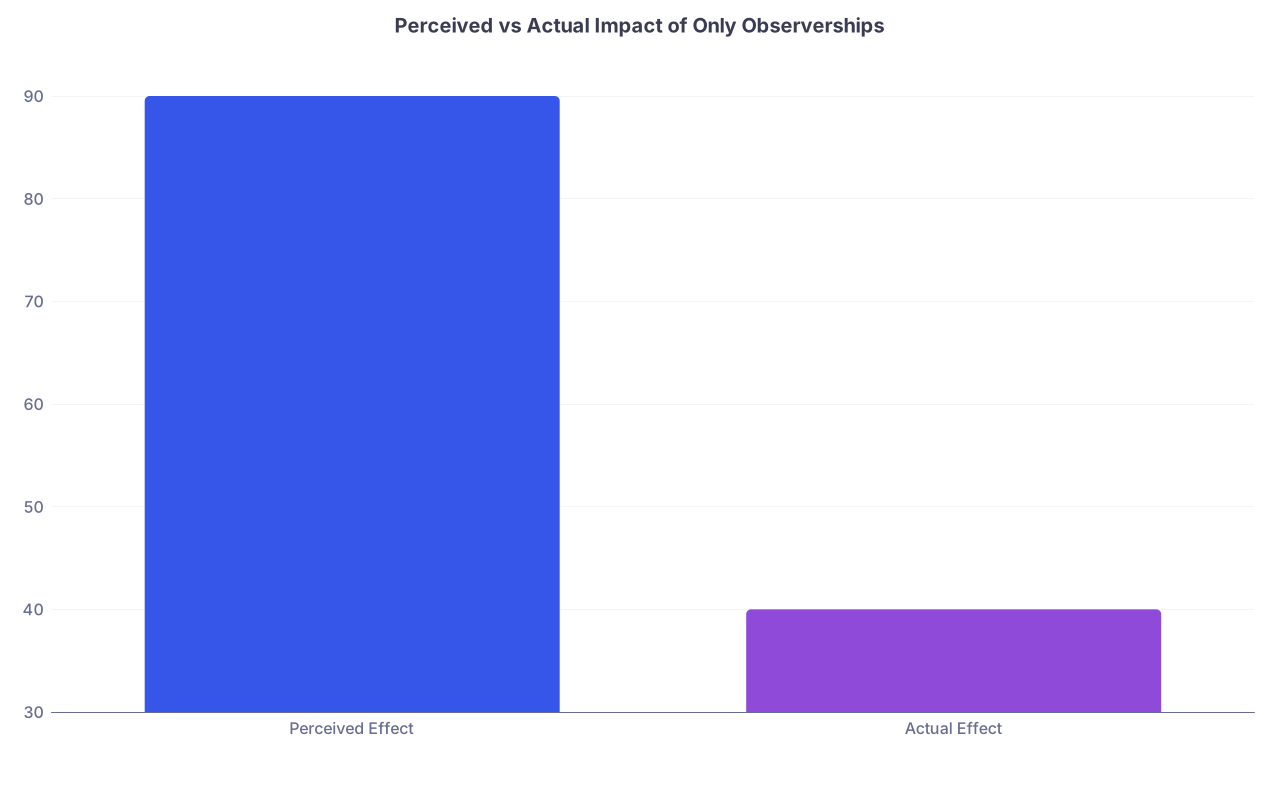
| Category | Value |
|---|---|
| Perceived Effect | 90 |
| Actual Effect | 40 |
In our heads:
“Only observerships” = 90% of why we’re doomed.
In practice: it’s like 30–40% of the “clinical experience” profile, which itself is just one slice of your whole application: scores, YOG, attempts, research, personal statement, visa status, etc.
Programs absolutely prefer:
- US electives/clerkships as a student
- Formal externships with hands‑on responsibilities
But are you invisible without them? No.
You’re not disqualified from:
- Community internal medicine
- Family medicine
- Some neurology and pediatrics programs
- A handful of university IM programs that are IMJ‑friendly
If you tailor your list right.
7. Targeting Programs That Don’t Punish You for Observerships
This is where strategy matters more than your panic.
You need to separate:
- “USCE required”
from - “Recent USCE required, observerships accepted”
And yes, you will need to do the annoying deep dive: websites, FREIDA, forums, program emails.
Look for phrases like:
- “US clinical experience preferred but not mandatory”
- “US clinical experience (observerships acceptable)”
- “International graduates with significant non‑US clinical experience considered”
Sometimes they’re vague. Then you rank‑order your risk:
- Clear “observerships accepted” → safest
- “USCE preferred” with lots of IMGs listed in current residents → still apply
- “Hands-on USCE required” and they mean it → probably skip, unless you’re over-statted
And be realistic with numbers. Most people in your situation should not be applying to 30 programs and hoping for the best. Think more like 80–120 for IM/FM if you’re an average‑ish IMG with only observerships. Painful financially, but that’s how people in this bucket have scraped interviews.
8. If You Still Have a Little Time Before Applying
If there’s any runway left before your ERAS submission, here’s how I’d prioritize as someone with only observerships:
Maximize quality of what you already have.
Go back, email your attendings, and ask:- If they can write strong, detailed letters (not just generic ones)
- If there’s any small project you can help with: poster, case report, QI
Add continuity, even if it’s unpaid and non-US.
Volunteer in clinics at home. Do telehealth under supervision. Anything that makes your recent years look clinically relevant.Fix the part that matters more than observership type: Step 2 CK.
A 245 with observerships only is much more attractive than a 220 with externships.Document everything specifically.
For each observership, write down:- Type of service (inpatient, outpatient, subspecialty)
- How many days per week
- What exactly you did (case discussion, note review, presentations, etc.)
You can later translate that into solid ERAS descriptions and interview talking points.
9. How to Talk About Observerships in Interviews Without Sounding Weak
The worst thing you can do is apologize for them.
Don’t say: “Unfortunately, I only had observerships…”
Say: “During my observerships, I focused on understanding how care is delivered here and how the team works together. For example…”
Then give one specific story:
- A challenging patient
- A system issue you noticed
- A discussion about end-of-life care
- A difference between your home system and the US
Program wants to hear: “This person was paying attention and reflecting, not just collecting a line on their CV.”
You’re not being judged only on what you were allowed to do (you can’t change that). You’re being judged on how you used what you had access to.
10. Hard Limits You Can’t Wish Away
I’m not going to sugarcoat what’s basically impossible:
- Matching ortho/derm/neurosurgery/plastics in the US with only observerships and no US hands‑on? Practically zero.
- Matching into top‑10 academic IM with just observerships and average stats? Almost zero.
- Expecting visa‑heavy, name‑brand programs to fight over an IMG with only observerships but no standout research or scores? Unrealistic.
That doesn’t mean you’re doomed to never practice medicine. It means your path probably looks like:
- Community IM/FM
- Maybe neurology/peds with heavy IMG presence
- Possibly a smaller university‑affiliate that’s historically IMG‑friendly
Your job is not to live in fantasy or despair. It’s to align your expectations with where your profile reasonably fits.
11. The Part You’re Refusing to Believe But Need to Hear
Programs don’t sit there counting whether your experience is called “observership” or “externship” as much as we think. They care about:
- Are your scores and attempts within their range?
- Do your letters read like, “I actually know this person and they’re good”?
- Do you seem like you understand the US practice environment?
- Is there anything in your story that screams risk or drama?
If you can make your observerships answer those questions—through your ERAS entries, your letters, and how you talk about them—they become good enough for a lot of reasonable programs.
Not perfect. Not magic. But good enough.
And right now, you don’t need perfect. You need “serious enough to read and maybe interview.”
You can absolutely get there with “only observerships.”
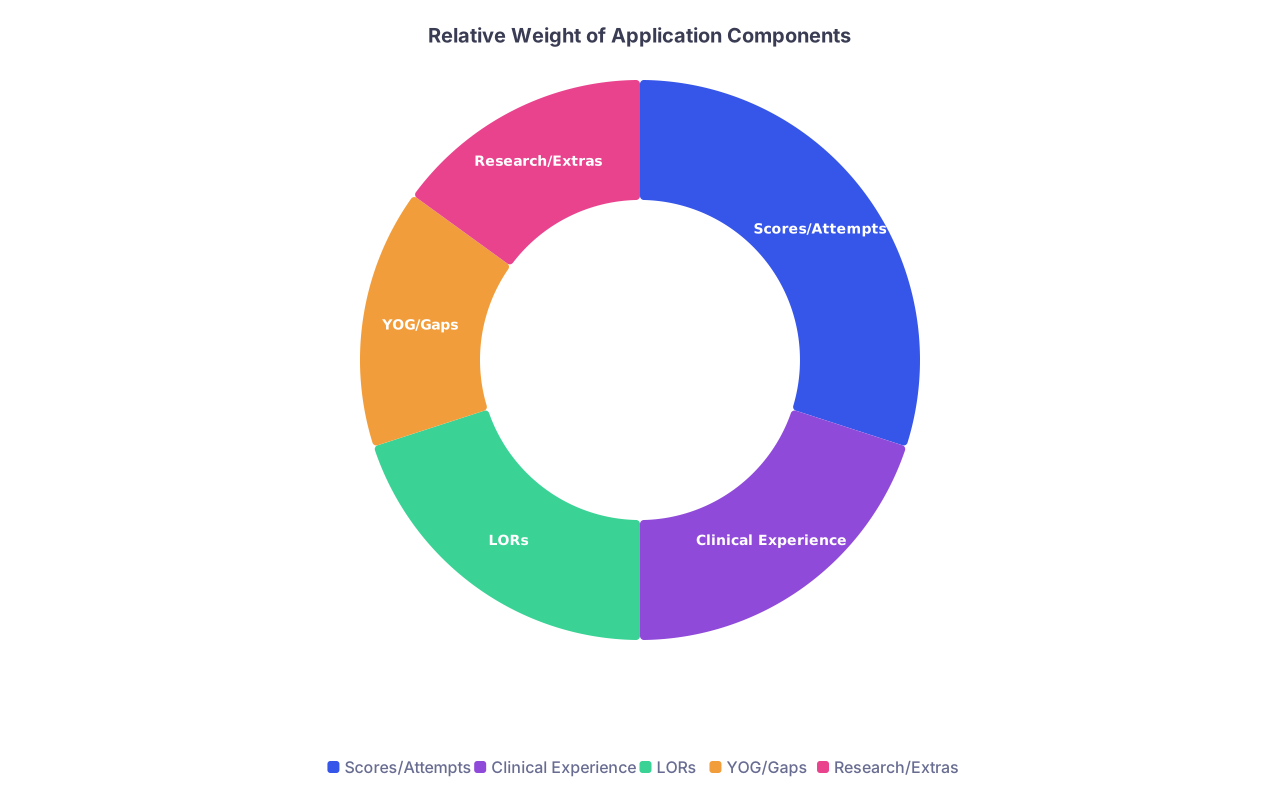
| Category | Value |
|---|---|
| Scores/Attempts | 30 |
| Clinical Experience | 20 |
| LORs | 20 |
| YOG/Gaps | 15 |
| Research/Extras | 15 |

| Step | Description |
|---|---|
| Step 1 | Overall Application |
| Step 2 | Scores and Attempts |
| Step 3 | Clinical Experience |
| Step 4 | Letters of Rec |
| Step 5 | Year of Grad and Gaps |
| Step 6 | Research and Extras |
| Step 7 | Hands on USCE |
| Step 8 | Observerships |
| Step 9 | Home Country Experience |
| Step 10 | US Style Exposure |
| Step 11 | US Letters |

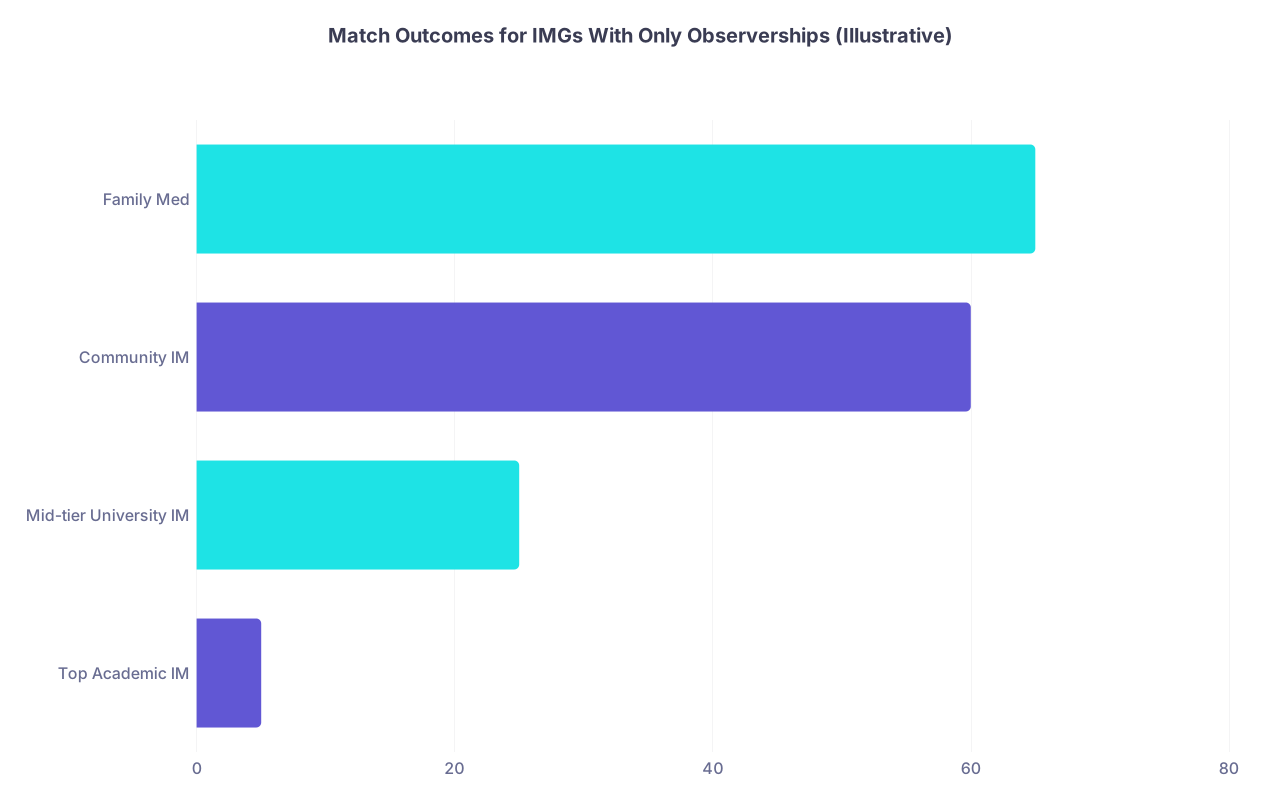
| Category | Value |
|---|---|
| Top Academic IM | 5 |
| Mid-tier University IM | 25 |
| Community IM | 60 |
| Family Med | 65 |

FAQ (exactly what my brain kept asking me at 2 a.m.)
1. Can I match with only observerships and no hands‑on USCE at all?
Yes, you can, especially into community internal medicine and family medicine programs, if:
- Your Step 2 is solid
- You have no major red flags
- Your observerships produced real, specific letters
- You apply widely and target IMG‑friendly programs
You’re not competitive everywhere, but you are absolutely viable some places.
2. Do programs secretly hate observerships and just tolerate them?
No. Programs hate fake experience and useless letters. A well‑done observership, where you showed up, engaged, and got a specific, honest letter? That’s neutral‑to‑positive. It’s not as strong as a hands‑on elective, but it’s far better than “no US exposure” or “random online observership with a two‑line letter.”
3. Should I delay my application a whole year just to chase hands‑on USCE?
Only if the rest of your app is borderline and you realistically can secure solid, true hands‑on rotations at reputable sites. If you already have decent scores, recent YOG, and 2–3 good observerships, waiting a whole year might not change your odds enough to justify the delay, cost, and extra YOG gap. Sometimes it’s better to apply now, thoughtfully, than chase a theoretical perfect profile that never actually materializes.
4. How many months of observerships do I “need” to not look fake?
There’s no magic number, but 2–4 months total, ideally in internal medicine and/or the field you’re applying to, looks reasonable. One random 2‑week observership from three years ago? Weak. Three 4‑week observerships in the last 1–2 years, with LORs and clear descriptions of what you did? That looks like a pattern of genuine effort to understand US practice, not checkbox‑ticking.
If you remember nothing else:
- Observerships are not useless; they’re just not miracle tickets.
- Programs judge your whole file, not only the label on your USCE.
- How you use and present your observerships (LORs, ERAS descriptions, interview stories) matters almost as much as the fact that they were “only” observerships.