
What If My US Rotation Attending Refuses to Write a Strong Letter?
What if the attending from your ONLY “good” US rotation says something like, “I can write you a letter, but I can’t promise it will be strong”?
Yeah. That sentence. The one that instantly makes your stomach drop and your entire Match plan feel like it’s collapsing.
Let’s walk through this, because this exact nightmare happens more than people admit—especially to IMGs.
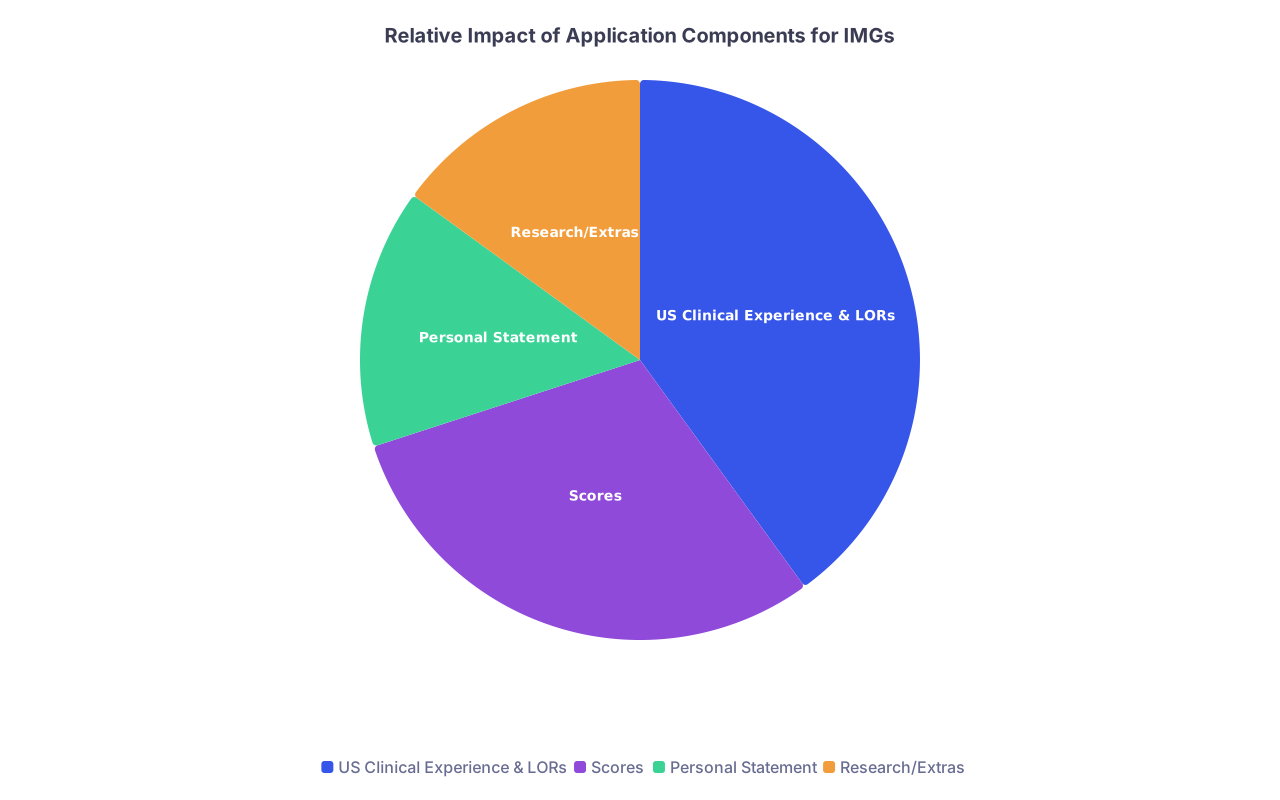
| Category | Value |
|---|---|
| US Clinical Experience & LORs | 40 |
| Scores | 30 |
| Personal Statement | 15 |
| Research/Extras | 15 |
First: Are You Actually Screwed If One Attending Won’t Write a Strong Letter?
Short answer: no. Your anxiety says yes, but the reality is more complicated.
Programs don’t sit there saying, “This one letter isn’t glowing, reject.” They look at patterns.
I’ve seen people match IM despite:
- One bland US letter
- One letter that was clearly written by someone who barely knew them
- A supervisor who flat-out refused to write anything at all
And they still matched. Why? Because the rest of their application made sense and the story was consistent: solid clinical work, some strong letters, and no obvious red flags.
Here’s the gritty truth no one says out loud:
Most letters are fine, not amazing. A truly glowing, specific, detailed letter is rare. Many are just: “They showed up. They worked. They were respectful.” That’s it.
So one not-so-strong letter doesn’t kill you.
But we have to be careful it doesn’t look actively negative or raise suspicion.
Decode What “I Can’t Write You a Strong Letter” Actually Means
That phrase could mean a few different things, and your brain probably jumps to the worst one: “They think I’m incompetent and hate me.”
Usually, it’s one of these:
They don’t know you well enough.
- You were with them for 2 weeks.
- They barely worked directly with you.
- They had 6 students at once. So they’re worried they can’t write detailed, specific comments. Some attendings take that seriously.
They’re overly honest/perfectionistic.
- These are the “I only write strong letters for the top 5% of students I see” people.
- You might be good, even very good, but not “top of my career” for them.
- Instead of writing a generic “they were good,” they feel obligated to warn you.
You actually did fine, but not great.
- You were solid, reliable, but not super memorable.
- No big mistakes, but no “wow” moments either.
- So they won’t lie and call you exceptional.
Something went wrong and they don’t want to hide it.
- You were late.
- You seemed disinterested.
- Your knowledge was consistently weak. In this case, they might still write, but the letter could be lukewarm or subtly critical.
The key is this: they’ve basically given you a gift by warning you. The most dangerous situation is when someone quietly writes a mediocre or subtly negative letter and you never know.
You are not doomed because they warned you. You’re actually safer now, because you can act strategically.

Step 1: Ask Yourself the Hard Questions (Quietly, Honestly)
Before you freak out completely, run a quick internal audit of that rotation:
- Did you show up on time?
- Were you prepared on your patients?
- Did you ask questions and seem engaged?
- Any feedback during the rotation that hinted at issues?
- Did residents ever cover for you or seem frustrated?
If you can honestly say: “I worked hard, I was engaged, my feedback was decent,” then this is probably about the attending’s standards or their limited interaction with you—not about you being a disaster.
If you know you struggled—late, overwhelmed, weak presentations, poor fund of knowledge—then yeah, this might be them trying not to write something that hurts you.
Both scenarios are survivable, but how you move forward is slightly different.
Step 2: Do You Still Take a “Non-Strong” Letter?
This is the question that eats you alive at 2 am.
Let me be blunt:
For IMGs, a generic/average US letter is sometimes better than no US letter—as long as it’s not negative.
The problem is, you don’t know what they’ll actually write.
So here’s what you do:
Have an honest, calm conversation
You can say something like:
“Thank you for being honest with me. I really appreciate that.
I’m trying to understand what would be best for my application.
Would your letter be more on the neutral/generic side, or do you have concerns that might come across as negative to programs?”
Yes, that’s terrifying to say.
But this is the difference between a survivable “meh” letter and one that quietly damages you.
If they say something like:
- “I just don’t know you well enough to be detailed.”
- “It would be more of a standard letter, not negative.”
Then that’s likely safe if you need more US letters.
If they hint at concerns:
- “I had some worries about your clinical reasoning.”
- “There were professionalism issues I’d have to mention.”
Then you do not use that letter. Period. I don’t care how desperate you are for US letters. A negative or even slightly critical letter can destroy your chances.
| Scenario | Use the Letter? |
|---|---|
| Attending says they do not know you well | Maybe |
| Attending says letter will be generic | Maybe |
| Attending mentions performance concerns | No |
| You had unprofessional behavior on rotation | No |
| You have 3+ other solid US letters | Probably not |
| You have only 1–2 total US letters | Consider, if neutral |
Step 3: Alternative Strategies If This Was Your “Main” US Rotation
This is where IMG panic really starts: “This was my big US rotation. If this isn’t strong, I’m finished.”
You’re not. But you need a Plan B, C, and maybe D.
Here are actual moves, not fantasy:
Leverage any other US experience, even if it feels weaker.
Observerships. Externships. Community hospitals. Outpatient clinics.
If someone there really liked you, their strong letter beats a lukewarm one from a “famous” attending.Get multiple decent letters instead of banking on one hero letter.
Three “this person is solid, hardworking, reliable” letters can be enough—especially if your scores and personal statement back it up.Ask a different faculty member from the same institution.
Maybe a senior resident, fellow, or another attending who worked more closely with you.
You can say:“Dr. X suggested you might be able to comment more specifically on my performance since we worked together more closely—would you feel comfortable writing a letter?”
Improve the rest of your application aggressively.
- Cleaner, tighter personal statement that clearly states your story.
- Strong CV organization (no weird gaps, no fluff).
- If time allows, another short rotation where you very intentionally perform at your highest level and directly ask for a letter from someone who sees you closely.
If this is late in the season, you adjust your target.
More community programs. More IMG-friendly ones. Less academic-heavy list.
Not because you’re bad, but because you’re realistic about how much “paper strength” your app has this cycle.

| Step | Description |
|---|---|
| Step 1 | Attending warns letter not strong |
| Step 2 | Ask if neutral or negative |
| Step 3 | Do not use letter |
| Step 4 | Consider using neutral letter |
| Step 5 | Skip and rely on other letters |
| Step 6 | Seek other faculty or new rotations |
| Step 7 | Strengthen rest of application |
| Step 8 | Need more US letters? |
Step 4: How to Ask for Future Letters Without Ending Up Here Again
This whole experience probably scared you away from ever asking for a letter again. But you can use it.
Next time, before you ever officially request a letter, say this:
“Based on the time we’ve worked together, would you feel comfortable writing me a strong letter of recommendation for residency?”
Not just “a letter.”
A strong letter.
If they hesitate, or give you vague answers, or say, “I can write a standard letter,” that’s your sign to thank them and not use them as a key writer.
Also, during the rotation:
- Ask for feedback early. Not in the last week when it’s too late to fix anything.
- Literally say: “I want to improve—what could I be doing better?” Then actually change.
- Show progress. Attendings love growth. “They improved a lot” is a powerful thing to write.
You’re not trying to manipulate them. You’re trying to give them real material to talk about.
The Fear Beneath All This: “What If This One Thing Ruins My Match Forever?”
Here’s the raw truth:
No single thing—short of a major professionalism disaster or a truly toxic letter—destroys an application by itself. It’s the pattern that matters.
Programs are asking:
- Are you safe?
- Are you reliable?
- Can we trust you with patients at 3 am?
- Do people who worked with you seem comfortable vouching for you?
You can absolutely match with:
- Less-than-perfect rotations
- An attending who didn’t love you
- A letter that’s more “solid” than “glowing”
What you can’t do is ignore red flags and hope they disappear. You’re doing the opposite right now: you’re facing it, trying to plan. That already puts you ahead of a lot of people.
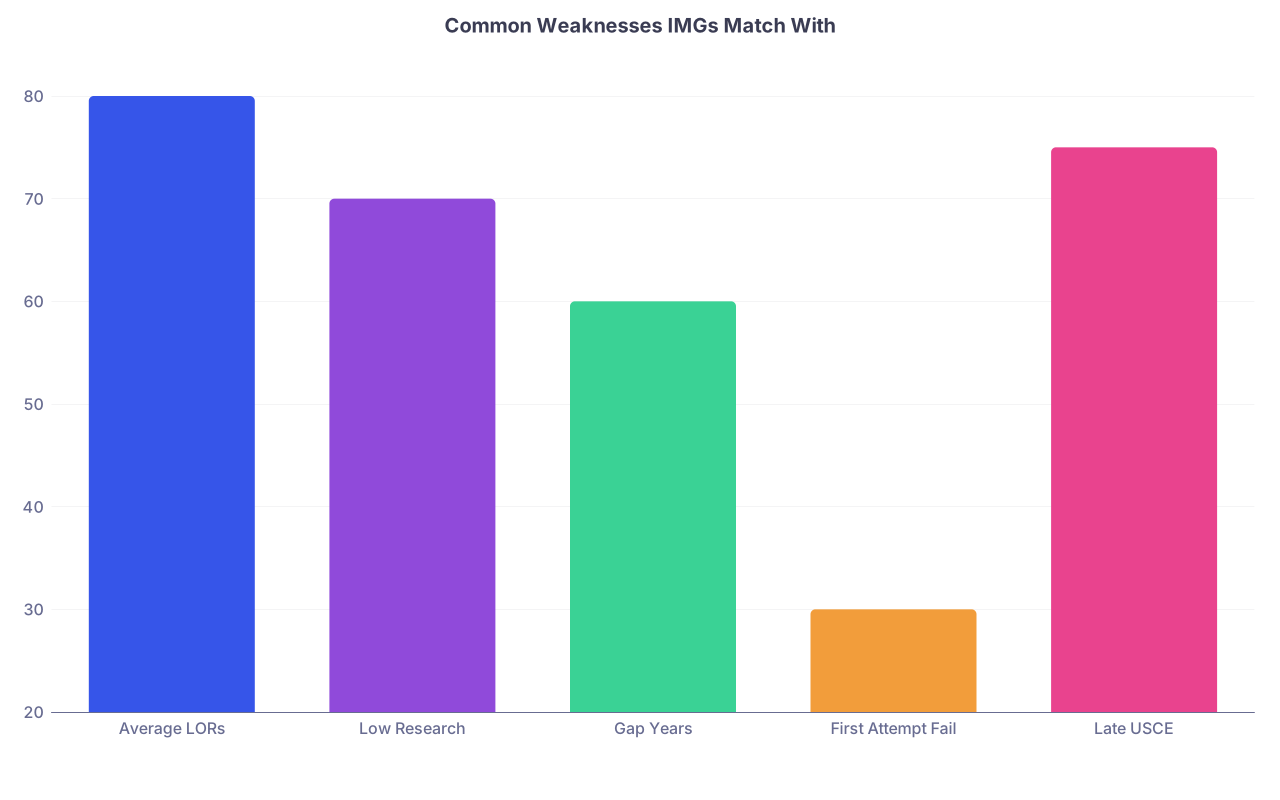
| Category | Value |
|---|---|
| Average LORs | 80 |
| Low Research | 70 |
| Gap Years | 60 |
| First Attempt Fail | 30 |
| Late USCE | 75 |
(Those numbers aren’t exact percentages, but they reflect reality: tons of IMGs match every year with “non-perfect” profiles.)
What You Can Do Today
Don’t just sit with spiraling thoughts. Do one concrete thing.
Here’s what I’d suggest:
Draft a short, calm email or script to talk with your attending:
- Thank them for their honesty.
- Ask if their letter would be neutral vs. containing concerns.
- Decide—based on that—whether you’ll use it.
Identify at least two other potential letter writers from any US, home country, or research settings who:
- Actually know you.
- Have seen you work.
- Have given you positive feedback.
Open your ERAS (or equivalent) and look at your “Story”:
- Do your experiences and personal statement show you’re serious, resilient, and teachable?
- If your letters are “just okay,” your narrative and consistency have to pull more weight.
You’re allowed to be scared. It is scary. But you’re not powerless here.
Open your list of potential letter writers right now and put a star next to the ONE person you think genuinely likes you and knows your work. That’s who you contact next.
FAQ (Exactly 6 Questions)
1. I’m an IMG and this was my only US clinical rotation. Is my Match over?
No. It’s harder, not over. Plenty of IMGs match with limited USCE. What you need now is a realistic strategy: maximize your home-country letters, consider virtual US experiences or short observerships, and make everything else—personal statement, CV, scores—as tight and coherent as possible. One rotation, even if not ideal, doesn’t erase your entire profile.
2. What if I already waived my right to see the letter and I’m now worried it’s bad?
Then your priority is damage control through context. Get other letters that are clearly strong and specific. Make sure anyone else who writes for you truly knows your work. If your performance on that rotation was shaky, briefly addressing growth or lessons learned in your personal statement or during interviews can help. You can’t un-waive, but you can dilute the impact of one questionable letter with stronger ones.
3. Is it better to have a strong home-country letter or a mediocre US letter?
For IMGs, I’d pick a strongly positive home-country letter over a mediocre or possibly negative US letter every time. A half-hearted US letter that hints at concerns hurts more than it helps. Ideally, you want both: strong home letters plus at least one clearly supportive US letter. But if you’re forced to choose, strength > geography.
4. The attending said they “only write truly exceptional letters rarely.” Should I still push for it?
No. If they’re already setting the bar at “exceptional” and implying you’re not in that group, they’re telling you the letter will be average at best. You say: “Thank you, I really appreciate your honesty,” and you move on. Push your energy into people who are enthusiastic about supporting you, not trying to convert someone who already decided you’re not top-tier for them.
5. Can I ask a senior resident or fellow for a letter instead of the attending?
Yes, absolutely—and often they know you better anyway. Some programs prefer attending letters, but a detailed, specific letter from a fellow or senior resident who actually supervised you is worth much more than a generic attending letter. If possible, ask them to co-sign with an attending, but even without that, a strong resident/fellow letter can help a lot.
6. Should I delay applying a year to get better rotations and letters?
Maybe—but not automatically. If this is just one rotation that went “meh” and the rest of your profile is okay, you can still apply this cycle, maybe with a more IMG-friendly list. If everything is borderline—scores, no USCE, no strong letters, big gaps—waiting a year to rebuild can be smart. But don’t sacrifice a year just because one attending wasn’t enthusiastic. That alone isn’t a good enough reason to hit pause.
Now, open your email and draft two messages: one to clarify with this attending, and one to a potential new letter writer who actually knows and supports you. Don’t overthink both for three days. Just write them.