
You are here
It is late March. Match Week just ended. Your email is empty, the NRMP screen says “No Match,” and your phone has stopped buzzing.
People keep saying “You can always try again next year,” as if that sentence fixes anything. Your mind is already jumping ahead:
- How do I avoid wasting an entire year?
- How do I rebuild my US clinical experience as an IMG so programs actually take me seriously next cycle?
- What should I be doing this week, this month, six months from now?
This is where a lot of IMGs either level up or quietly age out of the system. The ones who match on their second or third attempt almost never “take a year off.” They treat this as a structured, brutal, 12‑month training block.
I am going to walk you month by month, then zoom in to what you should be doing each quarter, each week, and in key crunch periods. Focused on one thing: using this year to rebuild and upgrade your US clinical experience so your next application does not look like the same rejected file with a new date.
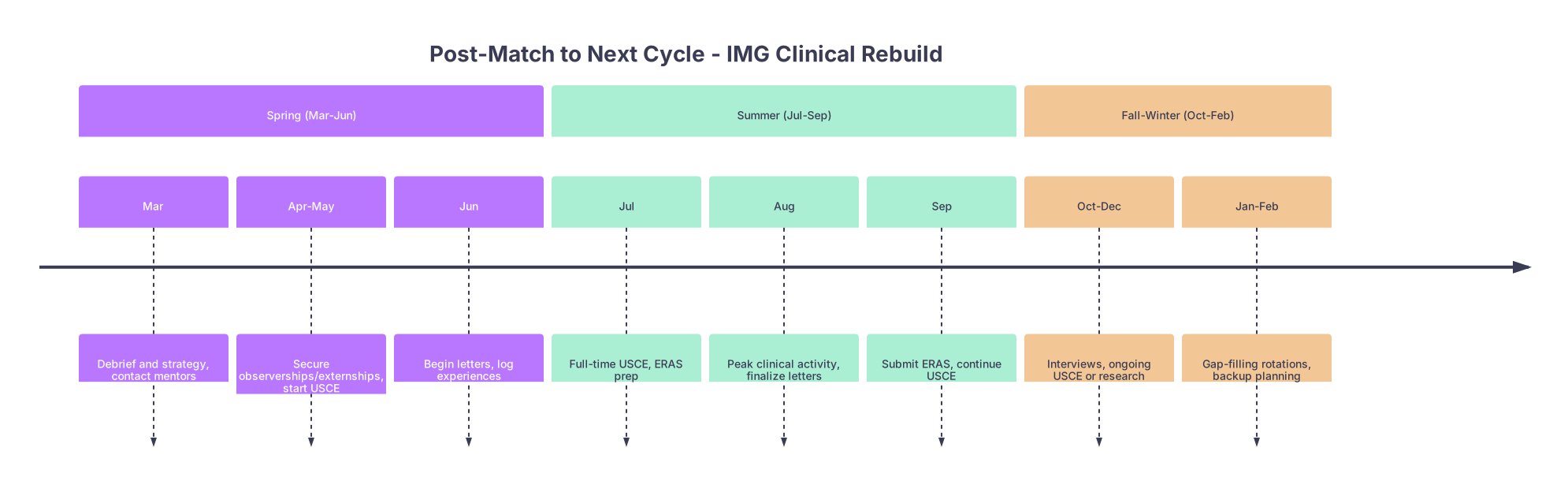
| Period | Event |
|---|---|
| Spring (Mar-Jun) - Mar | Debrief and strategy, contact mentors |
| Spring (Mar-Jun) - Apr-May | Secure observerships/externships, start USCE |
| Spring (Mar-Jun) - Jun | Begin letters, log experiences |
| Summer (Jul-Sep) - Jul | Full-time USCE, ERAS prep |
| Summer (Jul-Sep) - Aug | Peak clinical activity, finalize letters |
| Summer (Jul-Sep) - Sep | Submit ERAS, continue USCE |
| Fall-Winter (Oct-Feb) - Oct-Dec | Interviews, ongoing USCE or research |
| Fall-Winter (Oct-Feb) - Jan-Feb | Gap-filling rotations, backup planning |
First 2 Weeks After Match: Triage and Reality Check
At this point you should stop guessing why you did not match and get hard data.
Days 1–3: Honest post-mortem
Sit down with:
- Your ERAS application PDF
- Your score report(s)
- Your interview list (if any) and outcomes
Ask three blunt questions:
Did my application look “alive” this cycle?
- Recent USCE within the last 12 months?
- Any US-based letters from that experience?
- Or did everything end 2–3 years ago?
Where did I clearly fail?
- No interviews at all → usually a file problem: old USCE, weak letters, too few programs, red flags not addressed.
- Interviews but no rank → usually a fit/presentation problem: communication, explanation of gaps, lack of current clinical work.
How old will my experience be next September?
- If your last USCE ends up being >24 months old at the next application, you are in trouble. Programs like fresh, directly observed clinical work.
Days 4–10: External feedback
You are too close to your own file. At this point you should:
- Book a 30–60 minute review with:
- A US faculty member who knows you
- An advisor from your medical school
- Or a paid IMG advising service with actual program experience (not Instagram influencers)
And you ask directly:
- “Would you interview this application at your program? Why or why not?”
- “Is my US clinical experience recent and strong enough?”
- “What specific type of US experience should I prioritize this year?”
Take notes. Do not argue. You are collecting data.
Days 10–14: Decide your primary rebuild track
For most IMGs, the main deficit is current, hands-on, supervised US clinical experience that generates strong letters.
Common tracks:
- Track A: Heavy USCE year (observerships, externships, hands-on electives, prelim/transitional jobs if you can get them)
- Track B: USCE + research (particularly for competitive specialties or if you want academic programs)
- Track C: Research-heavy with some clinical (if your scores are low but you have a research niche)
If your USCE is weak or old, Track A or A+B is the correct answer. A pure research year without any clinical contact is a bad move for most IMGs applying to primary care fields.
Months 1–3 (Late March–June): Secure and Start US Clinical Experience
At this point you should be relentlessly building a pipeline of USCE from now until at least December.
Step 1: Map your calendar
Look at next ERAS opening (usually June) and submission (September). You want:
- At least 2–3 solid months of USCE completed or in progress before September
- Ongoing USCE into interview season (Oct–Jan) if possible
Rough target:
| Timeframe by Next ERAS | USCE Target | Risk Level |
|---|---|---|
| 0–1 months | Very weak | High |
| 2–3 months | Baseline | Moderate |
| 4–6+ months | Strong | Lower |
If you have zero USCE, aim for the 4–6 month range aggressively.
Step 2: Apply for USCE like it is a job
Week-by-week for the first month:
Week 1–2: Build a USCE application packet
You need:
- Updated CV (US-style, 1–2 pages, clinical roles clear)
- One concise email template requesting an observership/externship
- If you have any US faculty contacts, a separate “favor” email requesting introductions
Your email should:
- State your graduation year, specialty interest, and exam status (USMLE done/pending)
- Explicitly say you are willing to:
- Pay for structured observerships if necessary
- Handle your own visa/travel
- Be present in person full-time
Week 2–4: Hit every USCE route in parallel
Do all of this at the same time:
- University-affiliated programs:
- Check “visiting scholar” or “visiting observer” pages
- Email coordinators and chiefs directly when allowed
- Paid USCE companies:
- Yes, some are overpriced. But many IMGs who match on the second try swallowed this cost for 2–4 months.
- Prioritize those with:
- Inpatient experience
- Direct faculty preceptors
- Clear letter policy
- Community-based preceptors:
- Cold email physicians (especially IM/FM/hospitalists) where IMGs already work
- Ask current residents from your home country placed in US programs to connect you
Your mental model: “I’m building a continuous chain of USCE from May through at least November.”
Step 3: Start your first rotation and work like you’re already a resident
As soon as your first USCE starts (often May or June), your job description changes:
- Arrive early, leave late
- Learn the hospital system (EMR, paging, consult process) fast
- Present cases briefly and clearly
- Volunteer for unpleasant but educational tasks: discharge summaries, follow-up calls, med recs, etc.
Your goal by end of the first month of USCE:
- At least one attending who knows:
- Your work ethic
- Your communication skills
- Your reliability
- And is a realistic letter writer for you by July–August
Do not wait until the last week to mention letters. Around week 3–4, you say:
“Dr. Smith, I plan to reapply for residency this September. If you feel comfortable, I would be very grateful for a letter commenting on my clinical performance here.”
If they hesitate, keep working, but also identify another potential writer.
Months 4–6 (July–September): Peak USCE + Application Build
This is the critical stretch. Programs opening ERAS in September will judge you heavily based on what you are doing right now.
July: Full-time USCE + document production
At this point you should:
Be in an active USCE role
- Ideally inpatient or mixed inpatient/outpatient
- Direct attending supervision
- Seeing US-style pathology and workflow
Lock in at least 2–3 letter writers
- Aim for:
- One inpatient attending
- One outpatient or continuity physician
- If possible, a program director, clerkship director, or chief
- Aim for:
Draft your personal statement with this year’s story
- Old version: “I did US rotations in 2019 and then waited.”
- New version: “After not matching, I immersed myself in month-after-month of direct US clinical work in X/Y settings…”
- Programs want to see:
- Insight into why you did not match
- Concrete actions you took, especially clinically
August: Maximum clinical density + ERAS polishing
You are balancing three streams:
- Daytime – Hospital or clinic USCE
- Evening – ERAS polishing, program list building
- Weekend – Step 2 CK (if pending) or question banks to keep your clinical knowledge sharp
Practical checklist for August:
- ERAS CV fully updated with each USCE entry:
- Exact dates
- Site and specialty
- Role (observer/extern/research/assistant)
- Specific responsibilities
- LoRs requested and writers given:
- Your CV
- Draft personal statement
- One-paragraph summary of what you did in their clinic / on their service
- Program list built with tiers:
- Safety: community, IMG-heavy, lower score thresholds
- Target: moderate competitiveness, IMG-friendly
- Reach: a few academic or stronger programs if you have some leverage (scores, research, strong letters)
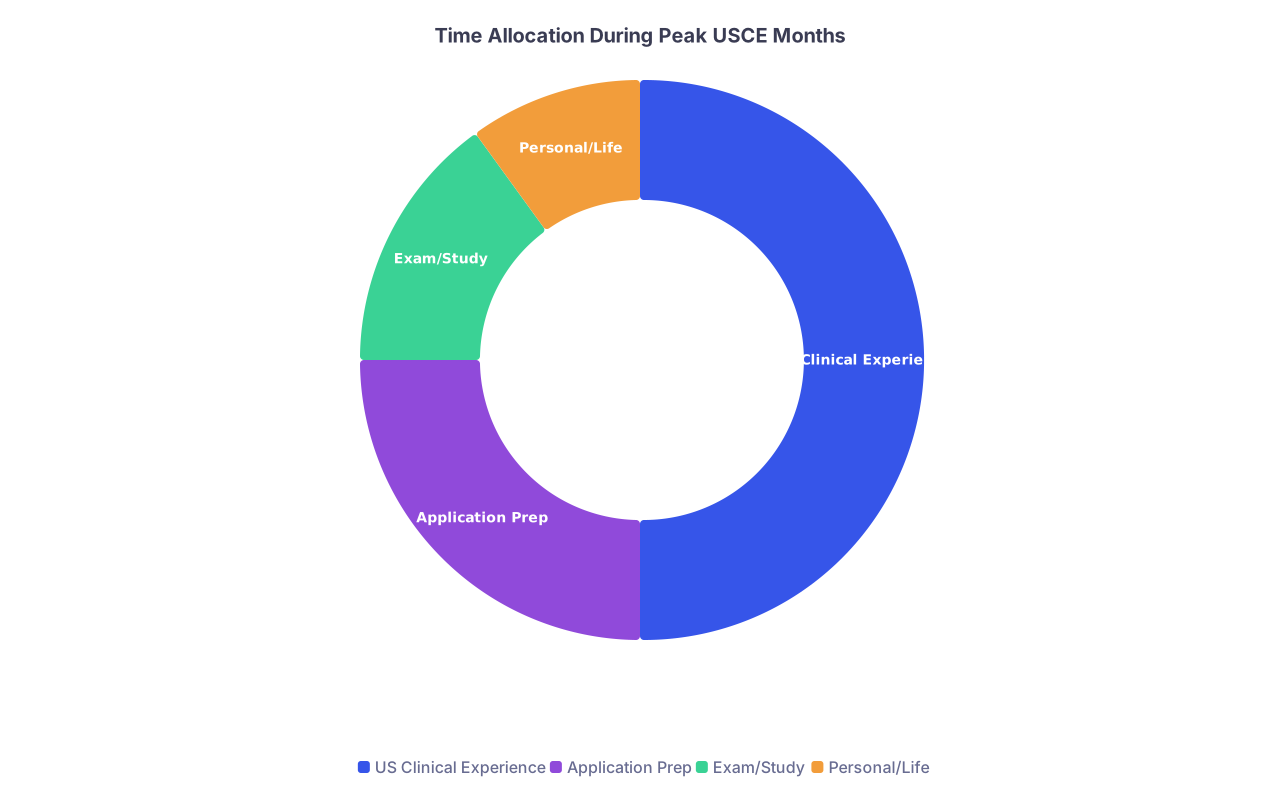
| Category | Value |
|---|---|
| US Clinical Experience | 50 |
| Application Prep | 25 |
| Exam/Study | 15 |
| Personal/Life | 10 |
Your USCE at this moment is not optional window dressing. It is the central argument of your file: “I am clinically active in the US right now and ready to start residency tomorrow.”
September: Submit early, keep working
You should aim to submit ERAS within the first 3–5 days of it opening for submission.
Parallel tracks:
- Submitting ERAS with:
- Current USCE entries up to the present
- Future-dated USCE (e.g., “Outpatient IM, Oct–Dec 2026, pre-arranged”) clearly listed
- Continuing your rotation:
- Show up like nothing changed
- This rotation may generate mid-season letters or support if programs email your attendings
Do not quit USCE the moment you click “submit.” Many IMGs waste the October–November window drifting. The smart ones keep stacking experience.
Months 7–10 (October–January): Interviews + Sustained USCE
If your rebuilt application does its job, you start to see interview emails.
October–November: Active season
At this point you should:
Maintain at least part-time USCE
- Programs often ask: “So what are you doing this year?”
- Saying “I am currently working with Dr. X at Hospital Y seeing patients” sounds very different from “Sending out applications and studying.”
Use your USCE stories in interviews:
- Specific cases from this year
- Concrete examples of teamwork, communication, dealing with US healthcare systems
If you are not getting interviews by late October:
- You need a rapid reassessment, not denial. Email one of your letter writers or a trusted US mentor and ask:
- “Given my current application and USCE, is there anything obvious that is turning programs away?”
- Consider:
- Expanding your program list (more community / rural / IMG-heavy programs)
- Emailing programs you have a legitimate link to with a brief, respectful interest note highlighting your current USCE
December–January: Second wave and backstop
Some interviews arrive late. Keep your foot on the gas.
You should:
- Continue or start another USCE block:
- Even 4–6 week outpatient blocks help keep the “current clinical” story alive
- They also refresh your letter options if needed for SOAP or a later cycle
- Have a backup narrative ready:
- If asked why you did not match before, your answer now includes:
- Concrete changes this year
- Specific US clinical skills you gained
- If asked why you did not match before, your answer now includes:

Special Scenarios: Old Graduation, Step Failures, and Specialty Switches
Not everyone reading this has the same profile. Let me be blunt about three high‑risk situations.
1. Older graduation year (>5–7 years out)
Programs become suspicious of “long-distance” graduates who show no consistent clinical work.
At this point you should:
- Aim for continuous clinical activity in the US (or at least directly relevant to US practice) from now through next March
- Emphasize:
- Recent USCE
- Any employment in clinical settings (scribe, assistant, telemedicine support, etc.)
- Avoid:
- Large unexplained non-clinical gaps during this rebuild year
2. Prior Step failures
USCE alone will not erase exam failures, but it can push you from “auto-reject” to “we should at least look.”
Your USCE must:
- Come with excellent letters explicitly commenting on:
- Clinical reasoning
- Reliability
- Improvement over time
- Be accompanied by:
- Strong Step 2 (and Step 3 if done)
- Consistent study alongside clinical work (question banks in the evenings, etc.)
If you are retaking or taking exams in this year, schedule them so they do not destroy your ability to do USCE. Programs want both.
3. Changing specialties
Example: You applied to Internal Medicine, got nowhere, now want Family Medicine or Psychiatry. Or vice versa.
At this point you should:
- Get USCE in the new specialty as soon as possible:
- Do not spend a full year in IM clinics then apply to Psych. That is incoherent.
- Obtain:
- At least 1–2 letters from attendings in the target specialty
- Make the narrative explicit:
- Why you switched
- How this year’s clinical work confirmed that decision
Daily and Weekly Habits That Make This Year Count
This is where IMGs either look impressive or scattered. Your daily structure during USCE matters.
Daily (during active USCE)
At this point each day should include:
- Clinical block (8–10 hours):
- Pre-rounding or pre-clinic chart review
- Attending shadow/participation
- Patient interaction where allowed
- Study block (1–2 hours):
- Question blocks on cases you saw
- Review of relevant guidelines or UpToDate topics
- Documentation:
- Log what you did:
- Patients seen
- Procedures observed
- Topics discussed
- This log becomes gold for personal statement, interviews, and reminding letter writers of your work.
- Log what you did:
Weekly
End each week with:
- A brief self-assessment:
- “What did I actually learn?”
- “What did my attending praise or correct?”
- A short email to yourself (or a Google Doc) with:
- 1–2 specific patient stories
- Any feedback that supports your strengths (e.g., “You present very clearly,” “Your follow-through is excellent.”)
These will become your interview stories later, and they keep you honest about whether you are truly growing or just showing up.
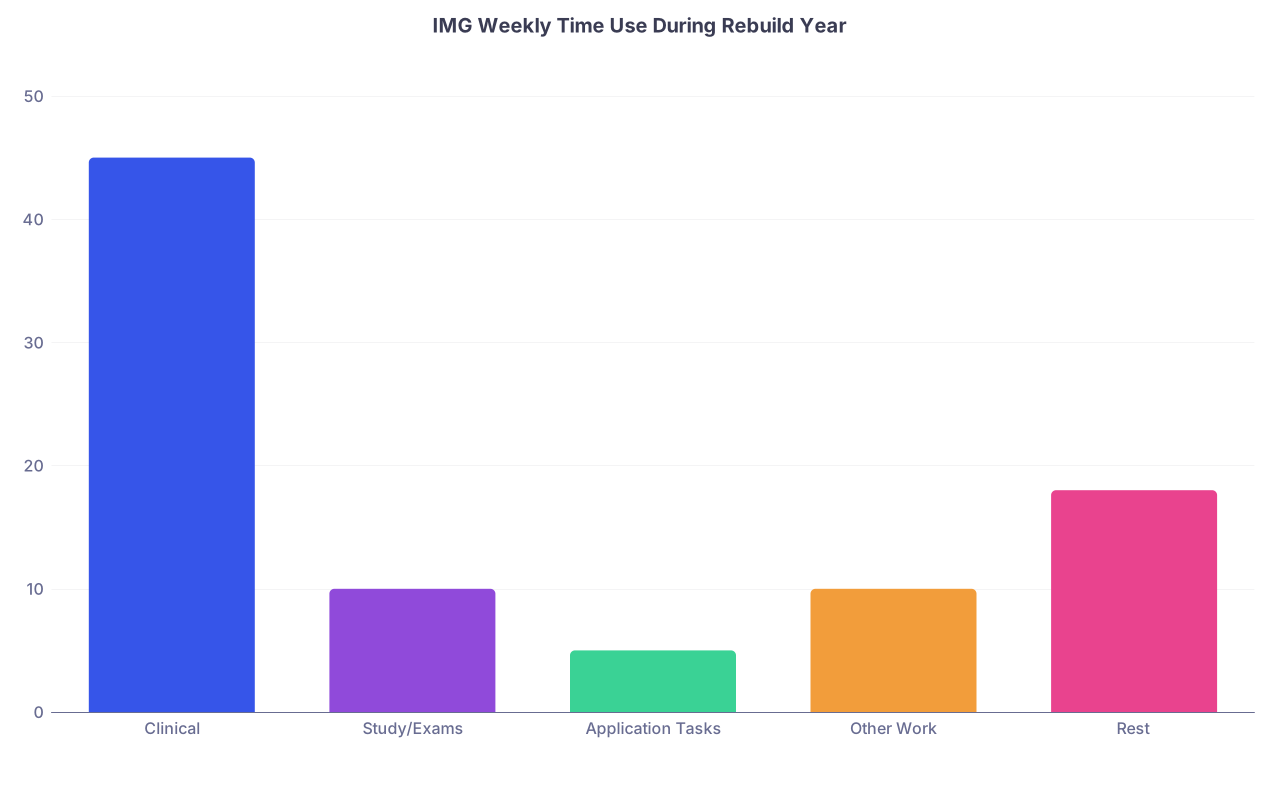
| Category | Value |
|---|---|
| Clinical | 45 |
| Study/Exams | 10 |
| Application Tasks | 5 |
| Other Work | 10 |
| Rest | 18 |
If You Do Not Match Again: Turning This Year into a Launchpad, Not a Dead End
I have seen IMGs use a well-structured rebuild year to pivot to:
- A categorical match the following cycle
- A prelim or transitional spot that then opens doors
- Research fellowships that later support academic IM or Neuro matches
I have also seen IMGs spend 12 months doing:
- Random part-time non-clinical work
- Sporadic observerships of 1–2 weeks
- Endless “planning” with no consistent activity
Those second files look almost identical to the prior year’s. Programs notice.
If, worst case, you find yourself unmatched again next March, your file should still show:
- Continuous, recent US clinical involvement
- Strong letters from this year
- A track record that makes you employable in clinical-adjacent roles in the US (scribing, clinical research, etc.)
That is how you keep options alive.
What You Should Do Today
Do not “research for a few weeks.” Do not “wait and see.”
Today, before you close this tab:
- Open a blank document and write a one-page brutally honest post-mortem of this application cycle.
- Under that, list three concrete clinical actions you will take in the next 7 days:
- Email X attendings / programs for observerships
- Contact Y USCE companies and compare options
- Reach out to Z former colleagues for US connections
- Block 2 hours on your calendar this week labeled:
- “USCE outreach – no excuses”
Then actually send the emails.
Your year between Match cycles will either become the strongest part of your story or another quiet gap that programs do not forgive. Start turning it into evidence today.