
You are in front of your laptop, logged into ERAS.
Under “Experience,” all you have is:
- 4-week observership at a community hospital
- 2-week shadowing with a private cardiologist
- A few vague “clinical exposures” from years ago
No hands-on externship. No US internship. No big-name academic center. And you are starting to panic.
You keep thinking: “Programs want strong US clinical experience. Mine is weak. How am I supposed to compete?”
Here is the truth: weak US clinical experience is not a death sentence. What kills applications is weak presentation of that experience and weak strategy around it.
I am going to walk through how to turn what you already have—observerships, shadowing, short electives—into a coherent, compelling ERAS story that program directors can respect.
We are not going to fantasize about suddenly getting a 6‑month hands‑on position at Mayo. We are going to fix what is in front of you.
1. Understand What Program Directors Actually Care About
Before you try to “transform” your experiences, you need to know what the other side is looking for. Because you are not selling “hours.” You are selling evidence.
Program directors do not care that you “completed a 4-week observership.” That line alone is useless.
They care whether your US clinical experience shows:
- You understand US medical culture
- You can function safely in a US clinical environment
- You are reliable and professional
- You know what residency in that specialty really looks like
- Someone in the US system is willing to stand behind you (LOR)
That is it.
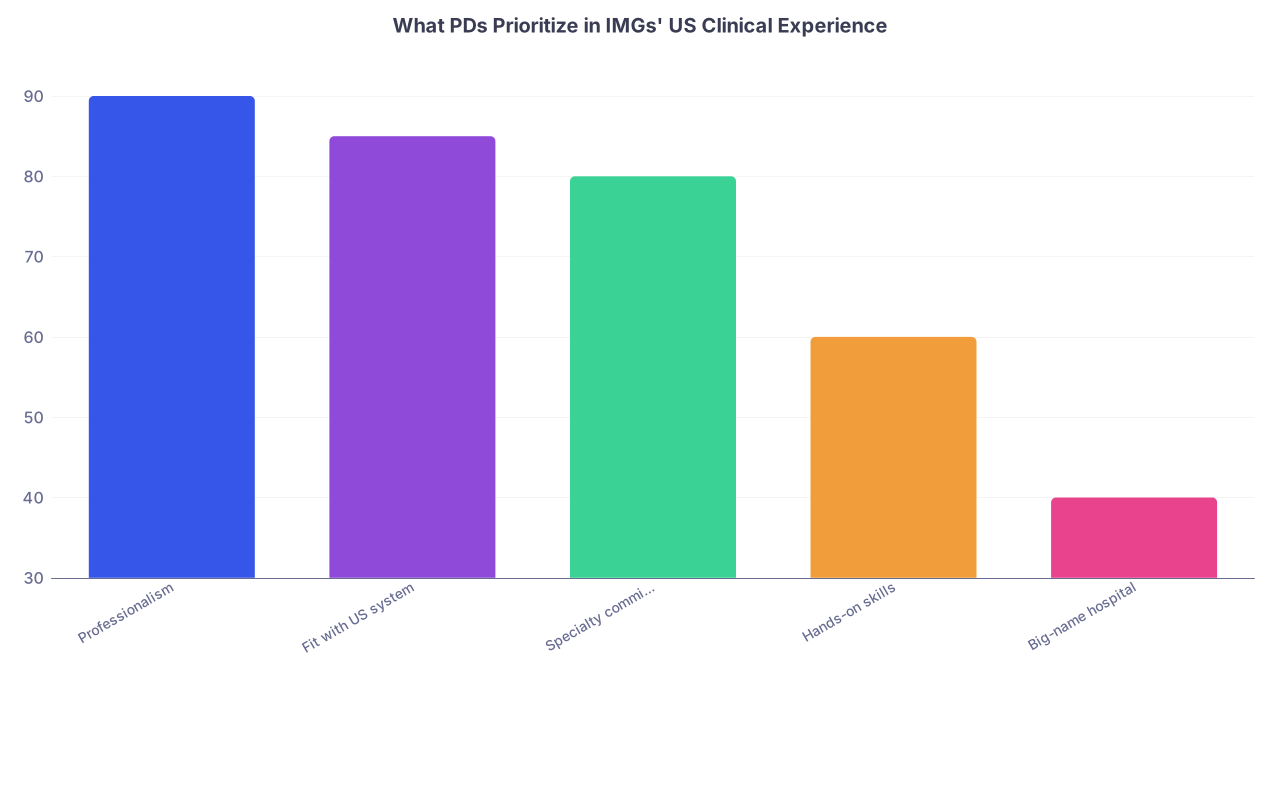
| Category | Value |
|---|---|
| Professionalism | 90 |
| Fit with US system | 85 |
| Specialty commitment | 80 |
| Hands-on skills | 60 |
| Big-name hospital | 40 |
You are overrating the prestige and duration, and underrating the narrative and signal.
So the mission is:
- Take your limited, observational experiences
- Extract the strongest signals of professionalism, adaptation, and specialty insight
- Package those signals tightly in ERAS, your personal statement, and interviews
2. Diagnose Your Actual Situation (Not Your Feelings)
You feel your USCE is weak. That feeling might be accurate. It might also be exaggerated.
Let us classify what you actually have. Be brutally honest.
- Hands-on USCE (externship, sub-I, clinical research with patient contact)?
- Pure observership (no orders, no notes, no direct patient contact)?
- Shadowing (following around a private physician, maybe no EMR exposure)?
- Remote observership/telemedicine only?
- None at all?
| Type | Typical Signal Strength | What It Proves Best |
|---|---|---|
| Sub-I / Acting Internship | Very High | Ready-to-function, responsibility |
| Hands-on Externship | High | Practical skills, workflow |
| In-person Observership | Moderate | Exposure, professionalism |
| Shadowing (private office) | Low-Moderate | Basic US exposure, interest |
| Remote / Tele-observership | Low | Motivation, some systems knowledge |
Now, combine that with:
- Number of total US weeks (4? 8? 12+?)
- Specialty alignment (all in your target specialty or random mix?)
- Year gap since graduation (fresh vs 5–10 years out)
- Letters you got from these experiences (strong vs generic vs none)
You are not just “weak USCE.” You are:
- “8 weeks of observerships, all in internal medicine, no hands-on, 2 strong letters”
- Or “4 weeks family medicine observership, 3 years ago, no letter, now applying to psych”
Those are very different situations. You need different tactics.
3. Core Strategy: Build a Coherent Clinical Story
A lot of IMGs make this mistake: they list experiences chronologically and hope the program “gets it.” They will not.
You must build a coherent clinical story:
“I came to the US → intentionally selected these clinical environments → progressively learned X, Y, Z → confirmed my commitment to this specialty → had my work and professionalism validated by US attendings.”
If your experiences feel random, your application feels random.
Step 1: Define the story you want to tell
One sentence. Straightforward. For example:
- Internal Medicine: “I intentionally sought out US internal medicine experiences in diverse settings to learn how teams manage complex, multi-morbid patients and to confirm that I want this as a career.”
- Psychiatry: “My US clinical exposures were built to understand how psychiatric care is delivered in outpatient and community settings and how cultural background shapes diagnosis and adherence.”
- Family Medicine: “I focused on primary care and community medicine in the US to see firsthand how longitudinal relationships and preventative care are actually practiced.”
This sentence becomes:
- The backbone of your personal statement
- The subtext of your ERAS descriptions
- The framework of your interview answers
Step 2: Map each experience to that story
Take each “weak” experience and ask:
- How does this fit my central story?
- What did I learn that supports my readiness for residency?
- What specific skills, habits, or insights did I pick up?
If you cannot answer those, then you have not thought hard enough, not that the experience has zero value.
Example:
2-week cardiology shadowing, private practice, no EMR access.
Most applicants write:
“Observed cardiologist in outpatient practice. Attended clinics and observed patient interactions.”
Useless.
Better breakdown:
- Saw how chronic disease (HF, CAD, AF) is managed over multiple visits
- Watched real conversations about adherence, side effects, and cost of medications
- Learned workflow of referrals, insurance approvals, and coordination with PCPs
- Noted differences between US and home country in preventive care and risk stratification
You can use that.
4. Rewrite Your ERAS Experience Entries So They Actually Work
This is where most IMGs lose points. Not because the experience is bad, but because the description is lazy.
The worst pattern:
“Observed rounds and clinics. Attended teaching sessions. Improved communication skills.”
Empty words.
You need to:
- Be specific
- Show progression
- Translate observation into insight
- Reflect understanding of US system and your specialty
Use this 4-part micro-structure for each clinical entry
For each US clinical experience, structure the ERAS description around:
- Scope – Where were you? What kind of patients/settings?
- Role – Realistic but active; what you actually did.
- Skills/Exposure – Clinical content, systems, EMR, team dynamics.
- Insight/Impact – What changed in your understanding or behavior.
Here is a template:
- Participated in [type of service: inpatient ward / outpatient clinic / subspecialty clinic] at [hospital/clinic type: community / academic / safety-net] caring for [typical patient population / case mix].
- Observed and contributed to [specific tasks within your allowed role: pre-rounding data review, drafting assessment plans, presenting patients in teaching rounds, tracking follow-up tests] under supervision.
- Gained exposure to [concrete topics: sepsis management bundles, discharge planning, chronic disease counseling, EMR order sets, quality metrics].
- Deepened understanding of [specific insight about specialty, US system, teamwork, communication] which informed my decision to pursue [specialty] and refined my approach to [problem].
Now let me show you real transformations.
Example 1: 4-week Internal Medicine Observership (Weak → Strong)
Weak ERAS entry:
“Observed inpatient internal medicine service. Attended rounds and teaching conferences. Improved history taking and physical exam skills. Learned about US healthcare system.”
Better entry:
- Observed inpatient internal medicine teams at a 300-bed community hospital caring for adults with decompensated heart failure, COPD exacerbations, sepsis, and uncontrolled diabetes.
- Daily reviewed EMR data, including vitals, lab trends, imaging reports, and consultant notes, to follow the evolution of 10–12 patients and anticipate diagnostic or management changes.
- Closely followed how attendings applied evidence-based protocols such as sepsis bundles and VTE prophylaxis, and how discharge planning incorporated social work, PT/OT, and outpatient follow-up.
- This experience clarified how internal medicine balances acute stabilization with safe transitions of care and confirmed my interest in managing complex, multi-morbid patients in a team-based US setting.
Notice:
- No fake “I examined” when you did not.
- Heavy on systems, workflow, and clinical reasoning. That is what PDs want.
Example 2: 2-week Shadowing in Outpatient Psychiatry
Weak:
“Shadowed psychiatrist in clinic. Observed patient interviews. Learned about different psychiatric diagnoses and medications.”
Better:
- Shadowed an outpatient psychiatrist managing adults with major depressive disorder, bipolar disorder, generalized anxiety, and comorbid substance use in a private practice setting.
- Observed longitudinal follow-up over multiple visits, focusing on how medication adjustments were made in response to symptom scales, side effects, and patient-reported functioning.
- Paid particular attention to how cultural background, language barriers, and stigma influenced engagement with care and adherence to treatment plans.
- This experience reinforced my interest in psychiatry by highlighting the importance of building trust, negotiating realistic treatment goals, and coordinating care with therapists and primary care physicians.
Here, the “weak” 2-week shadowing now shows:
- Longitudinal care
- Cultural sensitivity
- Understanding of multidisciplinary collaboration
That is what you are selling.
5. Use “Reflection” Correctly: Show Maturity, Not Fluff
Programs are tired of generic reflection lines: “This experience taught me compassion and empathy.” Everyone writes that.
If your USCE is light, you need your reflection to pull more weight. It must be:
- Specific
- Measurable in behavior
- Connected to residency
Use this pattern:
“I used to [old assumption / behavior]. After this experience, I [new understanding] and now I deliberately [concrete action / mindset] when [relevant clinical situation].”
Example:
“Before this rotation, I viewed discharge as a simple endpoint once patients were clinically stable. After observing readmissions due to medication confusion and lack of follow-up, I now actively think in terms of transitions of care, ensuring that education, follow-up appointments, and social factors are addressed when planning discharge.”
Or:
“Coming from a resource-limited system, I initially saw EMR documentation as primarily administrative. After this observership, I appreciate how real-time notes, order sets, and messaging functions are used to coordinate care across multiple teams and settings.”
These are cheap ways to demonstrate:
- Insight
- Adaptability
- Systems thinking
Highly valued. Especially for IMGs.
6. Plug the Gaps You Can Still Fix (Without Fantasy Plans)
If your application cycle is upcoming or already started, you cannot magically manufacture 6 months of hands-on experience. But you can tighten a few screws.
A. Add one targeted, short-but-high-yield experience
Even 2–4 additional weeks, if chosen intelligently, can help:
- Pick a setting that complements what you already have
- If you only have outpatient, get inpatient exposure
- If you only have community, try to get an academic site or vice versa
- Align strictly with your target specialty
This is not for the “hours.” It is to:
- Get one more US letter from your target field
- Patch an obvious hole (“zero inpatient experience”)
- Show ongoing, recent engagement in US medicine
B. Fix your letters of recommendation strategy
Weak USCE gets salvaged partially by strong letters that emphasize your mindset and adaptability, not your nonexistent procedural skills.
You want your letter writers to hit:
- Professionalism (on time, prepared, respected boundaries of your observer role)
- Initiative within limits (“frequently reviewed cases ahead of time and asked targeted questions about guidelines and local practice patterns”)
- Communication (“able to discuss clinical reasoning clearly and concisely”)
- Understanding of US norms (“quickly adapted to EMR use and HIPAA expectations”)
- Specialty commitment (“demonstrated clear interest in internal medicine through independent reading and follow-up on patients”)
Ask directly (politely):
“Would you feel comfortable commenting on my professionalism, clinical reasoning in discussions, and adaptability to the US system in your letter?”
If they hesitate, choose someone else when possible.
7. Integrate Your Weak USCE into a Strong Personal Statement
Your personal statement is where you connect the dots. The mistake IMGs make is either:
- Ignoring their USCE completely
- Or reciting it line by line like a CV
You should use USCE to:
- Prove you know what residency in this specialty actually involves
- Highlight 1–2 specific experiences that changed how you think or practice
- Show that US medicine is not an abstract idea to you
Simple blueprint
- Opening – A concise clinical moment from your USCE that illustrates your specialty’s core challenge or appeal. Not melodrama. Just real.
- Body 1 – How your non-US background prepared you (core strengths).
- Body 2 – How US clinical experiences refined or challenged your approach.
- Body 3 – What you now understand about this specialty in the US specifically.
- Closing – What kind of resident you aim to be and what you are looking for in a program.
Example integration (for weak USCE):
“During my observership in a community internal medicine service in New Jersey, I followed a patient with diabetes, CKD, and heart failure who had been admitted three times in six months. I watched the team spend almost as much time arranging home health, medication reconciliation, and follow-up visits as they did adjusting insulin or diuretics. That was the first time I fully appreciated that high-quality internal medicine in the US is as much about coordinating safe transitions and long-term follow-up as it is about acute management.”
One short paragraph like that does more for you than three generic sentences about “exposure to US healthcare.”
8. Prepare to Defend Your Experience in Interviews (Without Apologizing)
You will get questions like:
- “Can you tell me about your US clinical experience?”
- “Have you had any hands-on experience in the US?”
- “How do you think your observership prepared you for residency here?”
If you mumble: “It was just an observership, but I tried to learn as much as I can,” you are done.
Use a structured, confident answer. Not defensive.
Framework: Acknowledge limitations → Emphasize depth → Link to residency
Example answer:
“My US experience has been primarily observational, including 8 weeks in internal medicine at two community hospitals and 2 weeks in an outpatient cardiology clinic. Although I did not have independent responsibility for patient care, I used that time to focus on how teams function in the US system. I followed specific patients day to day, reviewed their EMR data, and then compared the team’s decisions with current guidelines. I also paid a lot of attention to discharge planning and coordination with outpatient providers.
These experiences helped me understand workflow, documentation expectations, and the pace of US medicine. Combined with my hands-on training and responsibility in my home country, I feel I now have both the practical skills and the systems awareness needed to transition into residency here.”
Notice:
- Honest about “primarily observational”
- Immediately pivots to what you did and what you learned
- Ends with readiness, not apology
Do the same for “Why no hands-on?” questions:
“Hands-on opportunities can be limited for IMGs due to institutional policies and visa constraints. Within those realities, I prioritized observerships in my target specialty where I could still meaningfully engage in case discussions, evidence review, and understanding workflow. I recognize that I will need an initial period of adjustment to local documentation and order entry, but I am confident in my clinical foundation and my ability to learn systems quickly, as I have done in different environments before.”
Confident. Rational. Not begging.
9. If You Truly Have Almost No USCE Yet
If you are at the very bottom—no USCE or just a 1–2 week tele-observership—then you have two options:
- Delay your application by one cycle and fix this properly
- Apply now, but realistically focus on community programs, prelim spots, or specialties that sometimes tolerate lower USCE, and simultaneously work on getting more experience during this year
If you choose to apply now anyway, then you must:
- Maximize any US-adjacent strengths you have:
- USMLE scores
- Research with US collaborators
- Remote QI or case-report work tied to US mentors
- Emphasize your adaptability:
- Prior work in different health systems or languages
- Rapid uptake of new responsibilities in previous roles
And you still fix your ERAS language the same way I described: concrete, reflective, strategic.
FAQ (Exactly 3 Questions)
1. Is it better to delay my application to get stronger US clinical experience or apply now with weak USCE?
If your USCE is truly negligible (0–2 weeks, no letters, not in your specialty), and you are not facing age or visa deadlines, delaying one cycle to build 8–12 weeks of targeted, letter-generating USCE is usually the smarter move. If you already have moderate USCE (6–12 weeks observerships with letters) but just feel it is “not enough,” I would not delay solely for that. Fix your ERAS descriptions, tighten your narrative, and apply strategically to programs that interview IMGs with similar profiles.
2. How many weeks of US clinical experience do programs expect for IMGs?
There is no universal rule, but many community internal medicine and family medicine programs like to see at least 8–12 weeks of USCE, preferably in the target specialty, within the last 2–3 years. Academic and competitive specialties often expect more robust or hands-on experience. That said, I have seen IMGs match with 4–6 weeks if they had strong scores, excellent letters, and a very coherent story. Volume helps, but quality and presentation matter more than people admit.
3. Do virtual or remote observerships actually count for anything?
They are clearly lower-value than in-person experiences, and you should not pretend otherwise. But they are not worthless. If you use them to build real relationships with US faculty, attend conferences regularly, present cases or journal clubs remotely, and eventually secure a thoughtful letter, they can contribute to your application. On ERAS, describe them honestly as remote experiences and focus on what you actually did (case discussions, literature reviews, quality projects), not what you wish you had done.
Key points to carry with you:
- Your US clinical experience is rarely as “weak” as it looks on paper; what usually is weak is the way it is written and connected to your story.
- Specific, systems-focused, reflective descriptions in ERAS can multiply the impact of even short observerships.
- You are not selling weeks and titles; you are selling evidence that you understand US medicine, are committed to your specialty, and can adapt quickly to the residency environment.