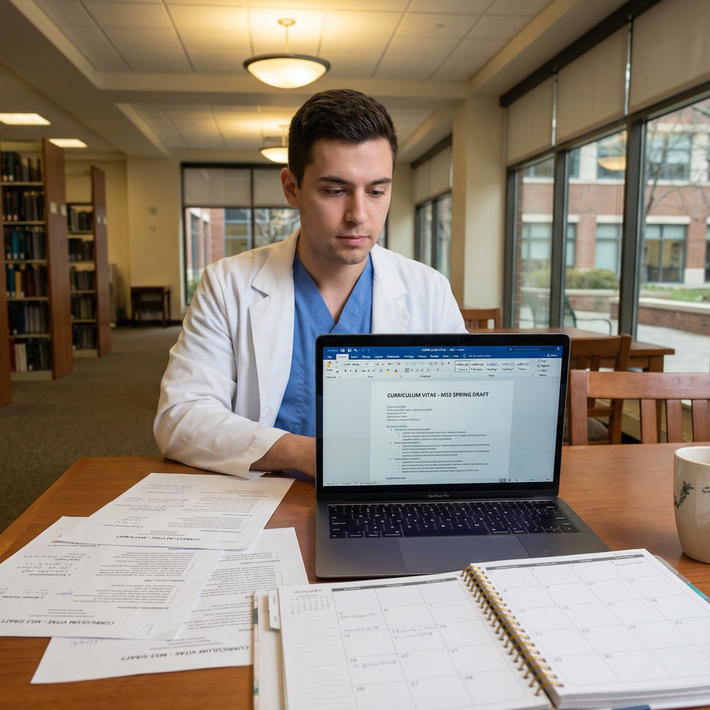
The worst ERAS mistakes are usually survivable—what kills you is doing nothing and spiraling.
You hit submit. You felt that half‑second of relief. Then your stomach dropped. A date is wrong. A PD’s name is misspelled. A whole experience is missing. Or worse: you see an error in every single program’s personal statement.
Now your brain is going:
“I just ruined my entire career.”
“They’re going to think I’m careless.”
“Should I withdraw? Reapply next year? Is this reportable to someone??”
Take a breath. Then let’s be brutally honest and also practical.
Step 1: Figure Out What Type of “Big Mistake” You Actually Made
Not all errors are equal. Some feel catastrophic but are just embarrassing. Others really can shift how your app is read. The first thing is to classify the damage.
Here’s how I break it down in my head when I’m panicking:
| Mistake Type | Severity | Usually Fixable? |
|---|---|---|
| Typos / minor grammar | Low | No action or minimal |
| Wrong program name / PD name | Low-Medium | Often via email |
| Wrong dates / hours for experiences | Medium | Sometimes via update |
| Wrong personal statement to some programs | Medium-High | Needs outreach |
| Major missing experience / exam / publication | Medium-High | Sometimes via update |
| Misrepresentation / incorrect exam score / disciplinary info | Very High | Needs immediate correction |
General rule:
If it’s about polish → mostly annoying, not fatal.
If it’s about truth → you need to fix or clarify.
Ask yourself, as honestly as you can:
- Does this change how they see my qualifications?
- Does this make me look dishonest or sloppy?
- Would I be uncomfortable if this came up in an interview?
If the answer is “yes” to the last two, we’re in damage‑control territory, not just “ugh, that’s ugly.”
Step 2: Check What Can and Can’t Be Changed in ERAS
Here’s the painful part: once it’s certified and submitted, a lot of ERAS is locked. You can’t just go in and quietly erase the chaos.
But some things are still changeable, depending on timing and section.
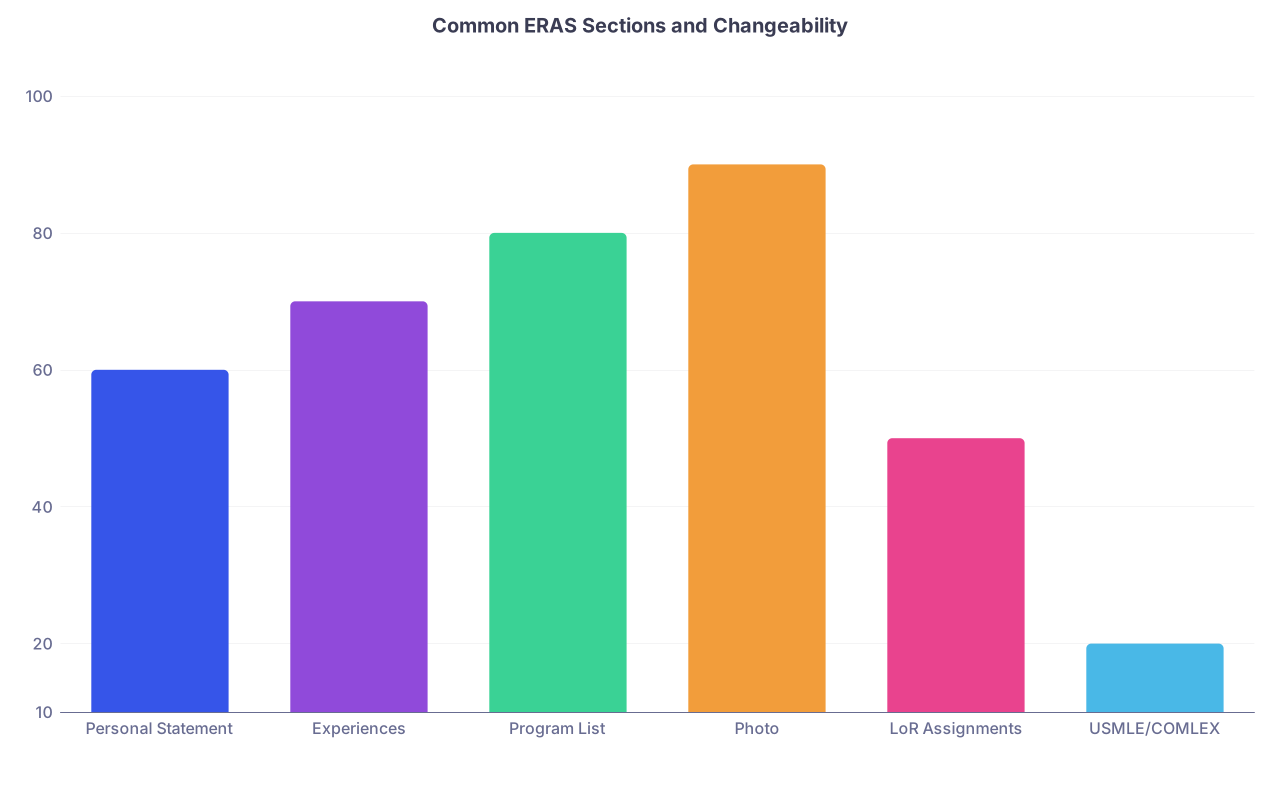
| Category | Value |
|---|---|
| Personal Statement | 60 |
| Experiences | 70 |
| Program List | 80 |
| Photo | 90 |
| LoR Assignments | 50 |
| USMLE/COMLEX | 20 |
(Think of these numbers as “relative flexibility” rather than exact percentages.)
General reality:
- Program list: you can add programs later. Can’t un‑send what’s already out there.
- Personal statements: you can upload new versions and assign new ones to new programs, but you usually can’t retroactively change what was already sent.
- Letters: you can add more and change assignments to programs that haven’t downloaded yet, but not to ones that already have.
- Experiences/dates: once certified, you usually can’t change these.
- Scores and biographic data: locked once submitted.
So before you start emailing anyone, log back into ERAS and see what’s editable. Click around calmly. Check the “Programs Applied To” area. See what’s been downloaded.
Then you’re not operating on vague fear—you’re dealing with concrete facts.
Step 3: Match the Fix to the Mistake (Realistic Options)
Let me walk through the scary “big mistake” categories one by one and what you can actually do.
1. “I Sent the Wrong Personal Statement to Some or All Programs”
This is the one that makes everyone feel sick.
Typical flavors:
- You wrote a “generic IM” statement and a “home program / tailored” one and mixed them up.
- You accidentally sent a specialty‑specific PS to prelim programs in another specialty.
- There’s a major typo (wrong specialty name, wrong hospital, obviously copy‑pasted).
If it’s already been submitted to those programs, you usually cannot swap it out in ERAS for them. That part is done.
What you can do:
Fix it for all future programs
Upload the correct PS, triple‑check the title and content, and assign it correctly moving forward.Decide if reaching out is worth it
If it’s something like:- You wrote “I’m excited to pursue internal medicine” in a prelim surgery application, or
- You named the wrong hospital or specialty in the first line
Then yes, I would consider emailing the program coordinator (not the PD directly, usually) with something short like:
Dear [Coordinator Name],
I recently submitted my ERAS application to [Program Name] and realized that the personal statement I attached contains an error in the first paragraph where I referenced [wrong hospital / wrong specialty]. The statement content reflects my genuine interest in [correct specialty/program], but that line was an editing oversight from a prior draft.
I apologize for the mistake and any confusion it may cause. I remain very interested in your program.
Sincerely,
[Your Name], AAMC ID: [XXXXXX]It’s not fun, but it reads as honest and self‑aware instead of careless and silent.
Accept some programs will never care
Many programs barely skim PS’s unless they’re on the fence about you or you’re interviewing. Some literally don’t read them at all. This feels like the end of the world to you; to them, it might be a non‑event.
2. “I Got Dates / Hours Wrong for an Experience”
Examples:
- You listed a research position as 2021–2023 when it was actually 2022–2023.
- You inflated hours by accident (or you’re terrified they look inflated).
- A job is missing, or the order of experiences is misleading.
If it’s a small date slip that doesn’t change the story (like misremembering the month), I wouldn’t reach out. It’ll just highlight it.
If it’s something substantial—like you claimed 1,500 hours of research when it’s actually 300—that’s different. That crosses toward misrepresentation.
What you can do:
- If that experience is central to your application and way off, email programs in a straightforward, non‑defensive way:
- Briefly explain there was a data entry error.
- Provide the correct date/hours.
- Emphasize that your role and responsibilities remain as described.
You can also be ready to clarify in interviews: “On ERAS I listed this as X hours, but in double‑checking my records I realized it’s closer to Y. The main work I did was still [summary].”
Programs care less about your exact hour count and more about: Are you honest? Do you own your mistakes?
3. “I Forgot a Major Experience / Publication / Award”
Everyone forgets something. You’ve been in school for like a decade.
If it’s a minor club, don’t touch it. If it’s a major publication, long‑term leadership, or new Step 2 score, you have more leverage.
Options:
Use an update letter/email later in the season
Many programs accept updates. You can group several things together: new publication, updated score, plus “clarification” of an experience or new one.If it’s genuinely huge (e.g., first‑author paper accepted in a big journal or a whole research year missing), send a clear update email:
- 2–3 sentences reminding them who you are
- 2–4 bullet points or short paragraphs with what’s new/corrected
- No whining, no over‑explaining
Think: “Here’s useful information for your evaluation of me,” not “Here’s my sorry saga and my guilt.”
4. “I Misreported Something Serious (Scores, Disciplinary Action, Credentials)”
This is the only category where I will say: you cannot just let it ride and hope nobody notices.
If:
- You selected the wrong Step score or date,
- You incorrectly answered a professionalism / disciplinary question,
- You mis‑marked graduation status, degree, or something clearly verifiable…
You need to fix it.
Your best move:
- Contact ERAS support for guidance on what, if anything, can be corrected directly in the system.
- If it can’t be changed there, email programs with a very short correction:
- State the original error.
- Give the correct info.
- Own it without drama.
Something like:
Dear [Coordinator Name],
I’m writing to correct an error in my ERAS application. I listed my Step 1 score as [XXX] when my actual score is [YYY]. This was a data entry mistake on my part.
I apologize for the discrepancy and wanted to ensure you have accurate information while reviewing my file.
Sincerely,
[Name], AAMC ID [XXX]
Is this uncomfortable? Yes. Does leaving it uncorrected risk being perceived as dishonest later, especially if it comes up in credentialing? Absolutely.
Step 4: Decide Where to Draw the Line on Reaching Out
Here’s the part no one tells you: emailing every program about a tiny typo can actually hurt you more than the typo.
A practical way to decide:
Ask: “If they never noticed this, would it change their decision on whether to interview me?”
If probably not → do nothing.
If possibly yes → fix it for future programs and selectively reach out where it matters most.
You can prioritize:
- Your top programs
- Your home program and regional places that know your school
- Programs where you’re a realistic candidate (your stats fit)
You don’t owe 80 programs an essay about a comma splice. Protect your time and your sanity.
Step 5: Stop the Spiral and Build a Recovery Plan
You’re going to want to keep rereading your ERAS every night and finding new things to hate. That way lies full meltdown.
Instead, channel the anxiety into what’s still under your control:
- Future communications: emails, thank‑you notes, update letters. Perfect those.
- Interviews: how you talk about your experiences. This can easily outweigh a weird line on your app.
- Letters: if they’re still pending, follow up professionally. Strong letters can blunt a lot of application ugliness.
- Rank list: later, you’ll still control this. Applicants with less‑than‑perfect applications match every year because they interview well and rank strategically.
And keep reminding yourself of the quiet truth:
Program directors read hundreds of applications. They are not performing forensic analysis of yours. They notice big patterns—consistent work, exams, letters, obvious red flags. Not whether you said “lead” instead of “led” in one bullet.
Step 6: Normalizing What Feels Catastrophic
I’ve seen people:
- Match with a PS that mentioned the wrong specialty once.
- Match after listing the same job twice by accident.
- Match with mismatched dates between CV and ERAS.
- Match after forgetting to list a publication and only mentioning it in interviews.
What wrecks people isn’t the mistake. It’s the panic decisions after:
- Spamming programs with rambling apology emails
- Over‑explaining during interviews
- Acting defensive or weird when something small is brought up
If someone asks, “I noticed XYZ on your application,” you want to be able to calmly say:
“Yeah, that’s an error on my part. The correct information is [this]. I realized after submission and have been clarifying when appropriate. The main experience itself was [brief summary].”
Then move on. Don’t monologue your guilt.

| Step | Description |
|---|---|
| Step 1 | Notice mistake |
| Step 2 | Classify severity |
| Step 3 | Fix for future apps only |
| Step 4 | Check what ERAS can change |
| Step 5 | Correct in ERAS |
| Step 6 | Email key programs with correction |
| Step 7 | Focus on interviews |
| Step 8 | Affects truthfulness? |
| Step 9 | ERAS editable? |
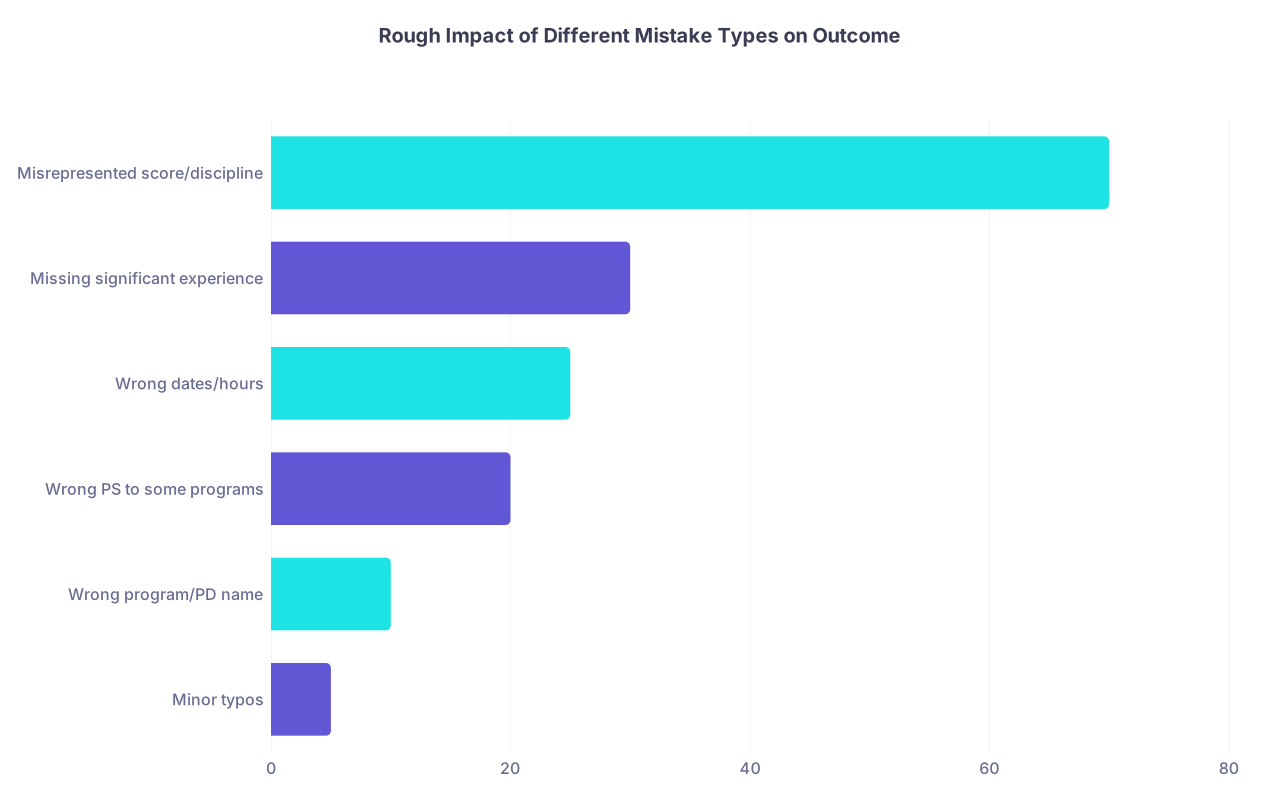
| Category | Value |
|---|---|
| Minor typos | 5 |
| Wrong program/PD name | 10 |
| Wrong PS to some programs | 20 |
| Wrong dates/hours | 25 |
| Missing significant experience | 30 |
| Misrepresented score/discipline | 70 |
(Again, not real data—just a way to show: the only thing that really spikes risk is misrepresentation that never gets corrected.)
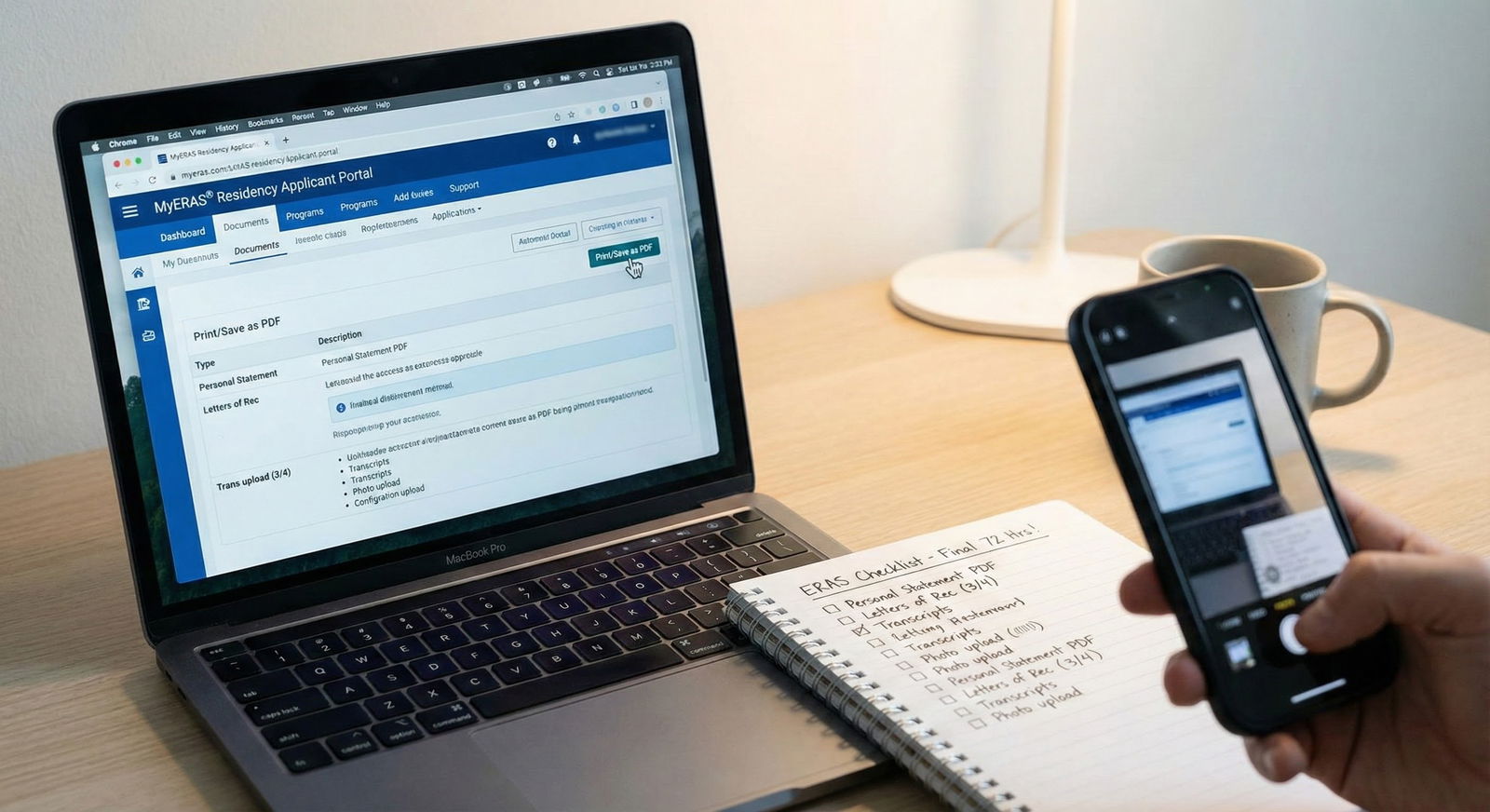
Quick Reality Check: What To Do Today in 30 Minutes
If you’re reading this at 1 a.m. on the verge of tears, here’s your bare‑minimum plan:
Log in to ERAS.
- Verify exactly what is wrong.
- Check what has already been sent/downloaded.
Categorize the mistake:
- Cosmetic annoyance vs. truth‑changing issue.
If it’s truth‑changing and can’t be edited:
- Draft a single, short template email to use for your highest‑priority programs.
- Send to 3–10 programs maximum today. You can always expand later.
Fix everything for future programs:
- Correct PS versions.
- Remove obviously error‑prone templates.
- Rename documents more clearly (e.g. “IM_Generic_Final”).
Then stop touching it. Sleep. Deal with the rest tomorrow.
You are allowed to not be perfect on the single most stressful document of your life so far. You’re not a robot. (Unfortunately. Robots would probably triple‑check everything.)
FAQ (Exactly 6 Questions)
1. Do programs actually notice small typos or formatting errors?
Some do, most don’t care. A lone typo or weird spacing isn’t going to tank you. They’re scrolling fast, skimming your scores, experiences, and letters. The only time they really stare at wording is if something feels off—or if they’re on the fence and digging deeper. Sloppy across everything can hurt, but a typo or two is just normal human behavior, not a character flaw.
2. Should I email every single program about my mistake?
No. That’s how you turn a minor issue into a big one. If it’s something meaningful that affects interpretation of your app, pick a subset: your top programs and most realistic targets. Use one short, clear template, customize the greeting and program name, and stop there. Over‑apologizing everywhere reads more anxious than professional.
3. Can a wrong personal statement really kill my chances?
If the content otherwise shows a genuine, coherent interest in that specialty, probably not. If you wrote “I’m passionate about emergency medicine” in an IM application, yeah, it looks sloppy. But many programs either barely read PS’s or use them mainly to flag huge red flags. I’ve seen people match with these mistakes. Owning it calmly if it ever comes up helps more than trying to pretend it didn’t happen.
4. What if I realize I exaggerated something and I’m scared it looks like lying?
Then fix it. Either via an email correction (for big things like hours or roles) or by clearly clarifying during interviews. You want your application and your spoken story to align. Program directors can accept “I misestimated and corrected it.” What they won’t forgive is obvious BS that you keep defending. You’re better off a little under‑impressive than labeled “untrustworthy.”
5. Will one serious mistake ruin my entire Match cycle?
One serious uncorrected mistake can definitely hurt. But most “serious” mistakes have some path to damage control: a correction email, an update, strong interviews where you show insight and maturity. People match every single year with imperfect applications: failed exams, leaves of absence, disciplinary notes. An error, corrected honestly, doesn’t automatically doom you. A perfect app also doesn’t guarantee anything. The Match is messy and multifactorial.
6. How do I stop obsessing over my ERAS mistake and focus on interviews?
Force structure on yourself. Set a hard cap: one hour to review what went wrong, send any needed emails, and fix things for future programs. After that, move your anxiety onto something actionable: practice “tell me about yourself,” brainstorm examples for “a time you failed,” review programs’ websites. You can even plan a one‑line response in case your mistake is mentioned. Once you have a script and a plan, your brain has less fuel to keep re‑running the panic loop.
Key takeaways:
- Most ERAS “disasters” are more fixable than they feel at 1 a.m.
- Correct truth‑changing errors; don’t overreact to cosmetic ones.
- After reasonable damage control, shift your energy to interviews and future communications—that’s where you can still move the needle.