International Graduate With Limited Research: Making Community Work for You
Your CV is light on research and your medical school is thousands of miles away. You keep hearing, “Academic programs love research, community programs are more realistic for IMGs.” But what does that actually mean for you this application cycle?
Let’s talk about how you turn “limited research, IMG, probably community-bound” into a strategy instead of a death sentence.
You are not competing to be chief resident at MGH right now. You are trying to get one program director at one program to believe: “This person will show up, work hard, not cause drama, and help us take care of patients.” Community programs are built around that kind of decision.
Here is how you make community programs work for you as an international grad with minimal research.
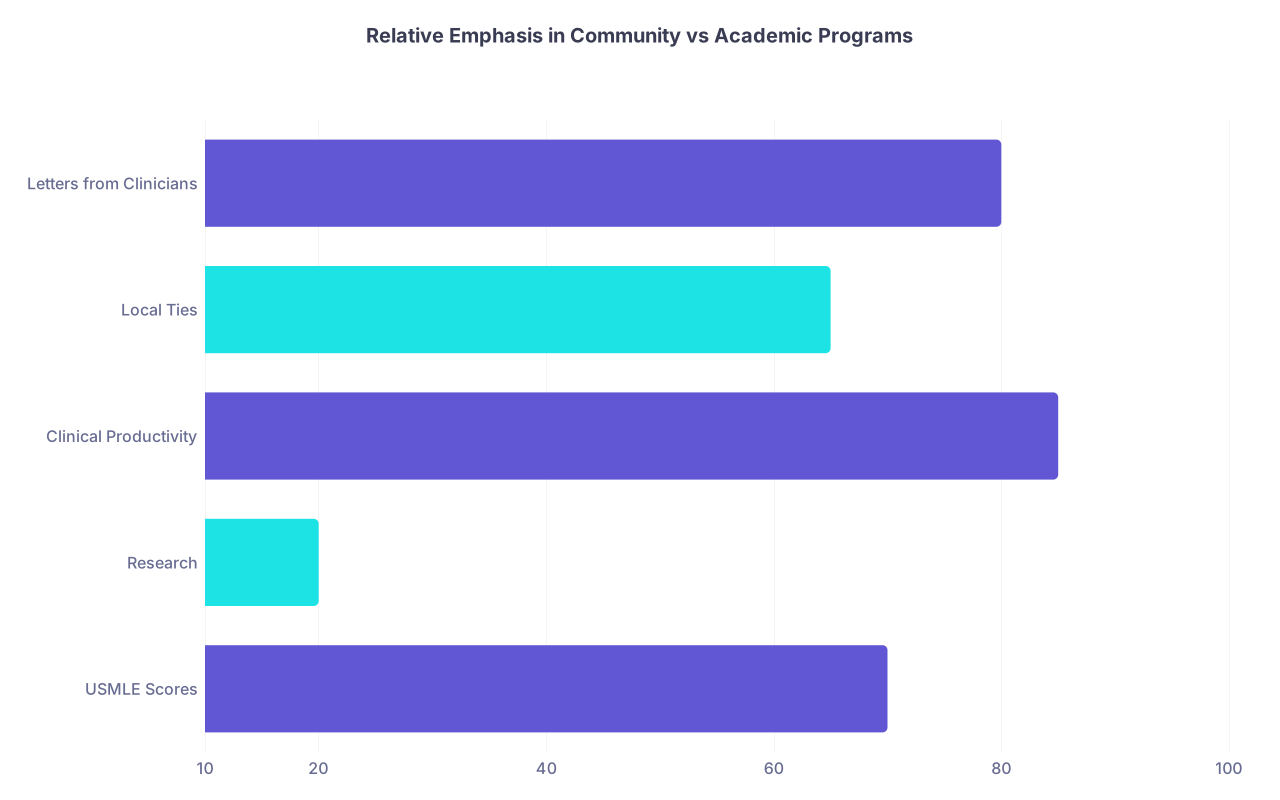
| Category | Value |
|---|---|
| USMLE Scores | 70 |
| Research | 20 |
| Clinical Productivity | 85 |
| Local Ties | 65 |
| Letters from Clinicians | 80 |
1. Understand What Community Programs Actually Want
Stop thinking “community = worse academic program.” That mindset leaks into your application and interview. Program directors smell it.
Most community programs (particularly in IM, FM, peds, psych, OB, general surgery at smaller hospitals) care about:
- Can you work safely on the wards starting July 1?
- Will you stay for 3 years or will you bail?
- Will you be pleasant enough that nurses and co-residents don’t hate you?
- Do you understand what this job actually is—service-heavy, real patients, real hours?
Research lives way down that list.
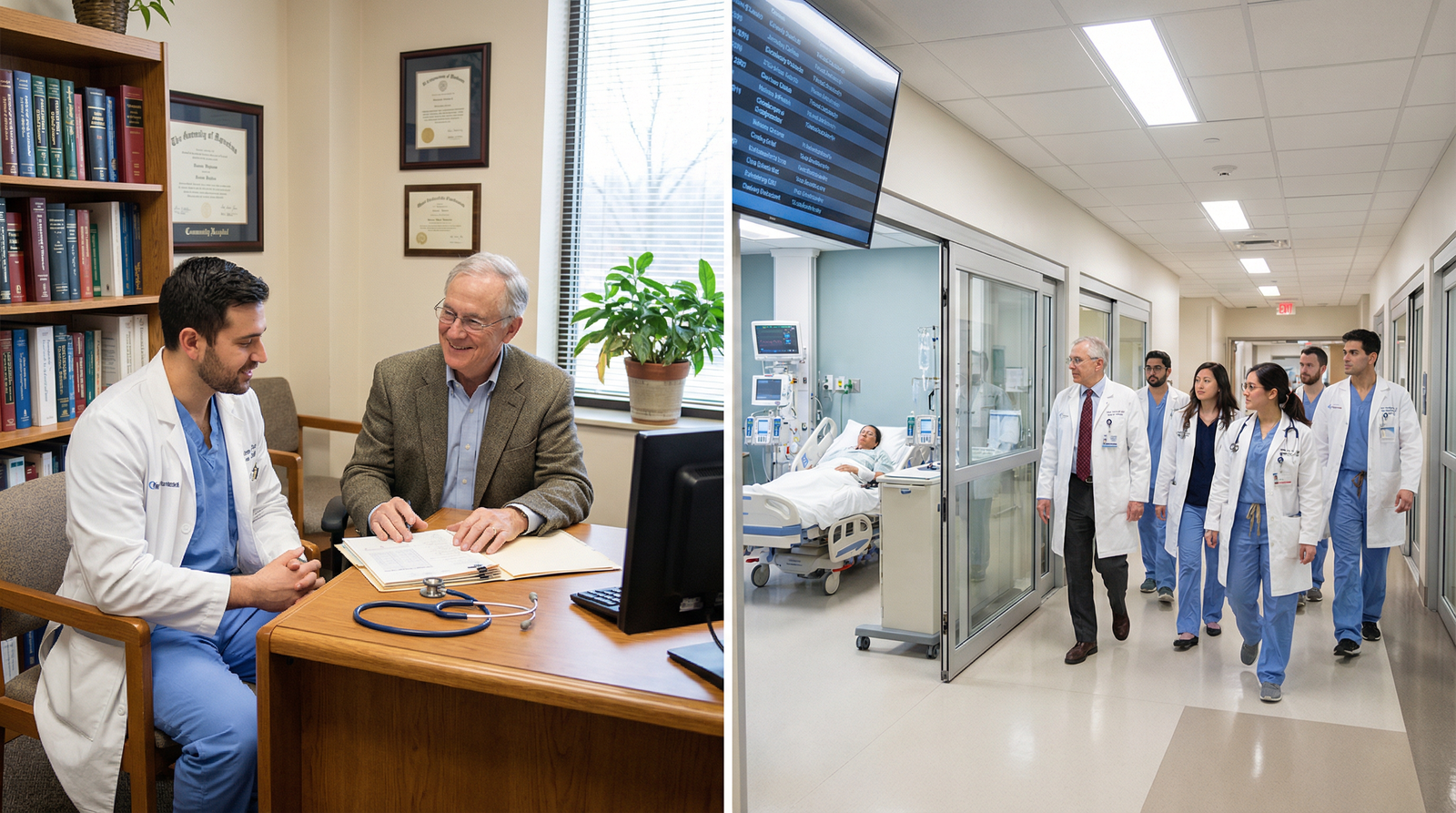
Academic programs might rank like this in their heads:
Research potential, metrics, pedigree… then maybe “will this person function on call?”
Community leadership flips it. Clinical reliability, communication, and fit are the top three. If you understand that and target your application accordingly, your “limited research” becomes almost irrelevant.
So your job is not to fake being a mini-scientist.
Your job is to scream: “I am clinically ready, dependable, and I belong in your hospital” in every piece of your application.
2. Map Your Profile to the Right Type of Community Programs
“Community program” is not one thing. There are flavors, and some are significantly better for an IMG with limited research.
You need to be strategic:
A. Pure community programs (no medical school affiliation)
Think: 150–400 bed hospitals, sometimes in smaller cities, often with a single residency (IM or FM only). These programs usually:
Care a lot about:
- Consistent work history
- Strong letters from clinical supervisors
- US clinical experience (USCE)
- Visa feasibility (they know exactly how much pain it is to sponsor H‑1B/J‑1)
Care much less about:
- Publications
- Name recognition of your med school
- “High status” extracurriculars
If your Step scores are decent but your CV is thin on research, this is your core target.
B. Community programs with academic affiliation
These might say things like “community-based program affiliated with XYZ University.” Translation: You’ll train in a community hospital but send some patients or residents to the university hospital, or faculty have university titles.
These programs:
- Often have a small group of faculty who care a little more about research
- May expect residents to do “scholarly activity” (case reports, QI projects)
- Might have a slightly stronger applicant pool
They’re realistic if:
- Your scores are solid for IMGs (e.g., Step 2 in the 230s+ if available),
- You have even small scholarly crumbs (poster, QI, case report).
C. “Community” programs that are academic in disguise
You’ll see language like:
- “Tertiary care center”
- “Level 1 trauma”
- “Significant NIH-funded research”
- “Residents regularly match into competitive fellowships”
These are effectively academic-lite. With minimal research and an IMG degree, they’re long shots unless:
- You have outstanding scores, or
- A strong connection (US MD letter from someone they know, or you rotated there)
Stop wasting half your application list on these. That’s how people end up with zero interviews.
Here’s how to mentally sort things when you’re screening programs on FREIDA or websites:
| Signal on Website | Likely Type |
|---|---|
| Small city, no med school name | Pure community |
| “Affiliated with XYZ University” | Community with affiliation |
| “NIH funding, fellowship matches” | Academic-leaning |
| Single residency listed | Pure community |
| Multiple fellowships on site | More academic expectations |
Your priority: heavy on pure community, moderate on affiliated, very light on academic-leaning unless your scores are strong.
3. Build Clinical Credibility to Replace Research Prestige
You don’t have publications. Fine. Then your clinical story has to be airtight.
A. Max out your US clinical experience (USCE)
Hands-on beats observer. In-person beats remote. Recent beats old.
If you’re still abroad or early:
- Aim for:
- 2–4 months of USCE in your target specialty if possible
- Mix inpatient + outpatient if you can
- Rotate at community sites, not just big-name universities that will never rank you
If you already graduated:
- Post-graduation gaps are deadly in community programs. Program directors worry about skill decay.
- Fill any gap with something clinical: unpaid externship, clinic work, research assistant in a clinical setting, even credible telemedicine in your home country if you frame it correctly.
You want your timeline to look like this:
No long unexplained blank blocks where you did “nothing.”
B. Letters of recommendation that scream “ready for residency”
Community PDs care way more about:
- “She showed up early, stayed late, followed through”
- “He managed 10–15 patients by the end of the rotation”
- “I would absolutely trust this person with my own family member”
than:
- “He co-authored a paper on cytokine X.”
So you need at least 2–3 strong US letters from:
- Community program faculty
- Hospitalists or outpatient attendings heavily involved in resident education
- Ideally at least one program director/associate PD if you rotated at a teaching site
Make it easy for them:
- Send them a short “brag sheet” with:
- Specific cases you managed
- Times you took extra responsibility
- Your goals: “I want to match into a community internal medicine program focused on strong clinical training.”
That guides their letter away from generic fluff.

| Step | Description |
|---|---|
| Step 1 | Start - IMG with limited research |
| Step 2 | Identify target specialty |
| Step 3 | Prioritize pure community programs |
| Step 4 | Secure US clinical experience |
| Step 5 | Get strong US letters |
| Step 6 | Rewrite personal statement for community focus |
| Step 7 | Email programs with tailored interest |
| Step 8 | Prepare community-centered interview answers |
| Step 9 | Rank programs realistically |
4. Rewrite Your Narrative for a Community Audience
Your personal statement and experiences can either sound like:
“I really wanted academic research but failed, so now I’m here,”
or
“This is exactly the type of practice and training environment I want.”
You want the second.
A. Personal statement: stop talking like an R01 applicant
Cut the “I dream of becoming a physician-scientist” paragraph if you have zero real research to back it.
Instead, focus on:
- Stories from direct patient care
- Times you took ownership of follow-up, results, family conversations
- How you functioned on a ward team (even abroad)
- Interest in community-focused work: continuity, underserved populations, long-term relationships
Sentence that plays well in community programs:
“I thrive in busy, hands-on clinical settings where I’m responsible for both the small details and the big picture of patient care.”
Sentence that makes them doubt you belong there:
“I hope to pursue a career primarily in basic science research while maintaining a small clinical footprint.”
B. How to mention your lack of research (or pivot from it)
If they ask about research in an interview:
Bad answer:
“I didn’t have many opportunities, my school didn’t support it, and I was busy.”
Better answer:
“My school had limited structured research, and I chose to spend most of my time in direct patient care and leadership roles. I’ve done small scholarly projects like case presentations and QI audits, but what really energizes me is bedside medicine and everyday problem-solving on the wards.”
You’re not apologizing. You’re positioning.
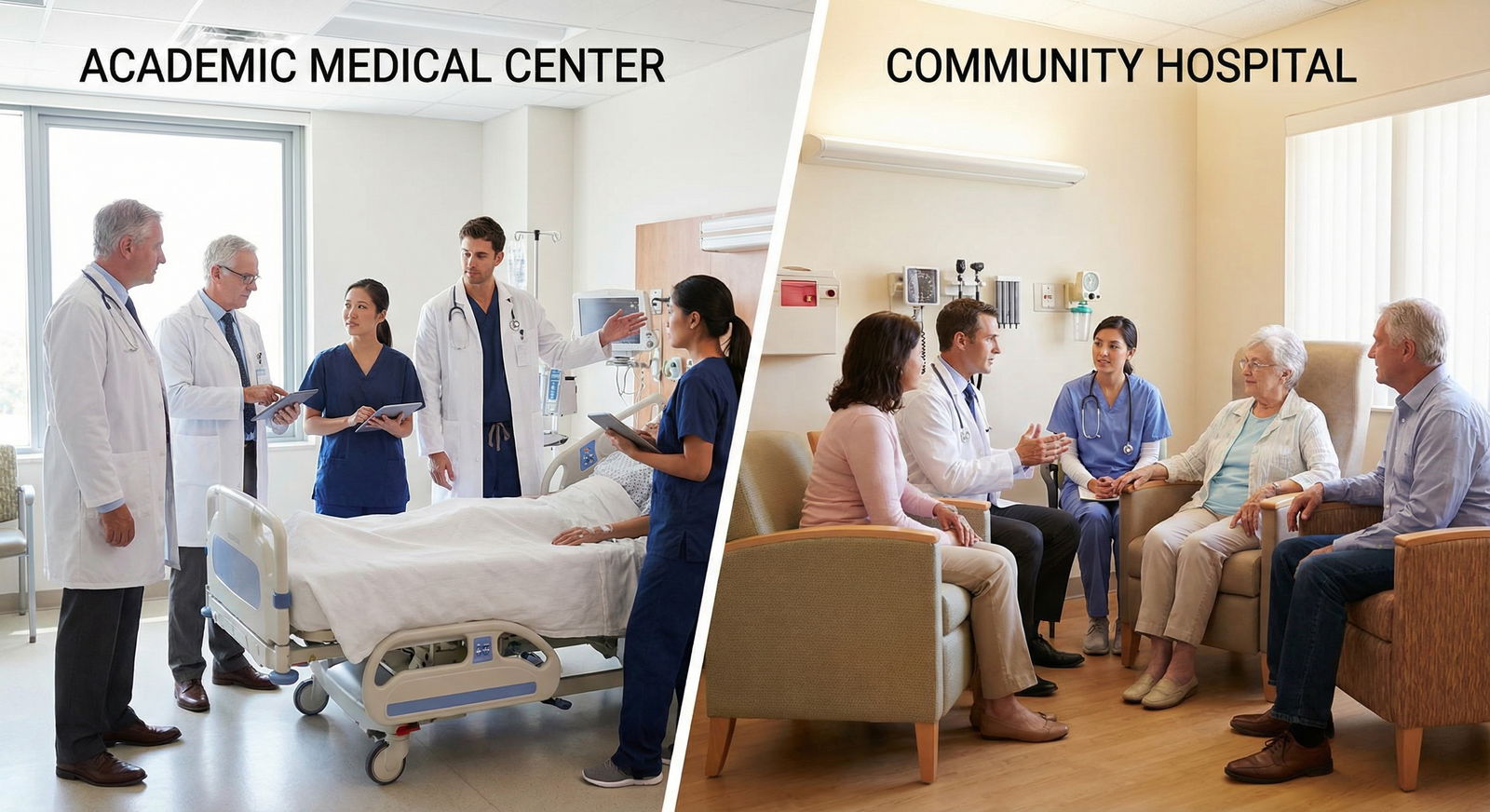
5. Use Community-Specific Angles in Your Application
You need to sound like someone who actually wants to work in that town, in that hospital, with those patients.
A. Show local or regional ties whenever possible
If you grew up there, have family nearby, did rotations in that state, or previously lived in that region—say it plainly.
Programs hate losing residents after PGY-1. So “likely to stay” is a huge selling point.
In your ERAS experiences or PS, drop things like:
- “My uncle’s family lives 30 minutes from [City], and I’ve visited regularly for the last 10 years.”
- “During my rotation at [Local Clinic], I realized how much I enjoy working in [rural/urban] communities.”
These sound small. They are not small to a PD who just lost two residents to another program last year.
B. Targeted emails that don’t sound desperate
If you’re an IMG with limited research, you often sit in the silent middle: not terrible, not obviously stellar, easy to overlook.
A short, tailored email can nudge you into the interview pile. But it has to be done right.
Good structure:
- Subject: “Prospective IM applicant – USCE at [similar site] and strong interest in community training”
- 3–5 sentence body:
- Who you are (IMG, grad year, specialty)
- One concrete thing about their program (location, population, rotation structure)
- How your background matches community-heavy work
- Offer to send CV; don’t demand an interview
Example:
Dear Dr. Smith,
I’m an international medical graduate (Class of 2021) applying to Internal Medicine this season. I’m particularly interested in community-based training and was drawn to your program’s strong inpatient experience and continuity clinic model.I’ve completed 4 months of US clinical experience in community hospitals, where I managed a high volume of complex patients under supervision and received strong feedback on my work ethic and communication. I’d be grateful if you would consider my application, and I’d be happy to share my CV if helpful.
Thank you for your time,
[Name, AAMC ID]
Short, specific, not begging. That’s the tone.
6. Use “Scholarly Activity Lite” to Look Balanced
You don’t need a PubMed list. But you don’t want a blank “research/scholarly activity” section either.
You can build minimal but credible scholarly activity with:
- Case reports: pick interesting patients from your rotations. Ask an attending if they’ll write it with you. Even a poster at a regional conference counts.
- QI projects: hand hygiene compliance, diabetes follow-up no-show rates, clinic wait times. Simple projects can be spun into a poster and checked as “scholarly activity.”
- M&M presentations or journal clubs: yes, you can list these if they were formal and structured.
The key isn’t impressing Mass General. It’s showing community PDs:
“This person engages with quality and education. They won’t fight me when I ask them to do a QI project in PGY‑2.”
Practical move:
Whenever you’re in a US rotation, explicitly ask:
“I’m very interested in learning how to do case reports or small QI projects. Is there a patient or process we could potentially turn into something presentable?”
You’ll be surprised how often attendings say yes, especially at community sites where nobody else bothers to ask.
7. Interview Day: Don’t Sound Like You’re Settling
Community faculty are sensitive to one thing: people who are “too good” for them or unwilling to get their hands dirty.
So in the interview:
A. Emphasize what you like about community settings
Specific things that land well:
- Faster responsibility and autonomy
- Closer relationships with attendings and nurses
- Getting to see bread-and-butter cases every day, not just the rare zebras
- Strong continuity with patients
Example answer:
“What I like most about a community program is the chance to be very hands-on early. In my community rotations, I loved seeing how residents knew their patients over time and how closely they worked with attendings and nurses. That’s the environment where I learn best.”
B. Prepare for the “Why no research?” moment
We touched this earlier. Your job is to sound intentional, not deficient.
You can say:
“While I respect research and would be happy to participate in smaller projects or quality improvement, I’ve always been most drawn to day-to-day patient care. That’s why I focused my time on gaining as much clinical exposure as possible, especially in community environments.”
PDs at a busy community hospital hear that and think: “Good. They’ll actually be okay cross-covering 40 patients at night.”
C. Don’t talk only about “fellowship, fellowship, fellowship”
You can have long-term goals. But if you come into a 12-resident community IM program talking 80% about GI or cards fellowships at big-name centers, they may assume you’ll be gone the second you get a letter.
Better:
- Acknowledge you’re open to fellowship,
- But repeatedly anchor to becoming a strong general internist first.
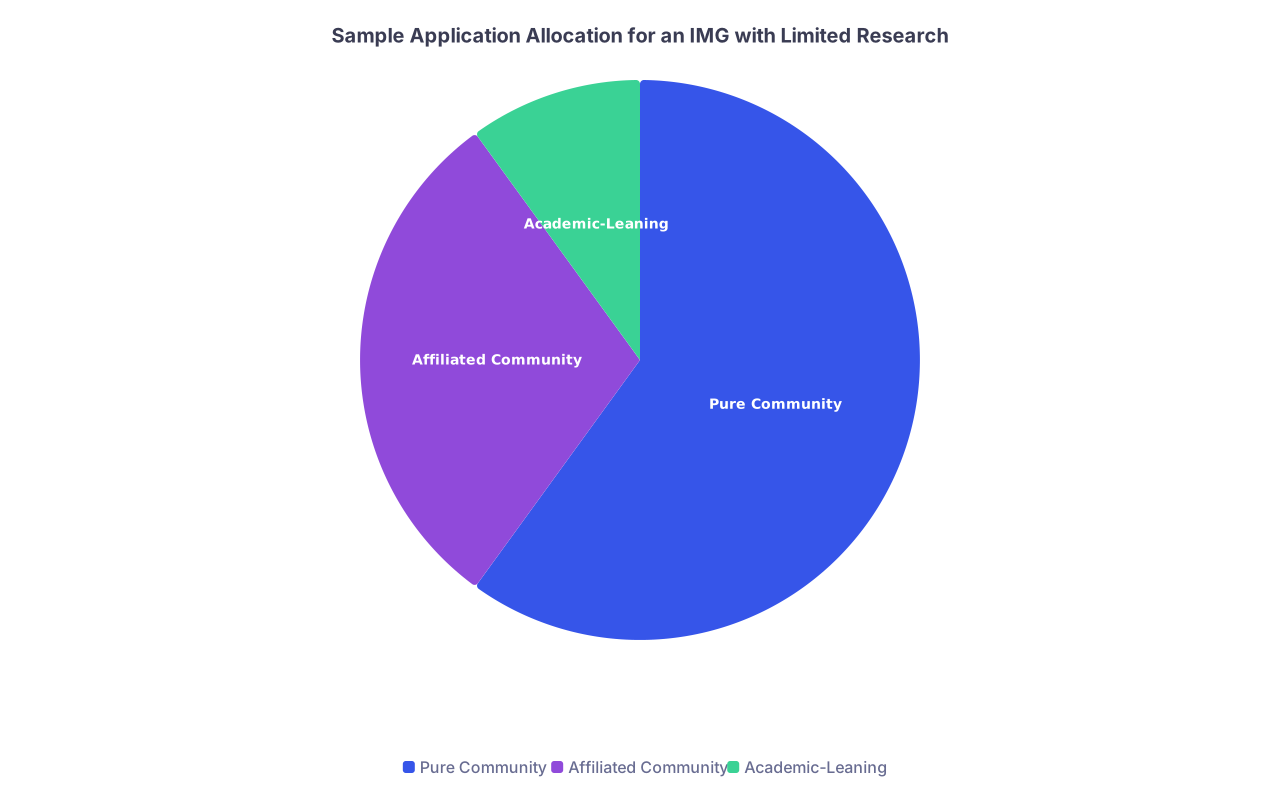
| Category | Value |
|---|---|
| Pure Community | 60 |
| Affiliated Community | 30 |
| Academic-Leaning | 10 |
8. Numbers Game: How Many and What Mix?
For a typical IMG with:
- Step 2 around mid-220s to low 230s
- Grad year within 3–4 years
- Limited research, some USCE, decent English
A realistic Internal Medicine application strategy might be:
- 60–70% pure community programs
- 20–30% community with academic affiliation
- 0–10% academic-leaning “reach” programs if there’s a genuine tie
If you have any red flags (old grad year, multiple attempts, gaps), tilt even more heavily toward pure community and smaller cities.
You’re not “lowering your standards.” You’re going where people actually want what you offer: clinical work ethic over publication count.
9. If You’re Late or Weak This Cycle
Some of you are reading this mid-cycle with:
- Late ERAS
- Thin USCE
- Weak letters
- No interviews yet
Do not panic. But do not fantasize.
Your move set:
- Keep emailing a small number of programs with personalized notes.
- Add more lower-visibility community programs if you can (in ERAS or SOAP next year).
- Start building a 1-year plan that fixes your biggest weaknesses:
- At least 3–6 months of USCE/externship
- 1–3 small scholarly things (case report, QI)
- Strong fresh US letters
- Close the gap in your timeline – no more “doing nothing”
I’ve seen people with zero interviews one year match the next after a disciplined, community-focused rebuild.
Key Takeaways
- Community programs are not your consolation prize; they are the place where an IMG with limited research can actually be valued for what they bring: clinical readiness and reliability.
- Replace research prestige with clinical credibility: strong USCE, powerful letters, a narrative built around hands-on patient care and community commitment.
- Ruthless targeting wins: load your list with true community programs, speak their language in your application and interviews, and stop pretending you’re applying to a research fellowship when what you actually need is a residency that will train you to be a solid, real-world physician.