
The biggest mistake applicants make with letters of recommendation is pretending one generic “strong letter” fits every program. It doesn’t. Not for ERAS. Not when you’re applying across community, academic, and hybrid tracks.
You’re heading into the pre‑ERAS summer. This is the narrow window where you can still shape your LOR portfolio on purpose instead of just hoping your clerkship evals carry you. At this point, you should be thinking:
- Which track am I aiming at—pure academic, pure community, or community‑academic hybrid?
- What setting‑specific letters will make program directors say, “Yes, this applicant gets our environment”?
Let’s walk month‑by‑month, then week‑by‑week, through how to collect the right LORs for each type of program.
Big Picture: What Different Programs Actually Want
Before timelines, you need the target.
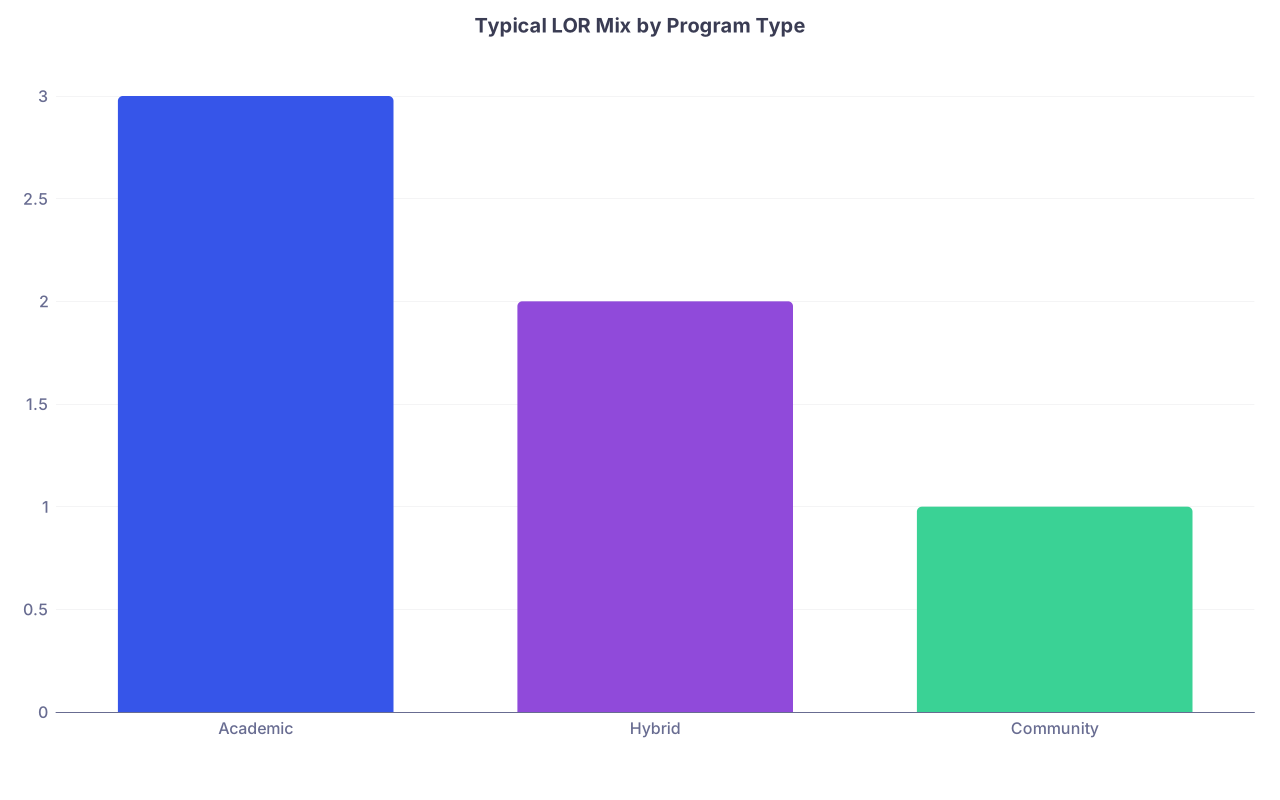
| Category | Value |
|---|---|
| Academic | 3 |
| Hybrid | 2 |
| Community | 1 |
That chart is simplified, but here’s the real pattern I’ve seen reading and discussing hundreds of applications:
| Program Type | Ideal Core Letters (3–4 total) |
|---|---|
| Pure Academic | 2+ academic subspecialty attendings, 1 research mentor, maybe 1 community or generalist |
| Hybrid (Univ‑Aff) | 1–2 academic faculty, 1–2 community attendings who can speak to autonomy and work ethic |
| Pure Community | 2+ community attendings, 1 generalist (FM/IM), optional academic if strong but not required |
So your job this summer is not just “get letters.” It’s “build a setting‑balanced LOR portfolio that fits your rank list intent.”
Early Spring (March–April of Application Year): Decide Your Tracks
At this point you should not be sending frantic LOR emails. You should be deciding your strategy.
Step 1: Map your target mix
By late March:
Pull up a rough list:
- Academic university programs you like
- Community‑academic hybrids (university‑affiliated community hospitals, large teaching community programs)
- Pure community programs (often stand‑alone, heavy service, less research)
Decide your primary identity:
- “I’m an academic‑leaning applicant but want some community interviews”
- “I’m community‑leaning but want a few university shots”
- “I’m hybrid; I’d be happy at either”
Translate that into an LOR quota. For example:
- Academic‑leaning internal medicine applicant:
- 2 academic IM subspecialty letters
- 1 research mentor
- 1 community hospitalist or primary care IM
- Community‑leaning FM applicant:
- 2 community FM attendings
- 1 community IM or EM attending
- 1 academic letter if you have a strong one (optional)
- Academic‑leaning internal medicine applicant:
Write this down. On paper. Don’t keep it in your head.
Late Spring (April–May): Inventory What You Already Have
By April, you should be doing a LOR audit.
At this point you should:
List every potential letter writer:
- Core clerkship attendings (especially in your specialty)
- Sub‑I attendings (if already finished one)
- Research mentors
- Community preceptors from earlier years
- Longitudinal preceptors (continuity clinic, student‑run clinic)
Tag each by setting:
- A = Academic (university tertiary/quaternary center)
- H = Hybrid (university‑affiliated community site)
- C = Community (stand‑alone community hospital or clinic)
Note letter status:
- Already written and uploaded
- Verbally agreed but not written
- Not yet asked
You’ll usually find one of three patterns:
- All your strong letters are academic. Great for university programs, weak signal for pure community.
- All your letters are community‑based. Programs will question academic potential for research‑heavy tracks.
- Mixed but random. No clear setting‑specific story.
Your pre‑ERAS summer is where you fix this.
Early Summer Overview (June–August): The Core Timeline
Here’s the high‑level structure of your pre‑ERAS summer letter work:
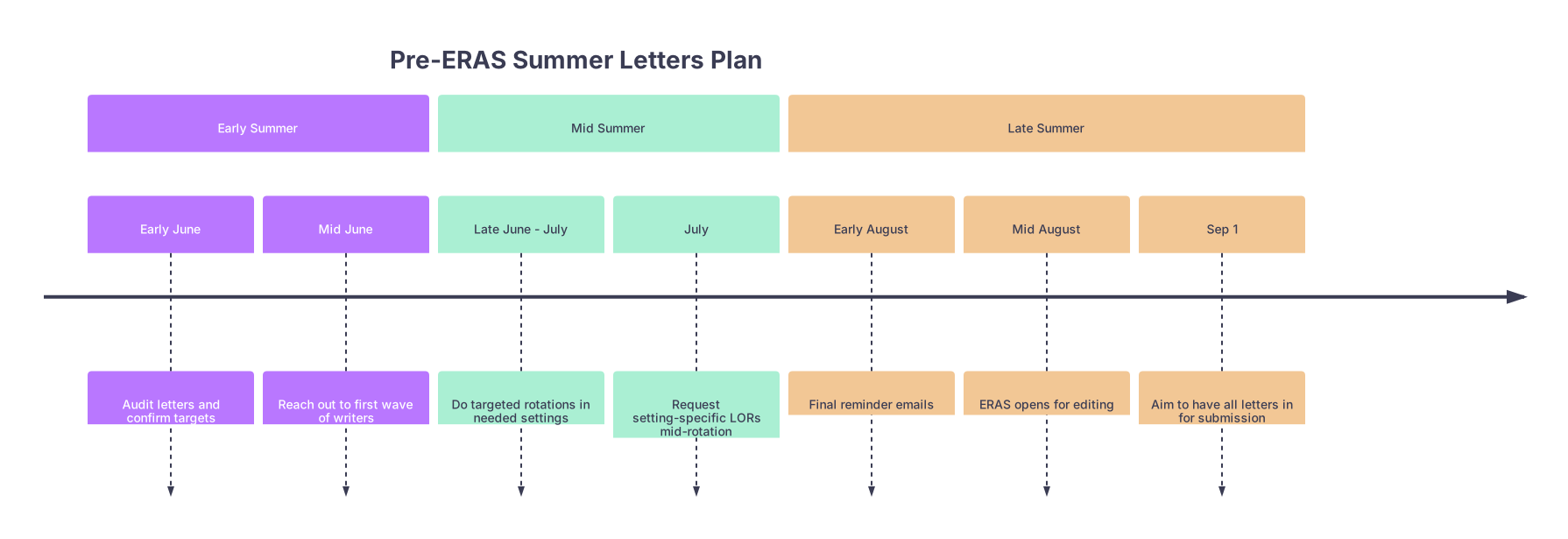
| Period | Event |
|---|---|
| Early Summer - Early June | Audit letters and confirm targets |
| Early Summer - Mid June | Reach out to first wave of writers |
| Mid Summer - Late June - July | Do targeted rotations in needed settings |
| Mid Summer - July | Request setting-specific LORs mid-rotation |
| Late Summer - Early August | Final reminder emails |
| Late Summer - Mid August | ERAS opens for editing |
| Late Summer - Sep 1 | Aim to have all letters in for submission |
We’ll go month‑by‑month then drill to specific weeks.
June: Lock Targets and Start First Wave of Asks
At this point you should be deciding who you must secure and starting the slow email chase.
Week 1 of June: Confirm your LOR mix
Sit down with your advisor or specialty mentor.
You should walk out of that meeting with:
- A written list of 4–5 letter writers you’re targeting
- Each labeled by:
- Specialty (IM, FM, EM, Surgery, etc.)
- Role (sub‑I attending, research PI, clinic preceptor)
- Setting (Academic / Hybrid / Community)
- Priority (Must‑have vs. Nice‑to‑have)
Example for a community‑leaning EM applicant:
- EM academic letter – university ED sub‑I attending – A – Must‑have
- EM community letter – busy suburban ED attending – C – Must‑have
- IM community hospitalist – C – Strongly preferred
- Research mentor (QI in ED throughput) – H – Optional but good
Week 2–3 of June: First email wave
Now you start emailing writers you already worked with earlier in the year.
At this point you should:
- Email every “must‑have” writer in any setting where you don’t need another rotation:
- Longitudinal preceptor you’ve worked with for months
- Research mentor who has known you for a year
- Attending from a strong sub‑I you completed in spring
Your email should:
- Ask specifically for a “strong letter of recommendation for [specialty] residency”
- Mention your program mix briefly:
- “I’m applying broadly to both academic and community‑academic internal medicine programs.”
- Offer a setting‑specific angle:
- To community attendings: “Programs that focus on high patient volume and resident autonomy are very attractive to me.”
- To academic attendings: “I’m particularly interested in programs with strong research and subspecialty exposure.”
This hints at what they should emphasize.
Late June–July: Use Rotations Deliberately for Setting‑Specific Letters
This is where most students blow it. They treat every rotation the same and ask for letters at random.
You won’t.
Step 1: Identify your “letter‑producing” rotations
For June–July, look at your schedule:
- Are you at a university flagship hospital? That’s your academic letter opportunity.
- Are you at a county or safety‑net hospital? That often functions as a hybrid setting.
- Are you at a stand‑alone community hospital or outpatient clinic? That’s your pure community letter.
At this point you should assign each rotation a letter role:
- “This July IM sub‑I at the VA = my hybrid/community‑academic letter”
- “This June cardiology consults at the university = my academic subspecialty letter”
Step 2: Behave like a letter seeker from Day 1
During week 1 of any “letter‑producing” rotation, you should:
- Show up early. Consistently.
- Volunteer for the extra note, the extra follow‑up call, the family meeting.
- Ask smart questions about system issues:
- In community: “How do you manage follow‑up without in‑house subspecialists?”
- In academic: “How do fellows and residents divide responsibility on complex patients?”
You’re not faking interest; you’re collecting detail your future letter writer can use.
Micro‑Timeline: How to Ask During a July Rotation
Let’s say you’re on a July community‑hospital IM sub‑I. Perfect for a community‑heavy letter.
Here’s your week‑by‑week:
Week 1
At this point you should:
- Identify 1–2 attendings who:
- Actually watch you pre‑round and present
- See your notes
- Work with you multiple days in a row
Do not ask yet. Too early.
Week 2
You now:
- Step up responsibility:
- Pick up extra patients (within reason)
- Offer to call consultants yourself
- Volunteer to staff new admissions with the attending
Toward the end of week 2, after a particularly good day (strong presentation, good save on something) you say, in person:
“Dr. Smith, I’m applying to internal medicine this year, mostly to community and community‑academic programs. I’ve really valued working with you in this community setting. If you feel you know my work well enough, would you be comfortable writing a strong letter of recommendation commenting specifically on how I function in a community hospital environment?”
That last clause matters. You’re telling them: talk about community‑style work.
If they hesitate or look uncertain, thank them and do not push. Find another writer.
Week 3–4
At this point you should:
- Follow up with a polite email:
- Attaching your CV, personal statement draft, and a “program types I’m targeting” blurb
- Explicitly remind them of setting‑specific points they’ve seen:
- “During this rotation I particularly enjoyed managing high‑volume ward patients with limited overnight resources and learning how you balance autonomy with patient safety in a community setting.”
For academic writers, the equivalent might be:
“…and working in a tertiary care environment with complex referrals and multidisciplinary teams.”
You’re feeding them language that program directors look for.
Academic vs Community: What Each Letter Should Actually Say
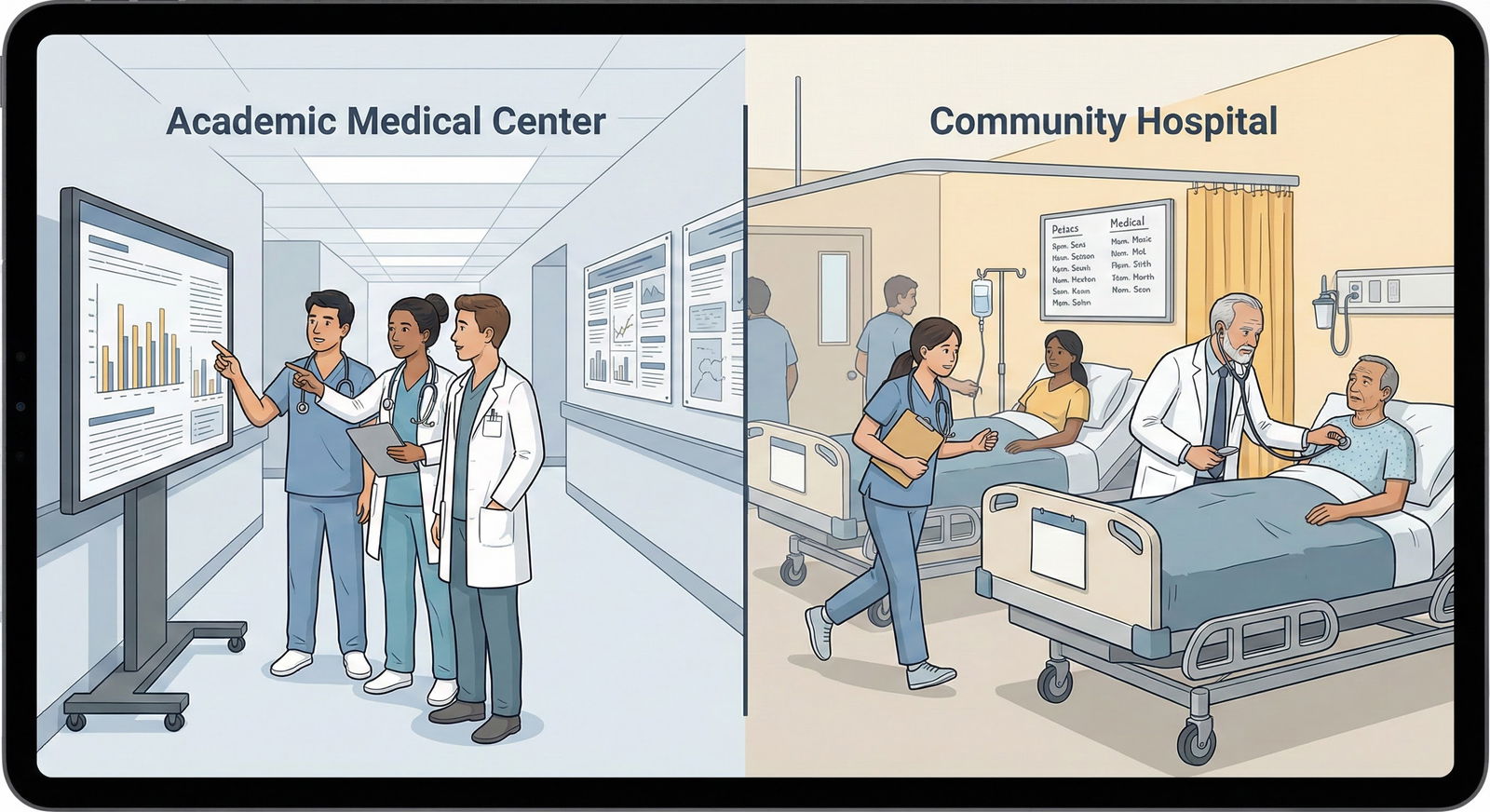
You can’t control their exact wording, but you can shape what they notice.
For Academic Programs
Your academic letters should highlight:
- Comfort with complex, tertiary‑care patients
- Engagement with evidence, guidelines, and teaching
- Interest or involvement in research / QI / education
- Ability to function on teams with fellows and multiple learners
How to steer that:
- Ask questions about trial data, guidelines, or study design on rounds.
- Offer to help with a small QI chart review or presentation.
- Mention in your email that you’re “particularly aiming at programs with strong subspecialty and research opportunities.”
For Community Programs
Your community letters should highlight:
- Efficiency and reliability with high patient volume
- Comfort with limited resources and fewer layers of backup
- Strong communication with nurses, consultants, and patients
- Ability to work independently at your level
How to steer that:
- Be the student nurses actually like paging.
- Volunteer to handle discharge counseling, family updates, coordination with PCPs.
- In your follow‑up email, mention how you “value the hands‑on, high‑volume environment of community programs.”
For Hybrid / Community‑Academic Programs
These are the “we do both” places. Your best letter here is from someone who has:
- Seen you in a teaching hospital that still feels like work, not a research lab
- Watched you balance teaching opportunities with service demands
Their letter should ideally describe you as:
- Academically solid
- Comfortable with real‑world medicine
- Not allergic to either research or service
This is where VA hospitals, county hospitals, and university‑affiliated community sites shine for letters.
July–Early August: Plugging the Gaps
By now, you should have:
- At least one setting‑specific academic letter (if you want academic programs)
- At least one setting‑specific community or hybrid letter (if you want community/hybrid programs)
- Ideally a fourth “flex” letter (research, extra attending, or a different setting)
If you see a gap, you still have time—but not all summer.
Use this checklist in mid‑July
At this point you should ask yourself:
- Do I have 2 letters that a community PD will read and think, “This student will handle our volume and autonomy”?
- Do I have 2 letters that an academic PD will read and think, “This student will engage with our teaching and scholarly work”?
If the answer is no for either camp you care about, you must:
- Use your next rotation as a targeted letter rotation for that missing setting.
- Tell your attending up front (early in the block) that you’re hoping to earn a letter that speaks to [community / academic] strengths.
Late August: Finalizing and Tracking

ERAS typically opens for you to start filling in data in early summer, but programs can’t see anything until mid‑September (exact date varies by year). You want your letters in by the time programs can start reviewing.
At this point (late August) you should:
Build a simple tracking sheet:
- Writer name
- Setting (A/H/C)
- Type (specialty, research, etc.)
- Date requested
- Date reminder sent
- Status (Not requested / Agreed / Uploaded)
Send one polite reminder to any writer who:
- Agreed more than 3–4 weeks ago
- Has not yet uploaded
Sample brief reminder:
Dear Dr. X,
I hope you’re doing well. I wanted to gently follow up regarding the letter of recommendation for my [specialty] residency application. ERAS applications will be ready for programs soon, and having your letter—especially given your perspective from a [community / academic] setting—would be incredibly helpful. Please let me know if there’s any additional information I can provide.
Thank you again,
[Name]
Don’t spam. One reminder, maybe two if they’re chronically slow but previously reliable.
How to Assign Letters Differently for Academic vs Community Programs
Remember: you can upload up to 4 letters per program, but you can have more stored in ERAS and choose which ones each program sees.
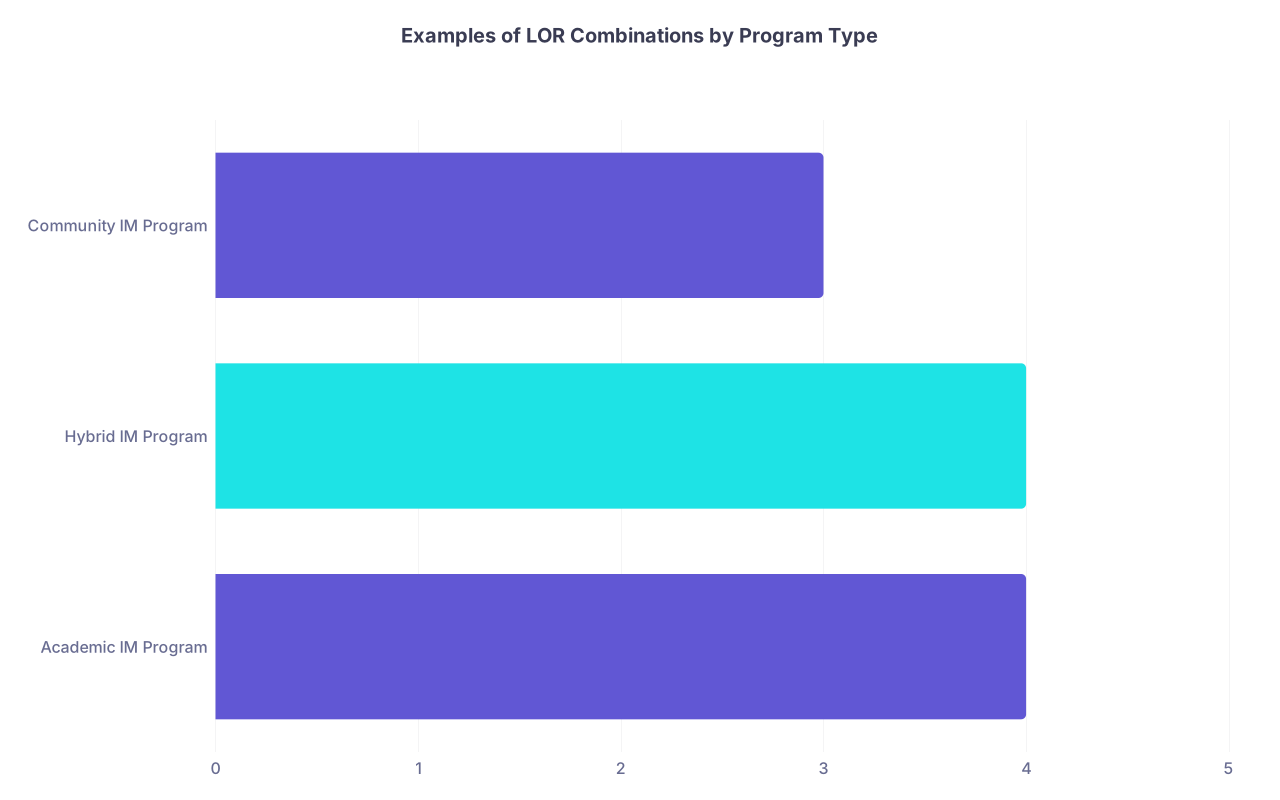
| Category | Value |
|---|---|
| Academic IM Program | 4 |
| Hybrid IM Program | 4 |
| Community IM Program | 3 |
Concrete example for an internal medicine applicant who has 5 total letters:
- Academic IM subspecialist – Academic
- IM ward attending – Academic
- Research mentor – Academic/Hospital‑based
- Community hospitalist – Community
- Community primary care IM – Community
For university academic programs, at this point you should assign:
- #1 Academic subspecialist
- #2 Academic ward attending
- #3 Research mentor
- #4 Either community hospitalist or primary care IM (pick the stronger one)
For pure community programs, you should assign:
- #4 Community hospitalist
- #5 Community primary care IM
- #2 Academic ward attending (shows you can hang academically)
- #1 or #3 depending on which felt less “basic sciencey” and more clinically relevant
For hybrid / community‑academic programs:
- #1 Academic subspecialist
- #4 Community hospitalist
- #2 Academic ward attending
- #5 Community primary care IM (or research mentor if very clinically oriented)
You’re sending the same core you, but customizing the setting signal.
Subspecialty Examples: Surgery and Family Medicine

Surgery
Academic‑leaning surgery applicant:
- 2 letters from academic surgeons (one from your home program, one from an away)
- 1 letter from a surgical researcher or lab mentor
- 1 letter from a community general surgeon (if you have it)
Community‑leaning surgery applicant:
- 2 letters from community general surgeons (busy bread‑and‑butter practice)
- 1 letter from your home academic program
- 1 from an EM or IM community attending who watched you manage post‑ops or trauma
In your community surgeon email, you emphasize:
- How much you value operative autonomy
- Comfort with fewer subspecialty services immediately available
- Interest in broad‑based general surgery training
Family Medicine
Academic FM programs care more about:
- Teaching, curriculum interest, OB volume, research in primary care/public health
Community FM programs care more about:
- Bread‑and‑butter outpatient volume, continuity, real‑world social determinants work
So for FM, your pre‑ERAS summer should include:
- At least one community clinic preceptor letter focusing on continuity and social context
- At least one inpatient FM or IM community attending letter showing you can manage adult medicine
- For academic FM programs, an additional letter from:
- An academic FM attending
- Or a public health / community research mentor
Final 2 Weeks Before Submission: No New Letters, Just Clean‑Up
In the last two weeks before you submit ERAS, you should not be chasing brand new writers. That almost always results in weak, rushed letters.
Instead:
- Confirm each program has 3–4 assigned letters
- Double‑check that each program type (academic / hybrid / community) gets:
- At least one letter from their world
- Not four letters all from the opposite setting
If a community program sees four ivory‑tower academic letters with no mention of volume, autonomy, or resource limits, they’ll quietly assume you’re a poor fit. Same for the reverse: if a hard‑core academic program sees only community clinic letters with no research/teaching flavor, they’ll doubt your academic stamina.
Key Takeaways
- Treat your letters as a portfolio, not a pile. You need the right mix of settings—academic, community, and hybrid—based on where you’ll actually apply.
- Use the pre‑ERAS summer rotations deliberately: identify which ones will produce academic vs community letters and ask mid‑rotation once you’ve proven yourself.
- For each program type, assign a different combo of letters from your pool so the program director sees someone who fits their environment, not someone who accidentally applied there.