
What if you match into your “dream” academic program… and then realize you actually hate the academic culture?
Not just “this is hard” hate. I mean the sick-to-your-stomach, “I picked the wrong life and now I’m trapped for three years” kind of dread.
Let’s go straight at the worst-case fears, because I know that’s where your brain is already living.
First: You Are Not Actually Trapped (Even If It Feels That Way)
Here’s the thing programs almost never say out loud during interview dinners: residents leave. Residents transfer. Residents change directions. Every year.
You don’t see it on Instagram, but I’ve watched:
- A PGY-1 IM resident at a big-name academic program quietly transfer to a community program one state over.
- A surgery resident who realized the malignant research culture wasn’t survivable switch to prelim + reapply.
- A resident in a so-called “prestige” university hospital finish, then run hard in the opposite direction to a tiny community job and never look back.
Is it easy? No. Is it impossible? Definitely not.
Hating the academic culture doesn’t mean you:
- Ruined your career
- Wasted your spot
- Are obligated to become faculty and do R01-level research forever
It just means the environment you thought would fit is not matching who you are when you’re actually exhausted, paged nonstop, and living the job for real.
That mismatch is more common than anyone wants to admit.
What “Hating Academic Culture” Usually Actually Means
Let’s name what you’re afraid of hating, because “academic culture” is vague until you’re in it.
Most residents who tell me “I hate academia” actually mean some mix of:
- Constant pressure to do research and present at conferences
- Feeling like service (patient care) is secondary to metrics and publications
- Being compared to hyper-productive co-residents who have 9 publications and a K award in progress
- Feeling invisible in a giant program where you’re Resident #47
- Hierarchy so rigid it feels like you need permission to breathe
- Attendings who are brilliant but socially clueless or dismissive
- The vibe that if you’re not chasing a fellowship at a top-10, you’re “less than”
If you’re coming from (or drawn to) a more community-style feel—where people stay long-term, fewer fellows, attendings actually know your partner’s name—this can feel like stepping onto a treadmill that never stops, at a speed you didn’t agree to.
Here’s the nuance almost nobody tells you:
You can hate the academic culture and still:
- Finish residency there
- Match into a great non-academic job later
- Never publish another paper after graduation
This is not an all-or-nothing identity choice unless you decide to make it one.
Academic vs Community: What You Thought You Were Choosing vs Reality
You probably made some mental model like:
| Aspect | Academic Program | Community Program |
|---|---|---|
| Research Pressure | High, often expected | Low–moderate, usually optional |
| Faculty Visibility | Many attendings, variable contact | Fewer attendings, more direct contact |
| Fellows | Many, can cut both ways | Fewer, more resident autonomy |
| Prestige Signaling | High focus on name, fellowships, CV | More focus on clinical skills, jobs |
| Resident Fit | Self-driven, research-inclined | Clinically focused, community-minded |
Reality: programs are all over the map. There are community programs with heavy research push and academic programs with “do a poster once, call it a day” cultures.
But if you end up at a place that really leans hardcore academic and your soul leans community? Yeah, friction.
Let’s talk about your actual options if you hit that wall.
Option 1: Stay, But Quietly Redefine the Game for Yourself
This is the path most people take, even the ones who are miserable in October of intern year.
You don’t have to become the academic machine to survive in an academic machine.
You can:
- Do the absolute minimum research that keeps you out of trouble
- Align yourself with clinically oriented mentors who aren’t obsessed with prestige
- Use your time to become a brutally competent clinician instead of a prolific publisher
What this looks like in real life:
- You do one QI project, maybe one poster at a regional conference, and that’s it. You’re done.
- When people push you for more, you say: “I’m really passionate about clinical education / community medicine / quality improvement on the wards. That’s where I want to focus.”
- You find attendings who are great teachers and don’t care if you publish in NEJM. Every program has at least a few of these “quiet good people.”
Meanwhile, you keep your eyes on the actual finish line: graduating and getting the job you want. Not impressing the one research-obsessed attending who thinks everyone should be a physician-scientist.
This option is realistic if:
- The culture annoys you but doesn’t crush your mental health
- You can find even 2–3 attendings who “get you”
- You’re okay being “the clinically strong, not research-crazy” resident
It’s not realistic if you’re waking up every day dreading going in and feeling trapped and unsafe. That’s a different problem.
Option 2: Strategically Pivot to a Community-Focused Career (Even From an Academic Program)
You can train in a fully academic setting and then run your post-residency life like a community doctor. Programs don’t own your future.
Here’s how that looks if you know early “this culture is not me”:
- Stop caring about impressing research faculty beyond basic professionalism
- Start networking with community physicians—your continuity clinic preceptors, community attendings, alumni in private practice
- Ask them directly: “What do you look for in a new hire from an academic residency?” Spoiler: clinical skills, work ethic, not your h-index
- Target away rotations or electives at community sites when allowed
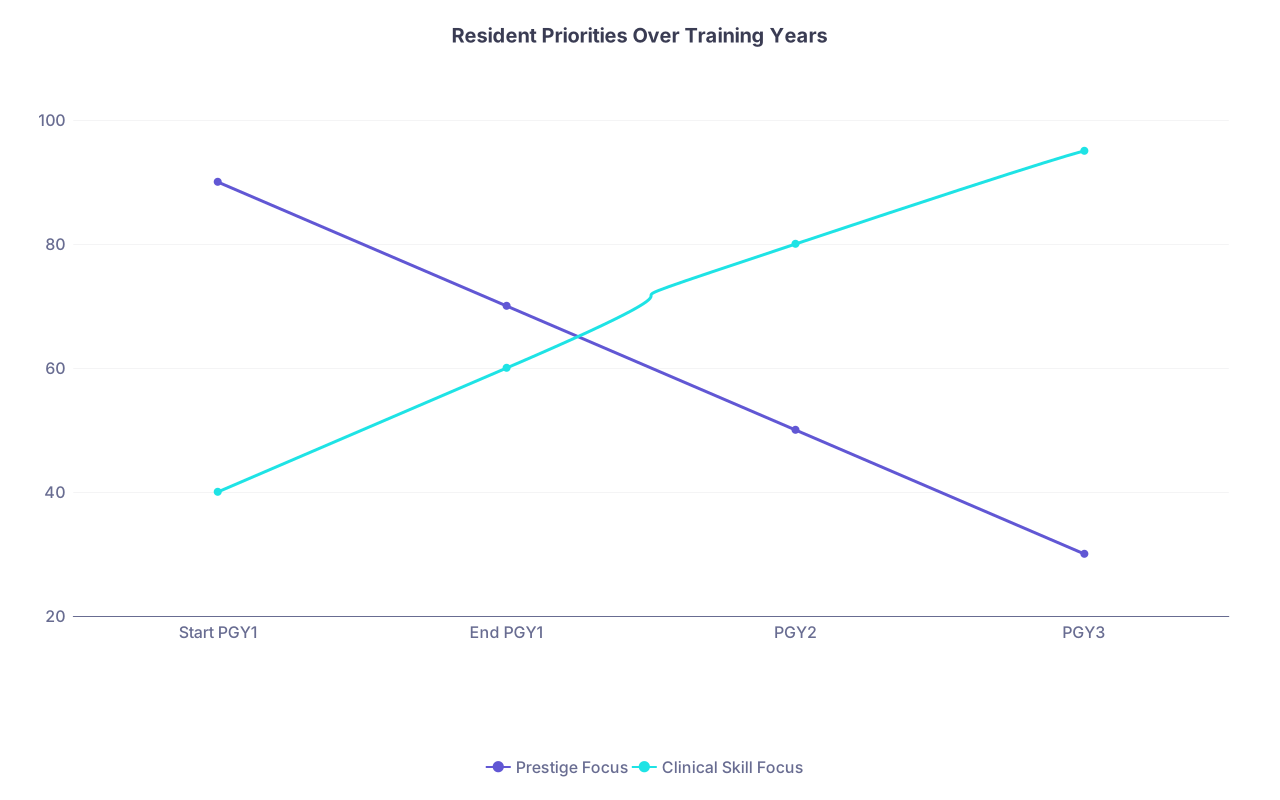
| Category | Prestige Focus | Clinical Skill Focus |
|---|---|---|
| Start PGY1 | 90 | 40 |
| End PGY1 | 70 | 60 |
| PGY2 | 50 | 80 |
| PGY3 | 30 | 95 |
You’re essentially using the academic name on your CV as a tool… while deliberately building a life that looks way more “community” after graduation.
People do this constantly. The big secret: many community groups love hiring clinically strong grads from well-known academic centers who clearly want out of academia.
You just have to:
- Finish
- Not burn bridges
- Be honest (with yourself, not necessarily everyone else) about what you want
Option 3: Try to Transfer to a More Community-Style Program
This is the nuclear option your brain is probably obsessing over at 3 a.m.:
“What if I just… leave? Am I allowed to do that? Will I be blacklisted?”
Transfers are messy, but they happen. Quietly. Every single year.
You don’t hop on ERAS again like a med student. Typically it looks like:
- You realize the fit is truly bad—not just “this is residency-hard.”
- You talk (carefully) with a trusted program leader or faculty mentor.
- You quietly look for open PGY-2 spots or “off-cycle” positions, usually at community or smaller academic programs.
- You send a targeted application: CV, personal statement explaining the need for transfer, letters from current attendings.
- Programs with openings interview you and decide if they’ll take you.
Transfers are more likely to work if:
- You’re not on remediation or in serious trouble
- Your story is about “fit and goals” not “I hate everyone here”
- You’ve done solid clinical work and have allies in your current program
The risk: if your current program leadership is territorial or petty, they can make this hard. Some are supportive. Some are not.
The brutally honest criteria to even consider a transfer:
- You’re having sustained, significant mental health deterioration tied primarily to the culture, not just intern shock
- You can clearly articulate what you want that your current program fundamentally does not offer (e.g., less research focus, more direct faculty contact, lower malignant vibe)
- You understand you may lose some seniority or have to repeat time
- You’d rather repeat a year than stay where you are
If you’re not there, transferring might be more pain than payoff.
Option 4: Differentiate “I Hate Academia” from “I’m Burned Out and Broken”
This part’s ugly but necessary.
Sometimes what feels like “I hate academic culture” is really:
- Sleep deprivation
- Compassion fatigue
- Depression or anxiety flaring
- Zero support system in a new city
Academic culture can absolutely trigger or worsen all of that. But if you transferred tomorrow and did nothing else differently, you might still feel awful.
So before you blow everything up, do a ruthless self-check:
- Are you eating anything besides call-room graham crackers?
- When’s the last time you slept more than 5 hours two nights in a row?
- Are you isolating and doom-scrolling on your one day off instead of seeing actual human beings?
- Have you talked to a therapist who understands medical training?
- Are other co-residents also struggling with this place, or is your experience very different?
If your brain feels like it’s on fire all the time, everything will look wrong. That doesn’t mean your concerns about culture aren’t valid, but it does mean your decision-maker is fried.
Use the resources you actually have:
- Institution-provided counseling (yes, it’s often imperfect, but it’s a start)
- A therapist outside the hospital if you can swing it
- The one upper-level who’s told you, “Text me anytime, I remember how rough intern year is” and actually meant it
Get yourself even 20–30% less on edge before deciding you’ve chosen the wrong entire career trajectory.
How This Plays Out Over Time: A Rough Timeline
You’re probably terrified of this scenario:
You hate the culture → you say nothing → you’re stuck forever → you become the bitter attending everyone complains about.
That’s not how it usually goes.
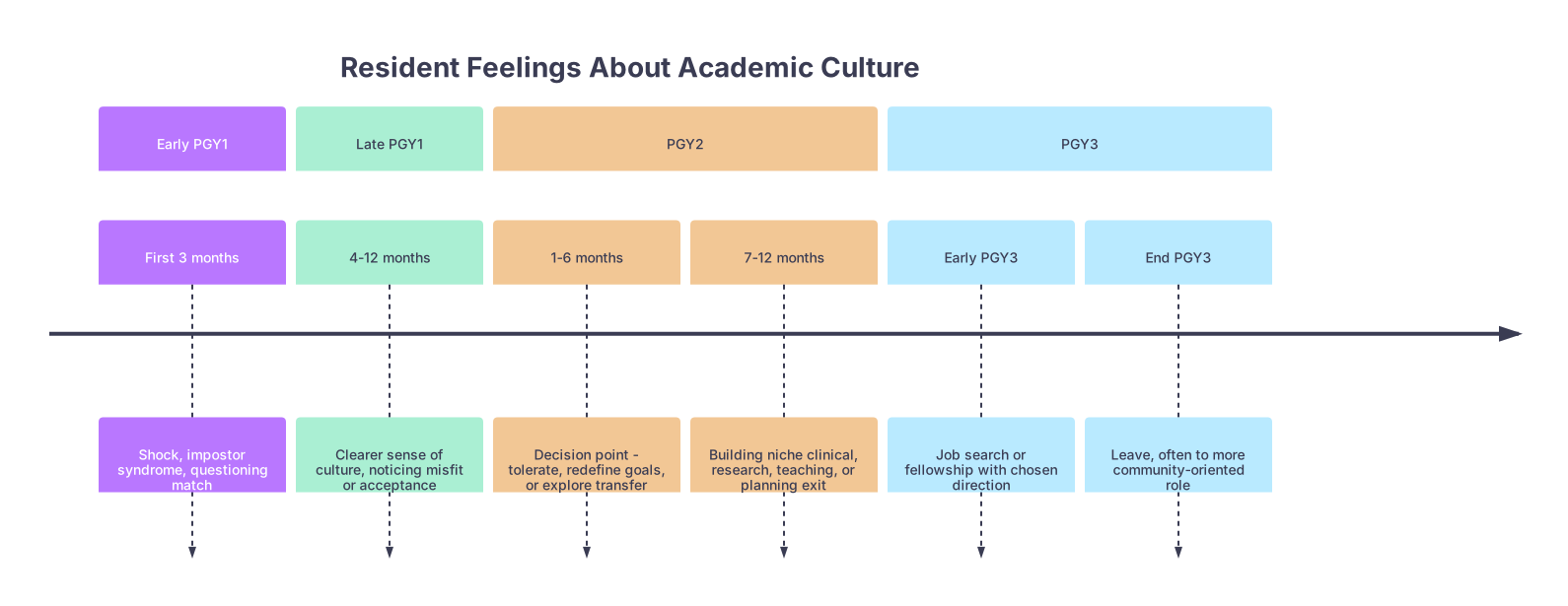
| Period | Event |
|---|---|
| Early PGY1 - First 3 months | Shock, impostor syndrome, questioning match |
| Late PGY1 - 4-12 months | Clearer sense of culture, noticing misfit or acceptance |
| PGY2 - 1-6 months | Decision point - tolerate, redefine goals, or explore transfer |
| PGY2 - 7-12 months | Building niche clinical, research, teaching, or planning exit |
| PGY3 - Early PGY3 | Job search or fellowship with chosen direction |
| PGY3 - End PGY3 | Leave, often to more community-oriented role |
Most people:
- Panic in the first 6 months
- Get a more honest picture in months 6–12
- Decide in PGY-2 whether they’ll:
- Lean in and use the resources for their own goals, or
- Mentally detach from the academic hamster wheel and just finish, or
- Try to leave early
You don’t have to decide your fate based on your first panicked months. You can watch, gather data, talk to people ahead of you, and then act.
Academic Culture You Hate vs Toxicity You Shouldn’t Tolerate
There’s a difference between:
“I don’t like research pressure and prestige games”
and
“I’m being routinely humiliated, yelled at, ignored when I raise safety concerns, or retaliated against.”
The first is misfit. The second is toxic.
If it’s toxic, the priority shifts from “how do I shape this into a career I like” to “how do I survive and get out without serious damage.”
That might mean:
- Documenting patterns (dates, times, who was present)
- Quietly talking to GME, ombuds, or a trusted chief
- Looping in mental health support
- Getting real legal advice if needed (rare, but sometimes appropriate)
And yes, people have successfully left malignant academic programs for more humane community ones. It’s not simple or quick, but you’re not required to absorb abuse because you matched there.
Realistic Way to Think About Your Options
You basically have four levers you can pull, often in combination:
- Internal shift – Redefine your personal goals (community-oriented, clinician-focused) while finishing where you are.
- External shift (micro) – Switch mentors, pick rotations that feel less “hyper-academic,” latch onto normal humans in the system.
- External shift (macro) – Transfer programs when truly necessary.
- Exit strategy – Finish, then choose a job that is the opposite of the academic environment you hate.
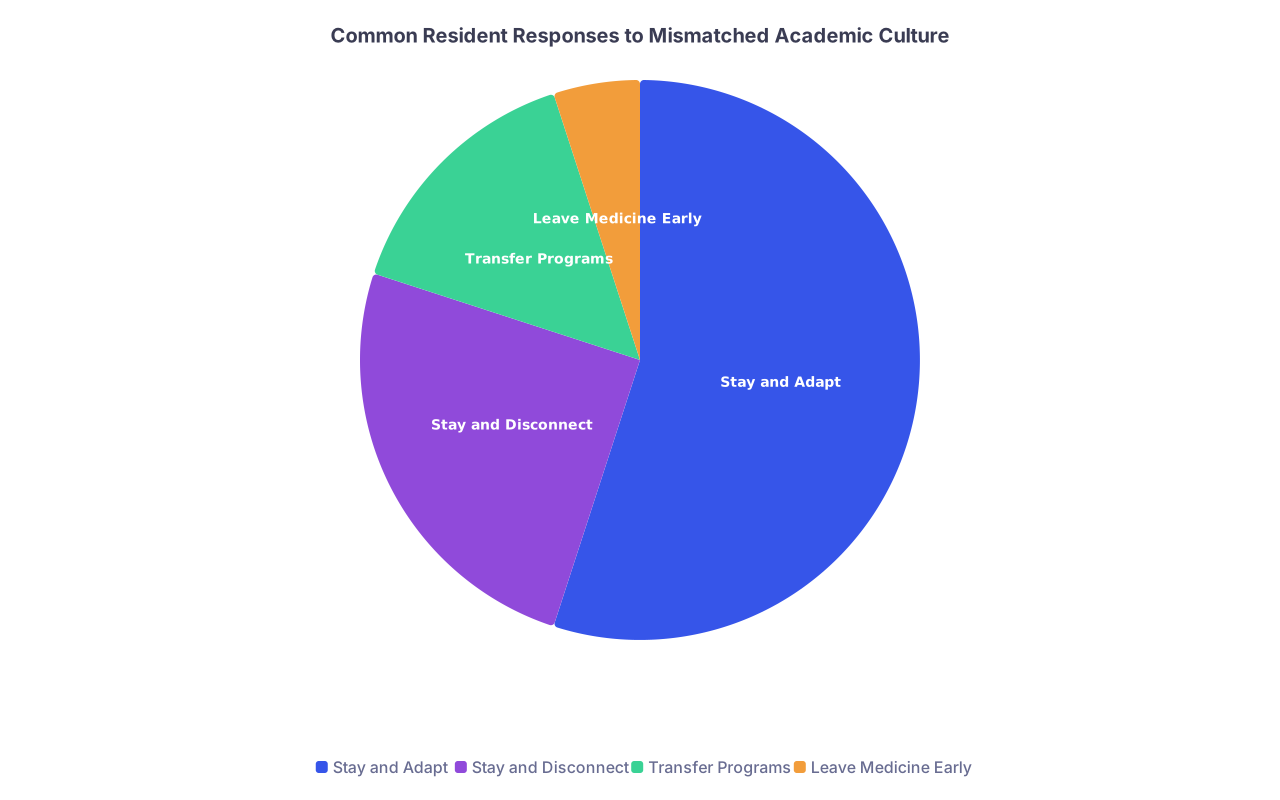
| Category | Value |
|---|---|
| Stay and Adapt | 55 |
| Stay and Disconnect | 25 |
| Transfer Programs | 15 |
| Leave Medicine Early | 5 |
Notice what’s small in that chart: leaving medicine entirely. Your anxious brain loves this catastrophic path, but in reality, most people find some way—maybe not perfect, but workable—to finish and shift into a better-fitting job.
You’re allowed to treat residency as a means to an end, not a full reflection of the life you actually want.
How Community vs Academic Plays Out After Residency
Here’s the part nobody emphasizes: your job can look radically different from your training environment.
You might:
- Train at Big University Hospital with heavy research and prestige vibes
- End up at a 150-bed community hospital where your job is: see patients, be kind, go home, maybe teach a little
Or:
- Train at a solid, chill community program
- Later join a hybrid community/academic setting with med students but minimal research expectations
Your CV doesn’t lock you into one culture. It just opens certain doors. You still choose which ones to walk through.

The fear that “if I match academic, I’m doomed to an academic life that doesn’t fit me” is just not reality. Unless you actively choose that path.
If You’re Still in the Application Phase and Terrified of This
If you’re reading this pre-Match and spiraling: “What if I accidentally rank an academic program too high and then hate it?”
Take a breath.
There are academic programs with:
- Supportive culture
- Reasonable research expectations
- Strong emphasis on teaching and clinical growth
And there are community programs with:
- Toxic leadership
- Terrible work-life balance
- No support for struggling residents
So instead of obsessing over “academic vs community” as a label, ask better questions:
- How do residents describe the vibe when faculty aren’t around?
- What happens when someone says they’re not interested in fellowship? Are they supported or subtly shamed?
- How many people leave or transfer out?
- What’s the reaction when you say you’re more community-job focused long term?

You’re not choosing “academic vs community.” You’re choosing people and patterns you’ll be stuck with at 3 a.m. on call.
Frequently Asked Questions
1. Will an academic residency “ruin” my chances of working in a laid-back community job later?
No. Honestly, if anything, it often helps. Community groups like:
- Strong clinical training
- Comfort with complex patients
- That you’ve seen a lot of pathology
What they don’t care about: whether you did five retrospective chart reviews. Plenty of academic-trained residents go straight into normal, non-academic community jobs and never touch research again.
2. If I try to transfer to a community program, will my current program sabotage me?
Sometimes programs are mature and supportive. Sometimes they’re territorial and weird. That’s why you don’t blast your intentions widely at first. You:
- Start with one trusted mentor
- Feel out their reaction
- Decide whether to involve leadership based on how much you trust them
And you don’t frame it as “this place is awful.” You frame it as “I’m realizing my long-term goals fit better with a community-focused program.”
3. How long should I “wait it out” before deciding I actually hate the culture?
At least 6–9 months, unless the environment is so toxic or unsafe that staying that long will break you. Early intern months are notoriously awful everywhere.
By around the end of PGY-1, you should have:
- A clearer sense of whether this is “residency is hard” or “this culture is totally wrong for me”
- Enough data from multiple rotations and attendings to judge the system, not just one bad month
If your gut is still screaming “wrong place” after that, it’s time to start exploring options, not just suppressing it.
4. If I stay and just do the minimum academic stuff, will I be judged by fellowship programs later?
If you want a hyper-competitive academic fellowship at a top tier institution, yes—having thin research may matter. But if:
- You’re fellowship-ambivalent
- Or interested in a more clinical fellowship (hospitalist tracks, community-focused programs, less research-heavy specialties)
then solid clinical performance, good letters, and being a normal human actually carry a lot of weight. You don’t have to win the “who has the most publications” contest to have strong options.
Open your current (or future) rank list or program list and put a star next to the places that felt the most human—not the ones with the fanciest name. Then ask yourself honestly: “If I ended up there and never did another research project, would they still treat me like I belong?”