
Derm vs ortho “who’s harder” debates are mostly wrong because they start with vibes, not data.
People keep repeating the same lazy line: “Derm is the hardest specialty to match. Period.” Or they swing the other way: “Ortho is insane now; it’s basically impossible.” Both groups are cherry‑picking anecdotes and ignoring how competitiveness actually works.
Let me be blunt:
Whether dermatology is “harder” than orthopedic surgery depends entirely on who you are, what your application looks like, and what metric you care about. There is no absolute answer. The data are messier and more interesting than the social media hot takes.
You want to understand real competitiveness? You have to separate at least four very different things:
- How strong the average matched applicant is (scores, research, etc.)
- How likely you are to match if you apply
- How programs sort applicants (Step scores vs research vs AOA vs letters)
- How many people pre‑self‑select out before applying
Once you untangle those, the derm vs ortho myth falls apart.
The Core Problem: You’re Asking the Wrong Question
When someone asks, “Is derm harder than ortho?” they usually mash together:
- “Do matched derm residents have higher stats than ortho residents?”
- “Would it be harder for me to match derm or ortho?”
- “Which specialty is more competitive this year?”
- “Which specialty has better lifestyle or pay later on?”
Those are not the same question.
Example I’ve actually heard in advising:
MS3: “I want derm but people told me it’s basically impossible, so I’m pivoting to ortho because I like procedures.”
Me: “What are your stats?”
MS3: “Step 2 is 222, no AOA, 1 poster, mid‑tier MD.”
Me: “Derm would be a bloodbath for you. Ortho also won’t be easy.”
For that student, both are rough. But the reason derm is harder for them is not because derm is cosmically “more competitive.” It’s because derm heavily screens on things they don’t have: top‑tier Step 2, honors in core rotations, significant research, home program. Ortho is brutal, but emphasizes a slightly different profile (class rank, letters from surgeons, away rotations, physical stamina for rotations, etc.).
You cannot talk about “harder” without specifying: harder for whom, using which criteria?
What the Data Actually Show: Derm vs Ortho by the Numbers
Let’s stop hand‑waving and look at some actual patterns from recent NRMP* and specialty data up through 2024.
*Exact numbers change year to year, but the patterns are consistent.
Overall patterns for US MD seniors over the last several match cycles:
| Metric | Dermatology (US MD) | Orthopedic Surgery (US MD) |
|---|---|---|
| Match rate (approx) | Lower | Slightly higher |
| Avg Step 2 of matched | Higher | Very high |
| Research output | Much higher | Moderate–high |
| Home program advantage | Huge | Huge |
| Away rotations importance | Important | Critical |
| DO / IMG access | Very limited | Limited but better than derm |
Those “lower / higher” labels gloss over the nuance, so let’s translate:
Dermatology
- Very high Step 2 cutoffs at many programs
- Extremely research‑heavy; multiple pubs/posters are the norm
- Relatively small number of positions compared to applicant interest
- Historically among the lowest match rates for US MD seniors who apply
- US DO and IMGs have a very hard time unless massively overqualified
Orthopedic surgery
- Also high Step 2 expectations (often 245+ at competitive places)
- Plenty of research helps, but depth is usually less insane than derm
- Heavy emphasis on away rotations and letters from ortho faculty
- Match rate is low, but not always as low as derm for US MDs
- DOs can and do match at a nontrivial rate, especially into former AOA programs
Now layer in the Step 1 pass/fail shift. This changed the game:
- Derm programs: leaned even harder into research, Step 2, school pedigree, AOA, and “fit” (i.e., whether they’ve seen you before)
- Ortho programs: pushed Step 2 scores up in importance but still heavily weight clinical performance, letters, and aways
So yes, if you freeze time and look at average matched applicant strength on paper, dermatology often edges out ortho. Higher Step 2 means, more research, a narrower pipeline.
But that does not equal “always harder.”
Self‑Selection: The Hidden Competitiveness Filter Everyone Ignores
Here’s a giant factor most people completely miss: who even dares to apply.
Dermatology has intense self‑selection. By the time ERAS opens:
- Students under ~235–240 Step 2 often quietly abandon derm before they ever click “apply”
- Many with weak or no research just never bother
- IMGs/DOs with anything short of unbelievably strong CVs are filtered out by their own advisors
So the denominator in derm “match rate” is already filtered. The pool is pre‑screened to be quite strong.
Orthopedic surgery? Self‑selection is still real, but the threshold is lower:
- Plenty of applicants with mid‑230s Step 2 will still roll the dice on ortho, especially if they have strong letters and aways
- DOs see ortho as at least plausible and do apply
- Some applicants cling to “I’m good with my hands, I’ll figure it out,” even with less research and mid stats
That means the ortho applicant pool is broader and more varied, with more weaker applicants included.
So when you look at “match rates,” you’re comparing:
- Derm: smaller, already‑filtered pool of strong applicants
- Ortho: larger, more heterogeneous pool, including more marginal candidates
This alone makes derm look like a black hole for mortals. But from the inside, for someone who already fits derm’s typical profile, the gap with ortho is smaller than Reddit would have you believe.
Different Gatekeepers, Different Game
Another big myth: “Competitiveness” is one thing. It isn’t. Different specialties gatekeep in different ways.
Dermatology’s Gatekeeping Style
Derm programs, in general, behave like this:
- Brutal initial filters on:
- Step 2 score
- School reputation
- AOA / class rank
- Research output (especially derm‑related)
- Strong preference for:
- Home students they know well
- Applicants who completed a research year with them
- People who rotated at their site and impressed faculty
I’ve literally heard: “Anyone without at least X publications or a research year goes in the maybe‑later pile” from a derm PD at a mid‑tier academic program. They are absolutely using research as a sorting hat.
Translation: Derm is vicious if:
- You hate research
- You’re at a school without a derm department
- You have a late awakening to the field in MS3 or early MS4
In that world, ortho may actually be more realistic for you even if derm’s “average matched Step 2” is a bit higher.
Orthopedic Surgery’s Gatekeeping Style
Ortho gatekeeping is more old‑school:
- Very heavy weight on:
- Away rotations (“sub‑Is”) performance
- Letters from ortho surgeons
- Reputation for being hardworking and coachable
- Scores matter, but:
- A strong clinical performer with slightly lower scores can still match
- A rock‑solid away at a mid‑tier program can pull you in
In ortho, I’ve seen candidates with lower Step 2 than many derm matches still land solid positions because they bled for the team on away rotations, scrubbed in on every case, showed up early, and got championed hard in letters.
So if you are:
- Moderately strong academically
- High‑energy, willing to crush aways
- Better at in‑person impression than on standardized tests
- Less interested in churning out manuscripts
Ortho competitiveness may feel different — and possibly more forgiving — than derm.
“Harder” Depends on What You Bring to the Table
Let’s walk through some realistic applicant profiles. This is where the myth breaks.
Applicant A: The Research Beast
- Step 2: 252
- Top‑20 MD school
- 12 publications, 6 in derm, 2 first‑author
- AOA, strong clinical comments, but not a procedural fanatic
For this person:
- Dermatology: Very realistic, possibly easier than ortho
- Orthopedic surgery: Also possible, but they’d be competing with people who’ve done 3 aways, have ortho‑heavy letters, and want surgery more than oxygen
For Applicant A, derm is not “impossible”; it may actually be the path of least resistance given their academic portfolio.
Applicant B: The Workhorse Clinician
- Step 2: 238
- Mid‑tier MD
- 1 QI project, no real research
- Honors in most clerkships, outstanding narrative comments
- Loved surgery, did two general surgery sub‑Is, considering ortho
For this person:
- Dermatology: Almost dead on arrival in many places (low research, borderline score)
- Orthopedic surgery: Tough but feasible with strong aways and letters
For Applicant B, the statement “derm is harder than ortho” is actually true. For them.
Applicant C: The DO Student
- COMLEX decent, Step 2: 242
- Newer DO school, limited home specialty depth
- 2 posters, 1 ortho‑related
- Good local letters
For this person:
- Dermatology: Vanishingly small chances; a few DO‑friendly derm programs exist but are insanely competitive
- Orthopedic surgery: Difficult but not impossible; there are DO‑friendly ortho spots, especially in former AOA or community programs
Here, saying “derm is harder than ortho” is almost an understatement.
Trend Lines: Competitiveness Isn’t Static
Specialty competitiveness isn’t fixed. It swings with:
- Lifestyle trends
- Reimbursement changes
- Resident work hour enforcement
- Fellowship bottlenecks
- Social media hype
Derm and ortho are both high‑tier in competitiveness now, but their reasons differ.
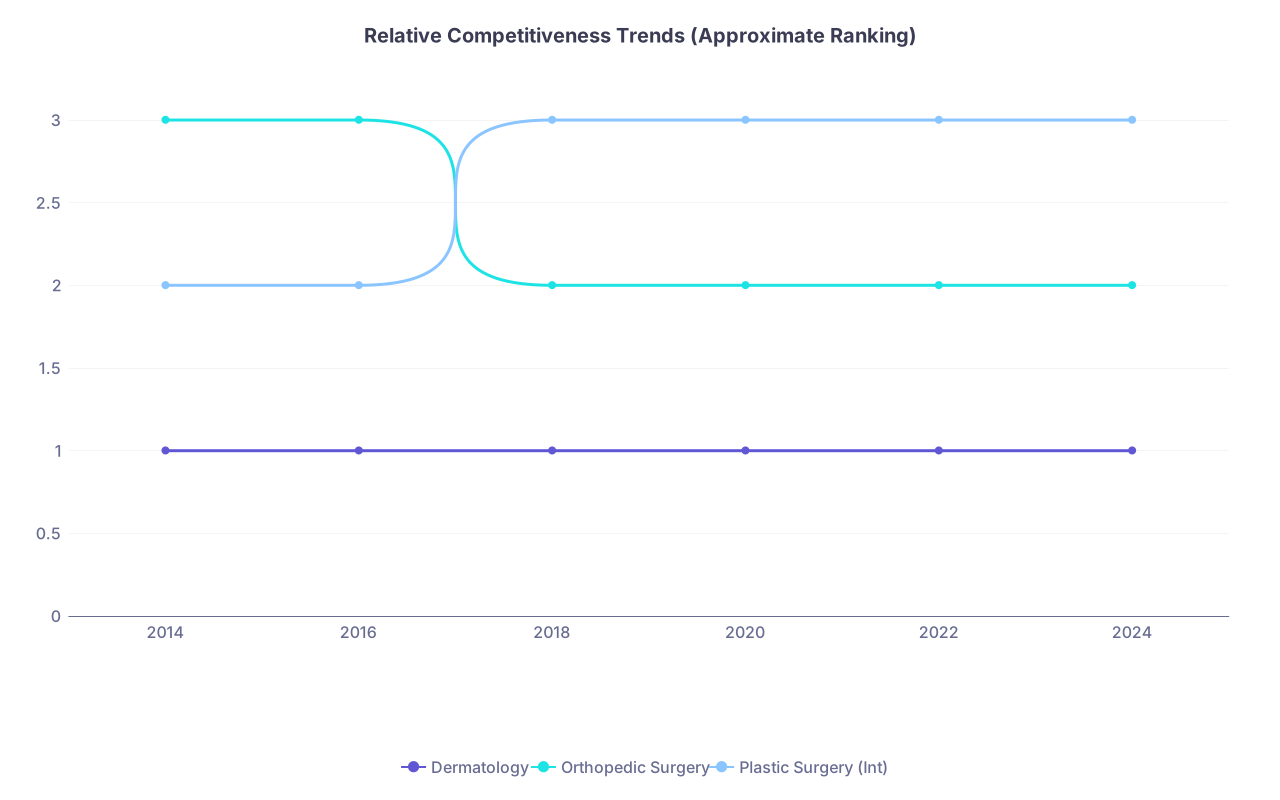
Look at the general trend over the past decade:
| Category | Dermatology | Orthopedic Surgery | Plastic Surgery (Int) |
|---|---|---|---|
| 2014 | 1 | 3 | 2 |
| 2016 | 1 | 3 | 2 |
| 2018 | 1 | 2 | 3 |
| 2020 | 1 | 2 | 3 |
| 2022 | 1 | 2 | 3 |
| 2024 | 1 | 2 | 3 |
Those numbers are relative rank positions (lower is more competitive), not exact NRMP data, but they match the broad story: derm has sat near the top for a long time. Ortho hovers close behind alongside plastics, ENT, and sometimes neurosurgery.
But again — that doesn’t tell you whether derm is harder than ortho for you. It tells you how strong your competition will be on paper.
The “Lifestyle Premium” and Why Derm Stays So Competitive
Derm isn’t just competitive because of prestige. It’s because of the lifestyle premium:
- Predictable hours
- Outpatient‑heavy
- Very high compensation
- Low call burden at many jobs
- High procedural flexibility (medical derm, cosmetics, surgery, Mohs)
Students look at that equation and think: high pay, great lifestyle, minimal scut, no 2 a.m. bowel perforations? Of course demand outstrips supply.
Now compare that with ortho:
- Long OR days, heavy call, traumatology, real physical strain
- Also great pay, strong job market, clear procedural identity
- But the lifestyle is more punishing, especially early on
So, yes, derm will likely remain numerically “more competitive” than ortho for the average US MD. It’s not because ortho is easy. It’s because derm offers a disproportionate reward for the training pain.
What You Actually Need to Ask Yourself
The derm vs ortho argument is a distraction from the real questions you should be asking:
- Based on my stats and experiences, where would I be above average for applicants?
- Does my personality fit:
- Research‑heavy, outpatient, detail‑oriented derm?
- OR‑heavy, physically demanding, team‑based ortho?
- Am I willing to:
- Take a research year?
- Move anywhere in the country?
- Apply twice if I do not match?
You also need to understand the process differences:

| Step | Description |
|---|---|
| Step 1 | MS2 MS3 |
| Step 2 | Heavy research focus |
| Step 3 | Early home derm contact |
| Step 4 | Early surgery exposure |
| Step 5 | Plan away rotations |
| Step 6 | Research year if needed |
| Step 7 | Letters from surgeons |
| Step 8 | Aways at 2 to 3 programs |
| Step 9 | Home program support |
| Step 10 | Stronger derm application |
| Step 11 | Stronger ortho application |
| Step 12 | Interested in Derm |
| Step 13 | Interested in Ortho |
If you only wake up to derm in the middle of MS3 with no research and a 230 Step 2, then yes, for you, derm is “harder than ortho” in a very practical sense. But that is about timing and portfolio, not some universal rule of the universe.
A Quick Reality Check on Match Odds
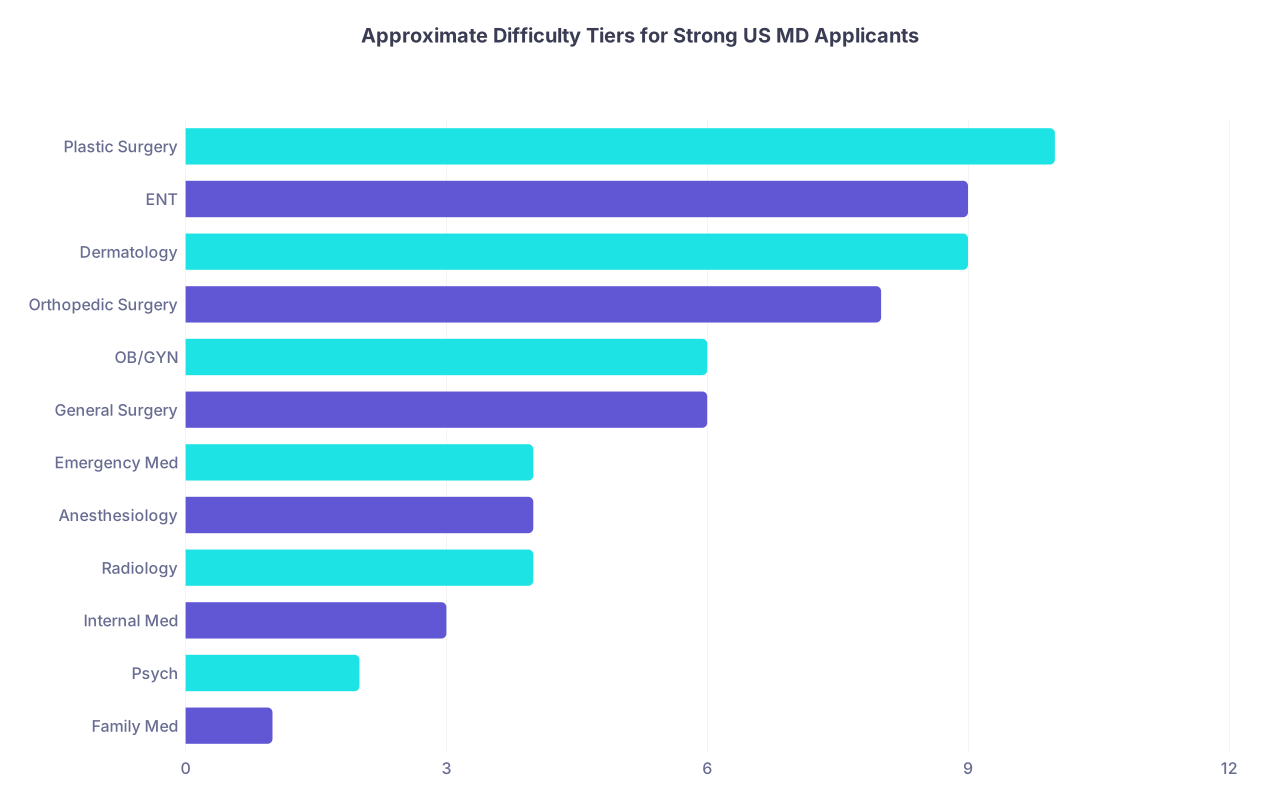
Let’s synthesize this into something more honest than “derm is harder.” Think in tiers.
| Category | Value |
|---|---|
| Family Med | 1 |
| Psych | 2 |
| Internal Med | 3 |
| Radiology | 4 |
| Anesthesiology | 4 |
| Emergency Med | 4 |
| General Surgery | 6 |
| OB/GYN | 6 |
| Orthopedic Surgery | 8 |
| Dermatology | 9 |
| ENT | 9 |
| Plastic Surgery | 10 |
Values here are rough “difficulty” tiers (1 easiest, 10 hardest) for a well‑qualified US MD.
Key point: derm and ortho both live at the sharp end of the distribution. They are more similar in competitiveness than different, compared to the rest of medicine. Arguing which is “harder” across the board is like arguing whether a 100‑meter sprinter or an Olympic gymnast is “more athletic.” The answer is: depends on what you’re measuring.
The Bottom Line
If you’ve skimmed everything else, read this:
“Derm is always harder than ortho” is lazy and wrong. Derm often has higher average matched stats, but self‑selection, different gatekeeping, and your personal profile matter more than global labels.
Competitiveness is specialty‑specific. Derm punishes lack of research, weak Step 2, and no home department. Ortho punishes weak away rotations, poor letters, and lack of surgical commitment. Which one is “harder” depends on your strengths and timing.
Stop chasing vibes. Build your application where you’re relatively strongest, understand how that specialty actually chooses people, and commit. The data should drive your decision, not the echo chamber in the call room or on TikTok.
That’s what competitiveness really means. Not who screams “hardest” the loudest, but where you stand in the actual numbers and priorities of a given field.