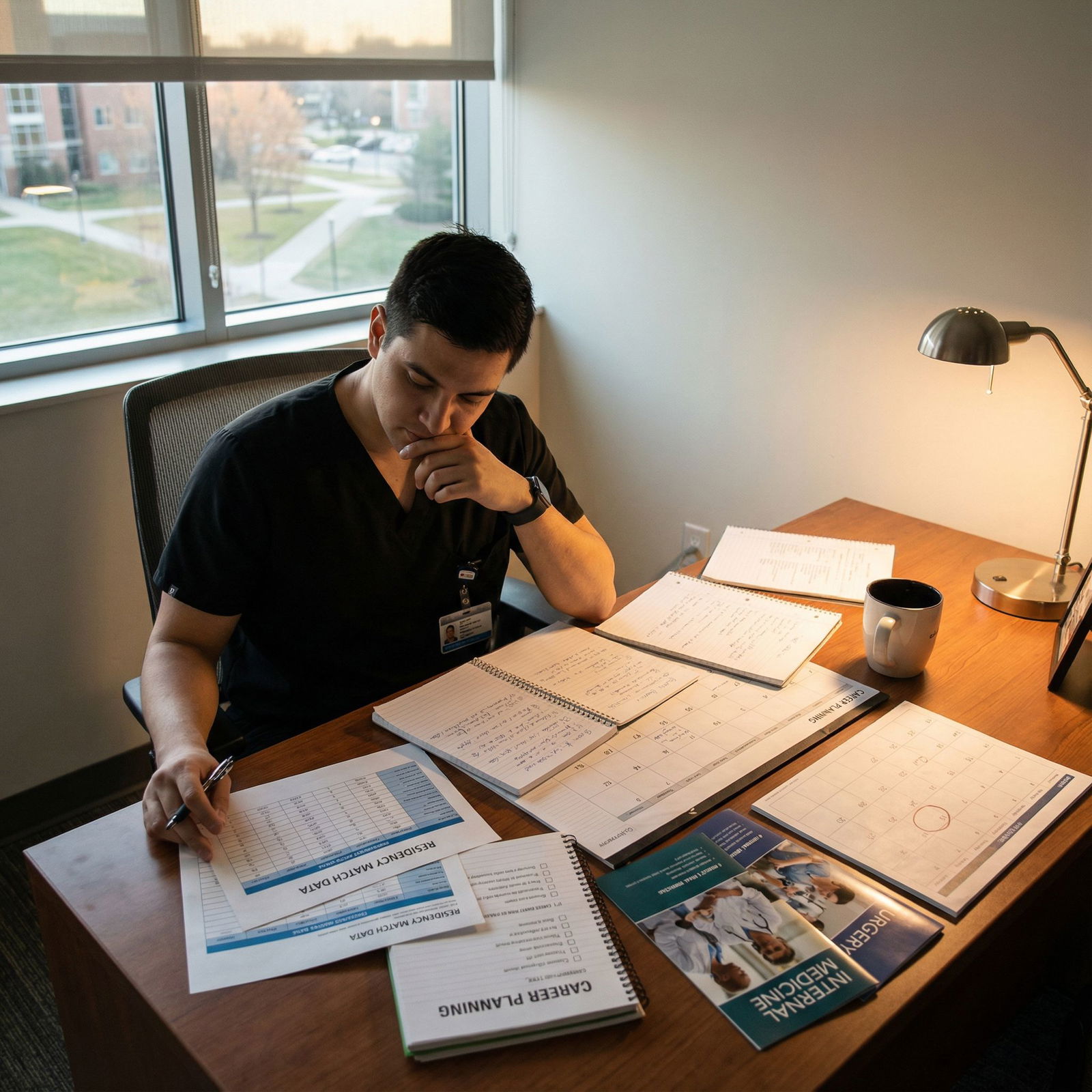
A single bad rotation evaluation almost never ruins a competitive specialty application—but it can feel like it already has.
That’s the real problem. Not just the eval itself, but the spiral that follows: “Derm is over.” “Neurosurgery is dead.” “I should switch to FM and stop embarrassing myself.” I’ve heard versions of that from classmates, interns, even residents still haunted by some scathing third‑year comment.
Let me be blunt: programs don’t believe one evaluation the way you do. They see patterns. You see a verdict.
Let’s unpack this like someone who’s been up at 2 a.m. re‑reading OASIS comments.
How Much Does One Bad Evaluation Actually Matter?
Short answer: way less than it feels like—unless it fits a pattern.
Program directors are not scrolling your file looking for The One Damning Comment that justifies tossing you. They’re trying to answer a few basic questions:
- Can you do the work?
- Will you be a problem?
- Do other people like working with you?
- Are you actually committed to this specialty?
One evaluation—especially on an early clerkship or at a site where the attending is “known to be harsh”—is background noise. The only time it becomes foreground is if everything else points in the same direction.
Think of your application like this:
| Component | How Programs Actually Treat It |
|---|---|
| Step scores | Initial screening, “can they pass boards?” |
| Clerkship grades | Pattern spotting, not single grades |
| Rotation evaluations | Context + trends, not one-off comments |
| Letters of recommendation | High-impact if specialty-specific |
| Research / productivity | Bonus for competitive fields |
One bad eval is like one crappy Yelp review in a sea of 4‑star ratings. Annoying, but not fatal.
But I know what you’re thinking: “Okay, but what if this was on the important rotation—like surgery when I want ortho, or medicine when I want cards, or a sub‑I?”
Let’s go there.
Worst-Case Scenarios You’re Probably Playing in Your Head
“What if my bad evaluation is on a core rotation in my specialty?”
Example: You want ortho. Your surgery clerkship eval says you’re “below expectations” in initiative and “seemed disinterested at times.”
Your brain: “They’ll think I hate surgery. Why would anyone rank me?”
Reality: Programs will look at a few things:
- Is this early in third year or later?
- What do later evaluations in similar settings say?
- Do your letters from surgeons say the same thing?
If your sub‑I in ortho says “hard‑working, enthusiastic, team player” and your away rotation letter is glowing, that earlier mediocre eval looks like you grew up, figured things out, or just had a mismatch with that team.
Residents and PDs all know That One Attending who never gives “outstanding” and writes stuff like, “Shows potential but needs to read more” for literally everyone.
“What if it’s my sub‑I and I totally screwed it up?”
Okay. This one stings more.
Sub‑Is (or acting internships) are closer to audition rotations. If you get:
- A lower grade than you expected, and
- Comments about professionalism or poor work ethic
…then yes, that can hurt more than a random clerkship.
But even then, it doesn’t automatically sink you. Programs weigh:
- Is this at your home institution or an away?
- Is the narrative “struggled but improved” or “never showed up”?
- Do your other sub‑I/away rotations contradict this?
If every other sub‑I/away rotation evaluation says you were excellent, they’re not going to let one lukewarm month define you.
The truly scary scenario is this: multiple red flags saying the same thing—“hard to work with,” “disengaged,” “unreliable.” That’s when people start pulling your file apart.
Not: “Didn’t ask enough questions on week 1 of surgery as an MS3.”
Clinical Evaluations vs Letters: What PDs Actually Read Closely
Let me say this clearly: narrative rotation evals and formal letters are not the same thing.
Those line‑by‑line evaluation forms with checkboxes and one‑sentence comments? People know they’re noisy. Attending saw you for two days. Fellow wrote it at midnight. Resident barely remembers your name.
Letters of recommendation are different. Those are curated. Chosen. Signed. They carry more weight.
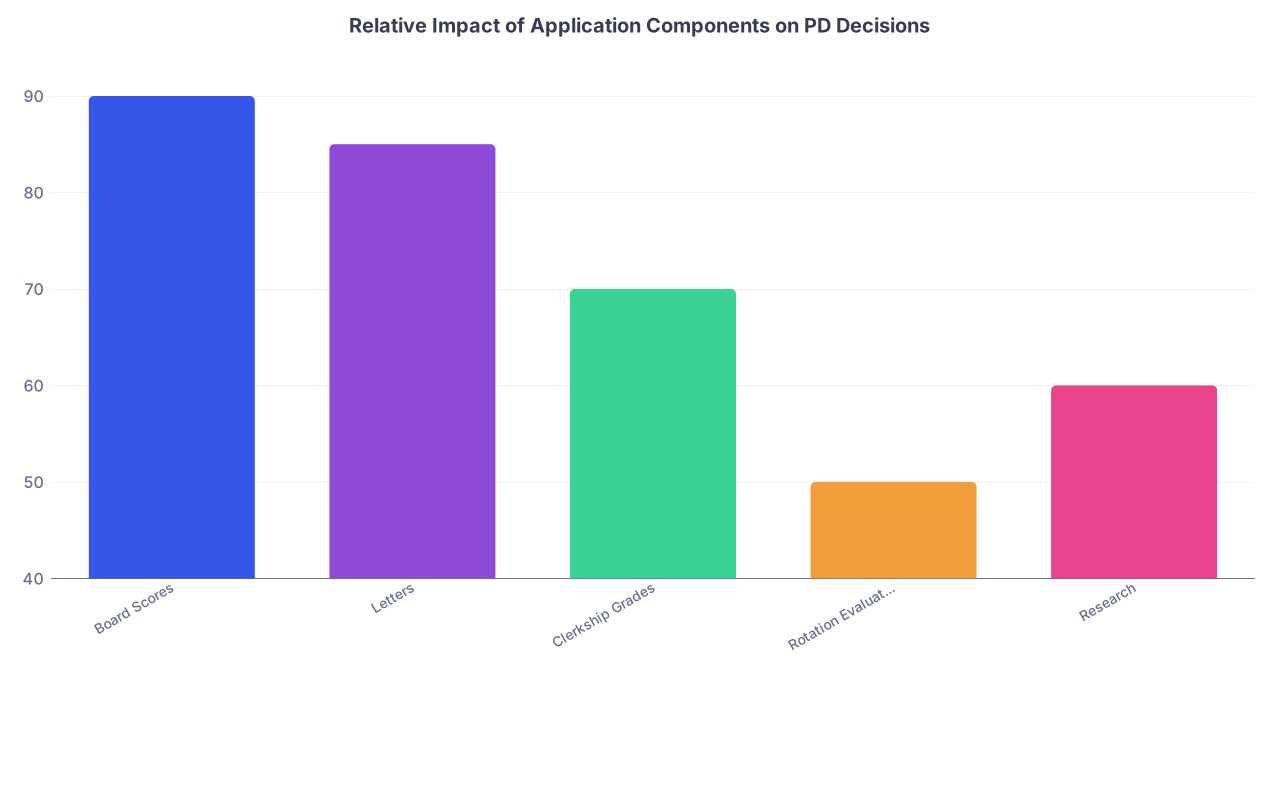
| Category | Value |
|---|---|
| Board Scores | 90 |
| Letters | 85 |
| Clerkship Grades | 70 |
| Rotation Evaluations | 50 |
| Research | 60 |
So if you had:
- A shaky eval on medicine but a glowing medicine letter from a senior faculty member
- An “average” eval on surgery but strong letters from surgical subspecialists
Programs are going to side with the letters.
I’ve literally heard a PD skim a generic comment on an eval and then say, “Eh, this sounds like Dr. X, she writes that for everyone,” and then spend five minutes going line by line through a letter instead.
So the thing to protect at all costs isn’t “every single evaluation must be perfect,” it’s:
- Get 2–3 strong letters in your specialty
- Get at least one strong letter in a core rotation (IM or surgery, depending on your field)
- Make sure those letters clearly contradict any one‑off bad narrative
How Competitive Specialties View Imperfect Evaluations
You’re not wrong: some specialties are cutthroat. But even the “hard” ones are still staffed by humans who remember what being a student felt like.
Here’s the part that nobody tells anxious applicants: competitive specialties expect some noise in applications. They know not everyone can be honors on every rotation. They know some schools have brutal grading.
| Specialty | Single Bad Eval Impact | Multiple Consistent Bad Evals |
|---|---|---|
| Dermatology | Low–moderate | High concern |
| Orthopedics | Low–moderate | High concern |
| Neurosurgery | Low–moderate | Very high concern |
| ENT | Low–moderate | High concern |
| Radiology | Low | Moderate concern |
Notice the pattern: “single eval = low–moderate” basically everywhere.
The big fear is this: “They’ll think I can’t hack it.” But they don’t decide that from a single month. They look at:
- Board performance
- Sub‑I/away performance in their field
- Whether you improved over time
- Professionalism pattern: reliable vs unreliable, kind vs toxic
You’re picturing a PD reading that one mediocre eval, pausing dramatically, and dragging your application to the “do not rank” folder. That’s just… not how this works.
When a Single Evaluation Does Become a Real Problem
Okay, I’m not going to pretend nothing ever matters. There are cases where one evaluation can hit harder:
The eval explicitly mentions serious professionalism issues
Things like: lying, not showing up, patient safety concerns, disrespect, privacy violations. Programs have to take that seriously.It leads to an official “concern” or remediation process
If your school flagged you and wrote that into your MSPE/Dean’s Letter, that’s no longer “just one eval.” That’s a documented institutional concern.The bad eval is on a specialty rotation AND your letter from that same rotation is weak or vague
Example: You want neurosurgery, your neurosurgery sub‑I eval is poor, and the letter from that attending says nothing specific. Now they wonder if the eval is the “real” opinion.
But even then, it’s not necessarily fatal. I’ve seen people match into competitive fields with:
- A professionalism “incident” that they addressed honestly and showed clear growth afterward
- A failed rotation early in MS3, remediated, followed by sustained strong performance
- A toxic attending’s ridiculous eval that was obviously out of proportion, and every other piece of their file contradicted it
Programs don’t expect flawlessness. They expect accountability and evidence you’re trending up, not down.
What You Can Do After a Bad Rotation (That Actually Helps)
You can’t erase the eval. You can control what happens next.
Here’s what I’d do, if I were in the middle of that post‑eval panic:
1. Get the story straight—objectively
Not the 3 a.m. catastrophized version. The actual version.
- What exactly did the attending say?
- Is it about knowledge, effort, personality, professionalism?
- Does it match anything you’ve heard before?
If this is the first time you’re hearing “quiet,” “slow to get started,” or “needs to speak up,” that’s one thing. If this has shown up three times, that’s a pattern you need to address.
2. Ask for direct feedback from someone you trust
Not just venting to your friends. Talk to:
- A clerkship director
- A trusted resident
- A faculty mentor in your specialty
Script it if you have to:
“I got some feedback on [rotation] that I’m worried might hurt my application to [specialty]. Can I show you the comments and ask how bad this really looks and what I can do to address it?”
You need a reality check. Not your own echo chamber of doom.
3. Over‑compensate (strategically) on future rotations
No, not by working yourself into the ground for no reason. By being intentional:
- Show up early, be prepared, volunteer for tasks
- Ask for mid‑rotation feedback and adjust visibly
- Make sure at least 2–3 later rotations generate strong evaluations that paint the opposite picture of that weak one
You’re trying to create a new, clear pattern: “Improving, teachable, reliable.”
4. Get letters that explicitly counter the bad narrative
If your bad eval said, “Seemed disengaged,” you want later letters that say things like:
- “One of the most engaged students I’ve worked with”
- “Actively sought feedback and applied it”
- “Consistently stayed late to help the team”
Readers don’t always see the raw evals, but they do see the MSPE summary and your letters. Let those be your rebuttal.
5. Decide if you need to explain it in your application
Most of the time? You don’t.
If it’s one slightly harsh eval on a sea of decent comments, do not write a dramatic personal statement paragraph about it. You’ll just spotlight something they might have skimmed right past.
If it led to:
- Remediation
- A formal concern in your MSPE
- A fail or repeat
…then yes, you’ll likely need a short, factual, non‑defensive explanation. Something like:
“During my [rotation], I received feedback that my communication with the team needed improvement. I worked closely with my advisors to develop specific strategies, which I implemented on subsequent clerkships, reflected in improved evaluations and stronger teamwork comments.”
Short. Honest. No excuses. Focus on what you did afterward.
How This Plays Out in the Real World
Here’s what I’ve actually seen:
Student A: Wants derm. Mid third‑year medicine eval says “seems uninterested in internal medicine, limited reading.” Panic. Gets two derm aways, crushes them, gets excellent letters. MSPE shows one lukewarm comment in a sea of good ones. Matched derm at a good academic program.
Student B: Wants ortho. Surgery clerkship director decides “this class is weak” and grades half of them lower than usual. Narrative comments are vague. School explains in MSPE that surgery grading was unusually harsh that year. Student B has strong ortho letters, solid Step, matches ortho.
Student C: Wants neurosurgery. Has a legitimate professionalism issue on an early rotation—showed up late repeatedly, documented. Meets with dean, writes reflection, then goes on to have spotless performance and strong faculty advocates who directly mention his growth. Still matches neurosurgery. Hard road, but not impossible.
You know who truly gets wrecked? The person who gives up early and quietly self‑selects out. “I blew that eval, so I’ll just apply IM even though I really wanted ENT.” They never even test whether their record was “too damaged.” They just assume.
A Quick Reality Check: How Much They Actually See
One more thing that will calm at least 10% of your anxiety: most programs don’t read every line of every evaluation.
They usually see:
- MSPE / Dean’s Letter summary of clerkship performance
- Grade distributions (Honors/High Pass/Pass)
- Selected comments pulled into the MSPE
- Your letters of recommendation
They’re not opening each individual OASIS evaluation and reading every resident’s comments from week 2 of your OB rotation. They don’t have time.
So unless your school specifically pulls that one harsh comment into your MSPE summary, many readers will never even see the full ugly paragraph you’re obsessing over.

| Step | Description |
|---|---|
| Step 1 | Receive Application |
| Step 2 | Screen Scores and Grades |
| Step 3 | Read MSPE Summary |
| Step 4 | Scan Letters |
| Step 5 | Invite to Interview |
| Step 6 | Ask For More Context |
| Step 7 | Any serious concerns |
Notice what’s not in there: “Read every single line of every rotation evaluation and overanalyze one harsh comment from MS3 psych.”
Turning the Anxiety Into Something You Can Use
I’m not going to tell you “don’t worry.” You’re clearly worrying. So use it.
Let the discomfort from that bad eval push you to:
- Ask for more real‑time feedback
- Be more intentional about team dynamics
- Choose letter writers who actually watched you work and like you
- Build redundancy: multiple strong rotations in your target specialty, not just one
Your goal isn’t perfection. It’s a convincing story: “I work hard, I’m teachable, I care about this specialty, and people like working with me.”
One bad month doesn’t destroy that story. It just means you have to write the next chapters a little more consciously.
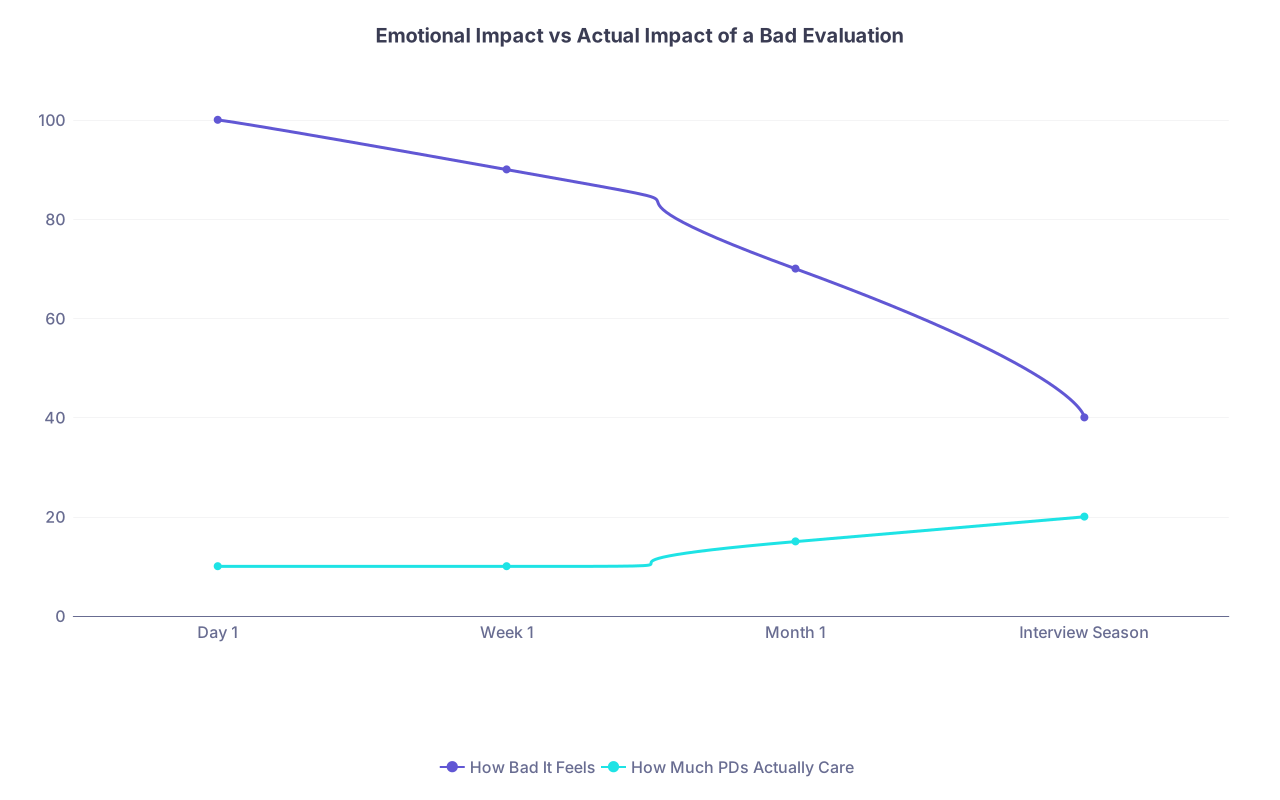
| Category | How Bad It Feels | How Much PDs Actually Care |
|---|---|---|
| Day 1 | 100 | 10 |
| Week 1 | 90 | 10 |
| Month 1 | 70 | 15 |
| Interview Season | 40 | 20 |
FAQ (Exactly 5 Questions)
1. Should I ask the attending to change or revise a bad evaluation?
Usually no. Asking them to change it directly can come off as defensive unless there was a clear factual error (wrong student, wrong rotation, obviously mistaken details). What you can do is email or meet with them to ask for clarification: “I saw your feedback and want to improve—can you share specific examples or advice?” Sometimes they’ll realize they were harsher than intended and soften future comments or at least think better of you for taking it seriously.
2. Will programs see every single resident comment from my rotation?
Often no. Many schools aggregate comments and only some excerpts end up in the MSPE. The full raw comments may technically be part of your school’s internal file, but programs are usually reading the summary, not digging through every comment unless something major is flagged. Ask your dean’s office what actually appears in your MSPE—that’s what most PDs see.
3. Do I need to mention a bad evaluation in my personal statement?
Almost never. You don’t highlight flaws that most readers will either miss or not care about. You only explain things that are (1) significant enough to show up in your MSPE as a concern or (2) result in a gap, failure, or remediation. Even then, keep it short and focus on what you changed, not on defending yourself.
4. Is it better to avoid asking a harsh attending for a letter, even if they’re big in the field?
If you’re not sure they’ll write you a strong letter, don’t ask. A “big name” weak letter is poison in competitive specialties. Programs can smell a lukewarm letter instantly—vague praise, no specifics, “met expectations.” You’re much better off with a strong, detailed letter from a mid‑level or less‑famous faculty member who genuinely liked working with you.
5. Will one lower clerkship grade (like Pass instead of Honors) in my specialty sink me?
No. People match derm, ortho, neurosurg, ENT, you name it, with a random Pass on a related clerkship. What matters is the overall picture: strong performance on sub‑I and aways, good letters, decent boards, and clear interest. One off‑grade doesn’t kill an application. A pattern of mediocrity with no standout rotations can hurt—but that’s different from one rough month.
Key points to walk away with:
- One bad rotation evaluation, by itself, almost never kills a competitive specialty application; patterns do.
- Letters of recommendation, sub‑I/away performance, and your MSPE summary matter far more than a single harsh comment.
- The smartest move after a bad eval isn’t panic—it’s targeted damage control: honest feedback, visible improvement, and strong later rotations that rewrite the story.