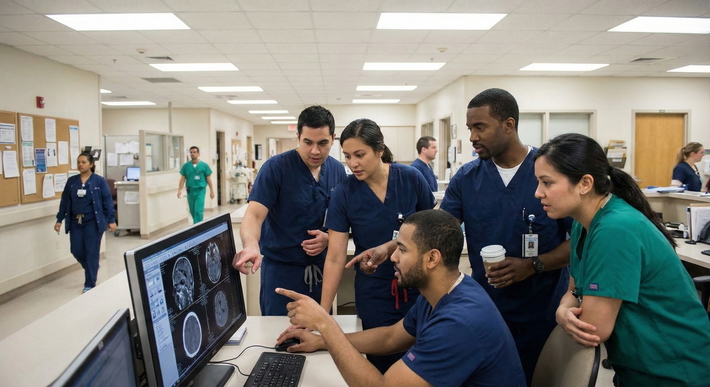
The fear of going unmatched in a competitive specialty is not irrational—but it’s also not the full story.
You’re not crazy for being scared. You’re not dramatic. You’re looking at match data, reading horror stories on Reddit, hearing about the brilliant M4 who didn’t match derm, and your brain is doing the math:
“If they didn’t match… what chance do I have?”
Let me be blunt: yes, people with strong applications go unmatched in tough specialties every year. And no, that doesn’t mean you’re automatically doomed if you aim high. The reality sits in that uncomfortable gray area you and I both hate—where risk is real but manageable if you stop pretending and actually plan for it.
Let’s unpack this like someone who’s trying to sleep at 2 a.m. the night before ERAS opens.
How Real Is the Risk of Going Unmatched in a Competitive Specialty?
The risk is real enough that you should respect it, but not so overwhelming that you have to abandon every dream and default to a “safe” backup specialty you’ll resent.
When people say “competitive specialities,” they usually mean things like:
- Dermatology
- Plastic surgery (integrated)
- Orthopedic surgery
- Neurosurgery
- ENT
- Ophthalmology
- Some fellowship-only routes (like IR through diagnostic radiology, or certain road specialties at top programs)
These fields have a painful combination: fewer positions and lots of highly motivated applicants throwing everything they have at them.
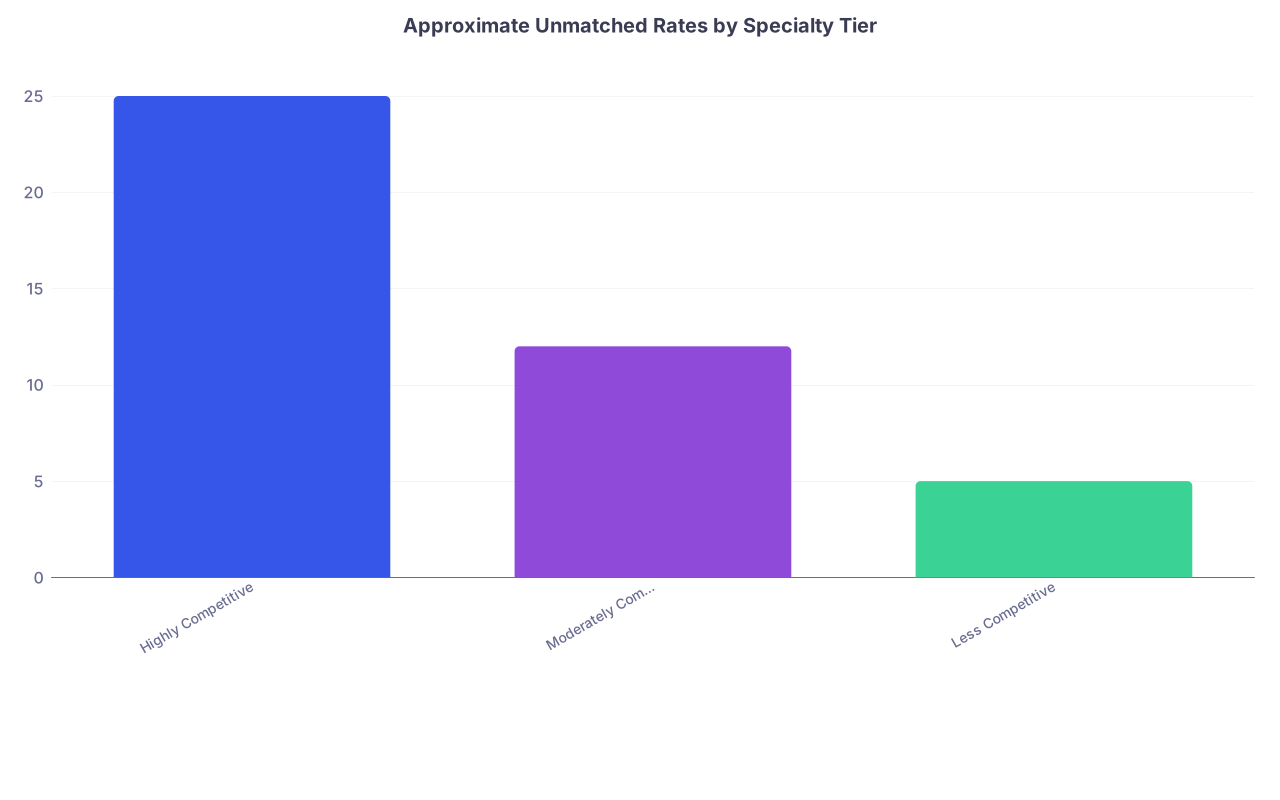
| Category | Value |
|---|---|
| Highly Competitive | 25 |
| Moderately Competitive | 12 |
| Less Competitive | 5 |
No, those numbers aren’t exact for every year or every specialty, but that’s the vibe: the more competitive the specialty, the more real the unmatched risk—especially if your application is mediocre or you don’t play the strategy game well.
What you’re actually asking though is more personal:
“With my stats and situation, how likely am I to go unmatched if I chase this field?”
That’s where everyone suddenly gets vague and says “It depends.” I hate that answer too. So let’s talk about what it really depends on.
The Brutally Honest Risk Factors (That Actually Move the Needle)
You already know the clichés: “board scores, research, letters.” Let me narrow it down to what I’ve actually seen make or break competitive applications.
1. Board Scores and Class Performance
Step 1 is pass/fail now, but don’t kid yourself—programs still care about signals of performance.
Step 2 CK is the new numerical gatekeeper. For the toughest fields, weak Step 2 scores will absolutely hurt you. Not always fatal, but it moves you from “auto-interview” bucket to “maybe if there’s a compelling story.”
Rough breakdown for very competitive fields (ballpark, not religion):
| Category | Step 2 CK Score |
|---|---|
| Strong for Top Programs | ≥ 255 |
| Competitive | 245–254 |
| Borderline | 235–244 |
| Concerning | < 235 |
I’ve watched applicants with 260+ still stress because “someone on SDN had 270 and didn’t match.” Don’t do that to yourself. Above a certain point, your score helps but doesn’t guarantee anything. Below a certain point, your score doesn’t kill you if other things are stellar.
But if you’re chasing derm with a 228 and no story behind it? Yeah. Risk just went way up.
2. School Type and Home Program
This part’s ugly but true. Coming from:
- A mid/lower-ranked MD school with a strong home program in your specialty = much better position
- A DO school or an international school without a home program in your specialty = uphill climb, but not automatically impossible
Home program matters a lot more than people admit. Having faculty who know you, can pick up the phone, and have a track record of placing students in that specialty? That absolutely reduces your unmatched risk.
3. Letters of Recommendation (Real Ones, Not Generic Filler)
The difference between “strong letter” and actually strong letter is insane.
“Hardworking, pleasant, shows promise” vs. “Top 1–2% of students I’ve worked with in 10 years, took independent ownership, essential to our research project, will be a star in [specialty]” — those are not in the same galaxy.
For very competitive fields, not having at least 2–3 glowing specialty-specific letters is a real liability. I’ve seen applicants with solid stats get fewer interviews than expected because their letters were just fine.
4. Research That Actually Signals Commitment
You don’t need 20 publications. But if you’re chasing derm, plastics, neurosurgery, etc., and you have zero research in the field and no sustained involvement? That absolutely makes program directors ask: “Are they serious about this or just trying it out?”
On the flip side, I’ve watched people with average scores but years of research in that field, posters at national meetings, and a PI going to bat for them still match very well. Not always to the biggest “name” program, but they match.
The Part You’re Really Afraid to Say Out Loud
You’re scared of this scenario:
You go all-in on a hard specialty.
You don’t match.
SOAP is chaos. You end up in something you never wanted at some random program. Or worse—no position at all.
Your classmates move on. You feel stuck, behind, embarrassed. You start rewriting your own story: “I wasn’t good enough.”
Let’s walk through how that actually plays out in real life instead of the nightmare version in your head.

| Step | Description |
|---|---|
| Step 1 | Choose Tough Specialty |
| Step 2 | Targeted Application |
| Step 3 | Underapply or Overshoot |
| Step 4 | Start Residency |
| Step 5 | SOAP or Reapply |
| Step 6 | Research/Prelim Year |
| Step 7 | Apply to Different Field |
| Step 8 | Realistic Strategy? |
| Step 9 | Match Status |
| Step 10 | Reevaluate Goals |
What I’ve actually seen:
- People go unmatched in ortho → do a prelim year in surgery or a research year → match ortho on second try
- People go unmatched in derm → pivot to internal medicine or peds → become excellent subspecialists, still very happy clinically
- People SOAP into fields they hadn’t considered → some end up surprisingly content, some reapply later, some change paths down the line
Is it painful in the moment? Extremely. Is your career over? Absolutely not.
The worst part is the shame, not the detour. And that shame is mostly in your head and your immediate social circle. Outsiders? They see: “Oh, you’re a resident now.”
The Hidden Risk: Pretending There’s No Risk
You know what actually terrifies me more than the raw unmatched stats? The people who:
- Apply to 25 programs in neurosurgery “because my advisor said I’m strong” when everyone else applies to 70+
- Don’t have a backup plan because “I don’t want to manifest failure”
- Refuse to even consider what they’d do if they didn’t match because it’s “too stressful” to think about
That’s how you turn a manageable risk into a disaster.
If you’re going to chase a tough specialty, you need to act like a person who understands odds, not like a lottery ticket buyer hoping the universe rewards passion.
That means:
- Applying broadly (geographically and program prestige-wise)
- Actually listening when honest advisors say “Your risk is higher than average”
- Being willing to submit a dual-application strategy if your situation calls for it
How to Actually Reduce Your Unmatched Risk (Without Completely Selling Your Soul)
You can’t eliminate risk. But you can stack the deck so you’re not just crossing your fingers.
1. Get a Ruthlessly Honest Reality Check
Not from your friend. Not from your mom.
From someone who knows that specialty and has seen multiple cycles.
Show them:
- Your Step 2 score
- Your transcript/rank if available
- Your research CV
- Your letters situation (even if you only know who’s writing them, not the content)
Ask them to categorize you honestly: strong, average, or high-risk for that specialty. Tell them you want blunt, not kind.
Then listen. If three different people familiar with that specialty tell you the same thing, believe them.
2. Structure a Real Backup Strategy (Not the Fake Kind)
A “backup” is not just a vibes thing. It needs specifics.
There are a few versions:
Dual-apply in the same cycle
Example: Apply to both diagnostic radiology and internal medicine, or both gen surg and prelim/transitional years.
This is messy but sometimes justified if your risk profile is high and you can craft believable narratives for both.Primary-apply + built-in prelim year
Very common in surgical subspecialties where you might do a prelim surgery year and reapply. This is more realistic than people think.Apply once. If unmatched, do a research/prelim year, then reapply
This is often the cleanest plan for those who really want that tough specialty and aren’t ready to pivot.
Where people screw this up is pretending they’re “keeping options open” but not actually:
- Getting any exposure to their backup field
- Securing letters from that field
- Thinking about how they’d explain their pivot if needed
You don’t have to love your backup. You just have to not hate it and be able to see yourself functioning there if Plan A goes sideways.
The Math Problem You’re Secretly Doing in Your Head
You’re trying to compute:
“Is it better to be a little less happy in a more certain specialty, or risk being unmatched (or delayed) for a chance at something I really want?”
There’s no neat formula. But here’s how I’ve watched people regret things:
They regret lying to themselves about the odds, not the risk itself.
If you go after derm fully aware it might take a research year and you accept that up front, then if you have to do that year, it’s annoying but expected.
If you go after derm thinking “My 238 is fine; it’ll work out, I’m manifesting,” and then you go unmatched with no plan B? That’s when the regret stings. Not because you aimed high. Because you refused to see reality.
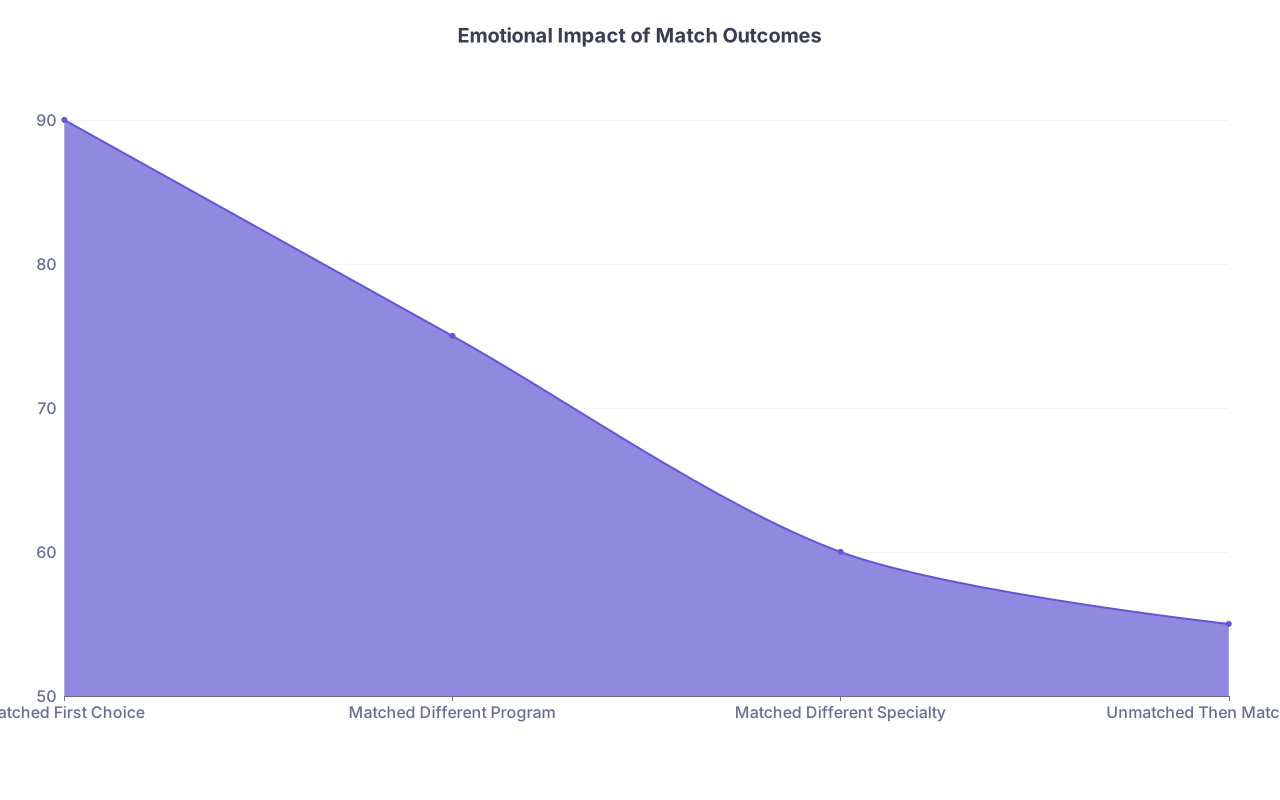
| Category | Value |
|---|---|
| Matched First Choice | 90 |
| Matched Different Program | 75 |
| Matched Different Specialty | 60 |
| Unmatched Then Matched Later | 55 |
(Think of those values as “average long-term satisfaction,” not exact data. People adapt more than you think.)
Career satisfaction is not a single moment on Match Day. It’s years of daily work, team dynamics, location, lifestyle, and your own growth. People dramatically overestimate how much specialty alone controls their happiness.
When You Should Seriously Rethink Chasing the Tough Specialty
I’m not going to tell you “follow your dreams no matter what.” That’s how people end up in absolute chaos.
You should strongly consider pivoting or dual-applying if most of these are true:
- Your Step 2 is significantly below average for that specialty
- You have no home program and no meaningful mentorship in that field
- Your research is minimal or absent in that specialty
- Multiple honest advisors have called your risk “very high”
- You aren’t willing to do a research year, prelim year, or reapply
That doesn’t mean you must give it up. It means if you insist on going all-in with no backup, you’re doing it with your eyes closed. And then yes—the risk of going unmatched for multiple cycles becomes very real.
What If You Already Feel Behind?
You might be reading this as an M4 thinking,
“I don’t have the research. My score’s okay but not amazing. I started late. Am I done?”
You’re not done. But you need to stop pretending this is a normal, low-risk application.
You can:
- Take a funded research year in that specialty and build relationships, projects, and letters
- Do a prelim year in something adjacent (like surgery before ortho/plastics/neurosurg) and reapply with stronger letters and clinical stories
- Pivot to a related field that still gives you pieces of what you want (e.g., allergy/immunology after peds or IM instead of derm; PM&R instead of ortho; IR after DR)
I’ve watched “late bloomers” match into fields people told them were unrealistic—but only because they actually did the work to fix their application, not just “hope the right program sees my passion.”
The Real Answer to “How Scared Should I Be?”
Scared enough to:
- Get brutally honest advising
- Apply strategically and widely
- Have a backup that’s more than just a thought
- Be willing to adjust plans if the first try doesn’t work
Not so scared that you:
- Automatically default to a specialty you low-key hate
- Assume you’re unworthy because you’re not a 260+ research machine
- Forget that many, many people with imperfect applications still match into tough fields every single year
Your fear is trying to protect you from humiliation, not from failure.
Failure is survivable. Humiliation just feels unbearable. And yet six months into residency, nobody is talking about who matched where. They’re too busy surviving call.
FAQ: Anxiety Edition (Because You’re Still Spiral-Planning)
1. If I don’t match the first time in a competitive specialty, are my chances basically dead?
No. They’re not automatically dead, but they change. If you go unmatched and then do nothing to improve your application, yeah, the risk skyrockets. But if you take a real research year, get strong new letters, show commitment, and have mentors advocating for you, you absolutely can match the second time. Programs notice growth and persistence. They don’t love unexplained stagnation.
2. Am I stupid for even considering a hard specialty with an average Step 2 score?
You’re not stupid. You’re just in a higher-risk zone. If your Step 2 is middle-of-the-road, your margin for error shrinks. That means your letters, research, and networking matter even more. It may also mean you need to be more open to doing a research year or dual-applying. It’s not “you’re dumb for trying,” it’s “you’re reckless if you try without a plan.”
3. Should I dual-apply if I’m anxious, even if my mentors say I’m competitive?
It depends on whether your anxiety is grounded or catastrophic. If three honest mentors in that specialty look at your file and say, “You’re solid, you don’t need a backup,” it might be okay to trust them. But if you’re coming from a weaker school situation, no home program, or you really can’t emotionally handle an unmatched year, dual-applying isn’t crazy. Just don’t half-ass both narratives.
4. Is it better to match into a “safe” specialty I’m lukewarm about than risk going unmatched for one I love?
“Better” depends on your tolerance for risk and delay. Some people would rather be working in a less-than-ideal field than sit out for a research/prelim year. Others would regret not at least trying once. What people regret most later usually isn’t the field—it’s lack of honesty with themselves. If you’d always wonder “what if,” consider at least one serious attempt at your dream field with a backup plan.
5. How many programs should I apply to in a competitive specialty to feel safer?
There’s no magic number, but underapplying kills people every year. For high-competition specialties, it’s normal to apply to 60–80+ programs or basically everything you’d realistically attend. If you’re high-risk, you don’t get to be picky on geography or prestige. Fewer applications = higher unmatched risk. It’s that simple.
6. What’s one concrete thing I can do this week to lower my unmatched risk?
Email or talk to two faculty in your target specialty at your school (or nearby programs if you don’t have a home department). Show them your CV, scores, and a draft of your personal statement. Ask directly: “Realistically, where do I stand, and what can I do in the next 3–6 months to make myself harder to reject?” Then shut up, listen, and write down everything they say. That advice is way more valuable than another hour of doomscrolling Reddit.
Open your application spreadsheet or ERAS account today and add one new column: “Plan if I don’t match.” Fill it with something real—not “panic.” Then ask yourself: with that plan in place, am I willing to take this shot?