
It’s late. Your ERAS portal is open. You’re staring at the Letters of Recommendation section like it personally offended you.
Three names. Maybe four. None of them are “famous.” None are the residency program director of your dream specialty. No one’s the department chair. One of them is from a community preceptor who’s never published anything. Another is from a hospitalist because the cardiologist you worked with “doesn’t usually write letters.”
And the thought hits you, hard:
“Everyone else has huge names. I’m dead in the water, right?”
Let me walk straight into the nightmare with you, because I know exactly how this spirals.
The Fear: “No Big Names = No Match”
The story in your head probably sounds something like this:
- Programs only care about “brand-name” letter writers
- If your letter isn’t from someone in the specialty, it barely counts
- People on Reddit all have letters from PDs, Chairs, fellowship directors
- Your letters are from “regular” attendings, community docs, and maybe even not in your chosen specialty
So your brain concludes:
“I’m clearly less competitive. They’ll take one look, see no big names, and toss my app.”
Here’s the first hard truth: big-name letters help mostly when everything else is already strong. They’re like seasoning, not the entire meal.
And the second truth: a generic, bland letter from a famous surgeon is worse than a detailed, enthusiastic letter from a community internist who actually knows you.
I’ve seen applicants sink themselves by chasing names instead of substance. PDs roll their eyes at weak letters that read like, “I have known Student X for two weeks and they were punctual and professional.” From a Chair. That letter gets ignored.
What gets read? Concrete, detailed letters with real stories.
What Programs Actually Care About in Letters
Here’s what program directors are looking for when they read letters. Notice what’s missing: “celebrity author.”
| What PDs Actually Value | What Applicants Obsess Over |
|---|---|
| Specific examples of work | Writer's academic title |
| Clinical competence | Is this person 'famous'? |
| Work ethic and reliability | Number of publications they have |
| Teamwork and communication | If they know the PD personally |
| Fit for the specialty | Institution name |
They care about:
- Do you show up, do the work, and not scare nurses and patients?
- Are you someone they’d trust at 3 a.m. with a crashing patient?
- Can you function on a team without drama?
- Do you actually seem interested in and suited for this specialty?
A letter that says:
“She stayed late every night to help call families, volunteered to pick up extra admissions, and was the only student I’ve trusted to independently call consults.”
…from Dr. Completely Unknown at a community site is gold.
A letter that says:
“He was a pleasure to work with. He was always prepared, did well on rounds, and was friendly.”
…from a Top-5 academic PD is cardboard. And PDs see that immediately.
But What If None of My Letters Are in My Specialty?
This is the part that really spikes the anxiety, especially in competitive fields (derm, ortho, ENT, plastics, ophtho, neurosurg, rad onc, etc.):
“I’m applying [insert cutthroat specialty], and my letters are medicine + family med + hospitalist + random research mentor. I’m done, right?”
No. You’re not automatically doomed. But there’s nuance.
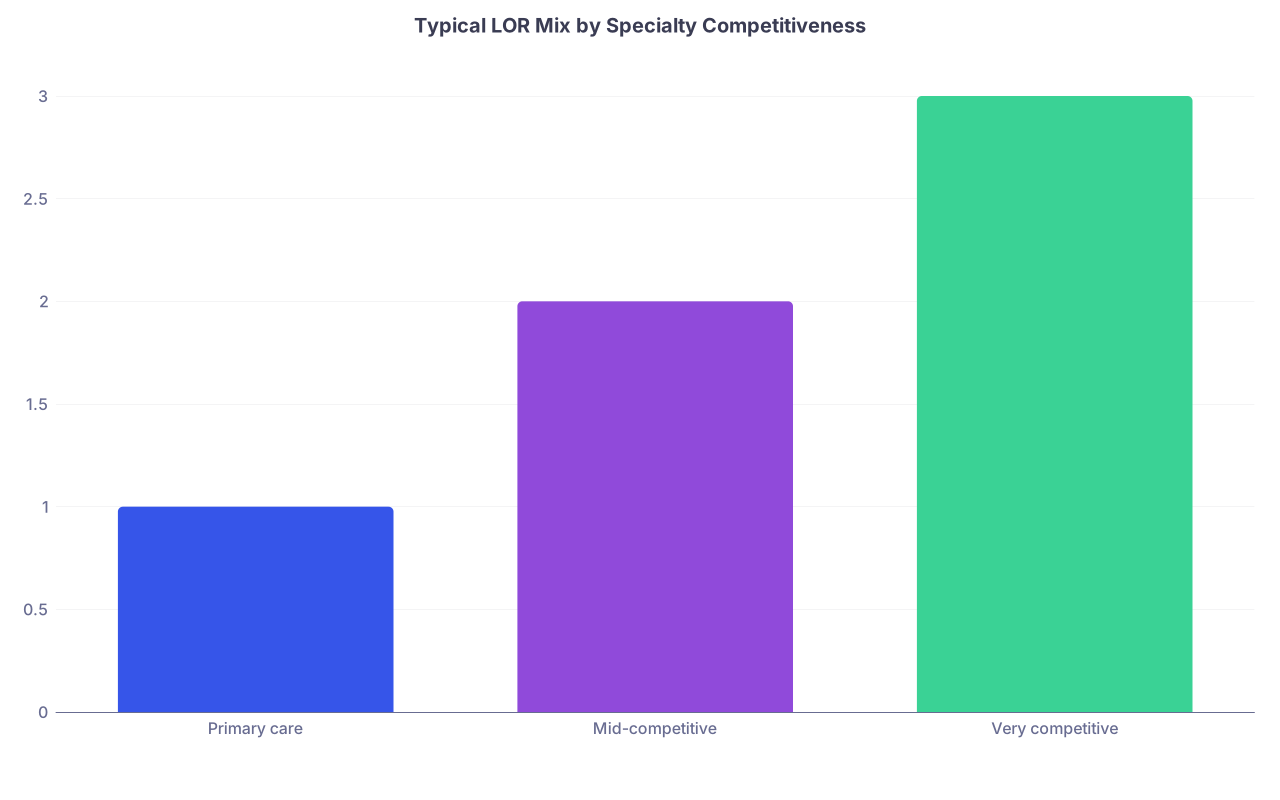
| Category | Value |
|---|---|
| Primary care | 1 |
| Mid-competitive | 2 |
| Very competitive | 3 |
Roughly how many same-specialty letters people aim for (not always get):
- Primary care (FM, IM, peds): 1 specialty letter is usually fine
- Mid-competitive (EM, OB/GYN, anesthesia, neuro, psych, gen surg): 1–2 specialty letters is recommended
- Very competitive (ortho, derm, ENT, neurosurg, plastics, ophtho, rad onc): They like 2–3 specialty letters, especially from away rotations
But “recommended” ≠ “automatic rejection if you don’t have it.”
Applicants:
- Change specialties late
- Don’t get to rotate in the field until late
- Are at schools without that residency or even that department
- Get screwed by rotation scheduling, pandemics, or just bad luck
PDs know this. They’ve literally said things like:
- “I’d rather see a great IM letter describing real work than a throwaway 2-week subspecialty letter.”
- “If your school doesn’t have [my specialty], I’m not expecting a letter in it. Tell me your story in your PS.”
What does look bad? A whole app that gives no sign you’ve ever interacted with the specialty you’re claiming to love, plus letters that could be used to apply to literally anything.
So if your letters aren’t from your chosen field, you absolutely need your personal statement, experiences, and MSPE to connect the dots and scream: “No, really, I’m serious about this specialty.”
How Much Does the Writer’s Name Actually Matter?
Does name ever matter? Yes, but in a much narrower way than you think.
Where a “big name” might slightly move the needle:
- In hyper-competitive specialties, if the writer is genuinely known and respected in that community
- If the letter writer personally emails or calls a PD and vouches for you
- If the letter specifically compares you to high-performing residents or fellows the PD actually knows
That’s a very different world than: “They’re a professor at a big-name institution, so obviously this will carry me.”
Most of the time, a famous name with a generic letter gets mentally filed as: “Ok, someone passably decent worked with a famous person and got a standard thumbs-up.” It’s neutral, not magical.
I’ve watched applicants from mid-tier schools with unknown letter writers beat out applicants from prestige places because their letters were vivid and specific. Things like:
“He functioned at the level of a strong intern on our busy cardiology service. I would rank him in the top 5% of students I’ve worked with in the last 10 years.”
That sentence does more for you than any fancy signature line.
When You Actually Should Worry (And What to Do)
Let me be blunt. There are letter situations that should concern you. But they’re not the ones Reddit screams about.
You should worry if:
- A writer barely knows you and seems reluctant or noncommittal
- Someone hints they “don’t usually write strong letters” (translation: it may be lukewarm or even negative)
- You have only 2 letters total when programs want 3–4
- All your letters are from very short interactions (1-week electives, 3-day shadows)
- You switched to a very competitive specialty late and have zero contact in the field
If any of that is you, the priority isn’t “find a big name.” It’s “salvage quality and context.”
Concrete moves you can still make:
Ask explicitly for a “strong, supportive letter.”
If they hesitate, thank them and move on. Weak letters hurt.Use a non-specialty letter strategically.
For example: a strong IM letter highlighting your work ethic, clinical reasoning, and patient ownership is absolutely relevant to almost every specialty.Explain the lack of specialty letters briefly.
In your personal statement or secondary questions (if allowed), a single clear line like:
“Due to limited local exposure to [specialty] at my home institution, I sought out independent experiences and mentorship, though my formal letters are from internal medicine and surgery.”Lean on research or longitudinal mentors.
A research PI who can say you’re the best student they’ve had in 5 years is worth way more than some random associate professor in your target field who barely remembers you.

How to Maximize “Non-Big-Name” Letters
If your letter writers are not stars in your specialty, then they need to be stars in describing you.
When you meet with them (yes, you should meet or at least email thoughtfully), help them help you:
- Give them your CV, ERAS draft, and personal statement
- Highlight 3–5 concrete things you did on their service (patients you followed, projects, specific feedback they gave you)
- Remind them of any positive comments they made at the time
- Tell them your specialty interest and what qualities that field values
- Say outright: “If you feel you can’t write me a strong, detailed letter, I completely understand and would rather you say no.”
You’re not writing the letter for them. You’re refreshing their memory and orienting them so they can be specific. That specificity is what makes letters powerful.
Example of what you want them to write:
- “She took near-resident level ownership of her patients.”
- “He routinely sought feedback and immediately implemented it.”
- “Nurses and consultants commented on how clearly and respectfully he communicated.”
- “I would rank her in the top 10% of students I’ve worked with.”
That’s what PDs underline. Not the job title under the signature.
Reality Check: How Often Are Letters Actually Read?
I’m going to say the quiet thing out loud.
Not every PD reads every letter for every applicant. They don’t have the time. Especially in big programs or competitive specialties, letters are:
- Skimmed
- Read in depth for borderline candidates
- Read closely for interviewees and rank decisions
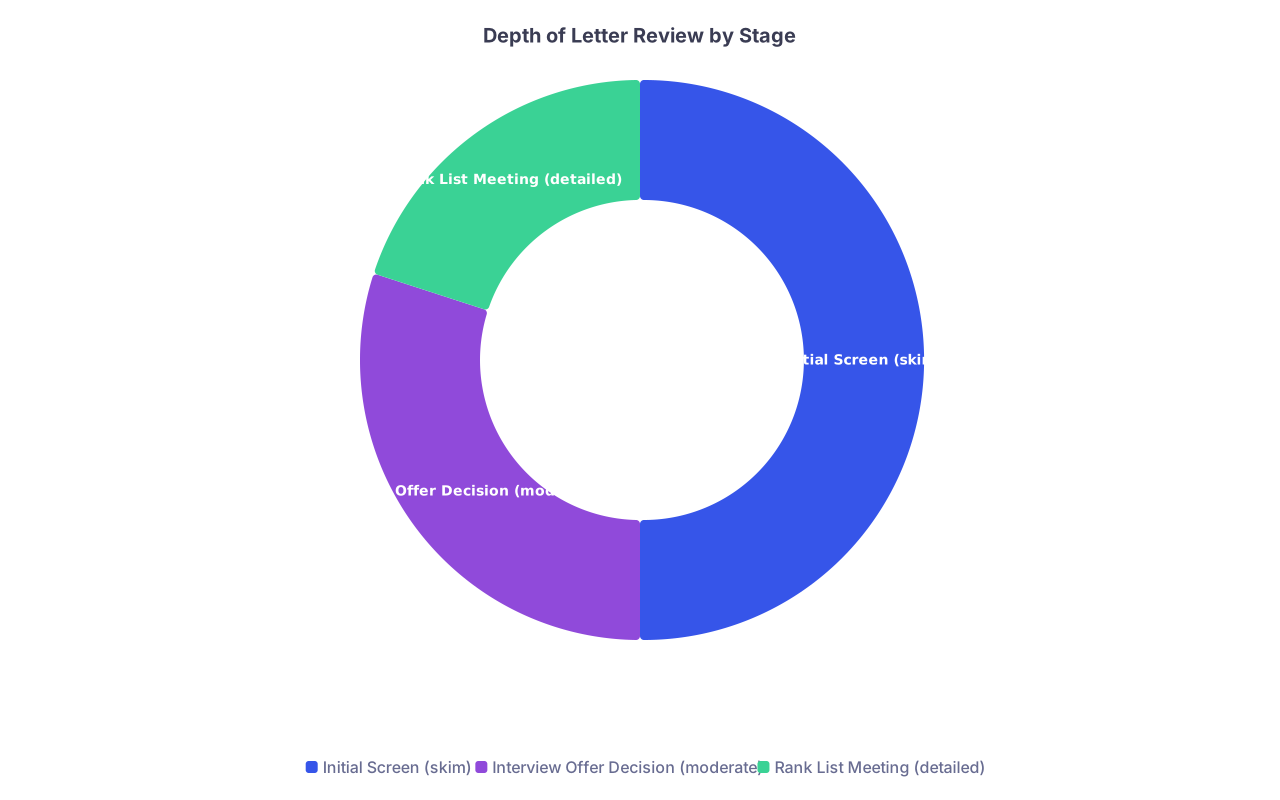
| Category | Value |
|---|---|
| Initial Screen (skim) | 50 |
| Interview Offer Decision (moderate) | 30 |
| Rank List Meeting (detailed) | 20 |
Where a great letter really helps:
- Pushing a “maybe” into “okay, let’s invite them”
- Confirming that a strong application is genuinely strong
- Breaking ties when ranking
Where a bad or lukewarm letter hurts:
- When everyone else is saying “top 10%” and your letter basically says “they showed up”
- When there’s even a hint of concern about professionalism, teamwork, or reliability
Now notice: none of this depends on the prestige of the writer. It depends on the content.
The Worst-Case Scenarios You’re Imagining (And Why They’re Overblown)
Let’s name the worst-case fears out loud.
Fear #1: “They’ll laugh at my small community letter writer.”
They won’t. Community attendings write some of the most authentic, detailed letters because they actually work with you. PDs know this. They all trained with community docs. Many trained under them.
Fear #2: “Everyone else has a PD/chair letter and I don’t.”
A lot of people don’t. And some who do, have garbage boilerplate letters that don’t help them. Programs are used to wildly variable access to “big names” depending on the med school.
Fear #3: “No specialty letters = instant auto-reject.”
Only in the absolute top-tier, hyper-competitive situations maybe, and even then it’s not automatic. If your story, experiences, scores, and other pieces are strong, many programs will still take you seriously, especially if your school doesn’t have that specialty.
Fear #4: “One mediocre letter will tank everything.”
One bland letter in a sea of strong ones? Annoying, but not fatal. A truly negative one? That’s bad. But you usually know who might write that. Avoid them.

| Step | Description |
|---|---|
| Step 1 | Letters of Rec |
| Step 2 | Helps move you up |
| Step 3 | Neutral to small impact |
| Step 4 | Hurts or screen out |
| Step 5 | Content Strong? |
What You Can Actually Do Today
Here’s how to channel the anxiety into something that doesn’t just keep you up at 2 a.m.
Make a brutally honest letter inventory.
List each writer, their specialty, how well they know you, and how strong you honestly think the letter will be.Identify your weakest-link letter.
If there’s someone you’re actively worried might write a lukewarm or vague letter, find a way to replace them if at all possible.Email one writer to set up a quick meeting.
Even 15 minutes to remind them of your work and share your goals can turn a generic letter into a strong one.Draft 3 bullet points you hope each writer emphasizes.
Tailor them to that rotation: work ethic, clinical reasoning, teamwork, independence, etc.If you truly lack specialty exposure, address it in your personal statement.
One clear paragraph. Not defensive, just honest and focused on what you did do.

FAQ (Exactly 4 Questions)
1. If I have to choose, is a strong non-specialty letter better than a weak specialty letter?
Yes. Every time. PDs would rather see a detailed, enthusiastic letter from someone in another field than a lukewarm, generic letter from your target specialty. A weak specialty letter can actively damage your application. A strong non-specialty one can still strongly support your candidacy.
2. Should I mention in my personal statement that I don’t have specialty letters?
If your lack of specialty letters is due to something structural (no home program, scheduling issues, late switch, etc.), a short, direct explanation can help. One or two sentences, max. Don’t make excuses or over-explain. Just give context and then pivot to showing what you have done to pursue the field.
3. Do programs care about the hospital or school where the letter writer works?
They care a little about context, but not the way you think. A letter from a known strong teaching environment carries some weight, but again, it’s meaningless if the content is bland. A detailed letter from a community hospital where you clearly did real work can absolutely be as strong—or stronger—than a short, generic letter from a famous institution.
4. Is it weird to give my letter writers a “brag sheet” or bullet points?
Not weird. Smart. Many attendings expect it. A one-page summary of your accomplishments, key things you did on their service, and your goals helps them write a more specific, supportive letter. Just don’t script the letter for them. Give them raw material, not paragraphs to copy-paste.
Open your ERAS letter section right now and make that honest inventory: for each letter, write down “strong,” “probably fine,” or “question mark.” Then pick one action—email a writer, schedule a quick meeting, or draft those bullet points—to upgrade just one of those letters today.