The idea that you “ruined your match” by choosing late is a lie a lot of us tell ourselves at 2 a.m.
You didn’t ruin it. But you did make the game harder. And pretending you didn’t is how people actually torpedo their chances.
Let’s talk about this honestly.
What “Late” Really Means (And How Bad It Is)
Here’s the uncomfortable truth: timing matters, but not in the absolute, catastrophic way your brain is telling you.
“Late” can mean different things:
- End of MS3: “I thought I’d do IM but now I want derm/ortho/ENT/ophtho/IR.”
- Start of MS4: “I just realized I love a very competitive specialty… and I have almost no CV for it.”
- After core rotations: “I picked anesthesia/EM/rads pretty late—did I screw myself compared to people gunning since M1?”
Your brain jumps to:
“Everyone else has 12 years of research, 5 away rotations, and a letter from the Chair who basically raised them since birth.”
Reality is messier.
Here’s the landscape in broad strokes:
| Specialty | Competitiveness Level | Late Switch Pain Level (1–5) |
|---|---|---|
| Internal Med | Lower–Moderate | 1–2 |
| Pediatrics | Lower–Moderate | 1–2 |
| Family Med | Lower | 1 |
| General Surgery | Moderate–High | 3–4 |
| EM | Moderate (volatile) | 3 |
| Anesthesia | Moderate–High | 3–4 |
| Radiology | High | 4 |
| Ortho, Derm, ENT, Plastics, NSGY, Ophtho | Very High | 5 |
If you’re pivoting into a very competitive specialty (ortho, derm, ENT, plastics, neurosurgery, ophtho, sometimes IR, sometimes rads), then yeah—late is genuinely a problem. Not impossible. But a problem.
If you’re pivoting into something more mid-range competitive (anesthesia, EM, general surgery, radiology, OB/GYN), it’s more about strategy and damage control, not doom.
And if you’re moving out of a competitive field into a less competitive one? Honestly, you’re probably fine.
Why Late Hurts in Competitive Fields (And What You Can Still Fix)
Programs in competitive specialties want to see three big pillars:
- Specialty-aligned CV (research, electives, conferences).
- Strong, specific letters from people in that field.
- Evidence of commitment (time, exposure, narrative).
When you decide late, you’re behind on all three.
Here’s the loop that runs in my head (and maybe yours):
- “I don’t have any research in this field.”
- “I never did an early elective or away rotation.”
- “My letters are from IM and surgery attendings who barely remember me.”
- “Everyone else has 4+ pubs and I barely have a poster… in something unrelated.”
You’re not wrong that these are weaknesses. But late doesn’t mean dead. It means you need to compress what other people did over 2–3 years into like… 6–9 months, and be smarter about it.
The parts you can’t realistically fix late
Let me just rip the Band-Aid off:
- You can’t retroactively create a multi-year research record.
- You can’t suddenly become AOA if that ship has sailed.
- You can’t go back to M2 and “decide earlier.”
So if your “plan” is:
“I’ll just find 3 big papers in the next 4 months and that will fix it,”
then yeah—that’s magical thinking, and programs will see right through it.
But here’s what actually is still in play.
The parts you can still influence
You still have levers:
Letters
A single, insanely strong letter from a well-known faculty in the specialty can be more valuable than three generic ones from random people.Rotations
A well-planned home rotation + one strong away rotation (for very competitive fields) can change how programs see you if you absolutely crush them.Narrative
Programs are actually used to people discovering fields late. If you can describe a believable, specific “why this specialty” that isn’t obviously fake, that helps.Backup plan
Having a parallel plan doesn’t weaken you. It keeps you from radiating desperation. Desperation is obvious. And unattractive.
The Late-Chooser’s Reality by Specialty Competitiveness
Let me zoom in, because “competitive” is vague and your anxiety wants specifics.
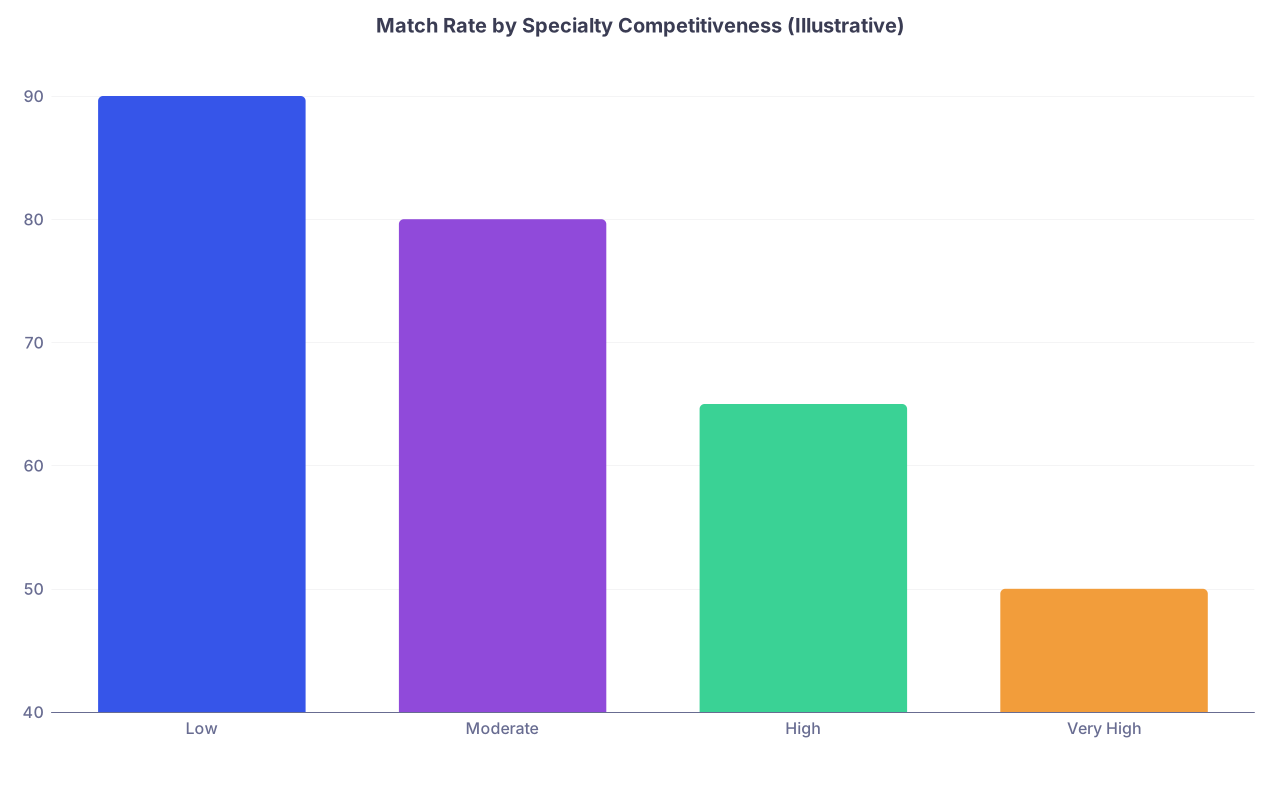
| Category | Value |
|---|---|
| Low | 90 |
| Moderate | 80 |
| High | 65 |
| Very High | 50 |
These numbers aren’t exact; they’re directional. But they match the vibe of NRMP data.
If you chose a very competitive specialty late
Think: dermatology, ortho, ENT, plastics, neurosurgery, ophtho, some IR, sometimes rads.
This is the worst-case-scenario territory you’re probably obsessing over.
What late means here:
- You’re competing against people with:
- Multiple first-author papers (in the field).
- 2–3 away rotations already lined up.
- Faculty who’ve known them since M1 or M2.
- You have:
- Maybe generic research, maybe none.
- Limited or no exposure to the field before MS4.
- Letters pending from people who just met you.
Is it possible to still match? Yes.
Is it statistically harder? Also yes. A lot harder.
Real talk: plenty of people in this exact position end up:
- Taking a research year.
- Applying twice.
- Pivoting to a different field when reality hits.
That doesn’t mean that’s your fate, but pretending it’s definitely not your fate is how you end up with a shock on Match Day.
If you chose a moderate–high specialty late
Think: anesthesia, EM (though it’s weird right now), OB/GYN, general surgery, radiology, some IM subspecialty pathways later.
Here, late is more like:
- You missed some “optimal” planning (early mentors, some early research).
- But you’re not automatically cooked.
You’re more in this zone: if you’re realistic with your list, fix your letters, and don’t try to only apply to top-10 name-brand programs, you still have a decent shot.
If you switched into a lower competitiveness specialty
Family med, pediatrics, many IM programs, psych in some cycles.
Your late decision is usually not the bottleneck. Red flags (failed exams, poor evaluations, no improvement trend) become more important than timing of choice.
So no, you almost definitely did not “ruin your match” here.
Concrete Damage Control: What To Do Right Now
This is the part your brain wants: “Okay, I’m late. What next?”
Here’s the honest priority list.
1. Get brutally honest about your competitiveness
Not your dream. Not what your friends are doing. Your actual profile.

Look at:
- Step 2 score (Step 1 is pass/fail, but your prep story still matters)
- Clinical grades
- Any honors or AOA
- Research (especially in the field you want)
- Meaningful specialty exposure
Then compare that to what your target specialty’s usual matched applicants look like (NRMP Charting Outcomes, program websites, etc.). If there’s a huge gap, accept that and plan accordingly.
2. Have a real conversation with someone who knows the field
Not Reddit. Not your class group chat.
You want:
- A program director or associate PD in that specialty
or - A faculty mentor who actually sits on a residency selection committee
You literally say:
“I chose this specialty late. Here’s my CV. If I apply this cycle without a research year or backup, what do you honestly think my chances are?”
If they hesitate, dance around it, or say something like “It may be an uphill battle, but anything is possible,” that’s usually a soft “you’re not competitive for the places you’re dreaming about.”
It sucks to hear. But it’s gold to hear it now.
3. Decide: Do you go all-in now, or build a longer runway?
For very competitive fields, your realistic options are usually:
- Apply this year with a robust backup specialty.
- Delay and:
- Do a research year (or two).
- Build specialty exposure.
- Then re-enter the match stronger.
For moderate fields, your options are more:
- Apply this year strategically and broadly.
- Add a small backup list if there are risk factors.
Neither path is inherently “right.” It depends on your risk tolerance, debt, life situation, and how much you’d resent doing a different specialty versus being delayed a year.
But just spraying out applications without a plan because “I’ll regret not trying” is how people end up unmatched and exhausted and behind.
The Thing No One Tells You About “Choosing Late”
A lot of us hold this secret belief:
“If I had just decided earlier, I’d be perfect for this specialty.”
Sometimes… no. Sometimes the timing isn’t the real problem.
Some specialties want very specific personalities and work styles. For example:
- Ortho/NSGY: physically demanding, procedure-heavy, long hours, kind of aggressive culture in some places.
- Derm: heavy focus on aesthetics, outpatient, lifestyle, but also extremely research-focused and networking-driven.
- ENT/Plastics: tiny fields, tight-knit, high-stakes surgeries, very high bar for fit.
If you only discovered a specialty late because you never wanted to be in the OR, or never liked that crowd, or didn’t vibe with the lifestyle, then maybe your gut knew something long before your brain caught up.
You might not have “missed your calling.” You might be forcing a story because you’re scared of regret or FOMO.
And yeah—this is the part that keeps you up at night:
“What if I’m just scared and future-me would’ve been amazing at this?”
That question doesn’t go away. You just have to make the best decision with the data you have now.
Building a Strategy That Doesn’t Rely on Luck
Let’s say you’re committed. You want the competitive specialty despite choosing late. Fine. Then strategy matters.

| Step | Description |
|---|---|
| Step 1 | Chose competitive specialty late |
| Step 2 | Assess CV honestly |
| Step 3 | Apply this cycle with strong letters and broad list |
| Step 4 | Consider research year and backup plan |
| Step 5 | Research year and reapply |
| Step 6 | Apply with robust backup specialty |
| Step 7 | Gap vs typical matched? |
| Step 8 | Willing to delay? |
A bare-minimum strategy for late deciders:
Fix your letters.
Do a home rotation where you work like your career depends on it. Because it kind of does. Ask for letters from people who:- Saw you work closely.
- Are in the specialty.
- Have some name recognition if possible.
Tell a clean story.
Not: “I watched a YouTube video and fell in love with ENT last month.”
More like: “I always loved X and Y parts of medicine, and [rotation/event] snapped it into focus during MS3/early MS4.”Apply widely, not just prestigiously.
Don’t only apply to the 20 “cool” programs your classmates talk about. Programs you’ve never heard of still train residents. And they still fill spots.Have a true backup.
Not just “If I don’t match derm I’ll scramble into literally anything.”
A real, thought-through alternative that you’d be able to live with.
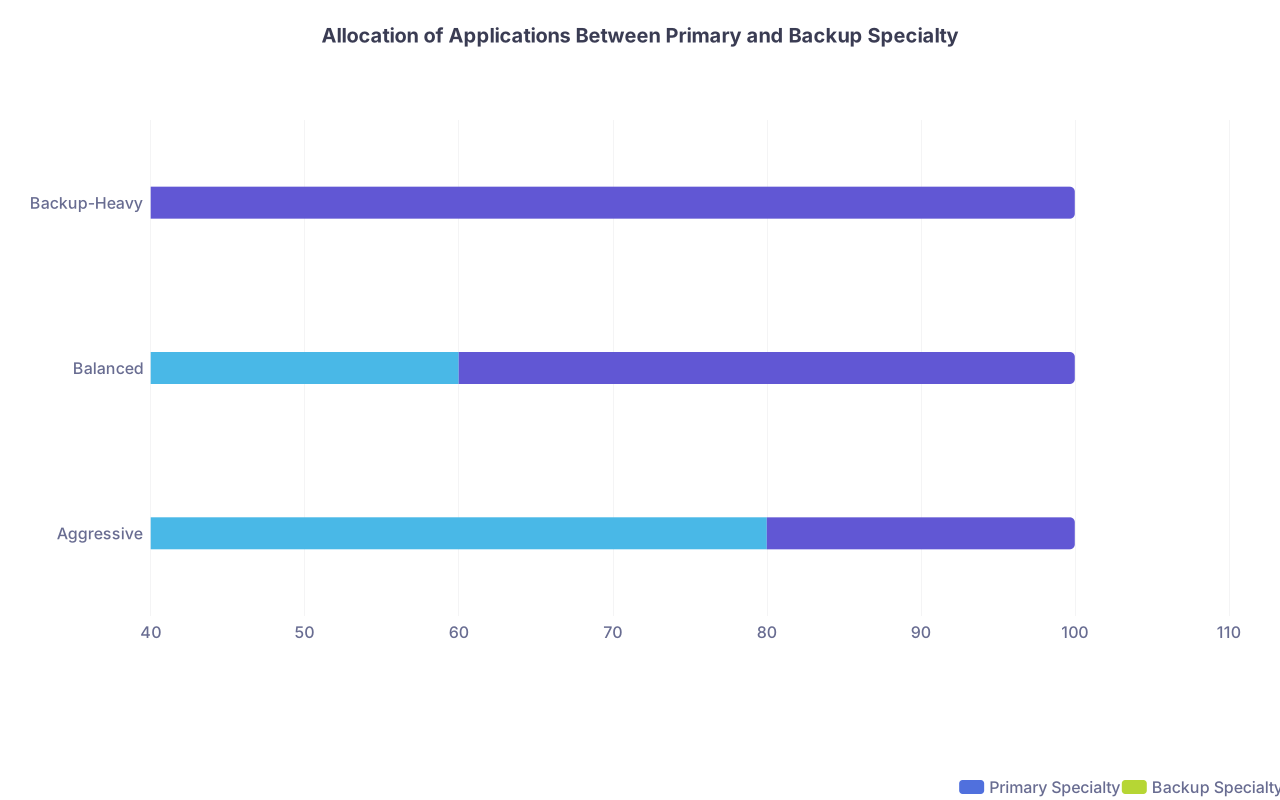
| Category | Primary Specialty | Backup Specialty |
|---|---|---|
| Aggressive | 80 | 20 |
| Balanced | 60 | 40 |
| Backup-Heavy | 40 | 60 |
How Much Did You Actually “Ruin” Your Match?
You didn’t ruin it. You changed the probabilities.
If you picked a less competitive specialty late:
Your odds may not be that different at all.If you picked a moderately competitive specialty late:
You probably shaved off some top-tier places, but a solid, broad list is still realistic.If you picked a hyper-competitive specialty late with no prior research or exposure:
Your immediate-cycle match odds are lower. That’s the truth.
But you’ve increased the chance that you’ll end up in a specialty you actually care about, even if it takes a research year or a pivot.
And I’d rather have you in the right field a year later than stuck in the wrong one forever because you were “on time.”
FAQ (Exactly 4 Questions)
1. Is it stupid to even try for a super competitive specialty if I decided late?
Not stupid. Risky. If you apply with no backup, no research year, and a weak CV, you’re essentially gambling your entire future on vibes. If you try with a backup plan and a realistic mindset, you’re just taking a calculated risk. Big difference.
2. Do programs secretly hate “late deciders”?
No. They hate fake-sounding stories and weak commitment. If your narrative is honest (“I realized late, here’s why, here’s what I did fast to confirm it”), and your letters back that up, you’re okay. They care more about whether you’ll show up and do the work than whether you knew in M1.
3. Should I take a research year just because I chose late?
Not automatically. A research year helps if:
- You’re aiming for a hyper-competitive field,
- Your current CV is clearly below the bar, and
- You’re genuinely willing to delay and grind hard.
If you’re borderline but not terrible for a moderately competitive field, a smart application strategy may be better than losing a year.
4. Did I “waste” my earlier years by not deciding sooner?
No. That’s your anxiety rewriting history. You were doing what you could with who you were then. Plenty of people who “decided early” just spent more time obsessing, not necessarily building a better life. Right now, your job isn’t to rewrite the past. It’s to make the clearest, least-self-sabotaging decision available to you this cycle.
Key points to walk away with:
- You didn’t ruin your match by deciding late—but you probably made it more complex and higher risk if the field is very competitive.
- You need ruthless honesty about your current profile and a real conversation with someone in the specialty.
- A smart strategy (letters, narrative, broad list, backup or research year) matters more now than wishful thinking about what “could have been” if you’d decided earlier.