
Myth: You Should Hide Your Relationship Unless Officially Couples Matching
What actually happens when a PD realizes in February that two of their “independent” applicants are, in fact, a couple who strategically hid it all season?
I’ve watched that play out. And it is not the power move applicants think it is.
Let me be blunt: the idea that you should hide your relationship unless you’re officially couples matching is outdated, strategically weak, and often backfires. It comes from fear and rumor, not from how programs actually function.
Let’s tear this apart.
Where This Myth Comes From (And Why It’s Wrong)
The myth usually sounds like this:
- “Programs will see us as a package deal and drop us.”
- “If we’re not couples matching, it’s safer to pretend we’re totally separate.”
- “PDs might think we’ll cause drama or want special treatment.”
- “We don’t want to limit each other’s options.”
You hear this most from:
- Upperclassmen who matched 5+ years ago in a different climate
- Residents who matched before virtual interviews and heavy spreadsheet culture
- Random SDN/Reddit posts where you never see the actual outcome
Here’s the problem: program leadership isn’t stupid, and they are not running their rank lists based on who is dating whom. They’re running them on:
- Board scores / exams
- Clinical performance
- Letters
- Interview impressions
- Fit and institutional needs
Your relationship status can influence their tactics, not their baseline evaluation.
And those tactics aren’t what you think.
Most PDs I’ve talked with fall into one of two groups:
- They don’t really care about your relationship unless it affects your likelihood of staying.
- They get very interested if your relationship significantly increases the chance you’ll rank them high and stay long term.
Notice what’s not on that list: “We punish people for being couples.”
What The Data And Match Rules Actually Say
Let’s ground this in what’s real, not rumor.
The NRMP’s Couples Match is the only formal mechanism the algorithm recognizes for linking rank lists. If you’re not couples matching, the algorithm treats you like two completely independent applicants. Period.
So if you are not entering as a couple:
- Your rank list is independent
- Your partner’s rank list is independent
- The algorithm has no idea you’re connected
This is key: any effect of your relationship is human, not algorithmic. It’s all about how PDs and committees perceive your likelihood to rank them and actually come.
And that’s where communication matters more than hiding.
There’s also data on what drives rank decisions. Over and over, surveys of PDs show:
- “Perceived interest in the program” is a major factor.
- “Likelihood of staying in the region or completing the program” is a real concern.
- Stability and support systems are generally seen as positives, not liabilities.
A partner in the same city? That usually helps those last two, not hurts.
When Hiding Your Relationship Backfires
Let me walk you through how this actually blows up in real life.
Scenario: IM + EM couple, not officially couples matching.
- She applies IM broadly: University A, B, C.
- He applies EM broadly: same cities + a few others.
- They’re “playing it cool” and hiding their relationship unless directly asked. Spoiler: most places won’t directly ask.
What happens?
At University A:
- IM loves her. Ranks her in their top 1/3.
- EM thinks he’s solid but not standout. Ranks him middle.
- Neither program knows they’re together. Each assumes they have a ~50/50 shot at getting that applicant if they’re somewhere mid-list.
At University B:
- EM loves him. Ranks him high.
- IM thinks she’s fine but not amazing. Ranks her middle.
- Again, no idea they’re a couple.
Now imagine if, during the cycle, each had said something like:
“My partner is applying to EM here and is very interested in this city. We’re not formally couples matching, but being in the same city would significantly impact how high I rank this program.”
What changes?
- At University A:
IM hears that and thinks: “If we get her and EM gets him, our odds of them both ranking us high just went up.” EM hears that and may bump him slightly if they’re on the fence between similar applicants. - At University B:
EM now realizes: “If we rank him highly and IM keeps her on their list, we may get a stable pair who are both more likely to stay.”
It doesn’t guarantee anything. But it changes how programs interpret your probability of ranking them high—and that can absolutely affect marginal rank decisions among similar applicants.
When you hide the relationship, you remove a piece of information that could work for you.
Where it really stings is post-interview communication. I’ve seen:
- Applicants send “you’re my top choice” emails to programs where their partner has no shot, because each was optimizing “individually” and hiding their plans.
- A PD later learning from a resident or another program: “Oh, they had a serious partner in X city?”
Translation: they feel misled about applicant interest.
Programs hate being surprised by avoidable information that affects retention. They hate it more than they hate couples.
“But Won’t They Rank Me Lower If They Think I’m A Package Deal?”
This is the fear-based core of the myth. And yes, there are some badly run programs that think like this:
“If we can’t get both of them, we don’t want either.”
Those programs are red flags anyway. They’re telling you they don’t understand how the match works.
Here’s what competent programs actually do:
They rank you based on your merit first. The relationship only comes in when:
- They’re deciding how to interpret vague “interest level.”
- They’re considering small tie-breaks near the margin.
- They’re trying to game which applicants are most likely to come if matched.
Do some PDs get nervous about complex couples match scenarios? Sure. Especially in smaller, low-capacity specialties where one slot is a big chunk of the class. But that’s official couples matching, not “I have a partner applying in the same city.”
And even with real couples matching, the bias is often overstated. Plenty of programs love couples because:
- They tend to be more rooted; less likely to leave.
- They come with built-in local support. Less burnout.
- They sometimes attract another strong recruit (the partner) who might not have considered that program otherwise.
Your relationship is a “risk” to a program mainly when you’re half-in, half-out, and no one knows what you actually plan to do. Not because you dared to say, “My partner is here too.”
When You Should Tell Programs About Your Relationship
Let me draw some actual lines here.
You should strongly consider disclosing your relationship situation when:
- You and your partner are both applying in the same city or institution, even if not couples matching.
- You are in related departments at the same hospital (IM + Anesthesia, Peds + Med-Peds, etc.).
- Your willingness to rank a program changes significantly based on whether your partner matches nearby.
If the presence of your partner meaningfully moves a program up or down your rank list, programs deserve to know that. And you’re shooting yourself in the foot if you hide it.
Where and how do you share?
In interviews:
“My partner is applying to X specialty, also in this city. We’re not formally couples matching, but location overlap is very important to us.”In brief post-interview updates (if the program accepts them):
“I remain very interested in [Program]. My partner is also applying here in [specialty], so being in the same city would significantly influence my rank list.”
You’re not demanding a two-for-one deal. You’re offering information about your likelihood to rank them high if things align.
That’s exactly the kind of information programs care about.
When You Don’t Need To Make A Big Deal Out Of It
On the flip side: not every relationship requires a strategy memo.
You don’t need to center your relationship if:
- Your partner is in a totally unrelated field and not applying this cycle.
- They can move flexibly and are truly willing to follow you anywhere.
- You’re in long-distance mode and not prioritizing co-location this match.
In those cases, it’s fine if it comes up casually (“My partner is in software in [city] but is fully remote.”), but there’s no need to “leverage” it because it doesn’t significantly change your ranking behavior.
What you should not do is:
- Oversell your commitment to a city when your partner is absolutely not going there.
- Pretend you’re geographically open when every real plan you and your partner have is anchored to one region.
That’s how you get into trouble with credibility.
The One Time Silence Really Hurts: Internal Candidates
If one of you is an internal applicant and the other is external, hiding the relationship is almost always dumb.
Example:
- You’re a med student at Midwest University applying IM there.
- Your partner is applying Anesthesia from another school but wants Midwest badly.
If you never mention the relationship:
- IM ranks you based only on your file.
- Anesthesia ranks your partner based only on theirs.
- Both programs may under-estimate the likelihood that you’ll both commit strongly if matched.
If instead you (or both of you) say something like:
“We’re not formally couples matching, but my partner is applying to [IM/Anesthesia] here. Matching together at Midwest would make us very likely to rank you at or near the top.”
Now, two chairpeople in the same institution know they might get a stable two-physician household out of this. Chair-to-chair conversations happen. Even if they don’t coordinate ranks explicitly (many won’t), the perception of your interest and commitment changes.
That’s not manipulation. That’s clarity.
How Programs Actually React When You’re Honest
Here’s what I’ve seen when applicants are open (not dramatic, not demanding, just clear):
- PDs nod and say some version of: “That makes sense; thanks for letting us know.”
- Occasionally you’ll hear: “We’ve had many couples here; it usually works well.”
- Rarely, someone clumsy will say: “We can’t guarantee anything.”
To which you should mentally respond: “Obviously.”
What you typically don’t see:
- PDs docking you an entire tier because you have a partner.
- Committees throwing your file out solely for mentioning a relationship.
- Programs blacklisting couples out of spite.
When you hear those horror stories, they’re almost always third-hand, vague, and missing data. “I know someone who knew a couple who…” No names, no year, no specialty, no proof.
The programs I worry about are the ones that get spooked by any whiff of complexity. If a PD is threatened because you have a life outside the hospital, that’s not a place you want to train.
A Simple Framework: When To Speak Up, What To Say
Here’s the clean version.
If your relationship materially changes:
- Where you apply
- How you rank
- Where you’re likely to stay long term
Then your relationship is relevant information. Hiding it doesn’t make you “stronger.” It just makes you less predictable and less trustworthy.
What to say—short, non-needy, and factual:
- “My partner is also applying to [specialty] in this city; being together would significantly affect how we rank programs.”
- “We’re not using the formal couples match, but we are trying to be in the same city.”
- “If we were both able to match here, this program would move very high on my list.”
You’re giving them levers. They decide if they can pull them. But at least they know they exist.
The Real Myth: That You Have To Choose Between Strategy And Honesty
This idea that you either:
- Hide everything and be “strong independent applicants”, or
- Over-share and be seen as “a package deal liability”
is a false choice.
The smart middle ground is:
- You rank based on your own priorities.
- You share relationship details when they clearly affect those priorities.
- You don’t demand special treatment; you just don’t lie by omission about major factors.
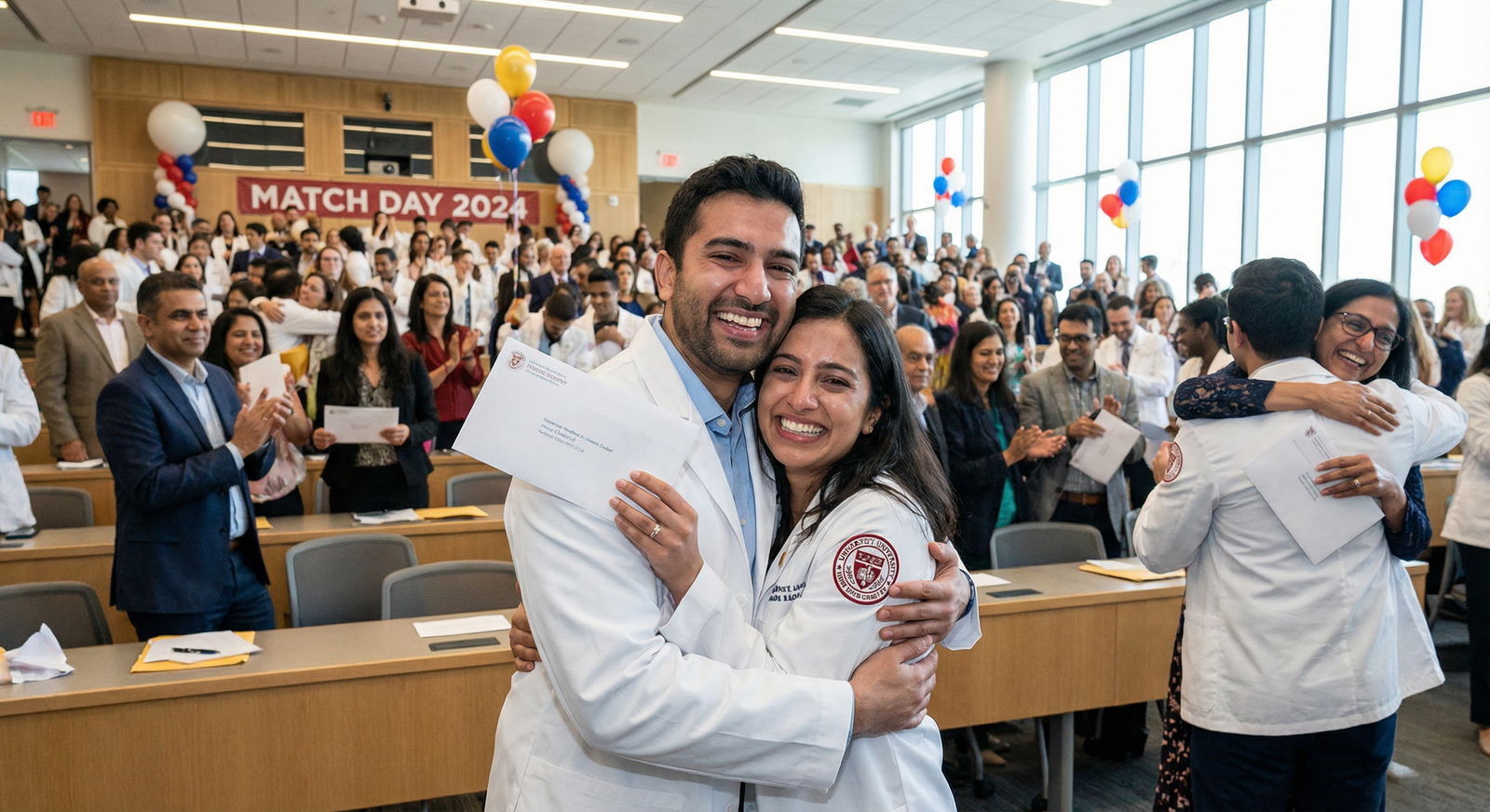
Years from now, you won’t remember the exact wording of your “interest” emails or whether you mentioned your relationship on minute 12 or minute 20 of an interview. You’ll remember whether you and your partner could look at each other on Match Day and say: “We were honest, we played it straight, and whatever this envelope says—we didn’t hide who we are to get here.”


