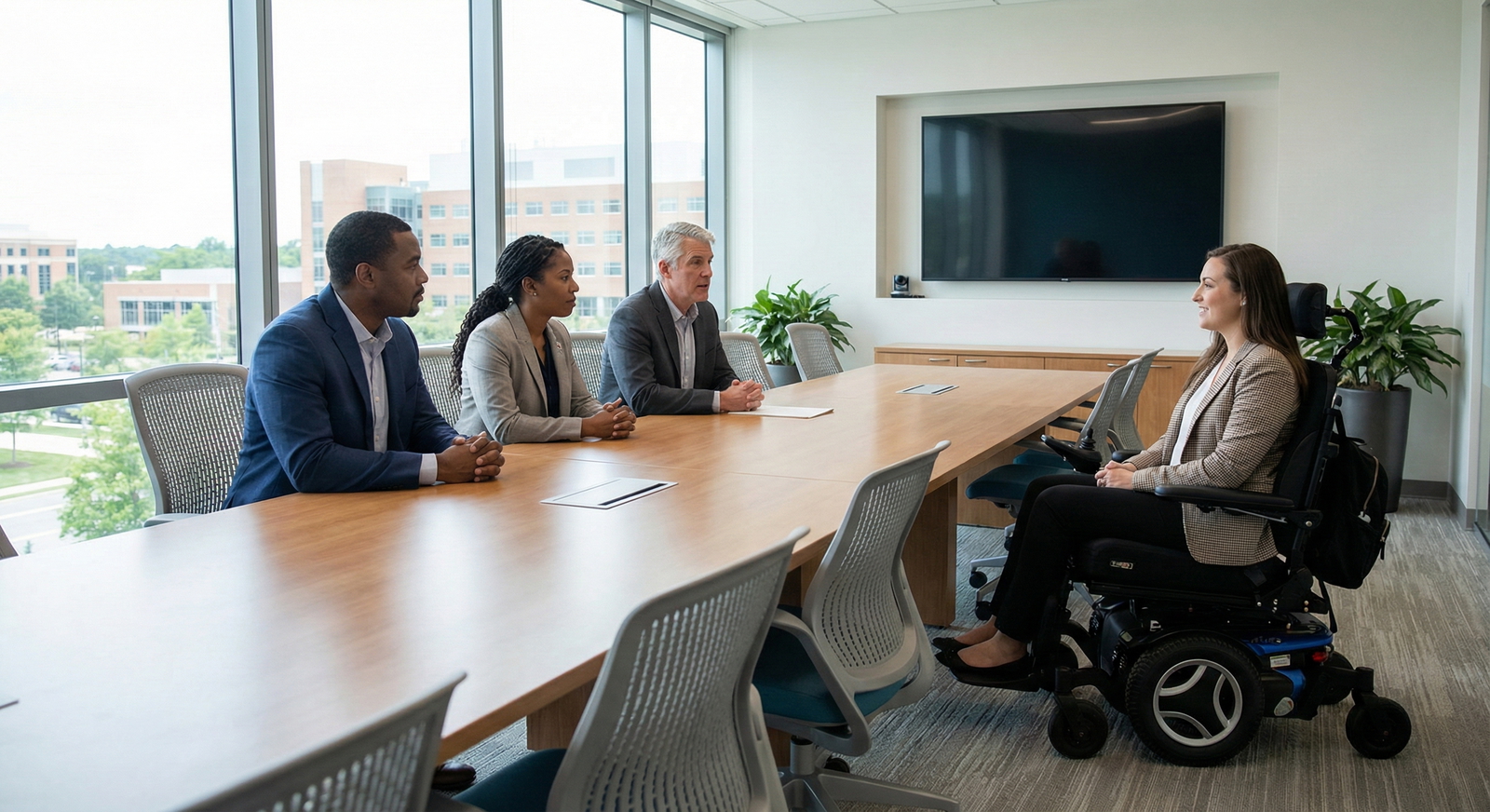
A student I worked with knew the medicine cold. Great history-taking. Strong rapport. Good physical exam technique. Then the OSCE format wrecked the whole thing.
Why? Not lack of knowledge. Barriers.
She had ADHD and panic symptoms. The standard setup — rapid station changes, dense written instructions on the door, background noise, constant time pressure — turned a clinical skills exam into a processing-speed contest. Another student had chronic pain and couldn’t stand through long simulation blocks without a flare. Another had hearing loss and kept missing parts of the standardized patient script when masks and room acoustics got bad. Same story, different diagnosis: the format created disability-related barriers that had nothing to do with whether they could become excellent physicians.
That’s where accommodations come in.
In OSCEs and simulation exams, an accommodation is a change in how the test is administered so you can access the exam on equal footing. Extra time. Rest breaks. Reduced-distraction space. Written instructions. assistive listening support. Accessible room setup. Permission to use mobility aids or ergonomic equipment. Reader or scribe support in the rare situations where it fits the task. These are not perks. They are not grade inflation. They are access measures. Full stop.
And here’s the blunt truth: schools are much more likely to approve a request when you stop making it abstract. “I have anxiety” is weak paperwork. “My panic symptoms impair task initiation and verbal organization during timed transitions between OSCE stations; I need 10-minute stop-the-clock recovery breaks after every three stations” is the kind of language that gets traction.
That’s the whole game. Identify the exact barrier. Match it to a specific accommodation. Submit a request built around function, not vague suffering. Do that, and your request becomes much harder to deny.
Start with the Barrier, Not the Diagnosis
This is the mistake students make over and over: they lead with the label and never explain the problem.
Diagnosis matters, yes. But for OSCE and simulation approvals, the real question is simpler: what part of this exam format blocks access?
That’s what disability offices and testing committees need to understand.
Common OSCE and simulation barriers look like this:
- Time pressure
- You know what to do, but processing speed, reading speed, motor slowness, or anxiety makes standard timing unrealistic.
- Reading load
- Door instructions, charts, medication lists, or written prompts take longer because of dyslexia, visual impairment, concussion symptoms, or fatigue.
- Multitasking strain
- Listening, note review, patient interaction, physical exam sequencing, and time monitoring all at once can overload students with ADHD, autism, TBI history, or anxiety disorders.
- Sensory issues
- Noise, alarms, fluorescent lighting, masks, or overlapping voices can impair attention, hearing, or regulation.
- Motor or mobility limitations
- Standing, transferring, reaching exam equipment, manipulating tools, or moving quickly between rooms may be the actual barrier.
- Fatigue or pain flares
- Endurance, not knowledge, becomes the limiting factor.
- Communication barriers
- Hearing loss, speech differences, auditory processing issues, or panic symptoms can affect interaction in ways the standard format makes worse.
Here’s the practical test I use:
What task is blocked?
- Reading instructions fast enough?
- Moving between stations?
- Hearing the patient?
- Organizing your thoughts under a countdown clock?
What part of the exam is affected?
- Pre-station reading?
- The encounter itself?
- Documentation?
- Transitions?
- Long simulation blocks?
What happens without support?
- You miss key details.
- You lose time regulating symptoms.
- Pain escalates and performance drops.
- You need repeated clarification.
- You perform below your true clinical ability.
That translation step matters more than people think. “I have dyslexia” doesn’t tell the school what to change. “I require additional time to read and process written station instructions accurately” does. “I have chronic pain” is incomplete. “I need a seated option and scheduled breaks because prolonged standing causes pain spikes that slow movement and impair concentration” is useful.
If your condition is invisible, fluctuating, or episodic, examples help. A lot.
Use real patterns from:
- prior OSCEs
- simulation labs
- shelf-style practicals
- anatomy lab
- clinical skills sessions
- standardized patient encounters
- even routine classes if they mirror the same demands
For example:
- “During mock OSCEs, I consistently need extra time to process written door instructions.”
- “In simulation sessions longer than 45 minutes, I develop pain severe enough that I cannot focus on medication calculations.”
- “In noisy patient encounters, I miss spoken details unless instructions are repeated or supported in writing.”
That’s persuasive. Concrete beats dramatic every time.
Build a Request That Schools Can Approve
If you want approval, make the reviewer’s job easy.
A strong accommodations packet usually includes:
- A clinician letter
- Diagnostic evidence, if available
- A description of functional limitations
- History of prior accommodations
- A short exam-specific student statement
- Any relevant testing or performance history
The clinician letter is where a lot of requests fall apart. Bad letters sound like this: “Student has anxiety and would benefit from support.”
That’s useless.
Good letters use educational and testing language:
- what symptoms do
- what exam tasks they impair
- why the requested accommodation is appropriate
- whether the need is consistent with the student’s history
That’s the rule: write for the exam, not just the chart.
A psychiatrist may document panic disorder beautifully in medical terms. But unless the letter explains how panic affects timed verbal performance, transitions, concentration, or recall in OSCE settings, the school may say the request is unsupported. Annoying? Yes. Common? Also yes.
Here’s what strong documentation should cover:
What the letter should say
- Diagnosis or condition, if established
- How long the student has had symptoms
- Functional impact in testing or clinical-skills environments
- Why the requested accommodation addresses the barrier
- Whether similar accommodations have helped before
- Whether the condition is stable, episodic, or worsening
What your own statement should say
Keep it short. One page is plenty.
Include:
- The exam format
- The barrier
- The consequence without accommodation
- The specific accommodation requested
Example:
“In timed OSCE stations, my ADHD and anxiety impair rapid reading, task initiation, and verbal organization during transitions. Without support, I lose time processing door instructions and regulating panic symptoms, which reduces my ability to demonstrate clinical reasoning. I am requesting 25% extended time on station reading and documentation components, plus a reduced-distraction environment and stop-the-clock breaks after every four stations.”
That is clear. Specific. Harder to dismiss.
Common accommodation requests that fit OSCEs and simulations
Depending on the barrier, reasonable requests may include:
- Extended time
- For reading instructions, documentation, or sometimes station completion if the skill being tested allows it
- Separate or reduced-distraction room
- Especially helpful for ADHD, anxiety, autism, migraines, TBI, or sensory processing difficulties
- Rest breaks
- Scheduled or as-needed, with clarity on whether they are stop-the-clock
- Modified scheduling
- Morning testing, spacing stations differently, splitting long simulation blocks, avoiding back-to-back endurance demands
- Accessible physical setup
- Adjustable bed height, seated option, nearby room placement, accessible doors, extra transfer space
- Assistive technology
- Screen magnification, text-to-speech for written instructions where allowed, noise-reduction support, amplified audio
- Communication supports
- Written instructions, captioning, assistive listening devices, clear masks if appropriate and available
- Mobility aid permission
- Cane, brace, scooter, ergonomic stool, supportive seating
- Reader or scribe support
- Only when the exam task allows it without undermining what’s being tested
The key is fit. Don’t ask for a random menu of accommodations because someone else got them. That’s sloppy and easy to reject.
Ask for what solves the actual barrier.

Follow the Approval Process Step by Step
This part is boring. It’s also where approvals are won or lost.
Here’s the workflow I recommend.
1. Read the school’s policy
Find the actual written policy for disability accommodations, clinical skills exams, and simulation-based assessments.
Look for:
- submission deadlines
- required forms
- documentation standards
- who makes the decision
- whether OSCEs have separate procedures from written exams
Do not rely on hallway advice. Students are often confidently wrong.
2. Identify the right contact
Usually this is:
- disability services
- accessibility office
- student affairs dean coordinating accommodations
- exam administration office for logistics
If the process isn’t clear, email and ask:
- who reviews OSCE/simulation requests
- what documentation is required
- what the deadline is
3. Submit early
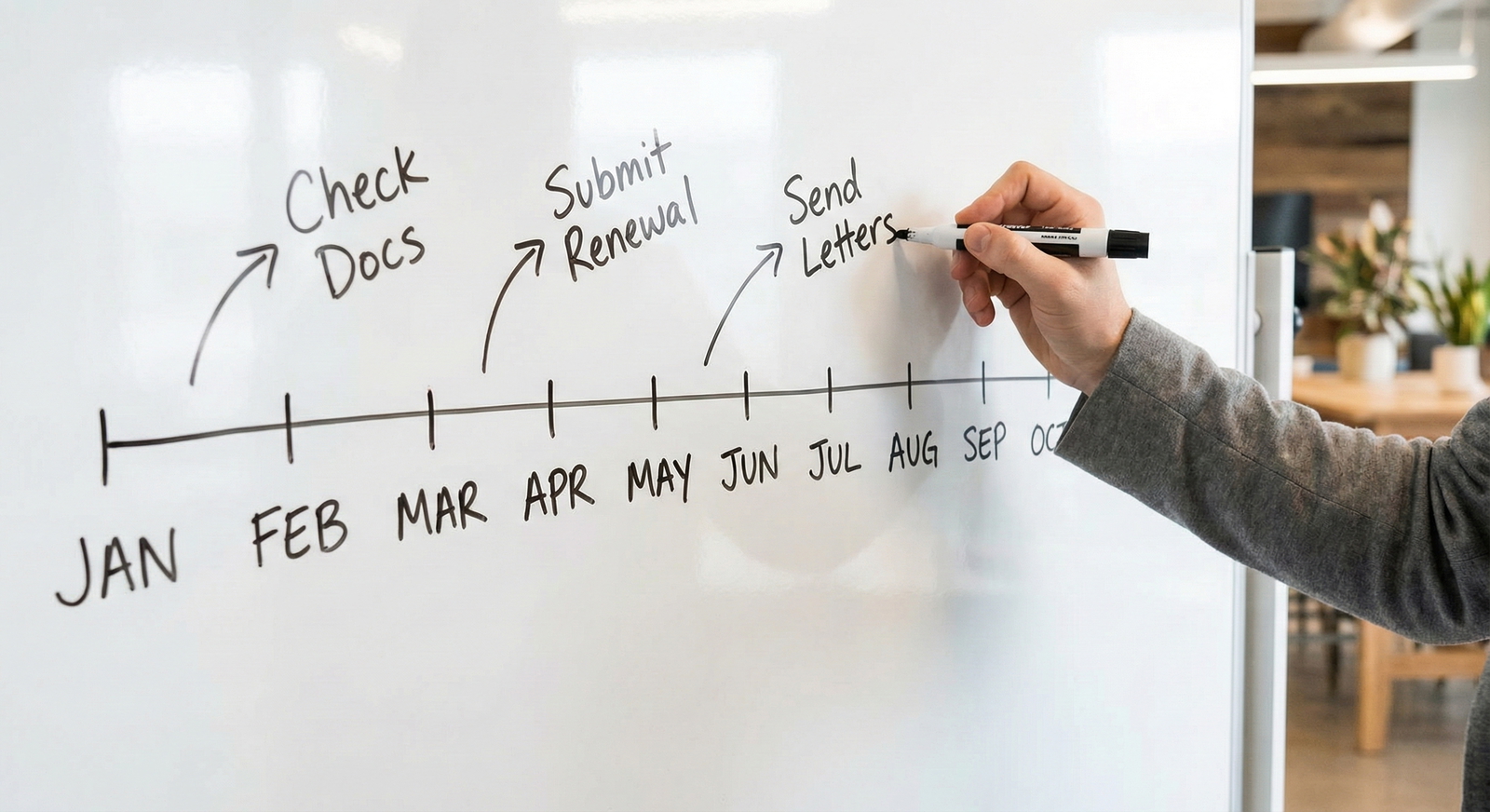
Best practice timeline:
- 6–8 weeks before exam: review policy
- 4–6 weeks before exam: gather clinician documentation
- 3–4 weeks before exam: submit full request
- 2 weeks before exam: follow up if you haven’t heard back
- 1 week before exam: confirm logistics in writing
Last-minute requests are much harder. If your condition is new or sharply worse, say that directly and provide updated documentation.
4. Keep copies of everything
Save:
- forms
- emails
- clinician letters
- prior approvals
- dates of submission
- names of people you spoke with
Paper trails matter. Especially when something goes sideways. And sometimes it does.
5. Answer follow-up questions fast
If the school asks:
- Why this accommodation?
- Why now?
- Why for OSCEs specifically?
- Is there an alternative?
Respond with the barrier-accommodation link. Keep it factual, not emotional.
Example:
“The requested stop-the-clock breaks address symptom escalation during long simulation blocks. Standard breaks that continue the exam clock do not provide equal access because they force me to choose between medical self-management and exam completion.”
That’s strong.
6. Get the decision in writing
Always. Every time.
Written confirmation should include:
- what was approved
- what was denied
- the logistics
- who implements it
- what to do if there’s a problem on exam day
If there’s pushback, don’t just argue in circles. Do this instead:
- Ask what specific concern prevents approval.
- Clarify the functional barrier.
- Offer an alternative if needed.
- Request the decision and rationale in writing.
That shifts the conversation from opinion to process. Much better ground.
If the Request Is Denied or Partially Approved
A denial is not the end. It’s feedback. Sometimes dumb feedback, but feedback.
First, read the denial carefully. Most problems fall into one of three buckets:
- Missing or weak documentation
- Poor match between the request and the barrier
- Policy limits or logistical objections
Your response should match the problem.
If documentation was weak
Fix it with better functional detail.
Ask your clinician to revise the letter to address:
- the specific OSCE or simulation demands
- the exact symptoms that interfere
- why the requested accommodation is necessary
- why alternatives would or would not work
If the request-barrier match was weak
Tighten it.
For example:
- Instead of “extra time for anxiety,” request “extra time for written instruction review and post-encounter documentation due to slowed processing during acute anxiety symptoms.”
- Instead of “breaks as needed,” request “10-minute stop-the-clock break after every three stations due to pain and fatigue escalation.”
Specific wins.
If the school says the request isn’t feasible
Ask:
- What part is not feasible?
- What alternative accommodation can provide comparable access?
- Can the logistics be modified without changing the competency being tested?
That last point matters. Schools do not have to fundamentally alter the exam. But they do need to consider reasonable ways to preserve access.
Step-by-step appeal plan
- Request the denial reason in writing if you don’t already have it.
- Compare the reason to your documentation.
- Gather stronger evidence.
- Ask your clinician for a revised letter with exam-specific language.
- Submit a reconsideration request by the stated deadline.
- Escalate if needed:
- disability services director
- student affairs dean
- ombuds office
- formal appeal channel
Keep your tone calm and exact. Anger is understandable. It’s just not persuasive paperwork.
Backup plan for exam day
If accommodations are approved but not actually provided, act immediately.
Do this:
- notify the proctor or exam coordinator on the spot
- document who you told and when
- email disability services the same day
- describe exactly what was missing
- request corrective action, makeup testing, or score review if appropriate
I’ve seen students wait three days because they felt embarrassed. Bad move. Report it while the facts are fresh.
Make Approval Easier for the Next Exam
Once you get through this once, don’t start from scratch every time. Build a system.
Create a reusable accommodations file — digital, paper, or both — with:
- clinician letters
- diagnostic records
- prior approval emails
- submitted forms
- exam dates
- what was approved
- what actually got implemented
- what worked
- what failed
Think of it as your access playbook.
After each OSCE or simulation, do a quick debrief:
- Did the accommodation solve the barrier?
- Did timing still feel too tight?
- Was the room actually reduced-distraction?
- Were breaks usable or fake breaks that kept the clock running?
- Did you need something different for documentation versus live encounters?
Write it down right away. Memory gets fuzzy fast, especially after stressful exams.
Here’s the practical checklist for your next request:
OSCE accommodation checklist
- Identify the exact barrier, not just the diagnosis
- Match each barrier to a specific accommodation
- Get a clinician letter with functional, exam-specific language
- Add a short student statement
- Include prior accommodations if available
- Review school policy and deadlines
- Submit early
- Save every email and form
- Confirm approval details in writing
- Verify logistics before exam day
- Debrief afterward and update your file
The students who get these requests approved most smoothly are not the students with the “best” diagnoses on paper. They’re the students who explain the barrier clearly, ask for the right fix, and create a clean record.
That’s the pattern. Use it.
Summary
OSCE and simulation accommodations get approved fastest when you stop arguing diagnosis and start proving access need. Name the barrier. Show how it affects a specific exam task. Request an accommodation that directly fixes that problem.
Strong requests are functional, exam-specific, and early. Weak requests are vague, generic, and last-minute. If you get denied, don’t spiral. Read the reason, tighten the evidence, appeal strategically, and keep a backup plan for exam day.
This process shouldn’t be harder than the exam itself. Too often, it is. But there is a way through it — and it starts with being precise, practical, and impossible to brush off.