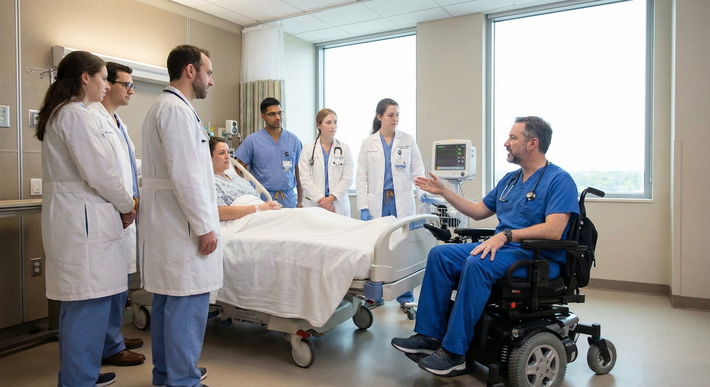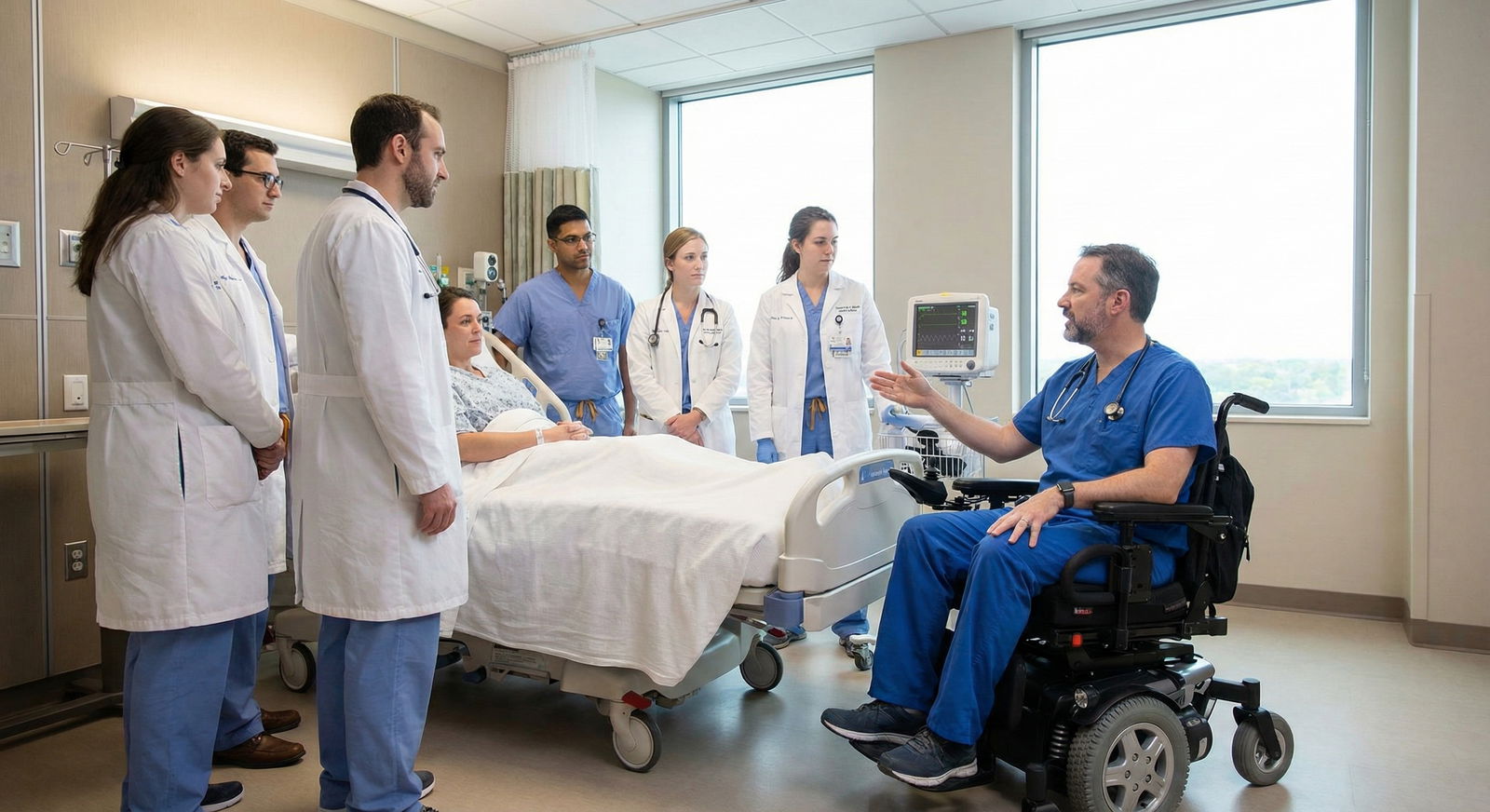
Pregnancy-related complications are temporary disabilities, and most training programs still pretend they are just “personal issues.”
Let me be blunt: residents are fainting in stairwells from hyperemesis, interns with placenta previa are being scheduled for 28‑hour calls, and medical students on magnesium infusions for preeclampsia are getting pimped on rounds over Zoom because no one wants to call it what it is—a disability that triggers legal protections and institutional responsibilities.
You can either treat pregnancy complications as an awkward inconvenience. Or you can handle them like what they are: time‑limited disabilities that require real accommodations, planning, and policy.
This is about the second option.
1. The Core Reframe: From “Pregnant Trainee” to “Temporarily Disabled Trainee”
Everyone gets stuck on the word “pregnant.” They should be focusing on functional capacity.
Normal pregnancy is not a disability. Pregnancy with significant functional limitations often is. That includes things like:
- Hyperemesis gravidarum with inability to maintain hydration or nutrition
- Threatened or actual preterm labor requiring activity restriction
- Placenta previa, placenta accreta, or vasa previa with bleeding risk
- Preeclampsia with severe features
- Gestational diabetes with brittle control and frequent hypoglycemia
- Severe pelvic girdle pain limiting mobility
- Postpartum complications (postpartum hemorrhage, peripartum cardiomyopathy, wound dehiscence, severe postpartum depression, etc.)
In disability language, the question is not “Are you pregnant?” The question is:
- What major life activities are substantially limited?
- For how long are they likely to be limited?
- What essential job functions are affected?
For trainees, “major life activities” map directly onto clinical duties: prolonged standing, night work, lifting, responding rapidly to codes, managing heavy cognitive load on no sleep.
Here is where most programs stumble: they deal with pregnancy through informal “kindness” (trade a call, move a rotation) instead of putting it through the disability accommodation framework. Informal kindness is fragile, personality‑dependent, and non‑enforceable. It also collapses the moment someone else is “more needy” or a chief changes.
Formally classifying significant pregnancy‑related complications as temporary disabilities:
- Triggers ADA/ADAAA or analogous protections (depending on jurisdiction)
- Forces engagement in a structured, documented interactive process
- Brings institutional disability offices, not just program directors, into the conversation
- Allows standardized, predictable solutions instead of ad‑hoc favors
That shift—from favors to rights—is the foundation. Without it, everything else is theater.
2. What This Actually Looks Like Clinically
Let me walk through concrete pregnancy scenarios and how they should be handled as temporary disabilities in training.
Scenario 1: Hyperemesis Gravidarum in an Intern on Wards
PGY‑1, internal medicine. Eight weeks pregnant, has not told anyone. Throwing up between patients, losing weight, nearly syncope on rounds. Still scheduled for a string of five 14‑hour days and then a 28‑hour call.
Functionally?
- Standing and walking: impaired
- Oral intake: impaired to the point of needing IV fluids
- Sleep and cognition: impaired from malnutrition and dehydration
Reasonable accommodations might include:
- Temporary switch to lighter rotations (outpatient, non‑call, telehealth)
- Scheduled protected breaks for hydration, snacks, antiemetics, bathroom
- Prohibition of overnight or extended call during acute phase
- Permission to attend infusion clinic or ED for IV hydration without punishment or “points”
Wrong approaches I have seen:
- “Just hang in there; second trimester is better.”
- “We have to treat all residents equally; everyone is tired.”
- Chiefs shuffling one call but leaving the overall structure unchanged.
Handled correctly, the resident gets a formal note from OB/MFM describing restrictions (not diagnosis details), engages disability office, and the program builds a several‑week accommodation plan that is revisited every 2–4 weeks.
Scenario 2: Preeclampsia With Severe Features in a Third‑Year Medical Student
MS3 on surgery, 34 weeks, suddenly with headache, elevated BP, proteinuria. Admitted, started on magnesium. Baby delivered preterm. She is postpartum, on antihypertensives, with ongoing visual disturbance and fatigue.
Disability framing:
- Major life activities affected: work, vision, thinking, mobility, sleep
- Duration: weeks to months, but not permanent
Reasonable accommodations could include:
- Delayed completion of the surgical clerkship
- Conversion of certain didactic or conference requirements to remote formats
- Modified call and overnight duties once cleared to return
- Flexibility in exam scheduling (shelf, OSCE)
- Protected postpartum recovery time beyond minimal federal/state leave
What you do not do is tell her, “If you don’t finish this rotation now, you’ll delay graduation and residency; maybe you can study while the baby is in the NICU.” That is not resilience. That is institutional malpractice.
Scenario 3: Resident With Complete Placenta Previa on Trauma Surgery
PGY‑3 general surgery, second trimester, diagnosed with complete placenta previa and intermittent spotting. MFM recommends no heavy lifting, no trauma activations, and strict avoidance of violent physical contact. She is scheduled for 24‑hour trauma calls with frequent trips to the ED and OR.
Functional limitations:
- No sudden heavy exertion or physical strain
- Avoid high‑risk, chaotic environments where abdominal trauma is likely
- Standing for prolonged periods may be possible but risky with bleeding
Reasonable accommodations:
- Reassignment away from trauma service for the remainder of pregnancy
- Replacement of home or in‑house call with no‑call consult, clinic, or research rotations
- Assurance this will not torpedo case log requirements (with a make‑up plan postpartum or in an extension year)
I have watched residents in this exact position get pressured to “decide if they are really committed to surgery.” As if wanting to keep your uterus inside your body is a lack of dedication.
This is the precise sort of scenario that justifies a formal temporary disability determination.
3. Mapping Pregnancy Complications to Required Accommodations
Let me be more granular. The real work is linking a specific complication to a defined set of functional restrictions and realistic accommodations.
| Condition | Key Limitation | Typical Accommodation |
|---|---|---|
| Hyperemesis gravidarum | Standing, stamina | Lighter service, frequent breaks, no overnight |
| Preeclampsia with severe features | BP control, cognition | Medical leave, delayed rotations, remote didactics |
| Threatened preterm labor | Activity restriction | No call, clinic/desk duties, limited walking |
| Placenta previa/accreta | Bleeding risk | Avoid trauma/ED, no lifting, no heavy call |
| Severe pelvic girdle pain | Walking, standing | Shorter shifts, step‑count limits, elevator use |
Notice what is not in that table: “pregnancy in general.” You do not grant blanket “pregnancy accommodations” to everyone. You tie accommodations to documented functional impact and risk.
Accommodations for pregnancy‑related disabilities in training usually fall into a few categories:
Schedule and hours
- Elimination or modification of overnight/24‑hour call
- Reduced weekly hours for a defined period
- Strategic stacking of lighter rotations during high‑risk weeks (late third trimester, early postpartum)
Location and type of work
- Shift from inpatient to outpatient or telehealth
- Temporarily removing from high‑risk settings (trauma bays, airborne isolation rooms for certain infections, radiology suites with frequent fluoroscopy)
- Assigning more documentation, consult triage, phone followups, teaching roles
Physical demands
- Restricting lifting, pushing heavy stretchers, or carrying equipment
- Ensuring guaranteed opportunities to eat, hydrate, and use the restroom
- Adjusted PPE or lead apron solutions to reduce weight and pressure on abdomen/pelvis
Temporal flexibility
- Allowing time‑limited leave without punitive extension beyond what is necessary for graduation/board eligibility
- Flexibility for frequent prenatal visits, NSTs, ultrasounds, and lab checks
This is where the disability office should be writing concrete, enforceable language, not, “Please provide reasonable flexibility as medically necessary.”
You want: “No shifts longer than 12 hours. No more than 3 consecutive days worked. No in‑house call. No assignment to trauma bay or interventional radiology.”
4. Legal and Regulatory Reality: Where Pregnancy Complications Sit
You cannot talk about this seriously without anchoring in the law. Otherwise you are just hoping your PD is nice.
In the United States (and similar principles exist elsewhere):
Pregnancy Discrimination Act (PDA): Requires employers to treat pregnancy, childbirth, and related medical conditions the same as other medical conditions with respect to employment decisions and accommodations. “Related medical conditions” absolutely includes complications such as preeclampsia, gestational diabetes, etc.
ADA/ADAAA: Covers physical or mental impairments that substantially limit one or more major life activities. Pregnancy itself is not per se a disability, but pregnancy‑related complications can be.
Pregnant Workers Fairness Act (PWFA, 2023): Requires reasonable accommodations for known limitations related to pregnancy, childbirth, or related medical conditions, unless undue hardship. This closes some gaps where employers tried to say, “Not disabled enough for ADA, so no accommodations.”
Where training programs go wrong:
- They silo pregnancy off from their disability processes and treat it as “leave” only.
- They require residents to be “100% capable of unrestricted clinical duties” or go on full leave, with no middle space for partial work with accommodations.
- They act like ACGME or specialty board requirements are absolute barriers to modification, when in reality there is often more flexibility than they admit.
You need to understand how accreditation and board requirements actually interact with pregnancy‑related disability.
| Specialty | Typical Allowed Time Away per Year | Notes |
|---|---|---|
| Internal Medicine | ~1 month | Some flexibility over 3 years |
| General Surgery | ~4–6 weeks | Must meet case minimums |
| OB/GYN | ~8 weeks over 4 years | Board may allow extensions |
| Pediatrics | ~1 month | Program director attestation key |
These numbers vary slightly by board and change over time, but the pattern is consistent: limited time away per year, some ability to borrow from other years, and the option to extend training when necessary.
The critical point: “Time away” is not the only lever. Modified duties on‑service while still “present” do not always count against time‑away caps if essential functions are met, and if the PD can reasonably attest to competency.
That is where structured accommodations for temporary pregnancy‑related disabilities become powerful. You can:
- Preserve board eligibility
- Avoid unnecessary extension of training
- Maintain partial clinical engagement
- Protect the trainee’s health and pregnancy
But only if you stop treating this as an awkward side topic and put it through your official disability and HR machinery.
5. How the Process Should Actually Run in a Training Program
Let me spell out the operational piece, because this is where programs either succeed or implode.
Step 1: The Trigger
Something changes. OB/MFM recommends restrictions. The trainee is hospitalized. A complication is diagnosed. The trainee either:
- Voluntarily discloses and requests help; or
- Clearly cannot perform duties safely even if they want to.
The correct response from leadership is not, “Send me your note and we’ll see what we can do.” It is:
“Thank you for letting me know. We will involve the institution’s disability office to formally consider accommodations. They may need a functional capacity form from your clinician. Meanwhile, you are relieved from duties that you and your doctor believe are unsafe.”
Step 2: Documentation—Focused on Function, Not Intrusion
The disability office (not the PD) should:
- Request medical documentation stating:
- The existence of a pregnancy‑related condition
- Expected duration
- Functional limitations (e.g., no prolonged standing, no night shifts)
- Explicitly not demand intimate details beyond what is needed for accommodations.
The PD should receive a summary letter stating: “Resident requires: no shifts >10 hours, no overnight call, no lifting >20 lb, for 8–10 weeks.”
Not: “Resident has placenta previa and recurrent bleeding.” That is none of the PD’s business.
Step 3: Interactive Process
This is where the trainee, disability office, and program sit down and get specific.

| Step | Description |
|---|---|
| Step 1 | Complication diagnosed |
| Step 2 | Medical documentation |
| Step 3 | Disability office review |
| Step 4 | Informal adjustments |
| Step 5 | Formal accommodation plan |
| Step 6 | Program schedule changes |
| Step 7 | Periodic reassessment |
| Step 8 | Return to standard duties |
| Step 9 | Extend or modify plan |
| Step 10 | Functional limits? |
Key decisions here:
- Which rotations in the upcoming 3–6 months are incompatible with the restrictions?
- Which can be swapped, front‑loaded, back‑loaded, or replaced with electives, research, or clinic?
- How will call be handled? Direct trade? Elimination? Redistribution?
- How will this affect graduation date and board eligibility, and what is the contingency plan if additional complications occur?
You want all of that in writing. With dates. With agreed‑upon review points.
Step 4: Communication and Culture Management
Here is the part almost everyone botches.
If a resident suddenly comes off call and leaves trauma, everyone will speculate. If leadership does not set the tone, the culture fills in the gaps with resentment.
The PD and chiefs, without sharing personal medical information, should:
- Acknowledge that a colleague is on temporary accommodation for medical reasons
- Emphasize it is institutionally mandated and time‑limited
- Reassure that the program will be fair with future scheduling and that call imbalances will be addressed over time
“X is on medical accommodation for a few months. That is not up for debate. We will redistribute call now and revisit over the year to even workload. If you have concerns, bring them to me, not to each other.”
That is what leadership sounds like.
6. Data, Perception, and the Reality of Frequency
Many PDs and senior faculty roll their eyes and say, “If we start treating pregnancy complications like disabilities, everyone will want special schedules.”
That fear is exaggerated and lazy. Let me put some rough numbers to this.
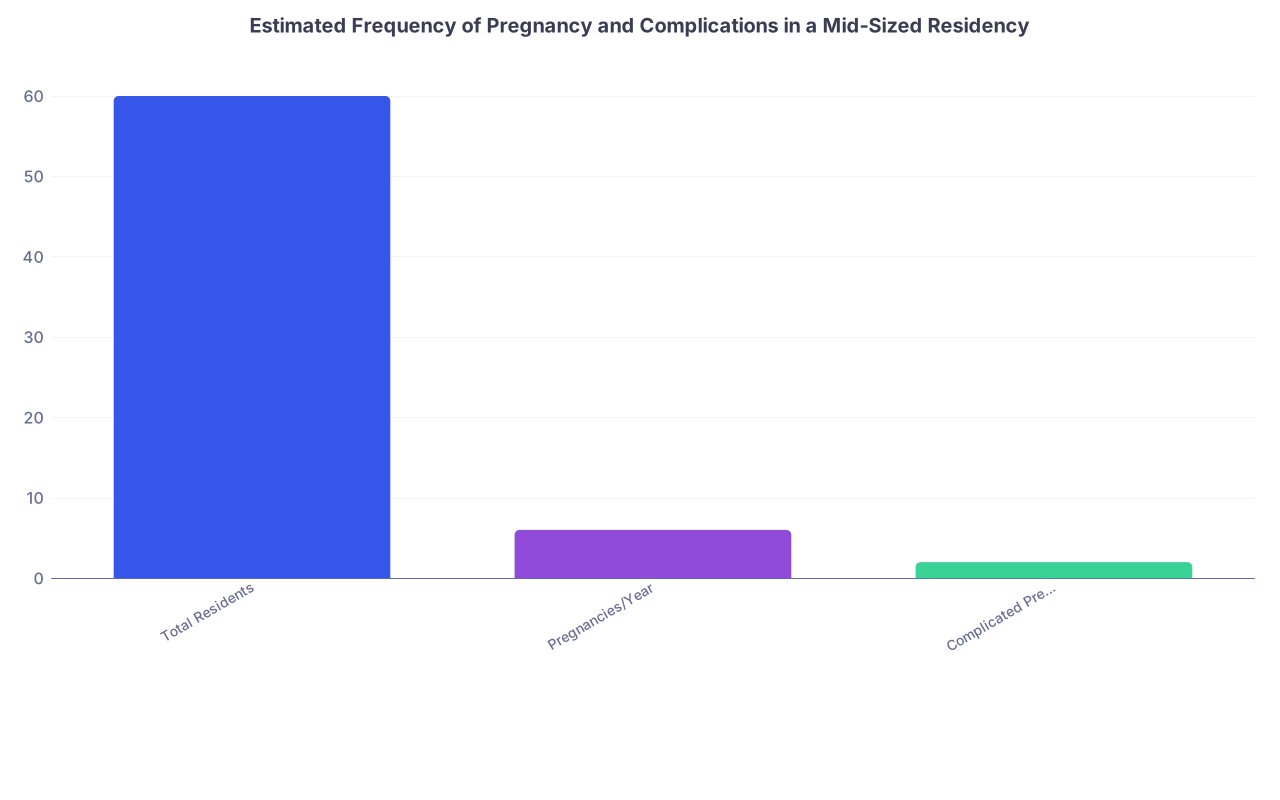
| Category | Value |
|---|---|
| Total Residents | 60 |
| Pregnancies/Year | 6 |
| Complicated Pregnancies/Year | 2 |
In a typical mid‑sized program of 60 residents:
- Maybe 6 pregnancies per year (some partners, some residents)
- Of those, 1–3 will have significant complications requiring real accommodation
- Of those, maybe 1 will need extensive schedule restructuring over several months
This is not a flood. It is a trickle. The institution can handle this. If it wants to.
The bigger problem is not numeric burden. It is cultural and administrative laziness.
7. The Edge Cases: Postpartum Complications and Mental Health
Everyone thinks about antepartum complications. Fewer people acknowledge that some of the worst temporary disabilities hit after delivery.
Examples I have seen:
- Postpartum hemorrhage requiring transfusion, ICU, or IR embolization
- Severe wound infection or dehiscence after C‑section
- Peripartum cardiomyopathy with EF 25%
- Severe postpartum depression or psychosis
All of these can—and should—trigger temporary disability accommodations if the clinician’s functional ability is substantially affected.
For mental health in particular, training culture is years behind:
- Residents with severe postpartum depression are often told to “use your vacation” or “maybe a short leave” but not offered structured accommodations on return.
- They return to full 24‑hour call immediately after a 4–6 week leave, while still on medication titration, with sleep deprivation that directly worsens their underlying condition.
A realistic, disability‑oriented approach might include:
- Graduated return to duty (no nights for 4–8 weeks, capped hours, predictable off days)
- Protected, non‑punitive time for psychotherapy and psychiatry appointments
- Explicit prohibition on using mental health treatment as a professionalism weapon in evaluations, absent real impairment or safety concerns
Postpartum complications are still pregnancy‑related medical conditions. They are squarely within the protection of PDA and PWFA. Programs that cut support at 6 weeks postpartum are doing the absolute minimum legally required for leave and ignoring the functional reality.
8. Designing Training Programs That Assume Pregnancy Will Happen
If you are serious about the “future of medicine,” you stop treating every pregnancy as an exotic exception. You design the system around the assumption that a nontrivial fraction of trainees will be pregnant, have pregnant partners, or experience loss and complications.
That means a few structural changes.
A. Rotation Architecture With Built‑In Flex
Programs need a pool of “accommodation‑friendly” rotations that are:
- Low‑call or no‑call
- Flexible in timing and length
- Competency‑rich but not physically extreme
Examples:
- Ambulatory blocks used as “accommodation slots” that can be shifted as needed
- Longitudinal continuity clinics that can be intensified temporarily
- Research, QI, simulation, or teaching rotations banked as future “currency”
You distribute these across the calendar, so if a complication emerges at 20 weeks, there is something to trade into without chaotic re‑engineering.
B. Call Systems That Can Stretch
Rigid, person‑specific call systems are brittle. Slightly over‑hiring or using flexible advanced practice providers, moonlighters, or hospitalists to absorb extra call for short windows is expensive, yes. But not prohibitively so. And it prevents patient care and resident wellbeing from both being compromised.
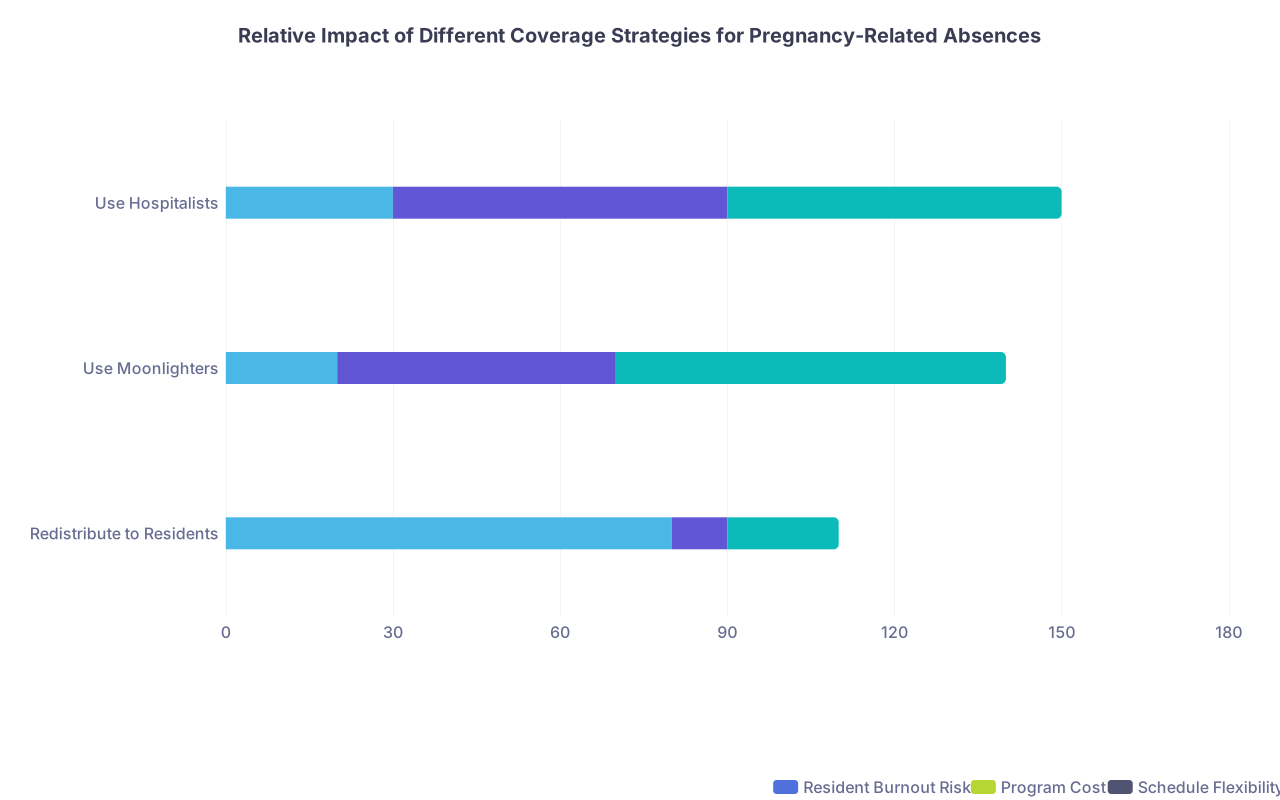
| Category | Resident Burnout Risk | Program Cost | Schedule Flexibility |
|---|---|---|---|
| Redistribute to Residents | 80 | 10 | 20 |
| Use Moonlighters | 20 | 50 | 70 |
| Use Hospitalists | 30 | 60 | 60 |
Does this cost money? Yes. Is it cheaper than recruiting and retraining a replacement after a resident leaves due to an unmanageable pregnancy experience? Often, yes.
C. Normalize Early, Confidential Planning
The most competent programs I have seen do something like this:
Explicitly tell incoming residents and students: “Pregnancy and pregnancy‑related conditions will be handled within our disability framework. Early disclosure (when you are comfortable) lets us plan better. Your information will be kept as confidential as possible.”
Offer a standard, optional meeting with GME and/or disability office for any trainee considering pregnancy, to explain leave policies, board requirements, and how accommodations work.
This is not coercive family planning counseling. It is transparency so that trainees do not fear catastrophic career damage from a first‑trimester bleed.
9. The Cultural Resistance—and How to Cut Through It
You will run into the same arguments over and over.
“Medicine is hard; if we lower the bar for pregnant residents, we are diluting training.”
Counterpoint: Protecting a resident with threatened preterm labor from 28‑hour calls for 8 weeks is not “lowering the bar.” It is applying the same disability principles you would for a resident with a broken hip or acute leukemia. The bar is competency over years, not unbroken heroics every single rotation.
“If we do this for pregnancy, we have to do it for everyone.”
Correct. That is the point. The disability framework is meant to be applied consistently: cancer, MS flare, complicated pregnancy, severe depression. Everyone gets an interactive process. The specific accommodations vary with functional need.
“Patients come first.”
Patients do come first. That is exactly why you do not want a severely hypertensive, sleep‑deprived, near‑syncopal pregnant resident managing your ICU overnight. Safe, rested, appropriately accommodated clinicians are a patient safety intervention, not a luxury.
10. Where This Is Going: The Future of Pregnancy, Disability, and Training
The direction of travel is clear. Legal protections for pregnant workers have expanded, not shrunk. The demographics of medicine are changing—more trainees in their late 20s and 30s, more dual‑physician couples, more high‑risk pregnancy by definition.
The training environment will either adapt in a structured, thoughtful way. Or keep lurching from crisis to crisis every time a PGY‑2 on trauma starts contracting at 30 weeks.
If you are a trainee, here is the uncomfortable truth: you cannot wait for your institution to have a perfect policy. You need to:
- Recognize when a pregnancy‑related issue has crossed into “temporary disability” territory
- Use formal disability channels, not just favors and whisper networks
- Ask specifically: “How will this affect my time‑away count and board eligibility? What are the options to keep me on track?”
- Document every agreed‑upon accommodation in writing
If you are faculty or leadership, the work is even heavier:
- Stop thinking of pregnancy as a private inconvenience and start treating pregnancy‑related complications as time‑limited but serious disabilities within your existing framework.
- Build modular rotations, elastic call systems, and clear policies that do not require reinvention with each pregnancy.
- Train chiefs and attendings to respond with, “We have a process; let us get you into it,” rather than guilt or skepticism.
Pregnancy‑related complications will keep happening. To brilliant, dedicated trainees. During high‑stakes rotations. At bad times.
Your real choice is not whether they occur. Your choice is whether trainees go through them isolated, ashamed, and punished—or supported by a system that recognizes temporary disability, accommodates it intelligently, and still gets them across the finish line as fully trained physicians.
Once you get that foundation in place, you can start tackling the broader question: how to design medical training that is compatible with a full human lifespan—fertility, illness, caregiving, aging—instead of assuming your workforce is eternally 26, single, and indestructible. But that is a bigger rebuild, and a conversation for another day.