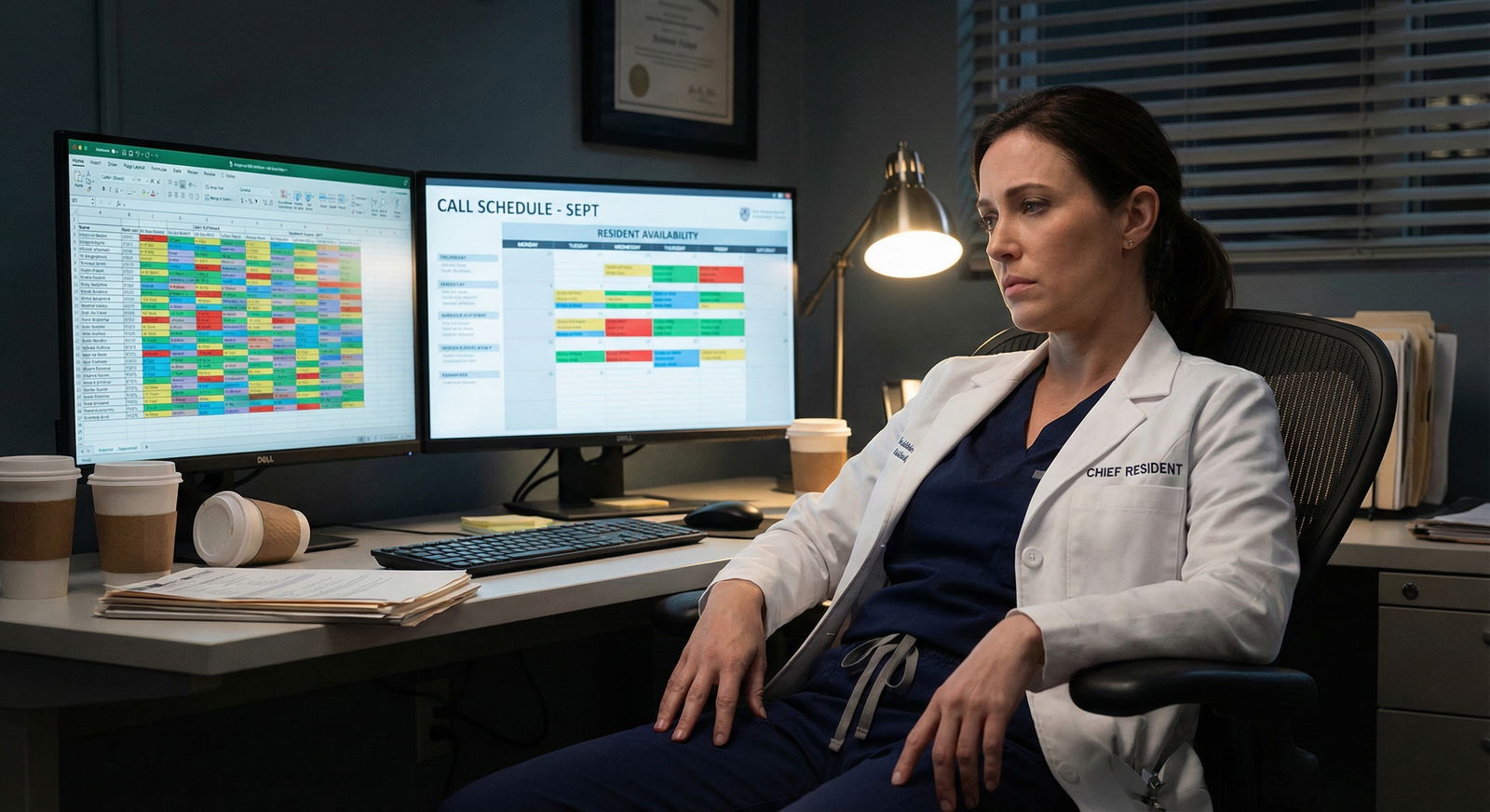
The biggest mistake disabled medical students make is treating residency like “more school with longer hours.” It isn’t. It’s a workplace with power, policies, money, and liability—and that’s exactly why you must start planning your accommodations a full year before you show up in a short white coat.
I’m going to walk you through that year. Month by month. Then, as you get closer, week by week and finally day by day. I’ll tell you what most people find out too late—after they’ve already burned out, been unsafe, or quietly pushed out.
You get to be smarter than that.
12–10 Months Before PGY‑1: Big-Picture Positioning
At this point you should be in late MS3 / early MS4, or about a year before residency starts.
1. Clarify your disability realities (not wishful thinking)
Before you even think “What accommodations will I ask for?”, you need to know what you actually need to function safely at resident intensity.
Over 2–3 weeks, do this:
- Track your energy, pain, cognition, mobility, or sensory issues daily.
- Note:
- Time of day you’re most functional
- Triggers (long standing, night shifts, noise, EMR use, masks, fluorescent lighting, etc.)
- Recovery time after a heavy day
- Compare a “light” clinical day vs. your heaviest clerkship day and how long it took to bounce back.
Write down, bluntly:
- “I can safely stand/walk for X hours before symptoms become unsafe.”
- “I need Y continuous minutes to take meds, stretch, or check blood sugar.”
- “I cannot do overnight call more than Z times per month without significant flare or risk.”
You will use this language later with:
- Disability services
- GME (Graduate Medical Education) / HR
- Program leadership
2. Choose specialties with your actual constraints in mind
This is where people lie to themselves. Do not.
Ask, “Can I do the core physical and cognitive work of this specialty, with accommodations, most days, for years?”
Some rough reality checks:
| Specialty Type | Typical Physical Demand | Typical Schedule Intensity | Environment Notes |
|---|---|---|---|
| Surgical | High standing/manual | Long days, heavy call | OR, procedures, sterile |
| Hospital-based | Moderate walking | Variable call/night float | Inpatient wards, ICUs |
| Outpatient-heavy | Mostly seated, EMR | More predictable days | Clinic-focused |
| Procedure-light | Lower physical demand | Mix of inpatient/outpatient | More cognitive workload |
You can match into competitive specialties with disabilities. I’ve seen visually impaired radiologists, residents with MS in neurology, wheelchair users in psychiatry and PM&R. But you can’t “accommodate away” fundamental job functions.
At this point you should:
- Narrow to 1–2 realistic specialties.
- Talk to at least 2 disabled physicians or residents in comparable fields if you can (Twitter/BlueSky/LinkedIn/Docs With Disabilities Initiative are good starting points).
10–8 Months Before PGY‑1: Information and Documentation
This is usually early MS4 or just before ERAS season.
3. Update your medical and functional documentation
Residency programs and hospitals don’t care that your medical school had you on extended time or gave you a stool in clinic. They care about:
- What your disability is
- How it functions
- What accommodations are recommended by a qualified professional
By 9–10 months out, you should:
- Make an appointment with:
- Your specialist (neurologist, rheumatologist, psychiatrist, etc.)
- Or a clinician who can perform a functional capacity evaluation (for mobility, stamina, etc.)
- Ask them specifically to address:
- Diagnosis (clear, durable)
- Functional limitations in a clinical environment
- Recommended accommodations (examples: no more than X consecutive hours, ergonomic seating, screen reader access, electronic stethoscope, proximity parking, etc.)
- Get this documentation in writing, not just in the clinic note.
Keep a digital folder labeled “Residency Disability Docs” with:
- PDFs of all relevant letters
- Your own 1–2 page “Functional Snapshot” summary in plain language
4. Learn the rules of the new game (ADA, GME, HR)
Here’s the shift: in residency you’re an employee, not just a student.
That means:
- ADA/Section 504 still apply
- But the process is now usually run through:
- GME office
- HR / Employee Health
- Hospital ADA/EEO office
At 8–9 months out:
- Read your target institutions’ disability or employee accommodation pages.
- Look for phrases like “reasonable accommodation,” “essential job functions,” “interactive process.”
You want to understand:
- Who handles accommodation requests (not just for trainees in general, but residents specifically).
- Whether they mention call, modified schedules, or remote work (rare, but occasionally relevant in telehealth-heavy clinics).
8–6 Months Before PGY‑1: Application and Disclosure Strategy
This is prime ERAS / application season.
5. Decide when and how to disclose
Do not let anyone scare you into “never disclose.” That’s simplistic and often wrong.
Your options:
No disclosure until after you match
- Pros: Less bias in selection.
- Cons: Less time to plan accommodations; potential mismatch with program culture.
Limited disclosure in personal statement / secondary / interview
- Pros: You can frame your story; find programs that “get it.”
- Cons: Risk of implicit bias; requires careful wording.
Targeted disclosure directly to GME/HR after interview but before rank lists
- Pros: Tests their response; allows some planning pre‑Match.
- Cons: Requires trust and finesse; not all programs are sophisticated about process.
At this point you should:
- Write a 3–5 sentence “disclosure script” in three flavors:
- Clinical facts only: “I have a chronic condition that requires predictable access to my medications and short rest breaks every X hours. With these accommodations I’ve been able to complete full‑time clinical rotations safely.”
- Values + facts: “My experience as a trainee with disability has shaped how I think about patient safety and team design. Functionally, I need X, Y, Z to work at my best, which I’ve done on inpatient rotations and call.”
- Accommodations-only: “I work with disability services/employee health to ensure I have A, B, C (specific supports). I’m happy to engage with your GME office about this process if I match here.”
Use whichever fits the situation.
6. Filter programs for disability-friendliness
Most websites won’t say “we’re bad for disabled residents.” Your job is to read between the lines.
At 6–7 months out, while making your program list:
- Check:
- Do they mention wellness beyond yoga and pizza?
- Is there a GME ombudsperson or trainee advocate?
- Any visible statements about disability, not just race and gender?
- Talk to people:
- Ask residents: “Do people here actually take medical leave?” “How is call redistributed when someone is out long‑term?”
- If you feel safe: “Have you seen the program handle accommodations or chronic health needs?”
Red flag phrases I’ve personally heard:
- “We’re a family; we all just pitch in instead of formal accommodations.”
- “We expect everyone to push through—residency is hard for everyone.”
- “We’ve never really had a resident with that kind of need.”
Put those programs lower on your list, if at all.
6–3 Months Before PGY‑1: Post-Match, Pre-Employment Reality
You’ve matched (or soon will). Now it gets real.
7. Week of Match: Map your next 3 months
At this point you should:
- Create a simple timeline:
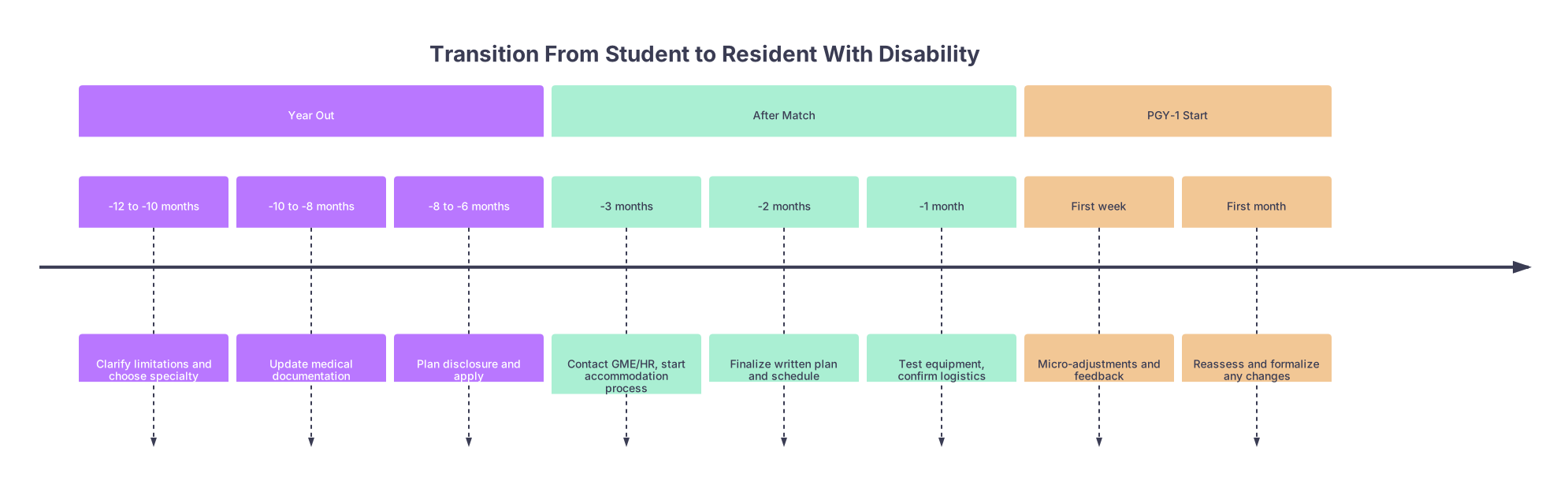
| Period | Event |
|---|---|
| Year Out - -12 to -10 months | Clarify limitations and choose specialty |
| Year Out - -10 to -8 months | Update medical documentation |
| Year Out - -8 to -6 months | Plan disclosure and apply |
| After Match - -3 months | Contact GME/HR, start accommodation process |
| After Match - -2 months | Finalize written plan and schedule |
| After Match - -1 month | Test equipment, confirm logistics |
| PGY-1 Start - First week | Micro-adjustments and feedback |
| PGY-1 Start - First month | Reassess and formalize any changes |
Print this or keep it pinned in your notes app.
8. Within 2–3 weeks after Match: Start the official process
Do not wait until orientation week. That’s how you end up doing 28‑hour call on day 3 with no stool, no medication time, and no parking.
Within the first 2–3 weeks after Match:
- Email the GME office (or residency program coordinator if that’s the listed pathway) something like:
- “I’m an incoming PGY‑1 in [specialty]. I have a disability that will require workplace accommodations. Could you connect me with the appropriate HR/Employee Health or ADA coordinator to start the interactive process?”
- Attach nothing personal yet unless they ask. You’re just opening the door.
You want:
- A named contact (HR/ADA/Employee Health)
- Clarity on:
- Their documentation requirements
- Their timeline (some systems move slowly)
9. 2–3 Months Before PGY‑1: Define your specific accommodation asks
Now you must translate “I get exhausted” into “I need X.”
Think in categories:
- Schedule / duty hours
- Limits on consecutive hours
- Adjustments to frequency of night float or 24‑hr call if medically justified
- Environment
- Ergonomic chair/stool in clinic and OR
- Reduced exposure to triggers (lighting, noise) where possible
- Proximity parking or safe transit
- Technology / tools
- Screen readers, dictation software, magnification
- Electronic stethoscopes, amplified pagers
- Task modification (without removing essential functions)
- Alternative methods to perform procedures
- Assistance with physically impossible tasks, while retaining responsibility where feasible
Draft a 1–page “Requested Accommodations” doc with:
- Bullet 1: Limitation (“I cannot safely be awake and clinically responsible for more than 16 consecutive hours due to [condition].”)
- Bullet 2: Risk (“Beyond this I have [vertigo, cognitive slowing, risk of seizure, etc.].”)
- Bullet 3: Accommodation request (“Limit shifts to 16 hours; avoid 28‑hour calls; structure night rotations as night float with X pattern.”)
You’re not demanding; you’re proposing. But be concrete.
1–2 Months Before PGY‑1: Locking in Details
At this point HR/GME should be mid‑process with you. If they aren’t, follow up. Weekly if needed.
10. Have the hard conversations before you start
Some programs handle this perfectly. Others are passive-aggressive. I’ve seen both.
By 6–8 weeks before your start date, you should:
- Have had at least one meeting (virtual or in person) with:
- HR/ADA or Employee Health
- Sometimes your program director (PD) if they’re brought in
- Clarified:
- Which accommodations are approved
- Which are under review
- Which are denied (with reasons)
Push for written confirmation. An email from HR/ADA spelling out:
- “Resident will have X, Y, Z accommodations starting [date].”
- Who is responsible for implementing each one (PD, chief residents, clinic manager, etc.).
This isn’t overkill. It’s how you protect yourself when the July chaos hits and everyone “forgets.”
11. Pre‑empt logistics problems
A lot of disability-related barriers are stupid logistics.
4–6 weeks out, go line by line through a typical day:
- How do you get to work?
- Apply for disability or proximity parking permits now.
- Arrange paratransit or rides if you can’t drive safely.
- Where will you be physically?
- Ask for maps of:
- Wards you’ll rotate on
- Clinic sites
- Call rooms
- Staff bathrooms (if you need accessibility features)
- Ask for maps of:
- What equipment must be in place on day 1?
- Order or request:
- Stethoscopes, chairs, keyboards, screen readers
- PPE adaptations if relevant (e.g., stethoscopes that work with hearing aids)
- Order or request:
At this point you should email the program coordinator:
- “Can you share the PGY‑1 rotation schedule and typical daily start/end times for each site?”
- “Who is the contact at [Clinic X] and [Hospital Y] to confirm accessible workspace/equipment before July?”
2 Weeks Before PGY‑1: Final Checks and Personal Systems
Now we zoom to week-by-week.
12. Week −2: Dry-run your functional day
Take one full day and simulate a resident day as best you can:
- Wake up at the time you’ll need for your earliest rotation.
- Stay continuously active (in your own way) for 10–12 hours.
- Build in:
- Only the breaks you’ve actually negotiated (not fantasy breaks).
- Approximate commute times.
At the end, write:
- “Symptoms at hour 4, 8, 10 looked like…”
- “I needed [X] additional rest / medication / food windows.”
If the day is impossible even with your planned accommodations, something is off:
- You may need to go back to HR/ADA with objective data:
- “I trialed a 12‑hour functional day and had [symptoms]. To work safely I’d need X instead.”
Not comfortable doing this alone? Rope in a trusted friend or partner to sanity-check.
13. Week −1: Communication prep
Use this week to script and practice the 10–second versions of your needs. You won’t be giving HR-level detail to everyone, but you will need quick phrases for:
- Chiefs / senior residents:
- “I have a chronic health condition and I’m working with GME on accommodations. Practically, it means I may need a 5‑minute break about every X hours and can’t safely do longer than Y-hour calls.”
- Co-residents:
- “I’ve got a disability I’ve cleared with the program. If you see me sitting a bit more or swapping some tasks, that’s part of my plan to stay safe and functional on service.”
You’re not obligated to share diagnosis. Only what’s needed.
First Week of Residency: On-the-Ground Adjustments
This is where planning meets chaos.
14. Day 1–3: Verify that reality matches the plan
Each day of your first week, you should:
- Check:
- Do you actually have your ergonomic chair/stool where you work?
- Is your parking/entrance accessible as promised?
- Are your shift lengths matching the approved accommodations?
- Keep a quick log:
- Start and end times
- What you physically did (standing vs sitting, procedures, rounds)
- Any near-miss issues (almost passing out, severe pain, missed meds)
If something is off:
- Email your HR/ADA contact early:
- “On [date], my shift extended to X hours, exceeding the Y-hour limit in our agreed accommodations. I want to flag this and discuss how we can adjust the schedule going forward.”
CC your PD or chief only if you’re comfortable or if HR suggests it. You’re not tattling. You’re documenting a safety issue.
15. End of Week 1: Micro-tune with your chief or PD
Ask for a 10–15 minute check‑in (even in the hallway if that’s all you get):
- “I want to make sure my accommodations are integrating well with team workflow. Here’s what’s working for me, and here’s 1–2 spots where I think we can adjust.”
Bring solutions, not just problems:
- “On rounds, if I can sit during the long teaching discussions but stand for bedside interactions, I’ll function better.”
- “If I can pre‑round on fewer patients but stay longer to help with notes and follow‑up calls, the workload stays balanced.”
The more you show you’re thinking about team function, the less defensive people get.
First Month of Residency: Reassessment and Longer-Term Plan
Once you survive the first few weeks, zoom out again.
16. Week 2–4: Pattern recognition
At this point you should:
- Review your logs weekly:
- What rotations/settings are most triggering?
- Which attendings/teams are flexible and which aren’t?
- Note any recurring unsafe patterns:
- “Sign-out consistently runs past my allowed hours.”
- “Clinic always double-books over my protected medication time.”
If you’re seeing repeated violations of your agreed accommodations:
- Schedule a follow-up with HR/ADA and, if appropriate, PD.
- Bring concrete examples, not vague complaints.
This is also when you test your backup plans:
- Who covers if you have a sudden flare?
- How do you step away safely for 10 minutes when things are on fire?
- Does your team actually respect those boundaries?
17. End of Month 1: Formal review with yourself (and maybe with GME)
Block a half-day off (seriously) at the end of your first month.
Ask yourself plainly:
- Am I clinically safe right now?
- Could I do this level of demand for 6–12 more months with only minor adjustment?
- What specific changes would make this sustainable?
If you’re already at the edge:
- This is the time to escalate:
- Request modification of future rotations (e.g., more outpatient-heavy blocks).
- Ask for explicit adjustment to call structure if your documentation supports it.
- Explore temporary reduced FTE or medical leave if necessary—not as failure, but as safety.
Looking Out Over the Rest of PGY‑1: Sustainability, Not Survival
By month 2–3 you’ll know if your current setup is survivable or if it’s slowly wrecking you.
Your long-term plan should include:
- Quarterly self-checks
- Symptom trends
- Use of sick days / leave
- Any near-miss patient safety events linked to fatigue, pain, or cognitive issues
- Annual documentation updates
- Especially if your condition is progressive or treatment changes
- Career path tweaks
- Maybe more outpatient, academic, or telehealth components
- Fellowship choices that match your functional strengths
Disabled residents are not rare edge cases anymore. You’re part of the future of medicine. But the system is still catching up, and you can’t assume it will take care of you automatically.
You need a plan. Year out. Month by month. Week by week.
One Visual: How Your Workload Will Likely Spike
To set your expectations, here’s the rough shape of your time and energy load across the transition year.
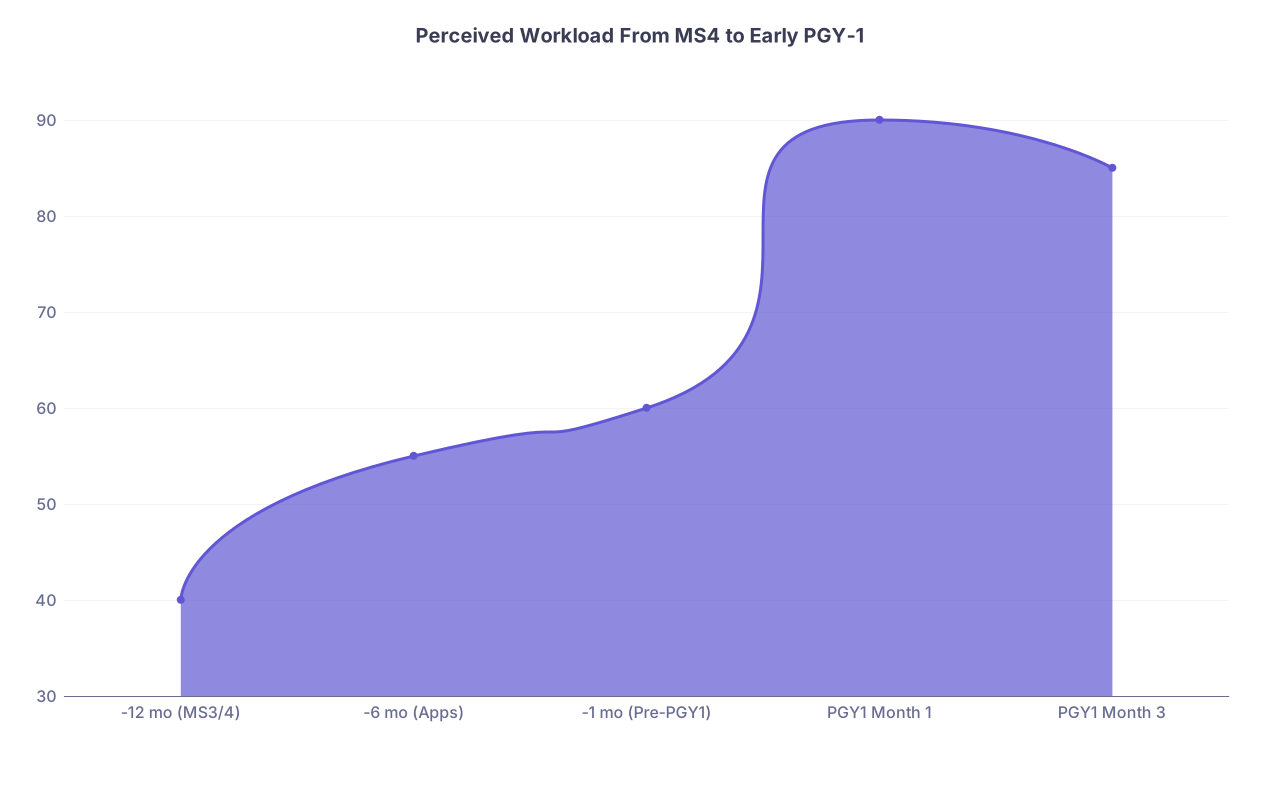
| Category | Value |
|---|---|
| -12 mo (MS3/4) | 40 |
| -6 mo (Apps) | 55 |
| -1 mo (Pre-PGY1) | 60 |
| PGY1 Month 1 | 90 |
| PGY1 Month 3 | 85 |
You can’t flatten that spike completely. But with planning, you can keep it from breaking you.
Your Next Step Today
Do one concrete thing now, not someday:
Open a blank page and write a one-page functional snapshot of your disability in clinical terms—what you can do, what you can’t, what you need to be safe. That document is the backbone of everything else: specialty choice, disclosure strategy, accommodation requests, and your actual life as a resident.
Start that page today. Then build the rest of your year-out plan around it.