The belief that “DO students cannot match competitive ACGME specialties because of research” is lazy analysis. The data show a more precise reality: research output functions as a force multiplier, and its impact is specialty-dependent, score-dependent, and increasingly important as DO–MD integration matures.
You are not competing in a vacuum. You are entering a market. And in that market, research is one of the few levers a DO applicant can still pull to close structural gaps.
Let’s quantify that.
1. The Baseline: DO Match Rates and Where Research Fits
After the single accreditation merger, DO applicants enter the same ACGME pool as MDs. But their outcomes are not identical. NRMP data and AACOM reports (2020–2024 cycles) show three pattern lines:
- Overall DO match rates are solid but lag US MDs.
- The gap widens in research-heavy, competitive specialties.
- DOs who “look like MDs on paper” (strong boards + meaningful research) converge toward MD match rates in those fields.
We will work with ranges drawn from recent NRMP Charting Outcomes data, AAMC/AACOM summaries, and program director surveys. Numbers vary by year, but the direction is consistent.
At a high level:
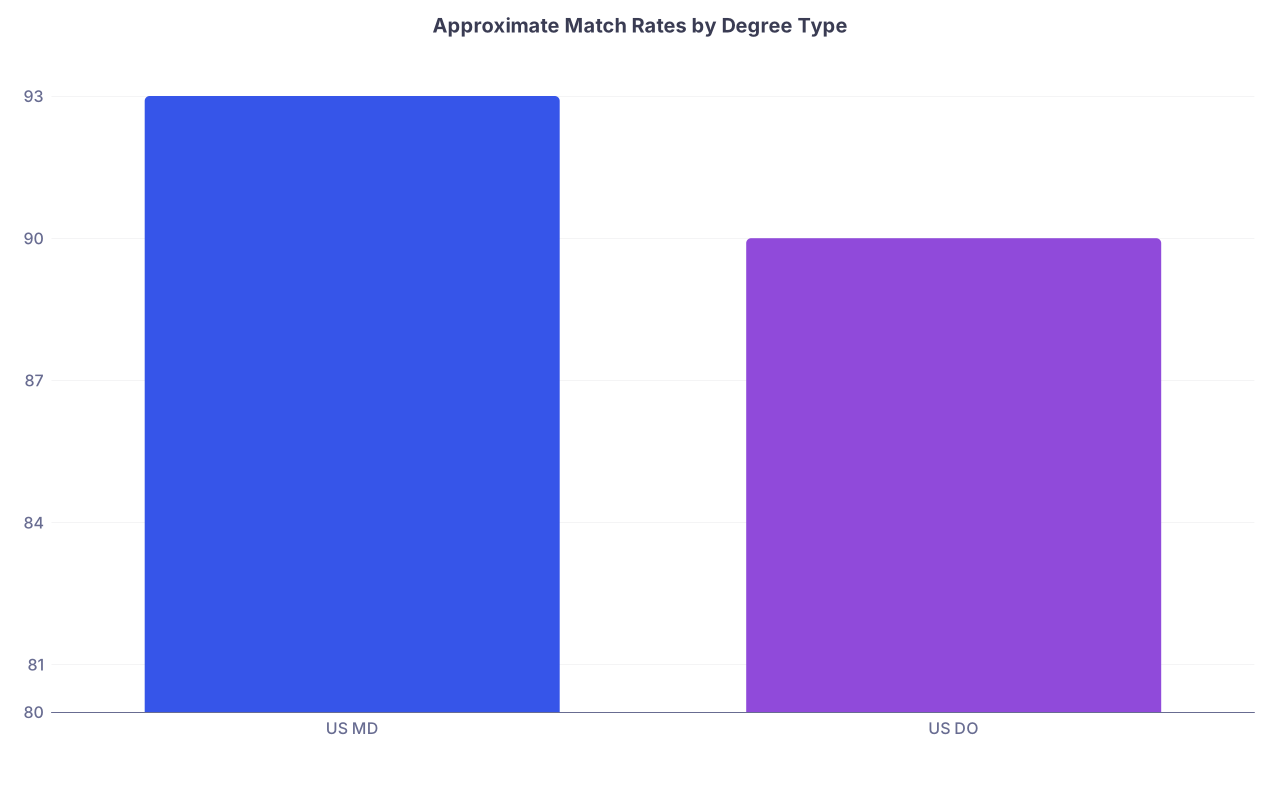
- Overall DO match rate in NRMP Main Match: usually ~88–92%
- Overall US MD match rate: ~92–94%
The real story, though, is in the specialty breakdown and what research does to the odds.
| Category | Value |
|---|---|
| US MD | 93 |
| US DO | 90 |
Those 3 percentage points overall seem modest. But they mask 20–40 point gaps in some specialties and near-parity in others. Research output is one of the strongest differentiators in those higher-risk zones.
2. Research Density by Specialty: Where It Actually Matters
Program director surveys (NRMP Program Director Survey, multiple cycles) repeatedly show that research, presentations, and publications matter far more in some specialties than others.
In other words: research is not universally critical. It is selectively critical.
Here is a simplified comparison of ACGME specialties grouped by “research intensity” based on:
- Average number of abstracts/pubs/presentations for matched US seniors
- % of programs listing “demonstrated scholarly activity” as important
- Typical academic culture of the specialty
| Specialty Group | Research Intensity | Typical Research for Matched US Seniors* |
|---|---|---|
| Dermatology | Very High | 12–20+ |
| Plastic Surgery | Very High | 10–20+ |
| Neurosurgery | Very High | 8–15+ |
| Orthopedic Surgery | High | 4–8 |
| Otolaryngology (ENT) | High | 4–8 |
| Radiation Oncology | High | 6–10 |
| General Surgery | Moderate–High | 3–6 |
| Internal Medicine (academic) | Moderate | 2–5 |
| Emergency Medicine | Low–Moderate | 1–3 |
| Family Med / Psych / Peds | Low | 0–2 |
*Numbers approximate, vary by year and dataset, but directionally accurate.
For DOs, the effect size of research is largest in the “Very High” and “High” bands. In FM or community internal medicine, research is nice; in derm, it is often a gatekeeper.
3. DO vs MD: Research Output and Match Probability
To understand the impact for DO applicants, you need to look at delta, not absolute numbers. How much does research move your probability curve within your own applicant pool?
3.1 The baseline disadvantage
Several structural disadvantages hit DO applicants in research-heavy fields:
- Fewer home academic departments in ultra-competitive specialties
- Limited NIH-funded labs at many osteopathic schools
- Fewer built-in research years or pipeline programs
- Historical bias from some programs that rarely or never interview DOs
Put differently: many DOs start with a research deficit and an institutional prestige deficit. Research output cannot erase school name, but it can:
- Increase interview offers from research-oriented programs
- Make you look statistically similar to MD peers from mid-tier schools
- Reduce the impact of your degree type in binary screening decisions
I have seen this repeatedly in ortho and derm: DOs with 8–12 pubs, including 1–2 first-author ortho/derm papers, are treated very differently from DOs with zero or one non-specialty abstract.
3.2 Quantitative impact by specialty “tier”
Let’s outline estimated “risk bands” for DO applicants, assuming:
- Step 2 / COMLEX Level 2 scores in a competitive but not elite range
- No major red flags
- Reasonable clinical performance
These are not official cutoffs. They are pattern-based approximations from recent match cycles and PD commentary, just to show how research shifts odds.
| Specialty Tier | Research Count (Specialty-Relevant) | Rough DO Match Outlook* |
|---|---|---|
| Very Competitive (Derm, PRS, NSGY) | 0–1 | <10–20% chance, often no interviews |
| 2–5 | 20–40% if strong, targeted portfolio | |
| 6–10+ | 40–70% in well-strategized applications | |
| High (Ortho, ENT, Rad Onc) | 0–1 | 15–30% |
| 2–4 | 35–55% | |
| 5–8+ | 55–80% in realistic program list | |
| Moderate (Gen Surg, IM academic) | 0 | Still matchable, but to lower research programs |
| 1–3 | Stronger shot at academic programs | |
| 4–6+ | Competitive for research-heavy institutions | |
| Low (FM, Psych, Peds) | 0 | Still good match odds |
| 1–2 | Slight bump, more academic options | |
| 3+ | Mostly diminishing returns |
*Assuming appropriate Step/Level scores and realistic program lists. These are directional bands, not guarantees.
The pattern is clear: for DOs, each incremental piece of specialty-relevant research cuts risk in the top tiers and expands geographic and institutional options in the middle tiers.
4. Specialty-Specific: Where DO Research Moves the Needle Most
Now let’s walk through the specialties where data and experience both say: if you are a DO and you want this field, you treat research like an additional board score.
4.1 Dermatology: Research as an entry ticket
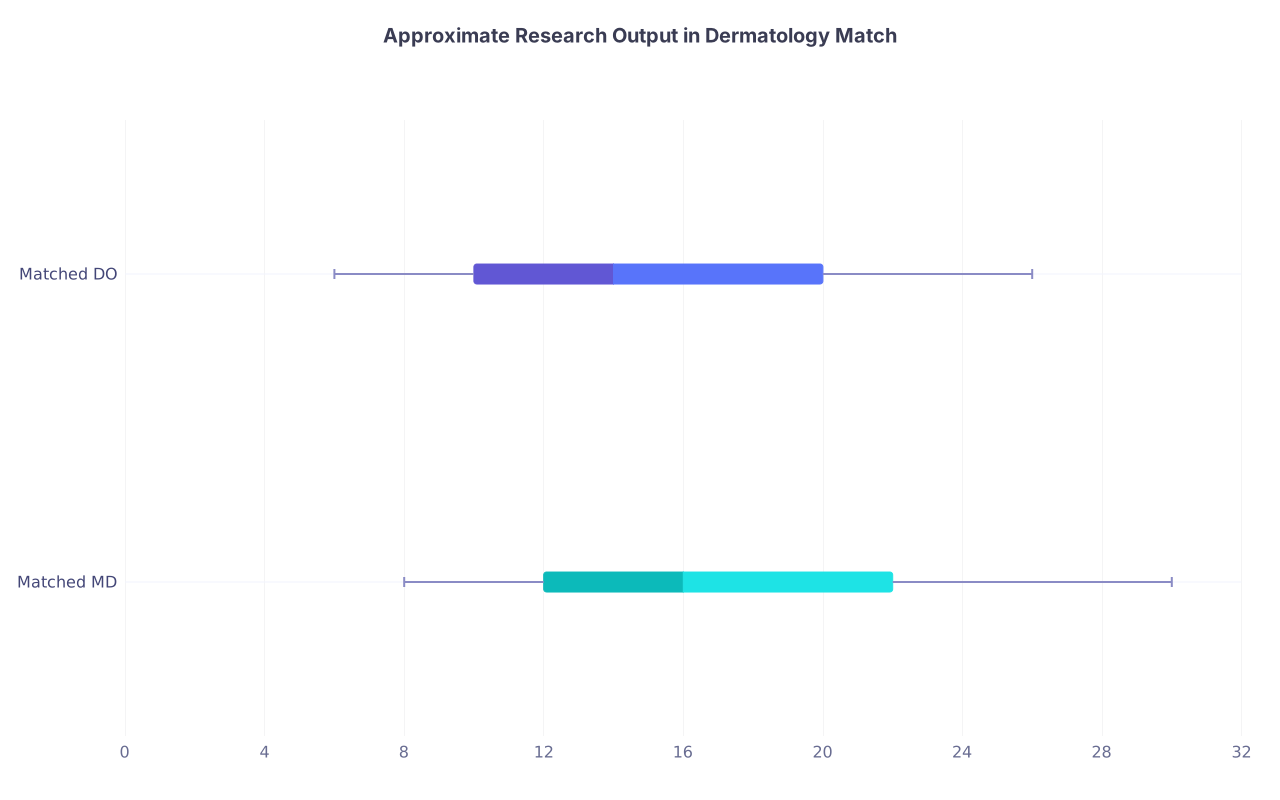
Dermatology is an extreme. NRMP data consistently show matched US seniors with double-digit publications/abstracts. Many are the product of dedicated research years.
For DOs:
- Match rate in ACGME derm is notoriously low. Some cycles: DOs constitute <5–7% of matched US grads.
- A non-trivial number of derm residencies never interview DOs. You are competing for a subset of spots.
What the data and anecdotes show:
- DOs who match derm almost always have research-heavy CVs: 10+ abstracts/pubs/presentations, often derm-focused.
- Many completed 1–2 research years at allopathic derm departments.
- Without meaningful derm research, your odds trend toward zero unless you are leveraging extraordinary networking or a niche DO-friendly program.
In derm, research is not “nice”. It is functional triage. Programs sort 600–800 applications; research volume plus derm relevance filters out huge swaths before anyone opens your personal statement.
| Category | Min | Q1 | Median | Q3 | Max |
|---|---|---|---|---|---|
| Matched MD | 8 | 12 | 16 | 22 | 30 |
| Matched DO | 6 | 10 | 14 | 20 | 26 |
DOs who beat the odds often look, on paper, indistinguishable from strong MD derm applicants in terms of output. The degree label matters less when the CV screams “serious academic intent.”
4.2 Orthopedic Surgery: Research as a tiebreaker and barrier-breaker
Ortho is slightly more forgiving than derm but still research-attentive:
- Typical matched US seniors: 4–8 research items on average
- Many programs are university-based with established research expectations
For DOs:
- A DO with 0–1 ortho-related projects, even with strong board scores, risks being seen as “community” profile only.
- A DO with 4–6+ ortho publications/abstracts, especially multicenter or with recognizable faculty, is suddenly in the conversation at academic programs.
I have watched this exact scenario: two DOs from the same school, both with Step 2 CK around 250, both strong clinical comments.
- Applicant A: 1 general surgery QI project, no ortho-specific research → matched community ortho after broad application.
- Applicant B: 7 ortho abstracts, 3 podium presentations, 1 ortho journal article → multiple academic interviews, matched at a university program that typically takes MDs.
Same school. Same boards. The differentiator was a quantified, specialty-aligned research story.
4.3 Neurosurgery and Plastics: Research or bust
Neurosurgery and plastic surgery resemble derm in one blunt way: if you lack research, you exist at the margins of the applicant pool, especially as a DO.
Patterns:
- Average research items for matched neurosurgery: often >10
- Plastic surgery applicants frequently hit double-digits as well
For DO applicants who match into these:
- Nearly all have done research at academic neurosurgery/plastics departments
- Many took structured research years, sometimes 2 years
- Their CVs include first-author manuscripts and meaningful contributions, not just padding
The impact is binary. With serious research: small but real chance. Without: negligible.
5. The “Middle” Specialties: IM, Gen Surg, EM, Psych
Here is where nuance matters. People overcorrect and start thinking they need 10 publications to match internal medicine as a DO. That is wrong.
5.1 Internal Medicine (especially academic tracks)
Internal medicine spans a huge range:
- Community IM programs: research is mildly relevant at best
- Academic IM at top institutions (e.g., major university hospitals): research is a strong positive signal
Data trends:
- Matched US MD seniors in IM: often 2–5 research items
- Many community IM programs have matched DOs with zero research consistently
For DO applicants targeting academic IM (future cards, GI, heme/onc):
- Research matters less for matching IM and more for setting up fellowship trajectory
- One first-author clinical paper + a couple of abstracts in IM or subspecialty fields can meaningfully improve your ability to land at university programs
- Number beyond ~5–7 has diminishing returns unless you are aiming for physician-scientist tracks
In other words: you can match IM without research. But if you want to compress the “DO penalty” when applying to Cardiology or GI later, early research output is a high-yield hedge.
5.2 General Surgery
General surgery sits in that moderate–high band:
- Matched US seniors average around 3–6 research items
- A chunk of DOs match GS with limited research, particularly at community or hybrid programs
Where research changes the curve for DOs:
- Academic surgery programs filter for people who can produce data, not just do cases
- A DO with genuine surgery research (even QI or retrospective studies) gets more serious consideration at those places, and for preliminary academic slots that can convert to categorical
Here the effect is less binary and more gradational:
- 0 research: you are realistically targeting community-heavy lists
- 1–3 surgery projects: open doors to mid-tier academic institutions
- 4–6+ with strong letters: you start looking like a competitive academic candidate regardless of degree type
5.3 EM, Psych, Peds, FM: Research as optional, not central
For these specialties, data from PD surveys are blunt:
- Clinical performance, SLOEs (for EM), Step/Level scores, and “fit” dominate
- Research lives near the bottom of PD importance lists
That does not mean research is useless. It simply means:
- It rarely rescues a weak DO application
- It can matter if you are targeting highly academic versions of these programs (e.g., psych at big-name research institutions, EM at research-heavy departments)
But the marginal gain here per additional publication is far smaller than in derm or ortho. One or two projects is usually sufficient to show “scholarly curiosity”.
6. Quality vs Quantity: What Actually Moves Numbers for DOs
Many DO applicants fixate on raw counts. “I need 10 pubs.” That misses the signal.
Programs, especially those skeptical of DO schools, look for:
- Specialty relevance
- Continuity with a mentor or research group
- Evidence that you understood the project (reflected in your letters and interviews)
- Contribution level (first-author vs name-added)
From a data-analyst perspective, think in terms of signal-to-noise ratio.
A DO profile with:
- 4 ortho-focused abstracts, 1 first-author ortho paper, 2 national podiums
is stronger for ortho than:
- 14 generic case reports in random fields, 0 tied to orthopedic faculty
Short version: program directors mentally weight a focused, coherent portfolio more heavily than a scattered pile of low-impact items.
7. DO Research Output vs Step Scores: Tradeoffs and Timing
You do not have infinite bandwidth. The key strategic question: how much time to shift from Step/Level prep to research?
Here is how the tradeoff usually works in outcome data:
- Falling below hard score cutoffs (e.g., Step 2 CK <240 for ortho, <250 for derm at many places) is often lethal, regardless of research
- Between the cutoff and the “ideal” score band, research can significantly improve your odds
- Above a certain score threshold, research begins to determine which tier of programs you realistically reach
Think in three rough ranges for competitive specialties as a DO:
Sub-threshold scores (e.g., Step 2 CK <235–240 in ortho):
Research rarely compensates sufficiently. Time is better spent ensuring you pass and consider alternate specialties.Borderline–competitive scores (e.g., 240–250 in ortho, 245–255 derm):
This is where research has the largest marginal impact. Each additional serious project preserves options that would have vanished.Elite scores (e.g., 255–265+):
Research now controls whether you compete for mid–upper tier programs or live primarily in the lower academic/community band.
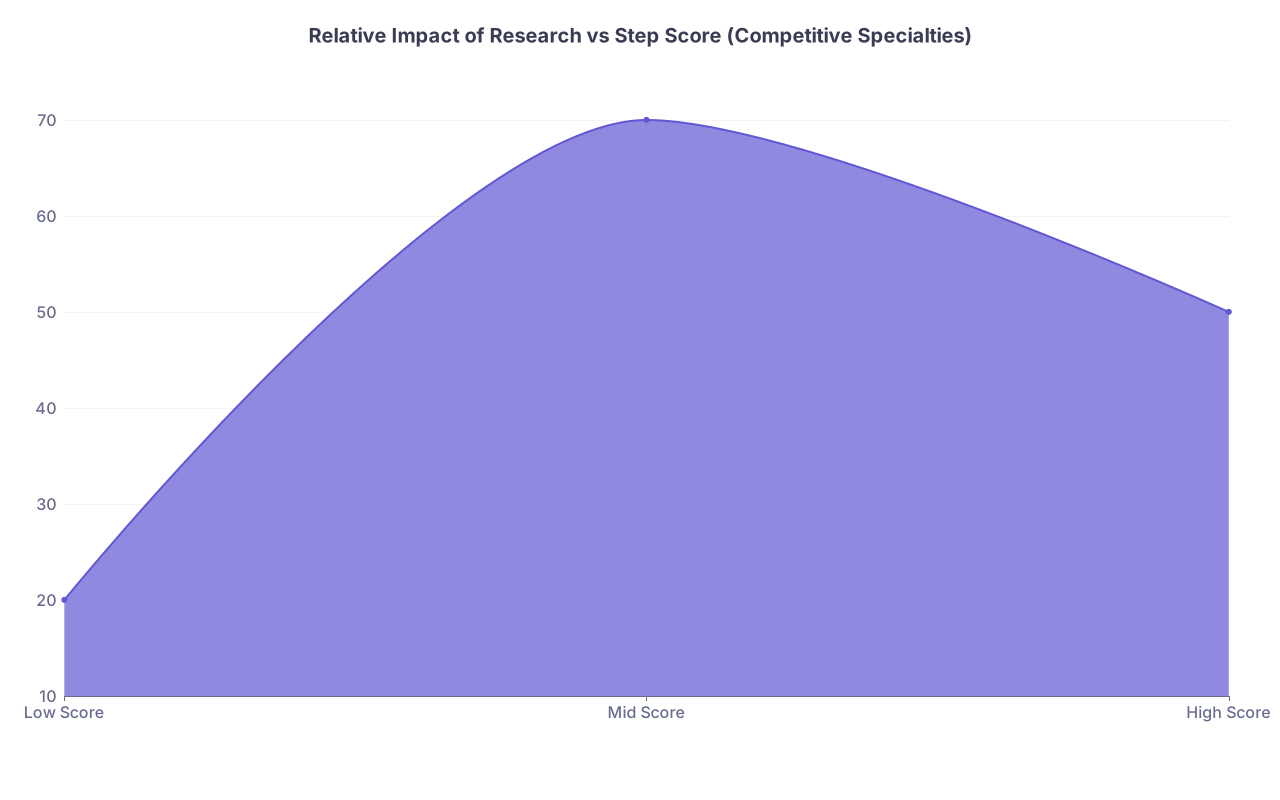
| Category | Value |
|---|---|
| Low Score | 20 |
| Mid Score | 70 |
| High Score | 50 |
Interpretation: at mid-range scores, research has the highest incremental value for DOs in competitive fields.
8. Practical Patterns: What Successful DO Applicants Actually Do
Let me ground this with actual patterns from successful DO applicants across recent cycles:
- The ortho DO who matched at a top-30 academic program: took one research year at an ACGME ortho department, produced 5 ortho abstracts and 2 publications, Step 2 CK ~250, strong away rotations.
- The derm DO who matched at a historically MD-heavy program: two research years, 15+ derm-related items, Step 2 CK in mid-250s, letters from known derm faculty.
- The neurosurgery DO (extremely rare) who matched: long-standing neurosurg research with first-author papers, multi-institution collaborations, high 250s Step 2, heavy networking.
Across all three: the research was not side-hobby level. It was sustained, mentored, and directly aligned with the specialty.
Conversely, I have seen:
- DOs with Step 2 CK 250+ in derm or ortho, but 0–1 relevant research projects → few or no interviews at the most competitive places, often did not match desired specialty.
- DOs with moderate scores but thick, targeted research portfolios → disproportionately strong interview yields relative to their numerical peers.
Patterns over anecdotes. Same direction every year.
9. How Program Directors Actually Use Your Research Output
PD surveys and informal comments reveal a consistent usage pattern for research in evaluating DOs:
Screening and sorting
- Initial filter: board scores, school type, visa status, red flags.
- Next tier: research volume and specialty alignment, especially in academic programs.
For DOs, substantial research pushes you “above the line” in programs that might otherwise screen you out by school.
Signal of commitment
If you are a DO applying to neurosurgery with 0 neurosurg research, the implicit question is: how serious are you? Research answers that.Proxy for academic potential
Competitive programs are training future fellows and sometimes faculty. Research history is a quantitative hint of who will contribute academically.Tie-breaker among similar applicants
When a program has 10 more-or-less similar DO applicants (same score range, similar letters), the one with documented specialty research and presentations rises to the top pile reliably.
10. Strategic Takeaways for DO Applicants
Compress all of this into actionable rules.
If you are a DO aiming for:
Derm, plastics, neurosurgery, or integrated vascular/ENT:
Plan on a research year or two. Aim for 8–15+ specialty-focused outputs by application. No research year and no output? The numbers are against you.Ortho, rad onc, urology, competitive general surgery:
You want at least 3–6 specialty-relevant projects, and more is better if you are coming from a non-elite DO school. Consider dedicated time if your home institution lacks these opportunities.Academic IM, academic psych, academic EM, academic peds:
2–4 relevant projects is usually enough to signal seriousness and reduce DO disadvantage at university programs.Community FM, community IM, community psych/peds:
Research is optional. One or two projects can help differentiate you, but clinical performance and letters dominate.
And across all:
- Quality and relevance beat raw count.
- Research cannot consistently rescue very low board scores in competitive fields.
- For DOs, the relative gain from research is larger than for MDs in many specialties because it directly counters institutional biases.
Key Points to Remember
- The impact of research output on DO ACGME match rates is highly specialty-dependent, with the strongest effect in derm, ortho, neurosurgery, plastics, and academic tracks.
- For DOs, specialty-relevant, mentored research meaningfully narrows the MD–DO gap in competitive programs but does not reliably compensate for sub-threshold board scores.
- In lower-competition specialties, research offers marginal advantage and future fellowship leverage rather than being a primary determinant of match success.