

The biggest mistake DO students make the summer before applying is drifting. You cannot drift into an ACGME-ready portfolio. You build it on a clock.
You have one short summer to close the “ACGME gap”: research expectations, letters from MD faculty, board scores positioned correctly, and your DO identity framed strategically rather than apologetically. That does not happen by accident.
Here is your summer, broken down on a timeline. Week by week. At each point, I will tell you exactly what you should be doing if you want a real shot in competitive ACGME programs, not just hoping the DO-friendly list saves you.
Big-Picture Timeline: Your Pre‑Application Summer Map
Assume:
- You will submit ERAS in September.
- You are entering the summer immediately before application (between third and fourth year for most).
We will structure June–August, then zoom into weeks and days where it matters.
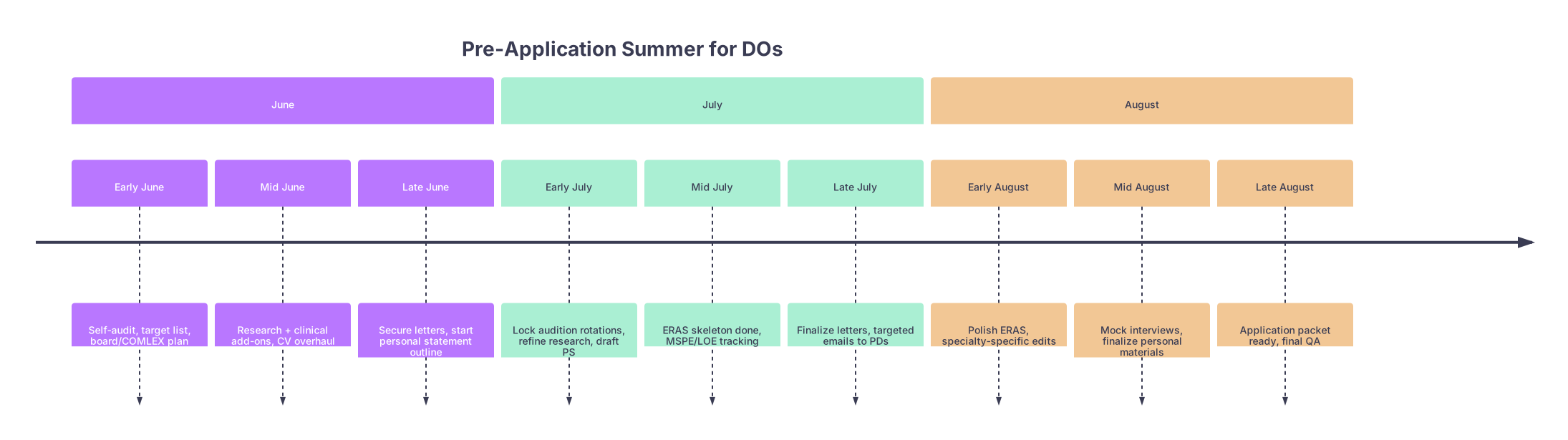
| Period | Event |
|---|---|
| June - Early June | Self-audit, target list, board/COMLEX plan |
| June - Mid June | Research + clinical add-ons, CV overhaul |
| June - Late June | Secure letters, start personal statement outline |
| July - Early July | Lock audition rotations, refine research, draft PS |
| July - Mid July | ERAS skeleton done, MSPE/LOE tracking |
| July - Late July | Finalize letters, targeted emails to PDs |
| August - Early August | Polish ERAS, specialty-specific edits |
| August - Mid August | Mock interviews, finalize personal materials |
| August - Late August | Application packet ready, final QA |
At this point you should accept one thing: if you are not intentional with each two‑week block, you will show up in September with a half-built file. ACGME PDs will see it in 30 seconds.
Step 1 (Early June): Hard Self‑Audit And Target Program Reality Check
Week 1–2 of Summer: Know Exactly What You Are Selling
At this point you should spend 2–3 focused evenings doing a brutal portfolio audit. Not vibes. Data.
Create a simple document with:
- Scores
- COMLEX Level 1 and 2 (or planned date for Level 2).
- USMLE Step 1 and/or Step 2 CK (or if you are not taking them, be explicit).
- Clinical
- Clerkship grades (especially core rotations).
- Any honors/high passes.
- Research
- Abstracts, posters, manuscripts (submitted/accepted/published).
- Osteopathic Identity
- OMT experience, osteopathic scholarly project, leadership in SOMA/SSIG, etc.
- Letters
- Who could write you a letter today? MD vs DO, core vs elective, academic vs community.
Now compare yourself to the rough expectations for ACGME programs in your target specialty.
| Specialty | Step 2 CK (if taken) | COMLEX 2 | Research Expectation | MD Letter Need |
|---|---|---|---|---|
| Internal Med | 230+ | 520+ | Helpful, not critical | 1–2 preferred |
| Family Med | 220+ | 500+ | Minimal ok | 0–1 helpful |
| Pediatrics | 225+ | 510+ | Some preferred | 1 preferred |
| EM | 235+ | 540+ | Strong; SLOEs | SLOEs > titles |
| General Surgery | 240+ | 550+ | Strongly preferred | 1–2 essential |
If you do not know your specialty yet, you use June to decide. Not August.
Concrete tasks by end of Week 2:
- Choose 1 primary specialty and at most 1 backup (e.g., IM + FM).
- Decide on USMLE Step 2 CK: taking or not. For many competitive ACGME programs, a DO without Step 2 has an uphill battle. Pretending otherwise is denial.
- Draft an initial “tiered” program strategy:
- Tier 1: Reach ACGME programs.
- Tier 2: Solid ACGME + historically DO‑friendly.
- Tier 3: Safety / community programs, possibly AOA legacy.
Step 2 (Mid–Late June): Build What You Are Missing
At this point you should shift from analysis to action. You have 6–8 weeks to patch the biggest holes.
Week 3–4: Research, Clinical, And Board Strategy
A. Research: Fast, Credible, And Visible
No, you will not magically publish three first‑author RCTs in two months. But you can:
- Attach yourself to ongoing projects with:
- Data analysis pending.
- Abstracts being written.
- Case reports that just need structure and references.
What you do now:
- Email 5–10 faculty (MD and DO) in your target field:
- Subject line: “Rising DO MS4 seeking short‑timeline project support in [specialty]”
- Offer: data cleaning, chart review, reference formatting, poster creation.
- Aim for:
- 1–2 new concrete projects to list on ERAS (in progress is fine).
- At least 1 mentor in ACGME‑heavy environment.
You are not chasing prestige. You are signaling you can survive in an academic system.
B. Clinical: ACGME‑Facing Time
If you do not already have:
- At least one rotation at an ACGME‑affiliated hospital in your specialty;
- And at least one MD attending who knows you clinically;
you need to fix that now.
Contact:
- Your clinical education office about away/audition rotations.
- Programs that are DO‑friendly but fully ACGME.
Your priority:
- Secure July–October rotations that will generate strong letters and show you in an ACGME environment.
If it is already “too late” for formal away slots at brand‑name places, pivot to:
- Community ACGME programs with open schedules.
- Shorter “observer‑plus” style weeks where you still get face time with attendings.
C. Board Exam Positioning
You should make a clear decision by end of June:
- If Step 2 CK is pending: book the exam date no later than early August for a September score release.
- If COMLEX 2 is pending: same logic.
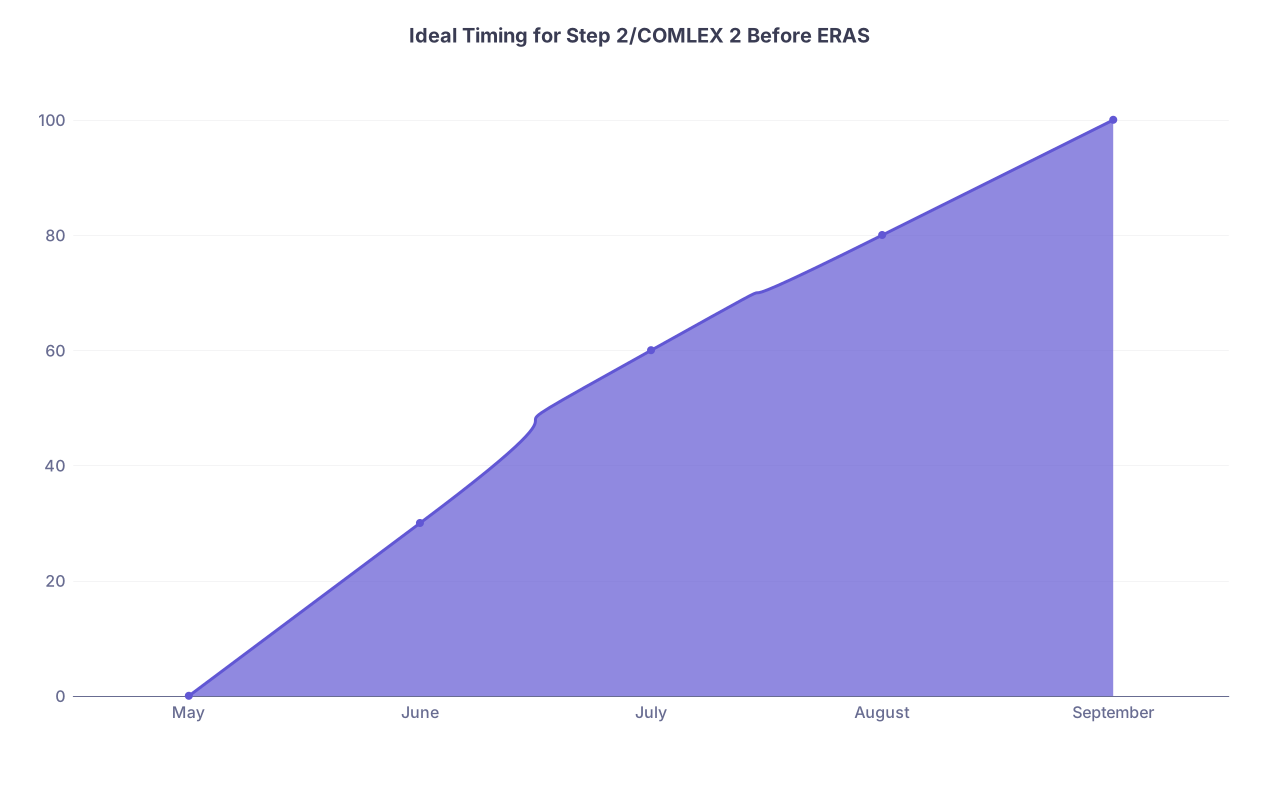
| Category | Value |
|---|---|
| May | 0 |
| June | 30 |
| July | 60 |
| August | 80 |
| September | 100 |
Interpretation: by early August, you want to be at ~80–90% of your prep progression, so scores come back by late September when programs start filtering.
Concrete tasks by end of June:
- At least 1 new research project started and documented.
- At least 1 ACGME‑affiliated rotation secured for July–October.
- Firm test date(s) set for Step 2/COMLEX 2 with a weekly study schedule drafted.
- Running spreadsheet of programs and requirements started.
Step 3 (Early–Mid July): Letters, ERAS Skeleton, And DO Branding
By now, you should be moving from “building credentials” to “framing credentials.”
Week 5–6: Locking Down Letters Of Evaluation
You want:
- 3–4 strong clinical letters.
- For ACGME:
- At least 1, ideally 2, MD letters in your chosen specialty.
- A mix of DO and MD is fine; what matters is strength and relevance.
At this point you should:
- Identify your top potential letter writers:
- Attending who said: “You’re functioning like an intern already.”
- Clerkship director who saw you consistently, not just on one good day.
- Email them with:
- Updated CV.
- Brief one‑page “summary sheet” (bullet points of what you did on their rotation, cases, feedback highlights, your specialty goals).
- Clear ask: “Would you feel comfortable writing a strong letter of recommendation for my [specialty] residency applications?”
If they hesitate or use vague language, they are not your top letter. Move on.
MSPE And Dean’s Letter Reality Check
As a DO, your school’s MSPE format may not mirror MD schools. That is fine. What matters:
- All clerkship grades documented correctly.
- Any professionalism issues or leaves understood and framed.
You should:
- Meet with your dean’s office or advisor.
- Confirm:
- Timeline for MSPE release.
- Process for including your osteopathic components (OMT, osteopathic track, etc.).
ERAS Skeleton: Start Filling, Not “Thinking About It”
By mid‑July, you should have an ERAS application that is structurally complete, even if not polished.
Sections you can and should fill now:
- Demographics.
- Education.
- Experiences (clinical, work, research, leadership).
- Licensure Exams section (even if some are future‑dated).
Do not leave “Experiences” to September. That is amateur hour.
Step 4 (Late July): Personal Statement And Specialty‑Specific Positioning
This is where most DO students waste time trying to sound “non‑DO.” That is a mistake.
Week 7: Drafting The Personal Statement
Your job is to answer three questions for an ACGME PD:
- Who are you clinically?
- Why this specialty?
- How does your osteopathic training add, not detract?
Structure (simple, effective):
- Opening: a specific clinical story that shows your behavior, not your feelings alone.
- Middle:
- 1–2 paragraphs connecting that experience to your specialty choice.
- 1 paragraph explicitly naming your DO background and what it brings:
- Whole‑person approach.
- Comfort with manual examination.
- Habit of systems‑based thinking.
- Closing: what kind of resident you intend to be (reliable, teachable, patient‑centered).
Avoid:
- Defensive apologies about being a DO.
- Over‑explaining OMT to people who have trained DOs for years.
- Generic “I have always wanted to help people” nonsense.
At this point you should send your draft to:
- One DO faculty.
- One MD mentor in the specialty (ideally ACGME‑affiliated).
Ask them two questions:
- “Does this sound like me?”
- “Would this reassure a program director that I will be safe and teachable on day one?”
Step 5 (Early–Mid August): Fine‑Tuning An ACGME‑Ready Portfolio
Now you start tightening the screws. No more building. Refining only.
Week 8–9: ERAS Experience Entries And Program Signaling
Strong DO applicants lose points here with lazy descriptions. ACGME PDs scan this section in seconds.
Each entry should:
- Use concise, active language.
- Quantify when possible.
- Highlight ACGME‑relevant skills: teamwork, QI, research literacy, systems‑based practice.
Example (weak vs strong):
Weak:
“Participated in research on hypertension. Helped collect data. Learned a lot about evidence‑based medicine.”Strong:
“Retrospective chart review of 220 patients with resistant hypertension at community hospital; extracted and cleaned data, coordinated with statistician, co‑authored abstract submitted to [Conference].”
You should also:
- Order experiences strategically:
- Research and clinical at the top.
- Fraternity social chair from undergrad goes near the bottom.
Specialty‑Specific Customization
If you are dual‑applying (say, IM and FM), you do not write one generic application.
You:
- Craft separate personal statements for each specialty.
- Adjust the order and emphasis of experiences:
- For IM: emphasize QI, research, complex inpatient cases.
- For FM: emphasize continuity, outpatient, community service.
Some programs allow signaling through ERAS or preference forms. For ACGME, especially in competitive fields, signaling matters. Use it on:
- Programs with a real track record of taking DOs.
- Places where you have any existing connection (rotation, mentor, geography).
Step 6 (Late August): Final Assembly And Pre‑Submission Checklist
By the final two weeks of August, your file should be 95% done. Not “I’ll write my personal statement this weekend.”
Week 10: Mock Interviews And Red-Flag Patrol
You should schedule:
- At least one mock interview with:
- A faculty advisor who is not your best friend.
- A recent graduate who successfully matched ACGME from your school.
Common DO‑specific questions you need airtight answers for:
- “Why did you choose a DO school?”
- “Tell me how your osteopathic background will influence your approach to patients in our (mostly MD) environment.”
- “You did not take Step 2 / you did not pass Step X on the first attempt. What changed?”
Practice out loud. Record yourself if you have to. The first time you stumble through these answers should not be in front of a PD.
Week 11: Final Document Check, Letters, And Programs List
At this point you should run a final checklist:
Scores
- Step 2/COMLEX 2 dates confirmed.
- Understanding of when scores will post relative to application submission.
Letters
- At least 3, ideally 4, “received” in ERAS.
- Mix includes required MD/DO ratios for your specialty.
ERAS
- All experience entries double‑checked for:
- Typos.
- Repetition.
- Vague language.
- Personal statements assigned correctly to each program.
Programs List You should have:
- A realistic number of programs based on competitiveness.
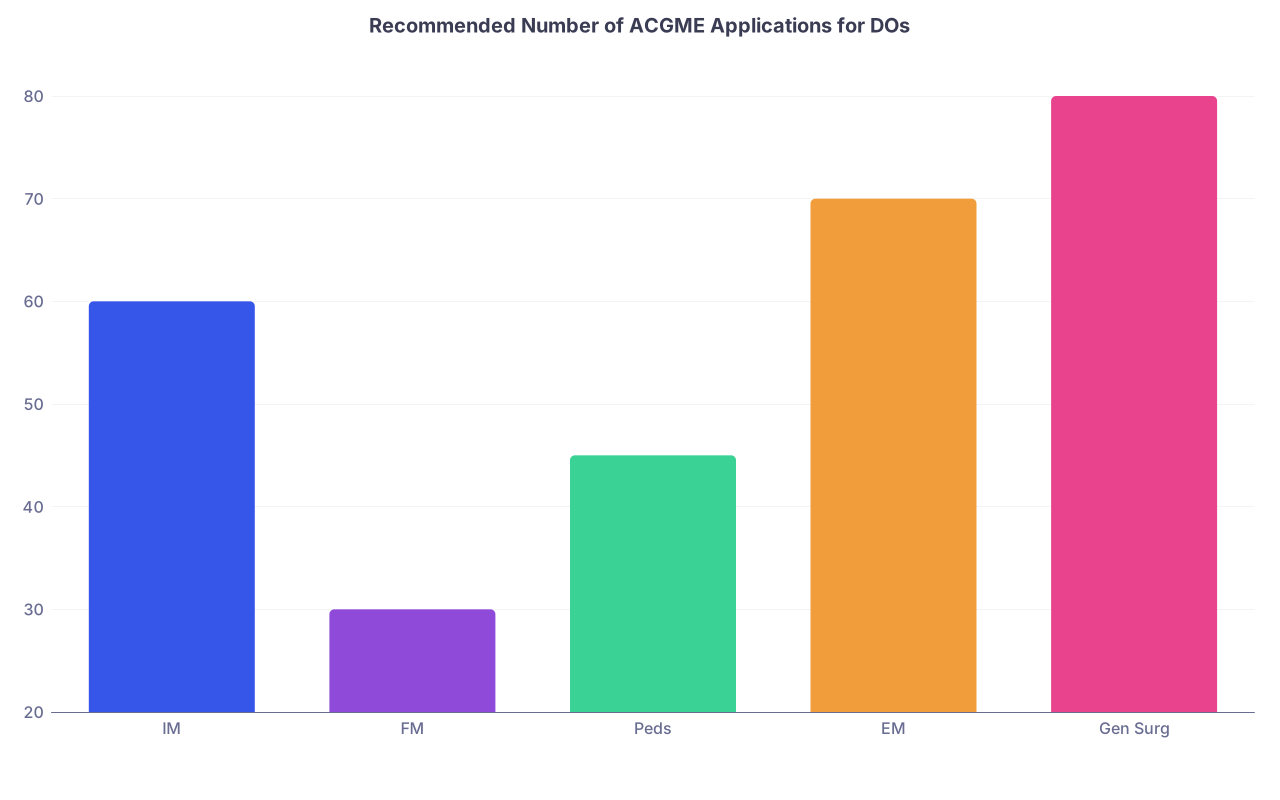
| Category | Value |
|---|---|
| IM | 60 |
| FM | 30 |
| Peds | 45 |
| EM | 70 |
| Gen Surg | 80 |
Interpretation:
- Less competitive specialties (FM) can be more targeted.
- Competitive specialties (EM, Gen Surg) require broader reach, especially for DOs.
Optional But Smart: Targeted Outreach
In the final days of August, a small number of programs may warrant a concise, professional email:
- Only do this if:
- You rotated there.
- You have a mentor with a real connection.
- There is a clear geographic or personal tie.
Email from you (or better yet, from a mentor) that says:
- You are very interested.
- You rotated/have a connection.
- Your application will be in their first wave.
Do not mass‑email 100 programs. PDs see through that instantly.
Weekly Time Allocation: What Your Summer Should Actually Look Like
You are not studying 16 hours a day all summer. But you also are not “seeing how it goes.” Rough weekly template for June–August:
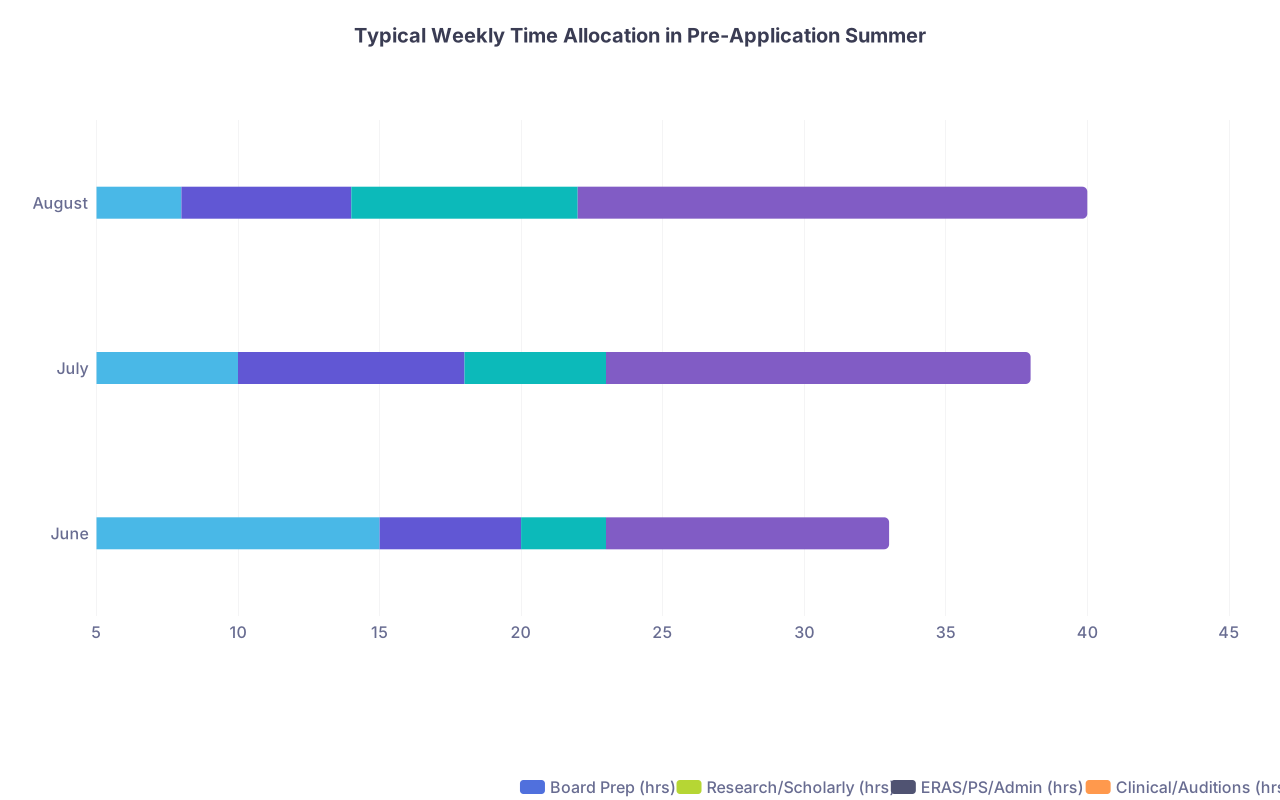
| Category | Board Prep (hrs) | Research/Scholarly (hrs) | ERAS/PS/Admin (hrs) | Clinical/Auditions (hrs) |
|---|---|---|---|---|
| June | 15 | 5 | 3 | 10 |
| July | 10 | 8 | 5 | 15 |
| August | 8 | 6 | 8 | 18 |
By late August, the balance shifts from building (research, board prep) to packaging (ERAS, personal statement, letters, programs).
Daily Micro‑Planning: One Concrete 7‑Day Sprint
To make this practical, here is what a high‑yield week in mid‑July should look like.
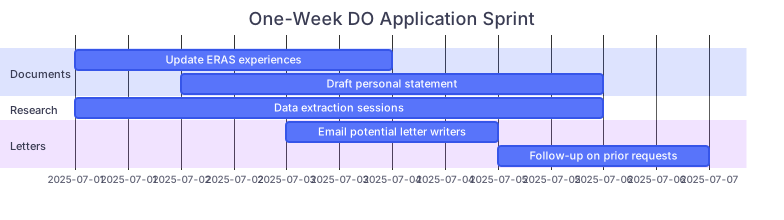
| Task | Details |
|---|---|
| Documents: Update ERAS experiences | a1, 2025-07-01, 3d |
| Documents: Draft personal statement | a2, 2025-07-02, 4d |
| Research: Data extraction sessions | b1, 2025-07-01, 5d |
| Letters: Email potential letter writers | c1, 2025-07-03, 2d |
| Letters: Follow-up on prior requests | c2, 2025-07-05, 2d |
Example day (Wednesday):
- 06:30–07:30: Board questions (UWorld/COMBANK).
- Lunch break: 30 minutes on ERAS experience rewriting.
- 17:30–19:00: Research meeting + data work.
- 19:30–20:00: One targeted email to a letter writer or program contact.
This is what “ACGME‑ready” work looks like. Boring. Repetitive. Structured.
Visualizing Your Progress
One last reality check: by the end of this pre‑application summer, your portfolio should look more like the right side of this comparison than the left.
| Component | Start of Summer | End of Summer (Goal) |
|---|---|---|
| Exams | COMLEX 1 only | COMLEX 1 + 2, Step 2 scheduled or completed |
| Research | 0–1 low‑impact items | 2–3 ongoing projects, at least 1 abstract/poster |
| Clinical | All at DO‑affiliated sites | At least 1 ACGME‑affiliated rotation in specialty |
| Letters | 1 generic DO letter | 3–4 strong letters, incl. 1–2 MD specialty letters |
| ERAS/PS | Blank or “thinking about it” | Fully drafted, specialty‑specific, reviewed |
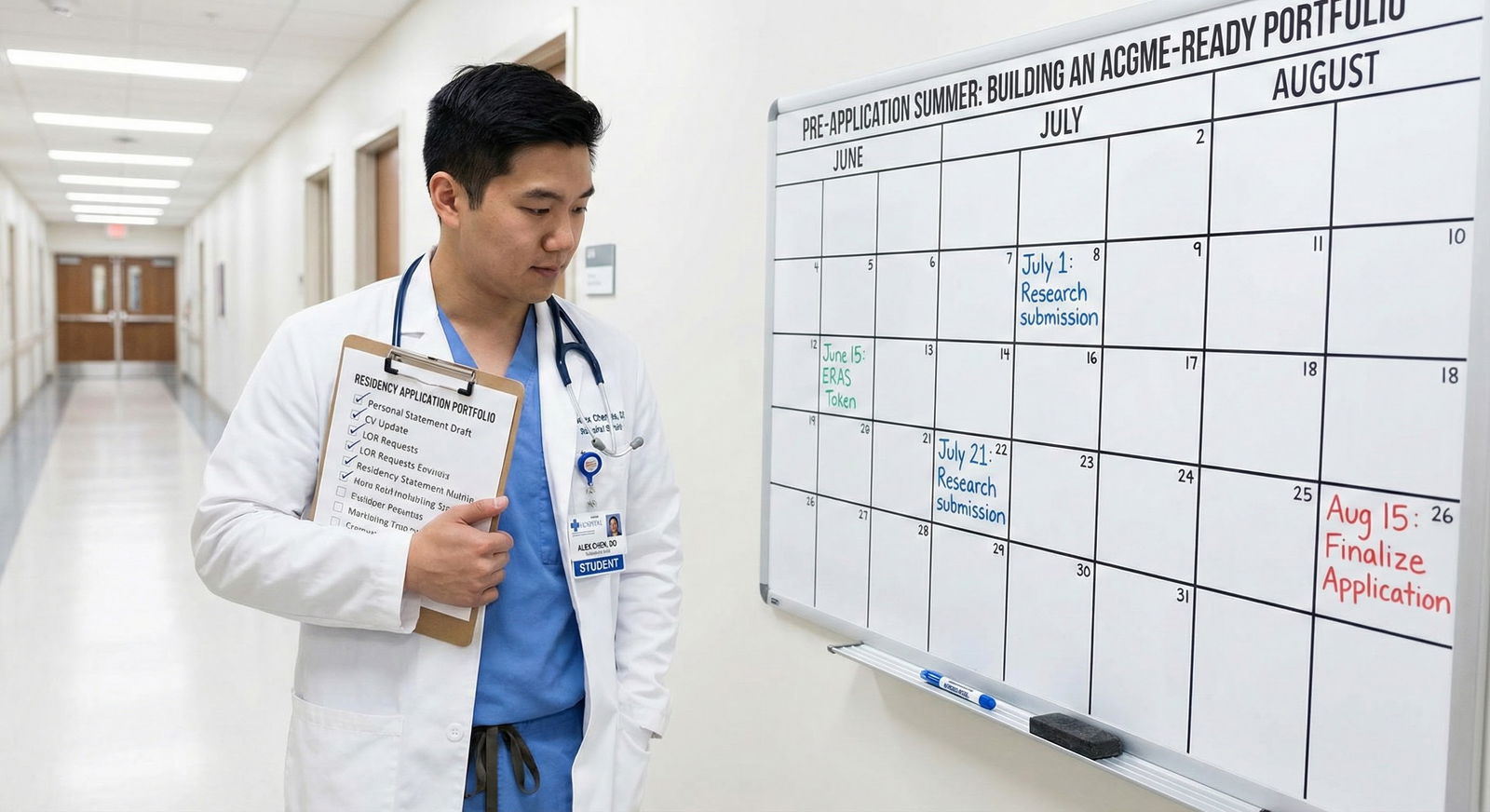
Final Thoughts: What Actually Matters From This Summer
To keep this tight:
- By the end of June, you should have a clear specialty target, a board exam plan, and at least one ACGME‑facing opportunity (rotation or mentor) locked in.
- By the end of July, you should have your ERAS skeleton filled, letters actively in motion, and research/clinical experiences reframed to show ACGME‑relevant skills, not vague “interest.”
- By the end of August, your application should be essentially done—polished personal statements, verified letters, realistic program list—so that when ERAS opens, you are not scrambling. You are submitting a portfolio that looks like it belongs in an ACGME program, DO degree and all.
If, at each of those checkpoints, you are where you should be, your “pre‑application summer” will have done exactly what it is supposed to do: quietly, systematically upgrade you from “DO applicant” to “ACGME‑ready resident.”


