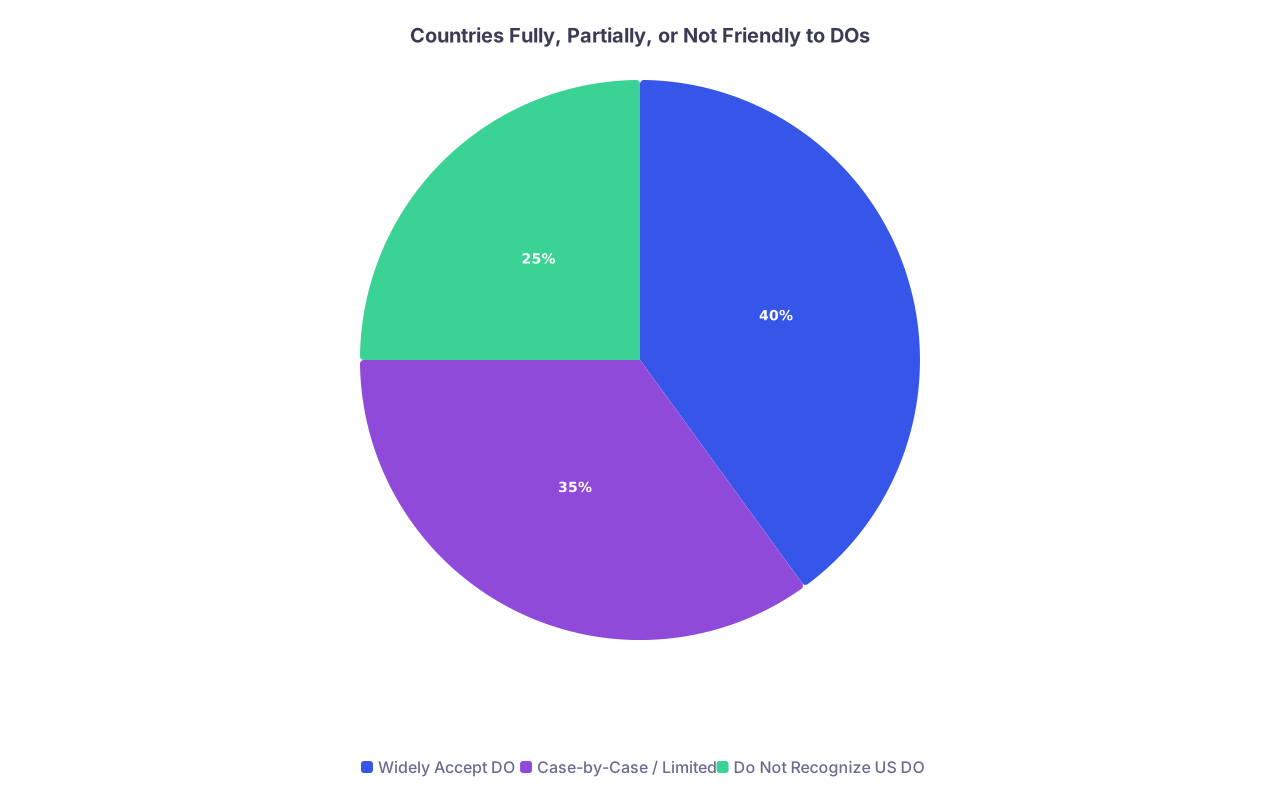
The belief that DO and MD residency applications are “reviewed the same” is comforting—and wrong in a lot of situations.
They’re reviewed similarly in structure. Not equally in reality. And if you’re premed or early in med school and you don’t understand the differences, you can accidentally shut yourself out of entire specialties or programs without realizing it.
Let’s walk through how it actually works, where DO and MD are functionally identical, and where being DO still changes your odds and your strategy.
The short version: structurally similar, practically different
Here’s the blunt answer:
- On paper, most ACGME-accredited (i.e., “single accreditation”) residency programs now review DO and MD applications through the same system (ERAS) and under the same accreditation body.
- In practice, programs still differ wildly in:
- How many DO applicants they interview
- Whether they take COMLEX alone seriously
- Whether they require or de facto expect USMLE
- Unspoken bias and historical habits
So no, your DO and MD friends aren’t playing exactly the same game—even if they’re technically in the same league now.
How residency applications are actually reviewed
Most students have a fantasy of some super-holistic committee reading every personal statement over coffee. That’s not how it starts.
Here’s the usual flow at many programs:

| Step | Description |
|---|---|
| Step 1 | ERAS Applications Submitted |
| Step 2 | Automated Filter by Scores/School |
| Step 3 | Coordinator Screens for Completeness |
| Step 4 | Faculty or PD Reviews Selected Files |
| Step 5 | Interview Offers Sent |
Stage by stage, this is where DO vs MD can matter:
Automated or quick filters
- Set by:
- USMLE Step 1/2 cutoffs
- Sometimes school type (US MD / US DO / IMG)
- If a program filters first by USMLE score, DO students without USMLE may never be seen until someone manually digs into COMLEX.
- Set by:
Coordinator / administrator review
- They check:
- Is the application complete?
- Does it meet the program’s basic thresholds?
- Some coordinators (especially in historically MD-heavy programs) still flag DO and MD into mental buckets: “We always have a few DOs” vs “We mostly interview MDs.”
- They check:
Faculty / program director review
- This is where:
- Letters of recommendation
- Clinical experiences
- School reputation
- Perceived “fit”
actually matter.
- Here, strong DO applicants absolutely can beat weak MD applicants. But you have to survive the earlier filters.
- This is where:
So the key question isn’t “are we reviewed the same at the very end?” Often yes. The real issue is: do we get through the first gate in the same numbers? Often no.
Where DO and MD apps are truly treated the same
There are places where the playing field is as close to level as it’s ever been.
1. Primary care and DO-friendly specialties
Family medicine, internal medicine (categorical), pediatrics, psychiatry, PM&R, and many community programs in other fields often genuinely don’t care whether you’re DO or MD—assuming:
- You’re a US graduate (big difference vs IMG)
- You passed boards on time
- You’re not full of red flags
Programs like many community FM or IM programs will often see:
- US MD, US DO, and IMGs all together
- And yes, DO applicants with strong applications get interviews and match well.
In these environments:
- COMLEX alone is often acceptable
- DO and MD applications are often reviewed side by side without heavy bias.
2. Osteopathic-heavy programs or regions
Programs in areas with lots of DO schools or osteopathic hospitals (Michigan, Ohio, Pennsylvania, some parts of the South and Midwest) often have:
- DO faculty
- DO program directors
- A long track record of taking DO graduates
Here, your DO vs MD label really does matter less, as long as your stats and experiences match the program’s usual range.
Where DO and MD are not treated the same
This is what you really care about.
1. Competitive specialties
Dermatology, ortho, ENT, plastics, urology, radiation oncology, neurosurgery, and some top-tier EM and anesthesia programs are still harder to access as a DO. Not impossible. Just harder.
Why?
- These programs often:
- Use high USMLE Step 2 CK cutoffs
- Have almost exclusively MD residents historically
- Get flooded with way more strong MD apps than they need
- Many will say they’re open to DOs—and occasionally match one—but look at their resident rosters:
- 20 residents, 0–1 DO
That’s not equal review in practice.
- 20 residents, 0–1 DO
If you’re DO and aiming for these specialties, your application has to be exceptional, not just “solid”:
- Strong Step 2 (and yes, USMLE, not just COMLEX)
- Real research output, preferably at academic centers
- Away rotations at programs that actually take DOs
2. Big-name academic programs
Think:
- Major university hospitals
- “Top 20” research institutions
- Places that feed into fellowships at elite centers
These places often say “we welcome DOs,” and some truly mean it. But a few realities:
- They often screen by USMLE score alone
- Faculty may be more familiar with MD schools and grading
- They may not understand how to interpret COMLEX well
So even if policy says “we accept COMLEX,” practice might look like:
- US MD + USMLE = easy to compare
- DO + COMLEX only = extra effort to interpret → often ignored unless someone specifically goes hunting for DOs.
COMLEX vs USMLE: how that actually plays out
You can’t talk about DO vs MD application review without talking about exams.
How programs think:
- Many MD-focused programs:
- Understand USMLE percentiles reflexively
- Barely know what a “good” COMLEX score is
- A lot of them quietly operate like this:
- “If they took USMLE, we’ll look.
COMLEX-only? Maybe. If we need to fill interview spots and they look otherwise strong.”
- “If they took USMLE, we’ll look.
So if you’re DO and thinking, “They said they accept COMLEX,” you need to ask a sharper question:
“Do they actually interview and match COMLEX-only DOs?”
Look at current residents on their website:
- Any DOs?
- Any DOs from your type of school (newer vs established, region, etc.)?
- If you can’t find a single example, that’s your answer.
School name and bias: yes, it still matters
Another uncomfortable truth: many reviewers see school type and unconsciously rank:
- US MD (especially older, higher-ranked schools)
- US DO
- US-IMG
- Non-US IMG
Is this always fair? No. But it happens.
Specific patterns I’ve seen:
- Faculty saying stuff like:
- “We’ve had great DOs here, but we still mostly interview MDs because we get so many.”
- “I don’t know how to compare COMLEX, so I default to applicants with USMLE.”
- Coordinators telling students:
- “Our program director prefers USMLE, so if you’re DO, we strongly recommend it.”
This doesn’t mean DO is a bad path. It means you need to be strategic, not naive.
How to think about this as a PREMED
If you’re premed deciding between DO and MD, the question “are applications reviewed the same?” should turn into something more specific:
“What doors stay wide open, and what doors narrow if I go DO?”
Here’s the honest framework:
If you:
- Are okay with primary care, psych, PM&R, EM (depending on region/program), or non-elite IM/Peds
- Would be happy at strong community programs
- Like the osteopathic philosophy and don’t care about the Ivy League badge
→ DO can be a great, rational choice.
If you:
- Are dead-set on extremely competitive specialties
- Dream of matching at top 10 academic hospitals
- Want the fewest systemic hurdles possible
→ An MD seat (if you can realistically get it in the US) gives you a wider playing field.
Does that mean DOs can’t match derm, ortho, ENT, etc.? No. They do. Every year. But they’re the exception, not the rule, and they fight uphill more often.
How to think about this as a DO in medical school
If you’re already DO, your question isn’t “Is this fair?” It’s “How do I win the game that actually exists?”
Here’s how to stack the deck in your favor:
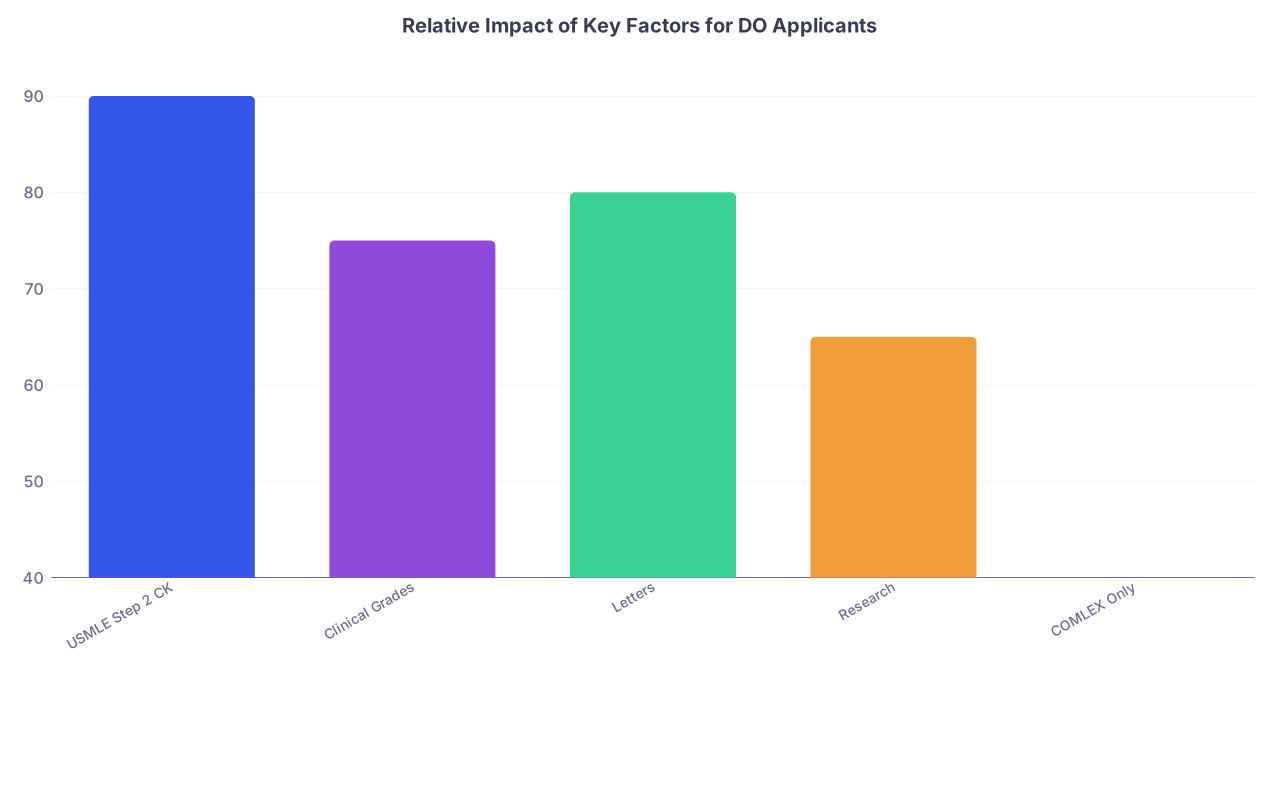
| Category | Value |
|---|---|
| USMLE Step 2 CK | 90 |
| Clinical Grades | 75 |
| Letters | 80 |
| Research | 65 |
| COMLEX Only | 40 |
Decide early about specialty competitiveness
- Competitive specialty = you probably need USMLE Step 2 CK
- More DO-friendly field + DO-heavy region = COMLEX alone can be enough
Research DO-friendly programs
- Check resident rosters. Count DOs.
- Use FREIDA + program websites + word of mouth
- Target places that have already shown they’ll take DOs like you
Crush clinical performance and letters
- Strong evaluations and letters from respected attendings (ideally at ACGME academic centers) go a long way in human review
- Especially if your numbers aren’t perfect
Use audition rotations intelligently
- Rotating at DO-friendly but strong programs is more valuable than chasing the biggest-name places that rarely take DOs
- You want to be “that DO student who was amazing on service,” not applicant #214 they barely skim
So are DO and MD residency applications “really reviewed the same way”?
Here’s the clean, no-BS answer:
- Same system? Yes. ERAS, same forms, same basic structure.
- Same official standards (ACGME)? Yes, now under a single accreditation system.
- Same real-world treatment at every program? No. Not even close.
It breaks down like this:
Many community and primary care programs:
DO and MD are functionally reviewed the same, especially if you’ve got passing scores and solid evals.Many solid mid-tier academic programs:
DOs are considered, but you may need USMLE and strong clinical proof to be taken equally seriously.Highly competitive and elite programs:
DO applicants are often screened more harshly, get fewer interviews per application, and have to substantially outperform baseline expectations to be treated like an average MD applicant with similar boards.
The single best mindset you can have as a DO:
Assume equality in theory. Plan for friction in practice.
What you should do today
Open a list of 10 residency programs in a specialty you’re even thinking about. For each one, look up their current residents and count:
- How many DOs?
- Any DOs from schools similar to where you are or plan to be?
- Any hints on their website about COMLEX or USMLE expectations?
That 20-minute exercise will tell you way more about how DO and MD apps are actually treated than any official statement ever will.
FAQ: DO vs MD Residency Application Review
1. Do residency programs see that I’m DO or MD right away?
Yes. Your degree (DO vs MD) and school name are visible as soon as they open your ERAS application. There’s no “blinding.” Reviewers know exactly what kind of school you attended.
2. Can I match a competitive specialty as a DO without taking USMLE?
You can, but it’s a lot harder and your program list will be much shorter. Many competitive programs heavily favor or effectively require USMLE because they’re used to comparing those scores. If you’re serious about a highly competitive field as a DO, I’d treat USMLE Step 2 CK as mandatory unless you have inside information that specific programs truly accept COMLEX-only applicants and historically take them.
3. Are DO applicants viewed the same as IMGs (international grads)?
Usually not. US DO grads are generally ranked above IMGs in most US programs’ minds. Many program directors lump “US MD + US DO” together as preferred over any IMG. That said, extremely strong IMGs can still beat weaker DOs, just like they can beat weaker MDs.
4. Do program directors actually understand COMLEX scores?
Some do. Many don’t. That’s the problem. Programs with lots of DOs on staff are more comfortable interpreting COMLEX. Programs that rarely see DOs are often lost, which is why they lean so hard on USMLE or just avoid COMLEX-only applications except when they’re desperate to fill interviews.
5. Has the single accreditation system made DO and MD equal in residency?
It’s moved things in the right direction but hasn’t erased differences. The old “separate DO residencies” are now ACGME programs, and that’s good for DOs long term. But culture, history, and bias don’t vanish just because the accreditation logo changed. Some programs embraced DOs; others changed nothing but their letterhead.
6. If I’m premed and get into a DO school and a lower-tier MD school, which should I pick for residency chances?
If your goal is maximum residency flexibility—including competitive specialties and academic medicine—a US MD seat, even at a lower-tier school, usually gives you a slightly easier path. If you strongly prefer the DO philosophy or the DO school is significantly cheaper/closer/supportive, and you’re mainly aiming at more DO-friendly fields, then a DO school can be the smarter overall choice. But don’t kid yourself: MD still opens more doors on average, especially at the top end.
Now go pull up a few actual residency rosters and see who they’ve actually taken. That reality check will tell you more than any marketing brochure.