
The worst reapplicant mistake is thinking you just need to “try again.” You don’t. You need a different year, a different strategy, and often a different MD vs DO target mix.
Below is a month‑by‑month, then week‑by‑week guide for a reapplicant year focused on recalibrating your MD vs DO list after an unsuccessful cycle. I’ll assume this: you applied, got few or no interviews, and either no acceptance or one you’re not taking. You want to do it again—but smarter.
Big Picture: Your Reapplicant Year at a Glance
At this point you should stop guessing and start timing things.
Your reapplicant year roughly runs from:
- October–December: Post‑cycle autopsy + MD vs DO recalibration
- January–March: Fixing structural weaknesses (academics, MCAT, clinical)
- April–June: Finalizing school list, building DO vs MD strategy, submitting primaries early
- July–September: Secondaries and interview positioning
- October–March (cycle): Interviews, updates, and contingencies
Here’s the flow in visual form:
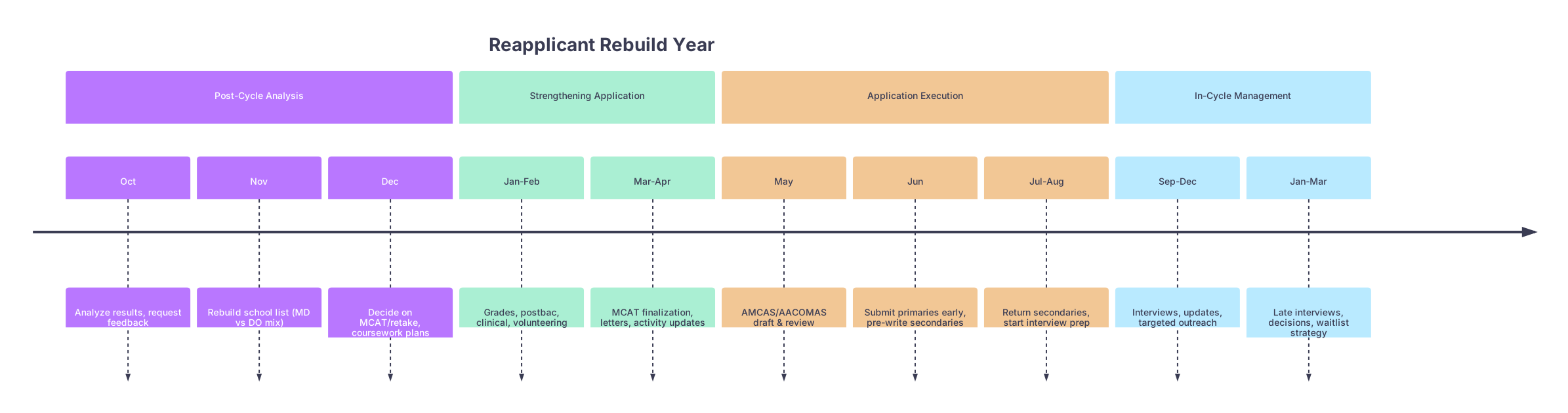
| Period | Event |
|---|---|
| Post-Cycle Analysis - Oct | Analyze results, request feedback |
| Post-Cycle Analysis - Nov | Rebuild school list (MD vs DO mix) |
| Post-Cycle Analysis - Dec | Decide on MCAT/retake, coursework plans |
| Strengthening Application - Jan-Feb | Grades, postbac, clinical, volunteering |
| Strengthening Application - Mar-Apr | MCAT finalization, letters, activity updates |
| Application Execution - May | AMCAS/AACOMAS draft & review |
| Application Execution - Jun | Submit primaries early, pre-write secondaries |
| Application Execution - Jul-Aug | Return secondaries, start interview prep |
| In-Cycle Management - Sep-Dec | Interviews, updates, targeted outreach |
| In-Cycle Management - Jan-Mar | Late interviews, decisions, waitlist strategy |
Step 1 (October–November): Brutal Post‑Mortem + MD vs DO Reality Check
If you just finished an unsuccessful cycle, this is not “rest time.” This is triage.
Weeks 1–2 after realizing you won’t matriculate
At this point you should:
Collect hard data from your last cycle
- Final stats:
- cGPA, sGPA
- MCAT (total and section scores)
- Application outcomes:
- Number of MD schools applied to
- Number of DO schools applied to
- II (interview invites) count, by MD vs DO
- Rejections and silence
- Final stats:
Request feedback where possible
- Some DO schools, and a few MD schools, will actually talk:
- Call or email: “I’m a serious reapplicant for the next cycle. Could I have brief feedback about how to strengthen my file?”
- Track common themes: MCAT too low, GPA, weak clinical, late application, poor school list, etc.
- Some DO schools, and a few MD schools, will actually talk:
Benchmark yourself honestly Use this as a rough reality‑check benchmark:
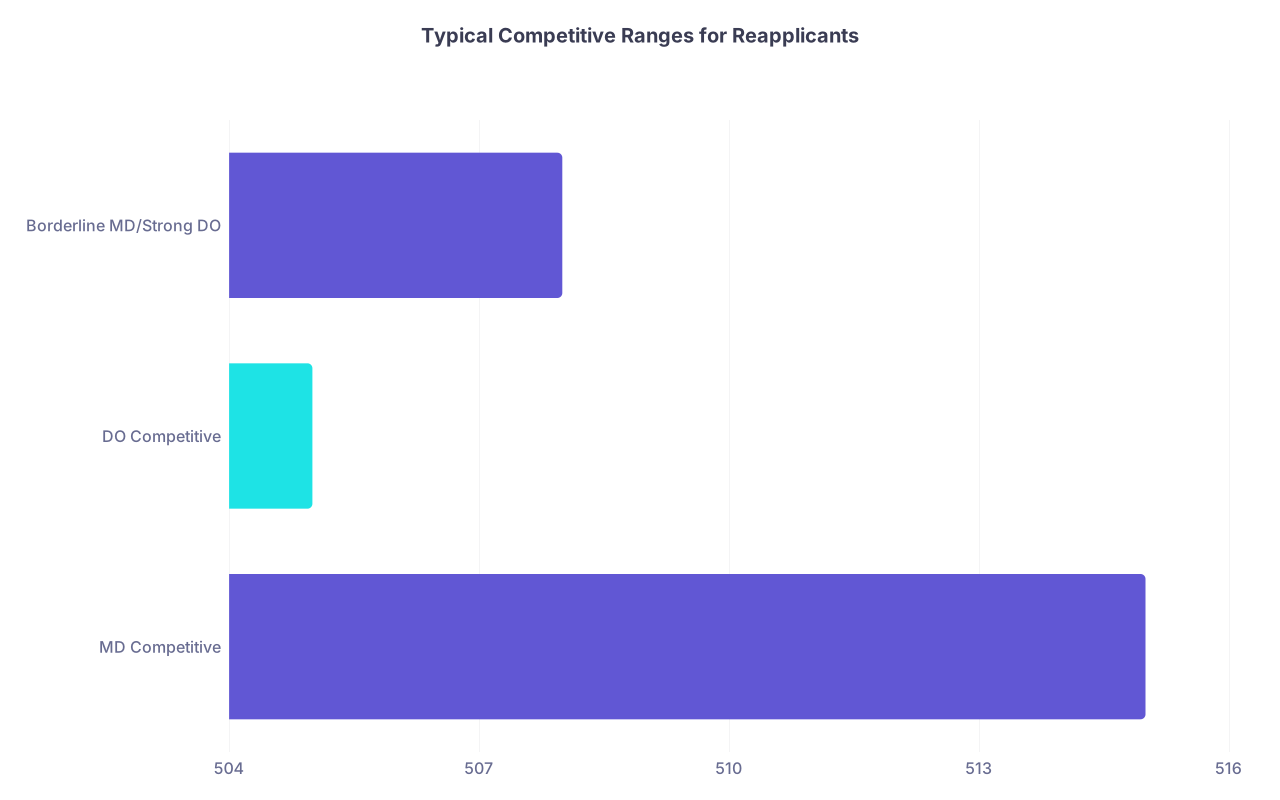
| Category | Value |
|---|---|
| MD Competitive | 515 |
| DO Competitive | 505 |
| Borderline MD/Strong DO | 508 |
Pair that with GPA ranges:
- Strong MD target: cGPA ≥ 3.7, sGPA ≥ 3.6, MCAT ≥ 514
- Borderline MD / solid DO: cGPA 3.4–3.6, MCAT 506–511
- Primarily DO: cGPA 3.2–3.4, MCAT 500–506 (with strong upward trend and excellent experiences)
If you’re well below one of these bands, pretending otherwise wastes another cycle.
Weeks 3–4: Decide MD vs DO Mix for the Coming Year
At this point you should be ruthless about categories:
Category A – You under‑applied DO last time
- Example: 3.4 cGPA, 506 MCAT, applied to 25 MD and 2 DO, zero acceptances
- This year: shift to DO‑heavy list with a small, tightly curated MD subset.
Category B – You’re in the true borderline zone
- Example: 3.6 cGPA (upward trend), 511 MCAT, solid clinical but weak school list or late submission
- This year: balanced MD/DO list, fix timing and quality issues.
Category C – You’re MD‑viable but sabotaged yourself with mistakes
- Example: 3.8 cGPA, 518 MCAT, but applied crazy late, weak personal statement, scattered activities
- This year: MD‑dominant list, DO as strategic safeties.
By end of November you should have written down, in one sentence, your primary framing:
“I am aiming for [mostly MD / balanced MD‑DO / mostly DO] based on my [GPA, MCAT, experiences].”
If you can’t finish that sentence without lying to yourself, you are not ready to build a rational list.
Step 2 (December–February): Fix Structural Weaknesses, Not Cosmetic Ones
This is where reapplicants either change their trajectory or just repackage the same weak app.
December: Decide on MCAT and Coursework
At this point you should:
Make a binary MCAT decision
- Retake if any:
- Score < 510 and you want MD to be a serious possibility
- Score < 505 and you want DO to be more than a long shot
- Score is ≥ 510 but with one glaring low section (e.g., 124 CARS or 123 Chem/Phys) and you have strong evidence you can improve
- Do not retake if:
- You’re sitting on 514+ with balanced sections and your weaknesses are clearly elsewhere (experience, timing, etc.)
- Retake if any:
Plan MCAT timing
- For a reapplicant aiming next cycle:
- Ideal retake: January–April
- Latest tolerable: May (only if you can still apply in June with that score)
- For a reapplicant aiming next cycle:
Plan academic repair (if needed)
- If your sGPA is < 3.3: you need a serious plan (postbac or master’s with real rigor).
- If your last 30–40 credits are trending up: double down on As this year. That trend matters.
January–February: Weekly Rhythm
At this point your weeks should be structured, not chaotic:
- If retaking MCAT
- 5–6 days/week:
- 2–3 hours content + practice questions
- 1–2 full‑lengths every 2–3 weeks, increasing to weekly by March
- 5–6 days/week:
- If not retaking
- Academic:
- 12–16 credits with no fluff, aiming for A/A‑
- Clinical:
- 6–12 hours/week consistent clinical exposure (scribe, MA, EMT, hospital volunteering)
- Non‑clinical:
- 2–4 hours/week of meaningful service, especially with underserved communities
- Academic:
Your MD vs DO strategy shapes your intensity:
- Pushing for MD: your MCAT target should be an honest 3–5 points higher than what you’d accept for mostly DO.
- Focused on DO: you can shift some energy from MCAT cramming toward deeper clinical involvement and leadership.
Step 3 (March–April): Build a Rational MD vs DO School List
By now you should know your likely MCAT situation, your GPA trajectory, and whether a postbac/SMP is underway. This is when the school list moves from fantasy to engineering.
Late March: Research and Categorize Schools
At this point you should:
Segment by competitiveness and mission
For MD:
- Out of reach if: your stats are below the 10th percentile for that school
- Reasonable if: at or above median for at least one metric and near median for the other
- Wildcard/mission fit: schools with strong emphasis on nontraditional backgrounds, rural/primary care focus, etc.
For DO:
- Aim for broad coverage: 10–15 schools that aren’t extreme outliers in selectivity.
- Pay attention to:
- States with heavy in‑state bias vs DO‑friendly openness
- COMLEX vs USMLE expectations
- Clinical rotation quality and geographic preferences
Quantify your MD vs DO target mix
Typical balanced reapplicant mix:
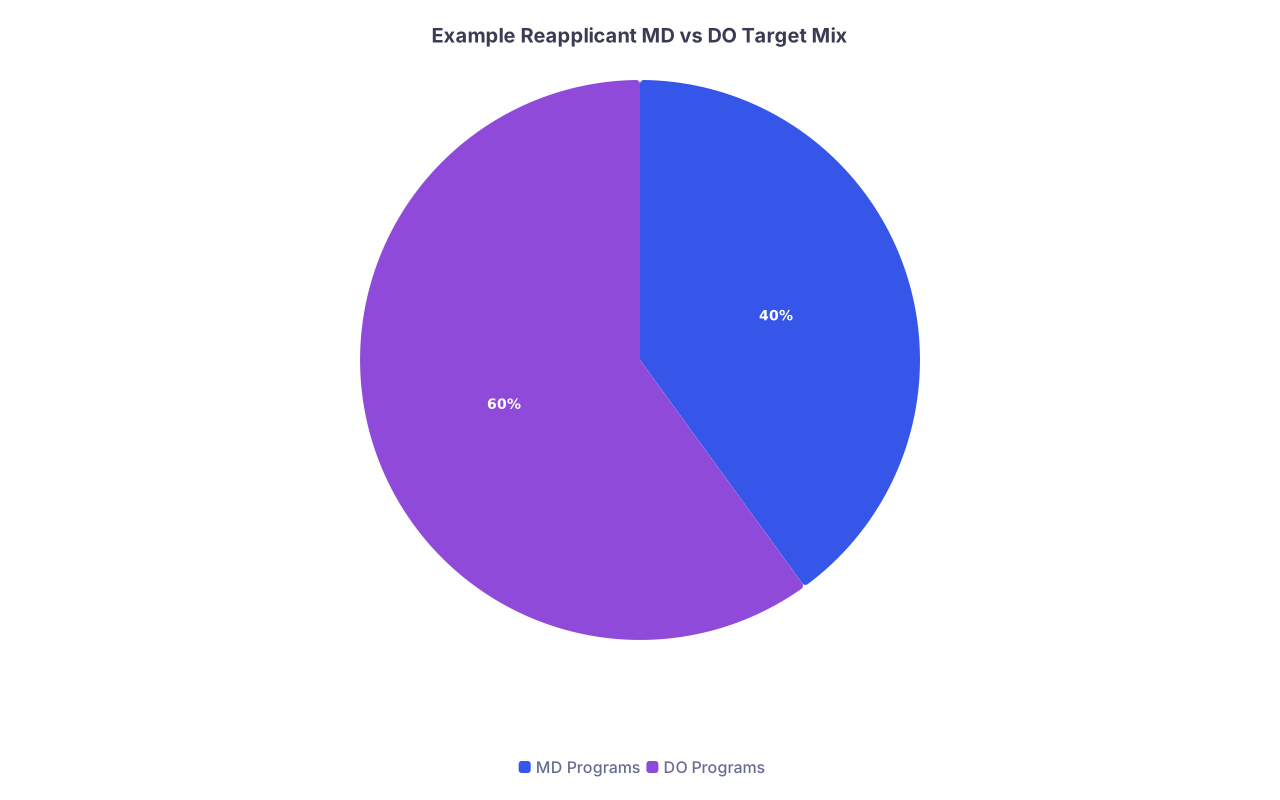
| Category | Value |
|---|---|
| MD Programs | 40 |
| DO Programs | 60 |
Example for a borderline applicant:
- 12–15 MD schools (carefully chosen; no vanity reaches)
- 12–18 DO schools (broad, with several realistic “safer” options)
April: Lock in the Strategy and Calendar
By the end of April you should have:
A final school list spreadsheet with:
- School name
- MD vs DO
- Median MCAT/GPA
- Your % match (subjective rating: strong/medium/weak)
- Secondary prompts from last year
- Deadlines and fees
A clear statement:
- “I will prioritize MD schools that match my stats and mission, but my acceptance probability this cycle will largely come from DO programs because my MCAT is 507 and my cGPA is 3.5 with strong upward trend.”
If you can’t say this kind of sentence out loud, you risk another cycle of magical thinking.
Step 4 (May–June): Application Assembly and Early Submission
This is execution time. Strategy without timing is useless.
May: Draft Personal Statement and Activity Descriptions
At this point you should:
Rewrite your personal statement from scratch
- If you’re a reapplicant, adcoms will often see your prior app.
- Do not just lightly edit. Reflect real growth and new clarity.
- Emphasize:
- Concrete experiences from this reapplicant year
- Why you’d be fine with DO or MD paths if that’s true (don’t grovel, just be realistic about physician identity vs letters)
Re‑frame your activities
- Highlight:
- Leadership upticks
- Longer duration / increased responsibility
- Clear impact (not just hours)
- Highlight:
Tune your narrative by goal
- MD‑leaning: a bit more emphasis on research depth, academic rigor, complex clinical settings.
- DO‑leaning: emphasize hands‑on clinical exposure, primary care interest, and openness to OMM/holistic philosophy if it’s genuine (do not fake this—the interview will expose you).
Early June: Submit AMCAS and AACOMAS
Your calendar now should look like:
- June 1–5: Final proofread of AMCAS and AACOMAS
- By June 5–10: Submit both (earlier if possible)
If you submit in July again “because last year it didn’t seem to matter,” you have learned nothing. That’s how people burn two cycles.
Step 5 (July–September): Secondaries, DO Emphasis, and Interview Prep
This is where MD vs DO realities become clear in real time.
July: Secondary Essay Blitz
At this point you should:
- Return MD secondaries within 7–10 days
- Return DO secondaries within 7 days if you’re DO‑heavy
Pay particular attention to DO‑specific prompts:
- “Why osteopathic medicine?”
- “How does our mission align with your goals?”
If your answer is “Because I didn’t get into MD,” you will not get far. Take time to articulate:
- Respect for holistic, patient‑centered care
- Interest in primary care, rural medicine, or underserved communities
- Any actual exposure to DOs (shadowing, mentorship)
August–September: Interview Preparation and Adjusting Expectations
At this point:
- You should start to see patterns:
- MD II drought, DO II activity → DO is carrying the cycle
- Some MD II, steady DO II → your balanced strategy is working
- Silence across the board by late September → either your app is weaker than you thought, or timing/secondaries/letters are a problem again
Your weekly schedule should now include:
- 2–3 mock interviews per week (friends, mentors, structured practice)
- Review of:
- DO vs MD training differences
- How you’ll explain your reapplicant status
- How you’ll articulate being satisfied with either MD or DO without sounding indifferent
Step 6 (October–March of the Cycle): Mid‑Course Corrections
Yes, even in‑cycle, you can adjust the MD vs DO balance slightly.
October–December: Strategic Updates and DO Insurance
At this point you should:
Send update letters to both MD and DO schools if:
- New grades (A’s in upper‑division sciences)
- New clinical responsibilities (promotion, more hours, leadership)
- New MCAT (if taken late, but ideally not)
Consider adding a few DO schools (if their deadlines allow) if:
- You have very few DO IIs by November
- Your stats are reasonable for their historical ranges
January–March: Living with the Outcome and Planning Next Steps
If you followed this plan and still come up empty or with only one acceptance you’re unsure about, you need a hard talk with yourself:
If you landed DO acceptances only and were “MD‑or‑bust” before:
- You now decide whether the MD prestige itch is worth another year and another roll of the dice. For most people, it isn’t. Being a physician matters more than the letters.
If you landed no acceptances again:
- Your next timeline is not “same plan but harder.”
- It’s a significant, multi‑year structural change: formal postbac, SMP, or even complete redirection.
Sample Year‑Long Weekly Snapshot by Applicant Type
Here’s how weekly time use reasonably shifts if you aim MD‑heavy vs DO‑heavy during your rebuild year.
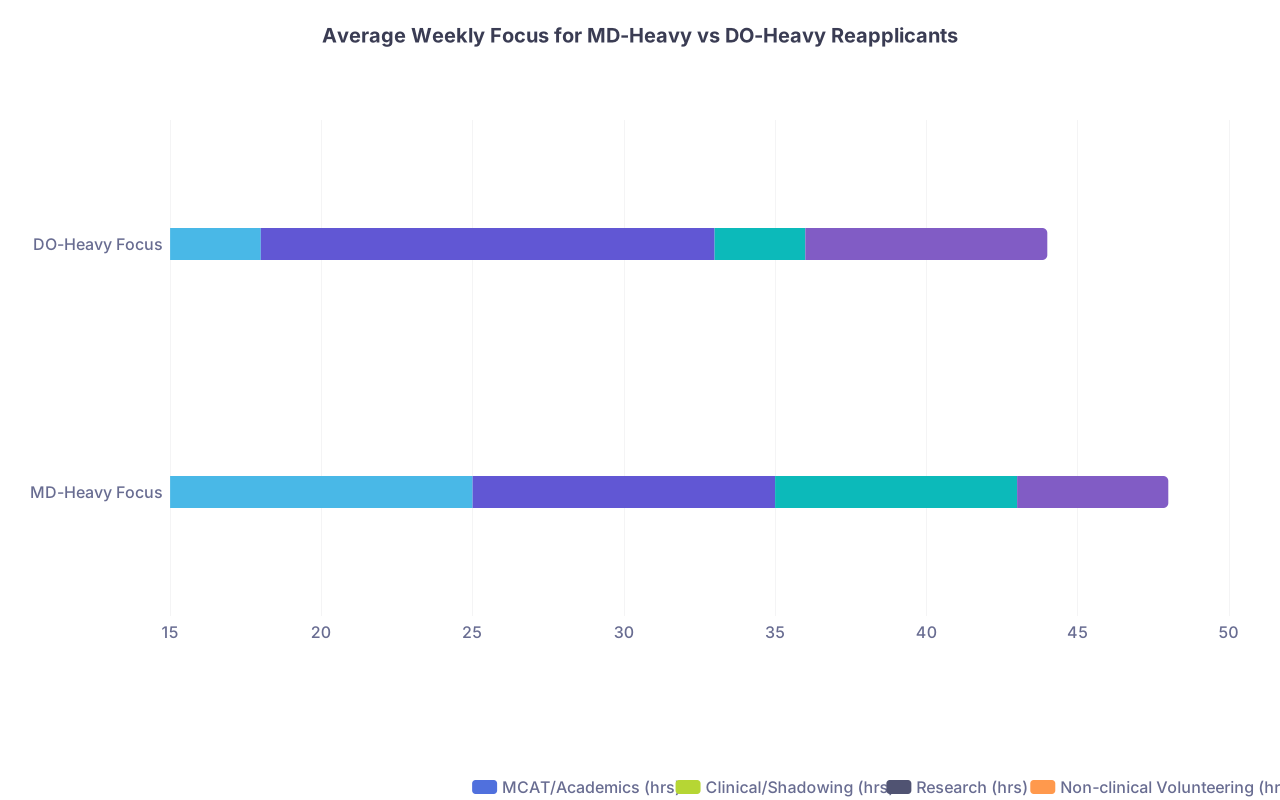
| Category | MCAT/Academics (hrs) | Clinical/Shadowing (hrs) | Research (hrs) | Non-clinical Volunteering (hrs) |
|---|---|---|---|---|
| MD-Heavy Focus | 25 | 10 | 8 | 5 |
| DO-Heavy Focus | 18 | 15 | 3 | 8 |
You do not need to match these numbers exactly, but the proportions tell the story:
- MD‑heavy: academics and research get more weight
- DO‑heavy: clinical immersion and service get more weight, with still‑solid academics
Final 4‑Week Checklists Before Submission
4 Weeks Before Primaries Open
At this point you should:
- Have:
- Finalized MD/DO mix and school list
- Decided MCAT status with no more test date changes
- A working draft of your personal statement
3 Weeks Before
- Confirm:
- All transcripts requested
- Letters of recommendation assigned and confirmed
- Activity list drafted
2 Weeks Before
- Personal statement and most impactful activities:
- Reviewed by at least one person who will tell you the truth, not just be nice
1 Week Before
- Portals:
- AMCAS and AACOMAS nearly complete
- Only minor edits left
If you roll into June still asking, “Should I add more MDs or DOs?” you started this process two months too late.
FAQ (Exactly 3 Questions)
1. If I really want MD, is it “settling” to apply DO heavily as a reapplicant?
No. What’s “settling” is burning 2–3 extra years chasing a label while your classmates (who chose DO) are halfway through residency. If your stats and trend line put you in the solid DO but marginal MD zone, the rational play is a DO‑heavy list with a few carefully chosen MD programs. If you’re truly MD‑level competitive (3.7+/515+ with strong experiences), you won’t need to stuff your list with DO schools—but if you’re not there, pretending you are is how you become a three‑cycle cautionary tale.
2. How different should my application be for MD vs DO schools in the same cycle?
Core content (story, activities, stats) doesn’t change, but emphasis does. For MD, you lean a bit more into academic rigor and, when you have it, research. For DO, you explicitly address why osteopathic medicine works for you—holistic care, primary care interest, or meaningful exposure to DO mentors. Personal statement stays one version; secondaries and interview answers do the tailoring. You do not write two completely different personas. Adcoms can smell that.
3. I got a late DO acceptance after reapplying; should I take it or roll the dice one more year for MD?
If your stats are below or barely at MD medians and you do not have a concrete, realistic plan to significantly change that (not fantasy, not “study harder,” but actual new grades or a major MCAT jump), you take the DO acceptance. Period. The exception is if something truly unusual changed—like a 10‑point MCAT jump or a completed hard‑science master’s with a 3.9—and you haven’t applied with those upgrades yet. Otherwise, accept the seat, do excellent work, and remember: residency programs care a lot more about who you are as a trainee than whether your diploma says MD or DO.
Key points:
- Do not “reapply” with the same MD‑heavy fantasy list if your numbers scream DO‑leaning reality.
- Use the rebuild year to fix structural problems (GPA trend, MCAT, clinical depth), not just polish essays.
- Lock your MD vs DO strategy by April, submit in June, and let the data—not your ego—tell you where you truly fit.