You are here
It’s late September of your first semester. You’ve survived your opening round of gen chem quizzes, you know which dining hall line moves fastest, and every other premed you meet casually drops “MD” when they talk about the future.
You keep seeing “DO” pop up on forums, in random conversations with upperclassmen, maybe from that one family friend who’s “a DO surgeon in Chicago.” You have a vague sense there’s some difference. You also have zero bandwidth to spend three nights deep-diving SDN arguments.
Here’s the blunt truth: you do not need to pick MD vs DO in your first year. But you also cannot wake up in junior spring and say, “Oh, I guess I’ll just switch to DO now,” like it’s a backup checkbox. The path you build year by year gives you options—or quietly closes doors.
So I’m going to walk you through it chronologically. Year 1 to Year 4. At each point: what you should already have done, what you must prioritize now, and where your MD/DO decision actually matters.
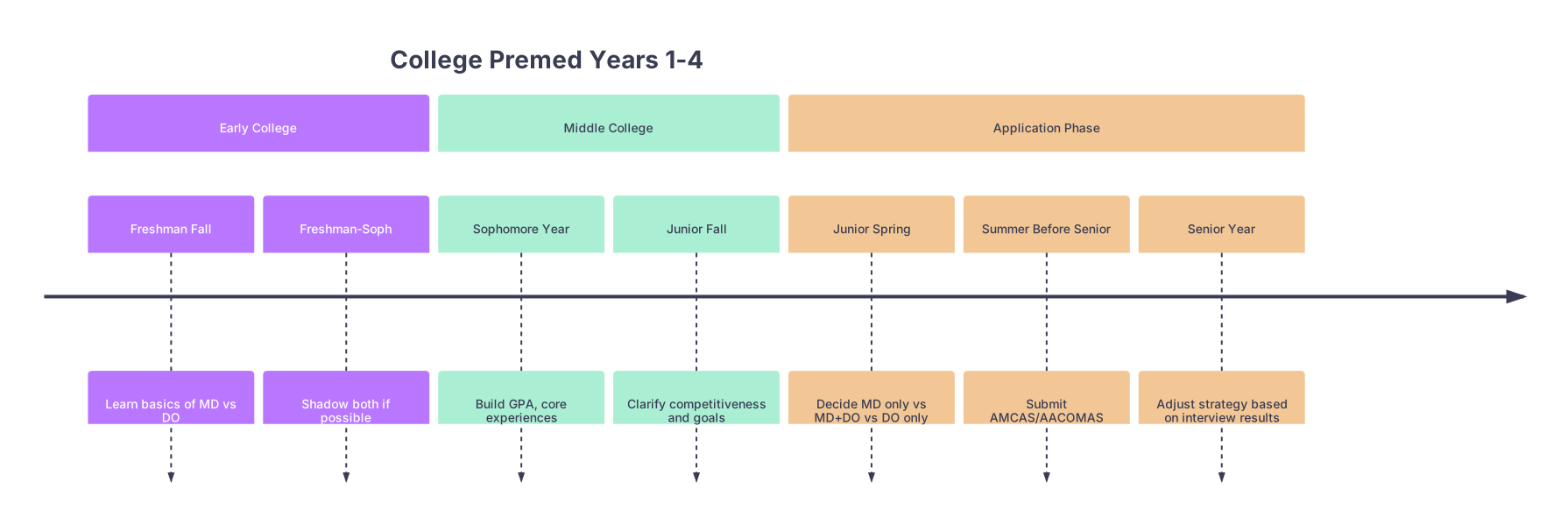
Big Picture Timeline: When DO vs MD Actually Matters
Let’s lay out the real decision points before we drill into the year-by-year.
| Period | Event |
|---|---|
| Early College - Freshman Fall | Learn basics of MD vs DO |
| Early College - Freshman-Soph | Shadow both if possible |
| Middle College - Sophomore Year | Build GPA, core experiences |
| Middle College - Junior Fall | Clarify competitiveness and goals |
| Application Phase - Junior Spring | Decide MD only vs MD+DO vs DO only |
| Application Phase - Summer Before Senior | Submit AMCAS/AACOMAS |
| Application Phase - Senior Year | Adjust strategy based on interview results |
At a high level:
- Year 1 (Freshman): Exposure phase. Learn what MD and DO actually mean. Shadow both if you can. No commitment.
- Year 2 (Sophomore): Foundation phase. GPA, clinical exposure, basic research/service. Keep both paths open.
- Year 3 (Junior): Reality check. Stats, MCAT, specialty interests. This is when you should make your formal decision: MD only, MD+DO, or DO only.
- Year 4 (Senior): Execution and adjustment. Applications are out. You are no longer “deciding,” you are refining strategy.
Now let’s track this by year, with explicit “at this point you should…” checkpoints.
Year 1 (Freshman): Learn the Landscape, Protect Your GPA
Fall – You’re just starting
At this point you should:
- Know, at a minimum:
- MD (allopathic): The traditional medical degree. Historically more competitive, especially for some specialties and academic medicine.
- DO (osteopathic): Fully licensed physicians with extra training in osteopathic manipulative treatment (OMT). Traditionally more primary care–leaning, but DOs now fill every specialty, including competitive ones.
- Understand the core reality:
- Licensing rights: MD and DO are equal in the U.S. for licensure and practice.
- Residency competitiveness: Top-tier and some super-competitive programs still lean MD-heavy. DO applicants can and do match them, but the path is steeper.
- Start a simple tracking document:
- Spreadsheet or note with columns: Date, Activity, Hours, Contact, MD/DO?, Notes.
- You will hate yourself junior year if you do not start this now.
Your priorities right now are:
- Protecting your GPA like it’s your oxygen.
- Take a sane course load. No “I’ll just do Calc II, Gen Chem, and Bio all at once to be efficient” nonsense if your high school background was shaky.
- Go to office hours before you are in trouble.
- Getting a basic feel for both paths.
- One evening:
- Read 1 MD school website (e.g., your state MD school).
- Read 1 DO school website (e.g., your nearest DO program).
- Note differences in mission, average stats, primary care emphasis.
- One evening:
Concrete actions in Freshman Fall
By winter break you should:
- Have:
- A realistic sense of how hard premed coursework feels for you.
- Read enough about DO vs MD that you can explain the difference to a non-premed friend in 60 seconds.
- Have done at least one of:
- Joined or visited:
- Premed club
- AMSA-like org
- If available: a pre-osteopathic club or chapter of SOMA (Student Osteopathic Medical Association).
- Attended any premed advising session or panel that included a DO or osteopathic topic.
- Joined or visited:
Spring – Start getting real exposure
This semester, at this point you should:
- Be aiming to finish the year with your highest-possible GPA.
- Start looking for shadowing, ideally including:
- 1+ MD physician
- 1+ DO physician
Shadowing is where most students realize:
“I literally don’t care if my future business card says MD or DO, I just want this job.” Or the opposite: “I really like the osteopathic philosophy / I want academic, big-name research, so MD probably fits better.”
Practical steps:
- Use your home community:
- Over spring break and summer, ask:
- Family doctor, urgent care, family friends in healthcare: “Do you know any DOs I could shadow?”
- Over spring break and summer, ask:
- Email template:
- Keep it short: who you are, your school, interest in medicine, asking to shadow briefly, willing to follow their office’s shadowing protocols.
By the end of Freshman Year you should:
- Have:
- Shadowed at least one physician (MD or DO; both is better).
- A GPA trend that will not bury you (ideally 3.5+; if it’s under 3.3, you need to adjust early).
- Understand:
- That the MD vs DO difference is real but not about “real doctor vs fake doctor.” If someone says that, stop listening to them.
Year 2 (Sophomore): Build Core Credentials, Keep Both Doors Open
This year you’re not choosing MD vs DO yet. You’re building the profile that gives you choice.
Fall – Core resume-building starts
At this point you should:
- Have settled into:
- A premed course plan with your advisor.
- Some consistent clinical or volunteer activity.
- Be actively:
- Looking for opportunities that align with both MD and DO expectations:
- Clinical volunteering (hospital, clinic, hospice).
- Non-clinical volunteering (community service, tutoring, crisis line).
- Intro-level research if available and interesting.
- Looking for opportunities that align with both MD and DO expectations:
Where DO vs MD starts to quietly matter:
- DO schools often value sustained service and “whole-person” narratives a lot.
- MD schools often place heavier weight on research and higher stats, especially for more competitive programs.
So sophomore year, at this point you should:
- Start one long-term activity you can carry 1.5–2+ years:
- Can be research, free clinic, EMT work, long-term volunteering, etc.
- Longevity matters more than random short-term fluff.
Mid-Sophomore Year: Get at least one DO contact
By the middle of sophomore spring you should:
- Have:
- Shadowed a DO physician for at least a few sessions. If you explicitly think DO might be on your radar, get:
- 20–40 hours total with a DO if possible.
- Shadowed a DO physician for at least a few sessions. If you explicitly think DO might be on your radar, get:
- Start thinking about:
- Whether you’d be comfortable asking that DO for a letter of recommendation eventually.
(AACOMAS/DO schools often strongly prefer or “require” a DO letter.)
- Whether you’d be comfortable asking that DO for a letter of recommendation eventually.
If you cannot find a DO locally:
- Look for:
- DO alumni through:
- Your college premed office.
- LinkedIn (search “DO” + your college).
- Telehealth shadowing programs that include DOs (yes, some schools accept virtual, but always check).
- DO alumni through:
End of Sophomore Year: Quiet self-assessment
By the end of sophomore year you should:
Know your:
- Cumulative GPA and science GPA (BCPM).
- Roughly where that lands you:
- 3.7+ → competitive for a broad MD range if MCAT aligns.
- 3.4–3.6 → solid but will need a strong MCAT or compelling story.
- <3.3 → MD is not off the table, but DO and/or repair plans (post-bac, SMP) become more central.
Have at least:
- 20–40 total shadowing hours (MD and/or DO).
- 50–100+ hours of some kind of clinical or community contact.
You are still not required to declare MD vs DO. But by now you should be thinking:
- Long-term specialty interests:
- “I’m obsessed with neurosurgery / derm / ortho” → MD path will usually give a smoother road, though DO is still possible.
- “I love primary care, rural practice, community medicine” → DO may be especially aligned.
Your only job right now: keep both doors open.
Year 3 (Junior): Decision Year – MD, DO, or Both?
Junior year is where fantasy meets spreadsheet. This is when you stop being vague and make a real plan.
Fall Junior Year – Hard reality check
At this point you should:
- Have an updated, brutally honest snapshot:
- Cumulative GPA
- Science GPA
- Practice MCAT baseline (if you’ve started content review)
- Know your rough competitiveness bands:
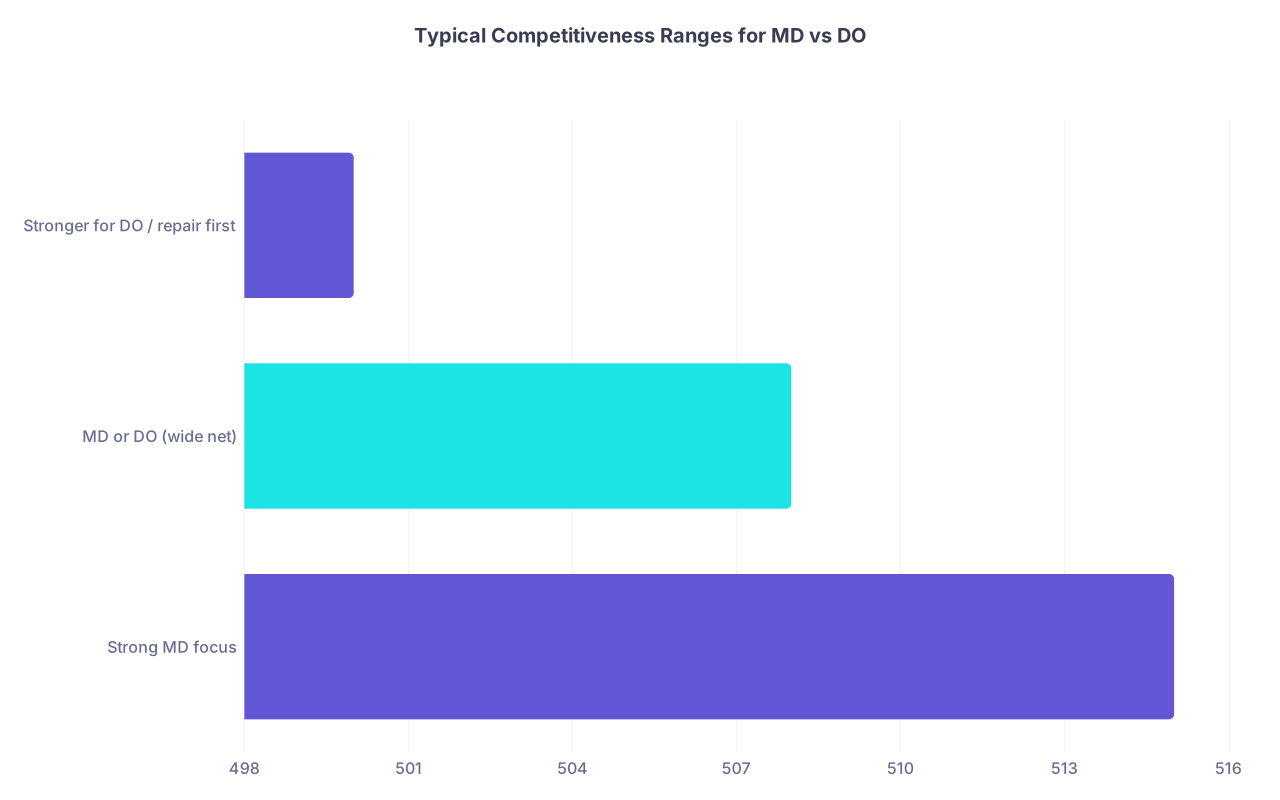
| Category | Value |
|---|---|
| Strong MD focus | 515 |
| MD or DO (wide net) | 508 |
| Stronger for DO / repair first | 500 |
Think of it like this (simplified, not gospel):
- MD-leaning competitive profile:
- GPA: 3.7+
- Target MCAT: 511–515+ (higher for top schools)
- Middle band (MD+DO wide net):
- GPA: 3.4–3.6
- Target MCAT: ~505–511
- DO-leaning / repair-needed:
- GPA: <3.3 or heavy downward trends
- MCAT: likely aiming 500–505+ for DO, while planning grade repair or extra years if MD is still desired
Around this time you should also:
- Start forming a specialty preference spectrum:
- “I have zero idea, but I like kids and continuity” vs
- “I care a lot about matching into a top integrated plastics / ortho program.”
Highly competitive specialties do not close to DOs, but they narrow severely, and prejudice still exists in some places.
If you already know you want one of those and you have the stats for MD, it’s rational to prioritize MD applications. If you’re stats-limited, you need to be brutally honest about risk.
Late Fall – Decide your primary application strategy
By late fall of junior year you should:
- Decide which bucket you likely belong in:
- MD only
- When this makes sense:
- GPA and projected MCAT are clearly competitive for MD.
- You’re strongly focused on top-tier or academic medicine.
- You’d rather reapply than attend most DO schools.
- When this makes sense:
- MD + DO
- When this makes sense:
- Stats in the middle; you’re competitive for lower/mid MD and strong for DO.
- You want to be a physician more than you care about the letters.
- You’re open to primary care but want options.
- When this makes sense:
- DO primary focus (with or without a few MD apps)
- When this makes sense:
- Your GPA is on the lower side; DO schools are more forgiving of improvement trajectories.
- You resonate with osteopathic philosophy.
- You’re okay with a slightly steeper path for the ultra-competitive specialties.
- When this makes sense:
You are not signing a binding contract here. But this decision informs your next 6–9 months:
- Which schools you research.
- Whether you prioritize getting:
- A DO letter
- More research
- Specific mission-fit experiences
Spring Junior Year – Application preparation ramps up
By early spring (before MCAT and primary apps) you should:
Have:
- A target MCAT date (often spring/summer of junior year).
- A realistic “if I score around X, I will: MD only / MD+DO / DO only” framework.
If DO is anywhere in your plan:
- You should have:
- A DO who knows you well enough to write a letter.
If you don’t, you need to fix that now. More shadowing. A few follow-up visits. Show up, be useful, be memorable.
- A DO who knows you well enough to write a letter.
- You should have:
Start tailoring your narrative:
- MD-only: You’ll emphasize research, academic curiosity, specialty interest.
- MD+DO or DO-heavy: You’ll lean harder into service, holistic care, resilience, non-traditional paths, rural/underserved interest, and osteopathic principles if authentic.
By end of junior spring you should:
- Have a preliminary school list divided into:
- MD reach/target/safety
- DO programs that match your profile and interests
- Be ready to submit primaries in early summer.
This is the point where “deciding between DO and MD” is no longer theoretical. Your application choices lock it in.
Year 4 (Senior): Execution, Adjustment, and No More Denial
By senior year you are not “thinking about” MD vs DO. You’ve already:
- Taken the MCAT.
- Submitted primaries (AMCAS and/or AACOMAS).
- Likely submitted secondaries.
Now it’s about:
- How your cycle is actually going.
- Whether you need to adjust in real time.
Summer Before Senior Year – Applications out
At this point you should:
- Have:
- Submitted AMCAS in June or early July if applying MD.
- Submitted AACOMAS on similar timeline if applying DO.
- If you planned MD+DO:
- Verified DO-specific components:
- DO letter uploaded.
- Clearly-articulated reason for osteopathic medicine somewhere in your app.
- Verified DO-specific components:
Fall Senior Year – Interview feedback loop
By mid-fall you’ll start seeing what your decision actually did:
- Scenario A: Strong MD+DO strategy
- You’re getting MD and DO interviews.
- Good. Stay the course.
- Scenario B: MD-heavy application, few or no invites by late fall
- At this point, if you didn’t include DO schools but want to be a physician, you should:
- Consider adding DO schools if still possible this cycle.
- Or start planning a gap year with a more DO-focused or mixed strategy next round.
- At this point, if you didn’t include DO schools but want to be a physician, you should:
- Scenario C: DO-focused application
- You’re getting DO interviews.
- Use them well. Show that you understand and genuinely value osteopathic principles.
Weakest move: using DO as obvious backup and not hiding it very well.
Your MD vs DO “decision” is now mostly baked, but you can:
- Broaden DO list if your MD response is underwhelming and timelines allow.
- Begin mentally committing to:
- “I’m going to be a DO and I’m going to crush it,” instead of endlessly replaying “what if I had gone MD.”
Spring Senior Year – Results and long view
By match/acceptance season you should:
- Have clarity on:
- Where you’re matriculating (MD or DO).
- Or whether you’re regrouping for a new cycle.
If you end up DO after initially being MD-only obsessed:
- Your job now is not to spend four years being bitter.
- Your job is:
- Excel academically.
- Score high on boards.
- Build the mentorship and clinical record that opens whatever doors you want later.
If you end up MD but had DO in the mix:
- Remember what you learned from osteopathic physicians:
- The “whole person” mindset is not owned by any one set of letters.
Quick Year-by-Year Checklist
Use this as a reality check each spring.
| Year | By End of Year You Should… | DO-Specific Milestones |
|---|---|---|
| Freshman | Understand basic MD vs DO differences; have GPA trajectory under control; at least some clinical exposure started or planned | Ideally shadowed or at least identified 1 DO locally or through networks |
| Sophomore | 50–100+ hours of clinical/volunteering; 20–40+ total shadowing hours; clear GPA picture | At least one decent shadowing experience with a DO and awareness of [DO letter expectations](https://residencyadvisor.com/resources/do-vs-md/application-cycle-calendar-coordinating-aacomas-and-amcas-without-chaos) |
| Junior | MCAT taken or scheduled; solid list of MD and/or DO schools; primary strategy chosen (MD only, MD+DO, DO only) | Strong relationship with a DO for a letter; specific reasons you can articulate for applying DO |
| Senior | Applications submitted; interview season underway; accepting outcome path (MD or DO) and planning future steps | If matriculating DO, mentally committed to excelling within that system rather than treating it as second best |
What You Should Do Today
Do one, not all. But do something concrete.
- If you’re Freshman or Sophomore:
- Open a blank doc and write a 3–4 sentence explanation of the difference between MD and DO as if explaining it to a non-premed friend. If you can’t do that clearly, spend 30 minutes reading one MD and one DO school’s “About” page and then rewrite it.
- If you’re Junior:
- Open your GPA/MCAT tracking sheet (or make one). Next to it, write three columns: “MD only,” “MD+DO,” “DO only.” Under each, quickly list what would have to be true (GPA, MCAT, goals) for that strategy to make sense. Circle the one that best matches your reality.
- If you’re Senior/applying:
- Look at your current school list. If it’s MD-only and your interview count is low or zero, write down three DO schools that match your stats and mission interests. Even if it’s too late this cycle, that list becomes the starting point for a smarter Plan B.
Then close the browser tab with strangers arguing about DO vs MD. Your years 1–4 plan matters more than their opinions.