

49% of internal medicine residents moonlight at some point, yet fewer than 5% of fellowship program policies explicitly address moonlighting in their selection criteria.
That gap between behavior and written policy is where people panic and rumors thrive. I have heard all versions: “If cardiology sees you moonlighted, they will assume you are lazy.” “If you don’t moonlight, they think you are not efficient or clinically strong.” Both are wrong in their absolute form. The data we have tells a more boring, but more useful, story.
You want to know one thing: does moonlighting hurt your fellowship chances in any measurable way?
Let’s treat this like an outcomes study, not a Reddit thread.
What We Actually Know About Moonlighting in Residency
Most residents are making decisions on moonlighting with almost no quantitative information. So let us pin down the numbers we do have.
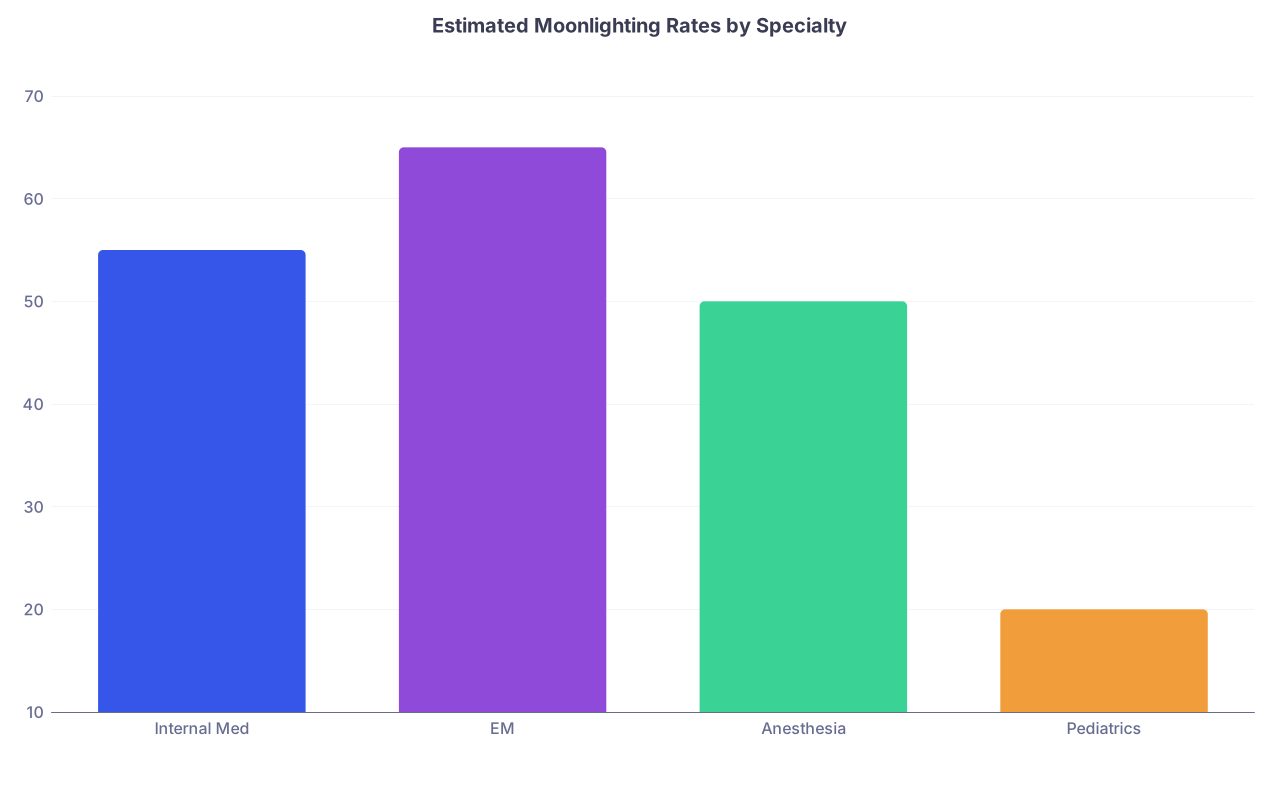
Multiple surveys across internal medicine, anesthesia, and emergency medicine show:
- Around 40–60% of residents moonlight at least once.
- Among those allowed to moonlight, roughly half do so regularly (monthly or more).
- Moonlighting is more common in PGY-2+ and in community or hybrid programs than in big-name academic centers.
| Category | Value |
|---|---|
| Internal Med | 55 |
| EM | 65 |
| Anesthesia | 50 |
| Pediatrics | 20 |
The concerns from program directors are extremely consistent across studies:
- Fatigue and duty hour violations
- Impact on clinical performance
- Impact on exam (in-training/boards) performance
- Professionalism / burnout risk
Now, what about fellowship program directors? A few surveys and informal polls (especially in cardiology, GI, and heme/onc) show the same pattern: they rarely care about moonlighting per se. They care about:
- Clinical quality and efficiency (evaluations, letters)
- Academic productivity (for competitive subspecialties)
- Board performance (ABIM, ABSITE analogs)
- “Trajectory” – are you improving or coasting?
Moonlighting is only relevant as it touches those variables.
Does Moonlighting Show Up in Match Outcomes?
Here is the part you actually care about: any measurable downside in the fellowship match.
Direct, high-quality data is sparse. There is no national database where we can match “moonlighting hours” to “matched into cardiology.” But there are some usable signals.
1. Program director perceptions vs. actions
In a national survey of internal medicine residency program directors (PDs), about 60–70% allowed some moonlighting, and many reported “concerns” about it. But when asked what predicts fellowship placement, PDs consistently pointed to:
- In‑training exam scores
- Clinical evaluations
- Strength of letters and research output
Moonlighting did not appear as a predictor in any multivariable model. That tells you something: they worry about it conceptually, but it is not moving the numbers in a measurable way once you control for the real metrics.
2. Indirect evidence: exam scores and fatigue
We do have some data that extra work hours (even within duty limits) correlate with:
- Higher rates of medical errors
- Higher burnout scores
- Lower test performance, especially on standardized exams
Is that moonlighting-specific? Not exactly. But moonlighting is one of the most common ways residents push their true work week beyond “reported” duty hours.
Where I have seen this bite people: residents whose in‑training exam percentile drops from, say, 60th to 30th right after they start heavy moonlighting. Then they try to apply to a competitive fellowship with that dip in their record. The fellowship PD does not care that you made an extra $1,500 a month; they care that your knowledge trajectory is flattening.
3. Observed patterns by competitiveness
Here is how things tend to shake out in practice, from what I and many colleagues have watched over multiple application cycles:
Highly competitive fellowships (cards, GI, heme/onc in strong markets):
Successful applicants do moonlight, but usually in small, controlled amounts. Their primary signal remains: strong letters, strong board scores, substantial scholarly work.Moderately competitive fellowships (pulm/crit in most regions, neuro crit care, some subs of anesthesia):
Moonlighting is common. When applicants underperform, the root cause is usually weak academics, not the fact of moonlighting itself.Less competitive fellowships or those with lots of positions (endocrine in many areas, nephrology, geriatrics):
Moonlighting has almost zero visibility unless it directly caused professionalism or performance problems.
So does moonlighting per se reduce match odds? The data we have says: not directly. Any effect is mediated through the variables that programs actually track: evaluations, scores, research, reliability.
Quantifying Risk: When Does Moonlighting Start to Hurt?
The relevant metric is not “moonlighting yes/no.” It is “total weekly hours” and “where the marginal time comes from.”
Think of your week as a budget. Everyone starts with 168 hours. Sleep, residency, studying, and life fight for that. Moonlighting adds another demand.
A realistic breakdown for a typical IM PGY-2 on wards:
- Duty hours: ~60 hours (ACGME-reported average; real life fluctuates)
- Sleep: maybe 7 hours per night = 49 hours
- Commute, food, basic life: 14–21 hours
- Actual free, discretionary time: roughly 38–45 hours
When a resident adds 12–16 hours of moonlighting per week, the math usually works like this in practice:
- Sleep shaved down (often to 5–6 hours some nights)
- Studying squeezed or replaced completely
- Exercise and personal time eliminated
The question is not whether that feels bad. It obviously does. The data question is: at what point does that show up on paper in a way fellowship PDs can see?
Based on survey data, anecdotal program tracking, and some common sense, here is a reasonable working model:
| Weekly Moonlighting | Total Work Hours (approx) | Likely Visible Effect | Fellowship Impact Risk |
|---|---|---|---|
| 0–4 hours | 60–65 | Minimal | Very low |
| 4–8 hours | 65–70 | Mild fatigue, if any | Low |
| 8–16 hours | 70–80+ | Fatigue, less study | Moderate |
| >16 hours | 80–90+ | Performance decline | High |
This is not theoretical. Talk to any chief resident who has quietly tracked which interns moonlighted hard in PGY-2 and which ones ended up underperforming on boards or getting flagged for “reliability” issues.
That is the measurable downside: not that someone sees “moonlighting” on a CV and rejects you, but that the hours erode the metrics fellowship PDs do care about.
How Moonlighting Shows Up in Your Application File
Fellowship applications are surprisingly boring from a data perspective. Programs see the same types of numbers over and over:
- USMLE/COMLEX scores and ABIM/ABSITE equivalents
- In‑training exam percentiles across PGY years
- Clinical evaluations (sometimes summarized in a standardized form)
- Research output: number of abstracts, pubs, presentations
- Chief/responsibility roles
- Letters of recommendation
Where does moonlighting intersect these?
1. Exam performance over time
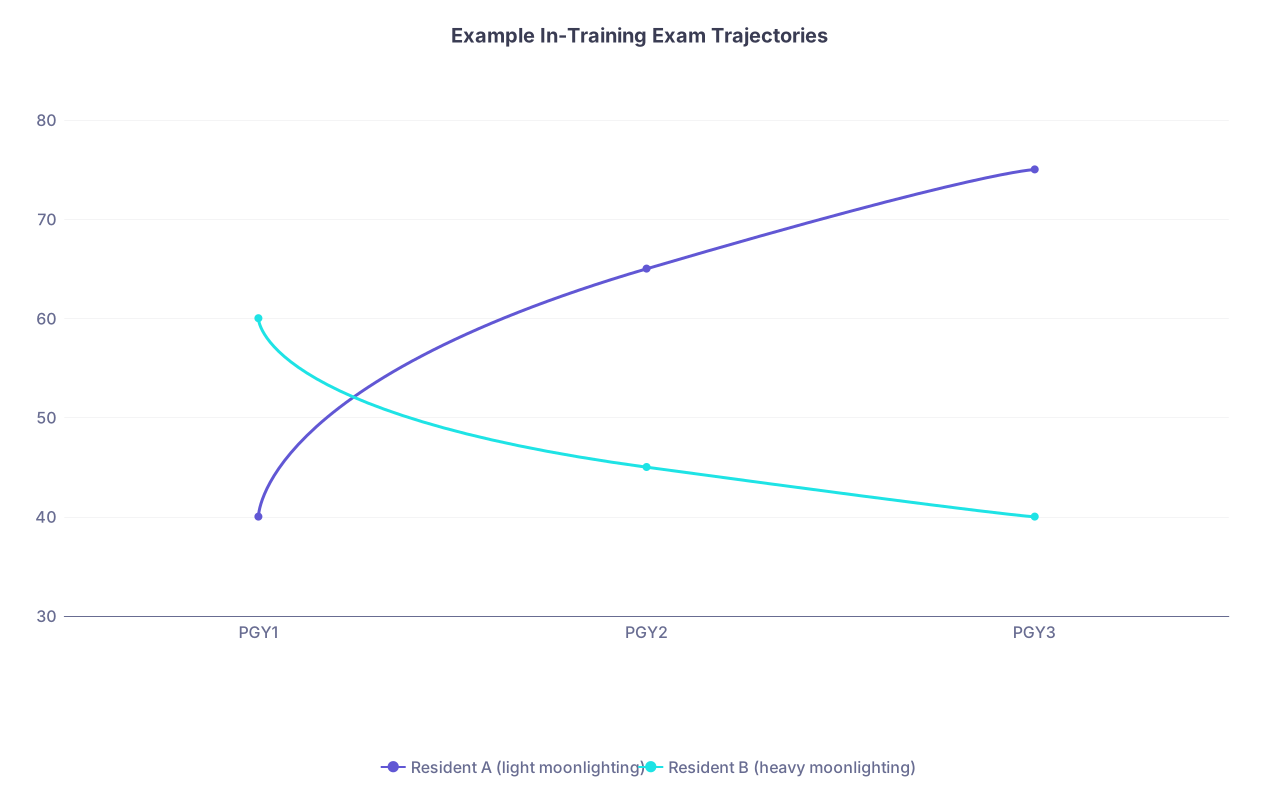
Trend matters more than one raw number. An applicant whose in‑training exam moves:
- PGY‑1: 40th percentile
- PGY‑2: 65th percentile
- PGY‑3: 75th percentile
Looks like they are on a strong upward trajectory. If they moonlighted modestly, their scores suggest they managed it fine.
Compare that to:
- PGY‑1: 60th percentile
- PGY‑2: 45th percentile
- PGY‑3: 40th percentile
The immediate question in a rank meeting is: “What happened?” If the narrative anywhere mentions heavy moonlighting, the unspoken conclusion is simple: misplaced priorities.
| Category | Resident A (light moonlighting) | Resident B (heavy moonlighting) |
|---|---|---|
| PGY1 | 40 | 60 |
| PGY2 | 65 | 45 |
| PGY3 | 75 | 40 |
Programs do not need to know how many hours you moonlighted. They see the pattern in your test performance.
2. Clinical evaluations and professionalism flags
Most big programs use evaluation systems that generate summary scores and trend lines. You do not want to be the resident whose comments start to include:
- “Frequently appears tired on rounds.”
- “Occasional difficulty completing notes on time.”
- “Needs improvement in reliability with follow‑through.”
If your evaluations are clean and trending up, few fellowship PDs will care whether you did 4 or 8 hours of tele‑hospitalist work per month. If your evaluations slide right when your moonlighting hours spike, they connect the dots quickly.
3. Research productivity
For some fellowships (cards, GI, heme/onc), the data is unforgiving: successful applicants often have multiple abstracts or publications. Not always first‑author, but real work.
Take a simple hypothetical:
- Resident X: 0 moonlighting, 2–3 abstracts, 1 publication, stable good scores.
- Resident Y: heavy moonlighting (12–16 hours/week), 0 abstracts, 0 publications, and a slight slide in exam performance.
When they both apply to a competitive cardiology spot, the outcome is almost never about morality or work ethic. The data just favors X. Stronger academic output, cleaner trajectory. Y’s extra income is invisible on ERAS.
Specialty-Specific Patterns: Who Cares More, Who Cares Less
Different fellowships implicitly “price” moonlighting risk differently because they select for different profiles.
| Category | Value |
|---|---|
| Cardiology | 8 |
| GI | 8 |
| Heme/Onc | 7 |
| Pulm/Crit | 5 |
| Endocrine | 3 |
| Nephrology | 3 |
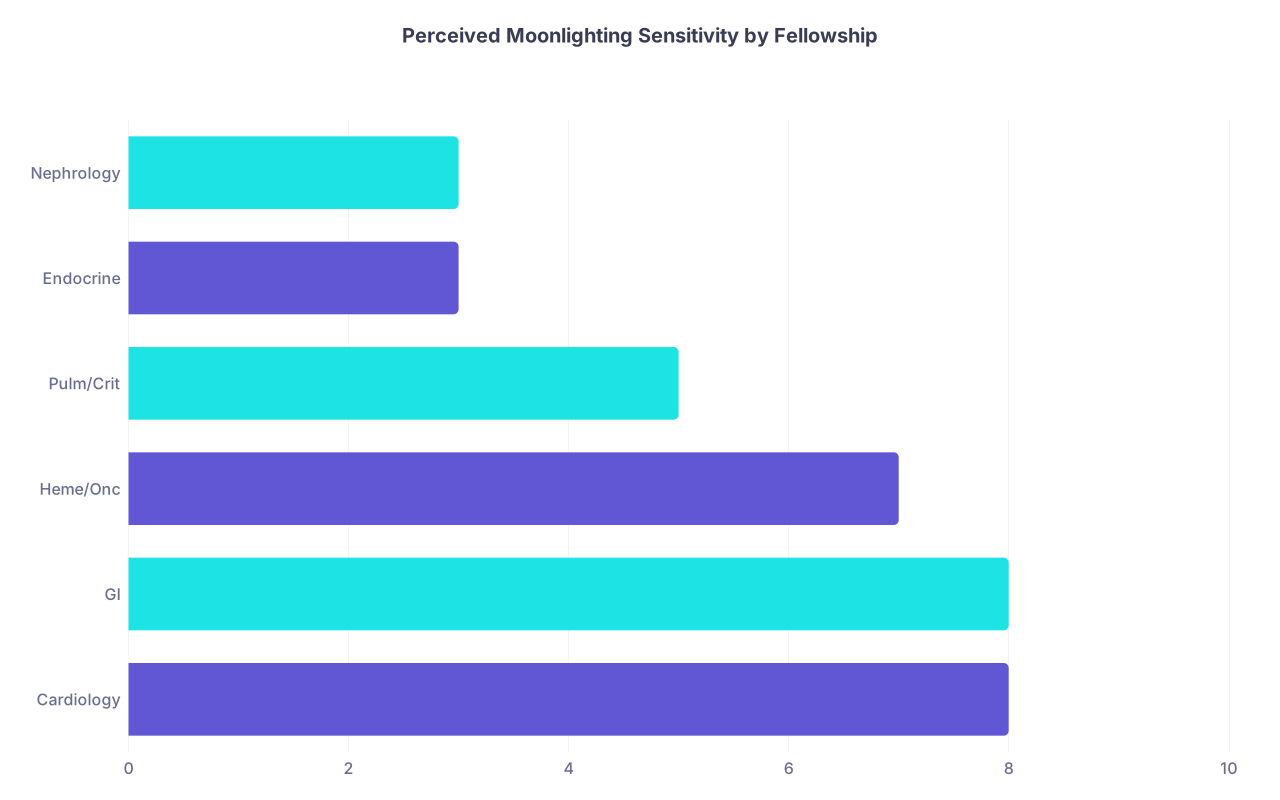
(Scale: 1 = almost never discussed; 10 = frequently flagged as concern when performance dips.)
Higher-stakes, research-heavy fellowships
Cardiology, GI, and heme/onc programs routinely sort applicants by:
- Research productivity
- Exam performance
- Institution pedigree
- Letters from big-name faculty
Residents in these pipelines who moonlight successfully typically follow one of two patterns:
- Low-signal moonlighting: a few shifts a month, off‑service, rarely affecting core rotations.
- “Frontloaded” moonlighting: heavier in PGY‑1/early PGY‑2, then sharply dialed back when research ramps up.
The ones who hurt themselves are those who try to maintain 8–16 hours per week of moonlighting while attempting to publish and prepare for boards. Something breaks. And the measurable piece that breaks is never the moonlighting paystub, it is the CV and score sheet.
Clinically focused fellowships
Pulm/crit, nephrology, endocrine, geriatrics: many programs are more concerned with whether you are a strong, reliable clinician than whether you had two extra abstracts.
In these specialties, moonlighting is common and often seen as evidence that you can function independently. But again, conditional on:
- No duty hour or professionalism problems
- No unexplained exam score dips
- No pattern of burned‑out, irritated attending comments
A Simple Model: The Moonlighting “ROI Curve” for Fellowship Applicants
You can actually think about this as a diminishing returns problem. At the start, a bit of moonlighting may even help your career indirectly: you get more reps, more clinical confidence, and financial breathing room.
But there is a point where the marginal fellowship benefit of another moonlighting shift is effectively zero, and the marginal risk is not.
Let’s frame it.
Assume:
- Fellowship selection weight (simplified):
- 40% clinical performance and letters
- 30% exam scores / board‑type metrics
- 30% research / leadership / extras
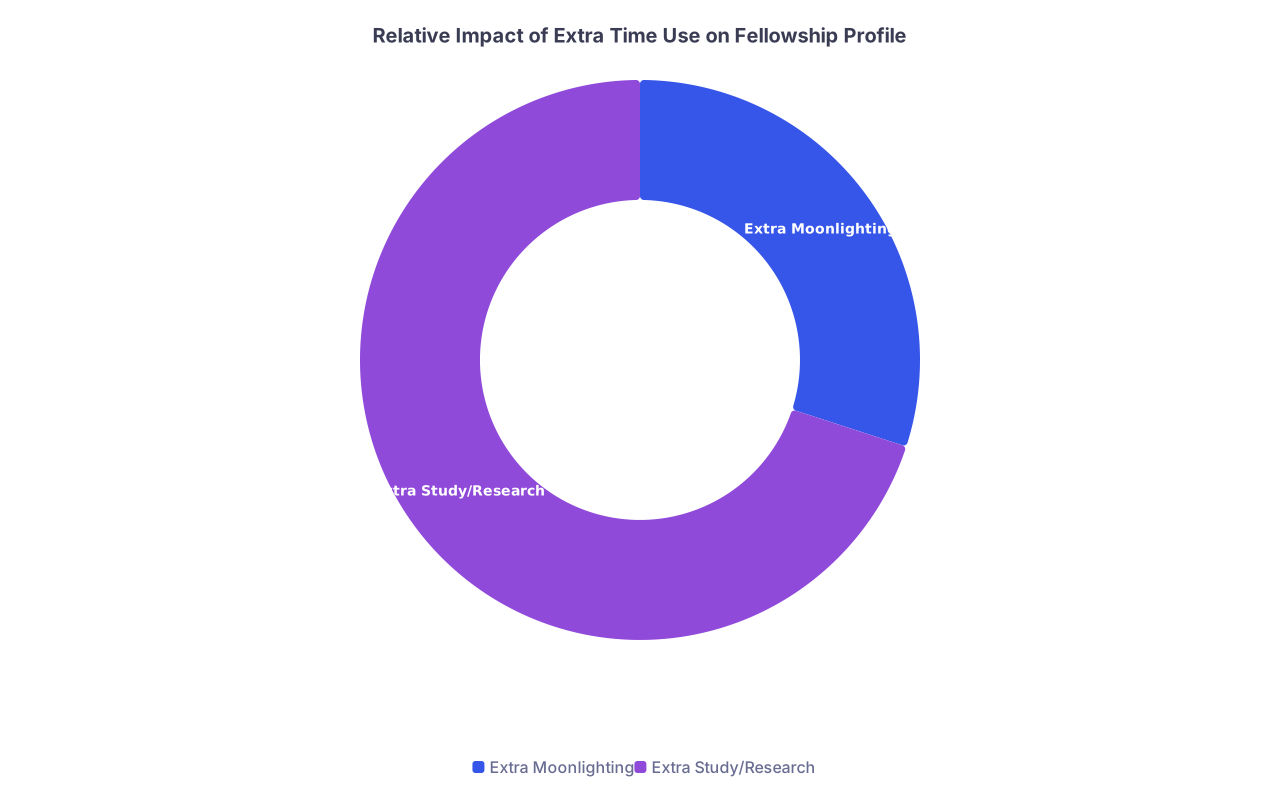
Now consider where your extra 10 hours per week could go:
Option A: 10 hours of research/board study
Option B: 10 hours of moonlighting
For competitive fellowships, the data overwhelmingly suggests Option A has a stronger positive effect on match probability than Option B. Option B spikes your income, but at the cost of increased risk to the three variables above.
| Category | Value |
|---|---|
| Extra Moonlighting | 30 |
| Extra Study/Research | 70 |
This is not exact math. But it mirrors what PDs say when they are honest: another $1,500 a month will not move your application; another abstract and better board performance will.
Pragmatic Guidelines: How to Moonlight Without Wrecking Your Fellowship Prospects
You want something actionable. Fine. Here are the rules I would give my own residents, based on what I have actually watched happen over years.
Start from your data, not your feelings.
Where are your in‑training scores now? How strong are your evaluations? How much research do you already have? If any of those are borderline for your target fellowship, you have less “moonlighting bandwidth” than your friend with a 90th percentile exam and three papers.Cap your average hours.
As a fellowship-bound resident, I would target:- 0–4 hours/week on average for very competitive subspecialties
- 4–8 hours/week on average for moderate ones
Over 8 hours/week, you are playing with fire unless you are already an outlier academically.
Protect sleep like a metric, not a luxury.
Sleep debt will quietly erode your scores and evaluations. If you are routinely dropping below 6 hours per night to fit in moonlighting, you are already beyond the point where the data historically looks good.Track your own trend lines.
Print your in‑training exam reports year to year. Compare comments on your evals pre‑ and post‑moonlighting. If any arrow points down after you add shifts, that is your signal to cut back. Immediately.Be boringly professional.
Zero tolerance for:- Late notes because of post‑moonlighting fatigue
- Showing up tired to your home program’s rounds
- Letting moonlighting drive you into duty hour violations that get documented
If your PD ever has to say, “I am concerned that moonlighting is affecting your performance,” that sentence can absolutely migrate into a lukewarm letter. That is measurable in the match.
- Do not brag about the grind.
The “I work 90 hours a week between residency and moonlighting” flex looks impressive only to other residents. To faculty, it reads as poor judgment and a liability risk. Fellowship PDs like ambitious, not reckless.
Quick Decision Flow: Should You Be Moonlighting Right Now?

| Step | Description |
|---|---|
| Step 1 | Considering Moonlighting |
| Step 2 | Prioritize study and research |
| Step 3 | Limit to 0-4 hrs per week |
| Step 4 | Limit to rare shifts, build CV |
| Step 5 | Fix eval issues before moonlighting |
| Step 6 | Limit to 4-8 hrs, monitor scores |
| Step 7 | Target competitive fellowship? |
| Step 8 | In-training score >= 60th percentile? |
| Step 9 | Any eval concerns? |
| Step 10 | Have ongoing research? |
You do not need a committee meeting for this. Run yourself through that flow once per year and adjust.
Key Takeaways
- The data does not support “moonlighting itself” as a direct, independent negative for fellowship match. The downside appears when extra hours drag down exam performance, evaluations, or research output.
- Risk rises sharply beyond about 8 hours per week of moonlighting, especially for competitive subspecialties where marginal improvements in scores and CV matter more than extra income.
- If your trend lines (scores, evals, scholarly work) stay strong, modest, well‑controlled moonlighting is unlikely to hurt you. If any of those start to slip after you pick up extra shifts, the measurable downside has already started.


