
One emotional ‘top choice’ email won’t ruin your chances. A bad one can.
Let me say that again, because I know your brain is playing disaster-movie montages right now:
Sending one heartfelt, well-written “top choice” email is not going to make you look desperate or unprofessional to program directors.
But I also know that’s not what your 2 a.m. brain is asking.
Your brain is asking:
- “If I say they’re my top choice, do I sound needy?”
- “What if they share it with other programs and I look shady?”
- “What if I phrase it wrong and they forward it to the whole faculty and laugh?”
Let’s walk through this like I’m sitting next to you at your kitchen table, watching you hover over that Send button.
What PDs Actually Think About ‘Top Choice’ Emails
Here’s the blunt truth: PDs have seen everything. The “you’re my number one dream program” emails, the unhinged three-paragraph love letters, the one-line “pls rank me high thx” messages. None of this is new to them.
Most PDs mentally sort follow-up emails into 3 buckets:
Normal, professional, mildly helpful
“Thank you for the interview, I appreciated X, Y, Z, I’m very interested in your program.”
Reaction: Fine. Good. Next.Genuinely useful signal
“I want you to know your program is my top choice / I plan to rank you first.”
Reaction: Okay, that’s a meaningful data point, especially if I’m on the fence.Yikes / red flag / cringe
Overly emotional, boundary-crossing, manipulative, or spammy (e.g., 5 emails, DMs, weird personal gifts).
Reaction: We’re not ranking this person higher. Possibly not at all.
Where does one emotional “top choice” email land?
If it’s:
- Respectful
- Not 1,000 words
- Not making weird promises or demanding assurances
- Not contradicting something you told them in person
…it goes into bucket 2 or, at worst, bucket 1.
Desperate is when you start sending multiple messages, trying to negotiate, or trauma-dumping your entire life story trying to “convince” them.
A single, sincere email that says, “You’re my top choice, here’s why,” reads as committed. Not desperate.
The Real Risks (And What You’re Afraid Of)
Let me actually list out the things your anxiety is whispering and tell you which ones are real.

Fear #1: “They’ll think I’m lying and doing this with every program.”
Some PDs absolutely think, “Yeah, half these ‘you’re my top choice’ emails are probably not true.”
But here’s the key thing: they still prefer clear interest over silence.
They’re ranking 100–200 people. They like having crumbs of extra information:
- “She said we’re her first choice.”
- “He followed up thoughtfully about our patient population.”
- “They went out of their way to express interest after interview day.”
Will they bank on your email? No. The Match algorithm doesn’t reward promises anyway.
Will it help you slightly vs someone who was equally strong and never followed up? Very possibly.
Being doubted is not the same as being punished.
Fear #2: “I’ll look unprofessional for being emotional.”
You’re allowed to be human. You can be:
- Warm
- Enthusiastic
- Grateful
- Specific about why you liked them
What crosses the line:
- Oversharing your entire mental health history
- Saying things like “I’ll be devastated if I don’t match here”
- Saying, “I’ve been stalking your faculty’s social media for years”
- Writing a three-page letter like you’re confessing love in a K-drama
Professional doesn’t mean robotic.
Professional means contained, respectful, and not asking them to manage your feelings.
Fear #3: “What if I change my mind and rank someone else #1?”
This one’s tricky. Ethically, if you tell a program “I will rank you #1,” you should only say that if it’s actually true.
Safer wording if you’re still torn:
- “Your program is one of my very top choices and I remain extremely interested.”
- “I can see myself thriving at your program and I plan to rank you very highly.”
Is a PD going to come hunt you down if you later rank them #2 or #3? No. They’ll never know your list. But you will know, and that guilt will eat at you. Don’t do that to yourself.
How One Emotional Email Can Actually Help You
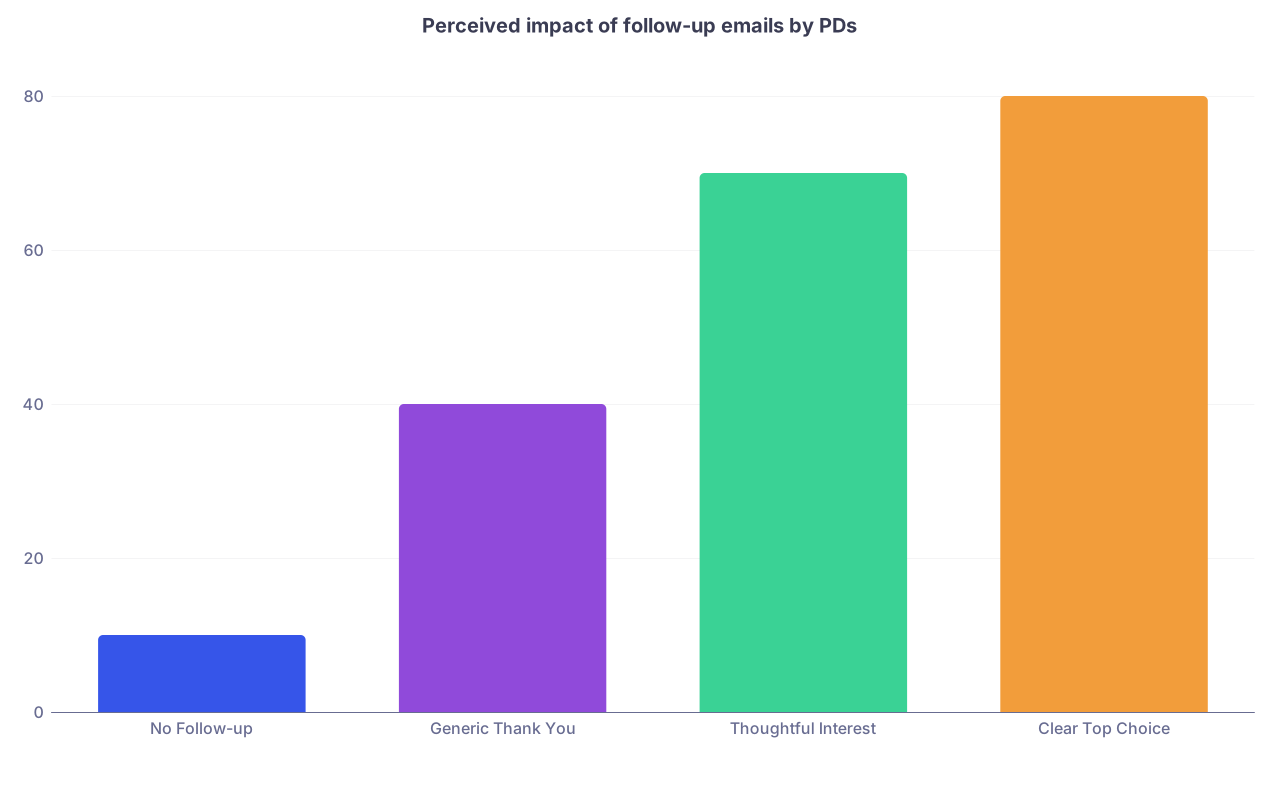
This isn’t all damage control. That email, done right, can be a small but real bump in your favor—especially if you’re on the bubble.
| Category | Value |
|---|---|
| No Follow-up | 10 |
| Generic Thank You | 40 |
| Thoughtful Interest | 70 |
| Clear Top Choice | 80 |
Interpret that chart like this: not precise numbers, obviously, but relative impact. Generic thank you = fine. Thoughtful interest + clear top choice? That’s the strongest signal you can send without being creepy.
Here’s how it helps:
- Breaks ties: If they’re ranking two similar candidates, knowing “this one is all-in on us” can push you slightly higher.
- Reminds them of you: Especially if your interview was early in the season. PDs are human—they forget. Your email pulls your file back into their working memory.
- Shows maturity: Someone who can articulate why they like a program (not just “good reputation”) comes off as thoughtful and grounded.
I’ve literally heard faculty say in ranking meetings stuff like:
“Remember that applicant who emailed saying we were their first choice and mentioned our refugee clinic? They seemed like a great fit.”
That’s the level of notice you’re hoping for. Not, “Wow, let’s overhaul the rank list.” Just nudging you from tier 3 to tier 2 in their mental model.
What Makes a ‘Top Choice’ Email Sound Desperate
You want concrete? Let’s be concrete. These are the patterns that actually make PDs raise an eyebrow.
| Behavior | How It Looks |
|---|---|
| One concise “top choice” email | Normal, committed |
| 3–5 follow-up emails over weeks | Desperate, boundary issue |
| Clear interest, specific reasons | Mature, thoughtful |
| Emotional pleading or flattery | Uncomfortable, red flag |
| Respecting NRMP rules in wording | Professional |
| Asking them to “hint” your rank | Unethical, risky |
Red-flag vibes include:
- Multiple emails escalating in intensity:
“Just checking that you saw my last email…” → “I really need this match to work out…” - Guilt-tripping subtext:
“I’ve gone through a lot in my life and it would really mean the world if you gave me a chance.” - Fishing for inside info:
“Can you tell me where I fall on your rank list?” - Romantic-style language:
“I fell in love with your program the moment I walked in.” (This one makes faculty roll their eyes so hard.)
One email. Plain language. Controlled emotion. That’s what you’re aiming for.
Exactly How to Write a Not-Desperate ‘Top Choice’ Email
Here’s the part where you stop spiraling and start typing.
Rough Template (Tweak to Sound Like You)
Subject: Thank you – [Your Name], [Specialty] Interview on [Date]
Dr. [Last Name],
Thank you again for the opportunity to interview at [Program Name]. I really appreciated [specific part of the day – e.g., talking with residents about X / hearing more about your curriculum / visiting the clinic].
After getting to know the program better, I’m confident that [Program Name] is my top choice for residency. I’m especially drawn to [2–3 specific reasons: patient population, teaching style, mentorship, program culture, location, etc.], and I believe I’d be a strong fit for your team.
Thank you again for your time and consideration. I’d be honored to train at [Program Name].
Best regards,
[Full Name]
[AAMC ID]
[Medical School]
That’s it. No drama. No bargaining. No “I’ll be crushed if I don’t match.” Just clear, honest interest.
Timing, Rules, And That NRMP Panic
You’re probably also worrying: “Am I even allowed to say they’re my top choice? Is that violating NRMP rules?”
No. The NRMP communication rules mostly restrict programs from soliciting commitments or giving misleading assurances like, “You’ll be ranked to match.”
You, as the applicant, are allowed to express:
- Interest
- Enthusiasm
- That you plan to rank them highly
- That they’re your top choice / #1, if it’s true
Where you cross ethical lines is if you:
- Tell multiple programs they’re each your #1
- Try to pressure programs for info about their rank list
- Ask for guarantees or hints (“If I rank you #1, will I match?”)
As for timing: send it after your interview, ideally:
- Within a week or two of the interview, or
- Later in the season as you finalize your list, especially if you decide they really are #1
Sending it the night before rank lists are due is… not ideal, but still not terrible. It just may not move the needle much because many programs lock lists early.
Let’s Walk Through Your Actual Worst-Case Scenarios
Because your brain won’t calm down until we hit rock bottom.
Worst-Case Scenario You’re Imagining
You send one sincere email saying they’re your top choice.
They:
- Screenshot it
- Send it in a group chat with other PDs
- Everyone laughs
- They decide you’re manipulative
- Your rank plummets
- Every other program somehow finds out you “lied” to them by not also calling them your top choice
- You don’t match anywhere
- The NRMP bans you for life
Reality check: That is not happening.
What actually happens in the real world:
- They skim your email between 40 other emails
- Maybe they nod and think, “Nice, they liked us.”
- If they remember you as a solid interview, they might bump you a bit higher
- If they already had you high, nothing changes
- Then they move on with their day
Realistic “Bad” Outcomes
Realistically, the worst that happens from one email is:
- They ignore it and it doesn’t help.
- You phrased it a bit too gushing, and they mildly roll their eyes but don’t change your rank.
- You sent it way too late and it didn’t affect anything.
None of those ruin your chances. They’re just neutral to mildly cringe in your head, not in your outcome.
How to Know If You’re Overdoing It
If you’re here wondering about “one emotional email,” it tells me something: you’re probably more cautious than reckless. The truly desperate people don’t ask—they just spam.
Check yourself:
- Have you already emailed this PD individually once or twice?
- Have you sent multiple follow-ups to the coordinator asking about rank list stuff?
- Are you thinking of sending a paragraph about your childhood trauma as a “reason” to rank you higher?
If yes to any of those—stop. Do not hit send yet. Cut it way down.
If this is your first and only “top choice” message to them, and it’s under ~250 words, you’re almost certainly fine.
One Simple Filter Before You Send It
Here’s how to sanity-check your email:
Read it out loud.
If you’d cringe hearing someone say it to a PD’s face, it’s too much.Circle anything that sounds like:
- Pleading
- Bargaining
- Threatening your own emotional stability if you don’t match
Delete anything that’s:
- Longer than 2–3 short paragraphs
- About your suffering more than their program
- Explicitly asking them for “any boost” or “special consideration”
Your email should communicate:
- Gratitude
- Specific interest
- Clear signal of ranking intent (if honest)
Not emotional dependence.
FAQ (You’re Not the Only One Freaking Out About This)
1. Should I email more than one program saying they’re my “top choice”?
No. That’s where you slide into dishonest territory. You can tell multiple programs you’re “very interested” or “ranking you highly,” but “top choice” or “#1” should be for exactly one program. If you’re not sure, don’t use that language yet.
2. What if I already sent a very intense email and now I regret it?
Don’t send a second “correcting” email. That just brings more attention to it. At this point, let it go. PDs are busy, and I promise they spent about 10 seconds on your message. Focus on the rest of your rank list and what you can still control.
3. Do I need to send a ‘top choice’ email to match there?
No. Plenty of people match at places they never emailed. It’s a small, optional nudge, not a requirement. If writing one makes you unbearably anxious, skip it and just be thoughtful with your rank list.
4. Should I CC the coordinator or send only to the PD?
Either is fine, but I’d usually send directly to the PD (and sometimes APD if you had close contact), and optionally CC the coordinator. Keep it simple. Don’t blast the whole faculty. One or two key people max.
Open your draft email right now and do this: highlight any sentence that’s about how desperate you are instead of how good the fit is. Delete those sentences. Then make the remaining email specific, short, and honest—and send it.