
You are here
It is early November. You just walked out of your first residency interview. Your cheeks still hurt from polite smiling. Your suit jacket is over your arm. And the thought hits you:
“I have no idea what I am supposed to do next… or how to keep all these programs straight.”
You are not alone. I have watched very smart people completely sabotage their rank lists by what they did – or did not do – between first interview and submission day. Not because programs are secretly scoring their thank-you notes like essays. Because they lost clarity. They forgot details. They misread “vibes” months later. They got swayed by late emails instead of early instincts.
This is the roadmap I wish every MS4 had taped above their desk. Month-by-month, then week-by-week when it gets tight. From the first interview all the way to clicking “Certify” on your rank list.
Big-picture timeline: From first interview to rank list
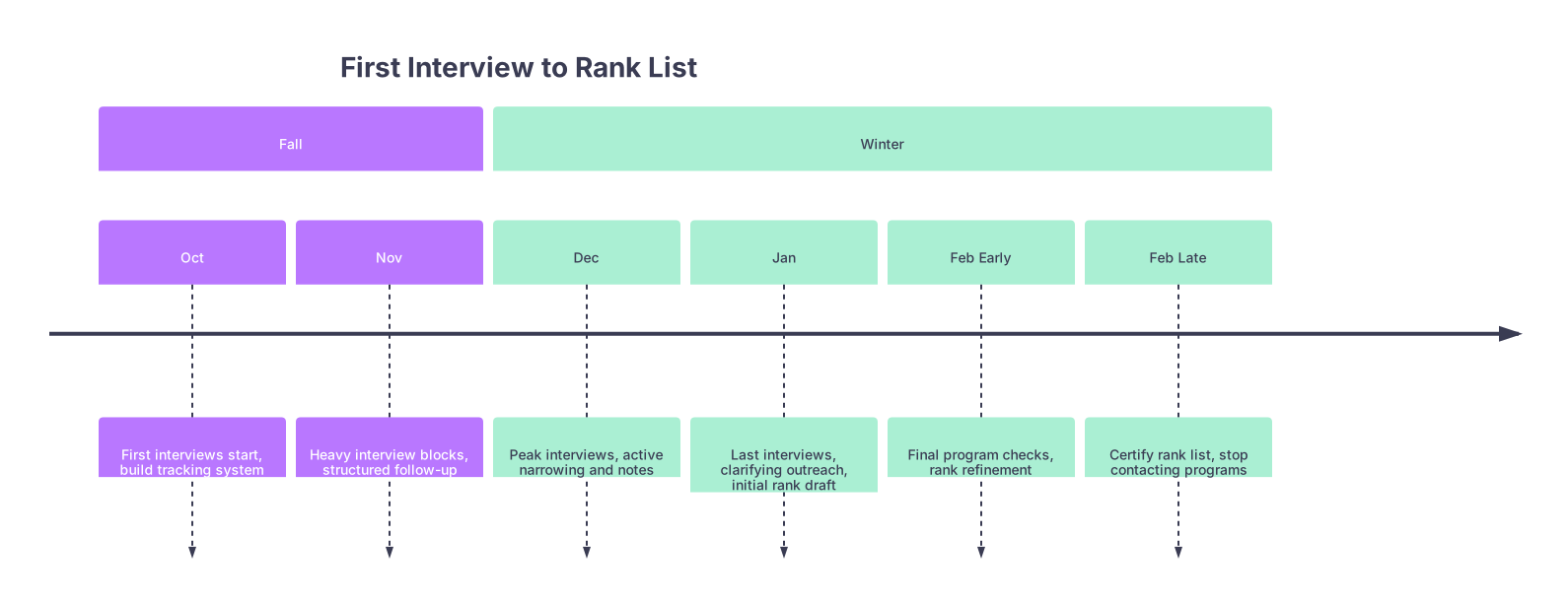
| Period | Event |
|---|---|
| Fall - Oct | First interviews start, build tracking system |
| Fall - Nov | Heavy interview blocks, structured follow-up |
| Winter - Dec | Peak interviews, active narrowing and notes |
| Winter - Jan | Last interviews, clarifying outreach, initial rank draft |
| Winter - Feb Early | Final program checks, rank refinement |
| Winter - Feb Late | Certify rank list, stop contacting programs |
At every point, you have 3 parallel jobs:
- Maintain relationships professionally.
- Capture and update your own data and impressions.
- Gradually convert impressions into a rational rank order.
We will go through each month with concrete “at this point you should…” steps.
October: First interviews and setting up your system
If your first interview is in October, this month is about infrastructure. Set it up correctly now and January will hurt a lot less.
By the time you complete your first 2–3 interviews, you should…
- Build an interview tracking sheet (Google Sheets or Excel, shareable across devices).
Use something like this:
| Column | Purpose |
|---|---|
| Program / City | Basic identification |
| Interview Date | For timing & follow-up |
| Interviewers | Names / roles |
| Impression Score (1–10) | Your gut, right after |
| Pros | Bullet points |
| Cons | Bullet points |
| Follow-up Sent? (Y/N) | Track thank-you notes |
If you skip this, by late December everything will blend together. I have watched people confuse which program had the malignant chief, or which one offered the research track.
- Decide your thank-you strategy. And stick to it.
At this point you should:
- Choose email as your default. Handwritten notes are slow and often get lost.
- Decide: will you write to every interviewer, or just PD + coordinator? My opinion:
- Competitive specialties (Derm, Ortho, ENT, Plastics): email each interviewer.
- Larger programs (IM, Peds, FM): PD + key faculty + residents you had extended conversations with.
- Create a thank-you template you customize, not copy-paste.
Basic structure:
- Subject: “Thank you – [Your Name], [Specialty] Interview [Date]”
- 1 line: Thank them for their time.
- 2–3 lines: Specific details from your conversation or day.
- 1 line: Brief reaffirmation of interest in [specialty] and what you liked about the program.
You send within 48 hours. Not 2 weeks later, not at midnight three days after. Within 1–2 days, during business hours.
Take 10–15 minutes while details are fresh:
- Fill in your tracking sheet (pros, cons, gut score).
- Jot 3–5 bullet memories:
- “Resident said: ‘I feel genuinely supported when things go wrong.’”
- “ICU months are 3 instead of 6.”
- “PD emphasized wellness but residents looked exhausted.”
These are gold when you are ranking in February.
November: Heavy interviews and disciplined follow-up
By November, you are in the grind. Traveling. Zoom fatigue. Same questions on loop. This is where structure saves you from burnout mistakes.
Each interview week in November, you should…
- Batch your logistics and follow-up
Pick one or two “admin blocks” per week (e.g., Wednesday evening, Sunday afternoon) for:
- Sending any remaining thank-you emails.
- Updating your tracking sheet.
- Uploading notes to a central folder (Google Drive, Notion, whatever).
This keeps you from trying to write thoughtful emails at 1:00 a.m. in an airport.
- Refine your data – start noting patterns
By now you have enough interviews to compare. At this point you should start tracking a few standardized metrics for yourself:
| Criterion | Example Scale |
|---|---|
| Location fit | 1–5 |
| Program culture | 1–5 |
| Clinical volume | 1–5 |
| Fellowship / job prospects | 1–5 |
| Resident happiness | 1–5 |
Right after each interview, quickly rate each item. Do not overthink it. This is for you, not for an essay.
- Calibrate your expectations – not every program needs a love letter
Reality:
- A polite, specific thank-you is standard.
- Multiple follow-ups trying to “stay on their radar” are annoying and can hurt you.
- Never ask, “Where will I be ranked?” or push them to reveal rank list details. That is a fast way into the “no” pile.
In November, beyond thank-you notes, you generally:
- Do not send “this is my #1” declarations. Too early, often disingenuous.
- Do keep a running list of programs you might eventually signal strong preference to (one or two at most).
December: Peak interviews and active narrowing
Most people hit their heaviest interview cluster in December. You are tired. Your standards get fuzzy. Programs start to blur. This is exactly when structure prevents you from overvaluing small things (“They gave us DoorDash vouchers!”) over real factors.
Early December: After ~5–8 interviews, you should…
- Build a preliminary rank “tiers” system
Not a final list. Just buckets:
- Tier 1: I would be excited to train here.
- Tier 2: I would be fine training here.
- Tier 3: I would go here if it is my only option.
Then sort your current programs into these tiers using your interviews + notes, not emotions from a single resident interaction.
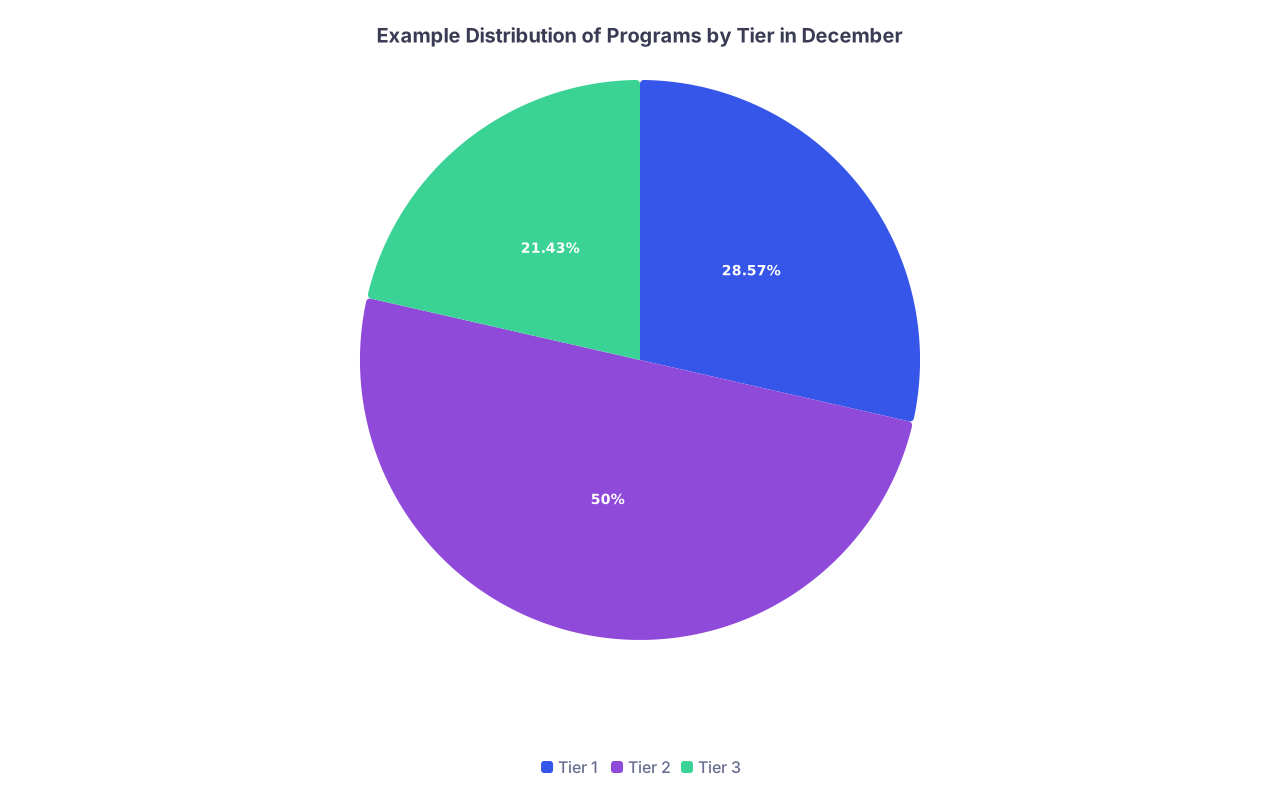
| Category | Value |
|---|---|
| Tier 1 | 4 |
| Tier 2 | 7 |
| Tier 3 | 3 |
This gives you a sanity check. If all your programs are in Tier 2, maybe your bar is fuzzy. If almost everything is Tier 1, you are probably not being honest.
- Clarify factual gaps with short, targeted emails
Examples of appropriate December follow-up:
- “Could you confirm how many months of ICU we have over three years?”
- “Is there protected time for research during PGY-2?”
You send these:
- To the program coordinator if logistical.
- To a faculty member or chief resident if more substantive, but still concise.
What you do not do:
- Fish for “how competitive am I?” reassurance.
- Ask if they plan to rank you.
- Send long paragraphs about how you keep thinking about the program.
Mid to late December: You should start preparing for the post-interview lull
A lot of programs go silent after interviews wrap up. You should not interpret silence as disinterest. Many PDs deliberately avoid post-interview contact to keep it fair.
At this point:
- Expect that some programs will send “you are highly ranked” type emails. Some mean it, some do not.
- Do not re-order your entire list based on flattery emails alone.
- Keep your own metrics and tiering front and center.
January: Last interviews, clarifying outreach, and first serious rank draft
January is decision month. Interviews are finishing. You finally see the whole playing field. Anxiety spikes because now the choices are real.
Early January: As you finish your last interviews, you should…
- Do your final wave of standard thank-you emails
Same template style as before, but you might add:
- A line acknowledging timing:
“I recognize you are nearing the end of interview season, and I appreciate the opportunity to learn more about your program.”
Still: 24–48 hour window. Still professional, specific, short.
- Clean your data
Before you touch a rank list, make sure:
- Every program has:
- Interview date
- Rank tier
- Key pros/cons bullet list
- Scores in your main criteria (location, culture, training, etc.)
Then create an initial ordered list based primarily on:
- Where you would most want to train if all programs ranked you first.
Do not try to “game” NRMP. Ranking programs lower because you think you are less competitive at them is a strategic mistake. The algorithm is applicant-favoring.
Mid-January: Clarifying follow-up and selective “interest” emails
This is where people start overdoing “love letters.” Do not be that person.
At this point you should:
- Identify at most 1–3 programs where a clear expression of interest is honest and may matter.
Types:
- Your true #1 where you would definitely go if matched.
- Maybe one or two others in the top cluster, but only if you can be honest with your wording.
- Send carefully worded interest emails (if you choose to)
Examples:
To your true #1 (only one program):
“After completing my interviews, [Program Name] is my top choice. If I am fortunate enough to match at your program, I would be thrilled to train there.”To high-interest but not guaranteed #1 programs:
“Following the completion of my interview season, I remain very interested in [Program Name] and believe it would be an excellent fit for my training and career goals.”
Short. Direct. No begging. No drama.
And most crucial: do not lie. Telling two programs “you are my #1” is unethical and does occasionally get exposed.
- Use January for any final information-gathering conversations
Appropriate options:
- Ask the coordinator if you can speak with another resident (especially someone with similar interests or life situation – couples match, kids, non-traditional).
- Attend any optional second-look virtual sessions if they exist (and if you have unanswered questions).
Avoid:
- Pressuring faculty for one-on-one second look days unless the program formally offers them.
- Flying out for unofficial visits that create inequity and weirdness; a lot of programs actively discourage this now.
February (early): Refining the rank list and final checks
February is less about programs and more about you. Programs are building their lists. You are finalizing yours.
First 1–2 weeks of February: You should…
- Do a structured rank list review
Take your first draft and run it through a simple framework.
For each neighboring pair (e.g., #3 vs #4), ask:
- If both offered me a spot, where would I be happier day-to-day?
- Where do I see better training for my likely career path?
- Which location aligns better with my support system, partner, or personal constraints?
If the answer consistently favors the lower-ranked program, swap them.
- Sanity-check with 1–2 trusted mentors
Not 10 people. Two types:
- A faculty member in your specialty.
- Someone who knows you well (advisor, mentor, chief, etc.).
Send them:
- Your tentative list.
- Your top 3–5 priorities (e.g., “stay within 3-hour drive of family,” “strong cardiology exposure,” “non-malignant culture”).
Ask:
“Looking at this through the lens of my goals, does this order make sense? Anything concerning?”
You are not asking them to choose for you. You are asking them to catch blind spots.
- Resolve any last crucial questions
If something truly critical is unclear (e.g., parental leave policy, visa issues, couples match logistics), a brief email to the coordinator is fine even now.
Keep it:
- Concrete.
- Single-topic if possible.
- Respectful of their time (“Thank you again for your help in clarifying this as I finalize my rank list.”)
No more “just wanted to remind you how excited I am” messages. That reads as last-minute lobbying.
February (late): Finalize, certify, and then stop
The last week or so before the rank list deadline is where people make their biggest mistakes. Overthinking. Panicking. Rearranging based on completely irrelevant noise.
The week before the NRMP rank list deadline, you should…
- Lock a “freeze date” for your list
Pick a day 2–3 days before the actual NRMP deadline. Tell yourself:
- “On this day, I will make any last changes and then stop.”
- After that day, barring some catastrophic new information, the list stays.
- Do a values check on your top 5
For each of your top 5:
- Can you articulate in 2–3 sentences why it is in that position?
- Does that reason match what actually matters to you (not your classmates or Twitter)?
If you cannot convincingly explain why #2 is above #3, you probably need to revisit that pair.
- Log into NRMP and triple-check the technical details
At this point you should:
- Verify program codes and names match exactly.
- Make sure there is no missing program you interviewed at.
- Confirm couples match links if applicable.
Technical errors are far more painful than “maybe I liked Program X a tiny bit more.”
- Certify your list at least 24 hours before the deadline
Do not flirt with server load failures, power outages, or last-minute life emergencies.
After you click “Certify”:
- Take a screenshot or print the confirmation.
- Then close the browser. You are done.
After certification: Stop contacting programs
Resist:
- “Just one more email to tell them they are #1.”
- Updating programs about a minor poster or case report that does not change anything.
Post-deadline contact does not influence rank lists and just raises eyebrows.
Where follow-up actually matters (and where it does not)
Let me be blunt.
Follow-up helps you:
- Clarify information.
- Demonstrate professionalism.
- Prevent programs from misreading complete silence as lack of interest, especially at your top choice.
Follow-up does not:
- Magically pull you from the bottom of their list to the top.
- Overcome a disastrous interview.
- Replace genuine program–applicant fit.
Programs differ, but if you want a rough sense of what actually shifts things, here is how I have seen it in practice:
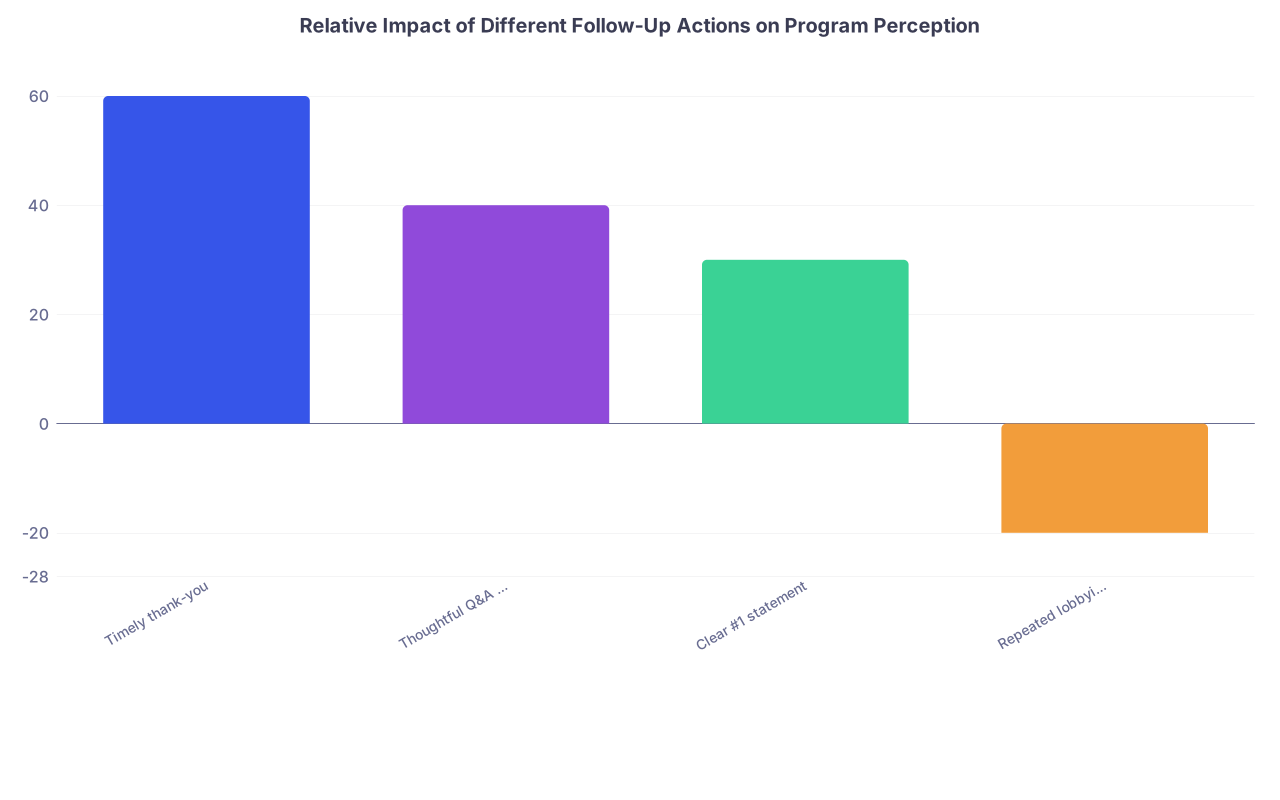
| Category | Value |
|---|---|
| Timely thank-you | 60 |
| Thoughtful Q&A email | 40 |
| Clear #1 statement | 30 |
| Repeated lobbying emails | -20 |
Numbers are conceptual, but the point stands:
- Timely, professional, modest follow-up is a net positive.
- One clear, honest “you are my top choice” can help at your #1.
- Repeated, needy emails are negative.
Daily / weekly cadence during heavy interview months
To make this concrete, here is what a “good” follow-up rhythm looks like in November–January.
| Time | Task |
|---|---|
| Same day as interview | Jot notes, update tracking sheet, gut score |
| Next business day | Send individualized thank-you emails |
| Weekly (1–2 hours) | Clean up sheet, adjust tiers, list questions |
| Monthly | Re-evaluate rankings, identify clarification needs |
And across the whole season, the volume of communication stays moderate:
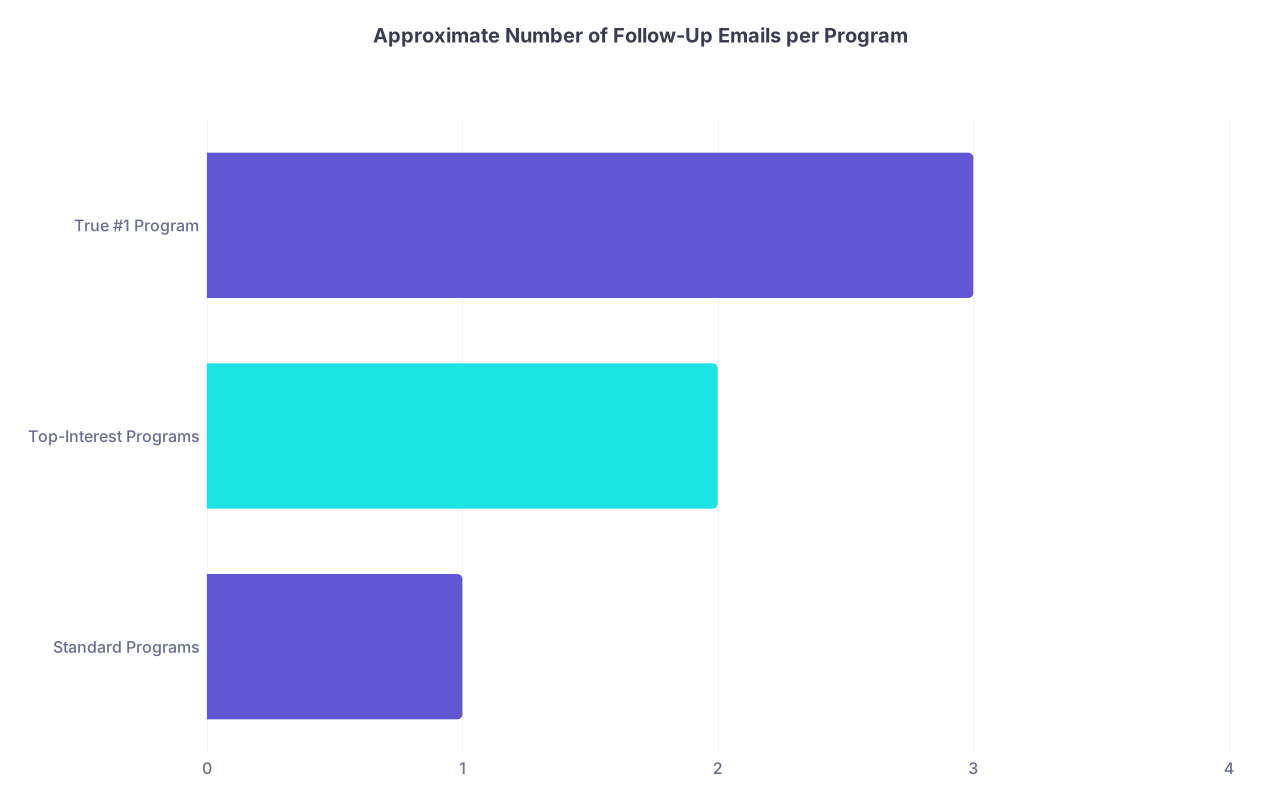
| Category | Value |
|---|---|
| Standard Programs | 1 |
| Top-Interest Programs | 2 |
| True #1 Program | 3 |
Standard program:
- 1 thank-you. Maybe 1 clarification message. That is it.
Top-interest program:
- Thank-you.
- One clarification or continued-interest email in January.
True #1:
- Thank-you.
- Possibly 1–2 targeted follow-ups, including your explicit “top choice” statement.
Not 10 emails. Not monthly updates.
Final thoughts
By the time you hit “Certify,” you should have:
- A clear, honest rank list built on your own priorities, not fear or flattery.
- A track record of professional, concise communication – thank-yous, clarifying questions, and at most one honest “you are my #1” email.
- A written record of your impressions so you are not making life-changing decisions based on hazy memories and airport Wi-Fi.
Set up the system in October. Stay disciplined in November and December. Use January and early February to refine rather than scramble. Then certify your list, step away, and let the algorithm do its job.