
You hit “withdraw” from a residency program in ERAS, felt relief for about 12 hours, and now your stomach drops. A mentor praised that same program. Or your top choice just rejected you, and suddenly that “backup” you casually withdrew from looks pretty good. Now you’re staring at a blank email draft thinking: Can I even reach out? Will I look flaky? Is this career suicide?
You’re not the first person to be in this mess. I’ve watched applicants backtrack from a withdrawal and actually salvage an interview—and I’ve seen others torch bridges with one badly worded email. The difference is in how you handle it.
Let’s walk through what to do, step by step, if you:
- Already withdrew from a program and want to email them
- Are thinking about withdrawing but might want to reconsider later
- Want to leave the door open—without looking indecisive or desperate
First: Get Clear on Your Situation
Before you write anything, you need to know exactly which scenario you’re in. The strategy changes based on timing and context.
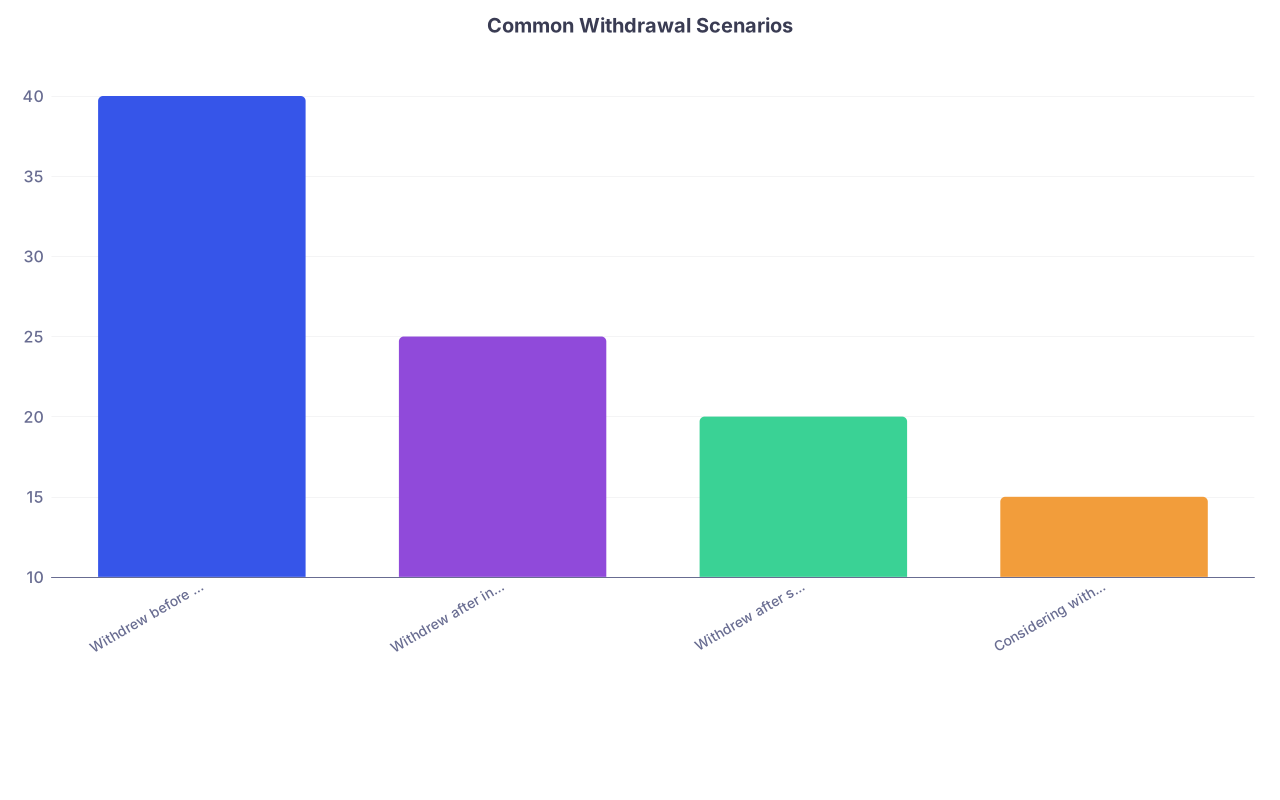
| Category | Value |
|---|---|
| Withdrew before interview | 40 |
| Withdrew after invite (no date set) | 25 |
| Withdrew after scheduling | 20 |
| Considering withdrawing | 15 |
Scenario A: You withdrew before an interview invite
You clicked withdraw early—maybe to “narrow your list,” save money, or because you felt the program was too far, too academic, too community, whatever. Then new information comes in: better understanding of the specialty, someone strongly recommends that program, or your interview season turns out weaker than expected.
This is very salvageable. You’re not asking them to undo a scheduled day; you’re basically asking them to re-open consideration.
Scenario B: You withdrew after receiving an interview invite
Different level of damage. Programs notice this. When you decline or withdraw after an invite, they assume:
- You’re not serious about them
- You’re overbooked
- You’re using them as a backup
You can still reach out, but you’re now asking for a favor. You need to be more careful and more specific in your email.
Scenario C: You withdrew after scheduling or even attending an interview
If you fully withdrew your application after interviewing—meaning you told them you’re no longer considering them—coming back later is tough. Not impossible, but you’re now going against your own previous statement.
Here, the bar is much higher. You need a very clear and honest reason for reconsideration, and you should expect that most programs will say no.
Scenario D: You haven’t withdrawn yet—but you’re tempted
This is the best-case scenario long-term. You can structure your communication so you don’t burn bridges and can potentially circle back if things change later.
If you’re in this situation, stop before clicking withdraw and read the next section twice.
Before You Withdraw: How to Not Trap Yourself
I’ve watched applicants get cute with “strategic withdrawing” and then sit on Match Day with way fewer options than they expected. Overconfidence is common. So is regret.
If you’re thinking of withdrawing, ask yourself three blunt questions:
- If I don’t match, would I want this program in SOAP?
- If my “top tier” programs pass on me, would I regret not keeping this one?
- Am I withdrawing because this program truly isn’t a fit—or because I’m chasing prestige, geography, or ego?
If the real answer is, “I might want them later,” do not hard-burn the bridge.
Instead of “withdraw and vanish,” consider a short email that:
- Thanks them
- Clarifies you’re currently focusing elsewhere
- Leaves the door slightly open, without asking for special treatment
Example if you plan to not interview but want future goodwill:
Subject: Application Status – [Your Name], [AAMC ID]
Dear Dr. [PD Last Name] and the [Program Name] team,
Thank you again for reviewing my application this cycle. At this time, due to personal and logistical factors, I need to limit the number of interviews I pursue and will not be able to continue in the process with your program this year.
I’m grateful for your consideration and the opportunity to be reviewed. I’ve heard consistently positive things about [Program Name], especially regarding [brief specific detail—resident camaraderie, teaching, patient population, etc.], and I hope to have the chance to work with your residents and faculty in the future.
Sincerely,
[Your Name]
[AAMC ID]
This is you saying “no for now” without closing the door on:
- Reapplying next year
- Rotating there as a fellow
- Ending up as their colleague down the line
Better than a silent withdrawal and no communication.
If You Already Withdrew and Want Back In
This is the heart of what you’re dealing with.
You need three things:
- A clear, believable reason for the change
- An apology that doesn’t grovel
- A specific but low-pressure ask
The worst thing you can do is pretend you didn’t withdraw.
Programs can see your ERAS status. They know. If you act like nothing happened, you look either clueless or manipulative.
Step 1: Own what happened directly
Do not write a 9-paragraph justification. One or two sentences is enough.
Examples of acceptable reasons (if true):
- Significant personal or family change (illness, geography constraints)
- Realization your initial strategy was flawed (too few interviews, wrong emphasis)
- Misunderstanding about the program that you later corrected
Unacceptable “reasons” you should not say directly:
- “I changed my mind because my dream program rejected me”
- “I was overconfident earlier and treated you like a backup”
You can think those quietly. You don’t put them in writing.
Step 2: Decide what you’re asking for
Be precise:
- Are you asking to be reconsidered for an interview?
- Are you asking to reinstate an invite you declined?
- Are you just trying to re-open communication in case of SOAP or next cycle?
Your email should reflect the actual realistic ask. Don’t say, “If there’s anything at all…” That sounds vague and desperate. Programs are busy; you need to make their decision easy.

Email Templates You Can Actually Use
You’re here for words you can copy, so let’s get into it. Adjust details to match your situation and specialty.
1. You withdrew before any invite, now want to be reconsidered
This is the least bad situation. Use something like this:
Subject: Request to Reconsider Application – [Your Name], [Specialty]
Dear Dr. [PD Last Name] and the [Program Name] team,
I hope you are well. I’m writing regarding my application to your [Specialty] residency program. I withdrew my application earlier in the season due to [brief reason: e.g., “anticipated geographic constraints” or “personal circumstances that have since changed”].
Since then, after discussing my goals with my mentors and gaining a better understanding of your program—especially [specific detail: e.g., your focus on underserved populations, your strong ICU exposure, your global health track]—I’ve realized that [Program Name] aligns much more closely with my long-term plans than I initially appreciated.
I understand that my earlier withdrawal may have caused inconvenience, and I apologize for that. If it is still feasible to reconsider my application for an interview, I would be very grateful. I remain sincerely interested in training at [Program Name].
Thank you for your time and for all the work that goes into reviewing candidates during a busy season.
Sincerely,
[Your Name], [Degree]
AAMC ID: [ID]
Phone: [Number]
Key things you’re doing here:
- Owning the withdrawal
- Offering a plausible reason without drama
- Being specific about why you actually like their program
- Making a single, clear ask
2. You declined or withdrew after receiving an interview invite
This is trickier. They already offered you a spot and you turned it down. Now you’re asking them to essentially “undo” that.
Be more concise and more apologetic, but still not over the top.
Subject: Request to Reconsider Interview – [Your Name], [Specialty]
Dear Dr. [PD Last Name],
Thank you again for the invitation to interview at [Program Name]. I initially declined/withdrew my application due to [brief, non-dramatic reason: e.g., “anticipated schedule conflicts,” “family considerations,” or “a misunderstanding about my geographic flexibility”].
My circumstances have since changed, and after re-evaluating my priorities and learning more about your program—particularly [1–2 specific details]—I realize that I made that decision too quickly.
I recognize that interview slots are limited and that my earlier decision may have been inconvenient for your team. If there is any possibility that I could still be considered for an interview, I would be very grateful. If not, I completely understand and appreciate the consideration you have already given my application.
Thank you for your time.
Sincerely,
[Your Name], [Degree]
AAMC ID: [ID]
Notice the last line before your signature: “If not, I completely understand…” This matters. It removes pressure and signals that you’re not entitled.
3. You withdrew after interviewing and now want to undo that
I’ll be blunt: success rates here are low. Programs don’t want to rank someone who told them “I’m not interested.” But sometimes life genuinely changes—family illness, partner’s job, visa issues, pregnancy, etc.
You must be transparent. Vague “personal reasons” will not cut it.
Subject: Update Regarding My Withdrawal – [Your Name], [Interview Date]
Dear Dr. [PD Last Name],
Thank you again for the opportunity to interview at [Program Name] on [date]. I wanted to reach out regarding my recent withdrawal from your rank list.
Shortly after my interview, [brief, concrete explanation: e.g., “my partner was offered a job in [city], and we believed we had to limit ourselves to that region; however, that position has since fallen through,” or “a significant family health issue arose, and we thought we would need to relocate, which has now been clarified and resolved”]. Based on what we knew at the time, I withdrew from consideration to avoid creating false expectations.
Those circumstances have now changed, and I find myself once again able to consider programs outside of [region]. Given how strongly I felt about [Program Name]—especially [1–2 very specific details you valued from the interview day]—I wanted to ask, respectfully, whether it would be possible to reinstate my application for ranking.
I understand completely if this is not feasible at this stage in the season. I also recognize that my earlier withdrawal may have caused added work for your team, and I apologize for that. Regardless of the outcome, I’m grateful for the time and consideration you and your residents gave me.
Sincerely,
[Your Name], [Degree]
AAMC ID: [ID]
You’re aiming here for “mature, candid, and respectful,” not “please save me.”
Who to Email and How to Send It
You’re not blasting the entire faculty listserv. There’s a hierarchy.
| Situation | Primary Recipient | CC |
|---|---|---|
| General reconsideration | Program Director | Program Coordinator |
| Scheduling / logistics | Program Coordinator | PD if needed |
| Complex explanation (family, serious issues) | Program Director | Maybe Coordinator |
| SOAP / future cycles interest | Program Director | None or Coordinator |
Some rules:
- If it’s about policy (reconsidering withdrawal, rank list issues), address the Program Director and CC the coordinator.
- If it’s purely about logistics (can I reschedule, is my ERAS status correct?), email the coordinator first.
- Don’t email multiple people separately with the same request. That makes you look disorganized.
Use your institutional email if possible. Save the Gmail address for when your med school shuts off your .edu later.
Timing: When Your Email Actually Has a Chance
Programs are drowning in emails from October through January. Your timing matters.
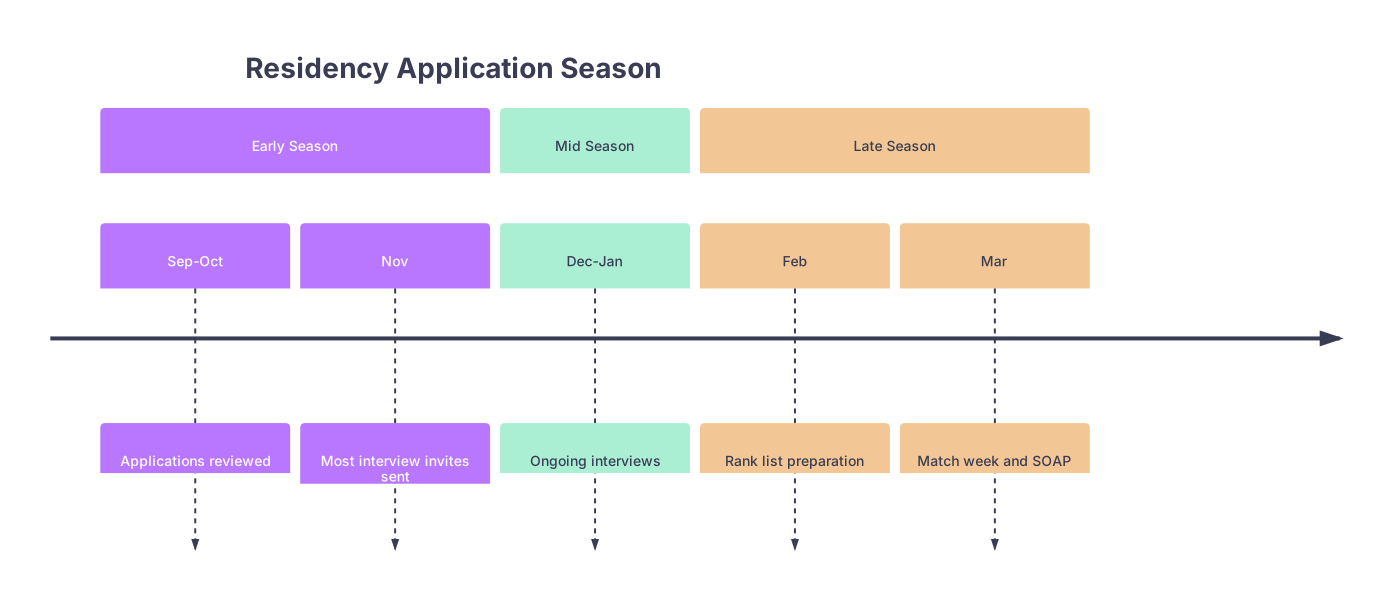
| Period | Event |
|---|---|
| Early Season - Sep-Oct | Applications reviewed |
| Early Season - Nov | Most interview invites sent |
| Mid Season - Dec-Jan | Ongoing interviews |
| Late Season - Feb | Rank list preparation |
| Late Season - Mar | Match week and SOAP |
Best windows to send your email:
- Early-mid November: They’re still actively sending invites. You have a shot.
- Late November–early December: Still possible, especially for programs that interview into January.
- January: Harder, but if they’ve had cancellations, they might squeeze you in.
- February: Realistically, you’re now in “maybe next year or SOAP” territory.
Worst windows:
- Match Week: Do not send “please reconsider me” emails. They’re focused on SOAP and NRMP rules.
- Week after Match: People are emotionally exhausted. Wait a bit unless you’re talking about next cycle.
What Not to Do (I’ve Watched These Backfire)
Some mistakes I’ve seen up close that you should avoid:
Sending a long, emotional essay.
PDs don’t have time. Your life story, your existential crisis, your regret spiral—they don’t belong in this email.Blaming the program.
I once saw an email that basically said, “I withdrew because I heard your residents are overworked, but now I’m desperate.” That applicant was done.Implying they’re a backup.
Anything like “Given that my top choices have filled their interview spots…” or “Now that I have fewer options…” Don’t do that.Multiple follow-ups when they don’t reply.
One follow-up after 7–10 days is fine. Beyond that, you’re just annoying them. Silence = no.CC’ing random faculty to add pressure.
You’re not running a PR campaign. Involving more people just increases the chance someone gets irritated.
How to Handle It If They Say No—or Don’t Reply
You might send an excellent, thoughtful email and get:
- A brief “Sorry, our schedule is full”
- A polite but firm no
- Or nothing at all
Here’s the part people skip: you still want to protect future relationships.
If they reply with a no, respond once:
Thank you for letting me know, and I appreciate your time and consideration. I remain very impressed by your program and hope our paths cross in the future.
That’s it. You showed maturity. If you reapply, they’ll remember you as the applicant who handled disappointment like a grown adult.
If they never reply? You send one follow-up:
Subject: Re: Request to Reconsider Application – [Your Name]
Dear Dr. [PD Last Name],
I wanted to follow up briefly on my email from [date] regarding my application to [Program Name]. I understand how busy this time of year is, and I appreciate any consideration you are able to give.
Thank you again,
[Your Name]
Then you stop. No third email. No “just checking in again.”
If You’re Really Thinking About Next Cycle or SOAP
Sometimes what you actually want isn’t “please interview me now” but “please don’t blacklist me forever.”
In that case, adjust the tone. You’re not asking for an immediate favor—you’re investing in a future interaction.
Dear Dr. [PD Last Name],
I recognized this cycle that I withdrew from your program earlier than I should have. In retrospect, I regret that decision, as I’ve since learned more about [Program Name] and believe it aligns well with my interests in [X, Y].
If I need to reapply or participate in SOAP, I would be very interested in the opportunity to train at [Program Name]. I understand if my earlier withdrawal affects how you view my application, but I wanted to be transparent about my genuine interest moving forward.
Thank you for your time and for all you do for applicants and residents.
Sincerely,
[Your Name]
You’re signaling: “I made a mistake once, I’m not making it again.”

Quick Reality Check: How Programs Actually See This
Let me be blunt about how most PDs and coordinators react to these emails:
A thoughtful, concise, honest email?
They might actually reconsider you, especially if they have cancellations or still have open slots.A sloppy, vague, or demanding email?
Straight to trash. Sometimes with your name mentally tagged as “high maintenance.”
Programs know applicants are human. They know people over-withdraw, miscalculate, or have life events. What they care about is:
Does this person show good judgment now? Do they seem teachable, professional, and respectful of others’ time?
Your email is a small test of that.
Your Next Action Today
Do this right now:
Open a blank document and write two paragraphs:
- One sentence owning your withdrawal and the real (but professional) reason
- Two sentences on why that specific program actually fits you
No fluff. No apologizing 10 times. Just those three sentences.
That becomes the core of your email. Once you have that, you’re not stuck staring at the cursor anymore—you’re just formatting and sending.