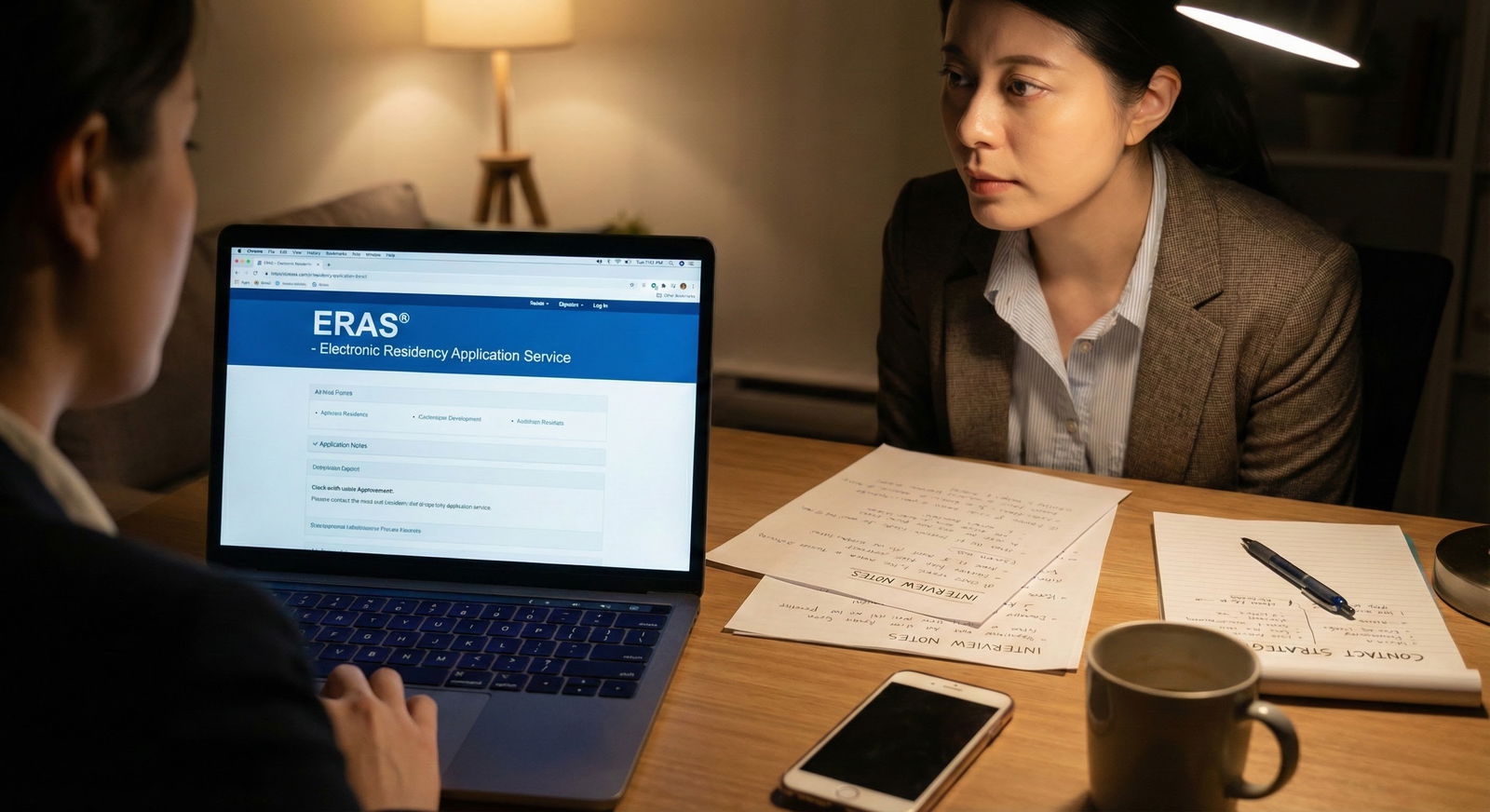
58% of residency applicants use the wrong level of formality at least once in their post‑interview thank‑you emails.
Not a typo. More than half. I have watched PDs, APDs, and coordinators scroll through thank‑yous muttering: “Nice kid, wrong name… again” or “Why are they calling me ‘Dear John’?” It does not usually sink your application, but it does quietly move you from “polished” to “a bit green.”
Let me break this down specifically: how to integrate pronouns, titles, and formality correctly in residency thank‑you messages, so you look like someone who understands professional hierarchies and modern etiquette, not someone cutting and pasting blindly from Reddit.
Core Principle: Match the Person, the Context, and the Culture
You are balancing three things in every thank‑you:
- Who the person is (their role, degree, age/seniority).
- What you know about how they present (their email signature, how they introduced themselves).
- The culture of the program/specialty (Path vs EM vs Surgery are not the same universe).
You do not pick one formality level and blast it to everyone. That is the rookie mistake.
Think of it as three lanes:
- Lane 1: Faculty and leadership (PD, APD, chair, core faculty).
- Lane 2: Fellows and senior residents.
- Lane 3: Junior residents, coordinator, med student affairs folks.
For each lane, you adjust:
- The greeting (“Dear Dr. ___” vs “Hi ___”).
- The closing (“Sincerely” vs “Best” vs just your name).
- Whether you mention or reflect pronouns.
- Whether you use titles at all.
We will go lane by lane, but first let us fix the most common minefield: titles and pronouns.
Names, Titles, and Pronouns: The Non‑Negotiables
How to Address Different Roles
Here is the stripped‑down hierarchy you should follow unless you have clear evidence the person wants something different.
| Role | Safe Default Greeting |
|---|---|
| Program Director / Chair | Dear Dr. [Last Name], |
| Associate / Assistant PD | Dear Dr. [Last Name], |
| Core / Interviewing Faculty | Dear Dr. [Last Name], |
| Fellow | Dear Dr. [Last Name], |
| Resident (PGY2+) | Hi Dr. [Last Name], |
| Resident (PGY1 or very casual introduction) | Hi [First Name], |
Why so conservative for fellows and residents? Because “Dr.” is never wrong. It may be a bit formal for that super‑chill PGY1 who opened with “Hey, I’m Mike,” but it is not offensive. Calling a PD “John” absolutely can be.
I have seen a PD forward an email with, “Apparently we went to high school together—he calls me John now.” Joking tone. But that applicant was no longer in the “top tier professionalism” mental bucket.
When a Faculty Uses Their First Name
Scenario: They say, “Hi, I’m Sarah, I’m one of the hospitalists,” and their Zoom name is “Sarah Kim, MD.” You then get a schedule that says “Dr. Kim – Hospitalist.”
What do you do?
- In the thank‑you subject line: “Thank you – [Program Name] interview” (no name needed).
- In the greeting: still use “Dear Dr. Kim,” unless:
- You exchanged multiple emails where they signed “Best, Sarah” and
- The specialty/program culture is explicitly casual (common in EM, FM, Med‑Peds, some IM).
If you are unsure, default to “Dr. [Last Name].” I have never seen anyone angry about that.
Pronouns: What You Do and Do Not Do
There are three distinct issues people conflate:
- Using their pronouns.
- Sharing your pronouns.
- Referencing pronouns after the fact (e.g., “They mentioned…”).
Using Their Pronouns
If the interviewer:
- Has pronouns in their Zoom name (“Alex Smith (they/them)”),
- Has pronouns in their email signature,
- Or explicitly states pronouns during introductions,
then when you refer to them in the body of the email (if you need to), you should respect and mirror those pronouns.
Example:
“Thank you again for taking the time to discuss your work in addiction medicine. I appreciated how you described your approach to patient advocacy and how it shapes your teaching.”
Notice I did not need to use pronouns at all there. You can often just avoid mis‑stepping by rewriting the sentence.
If you do need pronouns:
- “I appreciated how you described your approach and how it shapes your teaching. Your example about the patient on the addiction consult service stuck with me.”
You sidestep pronouns by keeping the focus on “you.”
If their pronouns are explicitly listed as they/them:
“I appreciated the way you described the residency’s support for resident wellbeing and how it shapes your leadership. Your comments gave me a very clear sense of the program’s culture.”
Again, you can write a whole thank‑you without needing to reference them in third person. Use that to your advantage if you are even 1% uncertain.
Sharing Your Pronouns in a Thank‑You
Do you add pronouns under your name in a residency thank‑you email?
Here is my blunt take:
If your application already has them (ERAS personal pronouns field, your CV header), and you consistently use them elsewhere, then adding:
Alex Johnson, MS4
Pronouns: she/heris fine and internally consistent.
If you have never used pronouns anywhere in your professional materials and you suddenly tack “he/him” under a single thank‑you email because you saw someone suggest it on Twitter, it looks like trend‑chasing. Either incorporate pronouns across your professional presence or leave them out entirely.
There are some programs (especially in academic pediatrics, psych, IM at coastal institutions) where sharing pronouns is almost expected. There are others (many surgical programs, some community programs) where it is less common. You are not going to match or un‑match based on this alone, but you should be intentional.
If you do include them, keep it simple:
- No explanation.
- No paragraph about identity.
- Just a line in your signature.
What You Should Never Do
Do not:
- Assume pronouns from appearance or name and then explicitly write, “I appreciated her leadership,” if you have no stated pronouns to go on. You rarely need third-person pronouns in a thank‑you. Avoid the trap.
- Correct or comment on someone’s pronouns in a thank‑you email. Absolutely not the place.
- Use cutesy or non‑standard pronoun formats (“she/they (but mostly she, haha)”). This is a professional interaction, not Instagram.
Formality Levels by Recipient: Concrete Examples
Let us get very specific. Assume you interviewed at “University Medical Center Internal Medicine.”
1. Program Director / Associate PD / Chair
Default: High formality, clear title.
Greeting:
“Dear Dr. [Last Name],”
Body style:
Complete sentences, no slang, no emojis, no exclamation point explosions.
Closing:
“Sincerely,” or “Best regards,”
[Your full name]
[Home institution]
[Phone, if you want]
Example:
“Dear Dr. Patel,
Thank you for the opportunity to interview for the Internal Medicine residency at University Medical Center. I especially valued our discussion about the program’s commitment to longitudinal ambulatory experiences and your emphasis on resident autonomy by PGY2.
Our conversation about how your residents graduate comfortable managing complex patients in both academic and community settings reinforced my sense that UMC would be an excellent fit for my interests in general internal medicine and medical education.
Sincerely,
Alex Johnson
MS4, State University College of Medicine”
Note the tone: direct, respectful, but not obsequious.
Do not:
- Mention other programs (“This interview made me more excited than all my other interviews so far…”).
- Over‑compliment (“I have never met such an inspiring leader in my life”). It reads as fake.
2. Core Faculty / Research Faculty Interviewers
Mostly the same as PD level, though you can relax 5–10% if their vibe was casual.
Greeting:
“Dear Dr. [Last Name],”
Body:
You can be slightly more specific about content you discussed.
Example:
“Dear Dr. Nguyen,
Thank you for taking the time to speak with me during my UMC Internal Medicine interview day. I enjoyed learning about your work in advanced heart failure and the way you involve residents in quality improvement projects on your service.
Your description of how residents progress from primarily managing floor patients to taking on more responsibility in the CCU matched closely with what I am seeking in my training.
Best regards,
Alex Johnson”
Still formal. No nicknames. No first names unless they explicitly insisted and the culture is clearly informal.
3. Fellows
Here you have options.
If they were clearly acting as faculty (e.g., interviewing you one‑on‑one in a subspecialty clinic):
Greeting:
“Dear Dr. [Last Name],”
If they were more peer‑like (e.g., part of resident/fellow panel, talking about day‑to‑day life):
Greeting could be:
“Hi Dr. [Last Name],” or, if they repeatedly used first names and signed emails that way: “Hi [First Name],”
Example (slightly less formal than core faculty):
“Hi Dr. Garcia,
Thank you for speaking with me during the resident/fellow panel for UMC’s Internal Medicine residency. I appreciated your honest perspective on how the program prepares residents for cardiology fellowship and how approachable the subspecialty faculty are.
Best,
Alex Johnson”
4. Residents
This is where applicants overthink.
General rule:
- PGY2+ and chief residents → “Hi Dr. [Last Name],” is the safest default.
- PGY1 in a very casual program, who introduced themself as “I’m Jess” and never used their last name → “Hi Jess,” is acceptable, especially in EM, FM, Med‑Peds, Pediatrics.
If you are not sure what year they are or the culture of the program, defer to “Dr. [Last Name].”
Resident thank‑you example:
“Hi Dr. Lee,
Thank you for taking the time to talk with me during the UMC Internal Medicine interview. Hearing your perspective on overnight call and the changes to the float system this year was very helpful.
I especially appreciated your examples of how senior residents support interns early in the year. It gave me a concrete sense of the program’s culture of teamwork.
Best,
Alex”
Notice the tone shift: a bit more conversational, but still professional.
5. Program Coordinator
They are not physicians. Do not call them “Dr.” Just use:
“Dear Ms. [Last Name],”
or
“Hi Ms. [Last Name],”
Unless they signed “Best, Taylor” with no title and the program vibe is laid‑back, you stick with the standard honorifics: Ms., Mr., Mx. (if indicated).
Example:
“Dear Ms. Roberts,
Thank you for all of your help coordinating my interview day at UMC. The detailed schedule and prompt communication made the process very smooth.
Best regards,
Alex Johnson”
You do not need to mention pronouns or anything else here unless they explicitly do.
Matching the Program’s Communication Style (Without Being Weird)
You are not writing these emails in a vacuum. You already have samples of how the program communicates:
- Invitation email tone.
- Pre‑interview info packets.
- How the coordinator signs their name.
- The language PDs use at the opening session.
Pay attention. Then mirror approximately.
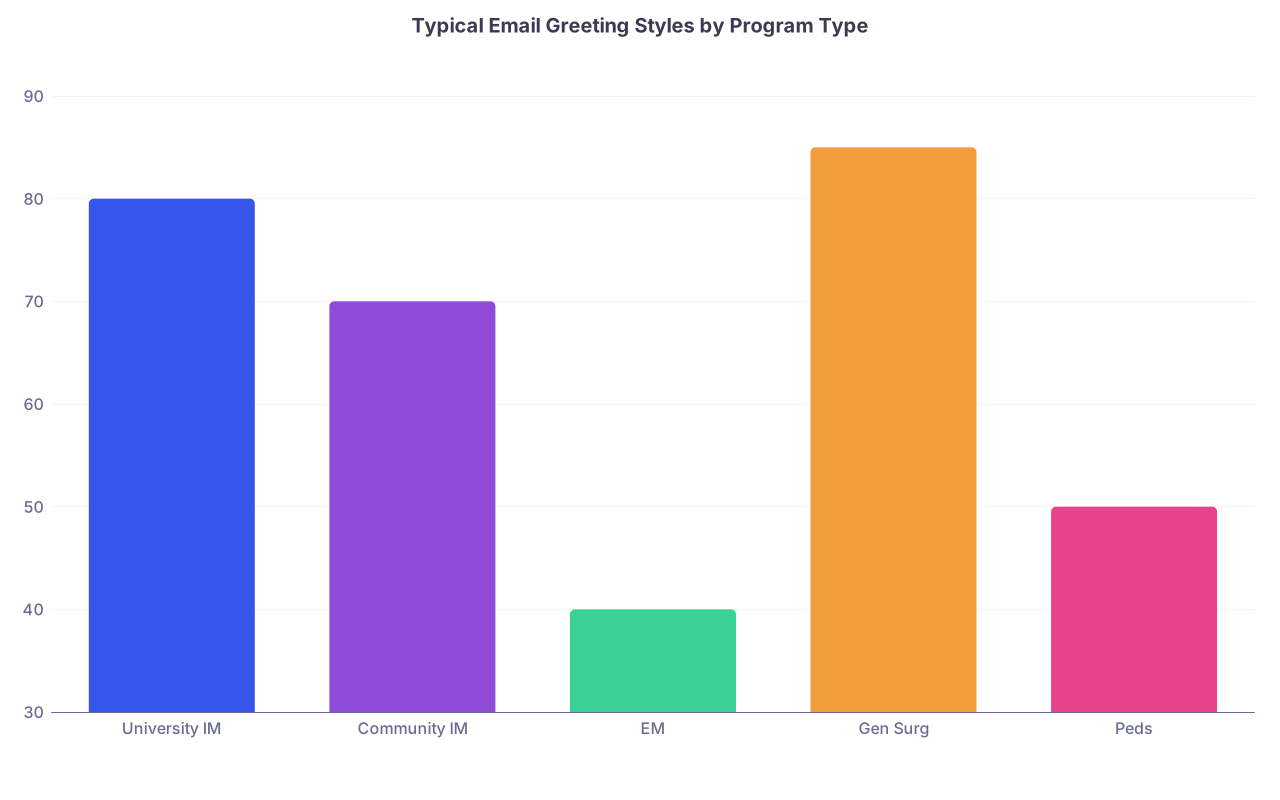
| Category | Value |
|---|---|
| University IM | 80 |
| Community IM | 70 |
| EM | 40 |
| Gen Surg | 85 |
| Peds | 50 |
Interpretation (and yes, this is from what I have actually seen, not fantasy):
- University IM and Surgery: heavily “Dear Dr. [Last Name]” world. Stay formal.
- EM and some Pediatrics: mix of “Hi [First Name]” in internal communications. You can relax a bit more if they clearly model that.
You do not:
- Respond to a “Dear Mr. Johnson,” with “Hey Sam,” to the PD. That mismatch screams tone‑deaf.
- Write “Dear Sir/Madam” to anyone. Ever. You are not writing to the DMV.
Here is the rule:
- Use at least the level of formality they used to you.
- Going one notch more formal than they did is safer than going one notch less.
Handling Tricky or Edge Cases
Let me walk through the situations that cause the most anxiety.
1. You Forgot Their Name or Title
You have: “Interview 2 – Faculty, Generalist” and no idea what their name was 24 hours later. Very common when you had 6+ people in one day.
Options:
- Check the program’s PDF, schedule attachment, or ERAS “interviewers” tab (some programs update this).
- If you still cannot find it, it is better to skip an individual thank‑you than to send one to “Dear Dr. [Wrong Name].”
I have seen “Dear Dr. Jones,” sent to Dr. Smith in a small department. That email gets shared, laughed at, and mentally logged. It may not kill you, but why risk it?
2. You Are Unsure of Gender or Pronouns from the Name
Common with names that are used by multiple genders or are unfamiliar to you.
Solution:
- Structure your email so you never need third‑person pronouns.
- Use “Dr. [Last Name]” or “[First Name] [Last Name]” in place of pronouns.
Example:
“Dear Dr. Jordan,
Thank you for taking the time to speak with me during my interview. I appreciated the way you described your teaching on the wards and your focus on developing residents’ clinical reasoning skills.”
No pronouns. No assumptions. Problem solved.
3. Faculty Used an Unclear Title (e.g., “Mx.”, “Prof.”)
If the person signs as “Mx. Taylor” or “Prof. Ahmed” in multiple communications, mirror it:
“Dear Mx. Taylor,”
“Dear Prof. Ahmed,”
Do not “upgrade” them to Dr. unless you know they are a physician and that is how the program lists them elsewhere.
4. They Introduced Themselves as Only “First Name” and You Have No Other Info
Panel situation, Zoom chaos, no titles. You want to send a generic note?
If you truly cannot confirm last name and title for a specific person, it is acceptable to send a single group thank‑you to a resident panel via the coordinator:
“Dear Ms. Roberts,
Would you mind passing along my thanks to the residents who participated in the panel on Friday? Hearing about their experiences with night float and the ambulatory curriculum was extremely helpful…”
This is better than:
“Dear Mike,”
“I really enjoyed meeting you (and I am not totally sure if you were Mike or Matt)…”
Structure and Length: How Much Is Too Much?
Keep each thank‑you short. Four to eight sentences. That is it.
Basic structure:
- Greeting with correct title.
- Thank them for their time / opportunity.
- One or two specific callbacks to your conversation.
- One connecting sentence about “fit” / what it showed you.
- Professional closing.
Example to a resident, fully assembled:
“Hi Dr. Singh,
Thank you for taking the time to speak with me during my interview at UMC. I appreciated your candid description of how the program balances ICU time with ambulatory experiences and how seniors support interns during their first few months.
Hearing how you felt prepared for independent practice by the end of PGY3 reinforced my interest in UMC’s training environment.
Best,
Alex”
This is all you need. You do not need your life story. You do not need to restate your entire personal statement.
Email Mechanics That Make You Look Competent
You are judged on tiny things at this stage. You want zero unforced errors.
Subject Lines
Keep them boring and clear:
- “Thank you – [Program Name] Internal Medicine interview”
- “Thank you for the interview – [Program Name] Pediatrics”
Do not stuff names in subject lines where you can mis‑type them.
Timing
Best window: 24–48 hours after the interview. That is when they still remember you.
If you are sending a thank‑you to a PD later in the season as a “this program is still high on my list” nudge, that is a separate strategic email. Same rules for titles and pronouns still apply.
Signatures
Minimum:
- Full name.
- Medical school.
- Optional: phone number, pronouns (if consistent with your application).
Example:
Alex Johnson
MS4, State University College of Medicine
Pronouns: she/her
(555) 123‑4567
Do not include:
- Match rank intentions (“I intend to rank your program #1”) unless it is a carefully worded PD communication later in the season, and even then be precise and honest.
- Inspirational quotes. Please.
How This Actually Lands on the Other Side
You might be thinking: “Do they really care this much about ‘Dr.’ vs first name?” Most of the time, no one consciously cares.
But subconscious impressions accumulate:
- You recognize hierarchy appropriately.
- You read cues (signatures, program tone) and mirror them.
- You are less likely to create weirdness with patients, nurses, or other staff.
Programs are trying to predict: Will this person integrate smoothly? Or will they be the intern writing “Hey Linda” to the CNO on day 3?
The content of your thank‑you matters less than the fact that you:
- Send it promptly.
- Get names and titles right.
- Avoid obvious awkwardness with pronouns and formality.

| Step | Description |
|---|---|
| Step 1 | Finish Interview Day |
| Step 2 | Collect Names & Titles |
| Step 3 | Draft PD/Leadership Emails |
| Step 4 | Draft Faculty/Fellow Emails |
| Step 5 | Draft Resident/Coordinator Emails |
| Step 6 | Check Names, Titles, Pronouns |
| Step 7 | Send Within 24-48 Hours |

FAQ: Pronouns, Titles, and Formality in Residency Thank‑Yous
1. Is it ever okay to call a program director by their first name in a thank‑you email?
Almost never. Unless the PD explicitly signs emails to you as “First Name” and writes in a very casual tone (“Hi Alex – great to meet you today, call me Sam”), you should stick with “Dr. [Last Name].” Academic culture is conservative about titles at the leadership level. Err on the formal side.
2. Should I include my pronouns in every thank‑you email signature?
Only if that is consistent with how you present yourself elsewhere (ERAS, CV, school email). Consistency is what makes it look intentional rather than performative. If your application never mentions pronouns, you are not required to start in your thank‑yous. If you do add them, make it a simple line in your signature, nothing more.
3. How do I handle an interviewer whose gender or pronouns I genuinely do not know?
Use “Dr. [Last Name]” in the greeting and structure the body so you never need third‑person pronouns. Focus on “you” and their role: “I appreciated how you described your work with…” This avoids assumptions and still reads smoothly. Do not guess based on name or appearance.
4. Do I have to send individual thank‑yous to every resident I met?
No. High‑yield targets are: PD, APD(s) who interviewed you, individual faculty interviewers, and possibly a chief or senior resident who spent significant one‑on‑one time with you. For large resident panels, a single thank‑you via the coordinator (asking them to share your appreciation with the resident team) is enough and avoids mis‑naming people.
5. What if I accidentally used the wrong title or name in a thank‑you email?
If it is a minor slip (e.g., “Hi Dr. Smith,” to a senior resident you thought was faculty), let it go. They are used to it. If you called the PD by the wrong last name or misgendered someone with clearly stated pronouns, you can send a brief follow‑up: one sentence acknowledging the error and a simple correction. Do not over‑apologize. Fix it and move on.
6. How formal should I be with EM/FM/Peds programs that feel very casual?
Start slightly more formal than they are. “Dear Dr. [Last Name]” or “Hi Dr. [Last Name]” still works even in relaxed specialties. If, over multiple communications, they clearly drop titles and sign only with first names, you can mirror that modestly in later emails. You should not be the one to lower formality first. Let their pattern guide you.

Key points to keep in your head:
- “Dr. [Last Name]” is the default safe address for anyone with an MD/DO unless and until they clearly pull you into a first‑name basis.
- You almost never need to guess pronouns if you write smart sentences; respect stated pronouns, and do not manufacture the issue where it isn’t.
- Short, specific, timely thank‑yous with correct names, titles, and tone quietly communicate that you are already operating at an intern’s professional level. That is the whole goal.