It is January 3rd. Your last interview was two weeks ago. Your inbox is quiet. Programs are starting to talk about “ranking meetings.” Your classmates are still firing off generic thank-you emails like it is October.
You cannot act like it is October.
At this point in the season, follow-up becomes less about “thanks for having me” and more about “where do I actually want to match, and how do I communicate that without shooting myself in the foot?” The timing changes. The tone changes. The stakes are higher.
I will walk you through what to do, chronologically, from early January until the rank list deadline. Week by week. What to send, when to send it, and when to stop.
First, Understand the January Reality (Week 1: Jan 1–7)
By early January, most programs are here:
- Interviews mostly done or winding down
- Files being reviewed in bulk, not one by one
- Rank meetings scheduled or already starting
- Everyone is tired and less responsive
Your follow-up timeline has to respect that.
| Month | Program Focus | Your Follow-Up Goal |
|---|---|---|
| October | Screening & early invites | Get on radar, show enthusiasm |
| November | Heavy interview blocks | Clarify fit, stay remembered |
| December | Slowing interviews | Maintain connection, updates |
| January | Ranking & final decisions | Signal interest, close loops |
In January, scattered, frequent emails look desperate and get ignored. Targeted, well-timed communication can actually influence how people talk about you in the room.
At this point you should:
Audit your status with each program.
Open a spreadsheet or page in your notebook and for each program list:- Interview date
- Who you met (PD, APD, chief, residents)
- Whether you have already sent a thank-you
- Any promised updates (new publication, score, letter)
- Your current rank “tier” for that program (Top 3, Top 5, Middle, Back-up)
Stop thinking in “broadcast mode.”
Every email now needs a reason:- New information
- Clarifying interest
- Responding to something they said/offered
No more “just checking in!” messages. Those belong in the trash folder, not in a January strategy.
Early January: Clean-Up and Final Thank-Yous (Jan 1–10)
This is your last window for any overdue follow-up that still might matter.
1. Late or Missed Thank-You Emails
If you somehow never sent thank-you emails for a late-December interview, send them now. Same week is ideal, but early January is still salvageable.
At this point you should:
- Send a brief, specific thank-you to:
- Program director
- Key faculty who interviewed you
- Any resident who spent significant one-on-one time with you
Do not over-explain the delay. A simple line like “I apologize for the delay in sending this” is enough.
2. Group vs Individual Follow-Up
Earlier in the season, some people send a group thank-you to a generic program email. In January, that is nearly useless.
Right now:
- PD / APD: Individual emails
- Residents: Only email if:
- You had a strong personal interaction
- They invited follow-up
- You have a specific question about the program or city
If you are sending 15 identical “thank you so much for the opportunity” emails with zero content, do not bother. Focus on the places that are actually in contention on your rank list.
Mid-January: Interest Signaling Window (Jan 10–20)
This is where strategy actually matters. Many programs hold rank meetings in mid to late January. Your timing here can affect how they discuss you.
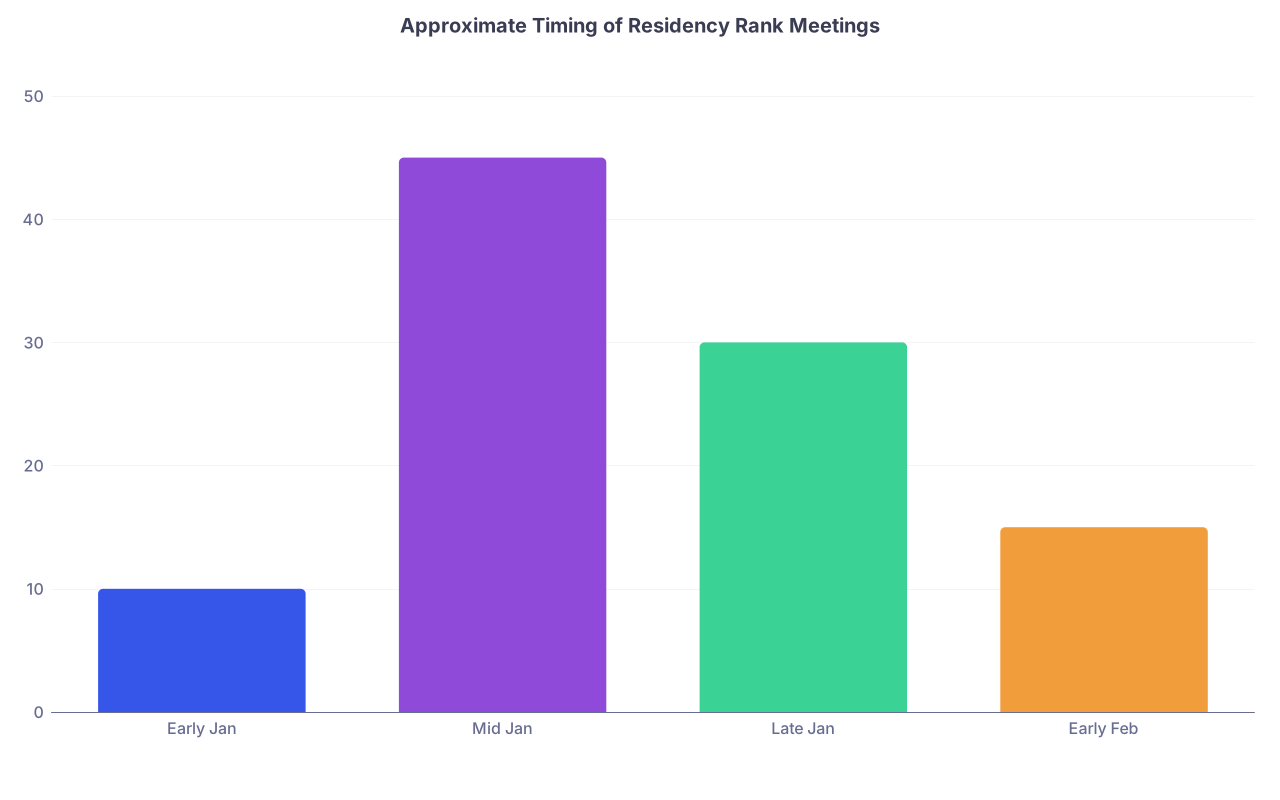
| Category | Value |
|---|---|
| Early Jan | 10 |
| Mid Jan | 45 |
| Late Jan | 30 |
| Early Feb | 15 |
Your Priorities in Mid-January
At this point you should:
Identify your top tier (1–3 programs).
Be ruthless. You cannot tell five programs they are your “number one.” That is how reputations get damaged.Decide your honesty level.
- If you have a clear #1: you can send a “you are my top choice” email
- If you have a top 2–3 and are undecided: you send strong interest emails, but do not say “number one” yet
Map your outreach plan by week.
Here is a simple structure:
| Date Range | Target Programs | Type of Message |
|---|---|---|
| Jan 10–15 | Top 1–3 | Strong interest / possible #1 |
| Jan 15–20 | Next 3–5 | Clarify continued interest |
| Jan 20–31 | Only if new updates | Significant updates or replies |
How to Write a January Interest Email
Your January emails should be:
- Specific (something you liked, something that fits you)
- Short (10–15 lines max)
- Honest (no fake “rank promises” to multiple programs)
Structure to use:
- One sentence thanking them again and reminding them of your interview date.
- 2–3 sentences on what stood out and how it aligns with your goals.
- 1–2 sentences on new information (poster accepted, leadership role, Step 2 score, etc.), if relevant.
- Final clear statement of interest.
For your true #1 (if you have decided):
“I wanted to let you know that [Program] is my first choice, and I plan to rank it number one.”
If you are not ready to commit:
“I remain very interested in [Program] and can clearly see myself thriving in your residency.”
Do not play word games with “very highly” and “top of my list” for multiple programs. Faculty have heard all of them. They compare notes across programs more than applicants realize.
Late January: Updates and Restraint (Jan 20–31)
By late January, many rank meetings are already scheduled. Some are in progress. Your job now is to be precise and not irritating.
At this point you should:
Send only meaningful updates.
Good reasons to email:- New accepted publication / national conference presentation
- Step 2 score that significantly strengthens your application
- Major new leadership position or award
- Life circumstance update that affects location (spouse matched nearby, etc.)
Weak reasons that should not trigger an email:
- “I just wanted to reiterate my interest” (you already did)
- “I remain excited about your program” with nothing new
- “Any updates on my status?” (you will find out with everyone else)
Time updates intelligently.
If you know (from coordinator emails or residents) that rank meetings are, say, January 25–28, send your update a few days before, not the night before.Stop emailing programs you will not rank to match.
If a program is below the line where you realistically see yourself training, there is no benefit in continued follow-up. Focus your energy on the places that matter.
February: Post–Rank Meeting Reality (Feb 1–Rank List Deadline)
Once February hits, your timeline shifts again. Most programs have either:
- Held initial rank meetings and are tweaking
- Or are about to hold a final meeting shortly before lists are due
You cannot control that. You can stop hurting your chances.
Early February (Feb 1–10): Quiet, Targeted Communication Only
At this point you should:
Finalize your own internal rank tiers.
You should know:- Definite #1
- True top 3–5
- Middle “would be happy here” tier
- Safety / back-up tier
Send a final, single clarity email to your #1 (if you have not yet).
If you waited until now to commit and you are certain:- Subject: “Continued Interest – [Your Name], [Specialty] Applicant”
- Body: Brief, clear, and explicit that you will rank them #1.
Avoid last-minute mass emails.
Programs can feel the panic wave that hits applicants in February. Long emotional letters, essay-length recaps of your life story, “I am so anxious” messages. All of that lands poorly.
If you have already told a program they are your #1, you do not need to email them again in February unless there is a genuinely major update.
Rank List Deadline Week (Usually mid-to-late February)
This is not an outreach week. This is a decision week.
At this point you should:
Be done emailing programs except in rare situations:
- Clarifying a factual question (call schedule, maternity leave policy, research track details) that actively affects your ranking
- Responding to a message they initiated
Be focused on:
- Double-checking your rank order
- Comparing notes from interview day and your January follow-up responses
- Asking trusted mentors for input if you are truly stuck between 2–3 programs
You do not email PDs saying “I ranked you here, where did you rank me?” That is unprofessional and puts them in an impossible spot.
How Your Tone Should Shift Through January
Let me be blunt: the “I loved meeting you and your residents were so kind” fluff that works (a little) in October is noise in January.
Your tone should evolve:
Early January:
Warm, appreciative, but still standard thanks + clarification.Mid-January:
Decisive. You sound like someone who knows what they want: “The combination of X and Y at your program aligns with my goal to Z.”Late January / February:
Minimalist. Precise updates, short clarity emails, no rambling.

What Not to Do in January (Common Late-Season Mistakes)
I have watched people sabotage themselves with late-season follow-up. Here are the greatest hits.
1. Emailing Every 7–10 Days “Just to Check In”
Programs are categorizing you. If they remember you as “the one who keeps emailing with nothing to say,” that is not good.
Rule: after a mid-January interest email, you do not email again unless:
- You have a major update
- They reached out to you first
2. Telling Multiple Programs They Are Your “Number One”
This is unethical, and yes, PDs talk at national meetings, over text, during site visits, on Zoom. You do not want to be the cautionary tale.
If you are genuinely torn, then say “one of my top choices” and leave it at that. But reserve a true #1 statement for a single program.
3. Turning Emails into Personal Essays
January is peak fatigue for faculty and coordinators. Nobody wants to read a 900-word narrative about how much you love their city.
Keep it tight:
- 1–2 short paragraphs, maybe 2–3 sentences each
- One clear takeaway line about your level of interest
4. Fishing for Reassurance
Emails like:
- “Do you think I will be ranked to match?”
- “Am I a strong candidate for your program?”
These put programs in a bad position. The only honest and safe answer they have is some version of “We cannot discuss that,” which wastes everyone’s time and makes you look nervous and inexperienced.
Special Situations: Couples Match, Red Flags, and Big Updates
Not everyone fits the simple template. January gets more complex if you are in one of these camps.
Couples Match
If you are couples matching, your January follow-up should:
- Briefly mention your partner’s specialty and rough geographic priorities.
- Clarify when a program’s location makes them more or less realistic for you.
You do not need to send them your joint rank list. But you can say:
“My partner is applying in [Specialty] and we are focusing our combined list on [Region]. Your program remains high on my list because of both training quality and location.”
If a program specifically asked about your couples strategy during the interview, January is a good time to close the loop and tell them whether their location keeps them “in play.”
Addressing a Red Flag
If there is a real red flag (fail, leave of absence, professionalism concern) and the PD or faculty brought it up during your interview, January is not the time to re-litigate it unless:
- They requested additional information or documentation
- You have meaningful new support (e.g., a new letter specifically addressing your growth)
A single brief follow-up to provide what they asked for is fine. Do not send a long defensive narrative. It usually hurts more than it helps at this stage.
Major Updates (Publication, Score, Award)
Timing matters here.
New publication / accepted abstract:
Email the programs where you are serious and where research matters. A community program that never mentioned research? Probably does not care.New Step 2 score that is significantly stronger:
Send to all interviewed programs. This can move the needle.Big award or leadership role:
Target programs that emphasized leadership, teaching, or advocacy.
Use a two- or three-sentence update and attach or link only if appropriate. No need to paste your whole CV again.
Simple Timeline Overview: January Through Rank Deadline
Sometimes you just need to see the whole thing laid out.
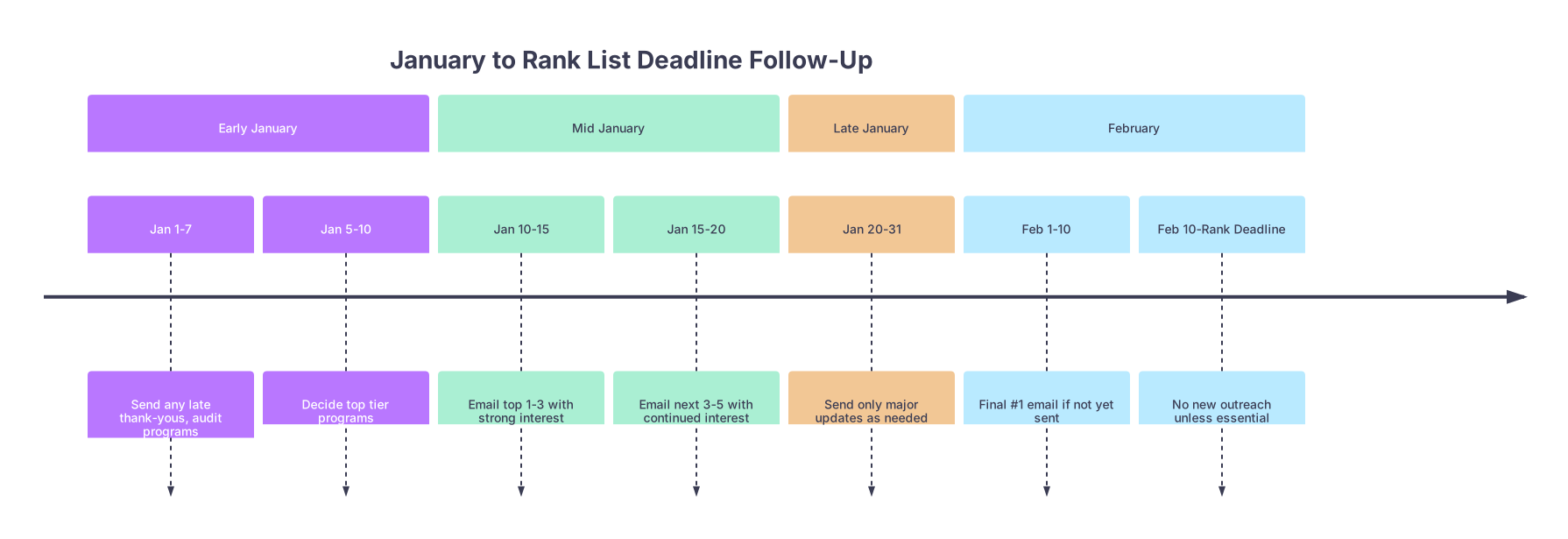
| Period | Event |
|---|---|
| Early January - Jan 1-7 | Send any late thank-yous, audit programs |
| Early January - Jan 5-10 | Decide top tier programs |
| Mid January - Jan 10-15 | Email top 1-3 with strong interest |
| Mid January - Jan 15-20 | Email next 3-5 with continued interest |
| Late January - Jan 20-31 | Send only major updates as needed |
| February - Feb 1-10 | Final #1 email if not yet sent |
| February - Feb 10-Rank Deadline | No new outreach unless essential |
How to Decide Today What to Send — and What to Stop
You are in January. The clock is moving. Let us cut the theory and make this concrete.
At this point you should do three things today:
Make a brutally honest rank draft.
- List every program you interviewed at.
- Put them in rough order based on where you would actually want to train, ignoring “do they like me” for the moment.
- Draw a line after the last place you would be genuinely okay matching.
Mark outreach status next to each program.
For each one, write:- T = thanked
- I = sent January interest email
- U = update sent (if applicable)
- N = no communication since interview
Choose 3–5 programs to contact this week.
- Top 1–3: strong interest / #1 (if honest and decided)
- Next 2–3: clear continued interest with 1–2 specific reasons
Everyone else? Leave them alone unless you have a real, substantive update.
Open your spreadsheet or notebook right now and list your top five programs in order. Next to each, write the exact date of your last email to them. If the gap is more than two weeks and you have not yet clearly expressed your level of interest, draft one focused, specific email to your true #1 today.