
The warm email you got from the program does not guarantee they’re ranking you high. But it also doesn’t mean nothing.
The Hard Truth About “Warm” Program Emails
Let me rip off the band-aid: almost every program knows how to sound warm.
“I really enjoyed meeting you.”
“You’ll be a great physician wherever you go.”
“Please reach out if you have any questions.”
“It was a pleasure getting to know you.”
You read those lines and your brain instantly jumps to:
“Am I in? Are they hinting they’ll rank me high? Did I just basically match?”
No. That’s not what it means.
Most of these emails mean three things:
- They’re not allowed to tell you explicitly where you are on their rank list.
- They’re trying not to get sued or reported to the NRMP.
- They’re being polite, and yes, they probably did like you at least enough to say that.
But “liking you” is not the same as “ranking you to match.”
And that gap between those two? That’s where your anxiety is living right now.
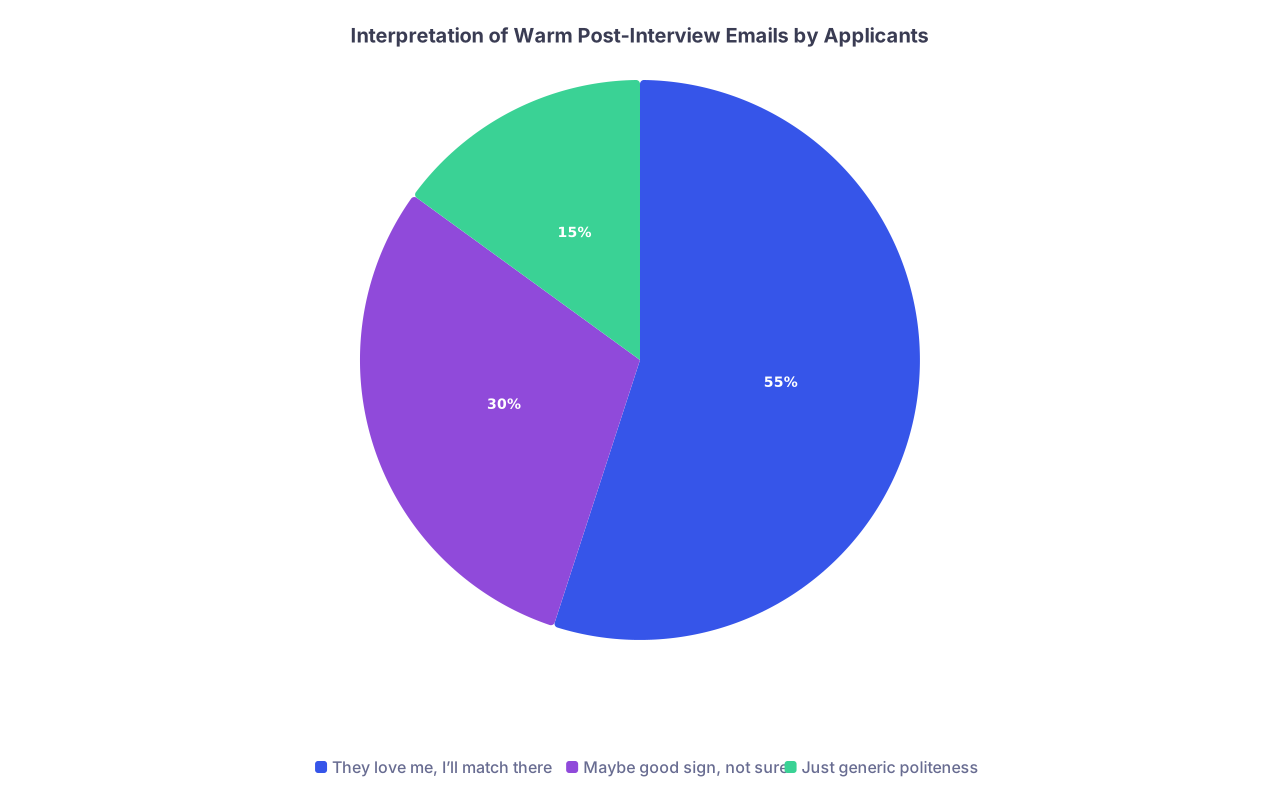
| Category | Value |
|---|---|
| They love me, I’ll match there | 55 |
| Maybe good sign, not sure | 30 |
| Just generic politeness | 15 |
Most applicants wildly over-interpret any warmth as a secret code. It’s not a secret code. Programs aren’t that subtle. Or that romantic.
What a Warm Response Actually Tells You
Let’s break down what that nice email from the PD or coordinator realistically means.
It likely does mean:
- You did not tank the interview so hard they want nothing to do with you.
- You’re probably somewhere in the “rankable” group (which is huge, by the way).
- They care about applicant perception and want you to feel good about them.
- The person writing it is decent and not a robot.
It does not automatically mean:
- You’re top 5.
- You’re a lock to match there.
- You’re their favorite candidate ever.
- You can safely rank them #1 and stop worrying.
I’ve seen this up close. PDs will say, word for word:
“I tell everyone I enjoyed meeting them—unless it was a complete disaster.”
So the bar for “warm” is… not catastrophic. That’s all.
There are levels, though. A quick “Thank you for your email!” from the coordinator isn’t the same thing as a detailed, personal note from the PD.
Here’s the rough spectrum I’ve seen:
| Response Type | Very Rough Meaning |
|---|---|
| Auto-reply / generic coordinator note | Pure admin, means nothing about rank |
| 1–2 line polite response | You’re in the mix with everyone else |
| Personalized comment referencing your interests | They at least remember you |
| PD personally writes and invites further questions | Mildly more promising, still not a guarantee |
| Explicit “We’ll rank you to match” (rare) | Strong interest, but still not 100% guaranteed |
Notice: nothing on that table = “you’re definitely matching here.” Because that doesn’t exist until Match Day.
NRMP Rules: Why Everything Sounds Vaguely Hopeful
Here’s the annoying part: programs are walking a fine line. The NRMP Match Participation Agreement basically says:
- Programs can tell you they like you.
- They cannot ask you how you’ll rank them.
- They shouldn’t promise you a position.
- They must not tell you exactly where you are on the list.
So they end up writing emails that sound like:
- “We think you’d be an excellent fit for our program.”
- “We will be ranking you highly.” (very few still say this, but some do)
- “We hope to see you in July.”
Which your brain converts into: “You matched. Chill. It’s done.”
And then when March rolls around and you don’t match at that place? You feel betrayed. Like they lied.
Most of the time, they didn’t lie. They just:
- Did rank you.
- Ranked a lot of other people higher.
- Still honestly thought you’d have a good shot somewhere.
Bottom line: NRMP rules force a vague, politely positive tone that sounds more meaningful than it actually is.
Reading Between the Lines (Without Losing Your Mind)
You’re going to overthink every adjective. “Warmly.” “Sincerely.” “Best.”
PD wrote the email vs. APD vs. coordinator.
Four sentences vs. two.
Exclamation point vs. period.
Let me be blunt: this micro-analysis is doing way more damage to your cortisol than it’s giving you actual information.
But since you’re going to do it anyway (because same), here’s a more grounded way to think about it:
Look for clear, personal details.
“I really enjoyed hearing about your work with needle exchanges in Baltimore” is more real than “It was great to meet you!”Notice who wrote it.
- Coordinator: logistics, neutral.
- APD/faculty: some memory of you, maybe.
- PD: could be a sign of more interest, but some PDs email everyone.
Check how often that program is known to send these.
Some programs email every single applicant. Some email none. Some only a handful. You, of course, have no way to know for sure.
So the safest assumption is:
- A warm email = You did fine, they liked you, you’re rankable.
- That’s it. No secret match prophecy. No guarantee. No disaster either.

How You Should Follow Up After a Warm Reply
Now the part you actually care about: what do you do next without looking desperate, annoying, or violating rules?
Because the fear is always: “If I say too much, I’ll look crazy. If I say nothing, I’ll look uninterested.”
1. Your Initial Thank-You (If You Haven’t Sent It)
If you haven’t sent a thank-you email yet, do it within a few days of the interview. Short, sincere, not creepy.
Something like:
- Thank them for their time.
- Mention 1–2 specific things you liked or learned.
- Brief nod to why you could see yourself there.
- That’s it. Do not send an essay.
2. After Their Warm Response
You do not need to respond to a generic “Thank you for your email!” from a coordinator. Let that go.
If the PD/faculty sent a real, personalized response, you can either:
- Not reply (totally fine), or
- Send one brief closing line like: “Thank you again for your time and for your kind note. I really appreciated the chance to interview with [Program].”
Then stop. Let it be.
3. The “I’ll Rank You Highly” / “You’re My #1” Email
This is where everyone panics.
Should you send a love letter? Will it help? Will it hurt?
General reality:
- Telling a program they’re your #1 can help a little at some places.
- At others, it changes nothing.
- It almost never hurts you, as long as it’s not unhinged.
If you choose to send one:
- Send it to only one program as your “You are my top choice” email.
- Don’t lie to multiple programs. It’s not illegal, but it’s gross.
- Keep it short:
- One line saying they’re your top choice.
- 2–3 reasons, specific, not generic fluff.
- One final line of appreciation.
Don’t write:
“I will definitely rank you #1 if you rank me highly as well.”
That’s heading into NRMP-awkward territory.
4. Timeline for Follow-Up
Here’s a rough, sane timeline to keep you from spiraling:
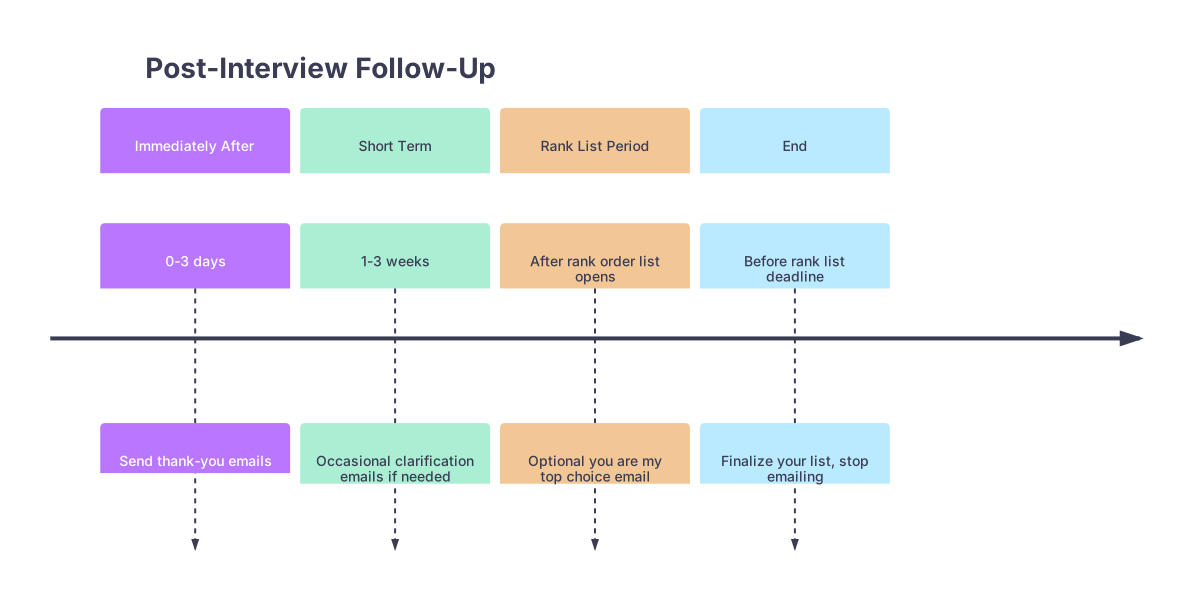
| Period | Event |
|---|---|
| Immediately After - 0-3 days | Send thank-you emails |
| Short Term - 1-3 weeks | Occasional clarification emails if needed |
| Rank List Period - After rank order list opens | Optional you are my top choice email |
| End - Before rank list deadline | Finalize your list, stop emailing |
Once your rank list is certified: no more emails. No more updates. Pull the plug on the obsession loop.
How Much Does Any of This Actually Matter?
Here’s the part nobody likes: your interview performance and your file mattered way more than your email etiquette.
Programs mostly rank like this:
- Application strength (scores, letters, grades, research, whatever that specialty cares about).
- Interview impressions (are you normal, do they want to work with you at 3 a.m., any red flags).
- Institutional needs (couples match, diversity goals, internal candidates, visa stuff).
- Tie-breaker vibes like: did you seem interested, did you fit the culture, did you seem genuine.
Your thank-you email? Small tie-breaker at best.
Your PD reassurance email? Mostly about you feeling less horrible waiting.
If you’re trying to choose how to rank programs, your actual question should not be “Who sounded nicest in their email?” It should be:
- Where can I handle 3+ years of my life without losing my mind?
- Where is the training solid?
- Where did the residents look exhausted vs. supported?
- Where did I feel like less of an imposter?
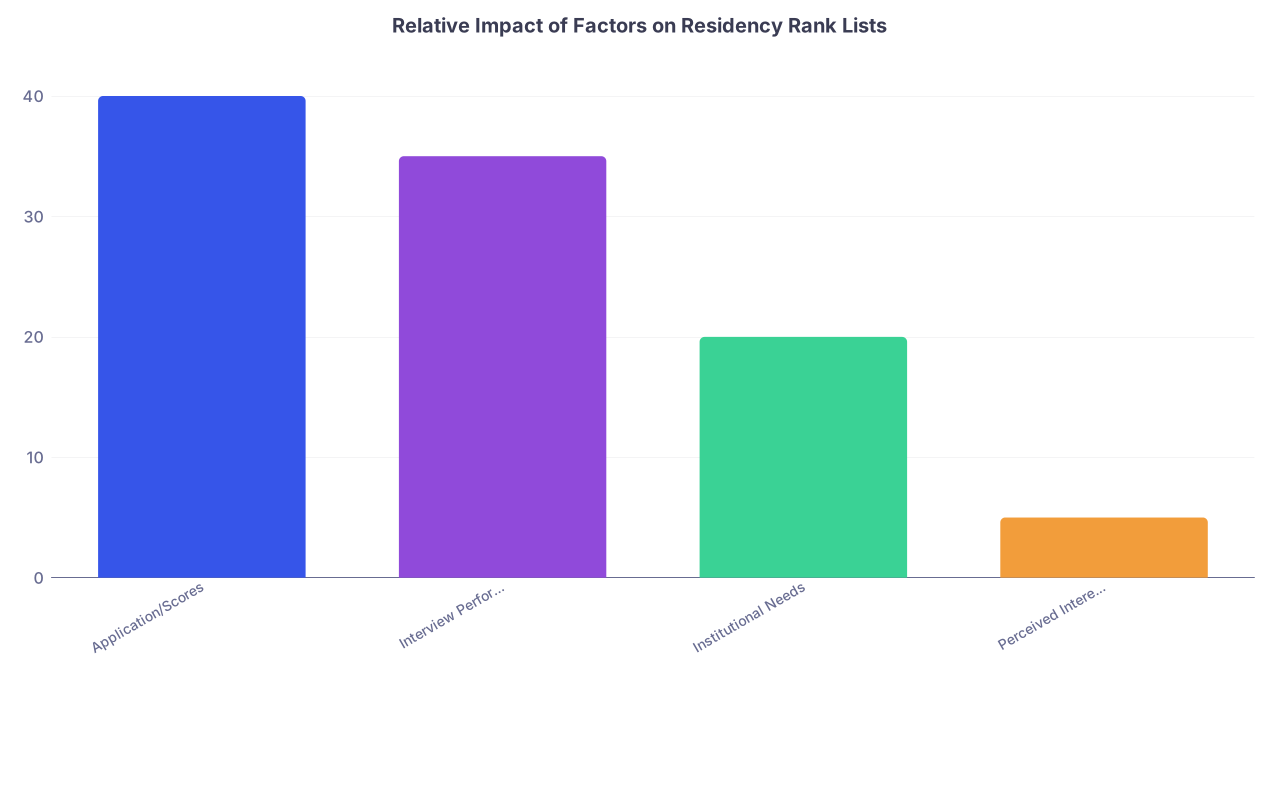
| Category | Value |
|---|---|
| Application/Scores | 40 |
| Interview Performance | 35 |
| Institutional Needs | 20 |
| Perceived Interest/Emails | 5 |
That last bar? That’s the one you’re obsessing about right now.
Coping With the “What If They Really Loved Me?” Spiral
You will absolutely replay their email 50 times in your mind. You’ll compare it word-for-word to emails your friends got. You’ll notice one friend got “We hope to work with you in July,” while you got “Best wishes in your future career,” and your stomach will drop.
Some harsh reassurance: programs are not as precise with wording as you think.
I’ve watched faculty crank out 40+ emails in an hour, copy-pasting phrases, half-remembering names, mixing up details. The email tone often reflects how tired they were, not how much they adored you.
So when your brain starts saying:
- “If they really liked me, they’d have said X.”
- “They didn’t mention ranking me at all, so I must be low.”
- “My friend got a longer email; they must be safer than me.”
You need a counter-script:
- “I literally cannot know what their rank list looks like.”
- “Email tone is a terrible predictor of match outcome.”
- “I’m building stories from incomplete data because this process is cruel and opaque.”
And then do something that isn’t residency-related for a few hours. Or at least 30 minutes. Just to remember you exist outside this.

So… Does a Warm Email Mean Anything At All?
Yes. It means:
- You weren’t a disaster.
- They see you as a decent candidate.
- You’re probably somewhere on their list.
- They’re not secretly despising you.
No. It does not mean:
- You’re matching there.
- They’re ranking you higher than everyone else.
- You can treat it as inside information.
You’ll never get certainty from these messages. That’s the part residency applicants hate, because you’re used to controlling outcomes with sheer effort and perfectionism. The Match laughs at that.
What you can control:
- Writing a respectful, concise thank-you.
- Sending a single honest “you’re my top choice” email if you want.
- Ranking programs by your real preferences, not by how flattered you feel.
- Stepping away from email for parts of the day so you don’t lose your mind.
And then—tolerating the wait. Which is the worst part, but also the part that ends.
FAQ
1. The PD said, “We will rank you highly.” Does that mean I’m in?
No. It means they intend to put you somewhere decent on their list. But their “highly” might still not be high enough for you to match there, depending on how competitive the program is and who else they rank. It’s a positive sign, not a guarantee. Rank them where you actually want to go, not based on that sentence alone.
2. I got no response to my thank-you email. Am I automatically ranked low?
Not at all. Plenty of PDs and coordinators don’t reply to thank-you emails at all—some literally delete them in bulk. Silence is neutral. They already saw your performance on interview day; that’s what matters. A lack of answer doesn’t equal a lack of interest.
3. Should I send updates (new publication, AOA, etc.) after a warm email?
You can, but keep it minimal. If it’s something significant (new publication, major award, changed visa status), one brief update email is fine. Don’t send every small thing. And don’t expect that update to rocket you up 20 spots. It might help a little, or it might just get noted and filed.
4. My friend got a warmer email from the same program than I did. Does that mean they’re ranked higher?
Not necessarily. Different faculty write differently, time of day matters, and sometimes emails are batch-sent with minor wording changes. Comparing adjectives between your email and your friend’s is a fast way to torture yourself with zero reliable information. You’ll know your real standing on Match Day, not via email tone analysis.
Years from now, you won’t remember the exact wording of that warm reply or how many times you reread it at 1:37 a.m. You’ll remember the place you actually trained—and how you learned to live with uncertainty long enough to get there.