
The tone of your thank-you email can quietly kill your chances — or quietly lock in your spot.
Program directors will never say that out loud on Zoom, but I’ve watched it happen in ranking meetings for years. The content of the email is almost irrelevant. It’s the tone that exposes who you’re going to be at 2 a.m. on call, six months into internship, when everyone’s exhausted and tempers are thin.
You think you’re just saying “thank you.” They’re reading attitude, maturity, and risk.
Let me walk you through what they’re actually inferring from your tone — the stuff people on Reddit and official webinars never tell you.
The Real Role of Thank-You Emails (Not What You’ve Been Told)
Most schools tell you: “Thank-you notes are optional, a nice professional courtesy.” That’s technically true and practically misleading.
Here’s the quiet reality:
- A perfect thank-you email will rarely win you a spot you didn’t already earn.
- A bad or weirdly toned thank-you email can absolutely push you down — or off — the rank list.
- A surprisingly strong, mature, and grounded tone can bump you a notch when you’re tied with someone else.
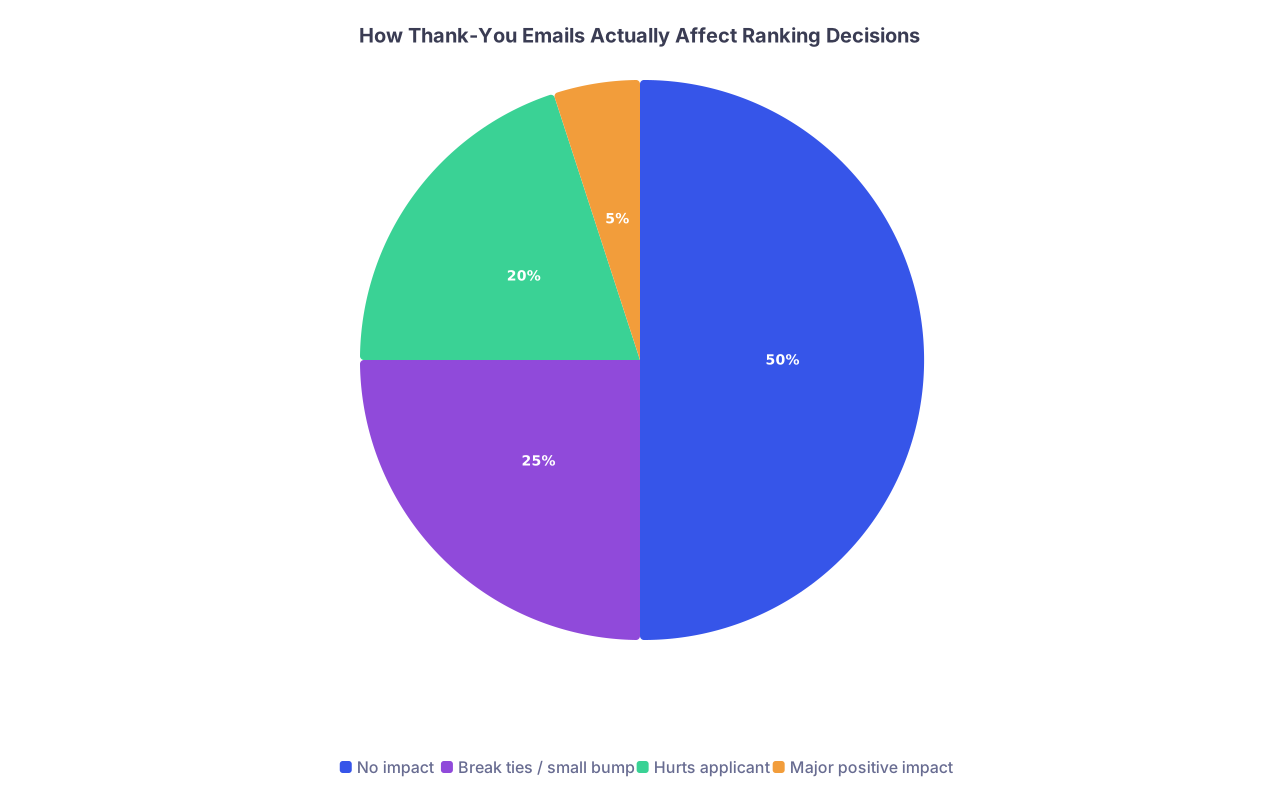
| Category | Value |
|---|---|
| No impact | 50 |
| Break ties / small bump | 25 |
| Hurts applicant | 20 |
| Major positive impact | 5 |
Here’s how it plays out behind closed doors.
Ranking meeting. We’re looking at three applicants in the same band. Someone says:
- “She sent a really thoughtful thank-you. Very professional.”
- Or: “His email was kind of…odd. A little pushy.”
- Or: “Did you see that long, emotional message? That worries me.”
Nobody is supposed to care. But the minute those words leave someone’s mouth, the room subtly shifts. People remember impressions, not PDFs.
So the real game is this: avoid setting off alarms, and if you can, project exactly the kind of intern they want — calm, respectful, concise, reliable.
What PDs Secretly Read Between the Lines
Most applicants obsess over what information to include. PDs are scanning for something else entirely: your operating style.
1. Length: Are You Going to Be High-Maintenance?
Long, flowery emails send a message you don’t intend: “I’m going to take up a lot of space and time.”
If your thank-you letter reads like a personal statement with a crush, here’s what faculty actually think:
- “This person doesn’t understand boundaries.”
- “If they write like this now, what will their notes look like?”
- “They need a lot of validation.”
On the flip side, the one-line “Thx for your time” with no capitalization? That reads as indifferent or sloppy. A risk in a field that lives on details.
The sweet spot they’re looking for is this: 3–6 sentences, clear, specific, emotionally regulated.
What that signals to them:
- You respect their time.
- You can communicate succinctly.
- You’re not using this as emotional processing.
I’ve seen programs drop someone a few spots purely because their follow-up screamed “emotional labor required.”
2. Formal vs. Casual: Do You Get Professional Boundaries?
Program directors and faculty pay unhealthy attention to how you address them.
If you write:
“Hey John, great chatting with you!”
after a 25-minute Zoom? That’s a problem.
Unless they explicitly told you, “Please, call me John,” stick with Dr. LastName. They’re not evaluating how “chill” you are. They’re screening for whether you understand hierarchy and professionalism in a hospital setting.
What different tones actually say:
Overly casual (“Hey!”, first names, emojis, “LOL”):
This smells like weak boundaries and a lack of professional instinct. The immediate thought is: “Is this how they’ll email consultants? Nurses? Patients’ families?”Overly stiff (“To Whom It May Concern”, “Esteemed Sir/Madam”):
This reads foreign to clinical culture. It’s not disqualifying, but it can suggest poor social calibration or copy-pasted formality.Calmly professional (“Dear Dr. Smith,” “Thank you again for the opportunity to interview with your program.”):
That’s what makes PDs relax. You sound like someone they can trust to email a chief, a patient, or risk management without creating drama.
You’re not auditioning to be interesting in this email. You’re auditioning to be safe.
3. Emotional Temperature: Are You Stable or Volatile?
This is the big one. PDs use your thank-you tone as a proxy for emotional regulation.
Read these two:
“I can’t even begin to tell you how much this interview meant to me. I have dreamed about your program for years and talking with you literally brought me to tears afterwards. I will be devastated if I don’t match at your institution.”
“I appreciated the chance to learn more about your program and enjoyed our conversation about resident education and ICU workflow. The culture you described is exactly what I’m looking for in a training environment.”
Applicant 1 might be sincere. They might also fall apart when things do not go their way. That email will be screenshotted and texted to another faculty member with: “Yikes. Red flag?”
Applicant 2 sounds grounded. Appropriate. Interested but not unstable.
Here’s what PDs are quietly asking themselves as they read:
- If this person gets negative feedback, will they spiral?
- If they don’t get what they want, will they become a problem?
- Are they going to escalate small issues to big drama?
Residency is stressful enough. Programs will rank a slightly “less impressive” applicant higher if they seem like they won’t explode under pressure. Your tone is one of the only emotional data points they get outside the interview.
4. Enthusiasm Level: Interest vs. Desperation
Desperation bleeds through tone faster than you think.
Lines that worry PDs:
“Your program is my absolute #1 and I will definitely be ranking you first.”
(Often read as: “This person doesn’t understand NRMP rules / professionalism” or “They might be saying this to everyone.”)“I feel like I truly belong at your program and nowhere else.”
(Clingy. They hear: “If they match here and struggle, this will turn into, ‘You owed me.’”)
On the other hand, vague, lukewarm endings like “I may consider your program in my rank list” read as uninterested or socially tone-deaf.
The tone that signals mature interest sounds more like:
“Our conversation confirmed that your program aligns very well with what I’m seeking in training, and I would be genuinely excited to join your team.”
Specific. Positive. No rule-breaking promises. No emotional hostage-taking.
Program directors infer from that: you’re interested, you get this process, and you respect boundaries.
5. Grammar, Typos, and Sloppiness: How You’ll Chart at 3 a.m.
You’d be shocked what sways a committee.
I’ve sat in meetings where someone says, “His email had three typos in four lines,” and you can feel people mentally lowering the applicant’s ceiling.
They aren’t grading you like an English teacher. They’re asking:
If this is the level of care with a one-page email to a PD, what will their documentation look like? Their orders? Their discharge summaries?
You’re about to be entrusted with:
- Controlled substances
- High-risk orders
- Med-legal documentation
Everything you send them is a mini-preview.
One typo? Human.
Email written like a text? Problem.
No capitalization, no greeting, no sign-off? Immature.
You don’t need perfection. You need evidence that you respect details when they matter.
6. Personalization: Are You Actually Perceptive?
Most directors can tell in 2 seconds if you mass-sent the same note to 20 interviewers.
A generic wall of text:
“Thank you for taking the time to speak with me. I really enjoyed hearing about your program. I appreciate the opportunity.”
It’s fine. It won’t hurt you. It also does absolutely nothing to differentiate you.
But here’s how tone and content interact: one specific, grounded reference makes your tone sound more authentic and more mature.
Example:
“I appreciated your candid perspective on how your residents handle night float and how you’re adjusting the system in response to their feedback. It gave me a clear sense of your leadership style and commitment to education.”
That tells them:
- You listened.
- You retain detail.
- You process information like a colleague, not a fan.
Program directors infer future behavior from that: someone who will give useful feedback on the program, not vague complaints.
Red Flag Tones That Get You Quietly Dropped
Let me spell out the tones that have actually burned applicants in rooms I’ve sat in.
The Entitled Tone
It sounds like this:
“Given my strong interest and qualifications, I believe I would make an excellent addition to your program.”
By itself, not terrible. But couple that with a mediocre interview or mid-tier scores, and you come off as unaware, maybe arrogant.
PDs think: “They already think we owe them something and they haven’t started intern year.”
Entitlement in an email = entitlement on rotations. Programs have been burned by this exact pattern.
The Over-Familiar Tone
This one makes attendings’ skin crawl.
“It was awesome hanging out and chatting! I felt like we really vibed.”
Or, worst of all, inside jokes from a 20-minute interview:
“I’m still laughing about your story of the patient who wanted Taco Bell on rounds haha!”
You think you’re building rapport. They’re thinking:
- “We are not friends.”
- “Will this person respect nurses? Staff? Patients?”
Programs want collegial, not buddy-buddy.
The Over-Apologetic / Self-Doubting Tone
This one hurts to read, but PDs notice it.
“I’m sorry if I came across as nervous — I was very anxious because your program is such a dream for me…”
“I hope I didn’t waste your time…”
You’re trying to sound humble; you end up sounding like extra emotional work. Programs expect residents to be insecure at times, but they don’t want someone apologizing their way through every interaction.
Anxiety in an email suggests anxiety on rounds, in codes, with feedback. High-risk for burnout and handholding.
The Pushy “Clarification” Tone
This is rarer but deadly:
“On reflection I’m not sure I fully answered your question about my research, so I want to clarify my role in the project…”
Or worse:
“I felt that one of my responses may have given the wrong impression, so I’d like to explain further…”
Now the director’s brain goes: “Why are they still litigating the interview?”
You’re hinting that you ruminate, you second-guess, and you can’t let things go. That’s not who they want fielding a bad outcome or a brusque attending.
If you screwed up an answer, live with it. Do not use the thank-you email as an appeal.
How Different Thank-You Tones Move You on the Rank List
This is what candidates never see. You send an email, then silence. But on our side, we remember.
| Email Tone Type | Typical Impact on Rank |
|---|---|
| Calm, specific, concise | May nudge you up vs. similar peers |
| Generic but professional | Neutral, no movement |
| Overly emotional | Small to moderate downward shift |
| Entitled / arrogant | Moderate drop, sometimes off list |
| Over-familiar / unprofessional | Often significant negative impact |
And here’s the kind of internal dialogue I’ve watched play out:
- “We have 4 people bunched here. Who do you remember?”
“Honestly, that guy who sent the crazy long email — that worried me.”
“Yeah, let’s move him down a bit. Put the steady one above him.”
Or:
- “She sent a really thoughtful, tight thank-you, referenced our curriculum changes. She seems sharp.”
“Agreed. Let’s put her above the guy who didn’t send anything.”
Notice: they are not saying, “She wrote the best thank-you so she’s #1.” This is tie-breaker territory. But ties are where your future lives or dies.
The Tone That Makes PDs Relax (And Remember You)
You want your thank-you to send three messages simultaneously:
- I’m a grown-up.
- I listened.
- I will not be a problem.
That combination is more valuable than you think.
Here’s the basic structure that achieves that tone, without sounding robotic:
- Respectful greeting using Dr. LastName.
- One sentence of gratitude, not groveling.
- One specific, factual reference to your conversation or the program.
- One line that ties that feature to your training goals.
- Simple sign-off with your full name and AAMC ID (optional but appreciated by some).
And underneath the words, the tonal rules:
- No begging.
- No promises about rank lists.
- No emotional oversharing.
- No “proving yourself” or litigating the interview.
- No fluff you copied from an “email template” website.

| Step | Description |
|---|---|
| Step 1 | Read Thank-You Email |
| Step 2 | Mark as Red Flag / Note in File |
| Step 3 | Neutral, Little Impact |
| Step 4 | Positive Impression, Tie-breaker Benefit |
| Step 5 | Tone Professional? |
| Step 6 | Shows Maturity & Insight? |
If you’re wondering how often people screw this up: more than you’d believe. Every year, there are a handful of emails that become cautionary tales in faculty lounges.
A Few Real-World Scenarios You Won’t Hear on Official Panels
I’ll give you three I’ve personally seen or had relayed in painful detail.
Case 1: The “Soulmate Program” Essay
Applicant ranked high after interviews at a solid mid-tier IM program. Then sends a 700-word thank-you about “soul connection,” “feeling like I’ve finally found my people,” and “I know I’m meant to be there.”
One associate PD literally said, “This makes me nervous. What happens if they struggle here?” Applicant dropped 8–10 spots. Matched elsewhere.
The irony? They might’ve been fine. But the tone screamed volatility.
Case 2: The “I Deserve a Spot” Fellow
Surgical specialty. Strong applicant, objectively. Email tone: “Given my operative experience and publications, I’m confident I would be an asset to your program and deserve serious consideration.”
Program had multiple red-flag experiences with arrogant residents in the past. They overcorrected. He got pushed below several slightly weaker but more “safe” applicants.
He still matched well. But not there. And yes, that email was on the table when they decided.
Case 3: The Quiet Bump
OB/GYN candidate. Solid but not spectacular on paper. Interviewed well. Sent short, specific, thoughtful thank-you notes that commented on concrete aspects of call structure, continuity clinic, and wellness initiatives. Tone: mature, grounded, no drama.
In the ranking meeting someone said: “Her email was really sharp — she actually understood what we’re trying to do with nights.” That one sentence probably moved her two or three slots up when they were sorting a dense cluster of candidates.
That is the level of impact we are talking about. Not life-or-death. But not zero.
Bottom Line: What Your Tone Actually Tells Them
Strip away all the fake politeness and here’s what program directors are really inferring from how you write that “simple” thank-you.
- Can you communicate like a professional adult who understands boundaries, hierarchy, and time constraints?
- Are you emotionally regulated, or will you bring drama and instability into an already overloaded system?
- Are you detail-oriented enough — and respectful enough — to put minimal care into an email that has their name on it?
Get those three signals right, and your thank-you email does exactly what it should: quietly reassure them that bringing you into their program is a low-risk, high-upside decision.
Miss them, and you become “that weird email” people talk about after you’re gone.
Keep it concise. Keep it specific. Keep it calm. That’s how you sound like someone they can trust at 2 a.m. — and that, more than any pretty sentence, is what moves you up the list.