You matched. Relief… for about three days.
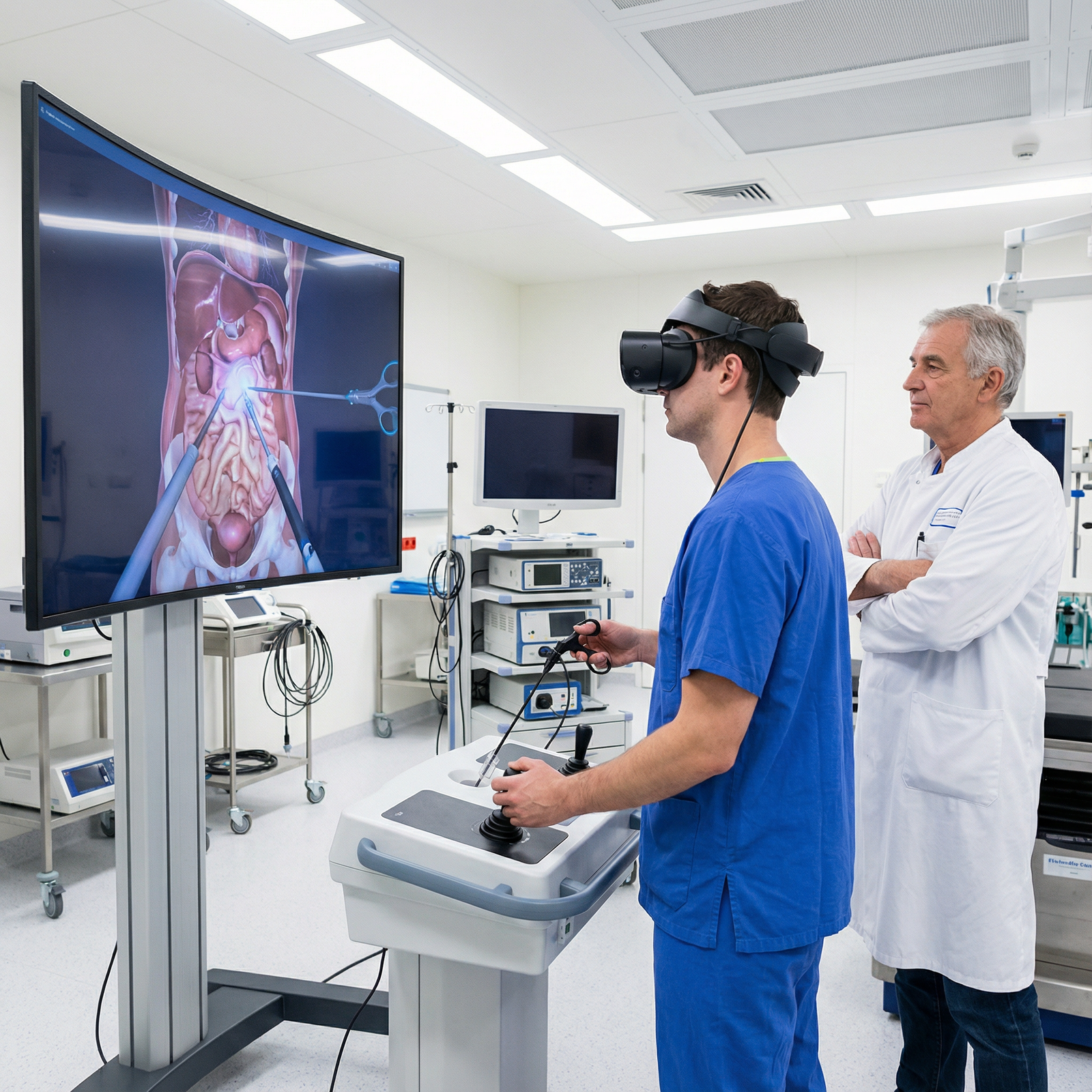
Now it’s March 20-something, you’ve binged the program’s website, found their YouTube videos, skimmed the orientation packet — and your stomach is dropping. Every photo: glass walls, giant monitors, residents on iPads, AI decision support, remote ICU dashboards, “virtual care command center.”
You trained in a place where the “system” was a paper triage sheet, the charge nurse’s brain, and the fax machine that always jammed. You like talking to patients, not screens. You’re efficient in a physical chart, not an EHR with 14 tabs. The word “AI” makes you think, “Great, another alert I’ll ignore.”
And you’re starting to think: I am not the right person for this program. Maybe they made a mistake.
They did not. You’re just in a gap: your practice style and habits are old-school, but you’re about to work in an environment that’s obsessed with tech, metrics, dashboards, and automation.
Here’s how to handle that without panicking — and without losing who you are as a clinician.
1. Get Clear On What “High-Tech” Actually Means At Your Center
First step: stop reacting to the vibe and find out what you’re actually dealing with.
Programs love buzzwords. “AI-assisted,” “data-driven,” “virtual-first.” Half of it is marketing. You need to separate branding from the realities of your day-to-day.
Break it down into four buckets:
| Area | What It Usually Means For You |
|---|---|
| EHR & Orders | Advanced order sets, CDS alerts, speech recognition |
| Monitoring | Tele-ICU, continuous telemetry analytics, wearables |
| Communication | Secure messaging, VoIP badges, app-based paging |
| Care Models | Telehealth clinics, remote triage, virtual consults |
How to get real intel before you start:
Email or message a current resident. Be specific:
- “What tech systems do you actually touch on a normal day on wards or in clinic?”
- “What’s the most annoying tech thing? What’s genuinely helpful?”
- “What do new interns struggle with most?”
During any pre-start onboarding calls, ask:
- “Will we have structured EHR/tech training in July, or is it more learn-on-the-job?”
- “Are there any systems I can get access to or videos I can watch now?”
Look at their GME or orientation materials for:
- Required modules (EHR, telehealth, device training)
- Mention of “super users” or informatics champions
You’re not trying to become a tech expert yet. You’re just trying to define the battlefield so your anxiety is attached to real things, not fuzzy dread.
2. Decide Your Identity: Old-School ≠ Outdated
If your instinct is, “I don’t want to become a robot clicking boxes,” good. That instinct is not the problem. The problem is if you cling to old workflows purely because they’re familiar.
You need a clear mental frame going in:
- “I’m old-school in values (bedside, narrative, physical exam, clinical gestalt).”
- “I’m flexible in tools (I’ll use whatever actually helps me care for patients safely).”
If you go in with “tech is stupid; I’ll ignore it,” you will:
- Get labeled “difficult” by nurses and co-residents.
- Miss out on actual safety nets (drug interaction checks, risk scores).
- Spend more time fighting the system than learning medicine.
If you go in with “tech is god,” you’ll:
- Over-trust algorithms.
- Let the EHR write your notes (and your thinking) for you.
- Lose the human skills that patients remember.
You’re aiming for this stance: “I will use the tech; I will not let it use my brain.”
Write it down somewhere you’ll see in July:
“I use tools. I do not become a tool.”
3. Build a 30-Day Tech Survival Plan (Before Day 1)
Do not wait until orientation week to realize you hate the EHR.
You can’t get full access yet, but you can lower the learning curve.
A. Core systems to expect
Most high-tech centers will hit you with:
- A feature-heavy EHR (Epic, Cerner, etc.)
- Order sets and decision-support alerts
- Telehealth platform
- Secure messaging (Voalte, TigerConnect, Epic Chat)
- Possibly: speech-to-text dictation, remote monitoring dashboards
You don’t need to master all of this. You just need to be not-clueless at:
- Opening and reviewing a chart efficiently
- Writing a basic note
- Placing common orders
- Responding to messages
B. Concrete pre-start actions (2–3 hours total, not a second more)
Find free EHR simulation videos online. Search:
“Epic inpatient resident workflow”
or
“Cerner inpatient order entry tutorial for physicians”Watch at 1.5x speed, skip fluff. You’re just trying to recognize the basic layout: where labs live, how to order meds, how to see recent notes.
Get comfortable with speech-to-text on your own device.
If your program uses dictation:- Practice dictating a brief H&P into your phone notes.
- Train yourself to think in structured phrases.
Example:
“Assessment and plan. One. Community acquired pneumonia. Mild hypoxia. On room air sat ninety two. Plan. Continue ceftriaxone and azithromycin. Repeat chest xray only if clinically worsening.”Practice structured, template-free notes in plain text.
Tech-heavy centers love templates that spit out 3 pages of garbage. Practice writing a clean, short SOAP note so you’re not drowning in autopopulated nonsense.For 2–3 patients from recent rotations, write:
- Subjective: 2–3 sentences
- Objective: bullets, not novels
- Assessment/Plan: numbered problems, 1–3 lines each
You’re not trying to study for Step 4. You’re preparing your brain for speed and structure so the tech doesn’t bully you into writing incoherent, bloated notes.
4. Day 1 to Week 4: How To Behave So You Don’t Drown
Here’s the part everyone underestimates. At high-tech centers, your reputation gets shaped early by how you deal with systems.
Your goal in Month 1:
Competent, coachable, not a complainer, not a cowboy.
A. Pair up with a “super user” intentionally
Every program has that PGY2 or PGY3 who is terrifyingly fast in the EHR. You’ll know them because:
- They’re done with notes before lunch.
- Nurses page them less because orders are always right.
- Other interns ask them how to do things.
On your first or second call shift, say this out loud:
“Hey, you’re clearly fast in the system. Sometime on a slower call, can I watch you admit one patient start to finish and just copy your workflow?”
You will learn more in that 20 minutes than in 3 hours of IT orientation.
What to observe:
- How they move through the chart (what’s first, what they ignore)
- How they use order sets (do they blindly accept defaults or edit them?)
- How they write notes (templates? Smart phrases? Free text?)
Copy their path, then customize later.
B. Set a limit on “this is stupid” comments
You are allowed to think the system is dumb. You are not allowed to make that your personality.
In front of nurses, seniors, pharmacists, IT trainers — you want phrases like:
- “Ok, what’s the cleanest way to do this in our system?”
- “Is there a standard workflow people here like to use for X?”
- “I’m used to doing this differently — show me the local way.”
What you do not want:
- “At my med school, we just wrote an order and it worked.”
- “This alert is pointless; I always override it.”
- “This is why medicine sucks now.”
People remember that. And they decide very quickly whether to help you or let you flail.
5. Using High-Tech Tools With Old-School Brains
Now to the actual practice. How do you stay grounded when everything screams algorithms and dashboards?
A. Treat decision support as a consult, not a command
CDS (clinical decision support) will throw alerts for:
- Dosing
- Interactions
- VTE prophylaxis
- Vaccines
- Sepsis bundles
- Renal dosing
Your rule: read, think, then decide.
Example:
- Alert: “Consider VTE prophylaxis; patient at risk.”
- Old-school brain: You already examined the patient, know they’re walking laps, going home tomorrow.
- Good response: “Reviewed. Ambulatory, low risk. No pharmacologic prophylaxis.” Override with short reason in your head (even if you don’t type it).
You’re using the tech as a safety net, not an autopilot.
B. Guard your exam and bedside time like it’s sacred
In a high-tech environment, people start to think seeing the chart = seeing the patient. That’s wrong.
Make a simple rule for yourself:
- New admission: see patient before placing non-urgent orders, whenever safely possible.
- Overnight cross-cover: for any “something isn’t right” call, put your hands and stethoscope on the patient before drowning in vitals graphs.
You do not have to brag about this. Just quietly do it.
Tele-ICU or remote monitoring team calls with a concerning trend? Fine. Still go see the patient. That’s how you keep your clinical intuition sharp.
C. Don’t let templates write your thinking
High-tech notes can easily become:
- 4 pages of copy-forward junk
- Autopopulated normals that aren’t true anymore
- Problem lists you don’t actually manage
Fight that tendency. Use tech for structure, not thought.
Good compromise:
- Use a short, clean template you customize (like a few smart phrases).
- Keep Assessment & Plan in your own words, even if short.
- Once per day, read your note top to bottom as if you’re a consultant seeing the patient for the first time. If it’s unreadable, fix tomorrow’s style.
6. Telehealth, Remote Monitoring, AI: How To Not Hate Them
This is the part that freaks “old-school” people out the most. Virtual care feels cold; AI feels like it’s trying to replace you.
Reality: at most places, these are clunky, not omnipotent. You can bend them to your style.
A. Telehealth visits: bring the bedside to the screen
If your clinic has video visits:
Start every visit with 15–30 seconds of pure human: “Hi Ms. Jones, I’m in a clinic room here at the hospital, where are you connecting from today?”
Do not open the chart the second the visit starts. Look at them. One or two sentences of small talk is not a waste of time; it sets the tone.
Use the tech on camera: “I’m going to pull up your last labs on the screen here… I see your A1c was 8.2 in December.”
Patients like seeing you work with tools, not staring silently at another monitor off-screen.
B. Remote monitoring / dashboards
If your program uses wearables, remote BP cuffs, continuous tele:
- Remember: these generate trends, not diagnoses.
- Use them to:
- Spot deterioration earlier
- Confirm your suspicion or reassure you
Do not:
- Panic over every single data blip.
- Let your day be entirely reactive to alerts rather than guided by clinical priorities.
Example mental line:
“Dashboard says their overnight heart rate was higher than usual. They also looked more dyspneic yesterday. I’ll prioritize seeing them early this morning.”
C. AI tools and risk scores
You may see:
- AI read assist on imaging
- Sepsis or deterioration scores
- Readmission risk scores
- “AI triage” suggestions
Use one hard rule: if the AI is telling you something that contradicts your gut, you owe it a closer look — either way.
- If AI says “low risk sepsis” but the nurse says “I’m worried” and the patient looks awful, you follow the human + your exam.
- If AI says “high deterioration risk” and you think, “They seem fine,” go see them again. There’s probably something you missed or something the algorithm is over-calling. Either way, you will learn.
You’re not in a contest with the AI. You’re in a conversation. With a very weird, statistics-obsessed colleague.
7. Protecting Your Sanity In a Metric-Obsessed Culture
High-tech centers love metrics. Door-to-needle. Time to orders. Length of stay. Note timeliness. You’ll feel it.
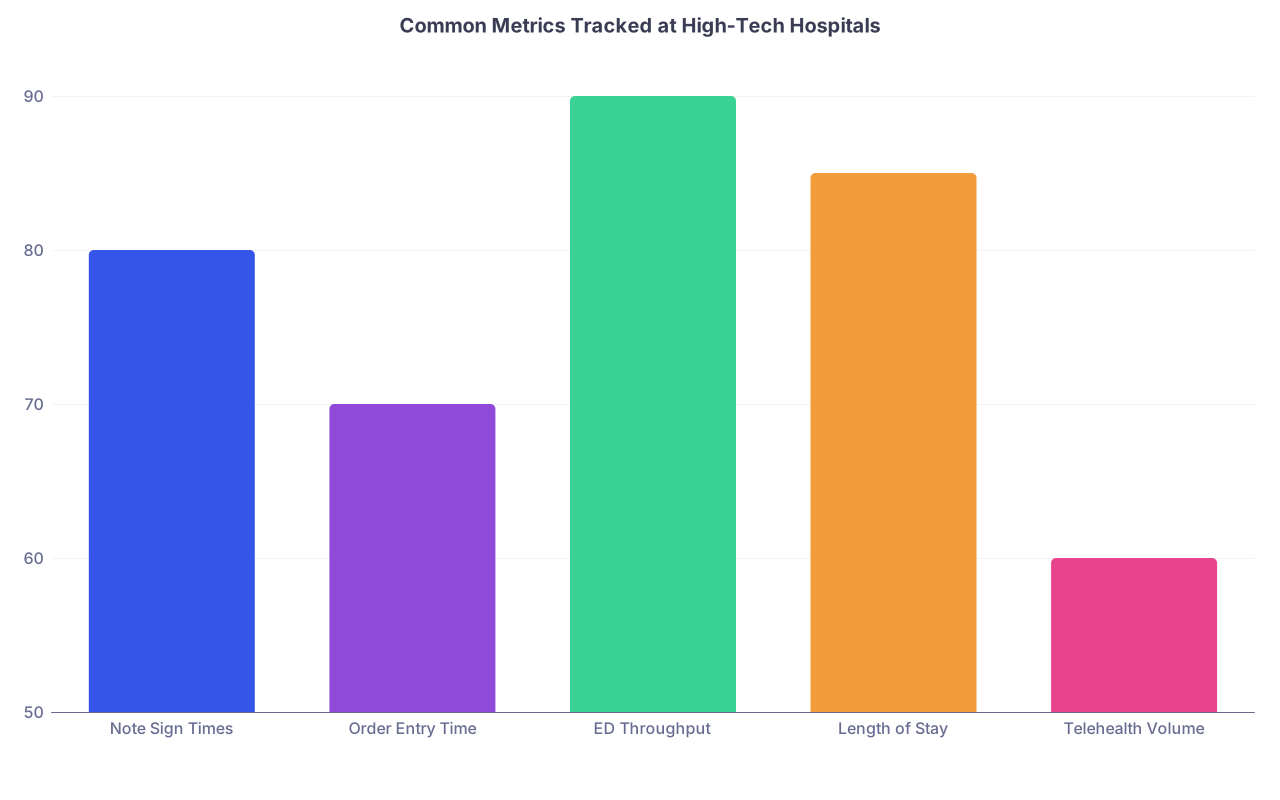
| Category | Value |
|---|---|
| Note Sign Times | 80 |
| Order Entry Time | 70 |
| ED Throughput | 90 |
| Length of Stay | 85 |
| Telehealth Volume | 60 |
What you need to remember: these are hospital-level problems being pushed onto your shoulders. You are responsible for doing your job well, not single-handedly fixing throughput.
Three rules:
Meet minimums, don’t chase perfection.
If the expectation is “sign daily notes by 3 p.m.,” aim to be consistently on time, not the fastest note writer in the building.Don’t let dashboards override human realities.
If a discharge will be unsafe just to hit length-of-stay goals, say so, document your reasoning briefly, and involve your attending.Find one admin-friendly workaround that makes your life easier.
Example:- Pre-chart 10 minutes per clinic patient the day before.
- Build one really good “discharge summary” smart phrase.
- Use batch sign for non-clinical tasks when allowed.
You play the game enough to not get in trouble. You do not let the game define you.
8. How To Advocate For Sanity Without Getting Branded As “Anti-Tech”
You’re going to see tech failures. Systems go down. Alerts fire for nonsense. Workflows that looked brilliant in PowerPoint will be a disaster at 2 a.m. on cross-cover.
The immature reaction:
Roll your eyes, complain to other interns, refuse to use the system.
The smart, old-school-but-adapted reaction:
Keep a running list (small notebook or phone note):
- “Pain points” — places where tech actively hurts care or efficiency.
- “Bright spots” — where a tool actually helped you.
For each pain point, jot:
- What you were trying to do
- What the system made you do instead
- What the consequence was (delay, confusion, safety issue)
Then, at a resident forum / QI meeting / supervision conference, you can say something powerful and specific:
“On nights, when I admit a septic patient, the sepsis order set is helpful, but it defaults to an antibiotic regimen that doesn’t match our local antibiogram. This leads to pharmacists calling us to change it, which delays meds. Could we update the default choices or add a local antibiogram link to the order set?”
Old-school clinicians with data get heard. Angry clinicians with vibes get ignored.
9. What To Do If You’re Still Struggling 3–6 Months In
Let’s say it’s December. You’re not incompetent. You’re not unsafe. But you still feel behind, slower, more drained by the tech than everyone else.
Do not just quietly suffer and assume you’re doomed.
Here’s your move sequence:
Identify the specific choke point.
Is it:- EHR navigation?
- Note writing?
- Order entry?
- Telehealth flow?
- Managing alerts?
Pick one. Not “everything.” One.
Find the local guru for that one thing.
Examples:- There’s always an Epic “physician builder” or informatics resident.
- Some nurse managers know the system better than any doctor.
- A co-resident who did informatics research.
Ask for a micro-coaching session. Literally 20–30 minutes: “Can you watch me do one discharge / one clinic visit in the system and point out where I’m making this harder than it has to be?”
Implement one change for 2 weeks.
Do not overhaul your whole workflow. One thing:- New note template
- New way of using order sets
- New way of reviewing overnight data
Reassess: did that one change lessen your mental load? If it did, add another later. If not, discard and try a different tweak.
Improvement in high-tech environments is incremental, not all-or-nothing. You stay old-school by being deliberate, not rigid.

| Step | Description |
|---|---|
| Step 1 | Match at High Tech Center |
| Step 2 | Clarify Systems Used |
| Step 3 | Adopt Identity - Old School Values, Flexible Tools |
| Step 4 | 30 Day Pre Start Plan |
| Step 5 | Shadow Super User |
| Step 6 | Use Tech As Tool, Not Brain |
| Step 7 | Advocate With Specific Examples |
| Step 8 | Targeted Coaching If Still Struggling |
FAQs
1. What if I genuinely prefer paper charts and hate screens — did I pick the wrong place?
You picked a place that doesn’t match your comfort zone. That’s not the same as “wrong.” You cannot practice modern hospital medicine without interacting with tech; that’s just reality. But you can absolutely be the resident known for thorough exams, great family meetings, and clean thinking while still being competent in the EHR. Shift your goal from “I want things to feel like 1995” to “I want to be the person who can use 2030’s tools without losing 1980’s skills.”
2. Will being slower with tech hurt my fellowship chances?
Only if it makes you look careless, constantly behind, or resistant to learning. Fellowship PDs and letter writers care about: judgment, reliability, teamwork, and your trajectory. If you start clunky in July but by winter you’re functional and engaged, that arc actually looks good. What will hurt you is a reputation for blaming the system for everything and never adapting. Document your growth by participating in a small QI or informatics-lite project if you can.
3. How do I push back if I think an AI tool or protocol is wrong without looking arrogant as an intern?
You push back with specifics and humility, not attitude. Instead of “this AI is trash,” try: “The sepsis alert fired on this patient with chronic tachycardia and no clinical signs of infection. I followed the workflow but I’m worried it may be over-triggering in patients with baseline abnormalities. How do you recommend we handle cases like this?” Loop in your senior or attending. You’re not rejecting the tool; you’re asking for calibration and teaching.
4. Should I try to become the “tech person” on my team even if I’m not naturally inclined that way?
Only if it genuinely interests you. Do not force yourself into being the resident who fixes everyone’s printer jams if that drains you. A better target is “competent enough that tech isn’t the main source of my stress.” If over time you find you like optimizing workflows or giving feedback to the IT team, lean in. If not, fine. Be the person who is rock-solid with patients and “good enough” with tech. That’s more than enough at most places.
Open your email or messaging app right now and contact one current resident at your new program. Ask them, in one sentence, “If you had 2 hours before starting here to learn anything about our tech systems, what would you focus on?” Their answer is your starting blueprint.