
Robotic surgery is one of the most overhyped “innovations” in modern medicine. The marketing is better than the medicine.
Hospitals plaster billboards with sleek robots and taglines like “smaller incisions, faster recovery, better outcomes.” Surgeons brag about being “robotically trained” as if the machine conferred extra skill. Administrators love it because patients love the idea of it.
But if you strip away the sales pitch and actually read the outcome data, the story is a lot less glamorous.
Robotic surgery is a tool. A very expensive, sometimes useful, sometimes pointless tool. In a fair amount of common operations, it’s not clearly better than conventional laparoscopy. Sometimes it’s worse on cost, time, and complications. And in a few areas, it’s genuinely transformative.
The problem is simple: the public hears “robotic” and assumes “superior.” The data doesn’t support that blanket belief.
Let’s go through what the evidence actually shows.
The Hype vs. The Reality
First, understand the incentives. A single robotic platform can cost $1.5–2.5 million up front, plus six figures per year in maintenance, plus expensive disposable instruments. Hospitals do not buy that to let it gather dust.
They need volume. So they do what works in American health care: sell it hard.
I’ve literally heard patients say, “I want the robot because it’s more precise.” Or, “I don’t want a human cutting me, I want the robot.” This is science fiction thinking, not medicine.
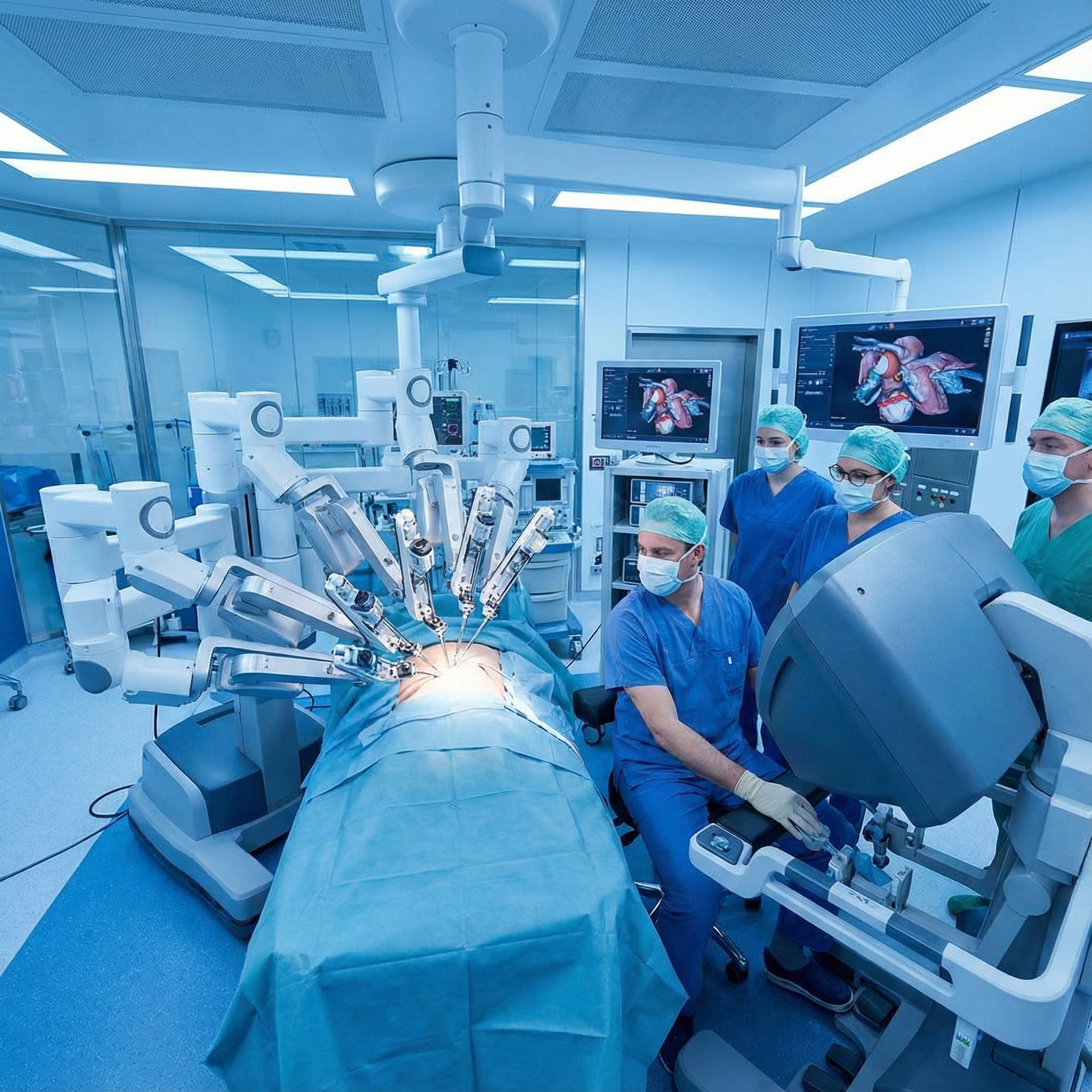
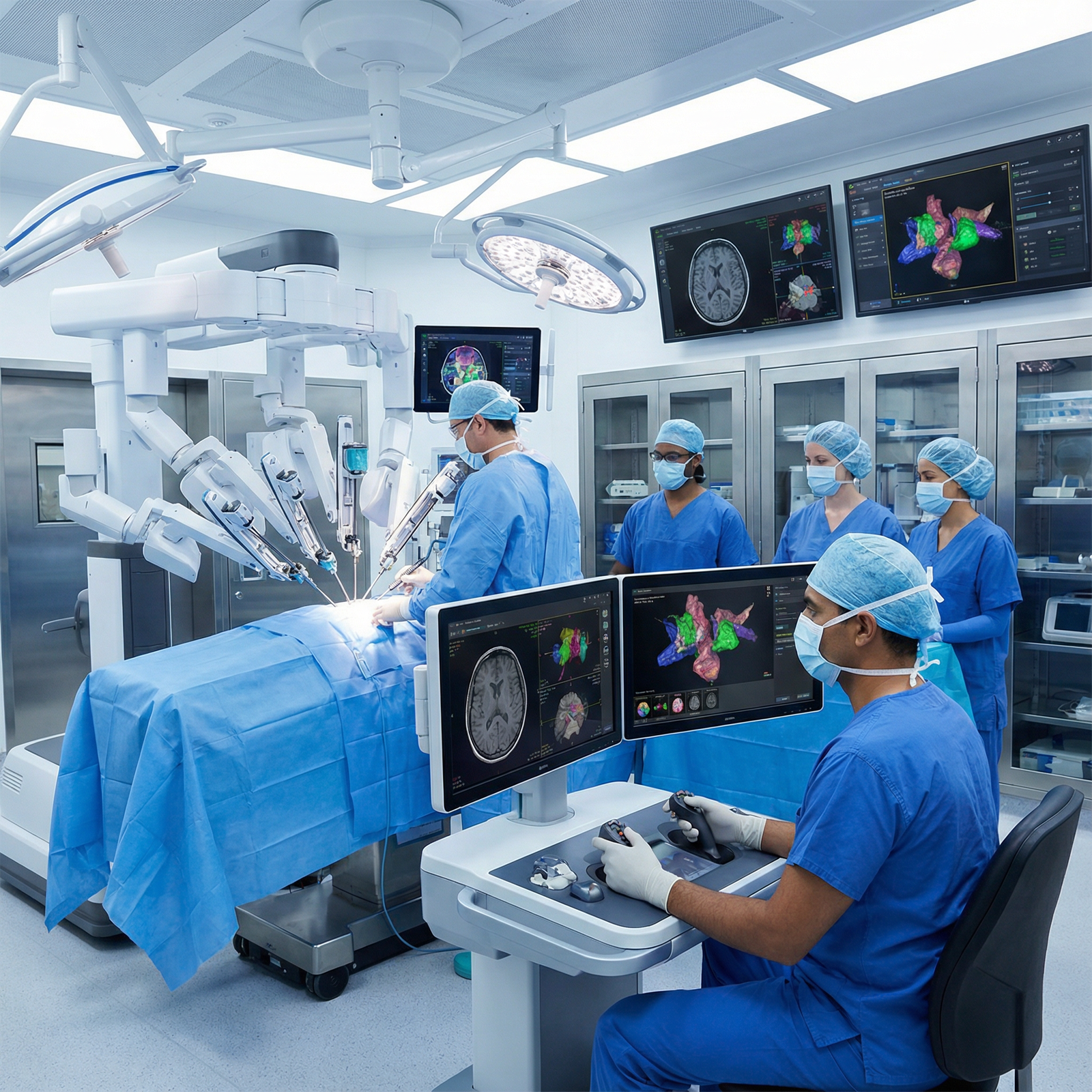
There is no autonomous robot doing your surgery. There is a surgeon at a console, controlling robotic arms. The system filters tremor and gives great visualization, yes. But it does not magically convert a mediocre surgeon into a great one. An excellent conventional laparoscopic surgeon will beat an average robotic surgeon every day of the week.
So the real question isn’t “robot or not.” It’s:
- For this specific operation
- In this patient
- With this surgeon’s skill and experience
…does the robot actually improve outcomes?
Sometimes yes. Often no. Occasionally it just makes everything more expensive and takes longer.
Where Robotics Clearly Helps (And Where It Probably Doesn’t)
Let’s be fair first. There are areas where robotic surgery genuinely moved the needle.
Stronger use cases
Prostatectomy (prostate cancer surgery)
Robotic-assisted radical prostatectomy is the poster child. It gives:- Better visualization in a cramped pelvic space
- Finer dissection around nerves responsible for continence and erectile function
- Easier suturing of the bladder–urethra connection
Large observational series suggest modest benefits in less blood loss and shorter hospital stay compared to open prostatectomy, with at least comparable cancer control and functional outcomes in experienced hands. Not a miracle, but there’s a rational anatomical argument and decent supportive evidence.
Some complex pelvic surgeries (colorectal, gynecologic in select cases)
Very narrow pelvis, obese patients, prior radiation or multiple prior surgeries—these are scenarios where the articulating robotic instruments and 3D vision can reduce conversion to open surgery and make technically nasty dissections more controlled.But that’s “for selected complex cases,” not “for every hysterectomy on the schedule.”
Weak or no clear advantage
Now the part vendors hate.
For a long list of common procedures, randomized trials and high‑quality cohort studies either show no significant clinical advantage or show benefits so small they don’t justify the cost and time.
Examples:
- Routine hysterectomy for benign disease
- Simple cholecystectomy (gallbladder removal)
- Routine bariatric surgery (gastric bypass, sleeve) in average-risk patients
- Inguinal hernia repair
The pattern: similar complication rates, similar lengths of stay, sometimes slightly less blood loss with robotics, but:
- Longer operative times
- Much higher direct costs
- No meaningful difference in pain, long-term quality of life, or mortality
And remember: “non-inferior but more expensive and slower” is not innovation. It’s branding.
What the Outcome Data Actually Shows
Let’s move from opinion to numbers.
Hysterectomy: robotic vs laparoscopic
There’s a classic area where marketing has totally outrun data.
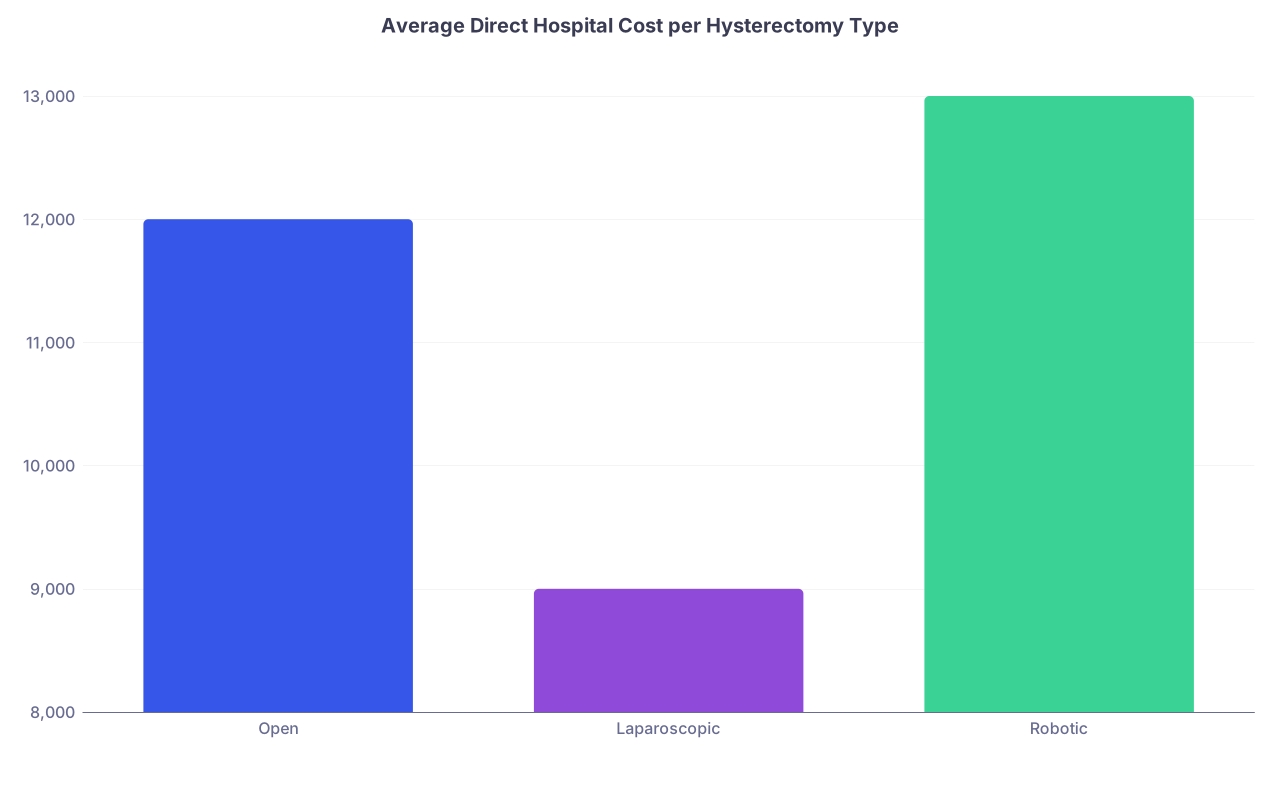
Multiple studies (including large database analyses) comparing robotic versus conventional laparoscopic hysterectomy for benign disease show:
- Similar complication rates
- Similar hospital length of stay
- No major differences in need for reoperation
- Robotic procedures often cost thousands more per case
| Category | Value |
|---|---|
| Open | 12000 |
| Laparoscopic | 9000 |
| Robotic | 13000 |
The exact numbers vary by system and country, but the ranking is consistent: robotic is the most expensive without a matching leap in outcomes for the average patient.
If a surgeon tells you, “You must have the robot; otherwise your outcome will be worse” for a routine case, they’re stretching the truth. At best.
Prostatectomy: slightly more nuanced
Robotics arguably has contributed more here. But even in prostate surgery, it’s not the superhero patients imagine.
Some findings from large comparative studies:
- Blood loss: lower with robotic vs open
- Hospital stay: shorter with robotic vs open
- Oncologic outcomes (margin status, biochemical recurrence): broadly similar when done by experienced surgeons
- Functional outcomes (continence, erectile function): highly dependent on surgeon skill; robotic may offer an advantage in expert hands, but the gap narrows as open surgeons get better
Here’s the dirty secret: a high‑volume open surgeon will often beat a low‑volume robotic surgeon on almost every outcome that matters to patients.
Volume and skill > technology.
Hernia and gallbladder: robotic creep without benefit
Where you see clear “technology creep” is in simpler operations.
Robotic inguinal hernia repair and robotic cholecystectomy are appearing more and more in billing data. Yet:
- Laparoscopic cholecystectomy is already minimally invasive, extremely safe, and fast
- Laparoscopic inguinal hernia repair is well established with short recovery times
Robotic versions add:
- More setup time
- Higher device and instrument costs
- Often longer OR times
For essentially no measurable improvement in pain scores, recurrence rates, or complication rates in the average patient.
| Procedure Type | Robotic Advantages | Robotic Disadvantages |
|---|---|---|
| Prostatectomy | Less blood loss, ergonomics, possible better nerve-sparing in experts | Higher cost, longer time early in learning curve |
| Benign hysterectomy | Similar to laparoscopy, better ergonomics for surgeon | Higher cost, longer OR time |
| Cholecystectomy | Rarely meaningful benefit | Significantly higher cost, longer time |
| Inguinal hernia repair | Similar outcome to lap | Cost, time, questionable value |
| Complex pelvic surgery | Easier in reoperative/obese pelvis | Same robotic cost/time penalty but may reduce conversion to open |
The Hidden Variable: Surgeon Skill and Learning Curve
Here’s the single biggest myth that needs killing: “Robotic surgery standardizes quality.”
No, it does not.
It standardizes the interface. The human at the controls is still the primary determinant of outcome.
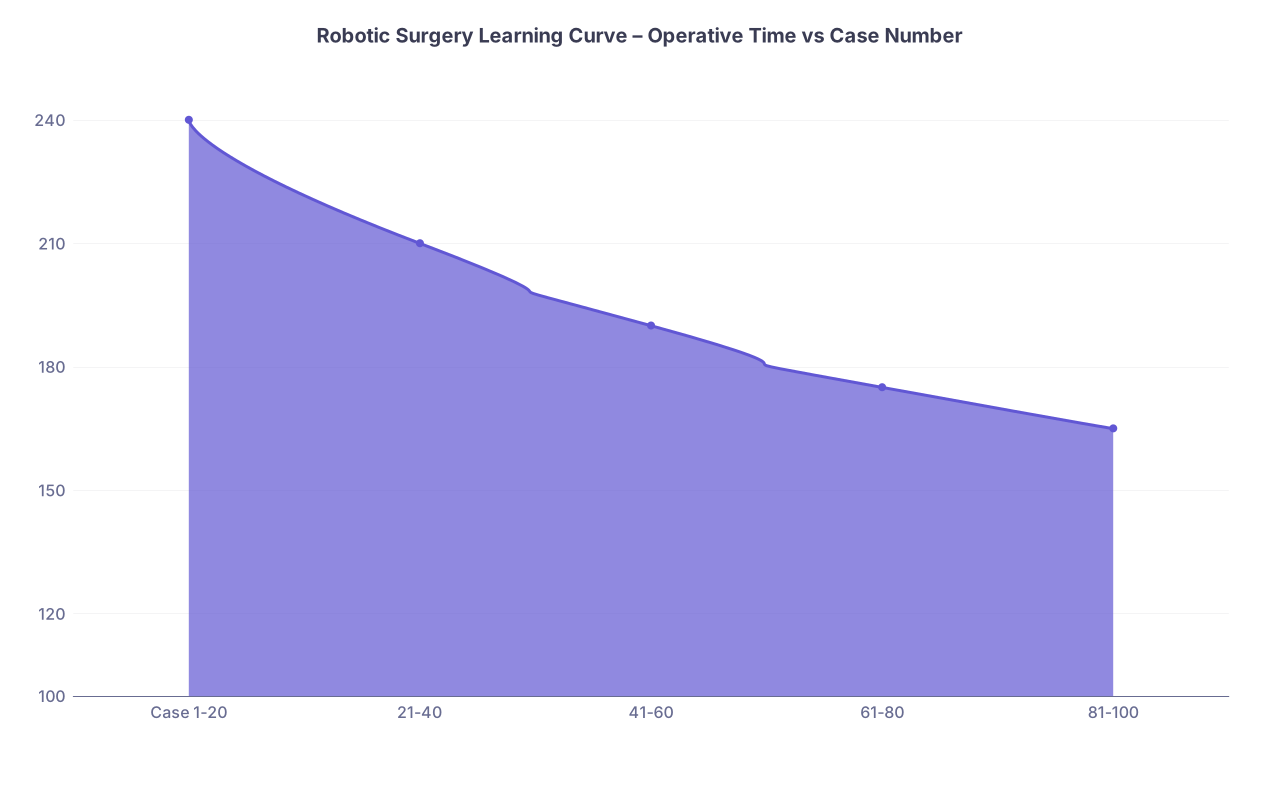
Robotic platforms come with a learning curve. Early in that curve, operative times are longer, complication rates can be higher, and the supposed benefits are often not realized.
| Category | Value |
|---|---|
| Case 1-20 | 240 |
| 21-40 | 210 |
| 41-60 | 190 |
| 61-80 | 175 |
| 81-100 | 165 |
You will never see this curve on a billboard.
A few uncomfortable truths:
- An expert laparoscopic surgeon forced to switch prematurely to robotics may initially deliver worse outcomes.
- A mediocre open surgeon does not become excellent by sitting at a console.
- Volume matters. High‑volume robotic centers with formal training, proctorship, and auditing have significantly better metrics than early adopters doing a handful of cases per month to “use the robot.”
So if you’re a patient, asking “Do you use the robot?” is the wrong question.
Better questions:
- How many of this exact operation do you personally perform per year?
- How many have you done robotically vs laparoscopically vs open?
- What are your complication and conversion rates, and how do they compare to national benchmarks?
That’s where the safety is—not in the brand of machine.
Costs, Time, and the Awkward Economics
Robotic surgery isn’t just a cool toy. It’s a massive cost center.
For health systems already straining under costs, this matters.
Typical disadvantages of robotic approaches compared to laparoscopy:
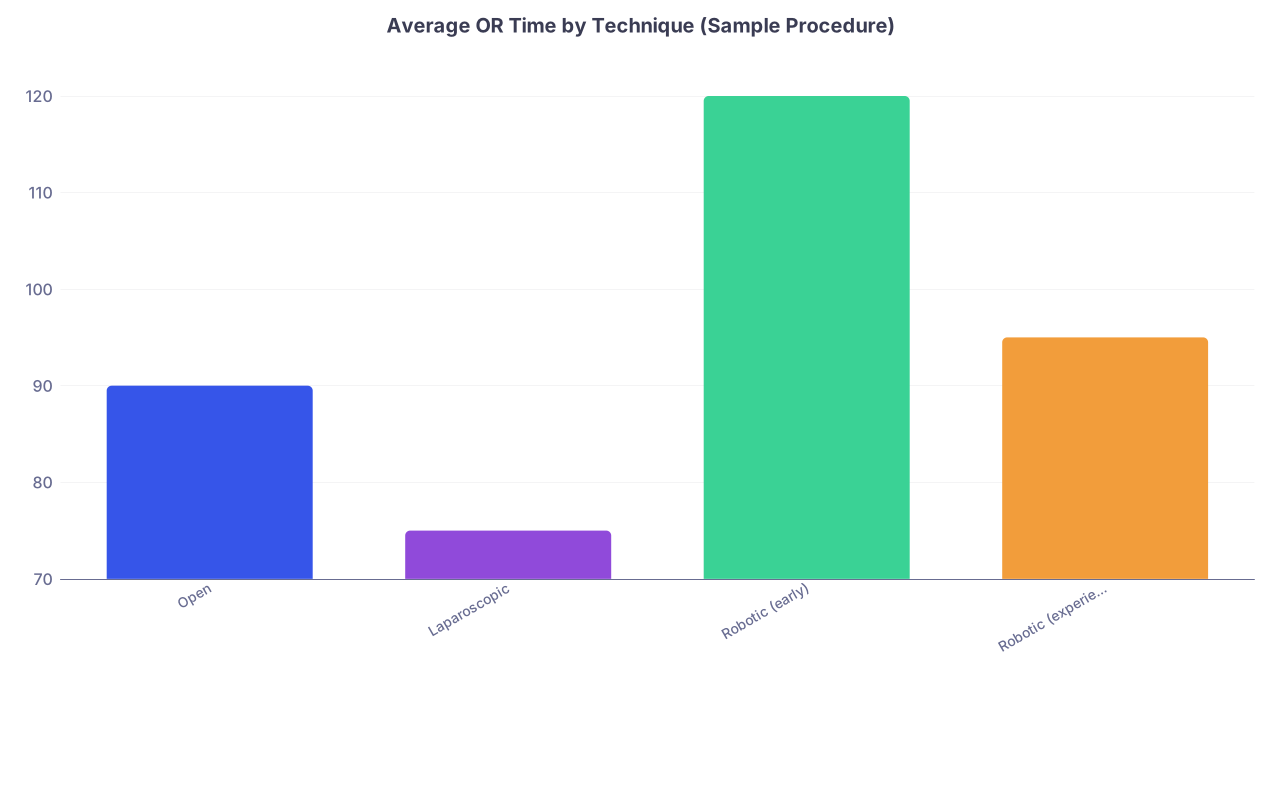
- Operating room time: often 30–60 minutes longer in many series, especially during the learning curve
- Instrument and maintenance costs: multiple hundreds to thousands of dollars per case more
- Capital expense: millions up front
| Category | Value |
|---|---|
| Open | 90 |
| Laparoscopic | 75 |
| Robotic (early) | 120 |
| Robotic (experienced) | 95 |
Do these extra costs produce proportionate gains?
For some operations, yes or arguably yes. For many, no.
The hard truth: robotic surgery has become a marketing differentiator more than a clinically necessary innovation in many fields. Hospitals fear losing patients to competitors who advertise the robot, so they buy one too. Then they need volume to justify the thing, and usage expands into marginal indications.
That’s not evidence-based adoption. That’s tech arms race.
Safety and Complications: Not the Sci-Fi You Think
Another misconception: robotic surgery is inherently safer because “robots are precise.”
Reality check:
- Most major randomized or large observational studies show similar overall complication rates between robotic and laparoscopic approaches for comparable cases.
- Unique robotic issues exist: docking errors, device failures, rare but real energy-related injuries due to longer instrument lengths and blind spots.
Regulators and researchers have documented enough robotic-specific complications over the years that they’re not just theoretical. Are they common? No. But they’re not zero.
Again, the dominant determinant is still the person operating the machine.
If a surgeon is telling you the robot makes surgery “risk free” or “much safer,” they’re simplifying to the point of being misleading. Safer for whom and compared to what? That part matters.
Where Robotics Really Shines (Quietly)
I’m not anti-robot. I’m anti-hype.
There are places where robotic systems are legitimately useful, sometimes game‑changing:
- Deep pelvic surgery: low anterior resections for rectal cancer in narrow male pelvises, redo pelvic operations, obese patients—these can be technically brutal laparoscopically. The robot’s articulation and 3D vision are genuinely helpful.
- Surgeon ergonomics: not a small point. Open and laparoscopy can destroy surgeon backs and shoulders over decades. Robotic consoles can reduce occupational injury, which indirectly affects long‑term surgeon performance.
- Complex reconstructive and urologic work: partial nephrectomy, pyeloplasty, some pediatric urologic cases—these benefit from fine motion and precise suturing.
But “sometimes useful in complex, specialized settings” is very different from “always better.”
How Patients Should Think About Robotic Surgery
Here’s how to approach this if you’re the one on the table.
Stop asking “Do you use the robot?”
It’s not the winning question. Ask these instead:
- “What are my options—open, laparoscopic, robotic—and which do you recommend for me, and why?”
- “How many of this exact procedure have you done with that approach?”
- “What are the typical risks and recovery differences between those approaches in your hands?”
If a surgeon gets offended by these questions or starts talking only in marketing clichés, that’s a red flag.
Focus on surgeon + indication, not gadget
For a straightforward gallbladder, hernia, or benign hysterectomy, a high‑volume laparoscopic surgeon is probably your best bet, with or without a robot.
For complex pelvic cancer surgery or redo operations, a high‑volume robotic team at a major center may be worth the extra cost and travel.

| Step | Description |
|---|---|
| Step 1 | Need surgery |
| Step 2 | Find high volume lap surgeon |
| Step 3 | Consider high volume robotic center |
| Step 4 | Proceed |
| Step 5 | Seek second opinion |
| Step 6 | Type of procedure |
| Step 7 | Surgeon experience |
The Future: Smarter Use, Less Hype
Robotics isn’t going away. Next‑generation platforms will get smaller, cheaper, more flexible. Competition may drive down costs. Integration with imaging and augmented reality may actually create tangible new benefits.
But the same rule will still apply: technology is only as good as the evidence that justifies its use in a specific context.
You should demand:
- Published comparative outcomes, not glossy brochures
- Transparent data on complications and conversions
- Honest conversations about cost versus benefit
And surgeons and hospitals should stop pretending the robot is a magic wand.
Key Takeaways
- Robotic surgery is a tool, not a guarantee of better outcomes. In many common operations, it offers no clear clinical advantage over laparoscopy while costing more and taking longer.
- Surgeon skill and case volume matter far more than whether a robot is used. A great conventional surgeon beats an average robotic surgeon every time.
- Use the robot where it actually helps—complex pelvic and reconstructive work, high‑volume centers—and stop assuming “robotic” automatically means “safer” or “better.”